Writing Memories 1

image5 (3).jpeg


Writing Memories 1
Saint John Free Public Library
10 March 2019

Subtitle: Thoughts and exercises on the role of memory as we grow and age.

Remember: we are not just writers, we are re-writers.

About Words:

Words strain,
crack and sometimes break, under the burden,
under the tension, slip, slide, perish,
decay with imprecision, will not stay in place,
will not stay still. (T. S. Eliot, Burnt Norton)

About Effort:

That was a way of putting it—not very satisfactory:
a periphrastic study in a worn-out poetical fashion,
leaving one still with the intolerable wrestle
with words and meanings. (T. S. Eliot, East Coker)

About Revision:

Every attempt
is a wholly new start, and a different kind of failure
because one has only learnt to get the better of words
for the thing one no longer has to say, or the way in which
one is no longer disposed to say it. (T. S. Eliot, East Coker)

Introduction:

As promised, I will present here, over the next week, my thoughts and comments on the writing workshop that took place in Saint John on Sunday, 10 March 2019. The workshop began with the above words from T. S. Eliot. They can be used for contemplation about the difficult art and craft of writing. They can also be used as prompts from which writers can develop their own creative and poetic philosophy.  There is more indeed, much more, than the simple splashing of ink upon the page. Yet we all begin with that first splash of ink, that first letter drawn with finger from the computer keyboard, or thumbed on the I-Pad.

Where do writers go next? That is the question. In this workshop, with its series of thematically linked writing models and prompts, I will try and answer some of those questions. More important, perhaps, all participants will have time to think, time to write, and time to read what they have written to a sympathetic audience.

The workshop’s structure is simple: five modules of 30 minutes each. After the third module, there will be a ten minute break. The last two modules will be followed by a question and answer session that can be prolonged for as long as participants wish.

Alas, I am not familiar with the writers in this group and therefore have not prepared individual exercises for each person’s needs. Forgive me for this lapse. What I have done is to draw up some generic hints and some typical models from which participants are free to select what suits them best. But first some notes on the writing you will be asked to do.

Suggestions for the writing exercise included in each module:

Write a prose memoir, just reminiscing.

Use 1st, 2nd, or 3rd person narrative.

Choose 6-12 words from the reading and expand on them using associative fields.

Write from an image or a metaphor.

Journal style: automatic writing, but try to select the gems.

Letter style: write to a friend.

Writing Levels:

Since I am unfamiliar with you as individual writers, here are four generic writing levels. Choose one and write from within that level. By all means work your way through the levels, if you wish to do so, one level per module.

Beginning Writers: Just write, using the prompts to help you get your own words and experiences and memories on the page. Don’t be afraid to ask me, or more experienced writers in the room, for help.

Intermediate Writers 1: Try and concentrate on writing about one or two senses within each exercise.

Intermediate Writers 2: Try and combine two or three senses within each exercise.

Advanced Writers: Use the prompts as you will and concentrate on imagery, metaphors, letting the language doing the work, and combining or mixing the senses. Also, please share your experiences (positive and negative) with other writers in each mini-group.

Reading and discussion:
         NB Change tables and seek new people in mini-groups after each module. Ideal size of mini-groups is 3-4 people.
We need to learn how to share, and how to accept very diverse opinions, some of which may be good and some of which may be bad.
Don’t just talk to old friends: discover and make new ones.
Listen to the comments and accept them or reject them after you have thought about them. Don’t argue. Don’t explain. Don’t defend your writing. Just listen and see how others read and see and understand your work.
As you read and listen, learn from the other writers, how they write, how they read, how they express themselves.
We are all in search of our own very personal and elusive voice: you won’t find your voice unless you use it. Remember: use it or lose it.

Invitation and Reminder:

By all means comment on this workshop and its modules. Module 1, with some polishing and though, will appear tomorrow.
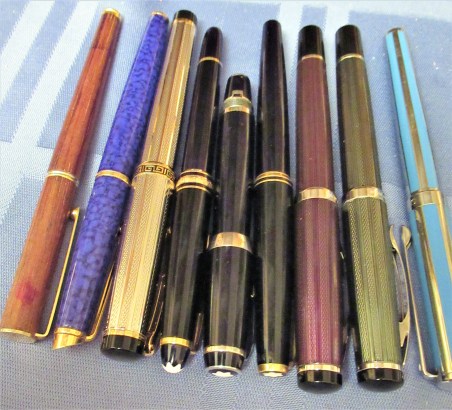
image3 (5).jpeg


Pen Friends

IMG_0376 (2).JPG

Pen Friends

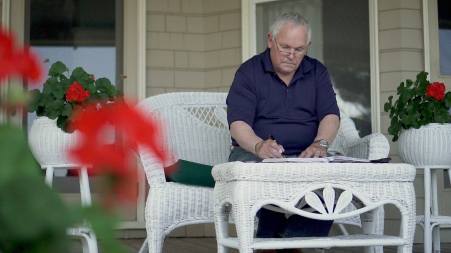
A writing day, today: so, spoiled by choices, even though some of those choices have grown wings and flown away. Pen friends and mood pens: I think I’ll begin with … and they are color coordinated for ink … this one … but you’ll never know which I chose … Maybe it will be my Waterman’s: speckled blue, second left. I do love pens: so essential to write with. Cursive hand-writing too, no longer taught in schools. It has become my secret code: nobody can read it.

But do you remember when pen friends really were pen friends and you wrote long letters to people in France, or Spain, or Germany, so they could practice their English and you could practice whatever language they spoke? I can remember playing postal chess with some of my pen friends. A move per letter and each letter taking a week or more to arrive. A full game with a pawn ending could take years! Did anyone ever meet their pen friends, I wonder? I know I did. I think of the immediacy of today’s online dating sites and I sometimes sigh for the old days. Courting by fountain pen … the slow and solemn can-can of two tortoises in the Carnival of Animals by Saint-Saens.

I write every day in a hand-written journal and have done so most days since 1985. I also keep a pocket notebook for odd moments, usually when I am outside in Mactaquac, or Funday National Park, or on Prince Edward Island, or at the beach in Ste. Luce-sur-mer, or beach-combing in Passamaquoddy. If I manage to write anything decent, I transfer these written ‘gems’ to the computer, where I revise and re-work. My poetry is almost always penned, but short stories usually go straight onto the computer, as do the novels, I have written three, though ideas and plans for stories and chapters do appear in the journals. I have come to think of the journals as a quarry and a memorandum, the computer as a workshop.

Come to think about it, I have, in the not-so-distant past, given workshops and seminars on just this topic. It is a very useful and informative subject, especially for beginning writers. With it comes the statement that (a) we must learn to recognize good writing when we see it; (b) we must learn to recognize, and reject, poor and weak writing; and (c) we must realize that we are not writers, we are re-writers. I always recommend people to keep their early drafts. Our tendency as re-writers may well be to revise out the energy and spontaneity of the original. This usually happens when the high-school policeman (thank you, Ted Hughes) steps into our brain and lectures us on how to write properly and correctly. If we lose that initial emotion, we must re-re-visit the original flow and try to recapture it recapture it in the re-re-write. Now here’s a good question: how many re-re-re’s can we get in there?


Forgetfulness


IMG_0225.JPG

Forgetfulness

a lone dog tied out in the rain
a lost German Shepherd barking at stars and moon
grass growing through plastic flowers on a grave
a name eroded by the sand paper wind
a solitary sea bird carving its name on a cloud
a sea gull slicing the sky with its wing
unwashed dishes sunbathing in the sink
a knife and a fork side by side not speaking
the bike with a flat tire growing dust by the door
the kite’s face locked in the prison of the tree
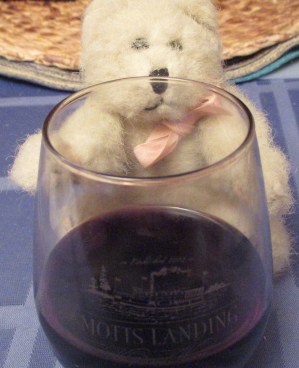
a teddy bear sitting by a forgotten glass of wine

Forgetfulness is also me and my blog. I have been writing elsewhere all week, preparing two manuscripts for a competition. It’s been a long slog: gathering the material, organizing it, structuring it, revising it, polishing it, cutting unwanted material, searching for valid replacements.

Tuesday I had the honor and the pleasure of working with a local high school in their  creative writing program. I am no longer a part of the Writers in Schools Program (WiSP), so this was a freebie. I came, I sat, I talked. And then I drove home again. I answered questions from the students on my life as a writer. It was very interesting for me as some of the questions were sharp and pertinent. How do you deal with writer’s block?   Do you write by hand or on the computer? Where do you get your inspiration? Hopefully my responses were of some interest to the students who gathered to listen. The one question I expected to field was never asked: “How much do you earn as a writer? The answer of course is very little, if anything. I write for pleasure, not for money, and I have never been published by a major press.

According to TWUC, the Writers’ Union of Canada, the average earnings of a writer in Canada are $12,500. Subtract the millionaire big earners (e.g. Margaret Atwood, David Adams Richards, et al) and most writers earn considerably less. Poets are traditionally at the bottom of the pay scale and I am principally a poet. The transition from print to digital also has everyone running in different directions. Personally, I like writing. I don’t like the marketing, advertising, selling of myself and of my books.  In fact, I now self-publish and give my books away. There’s very little money in it, but I enjoy myself and my friends seem to appreciate the gifts I give them.

Unless you are a ‘top draw writer’, working with a large, established company, you are unlikely to earn much money from your creative writing. In fact, many writers make their money from workshops, fellowships, grants, residencies, retreats, and things like that. I took a different direction. I chose to be an academic / teacher / researcher (full time) and a writer on a part-time basis. The academy kept food on the table for my family. The writing was always in addition to the mainline job. Retired now, I can dedicate myself to writing full-time, and that is just what I am doing.

Writing: so many meanings, so many ways to write. I blog, I maintain a journal, I write e-mails, I post to Facebook, I write poems, short stories, and I have written three unpublished (and probably unpublishable) novels. Also on two separate occasions, I have run a weekly sport’s column (athletics and rugby) in local newspapers. I have written academic books, translations, book reviews, peer-reviewed articles, and I have maintained, with the assistance of my beloved, an online bibliography and an online searchable data base. I have also helped edit some fourteen academic journals during my time as an academic. In my editing career I have been an editor, a co-editor, an associate editor, an assistant editor, an editorial assistant, and a book review editor, as well as sitting on the editorial and / or advisory boards of a handful of magazines. I have managed to do this in three languages (English, French, and Spanish). So, what exactly do I say when people ask me “What do you write?”

I am also a fan of the following statement, though I cannot remember where I first heard it. “We are not writers, we are re-writers.” This is certainly true of my editorial roles in academic magazines, for I have done a tremendous amount of rewriting and revisions for the people who have submitted their work to the magazines I was helping. So, there it is, in a nutshell … except for one thing, I have been involved in so many writing experiences, that I have forgotten many of them. Forgetfulness: the theme of today.


Surrealism

IMG_0124

Surrealism
KIRA Retreat Day 4

Only one of the Kingsbrae alpacas could understand and illustrate what we did today. This one showed us so many things. Luckily we smuggled him into the writing classes and the art classes and nobody was any the wiser. In fact he taught one class himself, and one participant served as translator, moving from Spanish to English with almost as much ease as he taught.

He began this morning with a reading that linked Symbolism to Surrealism to Magical Realism. It was a fascinating piece that nobody in the room, myself included, had ever heard before. So, we began with a concrete, literary example, then moved to a theoretical session. The alpaca began by explaining the difference between a lama, an alpaca, and a vicuña. This was extremely interesting, and something we hadn’t considered before. Luckily, these three creatures, two of them mythical (but which two?), do not have-isms attached to them and were therefore much easier to understand.

The lama began the theoretical session by offering some meditation exercises, very peace-giving.  Then he moved into the nitty-gritty of automatic writing. He followed this with some examples of how, rather than copying the automatic writing, we could select prime elements from it. This selection process allows the writer to mine the subconscious while avoiding some of the repetitious nature of the automated pen on the suppliant page.

In all cases, all participants read from their work and the sharing of subconscious inanities was a great way to break any ice that came with the overnight change in the weather.

After lunch, we had a second writing exercise that stretched into two exercises. These were courtesy of a second lama and entailed describing unknown and known objects. One of the participants was very uncooperative and instead of writing words drew pictures in his notebook. This drew comments of ‘Naughty, naughty,” from the lama and that student was given a time out on the golf cart driven round the lawn by the KIRA equivalent of Mad Max.

In our final session, the art lama appeared. He had carefully plucked all the flowers in Kingsbrae and then eaten them. However, in an incredible act of bravery, the ladies present stole some from his hoard and placed them in water cups. The participants then scattered random dots of paint upon a canvas and agreed that, seen from a distance and in the dark, they looked like flowers on a tarmac road under storm clouds on a thundery night when nothing could be seen.

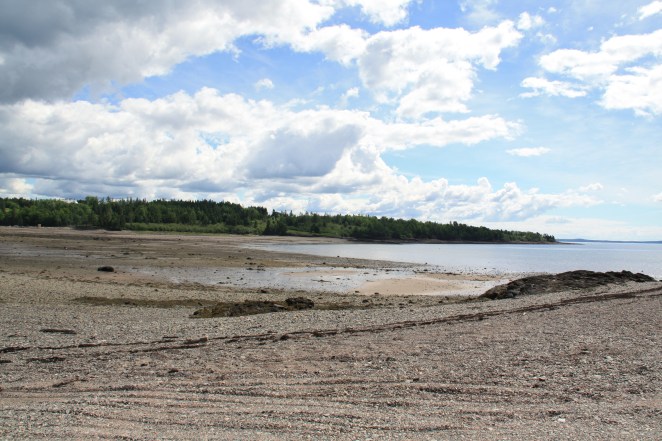
By now, the lama who had been tied to the fishing weir, oh, I forgot to tell you about that, sorry, had been rescued when the Old Sow let the water out of the Passamaquoddy bath tub (aka low tide). Luckily no harm was done and a delicious, fossilized piece of Turkish Delight was shared by the participants all of whom agreed that nothing like this had ever happened to them before, and I believe them.

Mad Max took everyone for a ride on the Golf Cart and we all chased deer round the Kingsbrae Gardens while singing “I’ve been working on the chain gang” and “For it’s a jolly good yellow.”

Green

39948917_706398923049634_3046174897211441152_o (1).jpg

Green
KIRA Day 3

Where has the time gone? Don’t answer that question. The Retreat has settled into a structure of its own and outside time no longer has any meaning. The internal time of the retreat runs smoothly as clockwork, a wooden, self-oiling clockwork, of the most delicate kind.

08:00 – 09:00 Breakfast. We gather in the kitchen and the conversations begin over breakfast. We talk about the previous night’s readings, the plans we have for the day, or whether we want to workshop of just retire to our studios and write.

09:00 – 10:30 Workshop time. Each morning we have a topic and we illustrate it and discuss it fully. Each workshop also comes with ideas and prompts for writing. At the end of  each workshop, we plan the rest of the day. We hold regular Blue Pencil Cafés in which facilitators and participants discuss submitted work. We suggested about 20 minutes for the BPCs, but my first one last over an hour and we managed to get through half a poem. Jeremy’s first one lasted an hour and a half (prose) and he covered more ground than me. My second one was marvelous: we spent an hour or more on one paragraph, three lines.

What happens in the BPCs is unbelievable. It’s not just the revision of the poem or the piece of prose, but a wide-ranging discussion on theories, ideas, prompts, the nature of writing, directions a piece may take, the nature of creativity, where inspiration comes from, how it may be channeled, how writing occurs, where it can lead … incredibly exhausting at times, yet energy fills us and we are always ready to write, re-write, revise, and talk again.

14:00 – 16:00 Art School. On Tuesday, Geoff Slater sat us down with paper and paint and we experimented with color, the creation of color, the basics of primary colors, how to make secondary colors, how to create the color wheel. Geoff enthralled us: never will the color wheel ever look the same again. Never will I use a color again without thinking in depth about it’s composition and meaning. Green no longer means Green: it means so much more. I read Lorca’s Romance Sonámbulo, this morning, and it took on all sorts of different and very new meanings. Verde, que te quiero verde. Green, for I love you green … green wind … green branches … green flesh … green hair … 

I sat opposite Geoff this morning. Behind him, green bushes, green trees, green leaves, green grass, green foliage … Yesterday, I paid little attention to all that green-ness. Today it fascinated me and I was able to distinguish between the amount of yellow, the amount of blue, the lightening factor, the darkening factor, the tinges of red and brown and oh to be able to capture it all, all that green-ness, all that certainty, blurred into a sea of green.

16:00 -17:30 BPC time. We pair up facilitator / participant and share our work. Each day a different piece, a different conversation, an advancement of yesterday’s talks, another step or two forward. Sometimes we take tiny steps. Other times we make gigantic leaps. Time and space lose meaning. We have been gifted with something different and we are truly blessed.

18:00 – 19:30 Dinner. This is a sumptuous meal provided by the Garden Café, our very own award-winning Kingsbrae Garden Café. The group is open. The man who provides us with desserts, he makes them in our kitchen, specially for us, joins us as we sit at the table and we add culinary art to the poetry, prose, and painting that we are always discussing.

19:30 – 21:30 Readings. We read what we have written during the day and facilitators and participants share together. I try to choose work of mine that reflects the day’s themes. Linking theory (morning) to practice (evenings) is also a fascinating procedure. We finish the evening by planning the next day’s work. The key to the retreat is flexibility. We respond to each others’ needs. Colors are important? We concentrate on colors and read about them in our evening sessions. Today we talked symbols. Tonight I will offer a reading in which symbols play an enormous role.

Alas: my free time is over. Now I must descend and return to the joys of BPCs, discussion, dinner, and the evening’s read. Farewell for now: I will be back as soon as I can.


KIRA 1

IMG_0170


KIRA 1

Our first full day at KIRA, and it’s not over yet.

Last night we had our first dinner together, courtesy of Kingsbrae Garden Café. Wonderful food and a dessert to live for. All of the participants gathered around the table and we were graced with the presence of Mrs. Lucinda Flemer. Conversation was lively, with each of us defining our position and interests in various art forms ranging through painting, print-making, poetry, photography, short stories, and memoirs.

After dinner, we discussed the nature of the retreat itself. This centered on several areas: Establishing Goals, Towards a Shared Experience, Building a Creative Community, and Managing Expectations. We discussed an agenda for this morning (Monday) and agreed upon an action plan for our first day. We also agreed that we would achieve what we could during the first day and then change, as necessary, if change were needed. The main things: be flexible, be creative, talk together, work together, support each other, and cater, small group, to each individual.

This morning we discussed the creation of a personal time and space for writing. Each one spoke of where and when they wrote. We made some suggestions as to how time and place might be achieved, even during a busy working day. We then spoke about journals, pocket notebooks, hard work versus inspiration, and the need to recognize gems when we created them. Genius is 99% perspiration and 1% inspiration. The hard yards must be put in at the beginning. Before long they will no longer be hard. The idea of the artist as a traveler was discussed. We are all making similar journeys, but we are all on different points along the way. Many of us were helped in our beginning days, and we in our turn must now help others.

We then worked on specific goals for each person, facilitators and participants. This was very person-specific. We agreed upon a schedule for Blue Pencil Cafés and gave the first ones later in the afternoon. We finished with a ten word exercise, courtesy of Jeremy Gilmer. Write a ten word story. We took time off to write and then ended the session by reading our efforts to each other. Great fun and a good time was had by all.

My own BPC went very well. More about that later, perhaps. It went on much longer than I expected and we both had great fun looking at a poem in all it’s different shapes, meanings, and possibilities. Tonight, we have our first set of readings and we will see how they go. The BPC material, reworked, should be ready for later. Again: it will be fun and words, thoughts, and ideas, will creatively take wing and fly.


KIRA Writing Retreat #2

KIRA Writing Retreat #2

IMG_0084

A second KIRA Writing Retreat will be held from Sunday, October 14, 2018 to Saturday, October 20, 2018. A maximum of five participants will be selected to work with the Kingsbrae  Artistic Director, Geoff Slater, Professor Emeritus and Award-Winning Poet, Dr. Roger Moore, and Award Winning Short Story Writer, Jeremy Gilmer. Full details are available from the Program Director, Mary Jones, at kira@kingsbraegarden.com or by telephone at 506-529-8281.

Click on the attached link for A Brief Overview of Life and Art at KIRA.

 KIRA Promotional Video


Sentence

SENTENCE

IMG_0279

Never underestimate the importance of the sentence, the power and placement of each word, the dynamism of the parts, the wisdom of the whole. I could write about this at length but, much more important, others have done so. My thanks to my friend and fellow artist, Jan Stoneist, for choosing the above sentence from my book, Stepping Stones, and carving it in Old Red Sandstone, from Wales. Cymru am Byth.

This article, attached below, illustrates the theory much better than I can.

THE SENTENCE


KIRA Video

IMG_0087


Kira Video

So, our July project, a video of the first KIRA poet reading his KIRA poem, is now completed. I read One Small Corner at KIRA and Geoff Slater, Jeff Lively, and Cameron Lively added video to verse in this blend of magic. Thank you so much: I really appreciate this visual rendition of my words. So much so, that for once, I am at a loss for words. I will just let the video speak for itself and myself. Just click on the link below and you will be transported to KIRA and Kingsbrae Gardens on a magic carpet. swift and smooth.

KIRA Promotional Video

Our September / October project is to inaugurate the first KIRA Boutique Retreat (Creative Writing). This will run from September 30 to October 6. I will be one of the facilitators, along with Geoff Slater, the artistic director at Kingsbrae and Jeremy Gilmer, this year’s writer in residence (July 2018). For a description of my own stay at KIRA last year (June, 2017), click on the first link. Click on either the second or the third link below for more information on KIRA and the Boutique Retreat.

KIRA: an intensive creative experience WFNB, August 5, 2017).

 KIRA – Kingsbrae Garden

KIRA Boutique Writing Retreat

KIRA & so much more


IMG_0052

KIRA & so much more

KIRA & Kingsbrae Gardens are so much more than an outdoor adventure. They offer a journey into yourself, an exploration of your inner depths, a Jules Verne voyage into the interior of the world that you are: the artist, the creator, the truly spiritual person that you are capable of being.

How do I know? Because I have been there. I have walked those beaches, explored those shores, got my feet dirty in the Passamaquoddy mud, climbed those hills, viewed those islands from both sides. I have been out to sea to see those whales, have crossed the Old Sow from side to side, have imagined myself as a pirate for the shortest of times, crawling my sailing ship around the whirlpool, listening to its sucking sound, watching the seals as they rose from the depths, the sea gulls as they dropped from the skies.

Within the gardens, I have touched those secret places, grasped the flowers, crushed the leaves of herbs between sightless fingers and raised those perfumes to blind nostrils. I have also breathed in the scents of salt borne on a sea wind caressing the cheek, smoothing the brow, bearing away the cares of city and suburb.

Renewal is here and now. It is the sea wind’s kiss, the suck of mud, between the toes, barefoot, the rise and fall of tides, the ocean’s life forced into our lives and floating our cares and despairs away. Nothing of the city lurks here to ambush us, unless you bring it with cell phone, computer, texting, and the dull, grey air that will soon be vanquished and whisked away by the breeze, terns, gannets, the seal’s nose breaking through the sea’s surface, the deer crossing the road, demanding their right of way.

At the end of my own residency in KIRA (June, 2017), I tried to summarize my thoughts about the experience. To read them for yourself, click on this link: Residency, June 29, 2017. I was invited by the Writers’ Federation of New Brunswick to write about my stay. To read that, please click on this link: KIRA: an intensive creative experience WFNB, August 5, 2017).

To find information about your own potential residency at KIRA, click on this site KIRA – Kingsbrae Garden or this one KIRA Boutique Writing Retreat.

 IMG_0464