Aubade

Spotify:
Remember to scroll down to the appropriate audio episode.

Aubade

Driving in winter, early one morning,
from Island View
to the Georges Dumont Hospital in Moncton
for Cancer tests

1

The crows in the garden complain of the cold,
cawing from their look-out points
with short, sharp calls.

A life of ease they seem to live,
but when the mercury descends and water freezes
icy blinds inside our window panes and snow-
squalls bluster in from north and west,
who knows what’s best for those poor birds
aloft in their crow’s nest spars,
sailing snow’s seas,
steadfast in their skippering of wind-bent trees?

This Arctic cold is such
that neither man nor beast can love it much,
crouched close to whatever warmth there is,
shivering in the wind’s cold touch.

 2

 Yesterday, a dozen crows pecked at salt grains
scattered over this road.

A black-clad chorus, they rejoiced
when sunshine drew the white-tailed deer,
from winter depths of banked up snow.

Not long ago she was alive.
Now she lies stiff and broken.

Soon she’ll be picked up by workmen,
tossed into the back of their truck,
dumped, and forgotten.

What magic spell invokes what beginnings?
To what end do we prolong our days?
What myth, this fairy-tale I call my life?
Stars drift hidden through the sunny sky.

3

Driving home from the hospital,
bullied by fierce winds
on a snow-packed road,
I dream as I drive.

I envision a past
that never was, a future
that may never be.

As I hibernate in that past,
last summer’s flowers
flourish in my mind.

The car skids into a snow bank
and my world shakes in shock.

A thirty wheeler rumbles by:
there are so many ways to die.

Obsidian’s Edge

Obsidian’s Edge
From morning to night
a day in Oaxaca

To purchase this book click on the following link

Obsidian’s Edge Print

Obsidian’s Edge Kindle

Obsidian’s Edge started out as At the Edge of Obsidian and was the second volume in the Oaxacan Trilogy (Sun and Moon, At the Edge of Obsidian, Obsidian 22). When I republished it in Create Space (now Kindle / KDP) I rewrote the last two volumes and turned them into a single book, Obsidian’s Edge, so that the Oaxacan Trilogy is now a Oaxacan Duology. My apologies to those who are eagerly awaiting the third book in the series.

Early Morning in Oaxaca

… dream worlds circle outside my bedroom window … starry sky … two full moons floating, one real, one mirrored in the glass …  inside the bedroom, tulips inscribe red gashes on white-washed walls … sharp fingernails scrape across paint, blood red shadows trickle down to the floor …
            … above the azotea, the temples of Monte Albán string out their sheets on the sky’s washing-line, glowing in the moonlight … against a background of granite and stucco, trenchant shadows sculpt dancers into grotesque, pipe-wire shapes as they struggle to escape their carved imprisonment …
            … priests in long black robes gape at the night sky. From their sanctuary in the observatory, they plot how they will persuade the people to believe the future they will foretell as night’s giant finger herds the wild-cat stars …
… three young women walk at an angle up the temple steps … when they reach the top, a moonbeam holds them in its spotlight and they wax with the full moon’s beauty …  the doorway to an unclosed grave opens its crocodile jaws and the three women descend the temple steps, ageing as they walk … at the temple’s foot, they enter the tomb’s dark mouth … an old man in a faded grey suit walks behind them … the grave swallows them all, burying them in the hidden depths beneath the mound …
            … dreams back themselves into a cul-de-sac, a wilderness of harsh black scars … an ancient Aztec god catches Rabbit by his ears and throws him against the second sun that sizzles in the sky … his sharp teeth burrow, burying themselves deep in the sun-fire’s light … the second sun loses its glow and turns into the moon’s cold stone …  the rabbit’s skull simmers in the new moon’s dwindling pool …
            With a clicking of claws, knitting needles come together to pluck me outwards from my dreams and upwards towards death’s golden guillotine that floats in the sky. The moon sharpens its knife edge on the keening wind and sets my blood tingling. I want to be free, free from those nightmares, those nocturnal visions that rise up from the past and stalk me as I lie in bed.
Drowsing, I long for the alarm clock to shuffle its pack of sleepless hours and to waken me with its piercing call as it tears me from these winding sheets, these grave clothes in which I lie. I wait for the sun to shine into my window.

Empress of Ireland

Empress of Ireland
Poems from Ste. Luce-sur-mer

is available at the following link:
Click here to purchase Empress of Ireland

The Empress of Ireland

The poems which have come together to form the Empress of Ireland were begun in Ste. Luce-sur-mer, Quebec, in May 2002. It was off-shore from Ste. Luce, in the early hours of the morning of the 29th of May, 1914, that the Empress of Ireland collided, in dense fog, with a converted Norwegian collier whose bows had been strengthened for ice-breaking. There were approximately 15 minutes between the moment of impact (1:55 am) and the moment the Empress caught fire and sank (2:10 am). Although the disaster has received little international attention, more passengers perished in this accident (840) then in the loss of the Titanic (832) or the sinking of the Lusitania (791).

Introduction to the Empress of Ireland

Click on the link below to read an early post with a new sound recording of
A Survivor lights a candle
https://rogermoorepoet.com/2020/11/23/a-survivor-lights-a-candle/

I first heard voices in the cries of the sea birds on the beach at Ste. Luce-sur-mer.

Borne on the wind, over the sigh of the waves, they seemed high-pitched, like the voices of children, or of men and women in distress. These were lost voices, the cries of people alone and frightened by the dark. I heard them calling to me.

That night, there were knocks at my cabin door and finger nails scratched at my window. Tiny sounds, almost beyond the range of human hearing: the snuffling of puppies when they turn over in their sleep and tug at each other, whimpering in their dreams.

“Who’s there?”

I started from my sleep. But there was only the wind and the waves as the tide’s footsteps climbed a moonbeam path to ascend the beach. When I walked on  the sand next day, at low tide, there was a whispering behind my back. Little voices crying to be set free.

“Who’s there?”

A lone gull flew past my head and battered itself against the wind’s cage with outraged sturdy wings.  That night, the mist descended. The church stepped in and out of its darkness and shadows gathered, persistent, at my door.

I walked out into the night and saw a lone heron surrounded by gulls. It was as if an adult, clamoured at by children, was standing guard over the beach. Then I saw the shadows of little people searching for their parents, the shapes of mothers and fathers looking for their off-spring, lost among the grains of sand.

Beyond them, on the headland, the church stood tall above the shadows. I saw grandmothers and grandfathers, their lips moving in supplication, kneeling before the granite cross which stands above the sea. As I approached, they turned to me, opened their mouths, mouthed silent words, then disappeared.  When I went back to bed, faces and voices visited me in my dreams. When I got up next morning, they came to me in the speech of birds hidden in the foliage, in the words dropped by the osprey’s wing, in the click of the crab’s claw as he dug himself deeper into the sand.

“Release us”

“Speak for us!”

“Set us free!”

The words of the M Press of Ire are not my words. They could never be my words. Foundered words, they are, rescued from the beach, and dragged from the high tide mark with its sea weed, carapace, charred wood, old rusted iron, and bright bones of long dead animals polished by the relentless action of wind, sea and sand.

One Small Corner

One Small Corner
A Kingsbrae Chronicle

is available at the following link:
Click here to purchase One Small Corner

Introduction to One Small Corner

I think of my creative writing in terms of visual, verbal photos. I create snapshots in words and these snapshots come from everywhere that I have been. For me, they are precious moments caught and frozen forever in the camera of the poet’s eye. Visual and verbal, they illustrate the life I have lived and the things I have seen. These are the phenomena on which my artistic life is founded.

I am not a philosopher by any means, but I have over time developed an artistic philosophy. It started a long time ago at Wycliffe College with my A level studies of French existentialism and continued later in the Graduate School at the University of Toronto, where I studied the origins of existentialism as they are expounded in phenomenology. Both these movements have influenced my life and my writing. Bakhtin’s chronotopos: “Man’s dialog with his time and place” has also been a great influence on my creative thinking. My art is indeed my dialog with my time, my place, and the people who inhabit them.

One Small Corner is the record of my stay at the KIRA Residence in St. Andrews-by-the-sea, New Brunswick, Canada. I was selected to be the only poet in the first cohort of Resident Artists and during the month of June, 2017, I was able to work full-time on this collection.

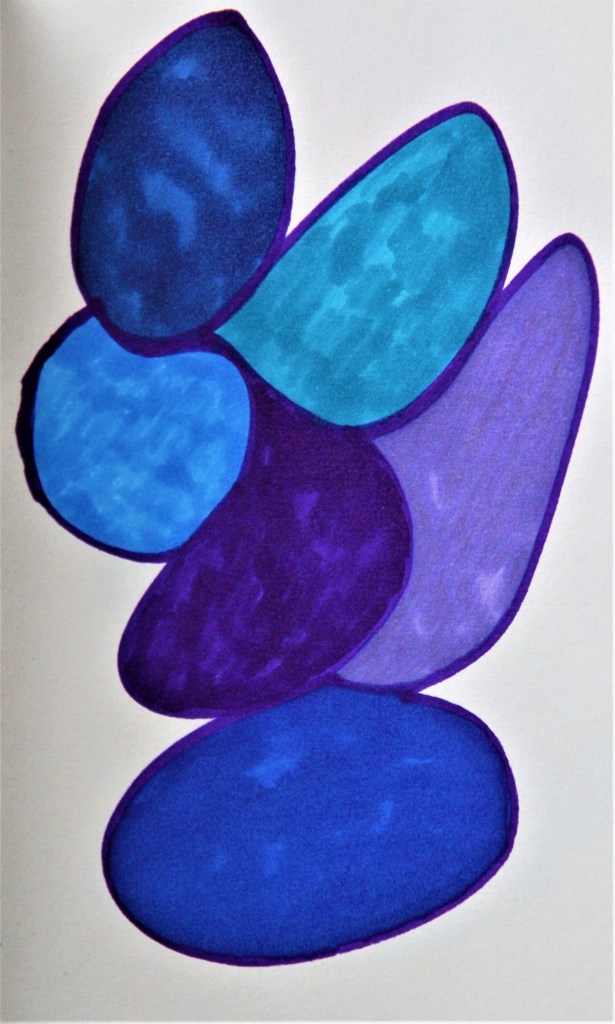
Blue, blue day

Blue Blue Day

Blue, blue day

“My grandfather told me there’d be times like these” and he was right. I wonder about his blue days, down there in the trenches, on the Somme, and on other fronts. He survived. He was a survivor. Sometimes that’s the only thing to be. So how do we survive? How do we ignore the snipers, the whizz-bangs, the star shells, the other things that go bump in the night?

There is no single answer. One of my best friends goes into hospital tomorrow, 6:00 am, buccal cancer. An operation. All may be well afterwards. I certainly hope so. I will be here for him, as my grandfather was there for me, as I have been there for others, as others have been there for me. I will not mention names. A blue, blue day indeed. But what shade of blue? If all goes well, the celestial blue of joy and hope, the blue of Mary’s robe when she crushes the serpent beneath her foot, the joy of the blue sky after the storm.

Not, we hope, the dark blue, almost purple, of the gathering storm, the blue of thunder clouds turning almost into black, the midnight blue of the last chance saloon with its overtones of tragedy and disaster. “I never felt more like singing the blues”… indeed I didn’t. But what shade of blue? And for me, it is always the blue of clearing skies, the blue of Mary’s robe, the blue of hope.

“And still I live in hopes to see, Swansea Town once more,” thus sang my father’s father during WWI. He was gassed, he was wounded, he was decorated, he was mentioned in dispatches, so many things happened to him. But he survived the snipers, Big Bertha, the star shells, the whizz-bangs, and he saw his beloved “Swansea Town once more.” As I hope I will, but my dream of a return to the blues of Swansea Bay may be fulfilled in a very different fashion.

Alas, my beloved Swansea Town is now a city. “And so I live in hopes to see, Swansea City once more.” It doesn’t sound the same, does it? It doesn’t have the same carry, the same rhythm, the same resonance. And what about Town Hill? Has it now been renamed City Hill? I am sure Town Hall, the old Brangwyn Hall where my father used to work, is now City Hall, which my father never entered. Enough, no more for “you can never walk in the same river twice” (Heraclitus).

On Being Welsh

On Being Welsh in a land ruled by the English

This is now published and in my hands. I do not yet have full details on links and where and how to purchase, but I will put them up as soon as I have them. Meanwhile, I am grateful to my cover artist, who always does such a great job, and to my editor, Dr. Karunesh Kumar Agarwal (Managing Editor) Cyberwit.net. What a pleasure it has been to work with him. The cover picture, incidentally, is An Only Son.

I am now working on my next book, Stars at Elbow and Foot. I am sure many will recognize the title as coming from a line of a man born in the same town in Wales as I was: Dylan Thomas. The island in the picture is the only Island visible in Island View, incidentally. Alas, I do not have a picture of my cat, though I may put one on my next cover.

Ah yes, time to celebrate. I guess we’ll open a barrel of wine tonight. Hopefully we won’t finish it one sitting. I’d be lying if we did. This incidentally is the bodega where I got baptized. If you haven’t got baptized in a Spanish bodega, you haven’t lived. I’ll tell you about it sometime. How I miss that verdejo! Unfortunately, the verdejo didn’t miss me, and that’s how I got baptized. ‘Ya te hemos bautizado!’ “Que sea yo, y no el vino.” And if you understand that, you speak pretty good Spanish or Spanish pretty good … and you probably have an evil mind, just like mine.

Here I am, on the sea-shore, selling C-shells and thinking about my evil mind. But remember, my evil mind is mine, and it’s a one-of-a-kind. You go and find your own. And watch out for those Saint John C-gulls.

Go on, buy one and read it.
I dare you.

Niche

Jane gave me the honor of writing the foreword to her book and I did so with great pleasure.

Jane Tims: Niche. KDP.
Book Review

Niche, the fourth poetry book published by Jane Tims, is a neat configuration of six segments that elaborate and illustrate the poet’s original definition of the multiple meanings of her title word niche. It is very difficult to separate the author from the act of narration as her keenly observed and skillfully executed drawings, together with their verbal representation on the page, are so autobiographical and so much an extension of her artistic and professional abilities that the objective separation of writer and text is scarcely possible. It is hard to forget that Jane Tims was, and to a great extent, still is, a highly competent professional botanist. The harnessing of the professional botanist, with her unique drawing skills and scientific knowledge, to the poet and auto-biographer is a key factor in the reading and interpretation of this text in which acute observation blends with an intimate knowledge of the observed botanical world, both flora and fauna, and this allows the poet, in her role of poetic narrator and lyrical voice, to weave a network of poems that are, at one and the same time, objective and intensely subjective.

The author emphasizes this when she writes in the Preface that “In biological terms, the niche is the quality of a space occupied by a living thing, the sum total of physical, nutritional, biological, psychological and emotional needs gathered together in one place.” She also reminds us that in human terms “niche can be a metaphor for home, community or personal space” and it is within these metaphoric spaces that the poetry text is elaborated. The text becomes a linked mixture of visual drawings, iterative thematic imagery and associative fields, all centred on the multiple meanings of niche. These terms are both biological and human in nature and the poet’s named world meets at this juncture between the human and the natural.

The section occupying space (1-19) bears the subtitle satisfying need and begins with a setting out of what this means in the following 12 poems and 4 accompanying drawings. The poem ‘apples in the snow’ with its companion drawing stands out for me. The section strategy, subtitled solidifying position (21-43) outlines in poetic terms, how plants, animals, and humans ensure their own survival. The section praying for rain, subtitled, avoiding danger and discomfort (45-68), offers views on discomforts and dangers. It also opens the discussion—relocate or stay where we are? The section mapping the labyrinth or places I have occupied (69-83), which contains the wonderful sentence “When I get lost on the road ahead, I look to the road behind me,” throws open the multiple meanings of home. The section new ways for water, subtitled coping with change (85-98), offers a double landscape, first, external, the things seen, touched, examined, remembered and described, and then the internal landscape that reflects upon them and is reflected in them. Finally, forgetting to move, with its subtitle getting comfortable (99-111), presents an autobiography that links observer (the twin personage of author and narrator) to observed (nature, both flora and fauna, and the added element of autobiography and self) via the symbiotic relationship of botanist to botany.

Two moments stand out for me. (1) Sadness is in seeking the space that is never found. (2) Loneliness is in trying to return to a space once occupied but no longer available. The whole concept of the Welsh word hiraeth is summed up in these two lines. Carpe diem, Jane Tims’ poetry indeed seizes the day and, with its minute, intense observation, it preserves so many precious moments. It also pays attention to that which has been lost, those moments that are irretrievable. They will vary for each reader, but hopefully, like me, you will take great pleasure in discovering them for yourself.

Comment: Brian Henry of Quick Brown Fox picked up this review and published it on QBF. Thank you, Brian and thank you Jane, you both do me great honor. Here’s the link: Niche on QBF 14 March 2021

Crazy Glue

The autumn leaves: what does it take with it when it goes? And what does it leave behind?

Crazy Glue

Late last night, a fallen star grazed by the lamp-post. A bouquet of golden sparks flew from an iron tree and sanctified the gutter. The gas lamps sputtered patiently in uniform rows. A scarecrow stuttered into the limelight and shook my hand. She was wearing my grandmother’s Easter bonnet, with all the flowers renewed, but she couldn’t keep my heart from last winter’s left over crumbs. Suddenly a tulip thrust through the concrete. It became as red as a robin and flew into the lounge bar of a public house. The bronze leaf necklace circling my throat filled with a flow of springtime song. My heart stood upright, a warped piano in my breast, and my skeleton tarried at the corner to play knuckle-bones with the wind. Torn butterflies of news fluttered round and round and kissed my eyelids when they closed. Yesterday’s horoscope winked its subversive eye and called to the hermit in his lonely cell: “Look out for the stranger with the tin can alley smile. Tie your heart to the tail of the first stray dog that comes whistling down the street and follow it home to the empty house that breathes in and out, moving thin membranes of memory.”
            That’s where I now live. Upstairs, downstairs, a lonely route I tread while the wind at the window scratches tiny notes. Something breaks loose in the confines of my mind and walks beside me. My twin brother stalks through this silvery sliver of splintered glass, this simian mirror wrinkling our troubled suits of skin. I glimpse the old moon’s monkey face through a broken window. Jagged and thin, it wanders like an itinerant snail, cobbled with clumsy clouds. Once, I descended the playground slide in a shower of sparks. A vagabond in a paving stone sky, I rumbled across metal cracks, a knapsack of nightmares humped on my old man’s back. Tell me: when the snail moves house, who stores the furniture he leaves behind? The hermit crab lurks naked on the beach, seeking new lodgings. Who killed the candle and left us in darkness?
            Two eyes in limbo watch me roll this snowman’s belly of flab across an unknown, clouded room where yesterday I got lost in the mirror. I know how to swim, but I would have drowned, except the light was too shallow and my feet touched bottom when I let the wheels down. I swam on and in looking for a deserted island on which to build my idle sand castle dreams. Two people said they saw my reflection swimming like a goldfish in the silver of that secret space. They said I stared back out at them with circles of longing ringing my eyes; but I laughed when they said they had seen me, for when I looked in the mirror this morning to shave, I just wasn’t there. My razor dragged itself over an empty space and its sharpened blade scraped white music from the margin of a cd rom that spun on edge like dust rings round a vanished planet. Now there is a black hole where my passport photo used to thrive. Someone plucked me from the circle and cut me out in the dance last night. Today I’m looking for a scrapbook in which to stick myself with crazy glue that never, never, ever comes undone.

Alebrijes

Alebrijes

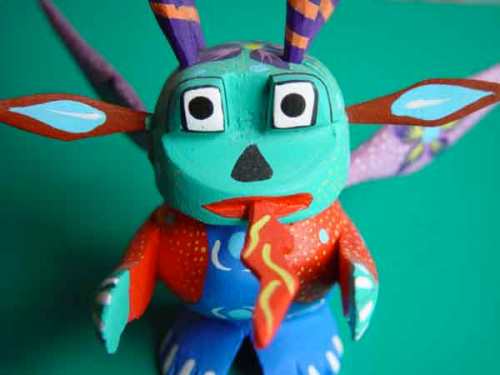
alebrije2
This is one of the first alebrijes I bought in the zocalo (main square) in Oaxaca. He has lost his ears and probably his tongue. They started falling out so we wrapped them up carefully and now we can’t find them. He’s still a happy chappy, hough, and has been in this house for a quarter of a century. Happy Birthday Alebrije!

     Alebrijes step out from dried wood and stand in the shower of paint that falls from the brush’s tip. Yellow flash of lightning, pointillistic rain, garish colors that mirror those of the códices. The carvings take the form of fantasy figures, anthropomorphic animals, and mythological creatures.
Sometimes one individual selects the wood, carves it, then covers it in paint. Occasionally an entire family takes part in the work of making the alebrije. One person collects the wood and prepares it for carving. Another carves and sands it. A third works on the undercoat, and a fourth applies the final patterns of paint.
The great debate: does the form in the wood reveal itself to the carver or do the carvers impose their own visions on the wood? In the case of the team, do the family members debate and come to a joint conclusion?
These thoughts, exchanged with wood-carvers in Oaxaca, have led to a series of interesting conversations. What exactly is creativity? Where does it come from? Do we, as artists, impose it upon our creations? Or do we merely observe and watch as new ideas float to the surface of our minds? How does the creative mind really function? And, by extension, how much of the sub-conscious creative sequence can be placed into words?

Alebrijes

 Are they half-grasped dreams
that wake, wide eyed, to a new day’s sun?

Or are they alive and thriving
when they fall from the tree?

Does the carver fish their color and shape
from his own interior sea,
or does he watch and wait for the spirit
to emerge from its wooden cocoon
to be reborn in a fiery block of color?

Daybreak:
in a secluded corner of my waking mind,
my neighbor’s dog greets the dawn with sparks
of bright colors born from his bark.

My waking dream: dark angels with butterfly bodies,
their inverted wings spread over my head to keep me warm.
In the town square, the local artist plucks dreams
from my head and paints them on carved wood.

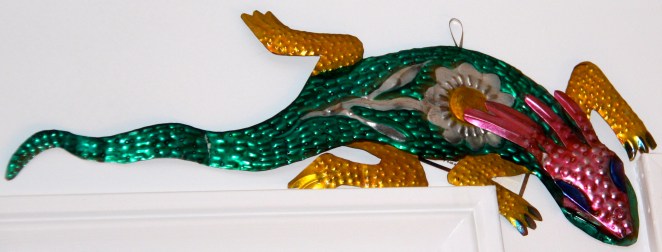
IMG_0299
Our house iguana: he is not an alebrije, but is made out of painted metal foil, carved first, and then decorated. He’s the one who guards the front door and falls upon unwanted intruders when they least expect it. Never stay home alone without one, or two, or more. But watch out if you have too many and they get hungry.

The Twain

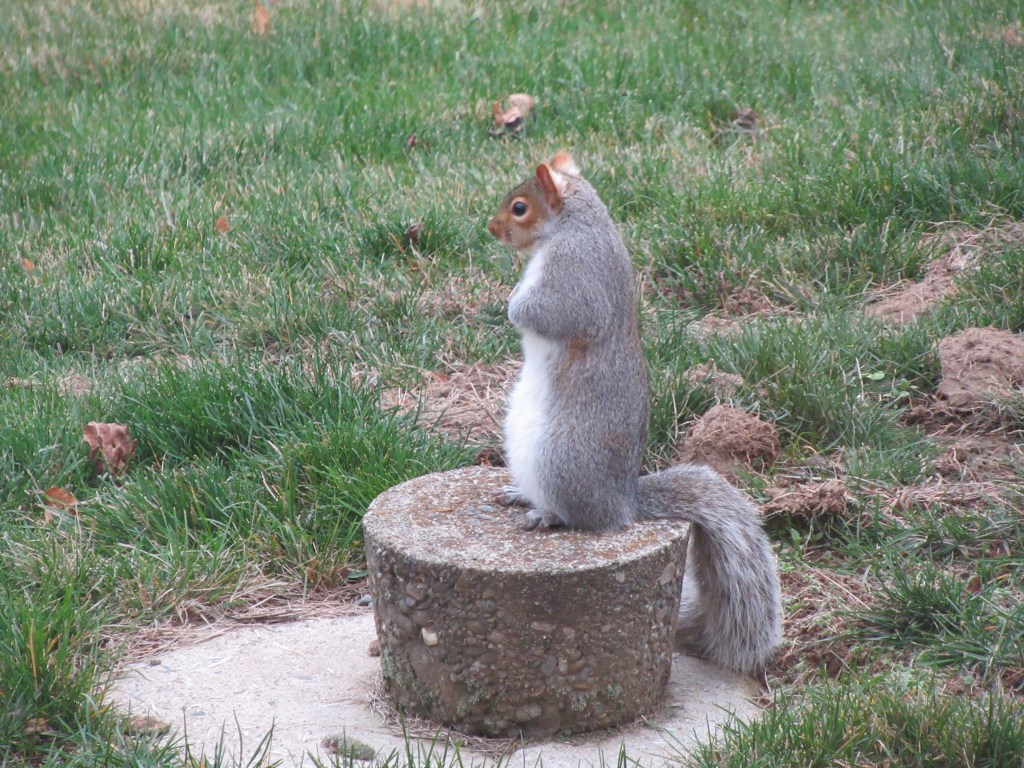
Comment 1: It’s one of those pandemic days when the steam stays in the kettle, the heart rattles, the ribs, and nothing happens. This is the hopeful grey squirrel who sits outside the kitchen window and tries to persuade us to come out and feed him. Look at him: one eye on us and the other on the world around him.

I think he’s looking for his twin, or maybe his twain. But what if the twain never meet? Click on the link below, a real Golden Oldie, and you’ll see what happens when the twain really do meet. As they sometimes do.

https://rogermoorepoet.com/2016/04/

Meanwhile, Teddy has a message for you: People who live in glass houses shouldn’t throw stones. Now, now: I don’t want to hear anyone thinking: ‘get stoned you silly teddy bear’. That’s not nice. Remember: “let him who is without guilt” etcetera

Comment 2: When you click on the link, if you click on the link, remember: that was probably my first ever post. Oh I was a novice once upon a time, but never in a nunnery. And I still don’t like taking orders. That’s probably why I never became a bar tender or a waiter. Hey: wait a minute now. I think this pandemic lockdown is getting to you. You are as mad as a hatter or as confined as a teddy bear in a glass house. Oy! Whose is that voice talking to me on my own blog? It’s the other half of your split personality. Oh dear: I guess we are all getting to know that strange, locked up feeling.