On Writing Poetry

On Writing Poetry

I sit here writing poetry
and, head in hands, I cry
at all the things I’ve left unsaid,
and then I wonder why
I wasted so much time on things
that perished before my eye.

Outside the night is dark and cold
and shadows flit and filter by.
I know that I am growing old,
that soon my story will be told,
and when it ends, I’ll die.

I know that death is not the end,
yet I do not want to die.
I want to paint the autumn trees,
the clouds that float on high,
with evening lights that stain the sky.

But rhyming is not all I do.
I’ often write in prose, with words
that wound and sow dark seeds
that root and flourish, grow like weeds,
and nourish other people’s needs.

Alas, I know not what I do,
nor yet what I have done,
nor when, nor where, the seeds
were sown, nor if they aided anyone
to turn away from the dark inside
and walk in the light of the sun.

Candles

Candles

Candle-light

Three candles burn at my table.
Outside,
the night wind howls like a dog
and scratches its pelt on my roof.

The wind has torn
branches from the trees
and polished the evening frost
until it sparkles
like eighteenth century silver.

A moth circles and sizzles
in a sacrifice of flame.

I keep my vigil at night’s altar
and place a wrinkled palm
into the candle’s liquid flame.

Put out a candle, put out a child.
Who would put out a dog
on a night like this?

Outside,
playing tag between dark trees,
the wind runs wild.

Bird

Bird

The bird came to me
   on the wings of Hurricane Lee.

Carried along by stronger wings
   he perched in my tree.

A new species, he was unknown to me.
   Our own power lost, the usual ways
               of searching were denied me.

He moved from the tree
   to the window feeder and gazed at me,
               eye to eye, as the hurricane’s eye
                           passed overhead.

Free. To come and go at his will,
   but there is little free will
               when the hurricane blows.

A sudden, strong gust
   whisked him away.

Unknown, and a stranger still,
   he soon was lost to me.

Comment:

All my good will and new resolutions went down the proverbial plughole when Hurricane Lee swept in, washed away one of the roads near to me, and left us without power for 52 hours. We lit candles, as much for warmth as for light, and, when dark descended outside, gathered in their flickering glow. The time has come, the Walrus said, to indulge in simpler things. Water saved in the bath upstairs and in an assortment of pots, pans, and buckets, served for the washing of hands, the flushing of toilets, washing the dishes. Food was served cold – but we indulged ourselves with perishables that needed to be finished quickly. The morning face wash and shave, in cold water, no shower, was a throwback to old times. The experience brought us closer together. Neighbors with generators dropped round with hot food and drinks, and all went well. After two days of picnics, we got a bit bored. I managed to write lots of poems though. The creativity of that experience will live on in words.

Monkey’s Clockwork Universe

Monkey’s Clockwork Universe

Some days, monkey winds himself up
like a clockwork mouse.
Other days he rolls over and over
with a key in his back like a clockwork cat.

Monkey is growing old and forgetful.
He forgets where he has hidden the key,
pats his pockets, and slows right down
before he eventually finds it
and winds himself up again.

One day, monkey leaves the key
between his shoulder blades
in the middle of his back.

All day long, the temple monkeys
play with the key, turning it round and round,
and winding monkey’s clockwork,
tighter and tighter, until suddenly
the mainspring breaks

and monkey slumps at the table
no energy, no strength,
no stars, no planets, no moon at night,
the sun broken fatally down,
the clockwork of his universe sapped,
and snapped.

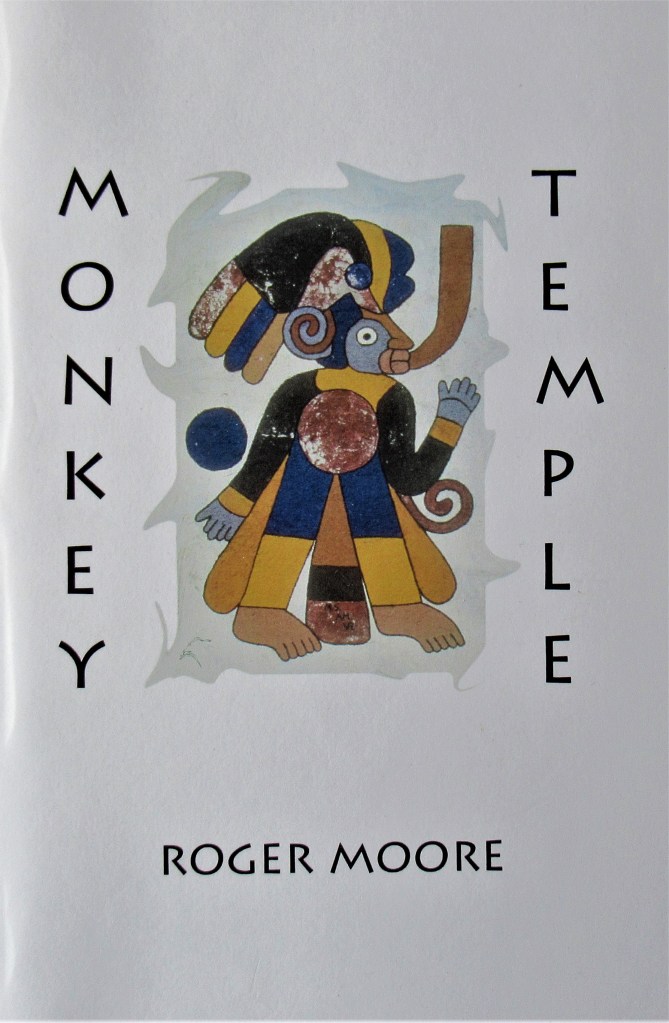
Comment: a big thank you to all who have reminded that yes, I did write this book, and yes, it is one of my favorites. Oh those naughty little monkeys. For those of you who have read the book or heard me reading poems from Monkey Temple, all is well in Monkey Land and the King of Harlem, with a wooden spoon, still gouges out the crocodile’s eyeballs and beats the monkeys on their backsides, with a wooden spoon. I thank my old friend, Federico Garcia Lorca, for that wonderful vision from his own book, Poet in New York.

King Canute

King Canute

I imagine King Canute, sitting on his throne,
at the seaside, surrounded by his court
as he tries to turn back the rising tide.
Or is he just proving that it can’t be done?

In vain we struggle against the rising waves.
We piss into the wind and try to drown
the thunder with our pitiful, impoverished farts.

Some preachers preach that we are immortal,
but mortal we are, facing such adversaries
as wind, rain, thunder, and the rising tide.

Who nailed us to this cross of cloudy doubt?
I hear crass crows cawing for tomorrow, but
it never comes, and if it does, it becomes today.

Today we must count the cost of every footstep
that leads us again into the Darkest Ages,
and back to the Stone Age, sent there by a rain
of unstoppable destruction, unleashed in our pride.

September Song

September Song

In the gathering autumn shadows
summer flares as bright as the berries
adorning the Mountain Ash.

Beads of blood,
they hold late evening light,
as do the Black-eyed Susans
growing wild beneath my window.

Rain wet, wind swept some nights,
yet still they glow
with their bottled sunshine.

Fairy lights, Christmas garlands,
ash rosaries will circle another tree,
enlightening wrapped presents,
lighting up the vacant crib
waiting for that little child,
soon to be still-born.

Comment: Poetry is where you find it. The inspiration for today’s poem came from the Poem of the Week in The Guardian. Inspiration, I found it in two places – 1. the photograph at the head of this blog and 2. in the analysis of the poem, not in the poem itself. The twilight of this autumn world is indeed wonderful.

Les croulants

Les croulants

That’s what they called the older
generations, in Paris, in 1963, when
I lived there, in St. Germain-des-Près.

Now, a member of that generation,
I remember those words and see myself
crumbling, failing, falling slowly down.

A façade, it’s all a façade. Here I am,
white-haired, wrinkled, watching time’s
oxen plowing furrows in my face as
winter’s snow layers a silvery thatch
of patchwork hair upon head and chin.

How much longer can I sustain my life,
exist in this metatheatre of give and take,
where each day takes its toll, and I give
away bits of myself, slowly, reluctantly,
sloughing them, snake-like, to dance,
then vanish, into the gathering dark.

Author’s Note
I used this painting as the cover for my novel People of the Mist.

People of the Mist
A Poet’s Day in Oaxaca

Click here to purchase this book.

Themes from this poem can be found in my poetry collection Poems for the End of Time. It is a series of metaphysical meditations written while listening to Messiaen’s Quartet for the End of Time. It is followed by Lamentations for Holy Week, a sequence based on the Spiritual Exercises of St. Ignatius of Loyola, as imitated by Francisco de Quevedo (1601 – 1613) in a series of poems composed during Holy Week. This poetry is written from the heart and expresses the authenticity of the poet’s being. Here, the poet indulges in a dialog with his time and place – much in the manner outlined by Mikhail Bakhtin in his theory of Chronotopos. This poetry is not written for the simple minded. Rather it invites the reader to explore the nature of the world, the philosophy of time and place, and the metaphysical exercises necessary to prepare for the inevitable end of time.

Poems for the End of Time
and
Lamentations for Holy Week

Click here to purchase this book.

Souvenirs

Souvenirs

Where have they gone,
the old days, the old folk,
the old ways of doing things?

I search for them, day after day,
but my cell phone isn’t
the old-fashioned circular dial,
nor the pick-up phone
with the shared party line,
when everybody listens in.

The garage is a mad hatter’s
maze of a workshop,
in which things grow legs
and walk this way, that way
every way to Sunday,
constantly getting lost.

I think I can hear them.
chittering, chattering.
but I cannot see them
nor hold them,
even though I would like
to clutch them tight.

Bats in the belfry,
and in the attic
mislaid items,
pens, ink, paints,
a tuck box, with keys,
a cricket bat,
cracked and yellow,
abandoned,
and forgotten.

Windmills

Windmills

Only the pendulum clock
disturbs the silence
as the slow stars circle
and the moon hides
its face beneath
seven excluding veils.

Tranquility finds me,
seated here, head in hands,
contemplating the complicated
dance steps of a terra-centric
universe where planets weave
an intricate back and forth
to justify the falsehoods
of misguided mistakes.

Men, confident in their wisdom,
know that all is well,
that their faith in the old gods,
the old books, the words
that were written, in stone,
before the modern world began,
need no rethinking.

Those whirling sails,
imprinted on the questing mind,
are a giant’s arms, those sheep
an enemy army cloaked
in dust, coats of arms visible
only to the far-sighted
whose eyes defy vision’s laws.

Right, they were then.
Right they are now.
Nothing changes. Nothing
can possibly change.
Sheep are the enemy
and windmills wait to invade
the unsuspecting mind.

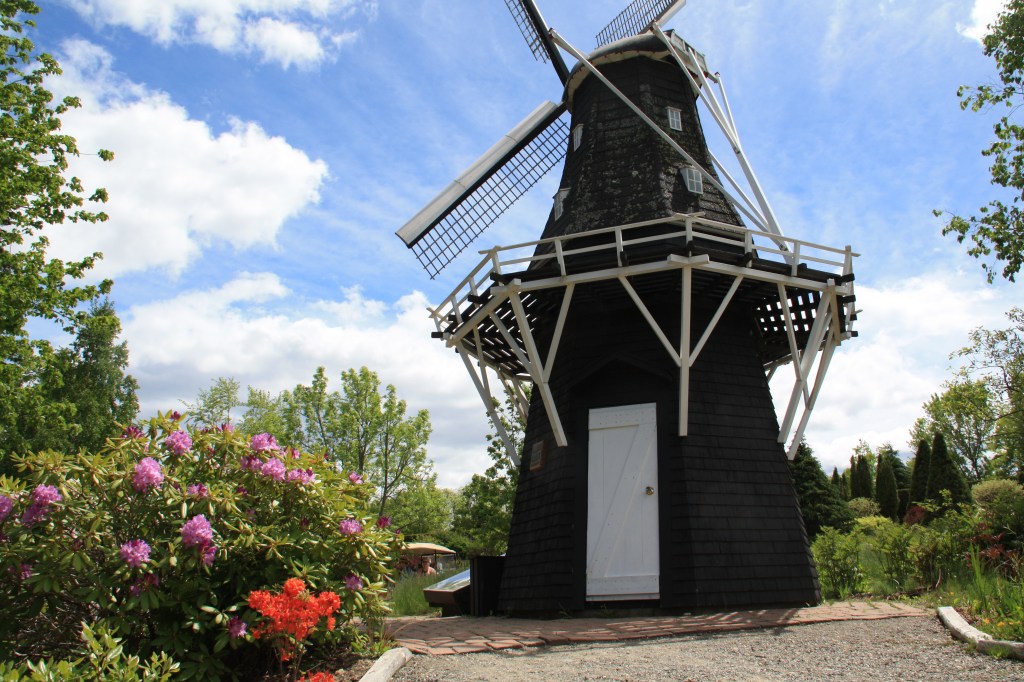
Comment: The history of Don Quixote and its reception in Spain is quite interesting. I was very sorry to read that Cervantes’s language is now considered so antiquated that interpreters are needed. I actually have a cartoon version of his quests – a picture reader, so to speak, very brief, because each picture is worth a thousand words. I have not yet seen the simplified text, rewritten with today’s reader in mind.

Don Quixote still holds many lessons for this modern world of ours and is definitely worth re-reading for, as Soren Kierkegaard (1813-1555) wrote: “There are two ways to be fooled. One is to believe what isn’t true; the other is to refuse to believe what is true.” Don Quixote, the character, threads a narrow path between those two extremes, as do many of the other supporting characters, some of whom use metatheatre for their smoke and mirror Wizard of Oz trickery. And remember, or forget at your peril, nihil sub sōle novum – there is nothing new under the sun. And yes, history does repeat itself, as you will see if you read (or re-read) Cervantes’s master piece.

Hide and Seek

Hide and Seek

Pictures and memories play hide and seek.
They hunt the slipper that hides in the words
that slither and slide across my page.

They long to emerge, fully formed, and to step,
without effort, into your mind. They want
to linger there, to baffle, taunt, and haunt you.

Digging through the verbiage, a thought,
a metaphor, a grouping of words will join and
rejoin. This is the grit that the oyster slowly shapes
into the pearl of great price that glows so bright.

Consider the opal. Plain at first sight, yet changing
color, shimmering in sunlight, a chameleon
adapting to mood and shadow, its moon dance
hovering, a butterfly over burgeoning blossoms.

Who could ever forget, once seen, star light
illuminating the bay, the moon gilding the sea,
those summer nights, our secret love flowering.

The veiled will unveil itself and tease its way,
its path over the sparkling waters of the bay.
Knock and it will open. Seek and you will find.

Comment: I had a specific, named place in mind when I first wrote this poem. Then I realized that my secret place was not necessarily the remembered place of other people who had undergone similar experiences. So, I removed the specific and made it generic.

I know you have been there, to your own special place. A warm summer night. Star light over a bay. Or maybe it was an estuary, or perhaps a river bank? The moon appearing, lighting up the waters. Walking, perhaps, hand in hand. Or sitting, as I remember it so well, in a late-night café, watching the night lights on the fishing boats, as the moon spread its golden carpet over the bay.