Book Burnings

Book Burning

A sharp-edged double sword,
this down-sizing,
this clearing out of odds and ends.

Library shelves emptying.
books disappearing, one by one.

So many memories
trapped between each page,
covers, dust-bound now,
dust to dust and books to ashes.

Sorrowful, not sweet, each parting,
multiple losses, characters
never to be met again,
except in dreams.

Heroes, thinkers, philosophers, poets,
their life work condemned to conflagration.

Alpha: such love at their beginnings.
Omega: such despair,
with Guy Fawkes celebrations
the means to their ends.

Word-fires:
the means of forging
those book worlds that surrounded us.

Bonfires:
the means to end them.

Steadfast, the book-fires,
flames fast devouring

all but an occasional volume
snatched by burning fingers,
from the flames.

Comment:

Funny things, book burnings. Why would anyone burn anything as innocent as a book? Good question. Yet people do. And people always have.

I think back to Don Quixote I, 6 and the Scrutiny of the Library. The Priest and the Barber go through the mad knight’s library and one by one examine the books of chivalry and either spare them, or cast them into the flames. This, in itself is a parody of some of the judicial actions of the Spanish Inquisition. In particular, any book that they considered to be unsafe or heretical went into the flames. Our Spanish Knight, of course, went mad through reading too many books of chivalry – and his brain dried up so that he totally lost all reason.

It is very interesting to read which books were spared and why. Equally interesting to find that many were burned on aesthetic grounds – they were not well written, or they were boring. Fascinating.

Fascinating too the book burnings that took place in Mexico during the Conquest of that country by the Spanish Conquistadores. Many pre-Columbian codices were burned. Priceless treasures and histories lost forever. Some, I think the Vindobonensis, still bear the marks of the flames when they were pulled from the fire in an effort to save them.

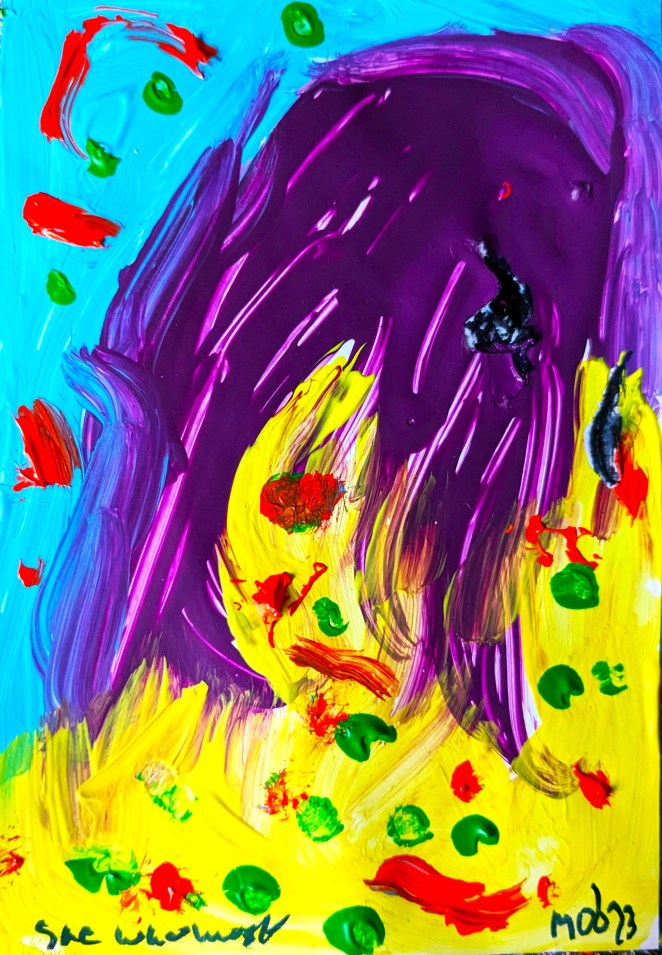
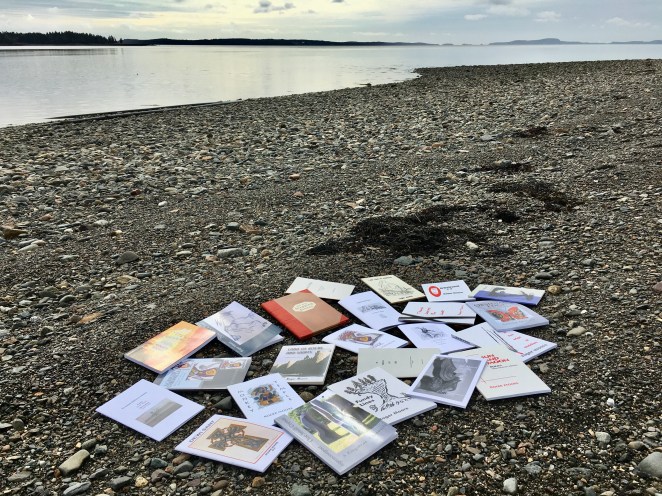
Moo tells me that my books will never be burned. And I am thankful for that. I asked why they wouldn’t be and he replied that nobody reads them anyway! Not such a comforting thought. So, in an effort to keep me happy and to preserve my books from the flames, another of my friends laid them out on the beach at Holt’s Point, New Brunswick. They certainly won’t burn when the tide comes in.

More important, I see that junk from Canadian Beaches, dated about 1960, has just arrived on the shores of the European continent, sixty plus years later. So – a floating book, a message, perhaps, in a time-bottle, destined to achieve immortality and live for ever. What a comforting thought for those of us who believe in the time and the tide that wait for no man! But they both might wait for his books.

Carved in Stone 65 & 66

Carved in Stone
65

Flames flow sparkling waters,
a cataract of fire,
down church walls
as the Castillo burns.

Fireworks claw upwards
to knock on heaven’s door
and waken the sleeping gods
reminding them
not to forget their people.

A knife edge slices sun
from shadow, heat from cool,
solombra, Paz calls his neologism
with its combination
of sun and shade / sol y sombra.

66

I will never forget the taste and smell
of my own sweat as I walk beneath
the heaviness of a midday sun,
its heat falling vertical
and rebounding in waves
from concrete and cobbles.

I recall the roughness
of hand-hewn stone
heated by that burning sun,
the smoothness of silk
contrasting with the harshness
of tares in hand-woven wool,
marketed in the central square.

Commentary:

Fireworks claw upwards to knock on heaven’s door. The celebrants would buy their rockets in groups of 3, 6, or 12. When the first rocket went up – whoooosh – BANG! – we would wait for the fourth. When the sixth rocket went up, same thing – do they have a full dozen? And when the seventh rocket goes up, indeed, we know they do. Sometimes, we would be woken up in the early morning, as the joyful people returned home after a night of reveling. When that seventh rocket flew skywards – we knew it was useless to try and go back to sleep!

I remember leaving the zócalo one night, turning into a side street, and being met by a wall of people. A whole village, with its accompanying band stood there, waiting. Up went the first rocket, the band started to play, and the dancing broke out. No sleep for the gods that night. Their people needed them and had come knocking on the door. I was always amazed by the way the old gods stood shoulder to shoulder with the new gods of Christianity. The number of people who worshiped both also surprised me.

I last visited Oaxaca in 2001. I wonder how much has changed. I hope the dancing trees never change. Inside them, young children, their eyes peering through the bark, followed the band music. Occasionally, one of them would stop, open his or her tree, and invite you in. Alas, I never had the courage or the skill to accept the invitation. Even by 2001, the traditional carnival figures – monos – were gradually being replaced by Donald Duck and Mickey Mouse. Tragic, in so many ways. I hope they keep the traditions of the rockets and the music and the trees.

People of the Mist
A Poet’s Day in Oaxaca

If you want to read more about Oaxaca
Click here to purchase this book.

Carved in Stone 64

Carved in Stone
64

I cannot bring you
the sounds and smells
of my own backyard,
let alone those of Oaxaca.

The pungent odour
of the first drops of rain,
falling from a blue sky
into dry dust.

The tang of bees’ wax candles,
burning in the cathedral’s darkness
where la Virgen de la Soledad
clad in black velvet sequined with stars
stands on guard in her small side chapel

Nor can I bring you the high notes
sung at the golden altar
in Santo Domingo
by the old woman, dressed in black,
who sings here every day.

The central market
is a bustle of bursting scents,
rooftop goats snicker above me,
my neighbor’s German Shepherd
patrols the roof-garden
and growls in my ear.

Commentary:

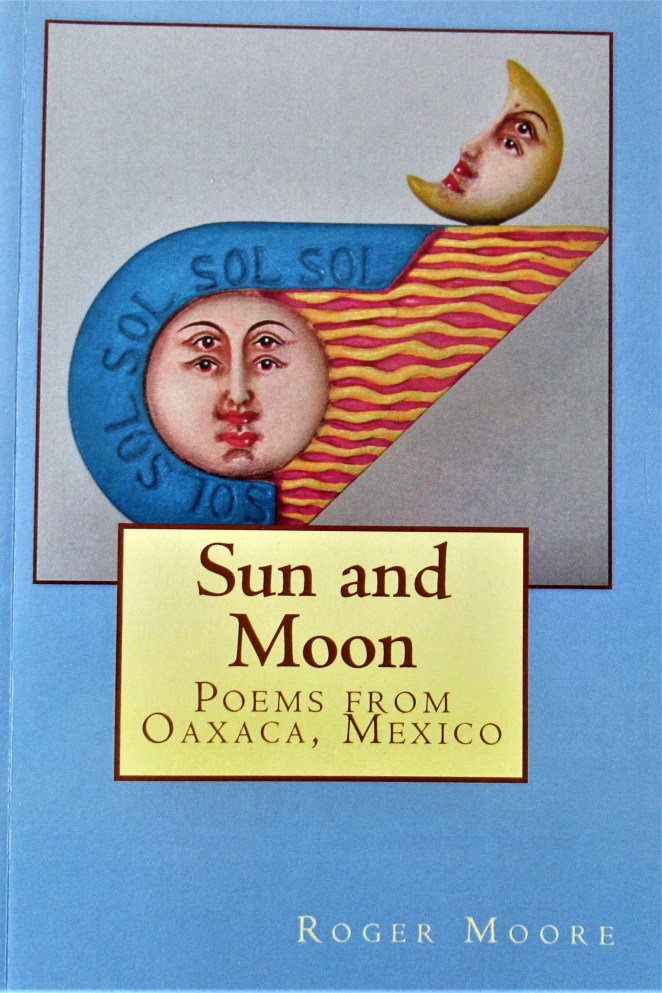
Sun and Moon is the first book in the Oaxacan Trilogy – Sun and Moon, At the Edge of Obsidian, Obsidian 22. I travelled to Oaxaca for 6-8 weeks each year between 1995 and 2001. I taught there and also researched the language, the culture, and the Mixtec Codices. Quite simply, my Oaxacan experiences changed my artistic, linguistic, educational, and cultural life. How? I earned to distinguish between what I could, and couldn’t do. A simple lesson, but one that needs to be understood at the deepest level of understanding.

The lessons took in all of my five senses – touch – dry dust, carved wood and stone, the tares in woven blankets -, taste – mole, flor de calabaza -, sight – the castillo burning -, sound – animals, goats and sheep, herded to the market-, smell – the central market is a bustle of bursting scents – hearing – rooftop goats snicker above me. A select few that blended with music of guelaguetza and the dancing that accompanied the village bands. But the experience(s) went beyond that. I began to realize, deep down, who I was, what I was, and, perhaps more importantly, what I wasn’t, what I could never be a part of, what separated myself from the other, the other whom I loved, who loved me, but who could never be a part of me.


Carved in Stone 56 & 57

Carved in Stone
56

I stand before the Tzompantli,
the Aztec Skull Racks
in the ruins of the Great Temple
in Mexico City,
and gaze in wonder,
at the multiple meanings
of these decorated deaths.

57

At Teotihuacan,
I climb the Sun Pyramid,
with its carved serpent,
slithering sideways,
as the sun moves.

I heave myself upwards,
panting, sweating,
and when I get to the summit,
I sit there, feet over the edge,
and I feel my heart thumping
as I fight to regain my breath.

Now, I feel purified,
cleansed, sweated dry,
as I watch poor mortals
struggle as I did
to take that final step.

I imagine them laid
on the sacrificial stone,
their chests carved open.

Each beating heart,
when extracted,
will cover altar, priest, and sky,
with a fountain of blood,
so hard those hearts
are pounding. Blood seeds
shoot into the sky
to revive the setting sun
as it drowns in its own blood.

Commentary:

Incredible, looking back, those moments in Mexico when I came face to face with a culture, so old, so alien to me, that I had difficulty coming to terms with it. I do not understand human sacrifice. Nor do I understand the mentality of the conquistadores who held the Aztec Emperor’s feet to the fire and burned them to the bone, leaving him alive. And still he would not tell them the secrets of the kingdom.

“The setting sun as it drowns in its own blood.” A nod to Charles Baudelaire, of course, – “Le soleil s’est noyé dans son sang qui se fige.” Wonderful how these images stay with us. Sunrise – and the sun is born in blood – sunset and the sun sets in its own blood. And was it really true that only the blood of humans, drawn through human sacrifice, sometimes voluntary, sometimes not, would keep the sun in the sky?

And there we go – in blood we were born, in blood we will probably die – all hail the power of blood – unless of course / wrth gwrs – it is contaminated. And what will happen to us then?

Inquisitor

Inquisitor
Sun and Moon

He told me to read,
and plucked my left eye from its orbit.
He slashed the glowing globe of the other.
Knowledge leaked out, loose threads dangled.
He told me to speak and I squeezed dry dust
to spout a diet of Catechism and Confession.

He emptied my mind of poetry and history.
He destroyed the myths of my people.
He filled me with fantasies from a far-off land.
I live in a desert where people die of thirst,
yet he talked to me of a man who walked on water.

On all sides, as stubborn as stucco,
the prison walls listened and learned.
I counted the years with feeble scratches:
one, five, two, three.

For an hour each day the sun shone on my face,
for an hour at night the moon kept me company.
Broken worlds lay shattered inside me.
Dust gathered in my people’s ancient dictionary.

My heart was like a spring sowing
withering in my chest
It longed for the witch doctor’s magic,
for the healing slash of wind and rain.

The Inquisitor told me to write down our history:
I wrote … how his church … had come … to save us.

Commentary:

No wonder the little girl in Moo’s painting looks so sad. She must have read this poem and understood how the exercise of power and authority, be it religious or secular, can effect those upon whom it is exercised. Times change, but so many things remain the same. The pendulum swings, and it moves from chaos to order and back again. The meaning of meaning – how we define chaos and how we define order define who we are.

Birds of a feather flock together. Manners maketh the man. Wonderful sayings. But fine words do not necessarily make for fine men or women at that. Serpents and senators, both can speak with forked tongues. It is up to us to apply discourse analysis and distinguish between what they say and what they actually mean. As my friend Jean-Paul Sartre once said – “L’homme n’est rien d’autre que ce qu’il fait.” A man is nothing more than what he does. His deeds reveal his true inner self – and remember – the plumage doesn’t necessarily make the bird.

People of the Mist

People of the Mist

Cover Painting

Pale Face by Moo

Back Cover Synopsis

            What if you walked into a church in a foreign country and came face-to-face your dead father? In People of the Mist, Nemo, orphaned as a baby after the suicide of his unmarried mother, seems called to visit Oaxaca, Mexico, the city of the returning dead. Upon arrival, he visits the town’s main cathedral only to encounter his adoptive father, a man he had buried years earlier. Confused by what he thinks is a realistic vision, he seeks the help of a local witch doctor to explain his mirage. The shaman seems to hold the answer and presents him with a broken medallion. He challenges Nemo to find the other half, promising the quest and discovery will reveal the real purpose of the young man being called to Oaxaca.

Brief Biography

Roger Moore, is an award-winning teacher, researcher, poet, and short-story writer. His accolades include being a CBC short story finalist, as well as winning multiple awards from the WFNB. Born in Swansea, Wales, he now lives in Island View, NB, Canada. Between 1995 and 2001, he taught multiple classes in Oaxaca, Mexico, where he first encountered the Mixtec codices.

Click here to view on Amazon

Masks

Mexican Mask depicting the ages of man.

Masks
Friday Fiction

I cover my face with a white mask of soap and carve intricate patterns with the razor.

… painted masks … death masks … the masks the priests wear in the pre-Columbian Oaxacan codices … the prisoner struggling … not yet fully understanding his fate … around him … animal masks … priest  masks … the jaguar cult of the regiments … they strip him down … paint his body … arm him with flowers … place him on a pedestal … from there he will dance his last dance … fight his last fight .. his destiny … like the bull in the bull ring … to die bravely showing no fear … he strikes first with the flower … his opponents strike back … one by one … with their obsidian knives … each wound a flesh wound on legs and thighs … the heart pounds … the blood flows .. faster and faster … more flowers … more knives … more blood … until almost bloodless the prisoner weakens and stumbles … rough arms seize him by the arms and legs … they carry him to the sacrificial stone … bend him over it … chest exposed … and tear the living beating heart from the cavity the carve in his chest … the severed arms and legs bounce down the temple steps to the waiting crowds … tomorrow his spirit will return as a hummingbird … and dance around the sun … for now his torn heart sizzles in the sacrificial fire … a horse’s head … teeth bared … grins from the temple walls …

My razor, held like a flower, slips and I gash my lip. The slow blood seeps through the soap streaking my mask with faint shades of pink. I shiver and stare at my reflection in the mirror. It’s a very plain face with a nose slightly larger and more hooked than it ought to be. I think of it as the prow of a ship or a bird’s beak: an eagle perhaps. My nose is very much like the nose of the man who died in the flower dance. In spite of the warmth in the room, I shiver again.

Inquisitor

Remember to scroll down to get the correct audio episode on Spotify

Inquisitor

Inquisitor

He told me to read,
and plucked my left eye from its orbit.
He slashed the glowing globe of the other.
Knowledge leaked out, loose threads dangled.
He told me to speak and I squeezed dry dust
to spout a diet of Catechism and Confession.

He emptied my mind of poetry and history.
He destroyed the myths of my people.
He filled me with fantasies from a far-off land.
I live in a desert where people die of thirst,
yet he talked to me of a man who walked on water.

On all sides, as stubborn as stucco,
the prison walls listened and learned.
I counted the years with feeble scratches:
one, five, two, three.

For an hour each day the sun shone on my face,
for an hour at night the moon kept me company.
Broken worlds lay shattered inside me.
Dust gathered in my people’s ancient dictionary.

My heart was like a spring sowing
withering in my chest
It longed for the witch doctor’s magic,
for the healing slash of wind and rain.

The Inquisitor told me to write down our history:
I wrote … how his church … had come … to save us.

Inquisitor was also a requested reading last Saturday. My promise, to put it up on the blog, with a reading in my own voice is now fulfilled. I love this poem: it speaks volumes about the Catholic Church in Oaxaca and the relationship of the Dominicans with the local people, aboriginals all and inhabitants of the Valley of Oaxaca for at least 10,000 years. The numbers represent the approximate date, 1523, of the arrival of the Conquistadores in Oaxaca, about three years after the fall of Tenochtitlan, the Aztec capital, now Mexico City. The poem, Inquisitor, can be found in Sun and Moon and also in Stars at Elbow and Foot, both available through this link.

Obsidian’s Edge

Obsidian’s Edge
From morning to night
a day in Oaxaca

To purchase this book click on the following link

Obsidian’s Edge Print

Obsidian’s Edge Kindle

Obsidian’s Edge started out as At the Edge of Obsidian and was the second volume in the Oaxacan Trilogy (Sun and Moon, At the Edge of Obsidian, Obsidian 22). When I republished it in Create Space (now Kindle / KDP) I rewrote the last two volumes and turned them into a single book, Obsidian’s Edge, so that the Oaxacan Trilogy is now a Oaxacan Duology. My apologies to those who are eagerly awaiting the third book in the series.

Early Morning in Oaxaca

… dream worlds circle outside my bedroom window … starry sky … two full moons floating, one real, one mirrored in the glass …  inside the bedroom, tulips inscribe red gashes on white-washed walls … sharp fingernails scrape across paint, blood red shadows trickle down to the floor …
            … above the azotea, the temples of Monte Albán string out their sheets on the sky’s washing-line, glowing in the moonlight … against a background of granite and stucco, trenchant shadows sculpt dancers into grotesque, pipe-wire shapes as they struggle to escape their carved imprisonment …
            … priests in long black robes gape at the night sky. From their sanctuary in the observatory, they plot how they will persuade the people to believe the future they will foretell as night’s giant finger herds the wild-cat stars …
… three young women walk at an angle up the temple steps … when they reach the top, a moonbeam holds them in its spotlight and they wax with the full moon’s beauty …  the doorway to an unclosed grave opens its crocodile jaws and the three women descend the temple steps, ageing as they walk … at the temple’s foot, they enter the tomb’s dark mouth … an old man in a faded grey suit walks behind them … the grave swallows them all, burying them in the hidden depths beneath the mound …
            … dreams back themselves into a cul-de-sac, a wilderness of harsh black scars … an ancient Aztec god catches Rabbit by his ears and throws him against the second sun that sizzles in the sky … his sharp teeth burrow, burying themselves deep in the sun-fire’s light … the second sun loses its glow and turns into the moon’s cold stone …  the rabbit’s skull simmers in the new moon’s dwindling pool …
            With a clicking of claws, knitting needles come together to pluck me outwards from my dreams and upwards towards death’s golden guillotine that floats in the sky. The moon sharpens its knife edge on the keening wind and sets my blood tingling. I want to be free, free from those nightmares, those nocturnal visions that rise up from the past and stalk me as I lie in bed.
Drowsing, I long for the alarm clock to shuffle its pack of sleepless hours and to waken me with its piercing call as it tears me from these winding sheets, these grave clothes in which I lie. I wait for the sun to shine into my window.

Sun and Moon

Sun and Moon
Poems from Oaxaca, Mexico

is available at the following link:
Click here to purchase Sun and Moon

Introduction to Sun and Moon

Oaxaca

A city of legends where the dead walk among the living and the stones beneath your feet come alive and talk to you. A city where the animals have voices and the songs of tree and leaf can be clearly heard. A city of hallucinations and spirits, of mystery and myths, a city, young in itself, built on land so old that memories clutch at you with treacherous fingers and lay siege to your heart claiming you for their own. This is the land of Sun and Moon. Come, enter its world. Join me there, if you dare.

Meeting my father in the main square

I saw my father yesterday evening, in Oaxaca. I walked through the zócalo, opened the main cathedral doors and walked in. The doors closed behind me. I looked towards the main altar and there my father stood, motionless. The evening light shone through the engraved glass panels and illuminated him as if he were some long passed saint come back to visit me. We stared at each other, but I couldn’t open my mouth to speak. The hairs on my neck stood on end and my hands shook. When I forced my mouth open, words stuck in my throat. He wore his best grey suit over a light blue shirt and a dark blue, hand woven tie: the outfit in which I had buried him.
            Three old women, dressed in black, broke the spell. One stood in front of me and wouldn’t let me approach my father. She held a large bag of knitting in her hands and the wool spilled everywhere as she pushed me away. The second threatened me with a pair of scissors that she held in her left hand and thrust towards my face. The third smacked a tailor’s measuring rod against my father’s head.  He nodded, smiled sadly, and they all turned their backs on me and hurried away out of the cathedral and into the square.
            Just for a moment, I stood there in silence. Then I pulled the doors open and ran in pursuit of my father. The setting sun filled the square with shadows that whispered and moved this way and that, as if a whole village had come down from the hills to walk beneath the trees and dance in the rays of the dying sun. I stood on the cathedral steps and called out my father’s name, but I could see no sign of him among the cut and thrust of the shadowy crowd.
            I ran out into that crowd and pushed at insubstantial people who stood firm one moment and then melted away the next like clouds or thick mist. I came to a side street and saw real people, flesh and blood beings, a group of villagers gathered behind their band. I stopped and as I did the village elder put a live match to the taper of the rocket that he clutched between his thumb and forefinger. The taper caught on fire and the rocket soared upwards with a searing whoosh. The village band marched forward and started to play a traditional dance as the rocket clawed its way into the sky to explode with a loud knock on the door of the gods.
            Tired of grasping at shadows and afraid of this living phalanx of men that marched towards me I went back to the cathedral and knelt at the altar of La Virgen de la Soledad, the patron saint of Oaxaca. Real wax candles stood before her altar, not tiny electric lights, and I inserted five pesos in the slot, took a taper, and lit a fresh candle from an ageing one that had started to sputter. I knelt and, for the first time in years, I prayed. I prayed for the soul I had saved from extinction by lighting my candle from another’s flame. I prayed for my father and my mother and, above all, I prayed for myself.
            On the way home to my second-floor apartment where I live alone, I bought two litres of mescal, one to send me to sleep, and the other so I would survive the next morning.