Silence

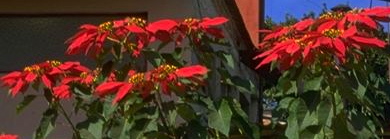
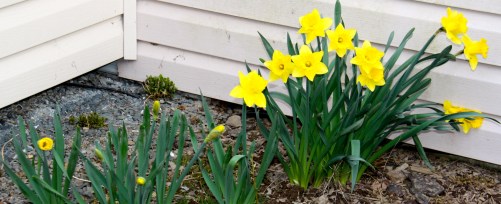
Where e’er she treads, the glossy flowers shall rise and light, like the light of flowers, will pierce any gloom and brighten the room.

Silence

When I wait for words to come
and they refuse,
I know that silence is golden
and spreads its early morning sunlight
across the breakfast table
where yellow butter melts on hot toast.

Light from the rose window in Chartres
once spread its spectrum over my hands
and I bathed in its speckled glow.

My fingers stretched out before me
and I was speechless,
for in such glory,
mortal things like words cease to flow.

So much can never be said
even if it is sensed: fresh coffee,
poutine à pain, bread baking,
flowers bursting into bloom,
the sense of immanent beauty that fills me
each time my beloved enters the room.

Angels

How many dancing on the head of a pin?

Angels

I thought for a moment that, yes,
I was an angel and I was dancing
on a pinhead with so many other
angels, and all of us butterflies
spreading our wings with their peacock
eyes radiant with joy and tears spark
-ling in time to the music that wanders
up and down and around with inscrutable
figures held spell-bound in a magic moment
… and I still feel that pulsing in my head,
that swept up, heart stopping sensation
when the heavens opened and the eternal
choir raised us up from the earth, all
earthbound connections severed and all
of us held safe in an Almighty hand.

Crow’s Feet

A crow, but not a beach. You’ll have to click on the link at the bottom of the page for the real beach photos.

Crow’s Feet

a convict’s arrows
marking the eye’s corner
and the beach at low tide
with its crackle of wings
as sea-birds fly
their defensive patterns
feathered sails
on a canvas wind

how many crabs
made in the image
of their carapaced god
hide in the sand
half-buried waiting
for the tide to turn
and water to return
and give them refuge

abandoned shells
postage stamps
glued in the top right-hand corner
of a picture post card beach

who can decipher
the sea’s hand writing
this mess of letters
stitched by sandpipers
who thread the beach’s eye
inscribing dark secrets
with the sewing machine
needles of their beaks

pregnant this noon tide silence
this absence of waves
where the quahaug lies buried
secured by a belly button
a lifeline to air and light
surrounded by crow’s feet
tugging at the beach’s dry skin

sand beneath my feet
sand between my toes
dry sand sandpapering

Comment:
And here’s the link to the beach photos.

https://moore.lib.unb.ca/poet/Crows_Feet.html

Bottle House, PEI

Light through glass, darkly: bottles set in one of the bottle house walls in PEI. The gardens are wonderful and well-worth a visit.

Bottle House, PEI
            The day begins with flowers: at the entrance, beneath the windows, flowers everywhere, a delicacy of scent. Beyond these flowers, even more flowers, then playthings in the garden: a child’s paradise, these sculptured faces, this glass among the trees, sun and shade, the fountain’s water, this dream of an old man, kept alive now by his children, a dream of health and sanity and peace out by the bay, where the mud red waters roll and the tide’s hand grasps at the land and pulls it down with watery fingers.
            Everywhere: faces and elements of faces: a nose, eyes, a mouth, open in surprise. Carved wooden faces, glass faces, pottery faces, flesh and blood faces, grandma’s face, grandpa’s face, then the grandchildren.
            Tourists travelling, old islanders returning to see family and friends, young islanders returning to visit the almost forgotten farms which their families worked a generation or three ago, before their exodus from the land.
            “This was grampy’s house!” they say or “that was my grandmother’s farm!” as if a life could be reborn in that pointed finger, those casual words. How many memories are snapped in each picture? How many lives are caught in this snapping of the fingers as the past is instantly summoned and perfection is bottled for a second or two in the magic of this house, this garden where the builder’s spirit roams. Sit still awhile. Be silent: you may hear him breathe, glimpse him, for a second, staking out the flowers, extracting a weed, checking the set of the concrete foundations, polishing a bottle, resting on a wooden seat, avoiding the slow snail on the path bejewelled by rain-drops from the trees or spray from the fountain. For where there are flowers, there must be water and rain and peace and happiness and all good things, glimpsed darkly through smoked glass yet grasped so smoothly in the sun’s bright light.
            This is the house of bottles, the glass house, where rough winds are shunned and the bottles are set in concrete. It is a museum of light and dark, the creation of sun and shadow as sunshine fails and the lighthouse’s flashlight beam reverberates from glass to stone and back again. Shapes, shadows, memories curved and carved in glass, set in glass, this shimmering beacon this glass house, this light house built as a heaven-haven for harboured ships and the soul’s refreshment, here, in these gardens, among these bottles, and at the chapel door, an angel-in-waiting.

Angel or fairy? It doesn’t matter. She was a gift one morning, when we visited. In this photo you can see how the bottles are set in the wall.

Three links to the Bottle House, PEI.

https://moore.lib.unb.ca/poet/Bottle_House.html

https://moore.lib.unb.ca/poet/Bottle_House_2.html

https://moore.lib.unb.ca/poet/BH3_Gardens.html

Light

Early morning light in the Red Room at KIRA. Such a splendid invitation for the enlightened mind to write poetry about the splendors of light.

Light

This fragile light
filtering through
the early-morning mind
filled as it still is
with night’s dark
shadowy dreams
their dance demonic
or perchance angelic
as light rises and falls
in time to the chest’s
frail tidal change
the ins and outs
of life-giving breath

Bright motes these birds
at my morning window
feathered friends
who visit daily
known by their song
their plumage
their ups and downs

they dazzle and sparkle
cracking the day open
with their joyous songs

Boxing Day

A wonderfully quiet and peaceful Christmas in Canada. Oh the sea, oh the sea, thank God it still flows between my family and me.

Boxing Day
            By the time I get up, the gloves are really off and the sparring has begun in earnest. I hear voices, walk downstairs to the kitchen, and a hush falls on the room. Knife-edge glances slice their menacing ways through the thick fog of war.
            Time for boxing: on my left, in the blue corner, my mother, smoking what is probably her second packet of the day. A thin haze of grey smoke escapes from her bruised lips and a cloud of exhaled fumes crowns her head with a murky halo. On my right, in the red corner, my father. White-faced, hungover yet again, truly into the spirits of Christmas. He breathes heavily, like a Boxer Dog in the mid-summer dog-days, snoring and snorting at a bitch in heat. In the middle, my grandfather, the referee. He is keeping the combatants apart, creating a tiny breathing space so the true Spirit of Christmas can disentangle itself from those false Christmas Spirits and bring peace to earth again for at least sixty seconds between each round.
            I look around the heaving, seething, threshing silence of a room where conversation has suddenly ceased. The fire is burning merrily. Beside it, tongs, poker, and small shovel stand to attention. On the hearthstone, the little red brush, with its long handle lies in ambush. This is what my father uses to beat me when he can’t be bothered to take off his leather belt. Scorch marks from the hot coal fire sear the handle and back of the little red brush. I threw it on the fire one day, hoping to see the end of it. Of course, it was rescued from the flames, resurrected, and I got beaten for that act of rebellion too.
            “It’s all your fault!” My father breaks the silence, pointing at me. His red-rimmed eyes blazing with a sudden and renewed anger. He starts to rise, but my grandfather steps between us.
            “Go and see your granny,” grandpa tells me. “She’s in the kitchen. Go now!” He points to the kitchen door.
            I run a gauntlet of staring eyes and go to my gran. As I shut the door behind me, voices rise higher in the room I have just left. Boxing Day, indeed. The gloves are off. The battle has begun again. My grandfather has evacuated me from no-boy’s-land and, for a moment, I am no longer trapped in the mud-filled, cratered, shell-holes between the trenches, the uncut barbed-wire barriers, the poached-egg eyes peering through periscopes and spying on me from the parental and priestly parapets. Here in the kitchen, for a while, I walk on the wooden duck-boards that keep my feet dry and clear of mud and water.

Comment: This is, of course, the true origin of the term Boxing Day. A genuine Boxing Day has nothing to do with the myth that it was the day on which the servants, who worked Christmas Day on the Lord’s estate, received their Christmas Boxes. Peace on earth and mercy mild has got nothing to do with alcohol-fueled quarrels, raging hangovers, and little children who should be seen and not heard. Sometimes, when all the elders are down at the pub on the corner, the night may, for a little while, actually be silent. But the noise when the drunks roll raucously home is most unholy. Then little children should be wise like the wise men, run quickly into bed, and lie there, neither seen nor heard.

Merry Christmas

A forgotten child’s Christmas in Wales.

On the Outside Looking In

As I walked home, it started to snow. Not the pure white fluffy snow of a pretty Merry Christmas card, but the dodgy, slippery mixture of rain, snow, and ice pellets that turned the steep streets of Swansea into ice slides and traps for the elderly. I turned up the collar of my coat, bowed my head, and stuffed my hands into my pockets. Two houses before my own, I stopped in front of our neighbor’s house.
The window shone, a beacon in the gathering dark. I drew closer, pressed my nose against that window and looked in. A Christmas tree, decorated with lights, candles, more decorations, a fire burning on the hearth, two cats curled up warm before the fire, presents beneath the tree, stockings hanging from the mantelpiece. For a moment, my heart unfroze and I felt the spirit of Christmas. Then I thought of my own house. Cold and drafty. No lights, no decorations. No fire. The snowball snuggled back into my chest and refused to melt.
            When I got home, our house stood chill and empty. My parents were out at work and the fire had died. Nothing was ready for Christmas. I sat at the kitchen table, took out my sketch book and began to draw, then color. When my mother came home, I showed her my picture.
            “Very nice,” she said without looking up.
            “But mum, you haven’t really seen it.”
            She stared at the picture again. This time, she saw the Christmas tree and the lights, the cats before the fire, the candles burning on the mantelpiece, the decorations and the presents wrapped and waiting beneath the tree. But she never noticed the little boy standing outside the house in the falling sleet, cold and shivering, peering in through the window.

Comment: Everyone remembers Dylan Thomas’s story A Child’s Christmas in Wales, but not all Welsh Christmases are like that. This is the story of a forgotten child’s Christmas in Wales. It is a story about a latch-key kid, left alone at Christmas to fend for himself. I enclose the drawing he did and I dedicate the story to anyone who is alone this Covid-19 Christmas. Christmas spent on your own is not much fun. Looking through another’s window, from the cold street outside, is not much fun either. So, at this time of year, let us remember those who are lost and lonely, those who need a kindly smile and a helping hand, those who do not have the comfort of family and friends, a warm wood fire, or a cat or a dog to snuggle up to them, to lick them, and to wish them ‘all the best’ in the languages that all animals speak on Christmas Eve, and sometimes into Christmas Day. Phone a friend, nod to a neighbor, and may your Christmas season be filled with joy.

Happy Anniversary

Married 54 years ago today. What a way to celebrate with 3 poems to Clare on QBF. My thanks to Brian Henry and Quick Brown Fox.

Yours

Yours are the hands that raise me up,
that rescue me from dark depression,
that haul me from life’s whirlpool,
that clench around the jaws that bite,
that save me from the claws that snatch.

Yours are the hands that move the pieces
on the chess board of my days and nights,
that break my breakfast eggs and bread,
that bake my birthday cake and count
the candles that you place and light.

You are the icing on that cake, and yours
is the beauty that strips the scales
from my eyes, then blinds me with light.

Comment: what excellent timing: thank you for publishing three of my poems to Clare and on our 54th wedding anniversary too (24 December 2020). An incredible gift and Clare and I both thank you for it, Brian. How to make a memorable day even more memorable. Tonight, when we open the champagne, we will have a glass for you on the table. Much as we would appreciate your presence, the two week quarantine on entering New Brunswick places a blanket over so many invitations and celebrations. That’s why every little helps, and this is so much more than a ‘little’, it is a lot, a very thoughtful lot. So, for Brian, his family, and all my family and friends: tonight we will be alone in our home. But we will raise a glass to absent friends, and we will be together in our hearts. “To absent friends”!!! Here’s the link to Brian’s page.

http://quick-brown-fox-canada.blogspot.com/

R.I.P.

Forget-me-not!

R.I.P.

He was a good man,
and a better friend.
He came over to mow the lawn
and stayed for a beer.
“This is gonna sizzle!”

Some called him uneducated,
no BA, no MA, no LLB,
but he had a golden heart
and a PhD in the school
of life and hard knocks.

I met men like him in Wales,
coal miners in bars,
steel workers on rugby teams,
sheep farmers from the hills
in the big city for the game.

Humble, they were, honest,
hard men, hard working,
intolerant of pretension and fools.
When I went to university,
nineteen and full of ideals,
they pulled me on one side.

“You’re one of us,” they said.
“However high you rise,
don’t lose the common touch.”

I met men like him in Spain,
foot-soldiers from the Civil War,
riflemen, dynamite throwers
with their skills learned
at coal face and quarry.

Machado wrote poems about them:
“Donde hay vino, beben vino;
donde no hay vino,
beben agua de las fuentes.”

Where there is wine,
they drink wine.
Where there is no wine,
they drink water from the fountains.

A good man, an honest man,
an uneducated man, some say,
who taught me more about life
and how to live it
than any university professor.

Comment: I read the obituary of one of my best friends in the newspaper today. He moved away from the neighborhood and we lost touch. But I never forgot him. As I have never forgotten those who shaped me in Wales and Spain. I have forgotten many of their names. But I have never forgotten their faces, nor their words of wisdom. At first, his passing brought a shadow to my life. Then I realized that no, he would not have wanted that. I think now of the good times, the laughter, the joy and, instead of mourning for him, I rejoice in all the goodness he gave me. Rest in peace, my friend. I will forget-you-not.

Heraclitus

Geoff Slater’s mural at McAdam Railway Station. ‘You cannot step in the same river twice.’ Heraclitus.

Heraclitus

Nothing will ever be
as it was before.

Time, like water,
like these people marching,
constantly flows,
trickling through my fingers,
uncatchable, unstoppable,
 sand filtering through
the hour glass’ waist.

Water flows, currents shift,
rocks wear down,
banks slide and fall.

“You cannot walk
in the same river twice
nor ever attend
the same demonstration.”

Nor can you recapture
that first, fine, careless rapture,
the touch of that first
drop of river water.

Kneeling by the river bank,
like St. Kevin and his Blackbird,
I cannot recall the river’s name.

Comment: I love the reality of the river, its impressionist style of flowing water, impossible without the enormous presence of Claude Monet and his portraits of the Seine. However, what makes the mural, for me, is the brutal reality that breaks into the painting’s unreality. The boards covering the interior wall, the hand rail blended into the painting, the skirting board, the electric socket. I also like the intertextuality: art speaking to poetry, poetry replying to art, the links to Heraclitus, poetry speaking to poetry, the anonymity of the river, and the further poetic links to Robert Browning and Seamus Heaney. I often wonder if readers and viewers pick these things up. Or do they just speed-read, link to their own experiences, and move on with no further thought? You tell me. But what I will tell you is that artists reaches out to art, poets extend their hands to poetry, and our world is an inter-connected maze of thoughts and ideas, linking and unlinking, occurring and re-occurring, lapping like an incoming tide at the fingers and toes we immerse in those amniotic waters, often so long-forgotten, in which our creativity is berthed and from which it is born.