Time Folds

IMG_0158

Time Folds

Time folds … itself in two or three. A rubber omelet clock, it vanishes over the white water adventure rocks, bending and sliding, folding and unfolding. Riding the waves is ungainly, unseemly. We hang on to ropes, clock edges, reach for outstretched hands, count seconds, minutes, hours, search for meaning …

Further downstream, men and women dance on the bridge at Avignon. Now there are two popes and each one castigates the other, hurling verbal darts, well sharpened, that pierce the thickest of skins. The bridge across the river stands unfinished. It stretches stone hands out towards the other side, but the further shore is distant and the bridge’s fretwork abandons its quest.

Where do we find meaning when seconds, minutes, hours slip down the stream paddled along beside all those hours lost from the clock? Omnia vulnerant, ultima necat: they all wound, but the last one kills. At what time will that final hour suddenly loom and sling its ultimate stone, shoot its outrageous final arrow? Jove’s thunderbolt, sudden, from a cloudless sky? Life’s lead-tipped slingshot and all that we love turned suddenly to hatred? A tremble of the ground beneath our feet? Kangaroos and Koalas burn, setting even more bush ablaze and the smoke from those fires reaches out, out, out, across the bush, across the cities, across the Tasman, across the Atlantic. New Zealand has become the land of the long pink cloud.  Now South America is gifted its grey, smoky monsters of grasping hands, those insubstantial nightmares of our childhood dreams, reaching in from the dark to pluck us from our sleep.

On the unfinished bridge at Avignon, the people still dance. In their papal palaces, the partisan popes still hurl the insults of their hit and missiles. Somewhere, close, was it in the future or will it be in the past, the Black Death lurks, waiting its moment. The Great Fires of London sizzle and stench from 1666 to 1941 while religious partisans burn each others’ homes. The Spanish flu invades the trenches and kills more men than the war will ever manage.

Turn your face to the wall, my darlings, as the gentlemen go by. But what do they bear in their hands, those gentlemen, in their minds, those unsubtle warriors of a crazy game that leads us onward, merrily, merrily, not so gently, down what stream, over what waterfall, and into which of the many perils that lie in wait?
Ephemera

PEI + bockle 2008 059

Ephemera

‘The day I was born, I took my first step on the path to death.’ Thus spoke Francisco de Quevedo, the Spanish poet born in 1580, died in 1645. “Am I going to die, Father?” “We’re all going to die, Patrick. We just don’t know how, where, or when.” This from the Sharpe’s Rifles Series. I can’t remember which show, but I remember the scene.

Ephemera / ephemeral: butterflies on a rock, on a flower, in a summer garden, blown away in a puff of wind. And that’s what we all are. “For whether we last the night, or no, / I’m sure is only touch and go.” Dylan Thomas: Under Milkwood. Or under Idlewood, Island View, as I like to rewrite it.

“Mais où sont les neiges d’antan?” / “Where are lost year’s snows?” François Villon.  “No hay pájaros en los nidos de antaño”“There are no birds in last year’s nests.” Miguel de Cervantes.

One of my friends, twenty-five years younger than me, wrote to me today speaking of how fragile he felt. Another friend wrote me last week, mid-forties, going into another round of cancer. How long do we have? How do we face our individual end? How do we pass through that door that opens for us, and each one of us alone? I have no answers. I remember pushing my father in a wheelchair around the cancer ward. I remember sitting with my mother, needles inserted in her arm, her arm a sunset of bruises.

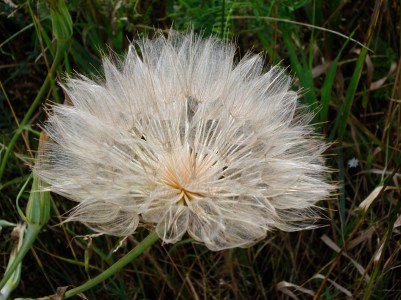
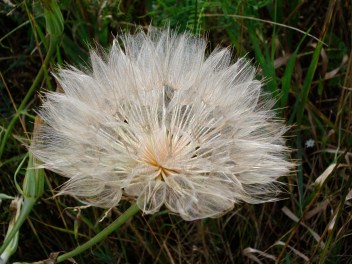
Where do we go? What will become of us? What will we do when the dandelion clock runs down and that last puff of wind bows us into eternity? Horas non numero nisi serenas / I count only the happy hours. These words come from the old Roman sundial. I first read them in a children’s book: The Puppy Who Lost his Wag. Does anyone remember that book? Or was it just an ephemeral publication, lost in the tides of time? Villon, Cervantes, and anonymous author … pobres poetas de hoy: polvo seco de tesis doctoraltoday’s poor poets: dry dust of a doctoral thesis. (José María Valverde, a very good friend).

Et ego in Arcadia vixi / and I in Arcadia have lived. It is, and has been, a wonderful life. I feel the sands of time trickling though my fingers. I feel the waters running dry in Antonio Machado’s  clepsidra / his water clock. And I am not afraid. I rejoice in who I am and what I have been. My puppy dog life has regained its wag and the sun shines on my sundial.


IMG_0617

My Father

IMG_0137

My Father (Solace 1)

1

            I saw my father yesterday evening. I walked through the zócalo, opened the main cathedral doors and walked in. The doors closed behind me. I looked towards the main altar and there my father stood, motionless. The evening light shone through the engraved glass panels and illuminated him as if he were some long passed saint come back to visit me. We stared at each other, but I couldn’t open my mouth to speak. The hairs on my neck stood on end and my hands shook. When I forced my mouth open, words stuck in my throat. He wore his best grey suit over a light blue shirt and a dark blue, hand woven tie: the outfit in which I had buried him.

               Three old women, dressed in black, broke the spell. One stood in front of me and wouldn’t let me approach my father. She held a large bag of knitting in her hands and the wool spilled everywhere as she pushed me away. The second threatened me with a pair of scissors that she held in her left hand and stabbed towards my face. The third beat a tailor’s measuring rod against my father’s head.  He nodded, smiled sadly, and they all turned their backs on me and hurried away out of the cathedral and into the square.

               Just for a moment, I stood there in silence. Then I pulled the doors open and ran in pursuit of my father. The setting sun filled the square with shadows that whispered and moved this way and that, as if a whole village had come down from the hills to walk beneath the trees and dance in the rays of the dying sun. I stood on the cathedral steps and called out my father’s name, but I could see no sign of him among the cut and thrust of the shadowy crowd.

               I ran out into that crowd and pushed at insubstantial people who stood firm one moment and then melted away the next like clouds or thick mist. I came to a side street and saw real people, flesh and blood beings, a group of villagers gathered behind their band. I stopped and as I did the village elder put a live match to the taper of the rocket that he clutched between his thumb and forefinger. The taper caught on fire and the rocket soared upwards with a searing whoosh. The village band marched forward and started to play a traditional dance as the rocket clawed its way into the sky to explode with a loud knock on the door of the gods.

               Tired of grasping at shadows and afraid of this living phalanx of men that marched towards me I went back to the cathedral and knelt at the altar of La Virgen de la Soledad, the patron saint of Oaxaca. Real wax candles stood before her altar, not tiny electric lights, and I inserted five pesos in the slot, took a taper, and lit a fresh candle from an ageing one that had started to sputter. I knelt and, for the first time in years, I prayed. I prayed for the soul I had saved from extinction by lighting my candle from his flame. I prayed for my father and my mother and, above all, I prayed for myself.

               On the way home to my second-floor apartment where I live alone, I bought two litres of mescal, one to send me to sleep, and the other so I would survive the next morning.

So Sweet

IMG_1318 (3)

So Sweet

Withered I am
and soon will perish
I cherish this brief
last leaf-light bright
on tree and pond

Stark the flooded
trunks of beaver-
gnawed trees
their sails no
longer leaf-clad

Fall’s canvas
a paradise
for lost and lonely
philosopher-poets
tree-bright their light

Stored sunshine
aged in maple
birch forest oak
soaked up
in summer life
so brief so sweet

IMG_1317 (2).JPG


Pax amorque

img_1092-2.jpg

Pax amorque

“Nowhere did she find peace and love
save in the dregs at the bottle’s bottom.
She solved life’s dilemmas with her whisky
aides: Johhny Walker, Glenfiddich, Bell’s.

Doctors told her that she must stop drinking,
not stoop to conquer yet another bottle.
The remedies they suggested didn’t suit her.
Family and friends lectured her in vain.

She knew she would not live forever,
no matter what the religious told her.
She opened bottle after bottle of Bell’s
Scotch whisky and hid them everywhere,

all over the house and garden so she could
always have one more before the road.
She drank until darkness overcame her.
Conquered by Shadows, she never emerged.”

Comment:
A found poem, overheard.
Pax amorque is the Latin for peace and love.

White Flame

IMG_0159 (2).JPG

White Flame
in praise of my beloved

White flame, her hair, emerging from shadows,
lighting her path downhill toward water’s edge.
Wind-driven waves splash lake-side. I watch
her footsteps, not now as firm as once they were.

Burgeoning age grips her hips. Toes and heels
no longer  lift in the same old way. Component
parts break down, arteries clog, arthritis worms
its stiffening way into fingers, wrists, and knees.

I recall nursery rhymes: “Jack be nimble, Jack
be quick,” but she isn’t anymore and neither
of us could jump over a candlestick. Her beauty:
inner light. Outer light, her hair, pure and white.

Her voice  is still as clear as a bell, soft yet
luminous, as she picks her way on a perilous
path through wayward woods, not stumbling
yet, and still she lives, as I still live, in hopes

to see each other, until earth stops our eyes and
we can see, sense, touch, and hear no more …

Ste. Luce-sur-mer

PEI + bockle 2008 059.jpg

Ste. Luce-sur-Mer
(1995 &1996)

marooned and listless
monarch of all he surveyed
this ancient sea-side crab
caught naked on a wave-wet beach

surrounded by thronging gulls
their powerful beaks
pulling at the carapace
half-buried in the sand

moment of truth
the second the oyster’s
protective vacuum breaks
the crab sucked from the sand

battered the scattered body
spread over crisp sheets
pillowed on mermaid-hair
claws that once clicked

silent now hushed
listen to the tide
watch the wind’s footprints
walking on warm summer sand

Ghosts

IMG_1055 (2)

Ghosts

My grandfather would wheeze, then cough, as he leaned on the old black dresser in the Welsh kitchen with its vast, cast iron fireplace. “As black as the hobs of hell,” he would say, and “as warm as our kitchen.” It was full of nooks and crannies where pasties and pies could stay warm, soup cauldrons could hang from iron chains, and copper kettles could whistle wild tunes and call us all to endless cups of tea. Sergeant-major tea: so strong and filled with so much sugar that a tea-spoon could stand upright and never fall over. Gassed in the First World War, my grandfather was always out of breath and each time he coughed, he brought up a tiny part of his lungs. “One day,” he announced between wheezes, “there’ll be nothing left.”
Twice a day, my grandfather would roll up the newspaper and brandish it like a conductor’s baton. The first time would be when I came home from school and it was time to do my homework. The second time would be after supper when it was time for me to go to bed. Each time he rolled up that newspaper, he would tap it gently on the dresser to get my attention, and then he would speak those famous words: “Let battle commence.” I would fight to escape to the street to play with my friends. I would fight to stay on my feet and I never, never wanted to go to bed. I hated to be entrenched alone, upstairs, in the cold shadows of that ghostly no-boys-land where I could hear mice and rats scuffling behind the dugout walls and smell the sour smells of old age and illness that stalked my dreams.
“Up the wooden hill to Bedfordshire,” my grandfather would sing, conducting with his baton and pointing to the stairs. I was never afraid of him. He was dark, strong, tall, and very gentle, a great man in his own right, one of those tall men who would always stoop to help a little child. If I was too troublesome, he would start to cough. And if he started to cough, the pink phlegm would come and he’d spit it into the red and blue polka-dot handkerchief he always carried. The pink phlegm caused consternation and in the ensuing panic, I would bolt for the stairs, go up to my room, undress, put on my pajamas, and bury myself in the vast double bed I shared with my grandmother. My grandfather’s bed was in the middle room downstairs. I didn’t realize then, as I do now, that he could no longer climb those stairs up which I scuttled.
After a while, I left of my grandfather’s house and went back to live with my father. One day, my grandfather, as he prophesied, coughed too much and that was the end of him. After the funeral, my father took me back to see my grandmother. Aunties and uncles, cousins, family friends that I didn’t know, neighbors known and unknown, spilled over the house in an invasion of tears and grief. After the friends had gone, my father and I decided to leave and the family gathered on the doorstep to wave us goodbye. I waved back to them all. “Goodbye,” I shouted. “Goodbye aunties, goodbye uncles, goodbye grandmother.” I paused. My grandfather stood there waving to me. “Look: there he is. I knew he couldn’t have gone.” I pointed and waved. “Goodbye grandfather!”
“Don’t be stupid. He’s not there,” my father said. “He’s dead.”
“I can see him,” I said. “He’s there. I can see him.”
“He’s not there. He’s dead.” Tears ran down my father’s face.
Sitting here, writing these words, I can still  see my grandfather, standing on that doorstep, waving goodbye. And I can still feel my father’s long dead, shadowy hands reach down, grab me by the shoulders and shake me, shake me, shake me, until I too am crying and the ghosts of my milk teeth are again rattling in my head.


IMG_1063 (2).JPG


Things

18581930_1306791786107970_4016640231053970709_n-1

Things I carry with me

            That old black cast-iron stove, wood-fired, that baked the best ever breads and cakes and warmed the bungalow on cold, summer mornings. The Welsh dresser with its age-blackened rails that displayed the plates, and cups, and saucers. The old tin cans that ferried the water from the one tap located at the end of the field. Full and wholesome, its weight still weighs me down as I carry it in my dreams. The Elsan toilet from the shed by the hedge and the shovels that appeared, every so often, as if by magic, as my uncle braved the evening shadows to dig a hole on the opposite side of the field, as far from the bungalow as possible.

            The outhouse at the end of the garden. The steps down to the coal cellar where they went when the sirens sounded, to sleep in the make-shift air raid shelter, along with the rats and mice that scurried from the candles. The corrugated iron work shop in the garden where my uncle built his model ships, the Half-Penny Galleon and the Nonesuch. The broken razor blades I used to carve my own planes from Keil Kraft Kits, Hurricanes and Spitfires, an SE5, and once, a Bristol Bulldog. Twisted and warped, they winged their ways into nobody’s skies, though once we built a paper kite that flew far away in a powerful wind and got tangled in a tree. The greenhouse from which I stole countless tomatoes, red and green. Kilvey Hill towering above the window ledge where the little ones sat when there were more guests than chairs in the kitchen. The old bombed buildings across the street. The bullet holes in the front of the house where the Messerschmidt strafed us.

            The old men spitting up coal dust from shrivelled lungs. The widows who took in lodgers and overnight travelers. The BRS lorries, parked overnight, that littered the street. The steep climb upwards into those lorries. The burrowing under dirty tarpaulins to explore the heavy loads, and many other things. The untouchable, forbidden drawer where the rent money waited for the rent collector’s visit. The old lady, five houses down who, when the shops were shut, sold warm Dandelion & Burdock and Orange pop for an extra penny a bottle.  The vicious, snub-faced Pekinese that yapped fierce defiance from the fortress of her lap. The unemployed soccer referee who on Saturdays walked five miles to the match and five miles back just to save the bus fare, his only financial reward. My father’s shadowy childhood. His first pair of shoes, bought at five years old, so he wouldn’t go barefoot to school.

            Wet cement molded onto the garden wall, then filled with empty bottles to be smashed when the cement set solid. The coal shed where the coal man delivered the coal: cobbledy-cobbledy, down the hole. The outside toilet with its nails and squares torn from yesterday’s newspaper. The lamp-lighter who lit the lamps every evening as the sun went down. The arrival of electricity. The old blackout curtains that shut in the light and shut out the night. The hand rolled fabric sausage that lay on the floor by the door and kept the heat of the coal fire in the kitchen. The kitchen itself with its great wooden chair drawn up by the fire. That chair: the only material possession I still have from that distant past.

Moon Walk

IMG_0456 (2).JPG

Moon Walk
Friday Flash Fiction

Full moon over the Bay.  For the second time this month I walk along the wharf and watch the moon’s perfect disc as it creates over the bayside mountain its miracle of geometry: a golden circle balanced on a high triangle of rock.  Moonlight carves its golden pathway across the waves. I want to walk that walkway and end my earthly existence.

At night, in my boarding school, that grey stone prison where I spend interminable days and fearful nights, lying awake, I watch the moonlight as it moves across the dormitory walls.  I lie awake so I will not be caught napping by those stealthy footsteps followed by the rough, punishing hands that still haunt my dreams.

Is that a face I see in the moon?  Is that the grinning visage I see in the beer glass on the Guinness advertisements that adorn the railway tracks behind my parents’ house where I am sometimes permitted to eke out my existence? In boarding school, the masters observe me. The prefects and monitors observe me. The school bullies observe me.  But in geography class, they have never taught me that the lunar body observes me with its unwinking eye.

I watch the moon as it swims in the water.  I sense the movement of the night fish as they shimmer beneath the waves and a shiver moves a chill finger up and down my spine. The moon is the other, the other that faces me, speaks to me, reasons with me, the unfathomable other. But what am I other than one of these cold fish swimming silent beneath the waves?

It’s very quiet tonight down here by the docks. I have been in this city for six weeks now and I still have no friends. There’s always a glass barrier into which I bump at various intervals. I do not leave for another six weeks, that’s what my tickets say anyway, but I am thinking of changing that.

Here, on the wharf I stand in the shadow cast by the Customs House. I taste the bitter salt of homelessness and I know that I will never belong in this world.

I look across the water. How beautiful is the bay beneath the moon.  I look up at the hills from whence cometh my salvation.

My grandfather walks towards me over the waves. He helps me choose stones and pebbles, helps me to fill my pockets with them. He takes me by the hand and gives me courage. He and I walk down the slip way, hand in hand, and then we walk out across the moon path and into the sea.