Carved in Stone 10 & 11

10

Firelight dances,
bringing things back to life.

Each morning,
I take time to empty my mind
of those restless cats
I herd at night as they shimmy
through my troubled dreams.

By day, each cat
throws a different shadow
that parades before me
in the sweetness of soft sunlight
where a honeyed sweetness reigns
and no bitterness dwells.

My own cat haunts me,
purring for butter,

sitting there, staring,
eyes wide open, hypnotic.

What, I wonder,
does she really want
as she turns her back,
walks away,
and stalks a different prey
among my books?

11

Does she hear the clock’s dry tick
and sense the Roman numerals
marching round, left – right – left,
always in step
with the pendulum’s sway.

Does she recall migrating birds
or those gaudy summer butterflies,
fanning their wings
as they perch on Cone Heads,
Bees’ Balm, Black-eyed Susans,
generic butterflies,
specific flowers,
planted by my own hands?

I often ask myself –
“What does she know
that I don’t know?”

Commentary:

A strange thing knowledge. I have learned the hard way that “the more I know, the more I know I don’t know.” Just look at today’s second stanza. I would love to know more about, and understand better, migrating birds, summer butterflies, especially the lovely Monarchs that fly at Mexico and back, the flowers themselves, the way language substitutes the generic (butterflies, flowers) for the specific (Red Admirals, buttercups), and as for that cat, I really would like to know what she knows that I don’t know. I have never been able to train her, but she has certainly managed to train me!

And I would love to understand humor and laughter. Slapstick aside, humor is one of the cultural secrets that travels least in translation. Jokes in French or Spanish just do not translate well into English. It takes a deep cultural and linguistic knowledge to grasp foreign humor at first glance.

Take today, for instance. I drove the car to the garage to change the tires from summer to winter. I asked the garage guy, my friend, if he would drive me home, and he said he would. He got i the passenger side and I drove home. Then he drove the car back to the garage. He opened the garage doors, drove the car in, turned the engine off, hoisted the car up, and changed the tires. When he’d finished, he tried to start the engine. No luck. He called me – “Where’s the key?” “In my pocket!” I replied. We were having such fun chatting we never thought to offer or request the car key when we exchanged drivers. Well, we are all still laughing about it.

When I got into the house, even the cat was laughing, and as for that cat, I really would like to know what she knows that I don’t know. Maybe, it’s just that we humans, especially as we age, aren’t as clever as we sometimes think we are. Some things, I guess, I’ll never know.

Angel

Angel

Oh yes, I have been with them, the lost folk, the tramps, the homeless, the bag-women, all the gente perduta. I have stepped on their fingers as they sprawled on the sidewalk. I have trodden on their toes, tripped over their legs, bumped into their stiff, stumbling bodies and stepped in their wasted body fluids. I have stayed out all night, shared a pack of cigarettes, producing another pack or a bottle from the pouch beneath my wings. Such stories they tell, and they tell them in that antiquated language that I first heard hundreds of years ago. They know me now. I won’t say they trust me, but they tolerate my presence, a Jacques Cousteau voyeur, looking into the sea-depths of their despair.
            Garbed in garbage bags, thin trickles of wine and vomit slipping over their lips and cheeks, bloody bandages wound around needle wounds, they have scars at elbow and foot. I hear the warmish blood whistling its snake song through their arteries and veins but death shall have no dominion, not while I am on watch.
            I enfold myself in my wings and weep as these people, my people now, pillow their heads on bloody bandages. Their world is a world of vomit and reek, yet the edges of their shattered lives rip chunks from my hands and fingers, pluck feathers from my wings, tear holes in my heart. Needles I have seen and touched, blunt, shared between three, five, and twenty-five. Round and round, they go, slipping the thin threads of drug-dreams and tainted blood from friend to friend while the blunt points stab at bruised flesh and leathery vein until the freed blood oozes through fingers and hands clenched tight to hold and staunch.
            Night after night I have watched them searching for something just beyond their fingertips. As the late-night diners emerge from their opulent restaurants, I have seen my people fortifying shop doorways with cardboard castles. I have watched them climb inside, shut down the portcullis, and enfold themselves in the plastic that will keep them free from wind and rain. They all crave the bottle’s warmth. They fight and scratch for that which will hold them together, body and soul, that spiritual glue that binds the spirit before setting it on its drunken dreams of freedom. Kings and Queens, tumbled from their earthly thrones, they dream of the paradise they lost, yet think they can find again at the sharp point of a needle or the bottom of a bottle.
            Oh bird-on-a-wire dreams held captive in a skull-bone cage, how you yearn to grow wings, like me, to soar, to fly, to be released from the body, to at last be free …

Commentary:

This book, All About Angels, is available online at Amazon.ca. Click on the link below to purchase the book.

All About Angels
Paperback edition

Last Dance

Last Dance

Ten years ago,
in the Hospice for patients,
the shy lady in the corner,
body withered by cancer,
stood up to dance.

She bowed to the band
then floated into movement,
dancing alone.

She clung to the empty air
as she once clung to her lover.

Nymphs and shepherds
played sweet music at midnight
in this room turned sacred grove,
where naiads and dryads
emerged from the shadows.

Her dance-steps
were a draught of joyous water
from the fount of eternal youth
and lasting love.

Commentary:

Moo offered me one of his paintings for this poem. He calls it Keep on the green side. Every Wednesday, in the hospice, a local band came in to play. Some patients danced, others sat and watched, some stood on the sidelines and listened to the music.

I had the fortune to be present at the singular performance recounted above. I never found out that lady’s name and I never saw her again afterwards. She remains a mystery, like the naiads and the dryads, and the hamadryads, who inhabited those mythological woods where so many of us dream our dreams of one last chance and one last dance.

Carved in Stone 6 & 7

6

At Westbury White Horse,
I wandered among unkempt mounds,
forgotten graveyards,
ancient barrows, their secrets
buried deep underground.

I walked to the horse’s eye,
stood there, then sat on the hill’s edge
to watch the sun drown
in a river of blood that turned
the White Horse red.

Shadows encroached.
A creeping chill came over me.
I started to shiver, not with cold,
but with the icy fear that someone,
something, evil and powerful,
long dead, but risen again, lurked,
hidden in the ground mists,
that rose as I fled,
not daring to look back.

7

But that fear,
deep-seated as it was,
could not match the terror I felt
as the sun set
over Badbury Rings.

An ancient horror
reigned over that place.

Mist warriors, visible
only from the waist up,
their weapons drawn,
charged towards me.

I felt chill fingers
clutching my heart, gripping it,
and tightening their hold.
I fled from them in the half-light.

Ancient powers linger long
in spite of charms, spells,
and exorcisms.

No wonder so many ancient tribes
shattered the legs of their dead
so they could not rise up
and walk again.

Commentary:

According to Wikipedia, the Westbury White Horse or Bratton White Horse is a hill figure on the escarpment of Salisbury Plain, approximately 1.5 mi (2.4 km) east of Westbury in Wiltshire, England. Standing at the northern edge of Bratton Downs, on a steeply sloping hillside below an Iron Age hill fort, it is the oldest of eight white horses in Wiltshire. The white horse has long been revered in European mythology. In Celtic traditions, it was associated with the Otherworld, acting as a guide between the realms of the living and the dead. In many myths, the white horse represented purity, power, and the ability to traverse spiritual boundaries.

I love visiting these sites. However, they need bright sunshine and warm weather. When the light starts to fail and the day grows cold, strange feelings emanate from the ruins. Many people have commented on this phenomenon and there are reports of sightings, such as the one that I associate with my visit to Badbury Rings. I went there late one afternoon, and as the evening drew in and the air grew colder, I and my companions felt a sudden (and totally inexplicable) fear. One look, and we ran as fast as we could back to the car park, got into the car, and sped away. None of us have ever forgotten that strange experience.

An Allegory for Gaia

Sponge in Water
an allegory for Gaia

She is in me
as I am in her –
I the sponge,
she, the water.

Our essences blend
with the promise
of an ample life
full of movement.

Eau de vie:
the water of life.

It causes me
to blossom and flourish,
to wither and perish
when her waters fail.

How lonely would I be
if she abandoned me?

What would she be,
what would she do
without me?


Commentary:

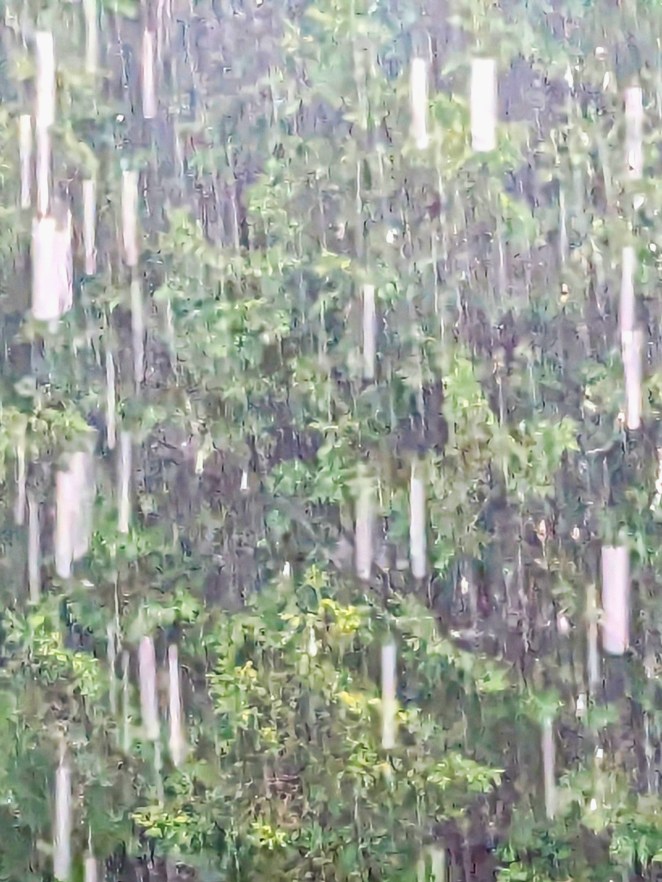
A summer without rain led to an early autumn drought. Slowly, water grew in importance. Wells in our neighborhood ran dry. We were lucky and were not affected. But we took great care not to waste water. Eau de Vie – the water of life – the water that brings life and causes life to blossom and flourish.

Without water, we are nothing. We cannot live. Then, when the rains came down, we rejoiced. We walked out into the yard and stood with our faces to the rain, looking up at the sky, mouths open, letting the water renew our hope and faith.

I took the photo, incidentally, from the dining table in my kitchen during a heavy rainstorm. Looking out into the garden, I saw a rush of water, so thick and heavy. Incredible. The photo hardly does it justice.

Hallowe’en

Hallowe’en

1

Today is All Hallows Eve.
Tomorrow is Oaxaca’s
Day of the Dead.
The clocks change
the day after tomorrow.

Today, it’s raining,
and rain is a trick when
it forces celebrants off the streets
and town councils vote to change
the traditional date and send
young children out trick and treating
on a dry, warmer night.

But this rain, after drought,
is a Hallowe’en treat.

It brings a promise
that the aquifers will refill
that wells will not run dry,
and above all,
it brings us hope.

2

Around us, fall thrives
and watches and clocks
will soon fall back.

Trees weep for lost leaves.
Flowers that flourished
now wither and perish.

Hollyhocks topple and fall.
Bees’ Balm is abandoned
by butterflies and bees.

3

I expect time
to change with the clocks
and my body clock
will soon be out of sync
with the tick-tock chime
that denounces each hour.

Hours that used to wound
now threaten to kill.
They used to limp along,
but now they just rush by
and I, who used to run
from point to point,
now shuffle a step at a time.

But still I live in hopes to see
the clocks spring forward
once more.


Commentary:

A great poem for Hallowe’en, even if I say so myself, and I haven’t even mentioned the Blue Jays and the Los Angeles Dodgers. Oh, woe is me. Shame and scandal in my poetry.

Game Six of the World Series on Hallowe’en – wow! – well, one team will get a treat and the other will receive a very disappointing trick. I know which team I support, but I don’t know who will win this time around.

Having said that – with substantial rain after drought, everybody in my province is a winner. And who could wish for more than that?

Carved in Stone 3

3

Death is everywhere.
It rides a pale horse
in the lands
where Odin reigned.

Sleipnir, his eight-legged steed,
carried him round the world.

It also carried the god
to the underworld,
and brought him back,
one of the few to enjoy
a return ticket.

Purity, innocence, power,
the White Horse rules
these Wiltshire hills,
a symbol of hope and renewal.

Above the horses,
hill forts in high places,
lie hidden.

Wave after wave
of earth-wall and ditch
blend into the landscape
making the forts
invisible from below.

Commentary:

Odin > Wodin > Wednesday, in English, not Mercredi (French) or Miercoles (Spanish). English, via Anglo-Saxon, often goes back to the Nordic gods of the invaders. Not so in Welsh for Wednesday in Welsh is Dydd Mercher, the word breaking down into “Dydd” (day) and “Mercher” (which is named after the Roman god Mercury). Alas, it is all too easy to reduce language to its most basic level. But dig below the surface and the wonders of language, history and culture, adoption and rejection, complication and simplification, are all there to be seen.

Our language links us, binds us, holds us across our culture and history. And remember ‘to lose our language is to lose ourselves.’ While to learn another language is to grow another heart and soul.


Carved in Stone 2

2

How many free thinkers
stumble up the gallows’ steps
or take that short walk,
candle in hand,
to the executioner’s block?

Some take a longer trip,
in a tumbril along French streets
lined with howling,
slogan-chanting citizens,
en route to the guillotine.

Heads, already severed,
welcome them with sightless eyes,
a strange harvest for straw baskets.

Hearken to the swish of stone
against steel as the executioner
sharpens the blade that will swiftly fall,
then rise, only to fall again.

The horse-drawn cart
creaks towards its inevitable end,
filled, standing room only,
with unfortunates trapped
by whatever rising tide
hurled them against the razor rocks
of their imminent mortality.

Commentary:

Flower Pot Rocks along the Fundy Coast. One of the most beautiful spots in New Brunswick, a province with so many other beauty spots. It’s hard to believe that I was standing on the seabed when I took that photo. It’s also hard to believe that the Fundy Tide, one of the highest, if not the highest, in the world, rises to the tree line, at the top of the photo, way above the sand.

If you go to the Fundy, consult the Tide Tables with care. You do not want to get stuck in the Fundy mud. Nor do you want to be one of the unfortunates trapped by whatever rising tide hurls you against the razor rocks of your imminent mortality.

Carved in Stone 1

My very own hand-carved verraco
Del Rincon (Avila) a Roger

Carved in Stone

1

Behold me here,
filled with a sort of shallow,
hollowed-out wisdom
accumulated over decades
while listening with my eyes
to the words and thoughts
of writers, long-dead.

Imprisoned in book pages,
do they bang their heads
against walls that bind,
or hammer with their fists
at the barred lines
of their printed cages?

These spirits long to break free,
but they choke on library dust
and pollen from verbal flowers
that bloom unseen.

Those old ones avoided
the traps of temporal power,
or, once trapped,
gnawed off a precious limb
to limp into freedom

Commentary:

Carved in Stone is the second dialog (Chronotopos II) in my Bakhtinian Dialogs with my time and my place. Clepsydra is the first Dialog. You can follow it, in its entirety, starting with this first, introductory post.

Reception Theory – I write, you read. Any meaning that you extract from my poetry will depend on your own culture and background. Tolle, Lege – Take and read. Read slowly, and with care.

I am a poet, a dreamer, if you will. These are my dreams. Tread softly on my dreams, for when you enter my world, you mingle your dreams with mine. The result, I hope, will be an interesting intellectual blend of new creativity.

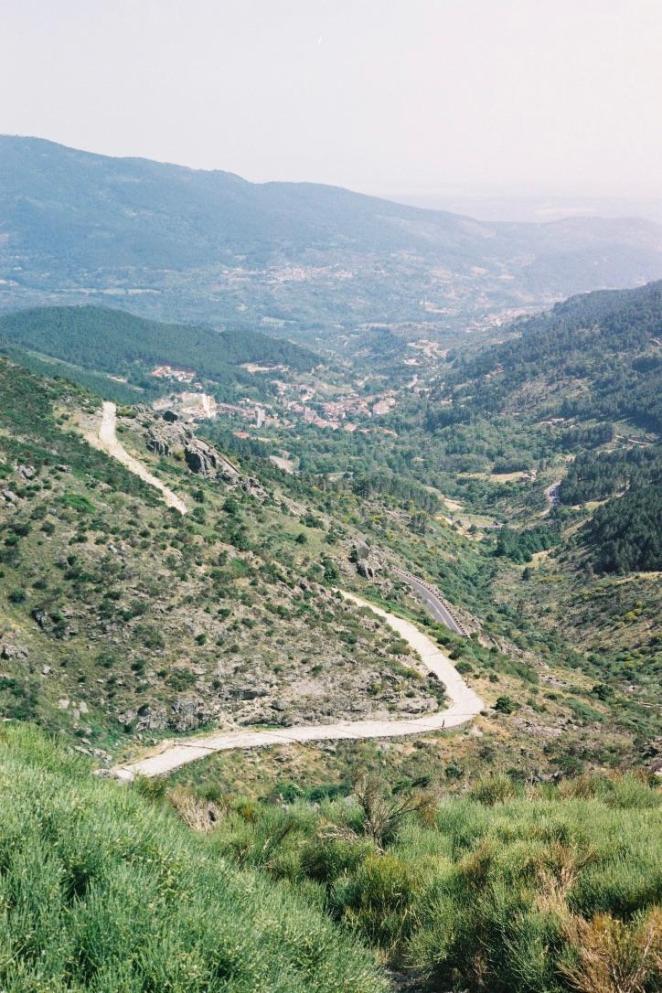
The hand-carved verraco, in the photo above, was given me by my friends in the Rincon (Avila) where I spent four happy and creative summers. Never forgotten. Blessings and pax amorque.

Clepsydra 51 & 52

51

… and thus I sit in silence
     while unspoken words
          echo through
               my empty skull

I cannot produce
     the grit that oysters use
          to smoothly shape
               the pearl of great price
                    that radiates with light

the word
     once spoken
          can never be recalled

word magic
     water magic
          liquid trickling
               from cup to earthen cup

time slowly dripping away
     filtering through my fingers

flickering and dying,
      and the snuffed candle flame
          absent now
               and everywhere
                    the pain of its absence …

52

… and me like so many others
     caught up in time’s dance
          a shadow among other shadows
               moving on the cave wall
                    while the fire flickers

I try to hold them
     as they flit by
          but they vanish
               drifting like dreams
                    half-glimpsed
                         in early morning light

dancers and dance
     must fail and fade away
          when the music ends

I recall snippets of song
     that fan the unborn fires within

what am I
     but a tadpole
          swimming bravely
                into my next metamorphosis

the dancers hold hands
     and sing, oranges and lemons
          as they circle under the arch

“Here comes a candle
     to light you to bed

and here comes a chopper
     to chop off your head

 and when will that be
     ring the bells out at Battersea

I do not know
booms the great Bell of Bow” …

Commentary:

And here ends Clepsydra. One sentence, one poem, 52 sequences. Time, frozen in the writer’s mind, the passing of time, measuring time, internal time, external time, sidereal time, historical time … all linked through memories … personal, cultural, literary, family, events … all tied up with what Miguel de Unamuno called intra-historia, those deep, very personal little histories, that lead us away from great historical events into the minds of the observers, the witnesses, the readers, all with their interior monologue and their own mindfulness.

For those of you who have chosen to walk this road with me, I offer you my gratitude. I do hope you have enjoyed – if not the whole journey, then selected parts of it that may have touched you, or amused you, or aroused your interest. Pax amorque.