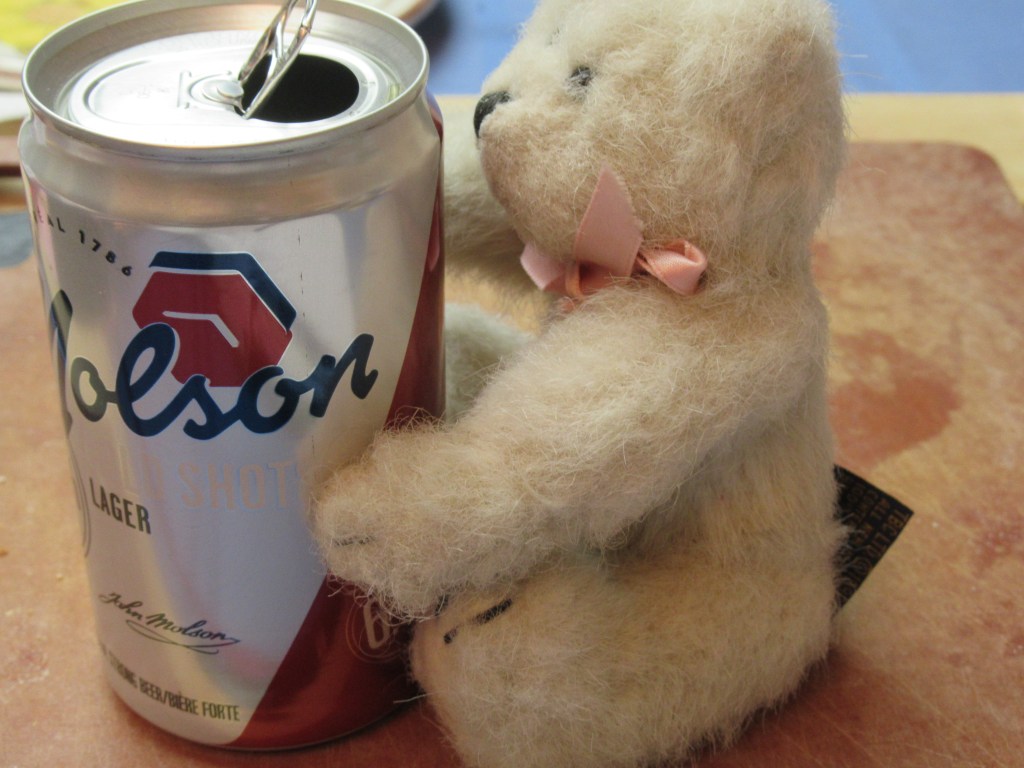
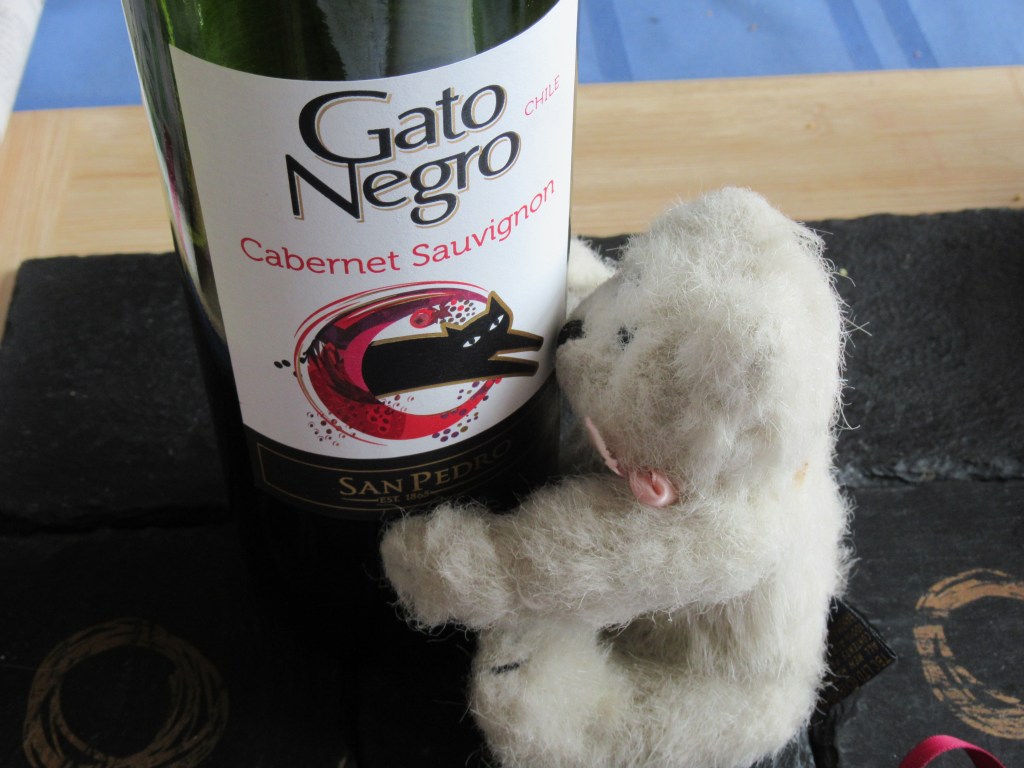
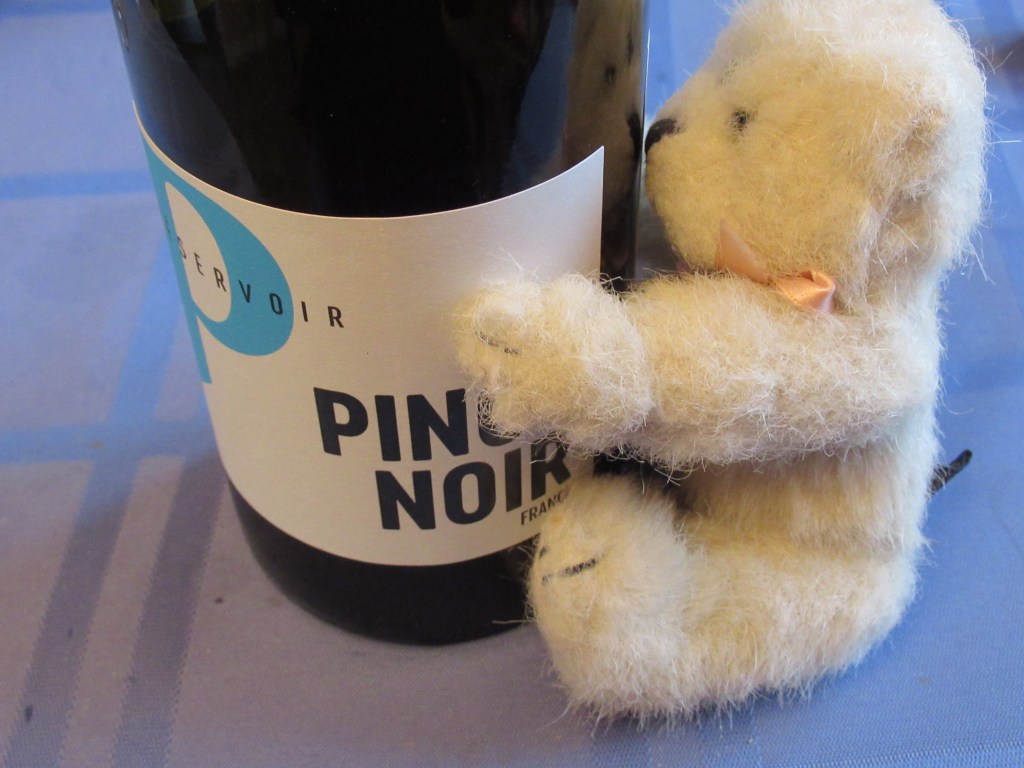
Yours are the hands that raise me up, that rescue me from dark depression, that haul me from life’s whirlpool, that clench around the jaws that bite, that save me from the claws that snatch.
Yours are the hands that move the pieces on the chess board of my days and nights, that break my breakfast eggs and bread, that bake my birthday cake and count the candles that you place and light.
You are the icing on that cake, and yours is the beauty that strips the scales from my eyes, then blinds me with light.
A Survivor from the Empress of Ireland Lights a CandleDuring the Old Latin Mass for the Dead Before the Main Altar at the Sanctuaire Sainte-Anne Pointe-au-Père
1
I am still afraid of fire: in principio erat verbum / in the beginning was the word.
I am still afraid of the loud voice of the match scratching its sudden flare, narrowing my pupils, enlarging the whites of my eyes:
et lux in tenebris lucet / and light shines in darkness.
Booming and blooming, igniting the soul’s dark night.
Voice of fire: et Deus erat verbum / and the Word was God.
Flourishing to nourishment, flames whispering on the flood: omnia per ipsum facta sunt / all things were made by Him.
Wool and water, this sodden safety blanket; and what of the cold plush of pliant teddy bear, the staring eyes of the doll:
et tenebrae eam non comprehenderunt / and the darkness comprehended it not.
2
The lashes of their eyes bound together with salt water, they were doused in a silken mist: hic venit in testimonium / this served as a witness.
Still the patterns pierce my sleep, hauling me from my opaque dreams, holding my wrists in this sailor’s double clasp: non erat ille lux / he was not the light.
Oh! Curse these dumb waters rising! “Not a hair on your head shall be harmed!” he said, hauling my sister up by her hair only to find her staring eyes belonging to the already dead: et mundus eam non cognovit / and the world knew her not.
3
Night waters rising. The moon raising its pale thin lantern glow: et vidimus gloriam ejus / and we saw His glory shining forth upon the waters’ mirrored face.
Comment: I searched everywhere, but I could not find a copy of my poetry book Empress of Ireland. Nor could I find a file containing the poems. Lost, I searched everywhere yet again and then, on an old USB, I found the text of the chapbook M Press of Ire. The above poem comes from that chapbook. Empress of Ireland is available on KDP / Amazon. I had forgotten how much I loved the sequence.
November on the Berryfield: duck weather, we call it, with the rain pouring down and the watchers standing on WWI duckboards, chilled their fingers, eyes blinking against the wind.
West Country clay turns rugby boots into leaden counterweights. Hands stuck in pockets, the railway carriage where we changed is a distant memory. The only reality, this wet clay holding us back.
Mouldy and muddy, our rugby jerseys are all the same and it’s hard to distinguish friend from foe.
Trench warfare, we think, as the two packs strain, a Roman tortoise, sixteen bodies, thirty-two legs, crabbing from side to side as they seek a perfection that will never be found on a day like today.
Rain shrouds the goalposts and the scrum half’s kick is a yard too far from clumsy, chilled fingers as they scrabble in vain at this soap-bubble nightmare we call a rugby ball. Worn-out legs churn through mud that clutches like an octopus at feet and ankles.
Running rhythms are lost. Wet clay fingers hold us back. Grey ghosts of ancient alumni raise up our hearts, help us to haul our opponents’ tired bodies down.
Comment: Just rediscovered this, revised it, and now I am posting it again. The Berryfield is where I played my school rugby. If anyone remembers the Berryfield, or actually played there, by all means drop me a line. That West Country clay mud was the devil. Heavy and clinging, it grew on your boots until they became as heavy as diver’s boots and gradually weighed you down. It was worse for the opposition than for us. We, at least, were accustomed to it. It was even worse for the cross-country runners and I have never forgotten those ploughed clay fields.
To be Welsh on Sunday (This prose poem should be read out loud, fast, and in a single breath!)
To be Welsh on Sunday in a dry area of Wales is to wish, for the only time in your life, that you were English and civilized, and that you had a car or a bike and could drive or pedal to your heart’s desire, the county next door, wet on Sundays, where the pubs never shut and the bar is a paradise of elbows in your ribs and the dark liquids flow, not warm, not cold, just right, and family and friends are there beside you shoulder to shoulder, with the old ones sitting indoors by the fire in winter or outdoors in summer, at a picnic table under the trees or beneath an umbrella that says Seven Up and Pepsi (though nobody drinks them) and the umbrella is a sunshade on an evening like this when the sun is still high and the children tumble on the grass playing soccer and cricket and it’s “Watch your beer, Da!” as the gymnasts vault over the family dog till it hides beneath the table and snores and twitches until “Time, Gentlemen, please!” and the nightmare is upon us as the old school bell, ship’s bell, rings out its brass warning and people leave the Travellers’ Rest, the Ffynnon Wen, The Ty Coch, The Antelope, The Butcher’s, The Deri, The White Rose, The Con Club, the Plough and Harrow, The Flora, The Woodville, The Pant Mawr, The Cow and Snuffers — God bless them all, I knew them in my prime.
Comment: I wonder how many other ‘serious drinkers’ or ‘amateurs’ remember these pubs and clubs. And, oh yes, there were so many more. The Mexico Fountain, The Tennis Court, The Old Market Tavern, The New Market Tavern, The Load of Hay, all those many colored dragons: green, black, blue … the Three Lamps, the Cricketers, the Villiers Arms, the Birchgrove Arms, the Rose and Shamrock, several Red Dragons, the Church, the Black Swan, I can’t remember how many different Georges, and Kings’ Heads, the Vine Tree, the Sun, the Oak tree, the Penguin, the Naval Volunteer, the Quadrant, the Coronation Tap, the Mauretania, The White Horse, the Black Horse, the Old Grey Mare … so many memories, and all deniable, and I’ll never forget the Wheelbarrow Race (ask me about it), nor Pickety Witch, one of those pubs at which I never stopped!
Every day, now he’s learning to speak Welsh, he finds out something new about his childhood. It’s not the need to talk so much as the necessity of diving into himself and mining his memories.
Brynhyfryd / Mount Pleasant. Pen-y-Bont / the End of the Bridge. Ty Coch / the Red House.
This latter the house in which he was born, way out of town, by Fairwood Common, away from the strafing and bombing. The war generation of his family all born in the same in-the-country Gower bed. No room in war-time hospitals not even for the birth of war babies.
Three of his brothers did not survive those rough, household births. He still bears the forceps’ scars from the moment the doctor plucked him out, head first, and hung him up by the heels, shaking him, bringing him back to life.
He bears other scars as well from the survivor’s burden of carrying three dead brothers for seventy long years, alive and kicking in the womb-warm crevices of his still beating heart.
Driving from St. Andrews to Island View, giving thanks for fall foliage as I pass fields and forests filled with autumn blushes blueberry patches brushed with cyan, violet, sprinkled with primary red.
Trees crowd close, encroach, add yellow and orange, fresh tonal values at each turn.
Sunlight strokes white touches of pointillistic beauty through showers of golden leaves.
Ochre and brown burn shades where pinprick black ghosts shadow grays through a gilded tree.
Cubist, this fire-bright, iron-sheeted shed. Surrealist that rusted tractor, abandoned. The road’s black thread ties together vivid impressions of leaves as they tumble and fall.
Red leaves multiply on maple trees. Bright berries staining a mountain ash.
One flower survives on the hollyhock, its blaze of glorious blooms lost, faded in a silence of dried seeds, absent bees.
Hummingbirds are now long gone. Geese gather in great gaggles feasting on grass before taking flight and soaring south.
I want to ask questions about their journey but they mouth denial and waddle away to paddle on grey waves when I approach.
Comment: With a temperature yesterday of 21 C (that’s plus 21 C) rafts of geese are still around. These photos are from earlier in the fall. I love the way several stand erect, looking at and for possible intruders, while others feed. Shared responsibilities. I guess we humans could learn a great deal from the geese, if only ‘we were not full of care / and had some time to stop, and stare’ (W. H. Davies, one of my favorite Welsh poets, the verses changed slightly and adapted to Mactaquac). Roedd hi’n y tywydd heulog a cynnes yfory / the weather was sunny and warm yesterday. What a joy to be able to write that in Welsh after so many years without the language.