Name Game

IMG_0129.JPG

Quacker-quack-quack: I suppose there are better names for a sort of quacking duck cartoon. But then, what’s in a name? A rose by any other name would smell as sweet. But would it? What if we called it a dead rat or a mushroom riot fungal infection, would it then smell as sweet? Good question.

With names, we are looking for le mot juste, the single word or short phrase that sums up the moment and seizes it, framing it forever. As the Welshman once said, when Wales beat the South African Springboks rugby team: “Now I can die happy.” And that’s what he was called ever afterwards: Dai Appy. Then there’s Dai Arrears, who could never pay his bills on time, and Dai Lemmer, who never knew what to do, and Dai Alysis, who had a kidney problem, and Dai A’Beckett, who ate too much sugar and chocolate, and Dai Ear-Kneed, who always held his hand out for a little extra financial help, and Dai Lingual, who couldn’t speak any Welsh (you’ll have to think about that one), and Dai Ap Bolockal, who had a devilish sense of humor and always played practical jokes on his siblings, and Dai Urnal, who slept all night and only woke up in the day time, and Dai Heederal, who threw stones at sea-gulls, and Dai Nasty, who lived in a shoe with so many children that he didn’t know what to do, and Dai Rection, who always knew the way home no matter how much he had had to drink, and Dai Late, who never arrived early and thought he would live for ever, not to forget Dai Anthus, the florist, with a personality so split he was also known as Bill and Ben the Flower Pot Man,  and there’s Dai Yallog, who always mumbling to himself, born in the Mumbles, mind, and mumbled so much his wife called him Mono, and there’s Dai Verse, a rotten poet, couldn’t ever make his poems rhyme in either unofficial language, and Dai Vulge, the village gossip, who could never keep a secret, and … and … One day, I will write a book about all my Welsh friends called Dai, and indeed, there are a great many of them. What adventures they would have. Enough to turn Under Milkwood sour with jealousy, probably.

Meanwhile, back at the duck farm, Quacker-quack-quack is looking for a nice, friendly duck name. Please let me know if you have any suggestions. And stop throwing sand in the Winky Bird’s eye: he’s got enough problems as it is.


Snowman

IMG_0176.JPG

“Settle down, children, and be quiet. I am going to read you a story about the snowman who didn’t believe in global warming. You, at the back, Elizabeth … yes, you. Sit down and shut up and stop biting your fingernails. And no, it’s not recycling when you chew them afterwards. Stephen, stop blowing raspberries. Now, children, shall we begin?”

“Yes, miss.”

“Once upon a time, a long time ago, after a big snow storm in November, Little Justin built a snowman in his garden. It was a lovely snowman. You can see how lovely it was if you look at the picture at the top of this page. There. Isn’t he lovely?”

“Yes, miss,”

“Justin was a very clever boy and he could do magic tricks. So, he made his snowman mobile and the snowman walked all over the garden. He was a very happy snowman and he threw snowballs at Justin who caught them and threw them back. Stephen, will you stop blowing raspberries.”

“Sorry, miss.”

“Justin’s snowman could speak and understand long words and sentences. He was very clever, but not as clever as Justin. David, will you stop picking your nose and don’t put that finger anywhere near your mouth.  And Stephen, one more raspberry and I’ll make you stand in the corner. Do you understand me?”

“Yes, miss.”

“One day, Justin told the snowman all about global warming and how the spring would come and the sun would shine and all the snow would melt. ‘Phooey,’ said the snowman. ‘I don’t believe you. And anyway, I don’t care.’ ‘You just wait until April or May,’ said Justin. ‘Then you’ll believe in global warming.’ ‘Right,’ said the snowman. ‘I won’t believe in global warming until April or May. Then I’ll believe in global warming. Maybe. We’ll see.’ Justin was very upset that the snowman didn’t believe him. Stephen: that’s enough. No more raspberries, I said. Now go stand in the corner. With your face to the wall. Any more noise from you and I’ll put you in detention. Do you understand?”

“Yes, miss.”

“Well Christmas came and the snowman danced on the snowbanks and thumbed his nose at Justin. ‘Global warming sucks,’ he sniggered. Justin shivered through the cold winds of January and February. Then March came in like a lion and the cross-country skiing was wonderful and Crabbe Mountain was full of young people all having fun. Meanwhile the snowman danced away and sang under the moonlight. Some nights Justin would wake up to find the snowman’s face, like a great full moon, leering in at his window. And … what was that noise? Stephen, was that you?”

“Please, miss. I couldn’t help it. It wasn’t a raspberry, miss.”

“I know it wasn’t a raspberry. And I know what it was. You’re coming with me to see the principal. Class, you can take out your pencils and notebooks and write your own ending to the snowman story. Stephen, what you did was disgusting. You’re coming with me to the principal’s office. Right now.”

“But, miss,” Elizabeth an David raised their her hand.s and spoke in chorus” “What happened to the snowman?”

IMG_0185.JPG


Buzz Words

IMG_0044.JPG

Beware of Buzz words. Beware too of the perils of what Bobby McDonagh, in the article linked below, calls the thought incinerator. A thought incinerator is a word or phrase that can be repeated again and again to destroy thought and argument. McDonagh’s article illustrates the use of thought incinerators in politics. Being more apolitical than political, I am interested not in politics, but in the linguistic argument that involves the erosion of language and meaning and the destruction, with chanted, thoughtless choruses, of logical discourse and analysis.

Lock her up, the people have spoken, build that wall, drain the swampfake news, all fall into the category of thought incinerators, precisely because they can be repeated endlessly with no need to present logical arguments to support their continued usage. While these mindless chants can be attributed to one side of the political divide in the USA, more similar phrases can be found in the article below touching on the current political situation in the [Dis-] United Kingdom of Great Britain and Northern Ireland. some examples follow: the elite, project fear, Brussels bureaucrats, Brussels bullying, Brussels blackmail, the EU wants to punish Britain, whatever did Europe do for us, not to mention the notorious red bus and its far-reaching message “350 million quid a week for the NHS. I encourage you to read the and hopefully to understand what such mindless repetitions do to incinerate thought within our so-called democratic society.

https://www.theguardian.com/commentisfree/2018/nov/20/brexiteers-trump-language-fake-news

The problem goes beyond politics and enters the realm of language erosion. In our province, the local newspapers write at a grade nine language level and like it or not, we deal on a daily basis with functional illiteracy. Spelling, if and when people actually write, has become phonetic because less and less reading takes place, and the world is summed up in catchy sound bytes from radio and television and the shorter the better. Slowly, we are reduced to devouring slogans like those repeated above.

I look at the trees in the garden: birch, pine, spruce, fir, tamarack, hackmatac (from the Western Abenaki?), balsam poplar, larch, willow, mountain ash, black willow … they can all be reduced to trees. In my garden, at the feeder, I have birds, sparrows (so many varieties), nuthatches (white and red-breasted), woodpeckers (at east three kinds), finches (many species), grosbeaks, siskins, song-birds, warblers, passerines … but as the clear-cut loggers who cleaned the hillside behind my house pronounced “trees are just trees, we’re here to clear them out,” we might just as well say “birds, just birds, we’re here to fatten them and feed them to the cats”.

The erosion of language, the erosion of thought, the dumbing-down of society, the reduction of the world to advert, slogan, and chant, the loss of thoughtful democracy … this is what I fear most. And, as I age, I fear the loss of memory as song sparrow, white-throat, chipping, Lincoln, are slowly fading into generic ‘sparrows’. Soon, alas, they will probably all flap their wings and fly away, fading into the simplistic grey mist of a disappearing species … ‘birds’. I fear that day and I fear what memory loss and thought incineration and language erosion are doing to my precious world.

More thoughts on language erosion can be found here

https://rogermoorepoet.com/2018/11/17/thinking-outside-the-box/

Early Bird

untitled

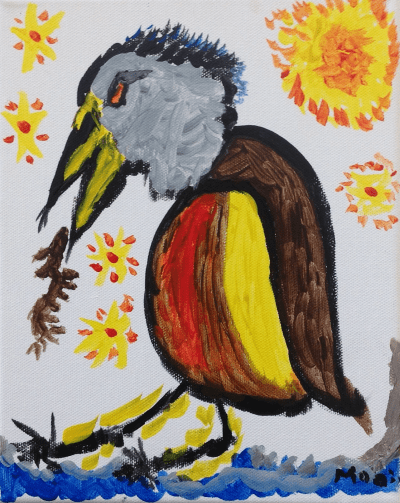
This is the first painting I ever did on canvas. Kingsbrae held their painting session for children in June 2017, and I joined in with the five and six year olds. It was such wonderful fun. They slapped the paint onto the canvas with unbounded joy. It was hard not to be joyful with them. Many of them expressed curiosity about my painting: “What is it?” then later “What are they saying to each other?” The conversation between bird and worm (or whatever it is) was of incredible importance to them. I thought of it as my “Bonjour, Monsieur Courbet” moment. Now that’s confidence for you.

My strange accent, slowly developing as mid-Atlantic Welsh, with a touch of West Country English and a dab of Upper Canadian and a touch of New Brunswick also fascinated them. “Where are you from?” “Fredericton.” “No. Where are you really from?” “Island View, New Brunswick.” “No. Where were you from before that?” The questions continued until they had ascertained that indeed, I was not a Canadian, a real Canadian, even though I was in Toronto in 1967 to see the Maple Leafs win the Stanley Cup. 1967: that’s 51 years ago, and I still support the Maple Leafs and I still have my strange overseas accent. “You’re weird,” they told me. “I’ve been in Canada a lot longer than you,” I told them. “Where did you grow up?” They asked. I silenced them with my answer: “I don’t think I have yet.”

Happy paint-splashers, we dabbed on and on in alternating mirth and silence. Some left the table and walked away. Geoff collected our paintings and left them to dry. Later that day, we hung this painting on the wall in the KIRA dining room. It sat there for several days and nobody noticed it. Alas, a hawk-eyed young lady finally spotted it the first night she came over for dinner and “What is that?” she asked, pointing at my painting. Bold and italics combined cannot reproduce the scorn and disdain rolled up in the single word: that. I remember the butler in a country house in Somerset removing with a pair of tongs the Communist newspaper The Daily Worker from the weekend newspapers left on the doorstep. He, too, was very disdainful.

I also remember the tone of an Old Etonian, well he said he was an Old Etonian and had a rasping, high-pitched nasality that made him sound the part. This jolly goof fellow summed me up at a dinner party one night in Toronto when I first came to Canada: “Oh, you’re Welsh.” The grate of his voice was the scrape of a stick removing a dog turd from a shoe. “No,” I said. “Irish, actually.” I used my broadest Welsh accent. “My family is Irish Catholic not Capel Cymraig / Welsh Chapel. Moore is an Irish name. Llewellyn ad Jones are Welsh names. I am not called Llewellyn or Jones.”

And this reminds me of my father, standing in the elevator in a posh hotel in Bordeaux, when three Irishmen walked in. They scanned him for a moment, and then one said, in the broadest of Southern Irish brogues: “T’is the map of Ireland written all over your face.” “Yes,” says my father in his thick, Welsh accent, “I am Irish. But I was born in England.” And that brings me back to my painting. Is it the early bird that catches the worm or the late worm that gets caught by the bird? And which came first, the chicken or the egg?

Ah, the beauty of children. They accept, often without judgement and often without speculation and I love their readiness to befriend the growing child within the old man as he ages. They may not hold doctorates in philosophy, but by golly they are true philosophers in their finest moments. And then of course, they go to school to learn how to behave … and may the good Lord have mercy on them.

Haircut, anyone?

SD 16

Haircut, anyone?

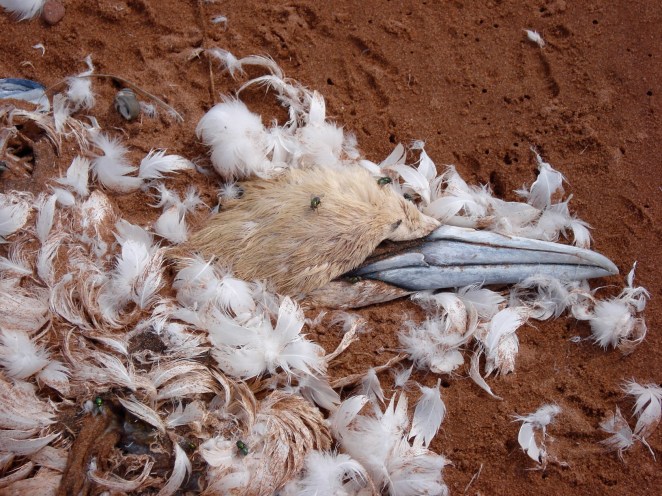
Well, it’s almost time for me to have my hair cut. When I looked in the mirror to shave this morning I looked a little bit like this: beaky nose, eyes closed, well, half-closed and squinting, anyway, and all lathered up. My grand-pappy told me there’d be days like these: usually just before he cut himself shaving at the kitchen sink with his old cut-throat razor. Then he’d disappear into the outside bathroom and reappear with little Vs of toilet tissue pushed into his chin to staunch the still-leaking wounds. All that’s missing here, in this photo, apart from life itself [nature morte: still life] is my grandfather’s pink shaving cream. And a sense of humor: wreckage on life’s beach, the common destiny that awaits us all, flies and all.

Funny Old World

IMG_0130

Funny Old World

It’s a funny old world,
this word-world of mine,
where one day
I am whirled off my feet
and the next
my feet seem to be set
in concrete.

Meaning?

I throw the question out,
a bone to the dog,
sun-flower seeds for the chipmunks,
but there’s no reply.

Only the crows,
black-winged monarchs
destined to wear
a weighty crown,
cry out their anguish,
longing for the day
when they’ll rule again.

MT 1-3

img_0181

MT 1-3
Monkey Statue

(after Rabelais and his many experiments with goose down and geese)

Covered in concrete
a conquering hero
stands in the yard.

Pigeons feed on scattered breadcrumbs.
Squabs squat on the statue’s head.
They gift his shoulders with the fresh
white lime of guano,
as dry as dandruff.

Is this what all monkeys will become,
statues in a square, pooped on by pigeons?

The statue stretches out a hand,
clutches at a passing pigeon,
thrusts it head first between his legs,
strains hard, then wipes his …

Monkey takes the hint,
dons an anonymous grey
suit of medieval armor,
and runs.


Poetry


img_0189

Poetry

“Poetry gives permanence to the temporal forms of the self.”
Miguel de Unamuno.

That is what my writing is all about.
Those temporal forms, fluttering and changing.
Butterflies, they live for a day or two,
perch and flourish, spread their wings,
excel for a moment, catch our attention,
blown by a sudden gust, tear their wings on a thorn,
perish in the blink of an eye, cluster and gather,
reborn in dusty ditches, congregate on bees’ balm,
smother Cape daisies and black-eyed Susans,
shadows shimmering, butterflies by day,
fireflies lighting up the night, terrestrial stars
floating in their forest firmament, hackmatack,
black oak, bird’s eye maple, silver birch, fir,
impermanence surrounds us, dances beneath stars,
sings with robins, echoes the owl’s cry through woodlands,
poetry, the elemental soul, our words capturing nothing,
turning it into eternity, holding it for the briefest moment,
then letting it go. Island View: my dialog with time and place.

Friday Fiction: It’s Snowing


img_0436

Friday Fiction
It’s Snowing
20 April 2018

I wish it was fiction, but it isn’t. Friday, 20 April, 2018: clouds fill the sky, thick, fluffy clots drift down nodding at me as they pass my window. An inch of snow covers  grass, deck, pathways, lawn.

It’s snowing.

I check the weather forecast: +6C / 43F with light rain forecast for today. So much for the computer and the weather forecast. Look outside: snow is tumbling down, and it’s getting thicker. The blonde bimbo who waves her arms across the weather map with its bars and contours tells me it’s raining. She’s trapped indoors, in a tv studio, reading from a teleprinter. Wake up, lady, and smell the green tea. Then look out the window. But wrap up warmly … because it’s snowing.

Why is it snowing? Several reasons:

  1. I took my snow tires off the car last week: a sure sign it will snow.
  2. I got my hair cut yesterday: that always brings a change, for the worst in the weather, especially when I get a summer haircut, nice and short.
  3. To reassure me that my choice in coming to Canada was the correct one: I could have gone to Australia where my cousins are in danger of being burned out yet again by their third major bush fire in ten years. Here, it just snows. And snows. And so …

It’s snowing on April 20. This is personal. This is a personal attack on my humanity and sanity. I know: I chose to come here, to spend my life here, and I love it … but snow on April 20, when the tv bimbo is calling for rain and wet weather?

What will the robins do? Yesterday, they wandered in little groups all over the grass, chirping happily, singing for their suppers, pulling worms out of the brown earth as fast as they could go. Today, not a robin in sight. Not one.

But the crows are back: ubiquitous, omnipresent, omniscient, eternal, the seculae seculorum crows squat, feathers fluffed, beaks to the wind, hunkered down in skeletal trees, counting the snow flakes as the fall … caw … caw … caw …

Crows and snow: I think of school porridge, burning for breakfast.  I can’t shake off those memories. They haunt me at breakfast time. Porridge suddenly appears as if from nowhere. The smell of burning tickles my nose. My cereal plate fills with the  grinning face of porridge. It makes faces at me, nurdling and grimacing as I try to picture Corn Flakes, Rice Crispies, and Sugar Frosted Flakes, robins, not crows, green grass, not this bright, white table cloth spread on the lawn before me.

Oh for the sweetness of the robin’s song, the dawn chorus of a thousand songbirds lighting up the morning, sunlight on the grass … not a hope … forget it … look out of the window …

It’s snowing.

Friday Fiction: Gringos

img0137_1

Friday Fiction
23 March 2018
Gringos

            By day, I sit in the shade beneath the grapefruit tree and watch as the sun turns each globe of fruit into a shiny planet. The hummingbirds visit me. They whir their wings, bow their heads, and pay homage with their ruby throats.

            On warm days, the sun decks me out in a shining cloak of sumptuous colors, red, blue, yellow, green. When it rains, my captors quickly confine me in a small dark place: no moon, no stars, no worshipers, no forest canopy, no grapefruit planetarium to shape my dreams. Just night and silence. I tuck myself in and hope for the occasional dream to reach out its hand and extract me from my cell.

            Fine weather today. I sit beneath the grapefruit tree and the gringos buzz around me. They push grapes, raisins, bananas, crusts, cigarette butts through the bars of my cage. I scorn them. Gringos, I cry with contempt. Gringos. They clap their hands. Bray with laughter. Sway from side to side splitting their sun-red faces with gold-capped teeth. I eat very little of what they offer. An occasional grape. A chunk of banana. I never take food from their fingers: the temptation to bite the hand that feeds is far too great.

            I am learning their language. The compound guards who allow the gringos in and out of the gates that lead to the outside world teach me gringo words. I can now say gringos go home and this makes for much merriment. The gringos slap their sides and double over with strange cackled cries of laughter. Sometimes tears come to their eyes.

            I drowse in the sun and recall my childhood on the building site. The workers took me from my forest home, placed a chain on my leg, and tethered me to the broken branch of a leafless tree. At first, I couldn’t understand their speech, but they persisted and bit by bit, I picked up their words. When I repeated them, they laughed. Now, I rarely use them and when I do, the compound guards throw a blanket over my head and carry me back to jail.

            I am very careful with what I say. Gringos go home. That is fine. But I rarely say what I really want to say. I want to tell the world how much I love the sunlight as it pierces the leaves and filters down to me, sparking fragmented colors from my frame. My greatest desire is to move in a cloud of many colors, all my family together. I love being part of the crowd-cloud, a voice among voices, all of us in counterpoint and tune. Instead, I sit here, isolated, alone, pining for my brothers and sisters.

            Gringos, I want to say, gringos, let me go home.

          Today, a great event. One of the gringos has picked up my prison and moved it from under the shade of the grapefruit tree to a new spot beneath the balcony. I now sit directly beneath the geraniums. The gringa who lives long-term on the second-floor waters her flowers regularly.

            The gringa grows old and forgetful. She knows she must not water her plants during the day, especially when I am around, but today she is out in the sunshine, forgetful, without her hat, dressed in her dressing-gown and grizzled slippers, with her hair in steel curlers, and a watering can in her hand. Water. It is the symbol of my baptism. It is the element that will release me from my bondage. Water will quench my thirst and free my soul.

            I hear the water, the blessed water, falling on the flowers. I hear the water filtering down through the flower pots. I feel the water bouncing off the geranium leaves threading its way down to settle on my back. My mind returns to the building site of my youth.

            I remember my childhood friends. Their faces flood back and grow like flowers as the waters flow and I remember every word those old friends said as they ran from the building site to take shelter from the rain that stole their money, stole their livelihoods, and stopped them from working.

            Fucking rain, I screech, as the water hits me. Fuck this fucking rain. Fuck this mother-fucking rain.

            I hear the sound of running feet followed by voices.

            “Gertrude’s watered the parrot as well as the geraniums. He thinks it’s raining.”

            “ Quick, fetch his bloody blanket. Shut up, you foul-mouthed parrot.”

        Alas, my moment in the spotlight is over. The play is done. The curtain falls. Darkness descends. I tuck my head beneath my wing and before I fall asleep, I squawk one last feather-filled word:

Featherless-muffer-fuckers.