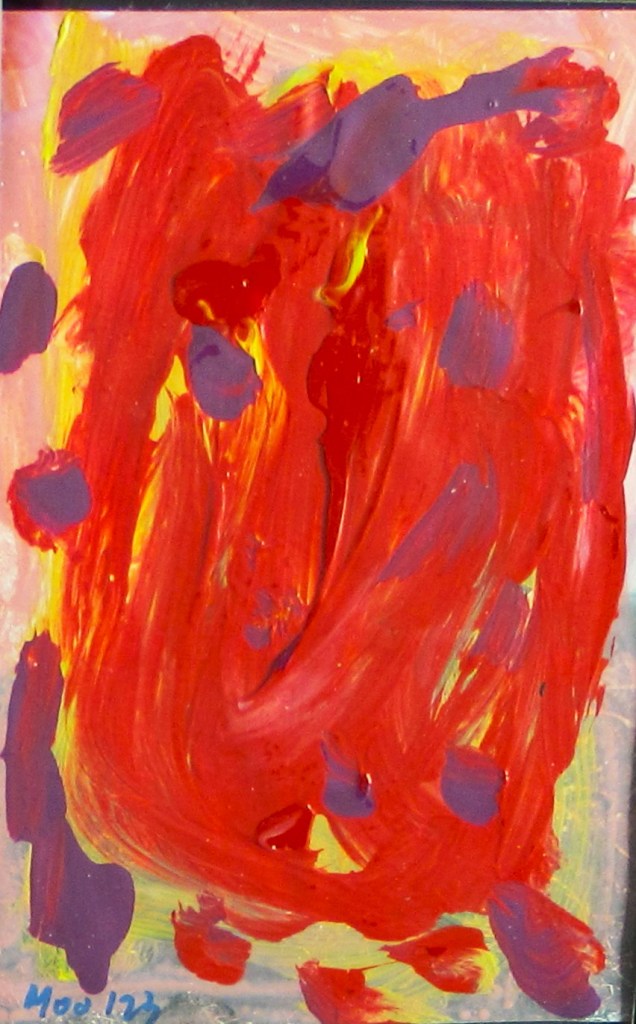
A Game of Chance

A Game of Chance

You make me think of the road not walked,
the path untaken, the bay around the headland
where we never swam, the cliffs on the Gower
that we never had the time to climb.

Who knows which path is right or wrong
when we throw the dice and stake our future
on a single moment of time when, thinking done,
we come to a decision and take that first step.

The more I know, the more I realize that I know
so little and am surrounded by a world
not only unknown, but totally unknowable,
and me with my life dangling from a frail thread.

Sometimes, I dig deep into bottled sunshine,
But find no answers there, just the same questions
swirling round the glass, and the glass filled with
the same uncertainties and lack of knowledge.

I really don’t know where to go, or how to get there.
And then I remember that, if I don’t know where to go,
any path I take will lead me there. That is when I shuffle
the cards, breathe deep, and give the dice a throw.
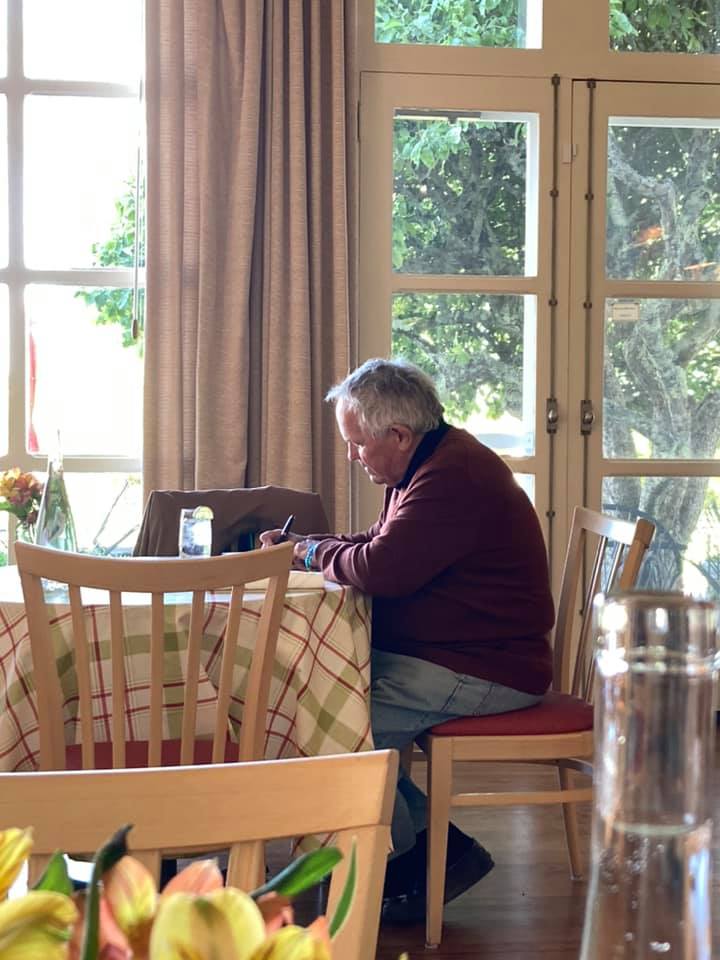
Pain and Pane

Pain and Pane

I am living in a Duke of York world
fraught with mood swings and random changes.
When I am up, I am up, and when I am down,
well, then I am down, and every so often,
I meet in the middle and am neither up nor down.

At night I swim among the constellations
and the stars net silver sequins in my hair.
By day, I walk along a piano’s keyboard
and replay life’s ups and downs like scales,
practicing them, again and again.

I no longer know who or what I am.
I only know I exist right here, at my desk,
my table, in my bed, looking out through
a window that has opened in my head,
a window that serves as a mirror.

I step through it, and go back to my childhood
in Wales. I recall the sunny days of sea and sand,
but also those days when sunlight fails, clouds
gather, and the west wind conjures rain and gales.
Such pain as I press my nose against the window
pane, and watch the raindrops falling again.

A World of Silence

A World of Silence

My dreams are black-and-white movies,
no voices, with the cinema pianist tapping
silent notes on the hammer dulcimer.

Shadowy images, cast by a candle, flicker
along the walls, and I am back in school,
walking, half-asleep to midnight mass.

I stumble forward, from that distant past
towards a series of unknown futures
none of which may ever come to pass.

In the Big Top of my head, the gymnasts
hold hands and in silence float their clouds
above the heads of the wondering crowds.

To fall or not to fall, to fall to rise no more.
Soundless sighs erupt from silent, open
mouths as the tight-rope walker sets out.

The umbrella in his hand is a Roman candle
that throws shadows on the circus sand
as clowns with bulbous noses cavort below.

The ring-master flexes an inaudible whip.
The carnival ponies trot up and down.
The motor-bike rider accelerates. In the hush
the bike ascends the Wall of Death and falls,
diving down, down, down, into silence.

“All words come out of silence. The language of poetry rises from, and returns to, silence.” John O’Donohue, Anam Cara, p. 110.

Old Man Sin Drome

Old Man Sin Drome

Damn! He’s done it again.
He must pretend it hasn’t happened.
He struggles out of his jeans,
runs the hot tap in the powder room,
removes his underoos,
and places them in the basin.

He adds soap and watches the water
bubble and change color.
He rolls up his sleeves,
places his hands in the hot suds,
grabs the nail brush,
and starts to scrub.

Cancer. He is washing it away,
removing its stain, the smell,
the pain of its presence.
He drains the water and wrings
his underoos, twisting them this way
and that in an effort to purge.

More water now, no soap.
He waits for the water to discolor.
When it doesn’t, he knows that all
is well and the evidence destroyed.


He wrings out his underoos again,
then hangs them over the air vent to dry.
He keeps a spare pair in the cabinet drawer.
He puts them on, struggles back into his jeans,
and hopes that nobody will ever find out.

Wash Day Blues

Wash-Day Blues

“Out, out, foul spot.” Yet,
however much I scrub them,
those blood spots on my clothes
will not disappear. No seas
incarnadine for me. Picking
at scabs, my fingernails draw blood.
with so many ragged edges.

The old, stale liquid flows
fresh again from once-healed wounds.
Why made me open them up?
Was it just boredom? Or that itch
ever nibbling at the mind’s edge?

Tell me, how do we walk away?
How do we heal ourselves?
How do we forgive and forget?
Does the fresh blood wash away
the dirt I feel crusted round me?
Will I ever be clean again?

Wednesday is wash-day.
I scrub again and again
at all my dirty linen. Then I watch
as my wrinkled skin grows damp, scabs
soften, and I open them once more.

Lost

Lost

Where can it be? I put it
somewhere safe, but I
can’t remember where.

So many things grow legs,
go absent without leave,
walk out of my world.

I am slowly losing control.
My life will soon be left
in somebody else’s hands.

They will control my wants
needs, and necessities.
Then I too will be lost.

Placed somewhere safe,
perhaps, there to lie forgotten,
abandoned, secure, perhaps,
but who knows at what cost.

Time and Tide

Time and Tide

Sitting, waiting, patiently,
it’s all I have left, except
for impatience and anger.
They sometimes take control
in an explosion of bitterness.

I can only sit here for so long and
then anguish gets the better of me.
A dropped plate, a spilt glass,
a cup of coffee slithering over
the tablecloth, and I explode.

Such events are becoming
more frequent and much fiercer.
I try to withstand them, to hold them
back, but they rise like the tide
that lifts the Fundy fishing boats
from their beds in the mud,
moon tides, planetary upheavals,
that swell again in spring and fall.

Like the boats in the bay,
I am powerless to stop them.

Two Spiders

Two Spiders

A spider dangles from its web by a fine, thin thread
that glistens in the sunlight. She hangs there, refusing
to think about the father she never knew, the aunties,
uncles, grand-parents, sisters and step-sisters, and all
those unknown relatives that abandoned her and fled.

What can she do? What can we do? Nothing.
We think ‘ancestry’ but we know, more or less,
who we are and what we are. We are just a son
and a daughter of troubled marriages where one set
got divorced and the other stayed together through
hell and high water, and all that those things mean.

But we are a son and a daughter, brought together
by chance, circumstance, happenstance, or some
thing beyond our control, and happy together,
the outside world shut out, and us in our little web,
as we have been for more than sixty years.

We have learned that, when the strong winds blow,
we must weave our web beneath fine grasses, that
do not stand strong like the oak tree, then stubbornly
break and fall, but bend like reeds or willows, before
the life’s storms, then straightening up, to raise
their heads, and surviving, after the winds pass.

Why am I?

Why am I?

A coast line
where sea and shore
engage in a never-
ending dialog
of silence and sound.

Who sees such things?
The man or woman
who has eyes to see.

Who hears such words?
The person who has ears
to hear and a heart
with which to feel.

And who am I,
this old man walking
life’s sands at the tide’s
foaming edge?

With a clarity of vision
that morphs light into shadow,
and then back out again,
would you tell me, please,
who, and why, I am.

“The chorus of the ocean, the silence of stone.”
John O’Donohue, Anam Cara, p. 78.

Poems for the End of Time

Poems for the End of Time

Here it is, and it is up and waiting for you! I already have my first copy. More on the way. The same artist who did the cover for People of the Mist did this one as well. He’s such a nice person – doesn’t charge me a penny.

Introduction

         Poems for the End of Time is composed of two linked collections, Meditations on Messiaen and Lamentations for Holy Week. They both have separate introductions in the body of the text.

         My graduate work at the University of Toronto (MA, 1967, and PhD, 1975) included studies on Golden Age / Early Modern Spanish Poetry (16th -17th Centuries). It enabled me to read and enjoy both the Renaissance and the Baroque poetry of Spain. My own interests lay within nature poetry, as expressed by the Spanish Mystics (St. John of the Cross and St. Teresa of Avila), the Neo-Platonic Poets (in particular, Fray Luis de León), and the Metaphysical poets (Luis de Góngora and Francisco de Quevedo). Echoes of their writings and thoughts are frequent within these two poetic sequences.

         I will write further on both sequences later in the book. Briefly, both sets of poems were written while listening to the music of Olivier Messiaen. Three of his compositions, Quatuor pour la fin du temps / Quartet for the End of Time, Éclairs sur l’au-delà / Lightning over the Beyond, and Petites esquisses d’oiseaux / Little Sketches of Birds, influenced me enormously. I listened to them every day while I was writing and revising these poems.

         These poems are not for the simple-minded. They form a contrasting tapestry of point and counter-point, filled with allusions, word-plays, internal rhymes, repetitions, and alliterations. They have a music all of their own.

Do not expect simplistic escapism. If you are serious in your efforts to read, listen to the magic of Messiaen as you turn the pages, much as I did while I was writing.