Buy a Book by an Author from NB

Buy a Book by an Author from NB

This is buy a book by a New Brunswick Author time, sponsored by the Writers’ Federation of New Brunswick (WFNB). Alas, so many New Brunswick authors are almost faceless to the wider world beyond the Province and the Maritimes. It gives me great pleasure, therefore, to highlight one of the books that I dearly love from a New Brunswick author, Jane Tims.

Here is my review of Jane’s book, first published (the review) on Brian Henry’s Quick Brown Fox (14 March 2021). Thank you, Brian, for the work you do in assisting and developing writers all across Canada – and beyond – and a special thank you for all you have done to help me over the years.

Niche, poems and drawing by Jane Spavold Tims, reviewed by Roger Moore
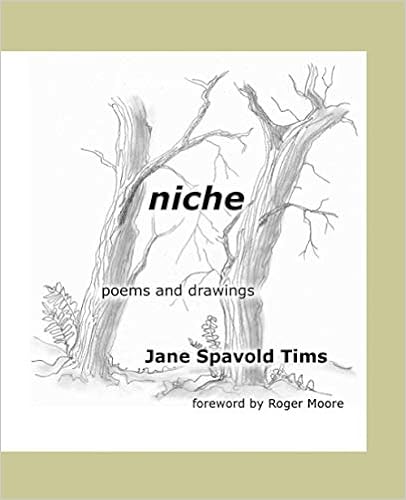
Independently published. Available from Amazon here.

Niche, the fourth poetry book published by Jane Tims, is a neat configuration of six segments that elaborate and illustrate the poet’s original definition of the multiple meanings of her title word niche.  

It is difficult to separate the author from the act of narration as her keenly observed and skillfully executed drawings, together with their verbal representation on the page, are so autobiographical and so much an extension of her artistic and professional abilities that the objective separation of writer and text is scarcely possible. It is hard to forget that Jane Tims was, and to a great extent, still is, a highly competent professional botanist. The harnessing of the professional botanist, with her unique drawing skills and scientific knowledge, to the poet and auto-biographer is a key factor in the reading and interpretation of this text in which acute observation blends with an intimate knowledge of the observed botanical world, both flora and fauna, and this allows the poet, in her role of poetic narrator and lyrical voice, to weave a network of poems that are, at one and the same time, objective and intensely subjective.

The author emphasizes this when she writes in the Preface that “In biological terms, the niche is the quality of a space occupied by a living thing, the sum total of physical, nutritional, biological, psychological and emotional needs gathered together in one place.” She also reminds us that in human terms “niche can be a metaphor for home, community or personal space” and it is within these metaphoric spaces that the poetry text is elaborated. The text becomes a linked mixture of visual drawings, iterative thematic imagery and associative fields, all centred on the multiple meanings of niche. These terms are both biological and human in nature and the poet’s named world meets at this juncture between the human and the natural.

The section occupying space (1-19) bears the subtitle satisfying need and begins with a setting out of what this means in the following 12 poems and 4 accompanying drawings. The poem ‘apples in the snow’ with its companion drawing stands out for me. 

The section strategy, subtitled solidifying position (21-43) outlines in poetic terms, how plants, animals, and humans ensure their own survival. 

The section praying for rain, subtitled, avoiding danger and discomfort (45-68), offers views on discomforts and dangers. It also opens the discussion—relocate or stay where we are? 

The section mapping the labyrinth or places I have occupied (69-83), which contains the wonderful sentence “When I get lost on the road ahead, I look to the road behind me,” throws open the multiple meanings of home. 

The section new ways for water, subtitled coping with change (85-98), offers a double landscape, first, external, the things seen, touched, examined, remembered and described, and then the internal landscape that reflects upon them and is reflected in them. 

Finally, forgetting to move, with its subtitle getting comfortable (99-111), presents an autobiography that links observer (the twin personage of author and narrator) to observed (nature, both flora and fauna, and the added element of autobiography and self) via the symbiotic relationship of botanist to botany.

Two moments stand out for me. (1) Sadness is in seeking the space that is never found. (2) Loneliness is in trying to return to a space once occupied but no longer available. The whole concept of the Welsh word hiraeth is summed up in these two lines. Carpe diem, Jane Tims’ poetry indeed seizes the day and, with its minute, intense observation, it preserves so many precious moments. It also pays attention to that which has been lost, those moments that are irretrievable. They will vary for each reader, but hopefully, like me, you will take great pleasure in discovering them for yourself.

Visit Jane Tims’ website here.

Jane’s interview with Allan Hudson, another excellent NB author, can be found by clicking this link – South Branch Scribbler. The work of all NB authors should be celebrated over the first weeks of this month. Allan, thank you for supporting us – and you, too, Brian Henry. Living in NB, we need all the enthusiastic support we can get.

A Moment of Joy

A Moment of Joy:

It’s always great when a friend actually reads one of my books and then writes to me to say how much he (in this case) enjoyed it. I quote: “I really enjoyed the concept of the image and writing. I’ve attached my favourite of the bunch. Audibly said “wow” when I read it.” It really makes my day (week, month, journey) worthwhile when someone reaches out and says ‘Wow!” Thank you, that certain someone. You shall remain anonymous for now, but your words will live on!

Click here for Roger’s reading on Anchor.
The Launch Pad

Spirit Dance

Spirit Dance
Thursday Thought

One of my best friends came over today and we talked. We also went out shopping: blinds and curtain rails. I can no longer put them up. He can. We had a fun time. So much exchange of information in the car and in the store and afterwards, coming home.

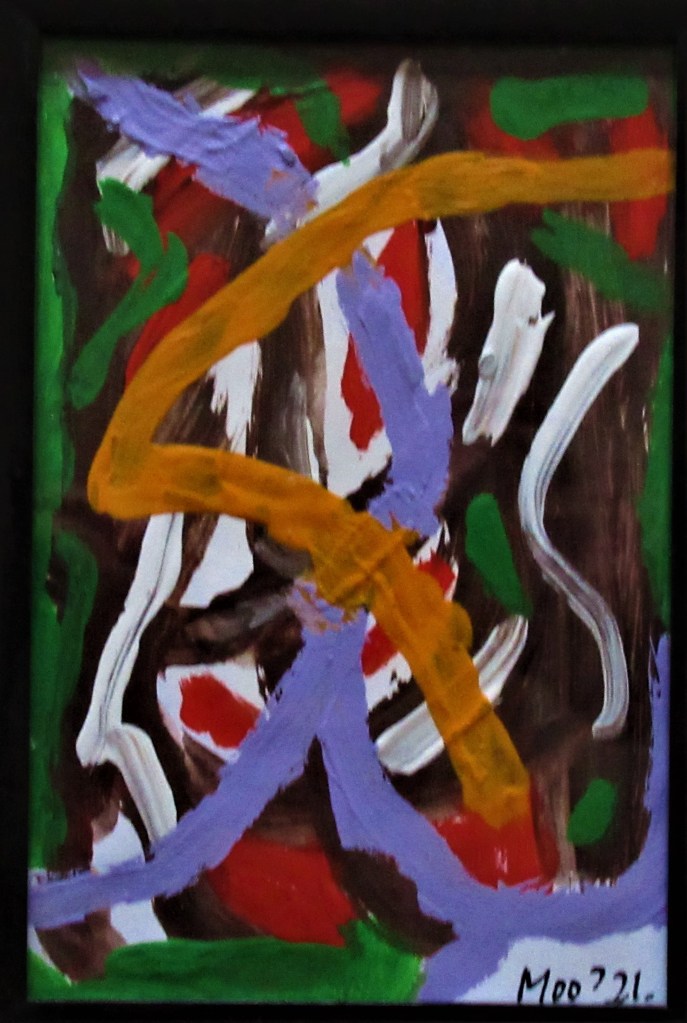
We left the mounting of blinds and curtains for another day. But I invited him to choose a painting from my collection to recompense him for his time, his care, his attention, his help, and to thank him for his friendship and his reaching out. He chose this one, Spirit Dance, the one above, quite unique, one of my favorites. It was one of two that he liked. This was the other to which he aspired.

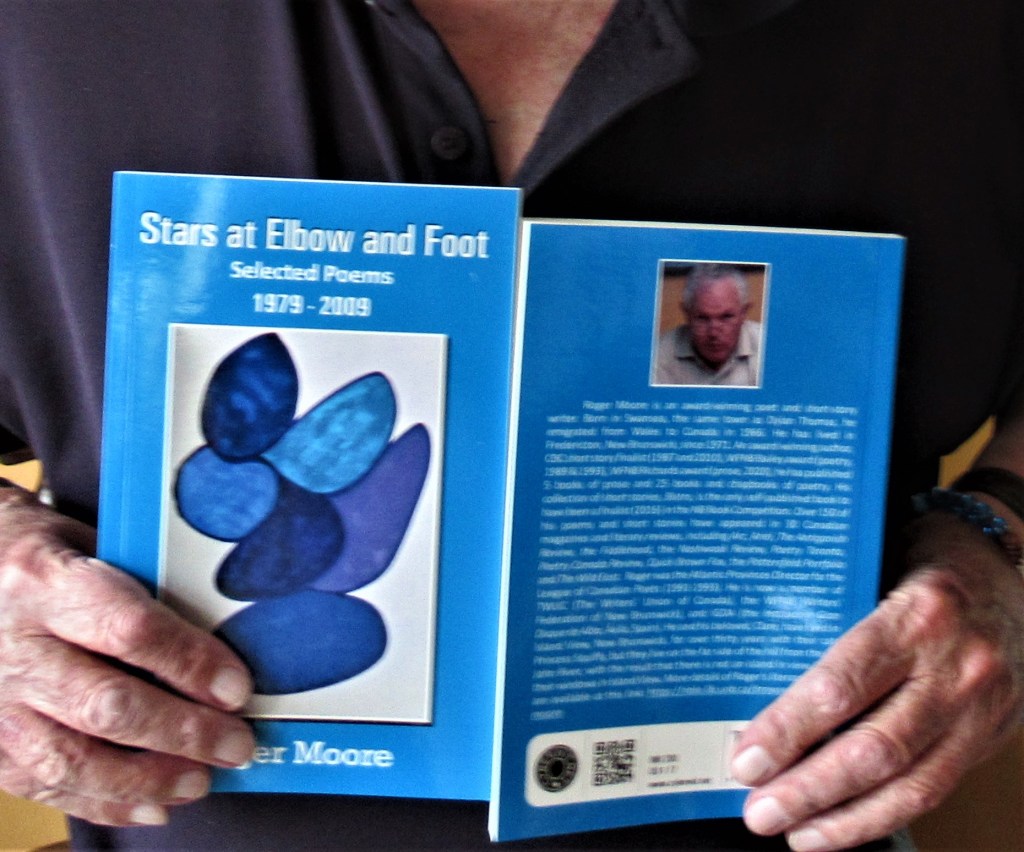
I asked him to help me choose a painting for the cover of my last book, Stars at Elbow and Foot, and this is what he selected. It is now on the cover of the book. He has a great eye for art. Well, it matches mine and he chooses my favorites. So I am happy with that.

But my Thursday Thought is this: in writing we say “kill your darlings”. Meaning, there are some great ideas in our poems, stories, novels, but they don’t quite fit. We love them. But we must kill them and cut them out. Sure we save them for later, but oh, do they ever belong.

I have never sold a painting. I cannot say ‘money talks’ like another of my friends, because to me it doesn’t. El Poema de Mio Cid: ‘partieron como la una de la carne‘ — they parted like the nail from the flesh. But, as another friend of mine, a preacher, said, when I visited my father in hospital: “there are no pockets in shrouds — you can’t take it with you.”

I am grateful to my friend for accepting the gift of my painting. I know he will cherish it and that it will be happy with him. But oh, I miss it. No: I don’t want it back. I want it loved and appreciated and yes, I know that when I go, I will not be able to take it with me. Nor any of the others. Does anybody want to adopt them, my beloved children?

Click here for Roger’s live reading.
Spirit Dance

Insights

Insights
Thursday Thoughts
07 October 2021

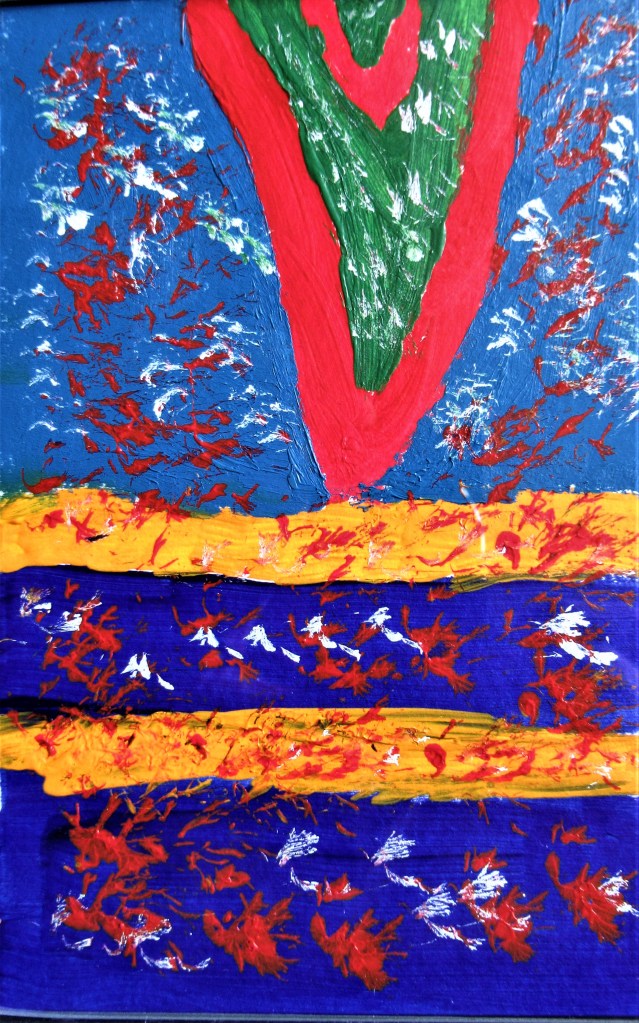
This is a painting inspired by one of Messiaen’s works: Visions from Beyond. His music inspired me to write the Meditations on Messiaen, and I have posted several of those poems on this page. For me, creativity is continuous: verbal and visual. The visual includes painting and photography, the verbal, short stories, poems, and short philosophical pieces on life and art. This is the link to the first poem from the sequence entitled Visions from Beyond. I should add that the audio reading is part of what I call creativity too: audio, visual, verbal. The complete package.

My Thursday thought: I feel that I have been blessed. To be able to see, speak, write, hear, and express some of the beauty of this world around me. I know there is ugliness out there, sickness, ill health, poverty and despair. So far, I have been spared. “Why me?” I think to myself, “Why me?” Then I cease to question and I just say “Thank you” to the Spiritus Mundi and to the Muse when she descends.

Every morning, when I wake, my mind runs through some of the hymns I used to sing as a child. “Songs of praises, I will ever give to Thee.” “Laud, bless, and praise Him all thy days, for it is seemly so to do.” “Good Shepherd may I sing Thy praise, within Thy house forever.” Meanwhile, until that time comes, I will do my best to celebrate and sing the beauties of this world in the oh-so-limited ways I know best, poetry and paint!

Twist & Bust

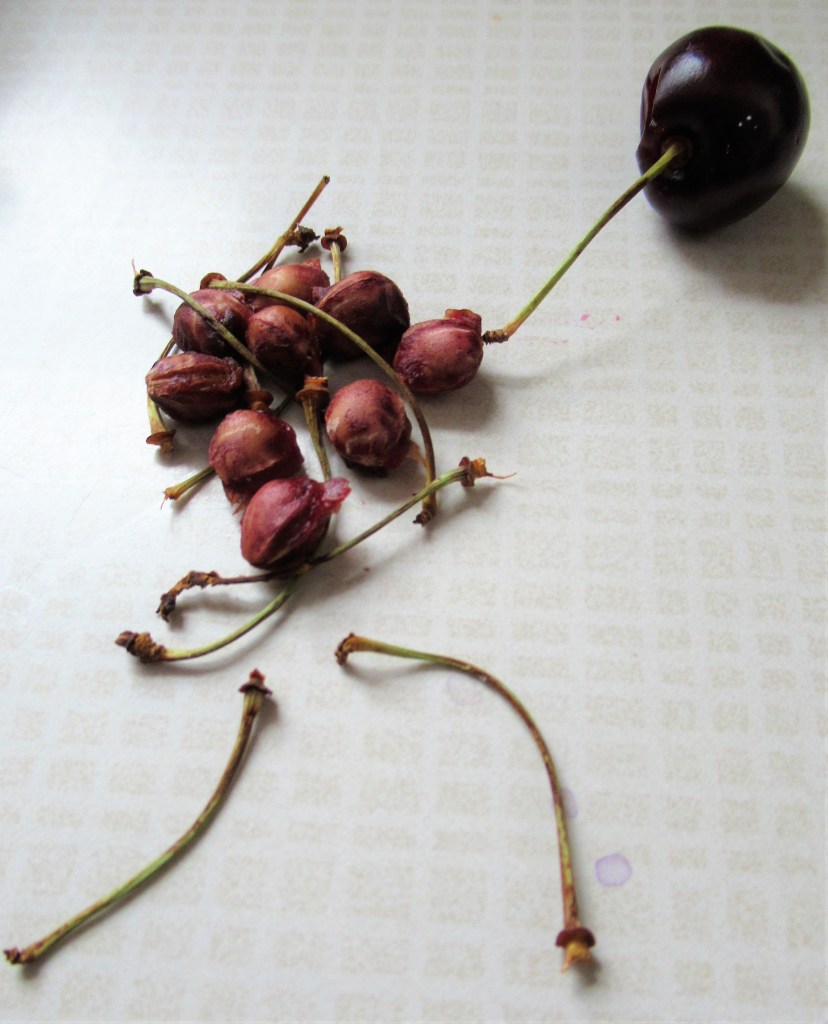
Lady Cherry Stones with balloon!

Meditations on Messiaen
Why do the people?

6

Twist and Bust

 Vingt-et-un, twist and bust, always hoping,
seldom winning, holding out one’s hand
for hand-outs, for special treatment, for some
thing that raises us above the everyday nothingness.

Twist, yes. Let’s twist again, like we did back when.
But this isn’t Oliver Twist: “Please sir, may I
have some more?” though everyone is heading
for the poor house and the beadles are gathering
by Bedlam’s door with their handcarts and dogs
and the full enforcement of a blue-serge law
made to twist and torment, though I have never
understood the law, especially when it is left
in the hands of lawyers, for “the law, dear sir, is an ass”,
a striped ass at that, black and white like a zebra,
though grey and costly in the areas that matter most.

And what is there to do but rant away
about the injustice of it all, the size of the pay-checks
and now you must check-out the food banks,
 the soup kitchens, the meals on wheels, the charitable
eating and boarding houses, because there’s no more roof
over the head and the house is sold and the incomes
are split and the children are more-or-less cared for,
though rather less than more, and the dog is turfed from
his dog house and the pussy cat booted from her feathered bed.

Click on the link below for Roger’s reading.

Twist & Bust

Real Friends

Real Friends
Thursday Thoughts
23 September 2021

A good friend of mine wrote to me the other day. “Have you noticed,” he asked, “that you have less REAL friends the older you get?”

In my reply, I said the following. “Oh dear yes, and triply so since Covid set in. I have a few remaining friends who correspond regularly on e-mail, a couple of friends who talk regularly on the phone, and the rest, in spite of all the Covid-19 promises of TLC for the aging, have been AWOL for the best part of two years. Mind you, I have kept myself to myself. In fact, I have become rather anti-social in face to face / mask to mask situations!”

This question-asking friend, now lives in another province, in a care home for the ageing. Over the ages, such homes have had many names. In South Wales they were called the Workhouse, and that’s where the broken old men from the mines and the industrial smelters ended up. Places of shame. Places to be feared. Then we had Old Folks Homes. Some were called Sanctuaries. Others are now called Hospices or Care Homes and the Hospitals themselves have been forced to take on the task of looking after our old and frail senior citizens. Some of our seniors were lucky, fell into good homes, and were blessed. Others were cursed, poor things, fell into hopeless surroundings, and lost all hope. As for the homes themselves, some were run by religious groups, others by charities, a few by the state or local health authorities. Some were non-profit, others, well, we are having a debate, here in Canada, about some of the more unscrupulous and unhealthy care homes that are run for healthy profits right now.

And that debate was caused by Covid-19. Under-paid employees, working several care homes, not just one, travelling from home to home, and the pandemic entering those homes and settling in there, causing immense suffering, damage, and death. I look on this as CCD. Originally, the initials spelled out Colony Collapse Disorder, the death moth that entered the bee-hives and caused their buzzing to end in silence. Now, for me, they stand for Covid Collateral Damage. And that form of CCD is everywhere.

You can see it in families that are breaking up. One partner loses their job, their self-respect, and goes out looking elsewhere for comfort and for pastures green. Another is forced into excessive overtime because other members of their team, now working from home, all of them, cannot cope with home-schooling, house-work, partner, and children present all day long. They break down under the stress, can function no longer, and society starts to fall apart.

Mind you, it has been falling apart for years. When I lived in Spain, I was adopted by a family in Santander who owned and lived in a huge house. The grand-mother was the matriarch and she shared the house with three siblings, two unmarried, and one divorced. The parents lived there, on and off, as they had jobs elsewhere. A country cousin, same age as the grand-parents’ generation, also lived there and did the cooking and cleaning. And the grand-children settled in there too, during term time. When the family gathered for the Sunday meal, there were 22-24 of us around that dining-room table. In such a large family setting, there were baby-sitters at hand, somebody was always employed, somebody always knew the solution to a problem, or could find one pretty quickly.

When we lived in Swansea, two sets of grand-parents were close, as were aunties, uncles, cousins, and a network of friendly faces, all of whom gathered round in an emergency. But, bit by bit, that family disintegrated. Some went to London, others to Bristol, a few to Birmingham, we moved to Cardiff. In Cardiff we went from a family network to a nuclear family, consisting of my mother, my father, and I. Both my parents worked and I was at a boarding-school, term-time, but a latch-key kid during school holidays, cooking for myself, looking after the house, waiting for my parents to come home. When I, in my turn, left for Canada, my parents were left as a family of two, then, when my mother died, a family of one. Of course, there were Social Services. Social Workers visited every so often, but the gaps got longer, the loneliness grew, and a terrible isolation took over every aspect of my father’s life. When I flew back from Canada to Wales to visit him in Wales one year, I found no food in the house, my father totally uncared for, unwanted and, by this stage, unwilling to cooperate. he wanted to stay in his home. He wouldn’t move. In truth, he had become a miserable old man who wouldn’t change, wouldn’t accept help, and could no longer look after himself.

On the anniversary of my mother’s death, I called him from Canada. He did not pick up the phone. I called his brother, who lived in another town some forty miles away. He’s like that now came my uncle’s reply. He’s fine. Don’t worry. But worry I did. Three days later, his brother called me back. My father had suffered a heart attack and a stroke on the anniversary of my mother’s death. He had lain on the bedroom door for three days, no food, no water, no visitors, until his brother had finally got worried and decided to come round and see what was happening.

“When the going gets tough, the tough get going.” We all know that phrase. Unfortunately, many are not that tough. They get going all right: they go right out through the door and vanish into the sunset. So, my thoughts for today: what exactly is a friend, what do friends actually do, what is a fair-weather-friend, what are friends for, how many real friends do we really have, and yes, the question that started me on this rant, do real friends diminish in number as we grow older?

As my grand-mother told me, a long, long time ago, in the warmth of her Welsh kitchen: “Roger, a friend in need is a friend indeed.” Luckily, I still I have some real friends who are there when I need them. Thank you, real friends. You know who you are and I am very grateful to you. Covid-19 and CCD have not been easy.


Blood and White Wash

Blood and Whitewash
A Thursday Thought

2-September-2021

Blood and Whitewash is the title of this painting. It has a subtitle: My Plan of Attack.

The origins of the title, and hence of the painting, go back to the Goon Show, with Spike Milligan, Peter Sellers, and of course / wrth gwrs, Harry Secombe, the Swansea Comedian and Master Singer. Away in boarding school back in the late fifties, one of my greatest pleasures was listening to the Goon Show on one of the dormitory’s transistor radios. As a teenager, I found the jokes and the accents incredibly funny. Still do. That’s why I painted this painting. Alas, it is silent, and you cannot hear the accents.

The following snippet of dialog occurred on one such Goon Show, I cannot remember which.

“What are we going to do?”
“Well, this is my plan of attack.”
“That’s not a tack, it’s a nail.”
“No it’s not. It’s a tack.”

So above you have my painting of My Plan of Attack, resurrected after all those years. I throw my mind back to the First World War.

The General:
“He’s a cheerful Cove,” said Jimmy to Jack,
as he walked to Arras with his pack on his back.
But he did for them both, with his plan of attack.

And there in essence is the history of the painting. First, the plan of attack, then the failure and the blood-letting, and then the white-washing of the whole history, a white-washing that turns failure into success, defeat into victory, and loss into gain. But in WWI, it was the poor Tommies who bore the burden, and all the other front line troops who obeyed orders, went blindly over the top, and charged unbroken wire with fixed bayonets.

“If you want to find the sargent,
I know where he is, I know where he is,
If you want to find the sargent,
I know where he is.
He’s hanging on the old barbed wire.”

“If you want to find the chaplain,
I know where he is, I know where he is,
If you want to find the chaplain,
I know where he is.
He’s hanging on the old barbed wire.”

“If you want the whole battalion,
I know where they are, I know where they are,
If you want the whole battalion,
I know where they are.
They’re hanging on the old barbed wire.”

Singing as they marched to their deaths, obeying orders, like sheep, and nipped on by the eternal sheep dogs. Things were so bad at Verdun that instead of singing, the men marched, bleating, like sheep. “Sheep unto the slaughter.” There was so much ill-feeling and rebellion in the face of orders and certain slaughter, that French regiments were decimated, one man in ten shot for mutiny, as they marched bleating, instead of singing, to their deaths.

“Oh, we’ll hang out our washing on the Siegfried Line,
have you any dirty washing, Mother dear?”

“Those who do not learn from history are condemned to repeat it.” So, tell me, “where have all the young men gone, gone to graveyards everyone, when will they ever learn, when will they ever learn?”

And that, dear friends, is my thought for today: The History of My Plan of Attack. When, indeed, will we ever learn?

Dance of the Spheres

Dance of the Spheres
Thursday Thoughts
26 August 2021

I thought for a moment that, yes,

I was an angel and I was dancing

on a pinhead with so many other

angels, and all of us butterflies

spreading our wings with their peacock

eyes radiant with joy and tears spark

-ling in time to the music that wanders

up and down and around with inscrutable

figures held spell-bound in a magic moment

… and I still feel that pulsing in my head,

that swept up, heart stopping sensation

when the heavens opened and the eternal

choir raised us up from the earth, all

earthbound connections severed and all

of us held safe in an Almighty hand.


Comment: This poem is from my book A Cancer Chronicle (2017) where it is published under the title Sewing Circle. While in the Auberge Monsieur Henri Cormier, in Moncton, undergoing treatment, I joined the quilting group. What fun, one anglophone man learning French from, a dozen Acadian women. What fun: and yes, I did learn a tremendous amount about so many things, including the peace, mindfulness, and inner concentration of sewing and quilting.


A Cancer Chronicle
The verse-story of one man’s journey
Click on the link below to purchase this book

A Cancer Chronicle