Sometime, make the time to drive to Alberton where the Great Blue Herons stand thigh deep in the incoming tide. Lobster boats spark stars from the waves.
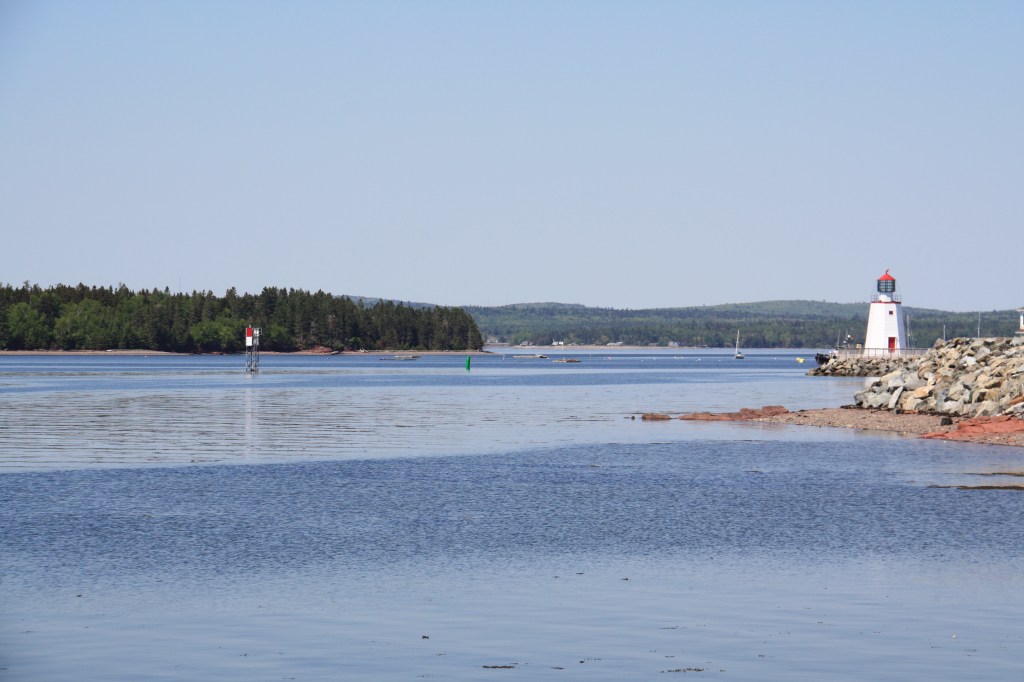
They white-water surge through a gap in the sandbank where the lighthouse stands red and white, outlined against blue sky, golden sand, sparkling bay.
Follow the fast-eroding coastline, a little less each year, past Jacques Cartier Park to Kildare Capes. Black-backed gulls ride shotgun on the red sand beach. Piping plovers charge up and down the wind-rush of surf digging for treasure, the crustaceans that will fill their bellies and enable them to survive their long journey south.
Head north past Sea Cow Pond to North Cape. Quixotic windmills wave their arms, like giants. The sand and pebble reef stretches its low-tide footpath out to the lazy seals basking in late summer warmth. Sea-birds seethe in great white clouds while fishing boats bob on wild waves and a black horse hauls Irish Moss off the beach to be sun-dried on the shore.
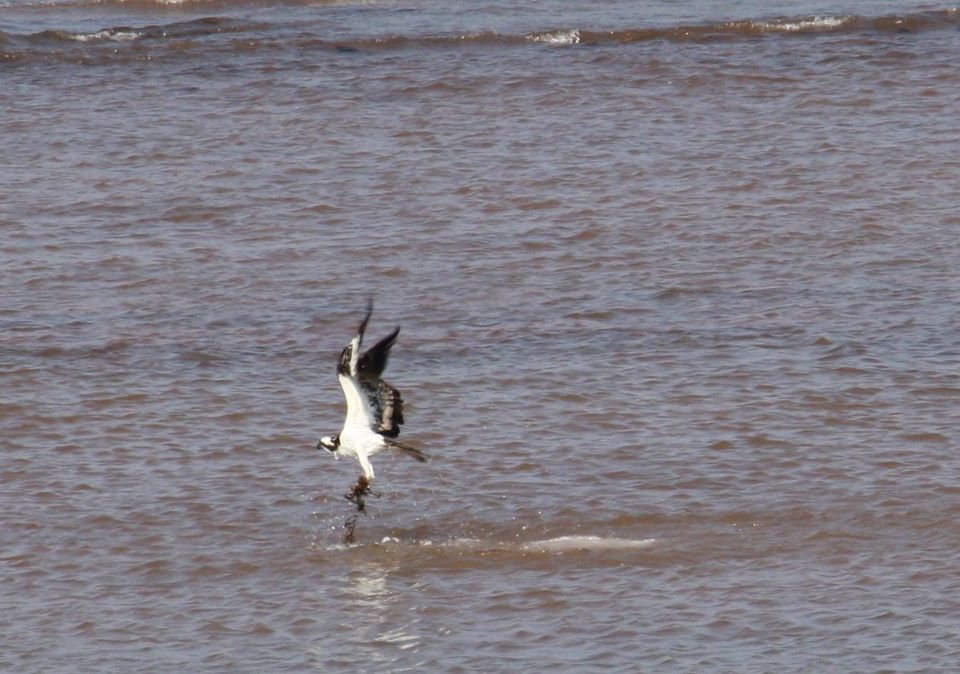
An osprey hovers, drops its lightning bolt to spear a flapping flounder on sharp claws. The magic of that great bird’s fall and rise will drive a wedge through your heart and split it open.
My family never forced me underground. Nobody ever made me kneel at the coal- face altar and worship, on my knees, that grimy god with its coal-black soul.
A child in body and heart, nobody ordered me to squirm down diminishing seams, much too narrow for men or machines and fitting only for the smallest child.
Fitting indeed, an early coffin, made to measure, lying in wait for the slightest slip of the rocks above or below. Tight fitting, indeed, no wiggle, wriggle room.
Billy Blake, my mate from Trinidad, younger than me, saw the black faces of miners emerge from the mine, enter the pit-head baths and come out white.
He, too, wanted to be white. He dug underground, grew even blacker, went into the showers, gouged his black skin, drew rivers of blood, never changed color.
He died when the roof above him fell without warning. They pulled him out. Brought him to the surface. Prepared him for burial. Wrote on his tombstone:
“His body was as black as night, but oh, his soul was white.”
Snow geese falling, plummeting from the sky, dropping like leaves, slowly and tumbling, swiftly and twisting, spiralling down. Fresh snow on the ground, their seasoned arrival.
Some land on water, others on the earth. They gather in groups, snow banks of geese, ghost-white, frightening, true sky lightning, celestial, striking from its ancestral throne.
Always some sentries, necks stretched, eyes open, alert, watching, guarding their needs while the flock feeds. One honks “Who goes there?” the flock looks up, watching him move.
Slowly, at first, they waddle from the walkers, then faster and faster as the man unleashes his hounds. An idiot woman, grinning like a death’s head, points her cell phone and barks instructions.
The dogs run at them, barking and growling. The snow geese panic, run ever faster, taking to the air with a clap-wing chorus, honking and hooting. The woman laughing, shouting
and shooting. “I’ve got them, I’ve shot them,” she calls in her pleasure. Frustrated, the hounds take to the water. Whistling, calling, the man cannot catch them, not till they tire of the chase,
no match for geese, not in air, nor in water. Joyous the couple, their videos made, hugging, cuddling. They get back in the car, dogs shaking, spraying them, baptismal water, cleansing all guilt.
Water: does it remember when the earth was without form and darkness lay upon the face of the deep?
Water gathered into one place and the firmament appeared. Then light drifted apart from darkness and with light came The Word, more words, and then the world …
… the world of water in which I was carried until the waters broke and my life sustaining substance drained away ejecting me from dark to light.
Here, in Oaxaca, the valley’s parched throat longs for water, born free, yet everywhere imprisoned. It languishes in bottles, tins, jars, and frozen cubes, its captive essence staring out with grief filled eyes.
A young boy on a tricycle pedals past my apartment. He carries a dozen prison cells, each with forty captives, forty fresh clean bottles of warm water. “¡Peragua!” he call out to me. “¡Super Agua!” he holds out his hand and asks me to pay a handsome ransom to set some of these captives free.
Real water yearns to be released, to be set free from its captivity, to trickle out of the corner of your mouth, to drip from your chin, to slip from your hand and seek sanctuary in dust and sand.
Real water slips through your hair and leaves you squeaky clean. It is a mirage of palm trees upon burning sand. It is the hot sun dragging its blood red tongue across the sky and panting for water like a great big thirsty dog.
Are they half-grasped dreams that wake, wide eyed, to a new day’s sun?
Or are they alive and thriving when they fall from the tree?
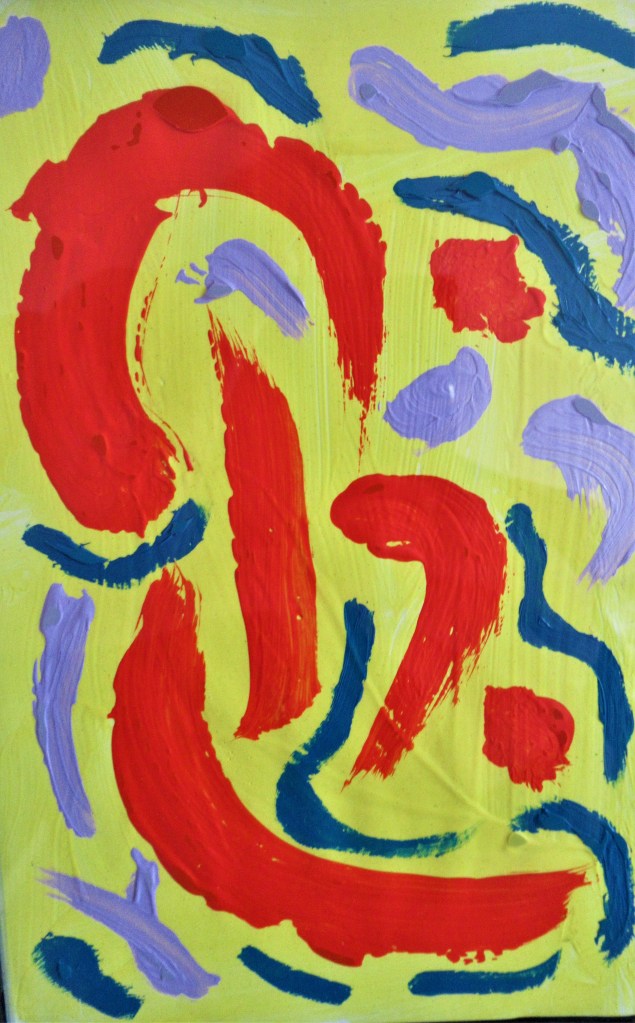
Does the carver fish their color and shape from his own interior sea, or does he watch and wait for the spirit to emerge from its wooden cocoon to be reborn in a fiery block of color?
Daybreak: in a secluded corner of my waking mind, my neighbor’s dog greets the dawn with sparks of bright colors born from his bark.
My waking dream: dark angels with butterfly bodies, their inverted wings spread over my head to keep me warm. In the town square, the local artist plucks dreams from my head and paints them on carved wood.
Searching for what exactly? For the exact word, le mot juste, the word that sums it all up, catches the essence of the thing and holds it in the mind forever.
Le mot juste? Think color. Think color blind. Think blind. Think of the world we see reduced to grey scale. Think of the seven colors that stripe the rainbow sky, each with a unique name: it seems so easy, so simple.
But the world has changed. Think now of the computer, its screen more accurate than the human eye and color coordinated by a million or more tiny little pixels that multiply the seven rainbow colors by a million or two and every color numbered beyond the recognition point of the human eye: le mot juste reduced to precision of number.
Think flowers. Think scent. Think of the limited ways we describe the smell of things.
I look across the breakfast table and see my wife of fifty years, a teenager reborn, walking into the café where we first met. I search my memory and my mind for the words to describe that beauty, that surge of excitement, but I cannot find les mots justes.
… white-capped the waves, pushed inland by a strong, warmth-bearing wind, and hazy the crazy paving sky, with its cloud figments floating, lazy, the heat, with summer’s heavy hand now sudden upon sea and land, wave upon wave, this heat wave, holding us now, as wind tied, the tide, strives to flee but cannot free itself from wind grip, and bit between teeth, white horses cap the waves, leave seaweed stranded high and dry in fierce sun, Irish Moss and Madcap Dulse, their iodine tang fulfilled on chance winds that blow us willy-nilly, this way, that way, any way the wind blows …
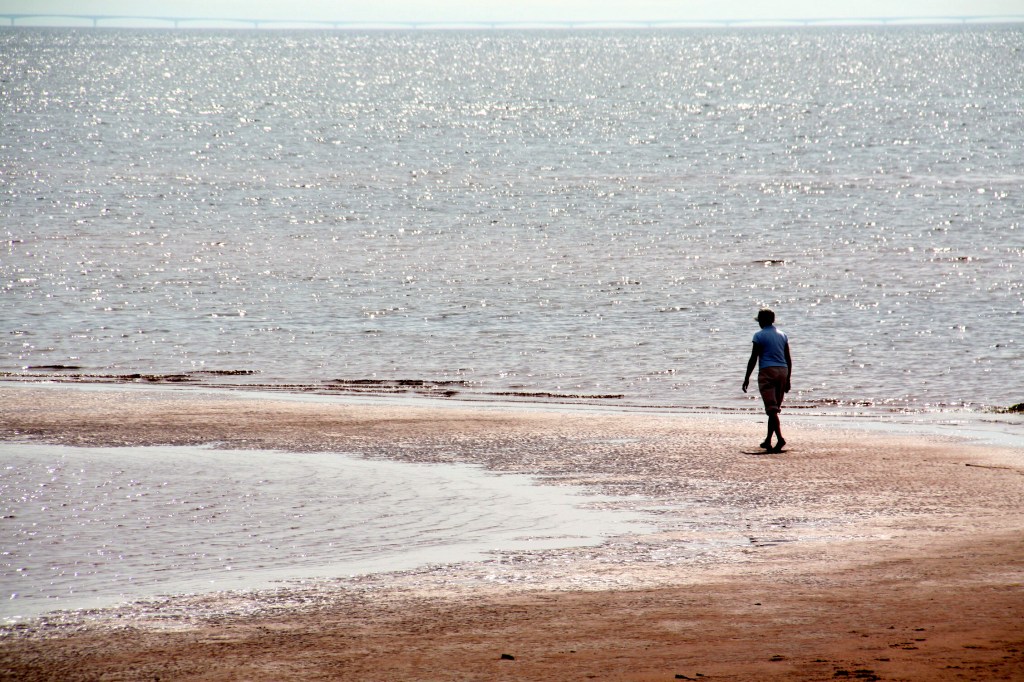
Here, on the seashore, the whisper of waves, splashed with a flash of sun, wind fingering the hair, the light a delight, and wordless this world though its beauty be configured in words.
The scything of the sea, the land seized in snippets, grey stones, red rocks, gelatinous mudflats, blue on white striations.
Seagull wings snipping celestial ribbons, salt caked keen on lips, sea weed scents sensed yet never seen.
Captivated we stand here, unattached our single wings, save to this singular beauty: peregrine, the falcon soul, so solitary as it soars.






 rogermoorepoet