Word without end

IMG_0937 (2)

Word Without End
Antonio Machado

Tree: rowan, mountain ash, larch, tamarack,
hackmatack, spruce, birch, maple, passerines
flying from branch to branch. Birds: more words,

woodpeckers, downy, hairy, pileated, cardinals,
finches, purple, house, golden, rain-rusted robins,
crows, aerial magicians, wondrous in flight.

Spring: fresh branch tips, tiny fox gloves, leaf buds,
folded fiddleheads soon to open their spring magic.
Open: hearts worn on sleeves, open to the world,

wounds, eyes, everything open to beauteous
sun-warmth, snow’s slow disappearance, rising river,
freshet flow freshening this Renaissance,

every day a rebirth, a new beginning,
fresh starts, the world reborn beneath a rising sun,
its yellow disc growing, the new day glowing.

The word as it was in the beginning, head in hands,
heart in mouth, words without meaning, words whirling
golden autumn leaves, words caught in a whirligig,
words all powerful in a word-world without end.

Comment: “La palabra: una palptiación honda del espíritu / The word: a deep palpitation of the spirit.” Antonio Machado (1875-1939). In The Meaning of Meaning, Bertrand Russell discusses what words mean and how they construct, with their endless associative fields, a net of emotions that take us beyond logic into new realms of meaning. As poets and creative artists, we are conscious of the emotions we attach to each word we use. If the poetry is good, then that network of emotional associations reaches out to a wider audience and draws them into our own world view. If we are less skillful, then the emotions are trapped in our own claustrophobic words and fail to reach out, to lift up from the page, to achieve take-off. As we develop as poets and writers, we become more and more aware of the ways in which the microcosm, our own world in miniature, reaches out to the macrocosm, that wider world outside. When we achieve a blend between those two worlds, even if it be in nothing more than a metaphor, nothing more than a felicitous phrase or a delicately timed rhyme, then we reach a new level, a level that we strive to retain and attain anew every time we create.

For me, many of the secrets of poetry can be found hidden in the rhythm of words, the music of their joining, the harmonies they create when they play off each other, old and older meanings reflecting off the newer meanings we give them as we shuffle them anew and put them through their paces.

img_0146-3

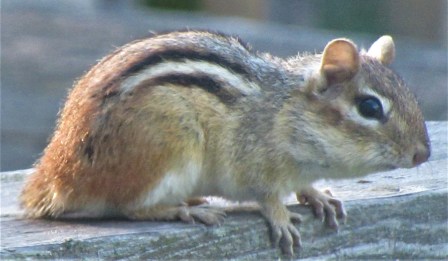
Yesterday, my beloved placed seeds on the back porch, and a chipmunk, her pet chipmunk, came and sat on her foot as he chomped the seeds. Today, this first chipmunk was followed by a second chipmunk. Patience my friends. Keep writing. Keep striving. Keep experimenting. Keep your faith and your creed. Your words will one day reach out, like seeds to chipmunks, and will sow themselves in the mind’s of your readers. And those readers will beget other readers, much as one chipmunk plus one chipmunk will eventually equal many more than two chipmunks. Oh the joy of words, the loving search for le mot juste and the meaning of meaning. In the words of the immortal Cervantes: Paciencia, y barajar / patience, and shuffle your words. The results will creep upon you one morning, unaware and, like the chipmunks, they will catch you by surprise.

Self Isolation Day 21

IMG_0638

Self-Isolation Day 21
Bakhtin’s Chronotopos
Man’s dialog with his time and place

Chronos / time + Topos / space = chronotopos: the time and space within which we live.

Chronos: this morning, when I woke up, I moved back into my own time and space. But what is my time? It was 5:45 am when I awoke, so was that my time? I stayed in what the Spanish call the duermivela, that drowsing dream-world in which we all wander, half-conscious. I stayed there until I decided to get up at 7:45 am. Was that my time? Well, yes,  all of that is / was my time. But time extends further than that. Real time is static and only exists in this second as I type the s of second, but look how it has flowed or flown. So my time drifts backwards into a knowable and then an unknowable past. I knew my parents, and my grandparents. But I know nothing of their childhood, their war days (WWI and WWII), their courting, their marriages. Their time is time lost for me. Sure, I can invent it, renew it, recreate it … but it can never be mine. All I can possess is this Second when I preSS the S key, a Second that haS already flowed paSt me, flown and gone. The same with future time. It is there, stretching out before me, for how long, I do not know. It is not yet mine, and when I come to possess it I will only posses it, really possess for those precious Seconds when I inhale, or exhale, or press the S key. And now I have bewitched you, and your concept of time, and your keyboard will never be the same.

Topos / Place: so what is my place? When I awoke this morning, it was the kennel-cave of the bed in which I hibernate each night. Then it morphed into the bathroom where I dressed and prepared for the day. After that, I walked downstairs. Descending the stairs, a step at a time, feeling for the steps with my cane, as I do, I find that each step is my place. Luis de Góngora, one of my favorite Spanish poets, wrote, a long time ago that “Cada pie mal puesto es una caída, / cada caída es un precipicio”each footstep, badly placed, is a fall, / each fall is like tumbling down a precipice. Ipso facto, I must take care not to fall each time I place my foot on a stair, and each stair, therefore, is my concentrate of time, and this moment of time manufactures my space.

Then there is my breakfast place, my office place, my work place. Time spent in each of these spaces is a link backwards and forwards, past, present, and future all inexorably bound in each passing second that I live.

But there are other spaces, spaces in which time flows at a different rate in objective time (the thirty minutes you spend in the dentist’s chair) and subjective time (the hours and hours those thirty minutes take to pass as each second limps by, like a three legged tortoise with gout). hen there is creative time: and creative time, especially on the computer, leads us into a different space, a sort of hyper-space, in which we hover between this place (the place of the office and the house) and that place (the place in which we create our visions and dream our dreams). Lost in that creative hyper-space we drift in a timeless amniotic sea where all time is one and all places are one and we are the masters and mistresses of our own creative universe. Y aquí, as my good friend José Hierro once told me, el tiempo no tiene sentido / here time has no meaning.

Jane Tims wrote these words to me today. “The idea that some of our words will live on, on the page… I wonder where our WordPress and Facebook words will reside in 300 years? Will some antiquities student make the headlines having managed to upload the forgotten words of people who wrote about the days of the coronavirus?”

My reply: “These are very true words, Jane. It looks like you have gifted me with the topic of tomorrow’s blog! Thank you.”

Indeed, the online medium is so ephemeral and can be wiped out in seconds. Tweets can be erased, changed, and altered. Written words and written histories have also been erased and wiped out. In our brave new world, the truth changes from day to day with no vital record attached to it. Historians always say that the conquerors write history … and when they do so they usually destroy the writings of the conquered. I think of all those Mexican Codices, destroyed by the Spanish priests on their arrival in Mexico as the works of the Devil. We know so much from the surviving ones, for example the history of Ocho Venado, born in 1063 and sacrificed in 1113 in accordance with the fifty two year annual cycle. Only five Mixtec codices now survive, one, the Vindobonensis, still bears the scorch marks from when it was plucked from the flames that were meant to devour it. Man’s inhumanity to man. How much have we lost? How much are we losing? How much will we retain? And what is truth …?

As for us and our chances of survival, another good friend of mine, the poet and philosopher José María Valverde once wrote of nosotros, los pobres poetas de hoy, destinados a ser polvo seco de tesis doctoralwe poor poets of today, destined to become the dry dust of doctoral theses. In spite of all this, it is our fortune and our duty to exist within our time and our space, to live letter by letter, painfully tapped on the keyboard, and to engage in our dialog with our own time and space, for that my friends is all we have, the single instant of that one letter S.

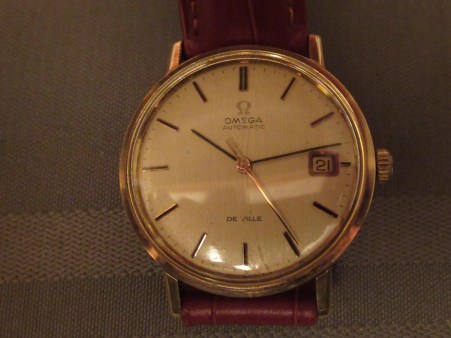
Comment: The watch in the photo belonged to my father. I wind it up and wear it on his birthday every year. It now measures my time, as it once measured his, and its place, at least once a year is on my wrist. Its function is to tell me the time. One day, it will do the same for my daughter, and then my granddaughter and they too will have their dialog with their own time and place.

Self-Isolation Day 20

IMG_1374 (2)

Self-Isolation Day 20
Novels of Action

Yesterday I wrote that “Wolfgang Kayser suggested, a long time ago, that there were three types of novels: novels of action (the easiest to write, if you have that calling).” I hope nobody took the second half of that statement “the easiest to write” too seriously. No novel worth its salt is easy to write and not everybody can write the sort of adventure story, filled with action, that drags the reader on from page to page. Part of the difficult lies in tying the end of one chapter to the beginning of the next and this is most certainly not all that easy to do. In my own case, I tend to bring closure at the end of each chapter, and that really the worst thing I can do. Why continue reading if you already have closure?

Let us look at how a master thriller writer closes his chapters. Prologue: “I will return to my Athens as soon as this mess resolves itself.” What mess? Why Athens? Where is the character now? What is happening? Read on. Chapter One: “As a double precaution, the keyboard and the door know were wiped cleaner than Petrescu’s account” What on earth has happened now? Why wipe clean the keyboard and the door knob? Which account? Why? What will happen next? Read on. Chapter Two: “Behind them, Edward Yorke’s lifeless eyes stared without comprehension at the foreman’s room and the splintered railing above him.” What has happened? Where is it all going to end? Read on. Chapter Three: “He had to move. So deciding, he opened the man’s wallet and found an address not far away?” An address? What address? Who lives there? Why is he going there? What will happen next? Read on. Chapter Four: [Summary] A crack in the wall behind a refuse bin … time for a shower … throw the victim’s pants and shirt out of the window for some bum to find … Who? What? Where? When? Why? Read on. And now for the last words of Chapter Five, the chapter that explains everything. “That hook is baited.” And this is the key … each chapter ends with a neatly baited hook that leads the reader, willy-nilly, into the next chapter. You want to know what happens next, what is on the hook, what the hook is exactly, to do that, you will have to buy the book and read it for yourselves. Look up Chuck Bowie: Three Wrongs. Muse It Up Press.

Alas, I have not yet finished with Chuck. In June, 2017, he drove to St. Andrews to visit me one afternoon while I was at KIRA. We sat by the sea-shore there and chatted about his latest novel, Body on the Underwater Road. He was working out all the details and we struggled here, and wriggled there, as we computed the many possibilities. Such good fun. So, here I am, a poet telling a story about a master story-teller-seller. How silly I am. I’ll offer up a poem instead.

Underwater Road
Chuck Bowie

We met at St. Andrews, at low tide, on
the underwater road. In secret we
shared the closed, coded envelopes of thought,
running fresh ideas through open minds.

Our words, brief vapor trails, gathering for
a moment over Passamaquoddy,
then drifting silently away. Canvas
sails flapped white sea-gull wings across the bay.

All seven seas rose before our eyes, brought
in on a breeze’s wing. The flow of cold
waters over warm sand cocooned us in
a cloak-and-dagger mystery of mist.

We spun our spider-web dreams word by word,
decking them out with the silver dew drops
proximity brings. Characters’ voices,
unattached to real people, floated by.

Verbal ghosts, shape-shifting, emerging from
shadows, revealed new attitudes and twists,
spoke briefly, filled us with visions of book
lives, unforgettable, doomed, swift to fail.

Soft waves ascended rock, sand, mud, washed
away footprints, clues, all the sandcastle
dreams we had constructed that afternoon,
though a few still survive upon the page.

And that, as the lion said, is the end of the gnus.

Comment: Three Wrongs is part of the Donovan: Thief for Hire series. Adventure series follow similar patterns: the problem, the solver (shining hero), the complication (dark arts adversary), further complications, resolution: problem solved. The Arthurian Romances set the pattern for linked adventure series back in the 12th and 13th Centuries. They were followed by the literary knights of the novels of chivalry. Perhaps the most famous of these, Amadis de Gaula / Amadis of Gaul, was imitated and parodied by Cervantes in Don Quixote. The numerous books of Amadis were followed by Son of Amadis, Nephew of Amadis, Cousin of Amadis. Perhaps nothing breeds success better than success. Think of the Sharpe series from the Peninsula War or the Hornblower books, or, more recently, Master and Captain and the recent Royal Navy series from similar times. Look out for Son of Donovan … a series coming to your bookstore soon.

Titles

img_0177


Titles

I am currently thinking and re-thinking the titles to my books.

Clearly, the title is of the utmost importance. The title should draw the reader in while offering some information on the content. Alas, my earlier titles rarely did this.

Monkey Temple, for example, really doesn’t say much about what the book contains. Nor does its subtitle: A narrative fable for modern times. Those who have read poems from the book or who have heard me read excerpts from it, know what it is about. However, deep down the title really says little about the life and times of Monkey, the protagonist who works and suffers in the corporate Monkey Temple.

In similar fashion, Though Lovers Be Lost is a wonderful title, taken from Dylan Thomas, and illustrating his theory that “though lovers be lost, love shall not, and death shall have no dominion.” If readers have these lines on the tip of their tongues, as most people from Wales do, then they will have a fair idea about the contents of the book. However, without that intimate knowledge of one of the great Welsh poets … many readers will be lost and the title will lack meaning, check my post on Intertextuality.

Bistro is a collection of flash fiction. I am not sure that the title suggests that instead of a standard and expected table of contents the book has a menu that refers to the 34 pieces of flash fiction are contained within its pages. The pieces are so varied, rather like a meal of sashimi or sushi, that it is difficult to describe the contents (or menu) in such a short thing as the title. Does the one word, Bistro, draw the reader in? The cover picture might and the combination of title and picture and cover may go further. However, I have my reservations.

Empress of Ireland, on the other hand, is a book of poems about a specific event: the sinking of the Empress of Ireland  in the St. Lawrence River in May, 1914. Here, title and event are closely linked and hopefully the title is rather more indicative of the contents. Even here, as in the cases of the books mentioned previously, a brief description of the book is necessary.

Sun and Moon is a great title, provided you have lived in Oaxaca, Mexico, and know that Sun and Moon are the official symbols of the state of Oaxaca. Without that knowledge, the sub-title, Poems from Oaxaca, Mexico, is essential. The cover photograph with the state symbol of Sun and Moon is intriguing, but it is still necessary to read the description to find out what the book is about. Are title and sub-title enough in themselves? I’m still not sure.

Obsidian’s Edge is a tricky title. I thought everybody knew that obsidian is the shiny black glassy stone produced in volcanic areas. Further, I thought most people knew that the edge of obsidian is used in weapons and knives that cut. By extension, obsidian knives were used by the Aztecs and others in their human sacrifices … so much knowledge that is clear to the writer but unclear to the reader who may not realize that we all live at Obsidian’s Edge with the sacrifice of our own lives hanging by a thin thread on a daily basis. Oh dear, I have been to workshops and readings recently where people knew nothing about obsidian and its properties … my title gives so little information.

Land of Rocks and Saints has yet to be revised and rewritten. Few English readers will associate it with the old Spanish saying, Ávila: tierra de cantos y santos / Avila, Land of Rocks and Saints. The tragedy of living a life in more than one language is that the cultural knowledge so easily understood in one does not necessarily transfer readily into a second or third language. Some of my readers write me to say that they Google all these terms and learn a tremendous amount from the books. Alas, I have to improve my titles. I need to sharpen them and use them to draw my future readers in.

Ávila: cantos y santos y ciudad de la santa, the Spanish translation of Land of Rocks and Saints that I put up on Amazon / Kindle, is a better title. Avila is both the province and the capital city of the province. The rocks and saints are clearly linked to the name and the city itself is the city of the saint, St. Teresa of Avila, of course. Hopefully, this title, in Spanish, will attract some Spanish readers. I can only hope.

The book on which I am currently working was originally called Iberian Interludes and had no sub-title. In my revision, I am selecting poems about Spain from various earlier collections and placing them together in one large compendium. I have selected poems from two collections Iberian Interludes and In the Art Gallery (oh dear, I never mentioned that it was the Prado and that all the paintings could be found there). To these I have added a selection of individual poems either published in reviews and literary magazines or taken from other collections.

I am still working on a title for this collection, hence today’s post. I have rejected Iberian Interludes as too vague (how many of my potential readers know that Spain is Iberia) and I am now looking at a bold assertion: Spain. If I do this, I will need a sub-title. The evolution of the subtitle looks like this: Bull’s Blood and Bottled Sunshine, ¡Olé!  >  Bull’s Blood and Bottled SunBottled Sun and Bull’s Blood. I wonder if Spain: Bottled Sun and Bull’s Blood will be catchy enough. Will it draw readers in and attract them?

Post Script: By the way, I thought long and carefully, and went with Iberian Interludes anyway. The cover picture shows a modern stone sculpture of a traditional bull. Lovely!

Plagiary: Wednesday Workshop

img_0177

Plagiary
Wednesday Workshop
9 August 2017

No, plagiary has nothing to do with the plague, though it might do in certain circumstances, especially if a plagiarist is plagued by lawsuits from others who think that the thief has benefitted financially or unfairly from the theft.

What is plagiary? The Merriam-Webster dictionary suggests the following, and I quote, with references:

Plagiarius, the Latin source of “plagiary,” literally means “kidnapper.” “Plagiarius” has its roots in the noun “plagium,” meaning both “kidnapping” and “the netting of game,” and ultimately in the noun plaga, meaning “net.” The literal sense of “plagiarius” was adopted into English; in the 17th and early 18th century, a kidnapper might be referred to as a “plagiary,” and, in the legalese of the time, kidnapping was “plagium.” But “plagiarius” also had a couple of figurative meanings – “seducer” and “literary thief.” It is the latter that has made the most enduring contribution to the English language. A “plagiary” could also be one who commits literary theft (now usually referred to as a “plagiarist”) or the act or product of such theft (now, more commonly, “plagiarism”).

https://www.merriam-webster.com/dictionary/plagiary

From the above definition, we can conclude that plagiary is theft, the stealing of another person’s work, and, above all, the presenting of that work as if it belonged to the plagiarist. In other words, creators create: they are not meant to steal and misrepresent.

Does plagiary matter? Of course it does. By its very definition, theft, it is one of the Ten Commandments, and therefore something to be avoided: Thou shalt not steal. However, as with all things, the gravity of the crime depends very much upon the circumstances. In academia, where creativity and original thought is the ‘name of the game’, the theft of intellectual property is considered by the gatekeepers of the purity of knowledge to be a very serious offence. That is why so many universities so carefully define plagiary / plagiarism and place such stiff academic penalties on the plagiarists who offend. By extension, certain professions, such as journalism and science (in the broadest sense, the creation, protection, and distribution of knowledge) must hold to very strict rules on the subject of intellectual theft.

The article on plagiarism in Wikipedia [ https://en.wikipedia.org/wiki/Plagiarism ] opens several horizons. It stresses that academia (with its spin off into scientific and industrial research) and journalism (with its theory of scooping) are the two biggest areas in which plagiarism is considered offensive. Plagiarism, the article stresses, more than anything else, is re-quoting other people’s material while claiming it as one’s own and without citing the sources from which it was taken. This quickly leads to the infringement of copyright and this is a much more serious and complicated legal matter, as the article points out.

As for literary and artistic plagiary, this is a very different kettle of fish as artists seem to borrow from each other in the most curious of ways. Molière, for example, proudly announced that, as for his artistic material, “Je le prends où je le trouve.” This roughly translates as “I take it from wherever I find it.” In his day and age, imitation was a favorite rhetorical device, and the imitation of other people’s work was considered more like flattery than theft. Miguel de Cervantes, in the Don Quixote, that most original of novels, took the first sortie of the famous and ingenious knight almost word for word from an earlier entremés (short play to be performed in the interval between the acts of a longer play) entitled El entremés de los romances. This is not so much ‘Homer nods’ as Homer ‘carries a gun and holds up a local bank’. Do we cry plagiary or imitatio when the similarities between the play and the novel’s opening are such that for a long time people attributed the Entremés de los romances to Cervantes and referred to it as his early work?

I follow the Spanish tradition and often use lines and words from other authors in my own work. However, I think that what I borrow is in most cases well enough known for it not to need quote marks, nor to need identifying. Though Lovers Be Lost and Broken Ghosts, two of my book titles, come directly from Dylan Thomas’s poetry. However, I quote the verses in the opening pages of each book and Dylan Thomas’s name is clearly attached to them. If, however, I write “Rage, rage against the dying of the light” … or “Rage, rage … ” against anything, I think personally that the attribution should be clear as should the literary dialog that I am starting within the text. Similarly, if I write that “July is the cruelest month, because we expect the sun and it is always raining”, then surely the reference to T. S. Eliot is clear as well, and so is the attribution and twisting of his ideas. I have used the phrase “Jack Pine Poems” before now, without referencing Milton Acorn, but most Canadian poets will be aware of the origin of the term without my writing “following in the footsteps of Milton Acorn and his Jack Pine Sonnets” ….

To further complicate the matter, plagiarism is a hydra, and its many heads may take a multitude of forms. Wikipedia suggests that there may well be a whole epidemic of what might be called ‘literary borrowings’ that verge on plagiarism; there is, for example, a touch of ‘literary theft’ about all of these: “plagiarism, literary theft, appropriation, incorporation, retelling, rewriting, recapitulation, revision, reprise, thematic variation, ironic retake, parody, imitation, stylistic theft, pastiches, collages, and deliberate assemblages.”

However, as the Wiki points out: “There is no rigorous and precise distinction between practices like imitation, stylistic plagiarism, copy, replica, and forgery. These appropriation procedures are the main axis of a literate culture, in which the tradition of the canonic past is being constantly rewritten.” The quote marks show that this list is lifted bodily from the Wikipedia article.

What I would underline most strongly is that “the canonic past is being constantly rewritten.” Literature is, to a large extent, a writer’s dialogue not only with (in my case) his own times, but also with the way other writers have seen the world and written about it. And not just written about it: think of the geometric expansion of oral literature. We hear so much, so much is repeated, words and phrases slip in and out of common usage. There is usually a prime over, an original author, but when a word r a phrase slips into what might be called ‘common usage’, then plagiarism takes a turn in a different direction.

“To borrow from one author is plagiary, to borrow from many is research,” as Oscar Wilde is rumored to have phrased it. As a result, what is considered to be a can of worms in academia, science, and journalism, may turn into an interesting and not necessarily a dishonest practice in the artistic world. How about the erotic cowboy novel that I am thinking of writing? I am going to call it Fifty Shades of Zane Grey … how many copyright laws am I breaking with that little joke? None, in my opinion, yet given a competent lawyer and two or more clients greedy for money, and virtually anything can be turned into a fertile battleground for legalistic dispute. Hopefully, the pitiful pennies that I own and the innocent and innocuous literary discourse that I exchange with other authors, many of them long dead, will not bring on a flurry of lawsuits.

“Where there’s muck, there’s money,” as a famous Yorkshire millionaire once said. So quit mucking about with even the possibility of plagiary, check your sources, and, if in any doubt at all, make sure that you add those quote marks and those references. And remember, it’s better to be safe than holding up your hand in court and saying “I’m very, very sorry, M’Lud.”
Punctuation in Poetry

img_0177

Punctuation in Poetry

Gardeners

when three bearded men
unbury winter’s bones they pick
at old wood scars dead trees and
their limbs now lying there lifeless

they dig deep at flowerbeds
uprooting a riot of Japanese
Knot Weed untangling roots
all tangled and twisted with
Bees’ Balm and perennials
that stray across borders
unwelcome immigrants neither
barriers nor fences can possibly hold

they probe between flag-
stones where wintering birds
and squirrels and chipmunks
cracked the seeds and wild weeds
that grow there and flourish

but where would the land be
and what would it accomplish
without helping hands
and the power of strong fingers
and fresh eyes that spot those
intruders who diminish
the space where good flowers
grow strong with fresh herbs
chives and oregano basil
and parsley peppermint sweet
crushed beneath feet

Comment: I posted this poem yesterday. It’s another raw poem. On re-reading it, I found it confusing. To punctuate or not to punctuate, that was my question. I decided to rewrite it and use punctuation. Here’s the new version.

Gardeners

Three bearded boys unbury
winter’s bones. They pick
at old wood scars, dead trees and
their limbs now lying lifeless.

They dig deep at flowerbeds
uprooting a riot of Japanese
Knot Weed, untangling roots
all tangled and twisted:
Bees’ Balm, Cape Daisies,
and quick-growing weeds
that run across borders,
unwelcome migrants
that barriers can’t hold.

They flourish between flag-stones
where wintering birds,
squirrels, and chipmunks
cracked seeds from the feeders.

Where would the land be,
and what would it accomplish
without helping hands,
the power of strong fingers
that pluck out the intruders
that infringe on the spaces
where proper plants grow
unthreatened by weeds?

Second Comment: Both versions work, but in different ways. The first version is more spontaneous and less logical. It allows thought and image to freely flow, but there’s some repetition and a certain lack of clarity. It does allow the  reader to be creative and to seek for alternate meanings and choose the combinations that please the most. The second version is more logical and expresses a slightly different train of thought. Punctuation forces revision and a revision that punctuates demands good grammar, less freedom of speech. The result is a tighter, much closer expression. By extension, the need to punctuate also demands more thought, more concision. Needless words are eliminated. Better combinations are possible. In addition, I find the rhythm becomes more prominent, but less spontaneous. To punctuate or not to punctuate: only the poet can decide, but any comments will be most welcome.

.

My Favorite Book

img_0196

My Favorite Book

Last night, my writing group threw the table open for discussion on ‘my favorite book’. I listened as each member of the group came up with a title or two and then chose a book that was ‘the favorite’. When my turn came, I was last, they all turned to me, but I remained silent for a long time and then: “I can’t do it,” I said. “I bet it’s got windmills in,” one person remarked, thinking of my propensity of frequently quoting Cervantes’s Don Quixote as a model when literary discussions arise. Indeed, Don Quixote might be my favorite book, but is it?

Let us begin with the concept of book. Is a book something contained between two covers or could it be a series of books? For example, does one choose between The Chronicles of Narnia or must one select The Lion, The Witch, and the Wardrobe over The Silver Chair? Is one free to choose The Lord of the Rings, or must one prefer The Two Towers, say, to The Return of the King? By extension, where exactly does The Hobbit stand, as a book, in book form, in relationship to the later and longer series? Or The Silmarion? Again, can we roll them all together, a series of books under the cover of one book, a favorite book?

The idea of favorite author versus favorite book then surfaced and we discussed Georgette Heyer, John LeCarré, equally loved and loathed, Jane Austen, the Bronte’s, J. K. Rowling, and William Shakespeare. The mention of Shakespeare led us into plays as reading material and plays as performance, and performance as on stage or on film. One of our members loved Shakespeare on film and TV, but didn’t like reading Shakespeare, because it was ‘difficult to read and needed the interpretation of the actor for the meaning to come across’. This same person did not like LeCarré’s books, but was very appreciative of his work on film. Where does George Smiley begin and Alec Guinness end, one asks? How can we separate the character from the actor? Applied to James Bond, who is James Bond? Is he Sean Connery (totally unique and my personal favorite), Roger Moore (better for me in the role of Simon Templar, The Saint), or one of the later and newer actors who have taken over the role? By extension, should James Bond be played by a black actor (why ever not I ask?), and could (oh horror of horrors!), a female actor take over that role (I’d love to see it … “I’m Bond. Jane Bond!”)?

This led us into the art of the narrative and the relationship between book as narrative and film as narrative. Clearly they are two different forms of media, but how do they influence each other? The book obviously comes first. We can talk of the seventeenth century novel, but it is difficult to talk of the seventeenth century film. So, the linear narrative of the book comes first and then that book is turned into a film. However, a film contains its own narratives structures and these include multiple points of view, split screens, flashbacks and time distortions, and a multiplicity of other devices among which the actual scenic impact is of the utmost importance. For most of us, the nineteenth century novel (no radio and no television for entertainment in those days) is long drawn out and very slow moving. We miss the instantaneous impact of screen and TV with the breaks for advertisements and the time to recharge our coffee cups and snacks. This leads us to our own attention spells as readers and our own demands for the instant gratification of a thrill a minute. “Hook them on page one and addict them by page three,” one person commented to many nods from around the table.

But the mention of Don Quixote also takes us into other areas. In this age of bi- and multi-lingualism, do we prefer to read our books in one language rather than in an another? Don Quixote in Spanish or French or English? And which translation? There are some twenty translations of Don Quixote into English. Is one preferable to another? Which is more accurate in the terms of a translation? Which reads more easily in terms of a re-creation in artistic form of the original? Should we prefer an English-English translation to an American-English translation? And where oh where is the Australian, Indian, Pakistani, South African, Canadian, Irish, or Welsh translator who will justify that famous text in his own country’s rendition of what used to be called the King or the Queen’s English?

Don Quixote, according to the great Spanish literary critics, is a book for the three ages of life. Readers should read it when they are young, when they are middle aged, and when they are approaching old age. Why? Because one’s reading and understanding of the book changes as one grows older. If this is true, then can we not expect to have books that we preferred at an earlier age in life, The House at Pooh Corner, for example, or The Wind in the Willows? And what about our early teens (adolescence), our early twenties (university years)? The idea of our being able to choose a ‘favorite book’ becomes less and less clear as we open up our minds to the broader horizon of tastes that change as we age and mature.

You will have noted that, with the exception of Shakespeare, we concentrated on the twin ideas of fiction and narrative, be it in word or on the screen. What about poetry? Five major critics met at the Modern Language Association of America’s meeting held one year in the University of Toronto and held a panel discussion in which they discussed why and how they had been attracted to the foreign language that they had studied. In four of the five cases, it was the poetry of the language, not the theatre or the narrative, that had pulled them in. Last night, we did not discuss poetry.

When we bring poetry to the table, we open a different discussion. We rarely read and appreciate ‘books of poetry’. With a few notable exceptions, it is individual poems and poets that attract our attention, rather than entire books or collections. And what is it about poetry that attracts us? Surely, it is the power, not of situation nor of action, but of language. It is the sheer power of language and the thrill of words that draws us to poetry. Perhaps that is why, in an age of impatience, we have less time for immersion in the magic spell of words and their undercurrents of subtle meanings. As a friend of mine said to me, the day before yesterday, “I started your poetry book, Obisdian’s Edge, but it was too deep for me, too difficult. I gave up on it. I needed something simpler to read.”

Comment: This article should be read in association with an earlier piece in this blog (15 July 2016) on My Top Ten Books.

Writing Groups: Thursday Thoughts


img_0186

Writing Groups
Thursday Thoughts
11 May 2017

We write in solitude.

We cannot group-write with a second person suggesting the second word and a third person, the third word. This leads only to the Third Word War or the Third Word Whore, as some would express it.

To write is to be alone. It is to sit alone before a blank page and watch it slowly fill with the black ants that we form into thoughts. With pen or pencil we trace the Morse Code SOS of our Mayday signals. We gather them into groups, press them between cardboard covers, and we send them out to sea in little bottles. Then we sit back and wait, hoping to contact intelligent and compatible life that will approve our efforts and perhaps offer to publish our writing.

We must not confuse the act of writing with the act of sharing.

In many cases, to share is to seek approval. But this is not always true. We sometimes share in the hopes that a listener will suggest improvements to our writing. I think of this as ‘sharing from weakness’. We are unsure of our sharing self and we seek confirmation and reinforcement. We also seek the reassurance that the second person or the third actually has a better vision than the writer and can improve that writer’s offering. How confident are we in our own writing when we constantly look for approval?

Sometimes, our sharing is in an act of defiance. We organize our black ant army. We form it into battalions. We launch them at the enemy and “Take that you bastards,!” we think as we read out our thoughts. Occasionally, our sharing is an act of self-praise. We know it’s good and we want others to realize just how good this piece is and how good we are. Auto-homenaje (Spanish): an act done in praise of oneself.

The act of sharing can be private and confidential. This is when we gather with a group of friends to share our thoughts and creations. This is most useful, in my opinion, at the beginning of a writer’s career. Writers have to become independent. They have to learn to shake off the shackles of doubts, second and third opinions, and the rewriting that comes from the mind of an outside reader. Writers have to learn to stand alone and to write alone. This is where the public reading comes in.

To read in public, as in an open reading given before an audience of unknown faces, is a different proposition. We are relatively confident when we share with our friends. We are not so confident when we read in public. We must be confident in ourselves and our words if we are to stand before strangers and expose ourselves, our strengths and our weaknesses, to those who may not love us and some who may actually hate us, looking for any defect, any chink in our written armor.

Beyond writing, yet enclosed within it, is the writer’s desire to be recognized and published. If we are writers, we want our works to be known and read. We want to be published. Even when we know we are not ready to be published or worthy to be seen in print, we like to imagine ourselves preparing that great tome or slender volume of verses that one day will project us into the realms of glory when it finally sees the light of day.

Yet we cannot publish alone. Or can we? Desk-top publishing on our own computer is easy to do. Format the work, print it out, take it to the photocopy machine, copy it multiple times, staple the resulting pages together and we have … a book. But are we satisfied with those morsels of paper that we hand out to our friends? Some people are, many are not.

Let us look at an alternate route: we hand the book over to a press that edits the writing, does all the copying work for us, chooses a cover, binds the book, gives us twenty free copies, and hands us an enormous bill … some are happy with that; again, others are not.

Let us examine another route: we find an online company that will do all (or most) of that for free. All we have to do is market our work … again, some are happy with that; others are not.

Mal de todos, consuelo de tontos. This is a delightful Spanish phrase. It means that when everyone is travelling in the same ship of sorrows, only fools are consoled by the fact that we all share the same fate. Perhaps that’s why writers gather together in groups and perch, like autumn swallows preparing to migrate, on chairs in a drawing room at somebody’s house or gather together in a disreputable, but cheap, coffee house to read, discuss, share, and endlessly talk about the works that never get published.

“You just got rejected? What a pity. I just did too. Let’s compare rejection letters. Paper your walls with them, my friend.”

The carrot that we all seek is the pot of gold at the rainbow’s end that contains the winning lottery ticket: a letter from a publisher offering to publish the book we have written. An Old Welsh Recipe for rabbit pie begins with these wise words: “First catch your rabbit.” The same wisdom must be applied to writers: “First, write your book.”

When the book is written, to the satisfaction of the writer, then, only then, let the networking begin. Then we can reach out to the community. Then we can read in public. Then we can seek out that elusive publisher and follow our own thirty-nine steps to success.

Bu, in the meantime, remember, never forget, we write in solitude.

Hyperbole: Wednesday Workshop

img_0177

Hyperbole

It is no exaggeration to say that Hyperbole is one of the most exciting and fascinating aspects of rhetoric.

At its most basic, hyperbole means exaggeration. When we start to explore the term, however, it means oh so much more.

Looking up synonyms for hyperbole, for example, we find the following: exaggeration, hype, metaphors, overstatement, amplification, coloring, distortion, embellishment, enlargement, magnification, PR, big talk, embroidering, laying it on thick, making a mountain out of a molehill, tall talk.

But let’s not stop there. Merriam Webster offers this as a definition: The representation of something in terms that go beyond the facts. “Enough food to feed a whole army” is a common example of hyperbole. Here are some more suggested synonyms, with a few overlaps: caricature, coloring, elaboration, embellishment, embroidering, embroidery, exaggeration, magnification, overstatement, padding, and stretching. Related words include: amplification, enhancement, fabrication, misrepresentation, fudging, hedging, hype, puffery, plum-mcduffery, and superlative.

The Power Thesaurus suggests that there are over 263 synonyms for hyperbole. It offers 14 pages of them. Here is the start of page one:

exaggeration / image, parallel, flower

overstatement / exaggeration, adornment, coloring

metaphor / exaggeration

embellishment / exaggeration, excess, decoration

distortion / exaggeration

magnification / exaggeration, fancy, line.

We could go on and on and on with this, world without end, secuale seculorum, for ever and ever, and all that, without exaggeration. The point is clear, we have more than enough definitions here to fill several rather large books and clearly, without being too catty about it, it would take at least nine lifetimes to read and understand them all.

Meanwhile, hyperbole possesses an adjective: hyperbolical. This is sometimes confused with the term hyperbolic which in turn is occasionally confused with the term hyperbollocks, as in the saying: “this article is, without embellishment or exaggeration, a load of hyperbollocks.”

Chuck Bowie comments: “Down the road, I hope we get to see your take on how to employ this useful tool without reducing the document to caricature.”

Roger Replies: Thank you for your comment, Chuck. I think that the application of hyperbole to a literary text or an image within a text depends entirely on the individual author. As authors and human beings, even in our daily speech and our interactions with other people, we can and do exaggerate. How we apply hyperbole to our structures and stories and characters is very individual. Clearly there must be a balance between emphasis (potentially good) and over-exaggeration (potentially bad, but with strong potential for parody and comedy), but so much depends on the individual situation. A stylistic analysis of each instance will reveal if the hyperbole is excessive. However, in my opinion, that necessitates the presence of a text, rather than a doctrinal theory about ‘how to do it’. The easiest way might be to analyze a text or two and see how hyperbole functions in specific circumstances. Certainly, as you so rightly note in the above comment, hyperbole can be used for comic purposes, as I have done in my article. Its overuse can both be criticized and parodied. An interesting study, with the seeds of a doctoral thesis planted therein, would be to demonstrate how, in Don Quixote, Cervantes moves from a hyperbolic parody of his character to a truer understanding of the essential dynamics of the main characters’ essential personalities. If I were fifty years younger, I might start that doctoral thesis.  Alas, within the self-imposed parameters of  this blog, there is neither time nor space. We can continue this conversation at our leisure. Thank you for responding.

Bearing Witness

IMG_0176

Bearing Witness

Pen on paper,
words falling like tears,
salt waters that erode
the hardest of stones.

This man bears witness
to thought, word, and deed.
He’s the outsider who sees
the interior world
and drags forth its spirit
for others to see,

not painted in paint,
not sculpted in stone,
not a breeze through
bound river reeds,
just words on the page
lined up in thin lines
to flower and flourish
like an army that conquers
the world of the soul,
and leaves fresh footprints
on eternal snow.