Curse of Cursive

IMG_0004 (2)

The Curse of Cursive
Wednesday Workshop
8 August 2018

It appears we will no longer teach cursive writing in our schools. Instead, we will teach our children to print. I will not pass judgement on this decision. Quite simply, my handwriting has always been bad. Very bad. I have never worked out why, but I suspect that it is because I think very quickly and my hand tries to keep up with my brain, and the result is the scrawl that I call my handwriting.

I type with two fingers, too, and stare at the keyboard as I am doing so. I tried to follow a typing course one year. I worked at it for two months. At the end of that time, I tried my touch typing examination and managed a rate of 78 words a minute with an accuracy of  82%. I did the same test with my trusted two fingers: 114 words a minute accuracy rate 98%. Oh dear. I still type with two fingers and I still write badly and no, my thoughts have not slowed down.

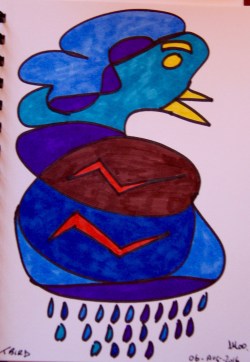
Just glance through the above photograph, taken from the journal I keep everyday. “Almas de Violeta,” it reads, “an early poetry book by Juan Ramón Jiménez, the Nobel winning poet, was first published in violet ink. I have a copy of his complete works, Obras completas, in which these early poems still appear in purple, or violet rather, to match the color of the title. He published in green ink too, but personally I prefer the purple. Bruised clouds on an evening sky, dark depths of a rainbow glow, Northern Lights singing at the deep end of their scale … or just a desire to be different … slightly different, as if that one thing, the color of my ink, might tip the scales and turn me from mediocre to celebrity with a wave of a violet wand or the click of a pair of ink-stained fingers.”

Now, wasn’t that easy! And there’s so much personality in tone and color, ebb and flow, the link of a poet to the words on his page.

Once, in a faraway library in a distant, magical land, I was studying an autograph manuscript, written by Francisco de Quevedo (1580-1645). The hand-writing began very steadily. Then I noticed a red dot or two on the page. Then a larger stain. Our poet was a notorious drinker. The letters grew large and loopy. The paragraphs sprawled. Punctuation marks and accents, slashed and splashed, and missed their targets. By the end of his evening, with his bottle surely empty and gone, I could just about make out what the good man had written.

When I turned the manuscript folio, from recto to verso, it was a new day and the original handwriting was back, small and neat. I have noticed the same phenomenon when I write late at night. Unreadable words, occasional wine splutters, spelling and grammar mistakes, disjointed readability … but the thoughts and the ideas are still there, still clear. Sure, I need a bit of hard work to interpret some things, but that’s the curse of the cursive, I guess.

Procrastination

IMG_0146

Procrastination
for my friend, Mr. Cake

It’s old age, I think:
I can manage
one thing a day,
depends on the weather,
then I forget,
then I remember,
but the weather isn’t right,
so I put it off again,
start a story,
write a poem,
the phone rings,
someone texts me,
there’s a knock on the door,
the crows in the garden
make me procrastinate,
(crass  Latin joke*),
then I remember
and feel sad,
and hair leaks from my head
like straw from a scarecrow,
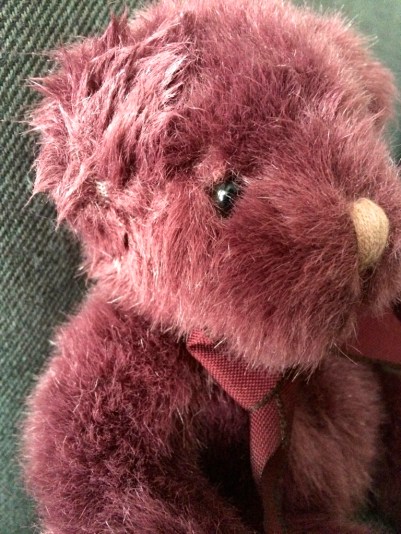
and my teddy bear brain
turns to sawdust
when I scratch,
and what was I saying?
I guess I’ve forgotten,
I’ll sleep on it tonight,
and write again
tomorrow.

Note:
Crass Latin joke*
Cras is the Latin for tomorrow. Cras is also the sound, in Latin, that the crows make. Hence Pro-cras-tinate: to leave things for tomorrow, or to abandon them for tomorrow’s crows. The joke probably doesn’t belong in the poem, but darn, it’s my poem and I’m leaving it in there.

Comment:
This collection of thoughts started in a casual online exchange with my good friend, Mr. Cake. Sometimes words flow and it’s impossible to stop them. Sometimes, they hover like crows or croak at us from the tree tops where they sit ungraspable. My spellcheck tells me that’s not a word, but if it isn’t, it ought to be. Whatever: the world and its words are sometimes surreal and if you are interested in the surreal, then Mr. Cake’s blog is the place to be. Here’s the link. The site comes highly recommended. Click on it now and don’t procrastinate. Mr. Cake’s Blog.

Dandelion Flowers

IMG_0174

Dandelion Flowers

My flowers fly bright flags as if trooping their colors
for Her Majesty, the Queen of England. They drink water
dosed with chemicals to keep them healthy and alive,
refusing to fade, flourishing in their vase on the table.

They withstand both sunshine and shade, neither wilting
nor fainting under the hot summer sun. In this house
there dwells no queen, just a domestic pussy cat
called Princess Squiffy who knows she may look at a Queen.

“Your Majesty,” say Cape Daisies as the pussy cat passes.
“Ma’am,” say Peonies and Pansies, bending knees, bobbing heads.
Outside my window, the garden fills up with onlookers,
still green Tomatoes, Clematis, and a tall Hollyhock.

A multitude of weeds crowds onto the lawn. Dandelions
standing splendiferous, waiting to take plebeian selfies,
for plebs, they are, vox populi, people’s voice, people’s choice.

Some ancient god must have loved them very much,
for they are ubiquitous, and totally indestructible.
That said, you must never trust them in your flower bed.

Love at First Sight

IMG_0181

Love
… sometimes comes at first sight

A teenage apprentice with a little plastic badge
bearing her name asked me to reveal my birthdate.
This apparently confirmed that I knew who I was,
so she bound my arm with a thick rubber thong.

My veins swelled up, long thin leeches, slowly fattening.
She told me to make a fist and pouted as she probed
with slender fingers, feeling in vain for a fresh vein
from which to extract, then bottle the necessary blood.

I watched my body’s sap pumping out in tiny, sad spurts
driven by that tired flesh-and-blood machine known as
my heart. Drip by febrile drip my blood accumulated.
The young girl smiled with youth’s perfect lips and teeth.

My heart was a time-bomb ticking beneath her fingers.
I dreamed for an instant of walking upright and free,
a stranger in the paradise of a long-promised land.

Then she handed me my gifts: a throw-away plastic potty,
three disposable spatulas, and an air-dry sample card,
with written instructions, date stamped, bearing my name.

On the Cat Walk

img_0141-2

On the Cat Walk

The cat stalks by, her tail held high,
a paint brush trying to paint the sky.
Nose in the air, she doesn’t care,
I guess she’ll acknowledge me by and by.

She’s neat, so neat, on her tiny feet,
moving swiftly, fast and sweet,
heading for her kibble treat
which she always stops to eat.

Some day I’d like to be a cat,
sitting quietly on my mat,
or lying by the open door,
watching chipmunks on the floor,

stuffing their cheeks with seeds galore:
who could ever ask for more?
A reality show on live tv
specially made for my cat and me.

MT 2-1 Kinder Monkey Garten

img_0181

MT 2-1
Kinder
Monkey Garten

Give him a magnifying glass
and monkey nit-picks!
He likes nit-picking.

Hunting for fleas,
he combs through the fur
of less fortunate monkeys.

Monkey see: monkey do,
and what monkey does best
is crack fleas between his nails
and stick his paw in the jam jar.

Here, in the Kinder Monkey Garten,
young monkeys learn monkey skills:
how to conduct monkey business,
how to throw a monkey wrench
into other monkeys’ plans,
how to wear monkey suits,
how to square round pegs
and fit them into triangular holes,
how to build better monkey traps,
how to reinvent the monkey wheel,
again and again and again.

Monkey likes to perch enthroned
at the top of the monkey temple.
Paradise is to squat
on the organ-grinder’s shoulder,
top banana that.

Monkey also likes to visit the rest of the zoo.


MT 1-9 Monkey Turns Down Promotion

img_0186

MT 1-9
Monkey Turns Down Promotion

 “I hereby appoint you head of the asylum.”
The young office monkey with the plastic stethoscope
was dressed neatly in a white sheet.

“Dr. Freud, I presume?”
Monkey held out his hand
but his witticism was lost in a flood of water
flowing from the flush and over the floor.

Monkey stood there, paddling in piddle.

Inmates with crowded heads and vacant faces,
fools grinning at a universe of folly,
paddled beside him.

He wiped a sick one’s drool from his sleeve.

The office boy spat on his hands,
slicked down his hair,
and placed his stethoscope on monkey’s heaving chest.

“You have no pulse.”

“How do you know I have no pulse?
Surely, you cannot hear my heart
for you have a banana stuck in your ear.”

“Speak up!” said the doctor, “I cannot hear you:
I have a banana stuck in my ear.”

Then monkey felt fear.

Daylight diminished and waters closed over his head.
He spurned the proffered paw,
the life belt thrown by the offer of a new position.

Exit monkey left, pursued by a chorus:
“Run, monkey, run!”


MT 1-1: Monkey Teaches Sunday School on Mondays

img_0181

Monkey Teaches Sunday School on Mondays
(With apologies to Pavlov and his dogs)

Younger monkeys e-mail elder monkey
and expect an answer within two minutes.
Elder monkey drools and writes right back.

He is turned on by the bells
and whistles of his computer.
“Woof! Woof!”
His handlers hand him a biscuit.

Elder monkey has grown to appreciate
tension and abuse:
the systematic beatings,
the shit and foul words hurled at his head.

The working conditions are overcrowded.
Elder monkey is overworked.

Yet he has managed to survive,
to stay alive and fight
what he once believed was the good fight.

Now he no longer knows:
nor does he drool anymore
when bells and whistles sound
and his handlers bait him
with an occasional, half-price biscuit.


I will record and post the whole of Monkey Temple, poem by poem, with voice recordings. I’ll use two key trigger elements: first, the grinning monkey in the picture and second, the MT 1-1 designation, standing for Part 1 Poem 1 … this will continue 1-2, 1-3, 1-4 etc. If you are enjoying these poems and readings, keep your eyes open for those two triggers and catch your favorite monkey as he goes about his monkey business.

My Body

IMG_5811_2

My body

My body has so many rooms and you,
my love, possess me in them, wander
through them, and I see you, here, there,
everywhere, your presence a shadow
glimpsed in a mirror, or your warm touch
a breath upon forehead or cheek. Where
have you gone? Why did you leave me
here on my own to languish in your absence?
I walk from room to room, but when I knock
you open no doors, and though I seek,
I fail to find. I know you are somewhere near.
I hear your footstep on the stair, your voice
in the silence that surrounds me. My name,
a syllable or two, whispered in the way
I so clearly remember. How can it be true,
my love, that you have gone, that you have
left me here and forged ahead into another
time and space? I count the hours and days.
Will you prepare me a place? Will your face
be there to greet me? Alone, I clutch at straws,
embracing dust motes, counting the angels that
dance on the rainbows on the head of a pin.

Plagiary: Wednesday Workshop

img_0177

Plagiary
Wednesday Workshop
9 August 2017

No, plagiary has nothing to do with the plague, though it might do in certain circumstances, especially if a plagiarist is plagued by lawsuits from others who think that the thief has benefitted financially or unfairly from the theft.

What is plagiary? The Merriam-Webster dictionary suggests the following, and I quote, with references:

Plagiarius, the Latin source of “plagiary,” literally means “kidnapper.” “Plagiarius” has its roots in the noun “plagium,” meaning both “kidnapping” and “the netting of game,” and ultimately in the noun plaga, meaning “net.” The literal sense of “plagiarius” was adopted into English; in the 17th and early 18th century, a kidnapper might be referred to as a “plagiary,” and, in the legalese of the time, kidnapping was “plagium.” But “plagiarius” also had a couple of figurative meanings – “seducer” and “literary thief.” It is the latter that has made the most enduring contribution to the English language. A “plagiary” could also be one who commits literary theft (now usually referred to as a “plagiarist”) or the act or product of such theft (now, more commonly, “plagiarism”).

https://www.merriam-webster.com/dictionary/plagiary

From the above definition, we can conclude that plagiary is theft, the stealing of another person’s work, and, above all, the presenting of that work as if it belonged to the plagiarist. In other words, creators create: they are not meant to steal and misrepresent.

Does plagiary matter? Of course it does. By its very definition, theft, it is one of the Ten Commandments, and therefore something to be avoided: Thou shalt not steal. However, as with all things, the gravity of the crime depends very much upon the circumstances. In academia, where creativity and original thought is the ‘name of the game’, the theft of intellectual property is considered by the gatekeepers of the purity of knowledge to be a very serious offence. That is why so many universities so carefully define plagiary / plagiarism and place such stiff academic penalties on the plagiarists who offend. By extension, certain professions, such as journalism and science (in the broadest sense, the creation, protection, and distribution of knowledge) must hold to very strict rules on the subject of intellectual theft.

The article on plagiarism in Wikipedia [ https://en.wikipedia.org/wiki/Plagiarism ] opens several horizons. It stresses that academia (with its spin off into scientific and industrial research) and journalism (with its theory of scooping) are the two biggest areas in which plagiarism is considered offensive. Plagiarism, the article stresses, more than anything else, is re-quoting other people’s material while claiming it as one’s own and without citing the sources from which it was taken. This quickly leads to the infringement of copyright and this is a much more serious and complicated legal matter, as the article points out.

As for literary and artistic plagiary, this is a very different kettle of fish as artists seem to borrow from each other in the most curious of ways. Molière, for example, proudly announced that, as for his artistic material, “Je le prends où je le trouve.” This roughly translates as “I take it from wherever I find it.” In his day and age, imitation was a favorite rhetorical device, and the imitation of other people’s work was considered more like flattery than theft. Miguel de Cervantes, in the Don Quixote, that most original of novels, took the first sortie of the famous and ingenious knight almost word for word from an earlier entremés (short play to be performed in the interval between the acts of a longer play) entitled El entremés de los romances. This is not so much ‘Homer nods’ as Homer ‘carries a gun and holds up a local bank’. Do we cry plagiary or imitatio when the similarities between the play and the novel’s opening are such that for a long time people attributed the Entremés de los romances to Cervantes and referred to it as his early work?

I follow the Spanish tradition and often use lines and words from other authors in my own work. However, I think that what I borrow is in most cases well enough known for it not to need quote marks, nor to need identifying. Though Lovers Be Lost and Broken Ghosts, two of my book titles, come directly from Dylan Thomas’s poetry. However, I quote the verses in the opening pages of each book and Dylan Thomas’s name is clearly attached to them. If, however, I write “Rage, rage against the dying of the light” … or “Rage, rage … ” against anything, I think personally that the attribution should be clear as should the literary dialog that I am starting within the text. Similarly, if I write that “July is the cruelest month, because we expect the sun and it is always raining”, then surely the reference to T. S. Eliot is clear as well, and so is the attribution and twisting of his ideas. I have used the phrase “Jack Pine Poems” before now, without referencing Milton Acorn, but most Canadian poets will be aware of the origin of the term without my writing “following in the footsteps of Milton Acorn and his Jack Pine Sonnets” ….

To further complicate the matter, plagiarism is a hydra, and its many heads may take a multitude of forms. Wikipedia suggests that there may well be a whole epidemic of what might be called ‘literary borrowings’ that verge on plagiarism; there is, for example, a touch of ‘literary theft’ about all of these: “plagiarism, literary theft, appropriation, incorporation, retelling, rewriting, recapitulation, revision, reprise, thematic variation, ironic retake, parody, imitation, stylistic theft, pastiches, collages, and deliberate assemblages.”

However, as the Wiki points out: “There is no rigorous and precise distinction between practices like imitation, stylistic plagiarism, copy, replica, and forgery. These appropriation procedures are the main axis of a literate culture, in which the tradition of the canonic past is being constantly rewritten.” The quote marks show that this list is lifted bodily from the Wikipedia article.

What I would underline most strongly is that “the canonic past is being constantly rewritten.” Literature is, to a large extent, a writer’s dialogue not only with (in my case) his own times, but also with the way other writers have seen the world and written about it. And not just written about it: think of the geometric expansion of oral literature. We hear so much, so much is repeated, words and phrases slip in and out of common usage. There is usually a prime over, an original author, but when a word r a phrase slips into what might be called ‘common usage’, then plagiarism takes a turn in a different direction.

“To borrow from one author is plagiary, to borrow from many is research,” as Oscar Wilde is rumored to have phrased it. As a result, what is considered to be a can of worms in academia, science, and journalism, may turn into an interesting and not necessarily a dishonest practice in the artistic world. How about the erotic cowboy novel that I am thinking of writing? I am going to call it Fifty Shades of Zane Grey … how many copyright laws am I breaking with that little joke? None, in my opinion, yet given a competent lawyer and two or more clients greedy for money, and virtually anything can be turned into a fertile battleground for legalistic dispute. Hopefully, the pitiful pennies that I own and the innocent and innocuous literary discourse that I exchange with other authors, many of them long dead, will not bring on a flurry of lawsuits.

“Where there’s muck, there’s money,” as a famous Yorkshire millionaire once said. So quit mucking about with even the possibility of plagiary, check your sources, and, if in any doubt at all, make sure that you add those quote marks and those references. And remember, it’s better to be safe than holding up your hand in court and saying “I’m very, very sorry, M’Lud.”