Patience

Patience


“Patience achieves everything.”
St. Theresa wrote this in Spanish,
back in the old days, when patience
was a virtue that few possessed.
Patience has vanished nowadays.

It is as dead as a doornail,
as dead as the proverbial dodo,
as dead as whatever cliché
springs to mind in the laziness
of the instant possession of each
passing cloud, each new slogan
marketed madly on the TV.

Turn off the TV. Go out, barefoot,
and walk on rain-wet grass
or walk on sea-wrinkled sand
out into the sun-warmed waves,
there where the sandpipers
stitch their secret messages
and the crows walk barefoot too.

Learn the secrets sown there,
decipher the ancient wisdom
left on the beach by wandering gulls.

There, in the tide-mark you will find,
among the sand-papered bones
and skulls, the secrets that will solve
the mysteries that you seek.

“If you try to force the soul, you never succeed.” John O’Donohue, Anam Cara, p. 147.

“La paziencia, todo lo alcanza.” St. Theresa of Avila.

Flowers

Flowers

“With freedom, flowers, books, and the moon, who could not be perfectly happy?” Oscar Wilde

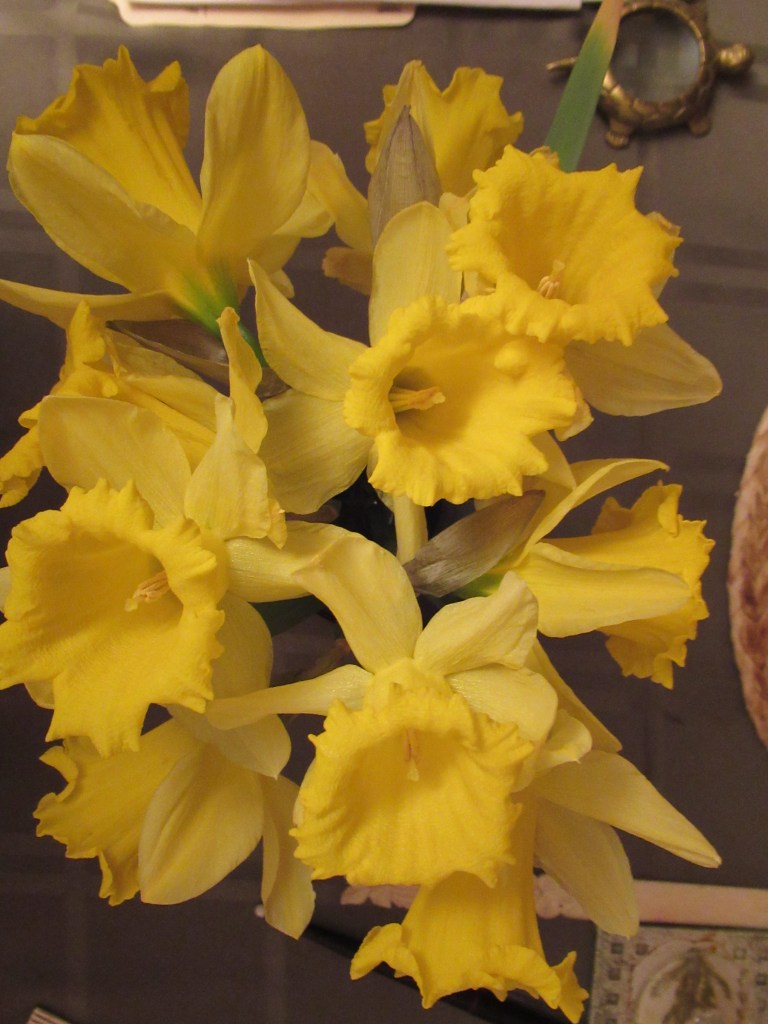
Yesterday I bought my beloved some flowers. I searched among the bunches in the supermarket to find some that were not full blown but ready to spring from bud to blossom. I had the freedom to buy and with it the freedom that comes from having a little bit of money to spare for those frivolities that keep love alive at any age.

As for books, I read them and I write them, and sometimes they write me, and sometimes I can tell the difference, and some times I can’t. “What is this life, if full of greed we have no time to sit and read. Or when we lay awake at night, we don’t have time to think or write.”

Then there is the moon. “Please let the light that shines on me, shine on the one I love.” An old sea-farers’ song also sung by the beloved left behind on the home shore. There are few things as fascinating as a garden in the moonlight. Delightful too are night flowers blossoming beneath a full moon. “Boys and girls come out to play, the moon is shining as bright as day. Leave your pillows and leave your sheets and join your playfellows in the streets.”

So there you have a recipe for perfect happiness. Freedom from need, cash for frivolities and flowers, moonlight in which to serenade one’s beloved, and a book in which to record the recipe and keep it fresh in mind – add them one by one, stir them gently, plant them – and may perfect happiness blossom for you, too.

Hollyhock

Hollyhock

Is it a silken purse
made from the pig’s ear
of its seed pod,
or just a single seed
excreted by
an incontinent bird?

Its bruised
evening-sky hues
stretch their emperor’s
imperial purple all too thin.
In the late summer sun
it swallows one errant bee
in its leviathan mouth.

Sole survivor,
from a score of flowers
that once climbed
the seven foot,
eight foot stalk
to sway in the wind,
it stands on guard
against fall cold
and winter’s snow.

Click here for Roger’s reading on Anchor.
Hollyhock

Comment: I didn’t like the ending to the earlier version, so, when it came to reading it, I rewrote it first instead. I much prefer this version. Apologies to those who read the earlier words.


Rainbow Flower & Pot

Rainbow Flower and Pot

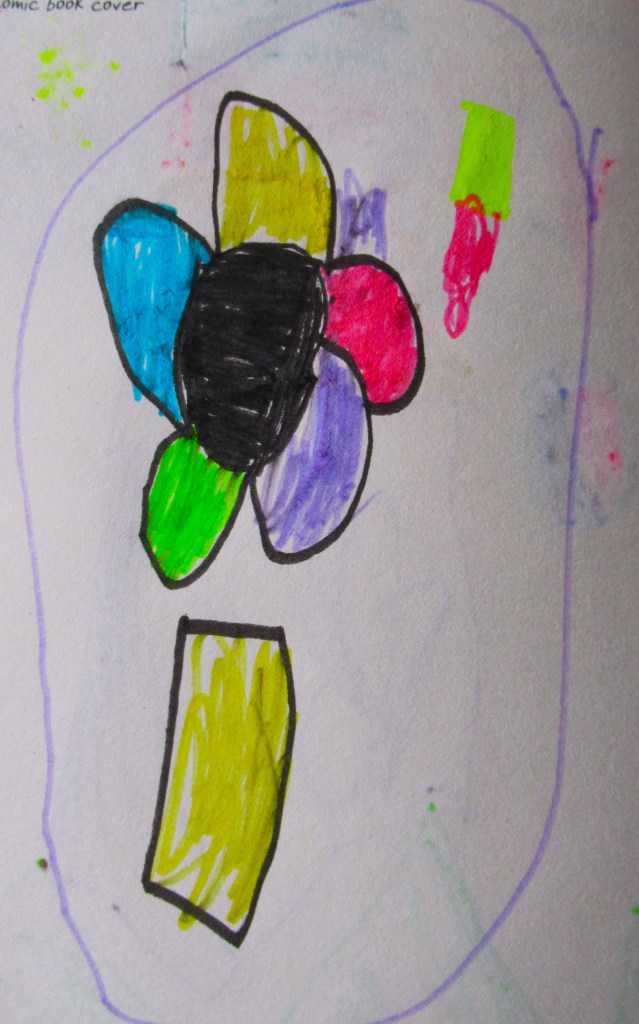
Finley has decided, quite rightly, that what she wants to paint, draw, or colour, is much more important than any of the page prompts in the drawing book I got her. That said, this could easily be a comic book cover – or the cover photo of my next book.

“I want to see the world again through the eyes of a little child” – Picasso. The gift of so doing is precious.

Spiders

Spiders

The spider plant
spins out web after web,
all knotted together,
then ejected
from the central nest.

One landed on my floor
the other afternoon
with an enormous clunk.
A huge new set of offspring
and roots ejected and sent
on a voyage of discovery
to find a new home.

Mala madre / bad mother.
Oaxacans have a curious way
of naming their plants.
I lived in an apartment
above a courtyard
filled with malas madres.

A Bird of Paradise
nested in the same tree,
while in the garden
a banana plant, in flower,
a huge hibiscus,
and such a variety
of prize poinsettias
that I could never get
the varieties straight:
red, white, cream, single,
clotted, and double-crowned.

In the powder room,
downstairs, our hibiscus
is about to break
into winter blooms.

Sider mites crawl all over it.
Every day, I hunt them down,
squishing them whenever I can.

My daughter calls me cruel
and a padre malo.

I say ‘no: it’s them
or the hibiscus.
You can’t have both.’

Click on this link for Roger’s reading.
Spiders


Why?

Why?

“Where are you going?” I ask again.
 “To see a man about a dog,” my father replies.
  “Why?” I ask.
  “Hair of the dog,” his voice ghosts through the rapidly closing crack as the front door shuts behind him.
  “Why?” I cry out.
 Years later I remember this episode. The mud nest nestles tight against a beam beneath our garage roof. Tiny yellow beaks flap ceaselessly open. Parent birds sit on a vantage point of electric cable, their beaks moving in silent encouragement. A sudden rush, a clamour of wing and claw, a small body thudding down a ladder of air to crash beak first on the concrete.
“Why?” I ask.
The age-old answer come back to me.
“Wye is a river. It flows through Ross-on-Wye and marks the boundary between England and Wales.”
The swallows perch on the rafters watching their fledgling as it struggles on the floor, the weakening wing flaps, the last slow kicks of the twitching legs.
“Why?” I ask.”
“Y is a crooked letter invented by the Green Man of Wye.”
“Why?” I repeat. “I want to know why.”
Silence hangs a question mark over the unsatisfied spaces of my questing mind.
A golden oldie. We would all like to know why. But there are no answers. Just riddles cast, like two trunk-less legs of stone, on the sands of time. Nothing beside remains. Yet still we ask the age old question: why? And still we receive the age-old answers from those ageing wise men who ruled our childhood and taught us everything they knew.
“Why?”
“Because.”

Comment:

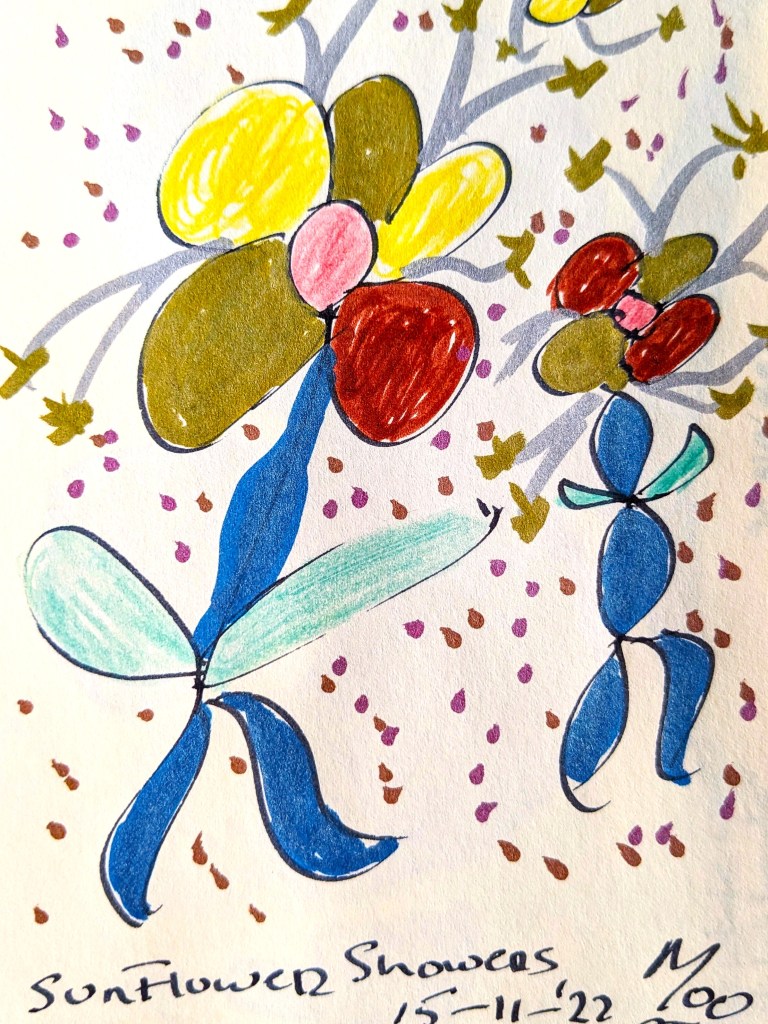
Alas, we have lost our hollyhocks, not all of them, but most. They have been drowned in torrential rain, blown and bent, ravished by raging winds, and they have been scorched in a heat-warning scorched earth policy that left them and the garden all forlorn. As for the lawn, between chinch bug, crows, raccoons, and a surge in weeds and bugs, it is a desolation.

What is worse: they were so beautiful, those hollyhocks. Multi-coloured, stately, and tall. Hopefully, they will return next year. We do hope so. And equally hopefully next year will be a better year for them. And for you and me. Meanwhile, I savour the photos and mourn their loss. Meanwhile…

“Why?” I ask “Why?”

The answer echoes back across the years in well-known voices that have long been silenced.

“Because.”
Hollyhocks

Hollyhocks

I have published three books this year and I am working on a fourth and a fifth. Somehow, the blog, like these hollyhocks, seems ephemeral. It will not out last me, though its seedlings, children and grandchildren, may creep into my printed books and remain a lot longer. These, incidentally, are the children and grandchildren of the first hollyhock grown in the garden. I think a little bird must have dropped it about five years ago. Now it has seeded and reseeded itself. Reseed, yes — recede, we hope not. They are so tall we can sit in the kitchen and they are at eye level with us.

And don’t forget the yucca. He was $120 in the local garden store. Reduced to half price ($60). Then to $50. “We are in the wrong zone for yuccas,” I told the salesman. “Yours for $20, then. He probably won’t last.” That was 32 years ago. And baby, just look at that yucca now.

He hides behind the hollyhocks, but he doesn’t live in their shade. Not by any means. There are so many things to see and do. The blog seems to have drifted by a little bit. I know it’s lonely, but I haven’t forgotten it, as the hollyhocks haven’t forgotten the yucca and vice versa. It’s just that it’s summertime and things are busy and well, I guess I’ll try to do a little bit better. I promise!

Daffodils

Spotify:
Remember to scroll down to the appropriate audio episode.

Daffodils

Winter’s chill lingers well into spring.
I buy daffodils to encourage the sun
to return and shine in the kitchen.

Tight-clenched fists their buds,
they sit on the table and I wait
for them to open.

Grey clouds fill the sky.
A distant sun lights up the land
but doesn’t warm the earth
nor melt the snow.

The north wind chills the mind,
driving dry snow across our drive
to settle in the garden.

Our red squirrels spark at the feeder.
The daffodils promise warmth,
foretell future suns, predicting
bright warmer days to come.

Nochebuena

IMG0034_1.jpg
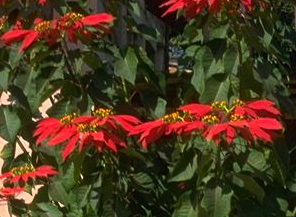
Poinsettia is called nochebuena in Oaxaca.
It also means ‘Christmas Eve’ in Spanish.

Spotify:
Remember to scroll down to the appropriate audio episode.

Nochebuena

Nochebuena / Christmas Eve:
last year, a star fell down the chimney
and landed on the poinsettia.
The cat and the dog stood up to deliver
new versions of their Christmas vision.
Birch bark: ghosts on the snow bank turned
white in the moonlight as they danced,
so slender and so bright.

This year an obsidian knife
hacks through my mind
slicing it into two uneven pieces.
Snowflakes invade its split personality.
Thin ice spreads across glacial fires.
Incarcerated birds sing deep in my rib cage.
A child’s world: with its lost toys lies
buried beneath fresh snow.

Tears freeze in my eyes,
drip from my eyelashes,
and fall to the earth as stars.
Soon I will be an enormous sunflower,
trapped in this wet clay rag of a body.

If I sit here in silence
will the world, like a garden
growing wild, go on without me?
The flowers in my yard close
their mouths and refuse to answer.