CV-19 Week 3 Day 3


IMG_1337 (2)

CV-19 Week 3 Day 3
A Change of Scene

Nothing serious happening with this change of scene, but this morning I put Phillip Larkin on one side and turned to a new book, Neil Sampson’s Apples on the Nashwaak (2019). This may be just the read you need in times like these. An excellent foreword locates the text of Neil’s narrative poem(s) in the long line of European narrative poetry. Neil’s introduction places his text in his own life on the land where he lives and wanders in Upper Durham, above the Nashwaak River. The text itself places us, as readers, in the long successions of repeated lives and deaths that mark the early settlements in New Brunswick, Canada. And yes, we have passed this way before, for better or for worse.

This is not a re-statement of ‘mal de todos, consuelo de tontos‘ / shared ill’s are a fool’s consolation. The colored apples on the stark tree that adorns the cover are a statement of hope, long term hope, even among the bleakness of difficulties, tragedies, and deaths. Like it or not, these things happen, and yes, there are survivors. Hopefully, there will always be survivors. And thus we must always live in hope. It is one of the threads that come through Neil’s poetry.

Only four trees are still alive.
The last of that first
generation
ponder existence and being
unable to walk
— no chance of pilgrimage —
have seeded their hope of redemption,
in Self.

Sounds like us, tucked away at home for three weeks and three days now ‘unable to walk’ outside and with no immediate ‘pilgrimage’ in sight or ‘hope of redemption’. Yet we sit here, un-suffering, following the news on television and radio, talking with friends on the telephone, reaching out to loved ones, near and far, on Skype, e-mailing and encouraging fellow un-sufferers, house bound, like us, ‘Children / hugging the chimney, // warm long after / the embers had died’.

Wait! In the orchard!
There’s One who’s come to call.
Those four pioneers
cankered with rot;
bark-skinned, limbs,
thin, draped in swags
of moss —

they know
who He is.

Enough for now, Neil. I shall read your book today and perhaps tomorrow, and then I will move on with head held high and hope in my heart. Thank you for your words. They are doubly meaningful at times like these reaching out to us with comfort, love, and understanding, and warming our hearts.


CV-19 Week 3 Day 2

IMG_1053 (2)

CV-19 Week 3 Day 2
Reading in Multiples

Legend tells us that Francisco de Quevedo possessed a revolving book stand-cum-lectern. He placed this on his table at meal times and he would have four books open at the same time, moving rapidly in his reading from one to another. I have always liked this idea. As a result, I am now doing something similar.

I began by taking out Don Quixote, which I am once again reading in Spanish. The adventures of our Ingenious Gentleman are a delight and this time, the slowness of my 28th reading of the 1605 text allows me to taste every word, to roll the syllables round the tongue, and to savor every word. With CV-19 on the loose, there are no deadlines, no use by dates, and nothing to prevent me from delaying the full enjoyment of each word of the text. Equally important, there is no class preparation, no waiting audience, just me, an old man now, following the thoughts and adventures of an old man as written by an old man, Miguel de Cervantes, way back when.

I have the Collected Poems of Phillip Larkin on the table beside me. What a different world. What depth of insight and observation. What a bearing of witness to the follies and foibles of an England that I left behind so long ago, much of it vanished now, along with the old choir stalls and the hedgerows, the cuckoos and the skylarks. I read and re-read The Old Fools and realize just how close I am to that cliff edge, that precipice, that Alpine peak, beneath which I shelter and seek succour. Then I turn to This be the Verse and I start to laugh at this portrayal of middle-class parental pretensions. This is Larkin’s open wit, but his sly wit, like that of Cervantes, but more bitter, creeps up on you and catches you unawares, unless you know how and where to look for it.

At my left elbow, Juan Ramón Jiménez’s Platero y yo awaits my attention. No children’s book this, but a wonderfully poetic recounting of a poet’s observations of Moguer, a small seaside town in Andalusia. This too is a book to read slowly, to savour, to taste each word, each story. This too is prose poetry at its best. Cervantes wrote that ‘epic poetry can be written in prose’ / la épica también puede escribirse en prosa‘. JRJ might equally well have written that ‘poetry can also be written in prose’ … an edict that I have tried to follow in my own writing.

For my more serious reading, I am dipping into the late Roger Scruton’s A Short History of Modern Philosophy (from Descartes to Wittgenstein). This is heavier reading, in some senses, yet the parallels between Descartes philosophical observations and Cervantes’s literary ones are well worth considering, for Cervantes often offers the practical where Descartes puts forward the theoretical.

I will be adding more titles to my reading as I progress. Needless to say, I am also wandering through the labyrinth of my own earlier writings, and they are so much fun to revisit too. I will add more on this topic, as our enforced enclosure progresses.

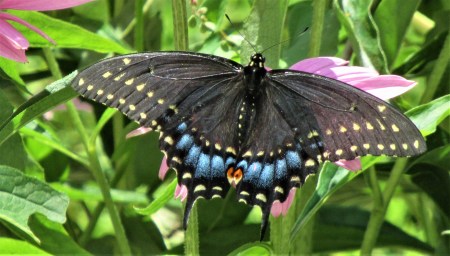
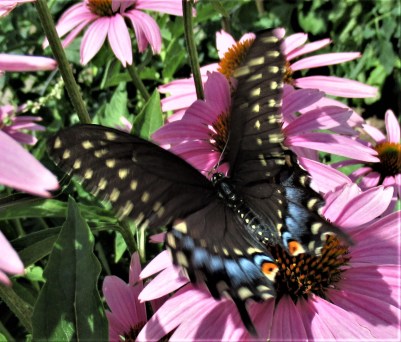
Comment: These visitors came to my garden last summer. It is a delight to offer my photographs of them as a counter to CV-19 for these butterflies symbolize the brevity and the beauty of our lives. Butterflies on a rock: poetry and literature in Canada, and even more fragile in these times of utmost fragility. Keep well, keep safe, and keep in touch with your loved ones by telephone, Skype, Messenger, e-mail, and keep everything safe.

Wannabe a Creator


IMG_1047 (2)

Wannabe a Creator?

            Not everyone can be a creator, not because they cannot create, but because they do not believe in the powers of creation, the strength of the tsunami, of that tidal wave that sweeps us creators away and drives us into the blackened spaces of our inner minds where a dark sun shines its coal black light and shadows dance their will o’the wisp dance and lead us on and on until we have caught our dreams, squeezed them dry of their nothingness, and turned them into the stuff of an actuality filled with new life, a new reality, a new creation, something that is really ours, yet that will only truly live outside ourselves.
We gaze at each new creation for a moment, in astonishment, then position it in its cradle of reeds, place it in the running river, push it out into midstream and eyes, filled with tears, we wish it ‘god speed’ and send it spinning on its way to who knows where? Our hearts fill with hope as we watch it float away to make its own life, sink or swim, on this sea of sorrows, where someone, downstream, may bend to the waters and speak the magic words and tell a tale, our tale, their tale, or whatever they then deem the new tale to be.
Now, in our time of trouble, is the opportunity to dig deep, to mine our unconscious, to discover and re-discover our innate creativity. Take out that note-book, that pencil. Find that old sketch-book. Bring tat camera back to life. Above all, take the time to be yourself, to remember who and what you are, to re-discover your self and, wherever possible, take this opportunity, for it is an opportunity, to build the new self, the one you still wish to be. There are no greater mortal creators than those people who can create themselves anew. Now is the time to dream ourselves a new and better reality. Now is the time to drop the wannabe and to become a true creator.

Comment: I am taking the time now to multi-task my reading. This means starting and restarting several books at once and then shuffling the readings and pausing a while as I contemplate the pages. More on this tomorrow. Join me then.

Creativity

IMG_1526 (2)

Creativity

When creative artists get together they talk and walk and hug and hold and discuss so many things, like how the creative spirit can inflate the body and send it soaring like a trial balloon, how listeners can be swept away by a magic vortex of voice, and how time and space can be suspended in the glories of creation that spin a web of forgetfulness around us and makes us disregard who and what we are as we forge new worlds.
Dark earth-spirits of love, want, and creation, hold us captive and drive us onward and inward until we give birth to that which was waiting patiently to be born, even though we never knew that the seed had been planted. “What is this?” we ask as we survey the new-born entity fresh on the page, held in the hands, suddenly full of life and breathing on its own, a thing of beauty, an essential being. It makes complete sense as we struggle to hold it as it grows and transforms from internally ours to eternally theirs, a product of our mind and body now belonging no longer to us but to the world beyond us.
We long to know its fate, to watch it as it walks along its path, its destiny now in its own hands. “What is it?” people ask as we stand still and know not what to tell them. Some sigh, some mutter ‘nice’, others just turn and walk away, lost in a self-created labyrinth of cul-de-sacs, dead end streets, and black, blind walls. Many go back to their two-thumbed clicking and surf the networks, bereft of the imagination to see and explore that which has been thrust fresh before them, this new-born babe beautiful in its swaddling clothes, a new creation.

Comment: The photograph … a geranium against the snow. Truth and beauty can survive even the hardest winters. As true creative artists we must be prepared to fight for our creative ideals. When the skies seem to be at their darkest (see my recent posts Poem from the Cree, Co-[vidi]-s and Outrageous Fortune) that is when we must strive to re-create the light, not just for ourselves, but for others as well.  

Le Pont Mirabeau

IMG_1318 (3)

Le Pont Mirabeau

Beneath Mirabeau Bridge flows the Seine
and so does our love
must I be reminded yet again
that happiness always follows pain

Let night descend let the hours sound
the days go by … I’m still around

Hand in hand let us stay here face to face
while beneath the bridge of our arms
like flowing waves our gazes interlace

Let night descend let the hours sound
the days go by … I’m still around

Love flows away like waves that flow
love flows away
hope fills us with dismay
and life passes slow

Let night descend let the hours sound
the days go by … I’m still around

Days and weeks flow by bye bye
along with former loves
and past times that did fly fly fly
they will never come back again
Beneath Mirabeau Bridge flows the Seine

Let night descend let the hours sound
the days go by … I’m still around

Comment: It’s hard to give up on this. The poem has stayed with me since 1962 (58 years). A slight variant on an earlier version. Sorry, Guillaume.

Poem from the Cree

IMG_1056 (2)


Poem from the Cree

The Cree have retreated from the streets.
Their violinist has taken time out, leaving
his last notes dancing from a street lamp.
Only the Fire-Brave remains, inhaling thick
black oily smoke. He juggles twin balls of fire.

Bones gather together to gather dry dust. Hollow
metal buffalo: a cold wind blew and plucked out
his heart. Five climate controlled pedestrian
walkways cross the prairie, linking building
to building. A glass wheat field shimmers
and tinkles to the rhythm of air conditioning.

The black cow, cast iron hide set free from rust,
ruminates behind its plate glass window.
The night wind whisks white buffalo bones
pale across the sky. Oskana ka asasteki.

With these words, I will leave you, suddenly,
abruptly. A light going out. Now I am here.
Oskana ka asasteki. And now I too am gone.

PEI + bockle 2008 059

Continue reading →

A Rare Visitor

IMG_1672 (2).JPG

A Rare Visitor

The rare Red Plastic Flamingo drops in to visit. He isn’t seen very often, especially in cold weather, for he should be flying somewhere in the Caribbean. It is cold here: you can see the snow outside. It probably drove him in to seek refuge inside in the warm.

The Red Plastic Flamingo is a strange bird, being land bound rather than aerial. He has four legs, as you can clearly see in the photo and is capable of running at great speed, faster than the fastest greyhound. It is rare and unusual to catch them in pensive pose, as here. Usually they are just a blur of movement, a moment of madness captured briefly flashing through the yard.

Rare Bird Alert: keep your eyes open. You may find one living close to you.

Creating vs Revising

IMG_1095 (2)

Creating vs Revising

The introductory picture (above) shows revisions made to my painting by my three year old grandchild!

1. As I read my early morning messages, I realize that there are two very different processes involved in creative writing: creation and revision.

In terms of creation, I follow Graham Green and Steven King: write 500 words a day, regularly, about two pages. Then, next day, re-read them and revise them. Then continue with the next two pages. This allows a steady accumulation that is usually somewhat under the writer’s control. It also allows the writer to go back and revise while creating: an important step for both King and Green.

In terms of revision, once the book or story or manuscript is complete, different processes emerge. One is to leave some time for the manuscript to settle: this also works chapter by chapter during the writing process. The other is to start again and apply the revision process as outlined in the First Five Pages.

Each one of us will be on a different stage of what is, I hope, an enjoyable creative experience. Part of the fun is also finding out what works for us; and by us, I mean each one of us. And yes, we all need those words of encouragement … so hang in there… have confidence … and be creative …

As for revision, I started by reading The First Five pages and found that this made the revision of my own manuscript much easier. The First 5 Pages deals with items one by one and in order of priority; it also allows you, as a writer / reader / adviser to have a clear idea of where you are going with the revisions, what you are doing, and why you are doing it. I also perused other online links and found them quite useful, especially those that referred to the revision process. I recommend searching for such links, in particular, the one that tells us never to give up.

Burroway for me is an adventure. I find that when I am reading the theory, I have a tendency to get confused and lost. In addition, I do not always agree with her analyses of the chosen snippets of text. I understand what she is saying, but I do not always agree with what she has said.

Selected stories themselves are something different. Reading them allows me to gain a perspective on what I am doing and how I am doing it. Thus I can say: I can do that; or I’ve done that; or I wouldn’t want to do that. The stories then come over as a reflecting mirror in which I can see aspects of my own writing, however beautified or distorted. The theory, on its own, leaves me cold and often confused. Other people’s creativity is inspiring.

The secret, in my opinion, is to relax, to be yourself, and to continue writing as you want to write while paying attention to the small details of which I am becoming more and more aware of every day. We are all creative — or we wouldn’t be here, reading this, doing this course. The secret is to develop and polish our own creativity. We must also learn to develop our own voices and to have confidence in those creative sparks that dwell within us.

2. Writing the introduction last is a standard procedure in academia. This is partly because it isn’t until the end of the research / study that the writer really understands the substance and the intent of what s/he has been studying. Also, it is only when the work is finalized that the appropriate conclusions can be drawn and the route that one has taken can be established.

As for the order in which revisions are made, there are many rules and circumstances can change. Even when there doesn’t appear to be a plot, as such, there is a chronology and chronology can be used as a substitute for plot. There is probably some form of evolution throughout the chronology, and that should be kept in mind, too. In addition, I would assume that as the learning process “bites” so we will be better able to make our own judgement calls. The art of good teaching is to eliminate the need for a teacher.

3. Changing the perspective: letters work: they can be found, sent, received, or discovered. The identity of the writer / receiver is also interesting.

In the 13th Story, the novel which I am currently reading, the principal narrator investigates / researches her subject in local libraries, the Who’s Who, a graveyard (reading the tombstones), and many different places. She also visits the local newspaper archives and interviews other characters in the novel, much as a newspaper reporter might.

Just read, think, learn, absorb, and, above all, remember to reject that which doesn’t suit you!

Self-Publishing

img_0196


Self-Publishing

Why do we write?

Before we talk about publishing, in any form, we must pose the question: why do we write? As a former academic, my writing was intimately tied to academia. At first, I wrote to pass my exams; then I wrote to pass my courses by handing in essays and potential papers; then, when I was a full-time academic, I wrote for the “publish or perish” world of academia, churning out articles (90) and reviews (70) on topics that were tied to my research projects. My writing, in other words, had a purpose and a direction. I knew why I was writing and I was conscious of the areas and places in which my publications would be acceptable and accepted.

At the same time as I wrote for the academic world, I indulged in creative writing. I have always written poetry. I have always been aware of my vocation as a poet. However, I was also aware that it was very difficult to earn a living as a poet. We’ll talk more about that later. The academy, research, and teaching gave me enough free time to indulge my dream of being a creative writer. It also permitted me to put food on the table and to keep my family warm and comfortable during our cold, Canadian winters.

So, the first question you must ask yourself is: why am I writing? What do I hope to achieve as a writer? Who do I want to read my works? Why do I want to be published? How do I want to be published? Your answer to these questions, and others like them, will determine your relationship to the publishing process.

Traditional Publishing

It isn’t easy to become published in the traditional fashion. In the first place, there are fewer major presses out there, and those that do exist are very large and powerful indeed. They want only the very best work. Not only that, they want the best work that will make them the most money. Good writing isn’t always guaranteed to sell well and thus to make the most money, remember that. In the second place, there are some excellent smaller presses, but they tend to be niche presses tied to a specialized corner of the market. Academia is a niche market. My own area of academia, Spanish Seventeenth Century Literature, is a very small niche market indeed. In order to get published in the traditional manner, a great deal of research into the niche area and the presses that publish therein is needed.

Most major presses will not look at up and coming writers unless they are represented by an agent. Few agents will take on an up and coming writer. This is a chicken and egg conundrum: how do we get the experience to be represented when we need the representation to help get the experience? All writers must solve this problem in their own fashion. There is no easy answer. Novels that have the potential to be turned into films: these will attract an agent and a big press, because that’s where the money is. How many of us are capable of writing them? Short story collections used to be a reasonably safe bet, but it appears that fewer presses and literary magazines are publishing them. Poetry generates little or no money, hence it also belongs to a highly specialized niche market with very small circulation figures. Once these realities are understood, then we can consider the alternatives.

Self-Publishing

 Self-publishing is no longer associated with the so-called Vanity Press, a term used to denigrate it. Not so long ago writers who paid for their writing to be published were considered by many to be ‘poor’ writers, ‘vanity’ writers. This is no longer true and The Writers’ Union of Canada (TWUC) now accepts self-published works as genuine works of literary merit, always provided that they are well-written. The advent of the computer revolution made all forms of writing, printing, and publishing so much easier. The ensuing advances in desk-top publishing allowed anyone to be a published writer and a writer’s life was suddenly that much simpler.

I published two poetry books with traditional presses in 1978 (Last Year in Paradise) and 1986 (Broken Ghosts). In 1990, following the death of my parents, I felt a deep desire to write and to be published once more. I had poems published in small literary reviews and magazines and I had a track record of wins and honorable mentions in writing competitions, but nobody wanted to publish another book of my poetry. I papered my walls with rejections … and I got nowhere. Therefore, in 1990, I started to self-publish.

My first six books were simple: I typed out the poems, ordered them the way I wanted, and took them to the local print shop where, for a small sum of money, the books were printed and saddle-stitched. This was a cheap means of production, so cheap, that I didn’t need to sell the copies so I just gave them away to my friends. Between 1990 and 1996 I published six of these little paperback chapbooks: Idlewood, In the Art Gallery, Daffodils, Secret Gardens, Iberian Interludes, and On Being Welsh. The runs were small, ranging between 100 and 200 copies, and very cheap per copy, often less than a toonie / twony (two dollar coins, after ‘loonies’ one dollar pieces with a loon on the coin).

All the initial work for these books was done by me: writing, selection, typing, and editing. The printers did the rest: copying and binding. In the case of these first self-published books, the covers contained typed titles and the author’s name and nothing more. In 2000, I was very fortunate. I met a genuine editor who agreed to work with me to publish my poetry via a small university print-shop. I wrote the poems and typed the text. My editor, a wonderful lady, then edited the text and prepared it for printing. My beloved (aka my wife) designed the covers for these books. Between 2000 and 2012 we (self-) published six of them: Sun and Moon, Though Lovers Be Lost, Fundy Lines, At the Edge of Obsidian, Obsidian 22, and Monkey Temple. These were genuine paperback books, with an ISBN. They were all limited editions and again I gave them away to my friends.

2008 saw Nashwaak Editions, the book division of the Nashwaak Review, publish Land of Rocks and Saints, a book of poetry that I wrote while in Avila (Spain). Again I funded this printing myself and again I gave it away to my friends and colleagues. I was devastated on several occasions to find signed copies of these books in second hand bookstores, that which I had given away for free had been sold for money. The receivers of free gifts had gained more cash than the books’ writer.

I continued writing and now had several manuscripts that I thought well worth publishing. Armed with a genuine list of publications and prizes and with excellent letters of recommendation from established writers, I again tried the traditional approach. Alas, I got the traditional results. Two small trade presses who agreed to publish my work both went out of business before they could do so. Agents, if they bothered to reply (and most of them didn’t), turned me down. I got to final judging with a famous niche press, but their marketing department said the book wouldn’t sell and they refused to market it … I didn’t know where to turn.

I had for some time been getting e-mails from houses that, for a large sum of money, would publish my new works for me. However, I was by now retired, and didn’t have those ‘large sums of money’. Publishing costs varied from $1500 US to $3500 US to £3000 (sterling). Well, I wasn’t that desperate, especially when I was suddenly subjected to regular e-mails, constant phone calls, and targeted advertising. I got tired of sales reps ringing me up and asking “are you read to go to press now?” There had to be easier and cheaper ways to get published.

2016 saw a major change in my self-publishing. A new friend, now a very close friend, suggested I try CreateSpace on Amazon. He came over one afternoon to give me a demonstration and we had a manuscript up and running that same day. It cost me nothing. I still haven’t sold a copy of that particular book. But it is up and available on Amazon. I buy copies at a relatively cheap rate and, you guessed it, I still give them to my friends. I now have nine titles on Amazon, two new titles* and seven rewrites and expansions. These include Monkey Temple, Bistro*, Though Lovers Be Lost, Sun and Moon, Obsidian’s Edge, Empress of Ireland, All About Angels, Iberian Interludes, and Avila* (my first book of poetry in Spanish).

Marketing is still a problem partly because I just don’t have (nor do I want to have) what it takes to be a salesman. I still give copies of my books to my friends. I guess I’ll never make any money worth speaking about from my creative writing. But that has never worried me: I have never written for money, only for love. I write because I love writing. I publish so I can give copies of my books to those friends who ask for them. I am a poet, whether I want to be or not. I am also condemned to my fate: I am an academic, a writer of poetry and books, and a book self-publisher. I guess I’ll never be a businessman.

Is it all worth the effort? Yes, I think it is. Can (other) people make money from self-publishing? Yes, they can, especially if they are willing to advertise, market, and sell their books at every opportunity. This is something that I just cannot bring myself to do although I know several writers who have been very successful with this aspect of the trade.

Quality Control

Are self-published books capable of being genuine works of art? Indeed they can. Bistro, although being self-published, has just been confirmed as one of three finalists in the New Brunswick Book of the Year Competition (2016-2017). Several of the stories in Bistro were either published separately in literary magazines or were part of larger manuscripts that received recognition in one way or another for the quality of their writing. Parts of several of my other books on Amazon have been published or awarded prizes or honorable mentions in competitions and this gives my creative work a track record of respectability.

I am an academic, trained to assess written work and to maintain quality control on my own written work as well as that of other people. Not everyone is born to be an editor, let alone a self-editor. How do we get to the level of self-editing necessary to be confident in our own quality control? Enter your work in competitions. Submit your work to literary magazines. Take writing workshops online and in person. Consult with other writers and join a good writing group or form one yourself. Be careful of submitting your work to the opinions of your best friends and your family: they will only tell you how good you are. Remember that your granny may be your favorite person, but she is not necessarily your best critic. Seek always the objectivity that allows you to stand back and criticize your own writing from a distance. Seek the opinions of others who are objective and will do the same.

Summary

  1. Think about why you are writing and what you want to achieve with your writing.
  2. Consider the different ways in which you can publish or self-publish and decide which is better for you.
  3. Research your market / niche market as carefully as you can and target the area in which you wish to work.
  4. Writing is a long-term commitment: you must make that commitment and stick with it.
  5. Remember that there is no substitute for high quality writing.
  6. Remember the words of Dewi Sant, St. David, the Patron Saint of Wales: “Keep the faith.”
  7. Don’t give up. Keep moving forward. If you stop writing, you will never achieve your goals or finish that book.

Writing: Task or Multi-Task?

IMG_0262

Writing: Task or Multi-Task?

“To task or multi-task? That is the question.”

In the lonely world of creative writing, be it in poetry or in prose, is it better to continue with one text until the task of writing it is thoroughly finished? Or should we flit from text to text, developing several at once and thus multi-tasking in the best sense of the word? This is a key question in the revision process and relates directly to the concepts of write, re-write, revision, revisionism, and the creative process, all of which have been mentioned both in this blog and in the comments to this blog. However, there is no single answer to this seemingly either / or question as many factors must be considered.

  1. Deadlines:

Anyone who has worked with strict deadlines knows that they matter more than anything else. “I want this work on my desk by 4:00 pm today,” says the manager rubbing the magic bottle in which the genie is kept. “Yes, ma’am,” says the genie bowing before vanishing back into his bottle. Only one thing matters, the task in hand, and there can be no multi-tasking.

  1. Novellas and Novels:

With longer texts, while there might be room for manoeuver, provided no deadline is in sight, it is better by far to focus on the task in hand — the extended narrative — and to dedicate all tasking and multi-tasking to that prime task. The majority of writers who have written on the art of writing, including Stephen King, Graham Green, and E. M. Forster, emphasize the necessity of sticking at it, maintaining focus, and getting on with the task. Graham Green’s recommended approach is to write four to five pages a day, re-reading them and revising them the next day, before writing another four pages. That way the events, the action, the characters, are kept well in mind. In addition, Joan Clark and Norman Levine, in their workshops, advise writers to get to know their characters intimately, to think about them, and to write and rewrite until they come living from the page. Anyone who has taken a longish break and then returned to the writing of a novel knows just how difficult it is to get back into the mind of those characters. With an extended narrative, a dialog abandoned is a dialog lost. And one must learn to listen to one’s characters and to never forget what they have said, mustn’t one?

  1. Poems, Prose Poems, and Flash Fiction:

This is where multi-tasking can truly take place. The brevity of these pieces, and I classify epic and extended poetry with narrative rather than with poetry, allows the writer time to pick the pieces up and put them down again, to play around, to abandon the text and to return to it later. Being shorter pieces by definition, one can re-read them with ease, correct them at leisure, and research around them with impunity. In an extended narrative, or when writing to a deadline, focus is necessary. With shorter pieces, easily recalled, procrastination is a pleasure, not a crime. With poetry, focus is sharper but for shorter periods.

  1. From Poem to Poetry Book:

As the poems accumulate and the writing, or rather the putting together, of the collection becomes more important, so the need to concentrate and single-task, rather than to procrastinate and multi-task becomes paramount.

These are my initial thoughts on Task or Multi-Task. What happens when we apply them in real life to real questions?

  1. On Revision (Chuck):

Will this exercise (revision of older texts) provide you more gratification than starting new ones that may or may not be so important to you?

The question of revision is key. While I would like to avoid revisionism (Al: There is value in showing poetry as a snapshot in time (if only to avoid endless revisionism), the question of how to revise a text is of maximum importance. The text to be revised may be old or it may be recent, but the act of revision — how and why and what to revise — is one that must concern us as writers if we are to eschew automatic writing in a search for le mot et la phrase justes. If I can learn from the revision of older texts what I need to look for in order to revise newer texts, then my search for a way in which to recognize and achieve better form of writing can be justified, for the techniques discovered can surely be applied to future texts as well as to past ones.

  1. The young Roger who was once you is no more (Kevin):

This is a beautiful thought: thank you, Kevin. Much of that earlier writing must stand as it is (and was) as a monument to what and who I was back then. However, some thoughts and phrasings may well be weak and need revision. The recognition of weakness and the realization of how to strengthen and how to renew is surely a part of our ongoing growing writing process. That is what I would argue, anyway. I would argue further that revision is NOT multi-tasking, but is single-tasking in the sense that I, as reviser, am teaching myself how to revise: an ongoing process in the act of creativity.

  1. Conclusion:

In my current situation, I have five creative works (Echoes …, Waiting, Bistro, Stars … , People … ) lying fallow and waiting for their final touches. As I look back on what I have previously written and how I have written it, I am, in my opinion, multi-tasking. That is to say, I am working with many texts rather than concentrating on a single text. However, at the same time, I am working hard on a single task: that of teaching myself, once again, how to revise and how to rewrite. Hopefully I will put a little, objective distance between my current self and my recent texts. Then, when I return to them, I will be able to take them, one at a time, and revise them properly. That is my hope and my intention.

To task or to multi-task … writing or re-writing … each has its place in the creative process. To conclude: I thank all of you who contributed to this conversation (mentioned or not!), and I wish you joy in your (re-)creativity.

Comment: These questions are as relevant to my writing now as they were when I first posted them several years ago. The text names change, but the multi-tasking continues. There are about five manuscripts / typescripts on my desk right now, each one clamoring for attention. In a couple of cases, there are deadlines that I must meet. In others, overnight thought means an early morning return with new ideas. Most important of all, is to write, and to continue writing. And yes: unless there is an imminent deadline, I multi-task!