Plein Air


IMG_0018 (2)

Plein Air
(for Ruby Allan)

“Plein air,”
she said, and I imagined her
sitting before the blank spread of a canvas,
a ship’s sail waiting for a sea-side breeze
to fill that empty space with color and mood.

What routes will her paintbrush take
as it wanders over the new world
lying before her?

Plein air, al fresco,
in garden and street,
before the shops and then
on headland and shore,
alone or accompanied,

with sea birds wading
and the gull’s cry echoing its sea of sound
as the sun sets in its bonfire of brightness
and throws light and shadow,
chiaro-oscuro,
all around.

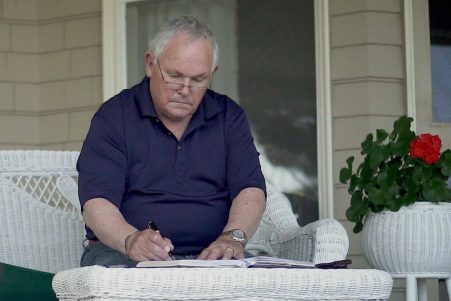
Comment: The lead photo of Ruby Allan in her studio was taken in her KIRA studio in June, 2017, by my friend and fellow artist, the Peruvian pan-piper and flautist / flutist, Carlos Carty. The poem comes from my book, One Small Corner (2017), written in KIRA during my residency. It can be found on page 94 in the section entitled Artists.

In this poem I have tried to capture the idea of Ruby painting in the fresh air (plein air / al fresco) in St. Andrews-by-the-sea. Clearly, as you can see from the above photo, the sea is so important to this town, as are harbors and boats and the men that man and sail them. The light is important too as it changes throughout the day or with wind and weather. As you can see, Ruby’s paintings are filled with light and she catches those magic moments when the world seems to freeze and stand still. I try to imitate visual art when I write, and I try to fill my poetry with those magic moments as I create verbal pictures that seize the seconds and  hold them, even if it be for just a little while.


Ego

cropped-39948917_706398923049634_3046174897211441152_o.jpg

Ego

I am not worthy
to be called her sun,
and yet her world
revolves around me.

She spins in my space
and short-circuits
her own life to make
mine more livable.

I’d like to say ‘joyous,’
but tears are in all things
(sunt lacrimae rerum)
and
death touches mortal minds
( et
mentem mortalia tangunt
).

The best I can offer:
a salt water world,
filled with inadequacies,
drowning us in tears.

Comment: Several things of note in this poem and the voice recording. Should we mix languages in a poem? Why ever not, so long as we explain them. This Latin tag goes back over 2,000 years and links my poem (Intertextuality, remember?) into a long Western tradition. Am I worthy of that tradition? Is my poem? Well, that is a totally different question. However, I am linked in, as you might phrase it. A second question: does my reading of the poem affect your understanding of the poem? If so, how and in what way? Does the phonic word play sun / son affect your understanding of the poem? If so, how? And how does the double meaning of ego work on your mind? Does the Freudian Ego / Id stand out? Or does the schoolboy “Quiz?” “Ego!” spring to mind. Or do you immediately think of the first person singular (Latin) ego as in ego sum lux, via veritas? More important: are you aware of any of this or does the poem disappear into a desert landscape of nothingness with no apparent strings attached? Good questions all: I invite you to think about them all. Blessings and best wishes. Keep safe.

An Angel at Jarea

IMG_0258

An Angel at Jarea

An angel moves through the room
in the silences between our chatter.
He fills the interstices of speech
with the wonder of feathers
enlightened by rainbows.

Tranquil his footsteps
as we sense his presence.
He places his hand on an arm,
his arm around our shoulders,
and now, commanding silence,
a finger on his lips.

We sit here
scared by our intimate inadequacies,
scarred by the fierceness of our thoughts
as we sense the vacuum
of his soon-to-be absence.

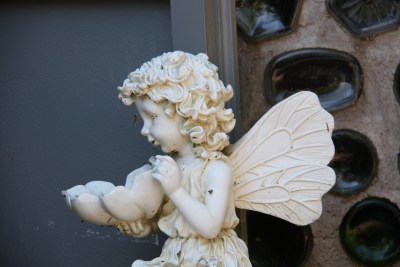
Comment: The video reading of my poem follows. Ruby Allan, one of the five artists invited to participate in the first cohort at KIRA (2017) would always say, when a silence fell on the group, that ‘an angel is moving through the room’. This poem is dedicated to her, and to my friend, Geoff Slater, whose house and gallery we were visiting when the happenings depicted in this poem took place in June, 2017. Several years ago now, but I remember it like yesterday: a magic moment that I have tried to preserve in words. I could never have captured these moments in my verbal snapshots without the assistance of my friends. Thank you all so much.


Mist at Jarea

fundy-05-mistwolfepipers-081

Mist at Jarea

Moving in with the tide,
drawing gauze curtains
over the islands,
climbing, so silent,
pebbles and rocks
to arrive at our windows
and block out the sun.

The mist’s grey face
presses against the panes.
Long lost friends,
come back to haunt us,
loom out of our past.

They bear memories
born beyond the mist,
living now in, and for, this mist.

They come stalking us and tap
with long, cold wisps of fingers
at locked windows and doors,
bolted so they can’t get in.


Empty Nest

fundy 05 mist+wolfepipers 153

Emptiness
is an
Empty Nest

The wind at the window
scratches tiny notes.
I can no longer hear the tune
nor read the words.

Who walks beside me
as I pace my lonely path,
abandoned
in this empty house.

My self-portrait
stares back at me:
a splintered selfie,
framed in a sliver
of silvery glass.

Above me,
the monkey-faced moon,
that itinerant tinker,
walks a fractured way
over broken glass.

The knapsack on his back
is cobbled together
from a finery of cobwebs
and clumsy clouds.

IMG_0039

Lamplighter

Avila 2008 207

Gas Lamps

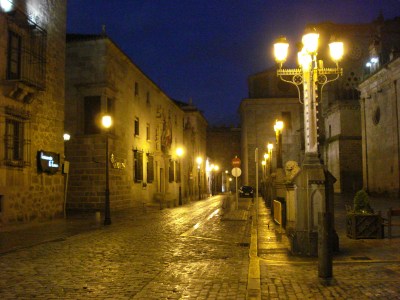
When I was very young, a long time ago, in Swansea, many of our streets still had gas lamps.  The lamp-lighter would appear in winter around three or three-thirty to light those lamps. I remember him walking up the street with his long pole over his shoulder, moving from lamp to lamp. We had one outside our front door. He would turn on the gas, then light the lamp from the lighted wick at the end of his pole.  Sometimes he carried a ladder with him. Then, every so often, when the lamp needed tending, he would climb the ladder and adjust the wick. These gas lights were not very bright but they stood out like light houses between stretches of darkness and we would walk from pool to glowing pool, as if they were stepping stones leading us up the hill to home. We all knew the lamplighter and he would often wave to us as we sat in the front room window to watch him walk by. We rarely saw him in the mornings when he came back to turn off the lamps. We were all tucked safely into our beds. I remember that I wanted to be lamplighter. Later I realized that there are many ways to light a lamp and spread brightness through the world. When I grew up, I became teacher, a coach, a faculty adviser, a mentor, a creator, and those roles allowed me to establish myself as a lighter of a very different set of lamps.


Wet Welsh Rain

IMG_0730 (2)

Wet Welsh Rain

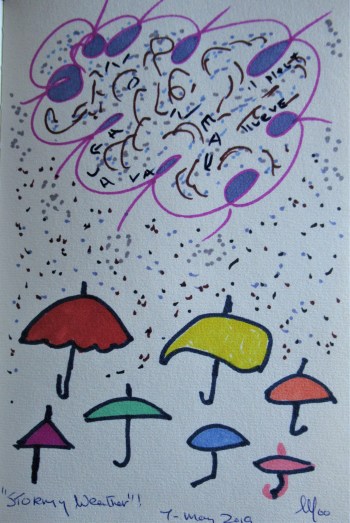
              Day after day, rain, drives in over Singleton Park and Swansea Bay. It claws its clouded way, shroud clad in grey cloud, up Rhyddings Park Road, through Brynmill, and up to the Uplands and Sketty, as it was then, now Sgetti. In those days, the rain got everywhere. It swirled around ankles and knees wetting everything below the hem of the raincoat. Umbrellas kept the shoulders dry. But when the wind blew, and gamp and brolly turned inside out, and people looked as though they were duelling with the wind, and threatening to poke each other’s eyes out, then a good soaking was sometimes better and safer and, in the worst of the rain and the wind, the gamps and brollies came down.  As for the puddles: they were everywhere. You walked in them, whether you wanted to or not, and your leather shoes turned into a pulp that let in water. Socks slopped around your feet, wetter than soggy blotting paper aka blotch [hands up if you remember blotch!]. Heads down, we faced the wind, draped around bus stops, waiting for buses that never came singly, but only in threes after much long suffering. Wind like a whiplash drove the rain before it and everywhere, woolen scarves turned into wet wash cloths and woolen gloves became underwater rain-sodden mittens.

Comment: As Tropical Storm Arthur gathers in the North Atlantic, we would do well to remember the good old days of summer holidays in Wales when it rained every day, bob dydd, during the whole two-week vacation. But did it really rain back then? Who remembers now? I seem to remember it was sunny every day, especially when the cricket was suspended with the words Rain Stopped Play displayed across the television screen. Ant the lunch time cricket scores: what joy to listen to them and to discover one day, as I listened on my illicit radio hidden in my school dormitory,  that play had been stopped because of “piddles on the putch, sorry, I mean puddles on the pitch” [hands up if you remember that announcement!]. I am sorry to say that particular radio announcer did not stay in his job for long. A great pity: I found him rather amusing.

We would do well, too, to recall the twelve days without electric power that followed Hurricane Arthur, back in 2014 [hands up if you remember Hurricane Arthur!]. Alas and alack: how accurate are our memories? And did all of those things really happen? As the street vendors and newspaper vendors [hands up if you remember paper boys!] used to cry out on street corners “Echo, Echo, South Wales Echo: Read all about it” or “Post, Evening Post, South Wales Evening Post, read all about it!” The South Wales Echo and the South Wales Evening Post hands up if you remember them … Oh those were the days … or were they? … click here and read all about it!


Don’t tell me

IMG_0624 (3)

Don’t tell me your troubles …

… words wrapping themselves around your neck, the tune a loose scarf, brilliant in the sunshine, and so warm, flapping as you walk the street … people see frayed ends … wave back at you … the sun picking out gold spots in your hair … all’s well with the world … a marching song … the world walks over the hills … and far away … you march to work or play … every day is a new day … blood stirring with this call to arms … to alarms … everything up for grabs … tunes in your head … words wrapped around you  … warming you …
… a sad song … rain drops falling … mist or mizzle … you walk through damp, low clouds … you are sad … but comforted … wrapped warm in a verbal comforter … the sun breaks through … throws its arms around you … hugs you …. until raindrops radiate … gathering on eye-lash … at leaf’s end … twinkling an abundance of radiant flowers …         … a Nor’easter … snow in the air … on the trees … on the ground … a steady accumulation … you know how it is, East Coast Canada … down by the Fundy …  a fire in the fireplace … warm heart … warm hearth … no travel today … books and computer beckon … a time to read … to write … to remember the old ways … the old days … those memories … a warm scarf wrapped around the neck … and the comforter … so comforting … so much to wrap around you … so much to wrap your head around …

Morning in Island View

IMG_0262

Morning in Island View

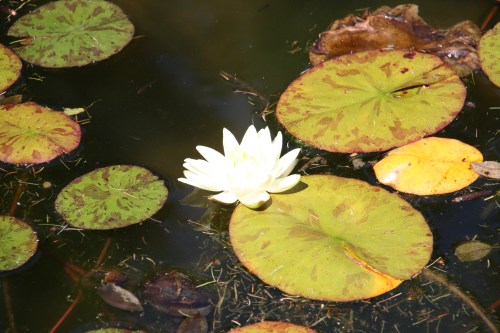
             Morning in Island View and I dream of warm lips rising from stone cold waters. Somewhere, the early sun floats petals across a lily pond. Framed among lilies, my beloved’s face drifts through a watery space. So sweet, her embodiment: she lies languid among the lilies, beside herself in bloom after bloom, each flower gigantic in its frame beneath a wooden footbridge.

            I envision her as she was, this lily who will toil not, nor spin, and who sighs with the morning breeze that ripples her smiling countenance into a thousand fragments. She lies cushioned amid the lily pads, a work of wonder in a liquid impression of fragmented light.

            Fortune rattles its poker dice and they fall haphazardly, here and there, wherever they will. Once thrown, like the spoken word that can never be recalled, they lie there, still on the table’s green baize. They fall, but not by chance and chance itself blossoms with their falling. Like Venus born from the waves, my beloved rises from the waters, born in a conjurer’s trick of blossom turned flesh and pulled from the stream’s dark sleeve to flash her mysterious magic in a thicket of flowering water.

            Now, I see her everywhere: a model in a window, languid in a pavement puddle where raindrops ripple her eyes, couched among the floating clouds as evening steals color from the day. Dusk’s shadows draw their curtains across street and square and now she becomes my lily of the lamplight and I frame her anew in the streetlight’s afterglow, night’s figment dreamed alive beneath distant stars. I walk with her, hand in hand, at noon, when the cathedral wears its strawberry suit, and again in the late afternoon when a blueberry blush descends with bells.

            One evening, in a fit of hope, or is it despair, when my heart pants for a cooling stream, I tread the lily pad path across the pond’s untroubled waters. Dark bells ring out their jug-o-rum chorus as I seek the light of her countenance. Dusk is a violent bruise, scoured purple and red across the waters as I try to become one with my lady of the lake.

            I still don’t know what drew me out. But when I emerged, I sensed that all had changed and that nothing had changed more than I had, the viewer, that once-young man, now old and arthritic, typing away, one finger at a time, battering my key-board to recreate the wanderlust of those day-dreams wrought sous le Pont Mirabeau, along the banks where the Seine flows, or up by the bouqinistes where bridges span the river, words bounce off the page, and painted lilies in the Marché aux Fleurs bewitch the viewer with a staring madness that mirrors pondweed and drifting hair. Now my beloved’s face floats through the cathedral’s eye that ripples in the river. I see the great rose window of Notre Dame, and I seek her once again in those dark waters where she holds out her hands, a place mat for my un-drowned heart.

The Journey

IMG_0681 (3)

The Journey

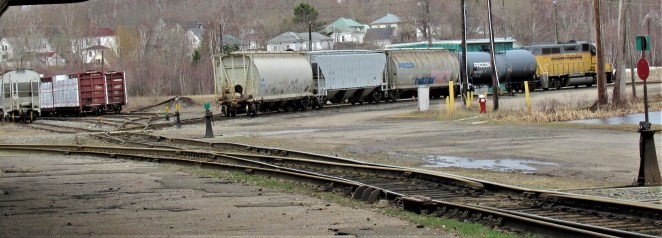
I sense the rust in her mind’s clockwork
clogging her brain, slowing down thought.

I watch her search for words, stumbling through
sentences.  “Wind up the flowers,” she says
handing me the key for the grandfather clock.

When she says “water the clock” I receive
the plastic watering-can meant for the flowers.

Fellow travelers, we journey side by side on life’s
train. I watch her as she looks out of the window
at the passing countryside with its tiny stations.

She frets as she clasps her weak hand in her strong
one and I realize she’s worried because she no longer
knows when, where, or how the journey will end.

Comment: I wrote this originally in memory of my grandmother. However, as I have been involved in the rediscovering / revision / rewriting of older poems, I have come to realize that, as our visions change,  our poems become more accessible to a wider audience. In other words, given what is happening right now with the pandemic, none of us know when, where, or how the journey will end. This leads directly into the twin themes of the fragility of life and the nature of memory. What do we remember? Why do we remember a particular incident? Did it happen just as we remember it or have we already doctored our memories, re-creating them, so to speak.

I have a clear memory of seeing Sir Frank Worral batting at St. Helen’s in Swansea, when I was about 11 years old. A close friend of mine, an outstanding cricketing historian, checked the details in Wisden and told me that Frank Worral wasn’t playing in that match, so I couldn’t have seen him batting. And then there was Sir Everton de Courcy Weekes: I swear a saw him score a century at Bristol, yet, again according to my friend who checked the records, he only got fifty in that game! Games: what mind games the mind plays with us as we age. So, do I go with the fantasy land of my memories in which much has been (re)-invented? Or do I go with the world of truth and checkable reality? As an academic, I lived in the latter world: research, check, double check, avoid expressing personal opinions, facts, facts, facts, and exact dates. As an ageing poet, I would much rather live in that former world where truth and reality march hand in hand with fairy-tale and fiction, a little bit of one and a smattering of both.

How far is from fairy-tale and fiction to the dream world we inhabit at night? Just a short step, I reckon. Sometimes I remember my dreams and write them down when I wake up. Sometimes they vanish and I can only recall some vague feelings of joy and anguish. And what is life, that fragile, dream-like reality? Is it really a dream, as Segismundo tells us in Calderón’s La Vida es Sueño? Or is it a real world? And if it is real, do we create that reality or do we dream it? And if we dream it, do we sleep walk, sleep talk, sweet talk our way through it? Or do we portray it just like it really is, with no creativity, just a factual repeat of reality as we know it?

¿Qué es la vida? Un frenesí.
¿Qué es la vida? Una ilusión,
una sombra, una ficción,
y el mayor bien es pequeño,
porque toda la vida es un sueño,
y los sueños, sueños son.

What is life? A frenzy.
What is life? An illusion,
a shadow, a fiction,
and the greatest good is small,
because life is a dream,
and dreams are nothing
but dreams, after all.