Les croulants

Les croulants

That’s what they called the older
generations, in Paris, in 1963, when
I lived there, in St. Germain-des-Près.

Now, a member of that generation,
I remember those words and see myself
crumbling, failing, falling slowly down.

A façade, it’s all a façade. Here I am,
white-haired, wrinkled, watching time’s
oxen plowing furrows in my face as
winter’s snow layers a silvery thatch
of patchwork hair upon head and chin.

How much longer can I sustain my life,
exist in this metatheatre of give and take,
where each day takes its toll, and I give
away bits of myself, slowly, reluctantly,
sloughing them, snake-like, to dance,
then vanish, into the gathering dark.

Author’s Note
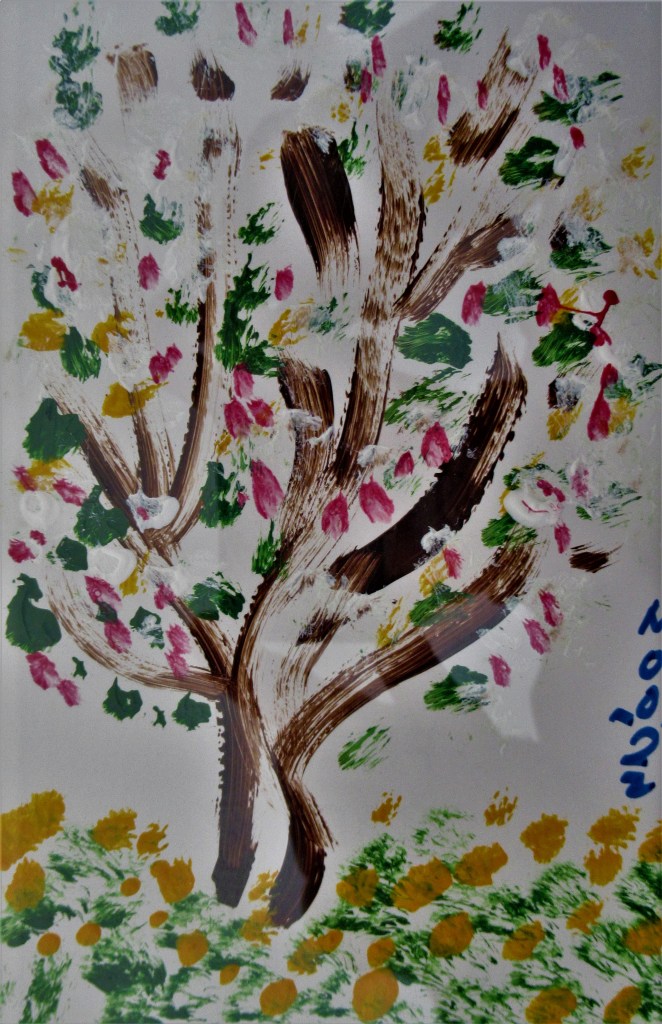
I used this painting as the cover for my novel People of the Mist.

People of the Mist
A Poet’s Day in Oaxaca

Click here to purchase this book.

Themes from this poem can be found in my poetry collection Poems for the End of Time. It is a series of metaphysical meditations written while listening to Messiaen’s Quartet for the End of Time. It is followed by Lamentations for Holy Week, a sequence based on the Spiritual Exercises of St. Ignatius of Loyola, as imitated by Francisco de Quevedo (1601 – 1613) in a series of poems composed during Holy Week. This poetry is written from the heart and expresses the authenticity of the poet’s being. Here, the poet indulges in a dialog with his time and place – much in the manner outlined by Mikhail Bakhtin in his theory of Chronotopos. This poetry is not written for the simple minded. Rather it invites the reader to explore the nature of the world, the philosophy of time and place, and the metaphysical exercises necessary to prepare for the inevitable end of time.

Poems for the End of Time
and
Lamentations for Holy Week

Click here to purchase this book.

What was the last thing you searched for online? Why were you looking for it?

Daily writing prompt
What was the last thing you searched for online? Why were you looking for it?

What was the last thing you searched for online? Why were you looking for it?

The last thing that I searched for online was a prompt that I wished to be prompted by, but I promptly lost it before I could respond to it. Then I went looking, but still couldn’t find it, even though I searched everywhere I could think of.

I grow forgetful as I age, and now I can’t remember what the prompt asked for, and that’s a pity because I remember that I had a lovely answer. Now I can’t remember my answer either. So I am stuck in a sort of one-way street, going in the wrong direction, as I draw near to a roundabout that will lead me back the way I came.

I am afraid some Minotaur or other will seek me out, because I am lost in a labyrinth without the thread of Theseus to lead me out. And its no good searching online, because I no longer know what I am looking for. And that’s a bit like my life at the present time – a pointless search for meaning as I wander, amazed, through a baffling maze of days, seeking, I know not what, and never finding it. I don’t want to give up on it yet, because I know that the answer lies just around the corner, lurking like the last sardine in a sardine can, or the last piece of squid, cowering blackly in its own ink, in the tin, not wanting to be eaten.

Life leads me a merry dance, as king-like, a one-eyed man in the kingdom of the blind, I rule my world. For, en el reino de los ciegos, el tuerto es rey / in the kingdom of the blind, the one-eyed man is king. And no, I didn’t search for that online. It came to me in a sort of dream because, as Goya says, el sueño de la razón produce monstruos / when reason sleeps, monsters are born. And now I see them everywhere, those monsters, and I search online for solutions, but none appear. And so I continue on my merry-go-round way, leading my ragamuffins around those ragged rocks.

Windmills

Windmills

Only the pendulum clock
disturbs the silence
as the slow stars circle
and the moon hides
its face beneath
seven excluding veils.

Tranquility finds me,
seated here, head in hands,
contemplating the complicated
dance steps of a terra-centric
universe where planets weave
an intricate back and forth
to justify the falsehoods
of misguided mistakes.

Men, confident in their wisdom,
know that all is well,
that their faith in the old gods,
the old books, the words
that were written, in stone,
before the modern world began,
need no rethinking.

Those whirling sails,
imprinted on the questing mind,
are a giant’s arms, those sheep
an enemy army cloaked
in dust, coats of arms visible
only to the far-sighted
whose eyes defy vision’s laws.

Right, they were then.
Right they are now.
Nothing changes. Nothing
can possibly change.
Sheep are the enemy
and windmills wait to invade
the unsuspecting mind.

Comment: The history of Don Quixote and its reception in Spain is quite interesting. I was very sorry to read that Cervantes’s language is now considered so antiquated that interpreters are needed. I actually have a cartoon version of his quests – a picture reader, so to speak, very brief, because each picture is worth a thousand words. I have not yet seen the simplified text, rewritten with today’s reader in mind.

Don Quixote still holds many lessons for this modern world of ours and is definitely worth re-reading for, as Soren Kierkegaard (1813-1555) wrote: “There are two ways to be fooled. One is to believe what isn’t true; the other is to refuse to believe what is true.” Don Quixote, the character, threads a narrow path between those two extremes, as do many of the other supporting characters, some of whom use metatheatre for their smoke and mirror Wizard of Oz trickery. And remember, or forget at your peril, nihil sub sōle novum – there is nothing new under the sun. And yes, history does repeat itself, as you will see if you read (or re-read) Cervantes’s master piece.

Coal Face

And Every Valley

And every valley shall be filled with coal.
And the miners will mine, growing old
before their time, with pneumoconiosis
a constant companion, and that dark spot
on the grey slide of the sidewalk a mining
souvenir coughed up from the depths
of lungs that so seldom saw the sun
and soaked themselves in the black dust
that cluttered, clogged, bent and twisted
those beautiful young bodies into ageing,
pipe-cleaner shapes, yellowed and inked
with nicotine and sorrows buried so deep,
a thousand, two thousand feet down,
and often so far out to sea that loved ones
knew their loved ones would never see
the white handkerchiefs waved, never
in surrender, but in a butterfly prayer,
an offering, and a blessing that their men
would survive the shift and come back
to the surface and live again amidst family
and friends, and always the fear, the pinched
-face, livid, living fear that such an ending
might never be the one on offer, but rather
the grimmer end of gas, or flame, or collapse,
with the pit wheels stopped, and the sirens
blaring, and the black crowds gathering, and
no canaries, no miners, singing in their cages.

Comment: A friend wrote to me about the closing of the pits in Nottinghamshire and how the mining communities had suffered, were still suffering, and might never recover. This poem is the first one in a sequence on the mine closures in South Wales and other mining communities. Poems For the End of Time – the book is available here.

Low Ebb

Low Ebb

We have been apart too long, my love,
night’s dark corridor lying between us
and neither of us approaching the other
when doors close and blinds are drawn.

The way to the heart of the matter is not
an easy path to walk, not any more.
Our secret ways and dreams lie cold
upon chill, empty sheets and pillows.

Each day the tide revives the beach,
flowing out, abandoning its wet debris
for the sun to perform its magic: fresh
seaweed drying above warm sand.

Sea-birds bury their beaks, writing claw
letters as crabs burrow, dig deep, waiting
for the tide to return and re-create
its alternate reality of dreamy waters.

Half of my bed performs its nightly duty.
The other half lies cold, empty, lonely.
No sea-life wanders there, not even in
my most creative dreams of sun and sand.

Comment: The loneliness of old age is compounded by many factors, including ill-health, sleeplessness, and the need to sleep in separate rooms. How many homeless people suffer that loneliness, and more, and at ages much less than ours? And then there’s the distress of trying to live in poverty, to survive from day to day, with safety net that will not protect us, if we chance to fall. A sad world then, as Polly Toynbee points out in today’s Guardian.


Underworld

Underworld

In the secret world of my goldfish bowl
I speak in bubbles but only hear silence.

My fish-eye lens bends the pendulum
of the grandfather clock. Westminster chimes,

inaudible, do not intrude. Noiseless are time’s
ripples across the surface of my submarine sphere.

I feel, rather than hear, my troubled heart beat.
The foreboding sounds of distant voices leave

me untouched and becalmed. Rocked in love’s
cradle, these amniotic waters nourish and soothe.

In my beginning will be my end. One day I’ll return
to the beaches of my childhood, where the sun

always shines, and the moon path over the waves
is a welcoming walkway leading to the underworld.

What change, big or small, would you like your blog to make in the world?

Daily writing prompt
What change, big or small, would you like your blog to make in the world?

What change, big or small, would you like your blog to make in the world?

Looking around me and seeing the way that the world I know is so totally divided, and knowing that words and ideas will bounce off people’s backs like rain off a duck’s back, I do not expect my blog to make any changes, big or small, to the world. Would I like it to? Yes, I would. But whether it will or not is a different question.

My blog consists of several elements. Let us start with the poetry. If I can reach out and touch somebody with one or more of my poems, then I will be very happy. This is, after all, a poetry blog. And part of that blog is a continuing discourse on creative writing and poetic creativity. If one of my articles / posts on creativity can help one person, just one, to improve their creativity, then I will feel justified with all the hard work and thought I have put into the posts.

I also write about Discourse Analysis, the meaning of words and texts. In our current, doubt-ridden world, it is often the loudest voice that carries the most weight, and he wildest ideas that get the most attention. I always remember that still, small voice that comes after the fire and the thunder: “What doest thou here, Elijah?” Alas, I am not an Elijah, nor am I a prophet, nor am I out to make a profit. But if someone, somewhere, recognizes my voice as a still, small, voice speaking a little bit of sense in this wilderness of wild words, then I will be satisfied. My creative prose comes next. It is mostly composed of flash fiction, memoirs, and short stories. If I can bring tears or laughter to the eyes and the heart of just one reader, then again I will feel that I have done my work.

Then there is my art work. I have always been told that I am useless at art. Mind you, I think those people came from the same school of thought that told me, as a teenager, that I would never go to university – except on a train. However, I discovered Matisse and his words ‘making meaning out of color and shape’. Then came Dali – ‘I don’t know what it means, but I know it means something.’ Out of those words have come cartoons and paintings, some funny, some sad, and all of them unique. Again, if one reader / viewer finds joy in them, then I will be happy. And if my own work persuades one battered, belittled artist that he or she can paint, create, make meaning out of color and shape, then I will have achieved the minor miracle of helping to change someone’s life for the better.

As for these prompts, I have only just started to be prompted into doing something. Why? I am not sure why. I just think that I have a different view of the world from most people. If I can offer that alternative view of reality, a joyous reality, I might add, to one, or maybe even two people, then once more, I can feel that yes, my blog has made one, small change to the world around me. And I cannot ask for more than that.

Meanwhile, I think of the studies I did on the Spanish Civil War (1936-1939). The right kept moving further right. The left kept moving further left. The middle ground where discourse, creative thinking, and debate can flourish, slowly vanished. Then, when positions and thoughts became so deeply entrenched that there was no room for mainoeuvre / manouver / maneuver, whichever way you wish to spell it, then shooting broke out and people went to war and found, all too often, their often-violent deaths. I would not wish that fate on any person, government or country. If just one person would read that powerful and bitter history, and learn from it, then the world might be a better place.

To talk to one person at a time, that’s what I want from my blog. Then I want that person to talk to another person, and the third one to a fourth, and so on and so forth, until we have established, one person at a time, a linked chain that may, just may, be long enough and strong enough to help lighten the darkness and head off the dangers into which we seem to be steering.

Qué será

Qué será

Peace in the Peace Park,
here on the headland,
where cool grass slopes
down to the water’s edge.

Geese have nested close by
and gifted us with goslings.
Golden balls of fluff, they walk
on the land right now,
but soon will take to the water.

A thin, yellow line, they will
paddle behind their parents,
webbed feet invisible
beneath the water’s flow.

And I, in the metal coffin
of my over-heated car,
sit and watch them, envying
their freedom of movement,
waiting for whatever will come.

My beloved draws near.
I sense as much as see her,
as I covet her strong steps,
the ageless sway of her body.

Alas, I am growing old,
and not with any grace,
but fighting it all the way,
and qué será, será
is all that I can say.

Words of Wisdom

Words of Wisdom

“You can’t write about life if you haven’t
lived it.” Words of wisdom from the poet
who wrote The Old Man and the Sea.

“But,” I hear you say, “what did he know
about writing? He never took any courses
that taught him how to write, nor held a certificate
from a prestigious school that guarantees quality.
Nor was he a poet, he only wrote prose.”

And yet, the prestige of that ivy-covered,
ivory tower leads poets… I pause for a moment…
– to where exactly? Into debt, of course, and also
down the paved path of their own destruction.

What kind of life do they live, those writers,
who only exist within their cerebral boxes,
and never step outside them unless they are
ordered to build an even bigger box?

Have they walked with street-walkers in Madrid?
Have they sat beside the poorest of the poor,
in Oaxaca, shivering in thin cotton clothing
beneath falling snow? Have they visited Madrid’s
Plaza de España, stepping high to avoid the blunt,
bloodied needles, shared, to take away the pain?
Have they pan-handled in Yorkville or slept
in sleeping bags, by the Royal York, in the snow,
at 40 below, on the gratings above the Subway?

“The unexamined life is not worth living,” some say
Socrates said. But what I think is ‘the unlived life is
not worth examining.” Tear down the walls that
inhibit and limit you. Go out into the world and see
what others see and feel. Only then, come back,
stab your pen into your veins, fill it with your blood,
and set before us what was done to you, what you
experienced, how you survived, and what you felt.

Comment: Once again I thank my friend Moo for his illustration – Building Bigger Boxes. It goes well with the theme of this rant, or is it a poem? A verbal rant to echo a visual rant, perhaps, or vice versa.