Memories

Memories

I did the memory test today. It’s hard to believe
that tomorrow I may not know where I am
nor what is the day. Others have passed this way,
none to my knowledge in my family. Sorrow gnaws
the red bone of my heart. The lady at the doctor’s
counter says she is seventy. Her bed-ridden mother,
for whom she seeks medicinal solace is ninety-eight.
Her mind, she says, is as sharp as a needle or a knife,
 or a blade of grass. What dreams, I wonder, flit
through her head at night? Does she recall her child
hood with its pigtails, the first young man she kissed,
church on Sundays, the genders carefully segregated,
driving there in the family horse and cart? Thunder rolls
and shakes my world’s foundations; a storm watch,
followed by storm warnings, walks across my tv screen.
Lightning flashes. Aurora Borealis daubs the night sky
north of Island View with its paint-box palette of light.
Memories, according to the song, are they made of this.
But what is this? Is it these shape-shifting, heart-stopping
curtains of shimmering grace? Or is it those darker
shadows cast by firelight on the smoky walls
of a pre-historic Gower cave where my ancestors gnawed
the half-cooked bones of the aurox and never ever
dreamed of Jung’s racial memories as they communicate
information from the unconscious to the conscious mind.

Some People

Some people leave indelible impressions
memorable moments impressed
on memory’s eye or clasped closely
to the butterfly heart caged in its chest
wings wildly beating as it strives for flight

some people cast shadows on snow
leave footprints light as flakes
as they walk across our waking dreams
or call on us in those midnight hours
when their image sears the drowsing mind

Some people set a fire in our hearts
allow us to see things out of sight
to write what we never thought to write
to reach out to the unreachable
to teach what we thought was unteachable

Stars in night’s silence they point the way
lead us on paths we never thought to tread
present us with a thread to lead us
through life’s labyrinths and out
from the darkness into bright light

Sometimes they cross the rainbow bridge
before we do and when they go we know
deep down in our hearts that they are there
just out of sight waiting for us ready
to welcome us when it’s our time to go

November 1961

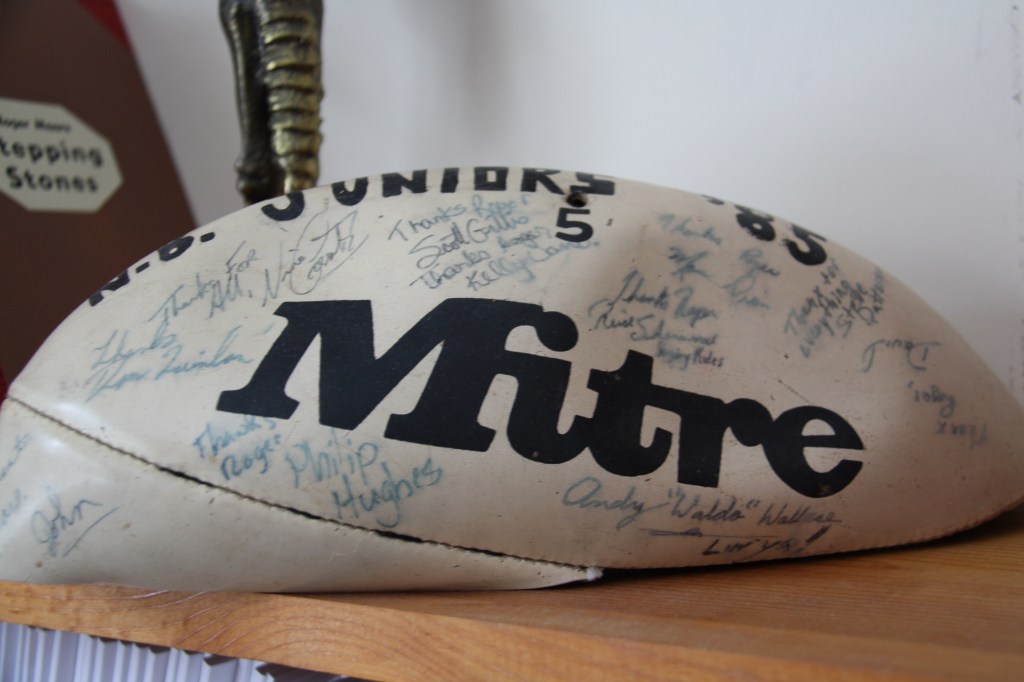
I wondered what had happened to that rugby ball!

November, 1961

November on the Berryfield: duck weather,
we call it, with the rain pouring down
and the watchers standing on WWI duckboards,
chilled their fingers, eyes blinking against the wind.

West Country clay turns rugby boots into leaden
counterweights. Hands stuck in pockets, the railway
carriage where we changed is a distant memory.
The only reality, this wet clay holding us back.

Mouldy and muddy, our rugby jerseys are all the same
and it’s hard to distinguish friend from foe.

Trench warfare, we think, as the two packs strain,
a Roman tortoise, sixteen bodies, thirty-two legs,
crabbing from side to side as they seek a perfection
that will never be found on a day like today.

Rain shrouds the goalposts and the scrum half’s kick
is a yard too far from clumsy, chilled fingers
as they scrabble in vain at this soap-bubble nightmare
we call a rugby ball. Worn-out legs churn through
mud that clutches like an octopus at feet and ankles.

Running rhythms are lost. Wet clay fingers hold us back.
Grey ghosts of ancient alumni raise up our hearts,
help us to haul our opponents’ tired bodies down.

Comment: Just rediscovered this, revised it, and now I am posting it again. The Berryfield is where I played my school rugby. If anyone remembers the Berryfield, or actually played there, by all means drop me a line. That West Country clay mud was the devil. Heavy and clinging, it grew on your boots until they became as heavy as diver’s boots and gradually weighed you down. It was worse for the opposition than for us. We, at least, were accustomed to it. It was even worse for the cross-country runners and I have never forgotten those ploughed clay fields.

Downsizing

Books abandoned on the sea shore of life.

Downsizing
Francisco de Quevedo

I chose each book, held it in my hands for
one last time, then placed it peacefully in
its new resting place. Old friends, they were …
I broke that friendship and set my friends free
to fulfill their promised afterlife on
another reader’s shelves.

Mind to mind, though they had
lived five hundred years ago,
I strove to engage them in lively
conversation, Bakhtinian dialogs
within our time and space, and
that space my basement library.

I loved to hear their lilting speech,
to listen to their wisdom with open eyes
and mind. I answered them with words
I quickly pencilled on each page.

One day, a man arrived from the university.
He carried them away in a delivery truck
and they were borne to a wider world.

If you see on, bless it, read it, cherish it.
Blind now my eyes that devoured their words.
Deaf now my ears that heard the dead,
for I can listen no more.

Note: “Escucho con mis ojos a los Muertos /
I listen with my eyes to the words of the dead.”
Francisco de Quevedo (1580-1645)

With thanks to Nicholas Wermuth, who was kind enough to comment and help me revise and restructure this poem.

Survivor

Survivor

Every day, now he’s learning to speak Welsh,
he finds out something new about his childhood.
It’s not the need to talk so much as the necessity
of diving into himself and mining his memories.

Brynhyfryd / Mount Pleasant.
Pen-y-Bont / the End of the Bridge.
Ty Coch / the Red House.

This latter the house in which he was born,
way out of town, by Fairwood Common,
away from the strafing and bombing.
The war generation of his family all born
in the same in-the-country Gower bed.
No room in war-time hospitals
not even for the birth of war babies.

Three of his brothers did not survive
those rough, household births.
He still bears the forceps’ scars
from the moment the doctor
plucked him out, head first,
and hung him up by the heels,
shaking him, bringing him back to life.

He bears other scars as well
from the survivor’s burden of carrying
three dead brothers for seventy long years,
alive and kicking in the womb-warm
crevices of his still beating heart.

Thanks Giving

Thanks Giving

Driving from St. Andrews to Island View,
giving thanks for fall foliage as I pass
fields and forests filled with autumn blushes
blueberry patches brushed with cyan,
violet, sprinkled with primary red.

Trees crowd close, encroach, add yellow
and orange, fresh tonal values at each turn.

Sunlight strokes white touches of pointillistic
beauty through showers of golden leaves.

 Ochre and brown burn shades where pinprick 
black ghosts shadow grays through a gilded tree.

Cubist, this fire-bright, iron-sheeted shed.
Surrealist that rusted tractor, abandoned.
The road’s black thread ties together vivid
impressions of leaves as they tumble and fall. 

Midnight

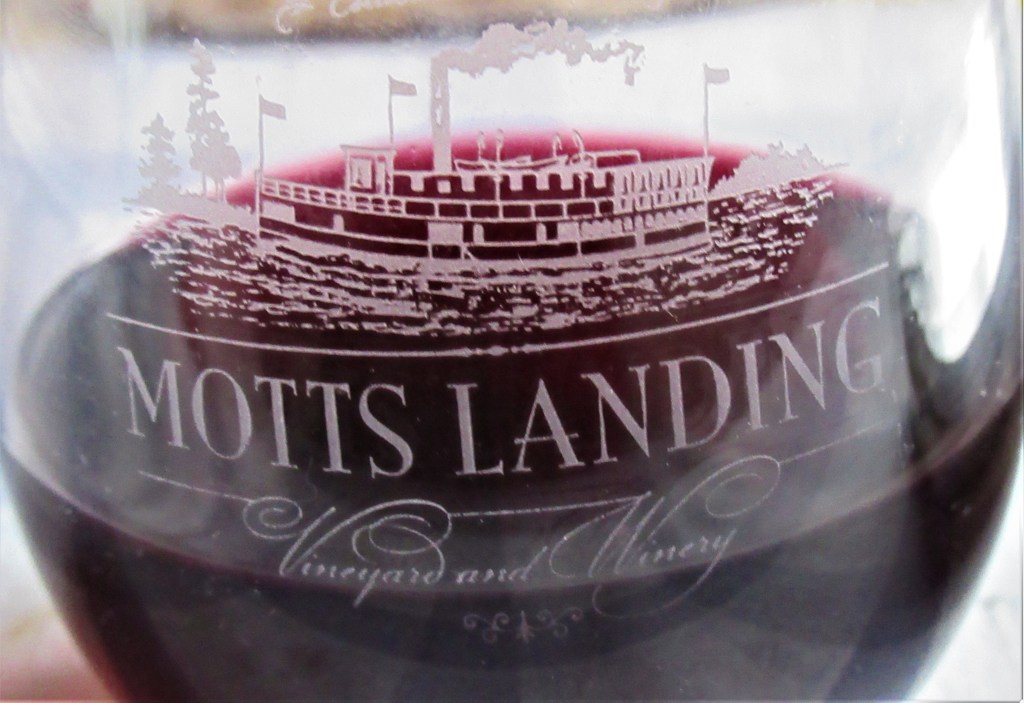
A great NB Winery

Midnight

Primary red, this label, and the wine, fresh-drawn,
plucked from the bottle, tumbling tinto, into the glass.

Swirled, streaked ruby by overhead lights, bubbles
bright with hints of garnet, purple, brick at meniscus.

Sniffed, it smells of warm autumn days, scintillating
leaves, just crisping, turning color, and fruit all ripe.

Tasted: fruit bursts into hints of raspberries,
strawberries, spices, a touch of garrigue, mysterious.

Wine descends like water on a dry, hot, dusty day,
or rain after drought, when thirsty lands lap up

liquids, and rejoice in moisture’s blessings.
Raised now the glass, vineyard and vintners toasted,

midnight greeted, saluted the old day past and gone,
welcomed the fresh day walking in, swaddled, new born.

Fall

Mactaquac and geese at the head pond

Fall

Red leaves multiply on maple trees.
Bright berries staining a mountain ash.

One flower survives on the hollyhock,
its blaze of glorious blooms lost, faded
in a silence of dried seeds, absent bees.

Hummingbirds are now long gone. Geese
gather in great gaggles feasting on grass
before taking flight and soaring south.

I want to ask questions about their journey
but they mouth denial and waddle away
to paddle on grey waves when I approach.

Comment: With a temperature yesterday of 21 C (that’s plus 21 C) rafts of geese are still around. These photos are from earlier in the fall. I love the way several stand erect, looking at and for possible intruders, while others feed. Shared responsibilities. I guess we humans could learn a great deal from the geese, if only ‘we were not full of care / and had some time to stop, and stare’ (W. H. Davies, one of my favorite Welsh poets, the verses changed slightly and adapted to Mactaquac). Roedd hi’n y tywydd heulog a cynnes yfory / the weather was sunny and warm yesterday. What a joy to be able to write that in Welsh after so many years without the language.

Carpe Diem

Autumn in the Garden

Carpe Diem

Seize the day. Squeeze this moment tight.
Nothing before means anything. Everything
afterwards is merely hope and dream. 

A tiny child, you chased wind-blown leaves
trying to catch them before they hit the ground
Elf parachutes you called them and trod with care
so as not to crush the fallen elves as they lay leaf-bound.

I stand here now, a scarecrow scarred with age,
arms held out, palms up, in the hope that a leaf will descend,
a fallen sparrow, and rest in my hand.

When one perches on my shoulder and another
graces my gray hair, my old heart pumps with joy.

Comment: Autumn in the Garden was framed by Geoff Slater who gifted it to me this summer. Thank you Geoff. A double picture, it shows the flowers and the trees with that first touch of drifting snow. NB it snowed here in Island View early September this year while we still had flowers and leaves. The poem, Carpe Diem, is from a series of quasi-sonnets. Quasi, because they rarely have 14 lines! Oh Petrarch: shake in your shoes.

Underwater Road

Underwater Road
Chuck Bowie

We met at St. Andrews, at low tide, on
the underwater road. In secret we
shared the closed, coded envelopes of thought,
running fresh ideas through open minds.

Our words, brief vapor trails, gathered for
a moment over Passamaquoddy,
before drifting silently away. Canvas sails
flapped white seagulls across the bay.

All seven seas rose before our eyes, brought
in on a breeze’s wing. The flow of cold
waters over warm sand cocooned us
in a cloak-and-dagger mystery of mist.

We spun our spider-web dreams word by word,
decking them out with the silver dew drops
proximity brings. Characters’ voices,
unattached to real people, floated by.

Verbal ghosts, shape-shifting, emerging from
shadows, revealed new attitudes and twists,
spoke briefly, filled us with visions of book
lives, unforgettable, but doomed, swift to fail.

Soft waves ascended rock, sand, mud, to wash
away footprints, clues, all the sandcastle
dreams we had constructed that afternoon,
though a few still survive upon the printed page.

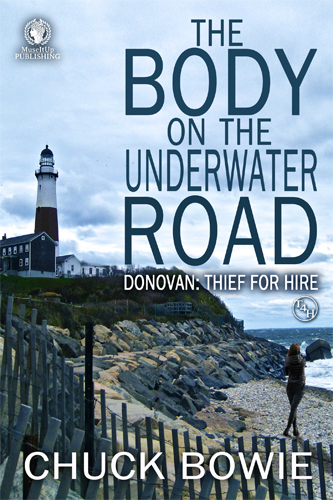
Comment: I wrote this in St. Andrews during my residence at KIRA (June, 2017). Chuck drove down for lunch, and after we had eaten, we sat by the sea and discussed the writing projects on which we were engaged. I was busy writing a poetry collection, One Small Corner (now available on Amazon / KDP), and Chuck was plotting his way through a new novel, based on St. Andrews, with the title The Underwater Road.

More details on The Underwater Road.

Here is the purchase site on Amazon.ca: https://www.amazon.ca/Body-Underwater-Road-Donovan-Thief-ebook/dp/B07CLPRG81/ref=sr_1_1?dchild=1&keywords=The+Body+on+the+Underwater+Road&qid=1604981052&s=books&sr=1-1

… and it may also be purchased  at Westminster Books in Fredericton, and Mill Cove Coffee, in Miramichi.