Qué será

Qué será

Peace in the Peace Park,
here on the headland,
where cool grass slopes
down to the water’s edge.

Geese have nested close by
and gifted us with goslings.
Golden balls of fluff, they walk
on the land right now,
but soon will take to the water.

A thin, yellow line, they will
paddle behind their parents,
webbed feet invisible
beneath the water’s flow.

And I, in the metal coffin
of my over-heated car,
sit and watch them, envying
their freedom of movement,
waiting for whatever will come.

My beloved draws near.
I sense as much as see her,
as I covet her strong steps,
the ageless sway of her body.

Alas, I am growing old,
and not with any grace,
but fighting it all the way,
and qué será, será
is all that I can say.

Was today typical?

Daily writing prompt
Was today typical?

Was today typical?

So, I Googled the meaning of typical and here are some of the synonyms that appeared. Standard, normal, stock, representative, usual, conventional, characteristic, regular, orthodox. Following the meanings offered, yes, today was typical. Dark at midnight, dawn breaking about 5:30 AM, full sun by 7:30 AM, noon – dead on 12 o’clock, as usual. And so it goes on. The weather may change, but the basic structure of the days, although also cyclical, growing longer then shorter, in terms of daylight hours, does not change much. Therefore, yes, by this definition, it was a typical day. But was it?

For creative people, each day is different and each moment, minute, hour of each day is different. Creatives listen, observe, feel, touch, delve beneath the surfaces of things, and see things in a lateral multiplicity that means everything is evolving, changing, growing, decaying. Creative people look and listen (with or without mother). They imitate, and from that imitation they create and re-create. And creativity moves way beyond the standard, normal, stock, representative, usual, conventional, characteristic, regular, and orthodox. If it doesn’t, it’s not creative, it’s just standard, normal, stock, representative, usual, conventional, characteristic, regular, orthodox.

Was today typical? Well, it’s not over yet. But up until now, it has only been typical in terms of its intimate creative typicality. The light has changed with the changing sky and clouds. Rain fell, and changed the tones of the colors around. The light changed, but so did the scents that arose from the warm earth with its carpet of grass and the tarmac and concrete, its heat suddenly cooled. The ground glistened, spider-webs sparkled, birds sang when the sun returned, flowers tossed their heads, in slightly different ways from yesterday, when the wind was warm. Now, damp and shining, their dance-steps and rhythms also changed. Now the world is wet. The trees are waving their fans and have caused a slight wind to arise and rustle their leaves. This day is full of creative magic – but only for those who have ears to hear and eyes to see. For too many people, alas, yes, this is, after all, just another typical, humdrum, boring old day. As W. H. Davies wrote: “What is this life if, full of care, we have no time to stand and stare?” Creatives make that time – and they live among the blessed.

Words of Wisdom

Words of Wisdom

“You can’t write about life if you haven’t
lived it.” Words of wisdom from the poet
who wrote The Old Man and the Sea.

“But,” I hear you say, “what did he know
about writing? He never took any courses
that taught him how to write, nor held a certificate
from a prestigious school that guarantees quality.
Nor was he a poet, he only wrote prose.”

And yet, the prestige of that ivy-covered,
ivory tower leads poets… I pause for a moment…
– to where exactly? Into debt, of course, and also
down the paved path of their own destruction.

What kind of life do they live, those writers,
who only exist within their cerebral boxes,
and never step outside them unless they are
ordered to build an even bigger box?

Have they walked with street-walkers in Madrid?
Have they sat beside the poorest of the poor,
in Oaxaca, shivering in thin cotton clothing
beneath falling snow? Have they visited Madrid’s
Plaza de España, stepping high to avoid the blunt,
bloodied needles, shared, to take away the pain?
Have they pan-handled in Yorkville or slept
in sleeping bags, by the Royal York, in the snow,
at 40 below, on the gratings above the Subway?

“The unexamined life is not worth living,” some say
Socrates said. But what I think is ‘the unlived life is
not worth examining.” Tear down the walls that
inhibit and limit you. Go out into the world and see
what others see and feel. Only then, come back,
stab your pen into your veins, fill it with your blood,
and set before us what was done to you, what you
experienced, how you survived, and what you felt.

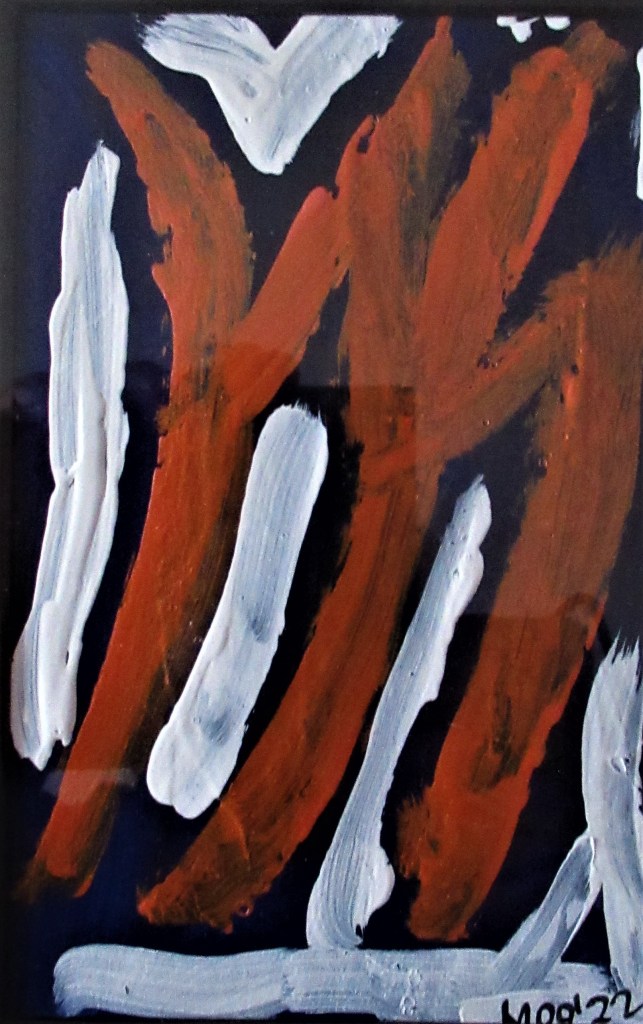
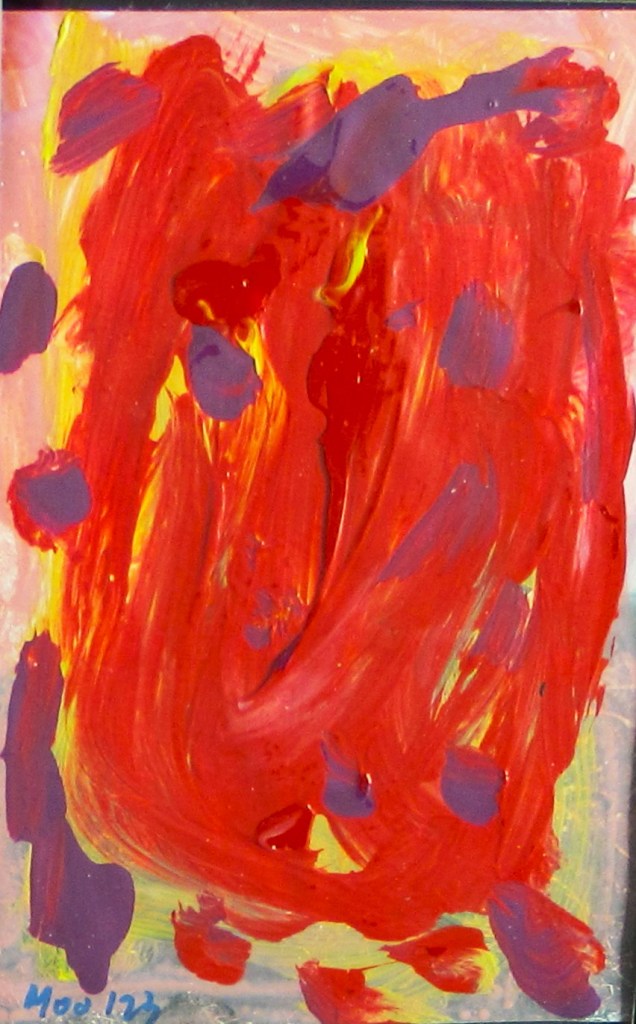
Comment: Once again I thank my friend Moo for his illustration – Building Bigger Boxes. It goes well with the theme of this rant, or is it a poem? A verbal rant to echo a visual rant, perhaps, or vice versa.

What strategies do you use to maintain your health and well-being?

Daily writing prompt
What strategies do you use to maintain your health and well-being?

What strategies do you use to maintain your health and well-being?

Covid changed the world and my outlook on the world. Since the first rumors in 2019, I cut my own hair and stopped eating out. I avoided crowds, left home as little as possible, wore a mask everywhere, and maintained as much distance as possible between myself and other people. I stopped inviting people around to the house, and, as a result, we have hardly had a visit or a visitor in the last four years. We got regular shots and boosters. So far, with those precautions and a little bit of luck, we have avoided Covid.

My health care deteriorated during the Covid period. I had very few visits to my GP’s office, and most business, like prescription renewal, was done over the phone. Consultations were by telephone as well. I missed out on the regular blood tests that my urologist / oncologist had been scheduling for me, after a bout with prostate cancer. These picked up again in late 2021, and were resumed in 2022 and 2023. Things seem to be moving well currently. Thank heavens.

I interpret well-being as my state of mind, rather than my state of body. I would say that my well-being suffered from my lack of human contact, although I have slowly developed a series of online support groups. In this way, I was able to continue my writing, for example, in Zoom sessions. I also missed my family visits. I no longer travel well, and due to Covid restrictions, I did not see my daughter or my granddaughter from 2019 to 2022. Clearly, we all missed the family closeness and we were all affected. However, we are used to isolation from family. Boarding schools, travel abroad in the summer, emigration to Canada, saw our family connections broken. That said, the advent of social media, Skype, Zoom, Messenger, texting, free phone calls, have all lessened the miles between us and maintained a contact that we never had, post migration, with our parents and grandparents, and extended family. The isolation and loneliness have been hard. They are hard upon all ageing, isolated people. We have suffered less than most.

As for strategies, I really have only three: 1. to adapt 2. to survive 3. to create beauty via my writing and my painting. Painting, prose, and poetry – these I can share with my friends. Vita brevis, ars longa – life is short, but art endures. Pax amorque – peace and love.

Modern Society

Daily writing prompt
What would you change about modern society?

What would you change about modern society?

Good question – what indeed? First, define society. It’s not as if a single society dominated the world. Do we then distinguish between the world, this geoidal planet on which we live, and the multiple societies that inhabit this world? If we do, then what right do you, or I, or any other individual have to change any or all of the world’s cultures and societies? And how do we change them?

Many ways have been tried in the past, very few successfully. The Spanish Inquisition burned many books and censored others. Other book burnings and spurnings have taken place, and in some places, they are still happening. But are they effective in the long term? Good question. Short term, maybe. Long term, I am not so sure.

Do we limit education, and by extension, knowledge, to a few , limited people, who believe what we believe, and do what we want them to do? That has been tried as well. Short-term successes, but long term disasters. As well as depriving people of education and books, we can also enslave them. This is still happening in many places.

So, another definition: what do we mean by change? Change for the better? Change for the worse? Change for change’s sake? Change for the betterment of our own selves and the devil take the hindmost? And what do we mean by modern? So many questions – so few answers.

Albert Camus once wrote that he was ‘optimiste, quant au monde, pessimiste quant a l’homme‘ – an optimist where the world is concerned, a pessimist where humankind is concerned. Personally, I am not sure that this particular thought stands up any longer. Is it still possible to be optimistic about a planet that we are capable of blowing to smithereens, a planet, moreover, that is currently suffering from wind and rain, fire and flood, famine and war, pandemic and a pollution like none we have ever seen before?

How can I change the world? I am just a single human being. Well, I am a married one, actually. But I only have one vote. I rather fear that single vote (votes don’t marry and produce offspring) will have little effect on my ability to make any change at all to modern society.

Pass the soap and a towel, please, as a certain person said a long time ago. I want to cleanse my hands and purge my soul. I am too old a dog to try and learn new tricks.

What Bothers You and Why?

Daily writing prompt
What bothers you and why?

What bothers you and why?

I went to the pharmacy today for my regular shots, booster and upgrade. The pharmacist asked me if I was allergic to anything. “Yes,” I replied. “I am allergic to stupidity.”

Stupidity is a singular thing, but it comes in many forms. The car driver who weaves his car through thick traffic, breaking the speed limit, threading a narrow pathway, overtaking on the inside, the outside, turning a two way street into a three way street by adding a third lane, even though there is oncoming traffic in the new lane he has built for himself. Such people rely on the charity of others to give way and make space.

Then there are incompetent teachers. Not all teachers are incompetent. Some are wonderful, kind, friendly, and comforting. Others are martinets, escaped from the army cage, and strutting the classroom, using the ruler to beat the students into submission. ‘My way or the highway,’ they claim, and what they say goes, even if it climbs to the height of stupidity or falls to the bottom of the well of incompetence.

Goya illustrated the nature of various kinds of stupidity in his wonderful etchings. Witches flying, donkeys braying, simple people worshipping the expensive clothing but never seeing the corruption it covers. So, turn to the Caprichos and the Proverbios, or, if you want to receive a real lesson in man’s inhumanity to man, look at the Desastres de la Guerra, the disasters of war.

Stupidity – a simple word – but with multiple meanings. What bothers me, and why? Stupidity, plain and simple, in its multitudinous forms.

Interesting Times

Daily writing prompt
List 10 things you know to be absolutely certain.

Interesting Times

“May you live in interesting times.” This phrase, be it a blessing or a curse, it has been called both, is rapidly becoming a cliché. So, are we living in ‘interesting times’? Good question, and I have no answer to it, not one that I would publish anyway.

As to listing 10 things that I know to be absolutely certain, I can’t. And that may be the first thing I am certain about. The other thing about which I have a certain amount of certainty is uncertainty itself. I am certain that yes, we are indeed living in times of uncertainty. Well, most of us are anyway. The other thing that I am fairly certain about, well, 100% certain about really, is that death will come to us all, sooner or later, don’t know where, don’t know when, don’t know how.

So, perhaps I can manage to achieve three certainties – 1. The certainty of death, to quote Dylan Thomas, ‘for all poor creatures born to die’. 2. The certainty of uncertainty itself, to quote Stéphane Mallarmé, in my own translation, ‘a roll of the dice will never eliminate chance’. 3. The certainty that I cannot find seven more things about which I am certain.

That said, I am not all that certain about what I have just written

A Game of Chance

A Game of Chance

You make me think of the road not walked,
the path untaken, the bay around the headland
where we never swam, the cliffs on the Gower
that we never had the time to climb.

Who knows which path is right or wrong
when we throw the dice and stake our future
on a single moment of time when, thinking done,
we come to a decision and take that first step.

The more I know, the more I realize that I know
so little and am surrounded by a world
not only unknown, but totally unknowable,
and me with my life dangling from a frail thread.

Sometimes, I dig deep into bottled sunshine,
But find no answers there, just the same questions
swirling round the glass, and the glass filled with
the same uncertainties and lack of knowledge.

I really don’t know where to go, or how to get there.
And then I remember that, if I don’t know where to go,
any path I take will lead me there. That is when I shuffle
the cards, breathe deep, and give the dice a throw.

Patience

Patience


“Patience achieves everything.”
St. Theresa wrote this in Spanish,
back in the old days, when patience
was a virtue that few possessed.
Patience has vanished nowadays.

It is as dead as a doornail,
as dead as the proverbial dodo,
as dead as whatever cliché
springs to mind in the laziness
of the instant possession of each
passing cloud, each new slogan
marketed madly on the TV.

Turn off the TV. Go out, barefoot,
and walk on rain-wet grass
or walk on sea-wrinkled sand
out into the sun-warmed waves,
there where the sandpipers
stitch their secret messages
and the crows walk barefoot too.

Learn the secrets sown there,
decipher the ancient wisdom
left on the beach by wandering gulls.

There, in the tide-mark you will find,
among the sand-papered bones
and skulls, the secrets that will solve
the mysteries that you seek.

“If you try to force the soul, you never succeed.” John O’Donohue, Anam Cara, p. 147.

“La paziencia, todo lo alcanza.” St. Theresa of Avila.

Why am I?

Why am I?

A coast line
where sea and shore
engage in a never-
ending dialog
of silence and sound.

Who sees such things?
The man or woman
who has eyes to see.

Who hears such words?
The person who has ears
to hear and a heart
with which to feel.

And who am I,
this old man walking
life’s sands at the tide’s
foaming edge?

With a clarity of vision
that morphs light into shadow,
and then back out again,
would you tell me, please,
who, and why, I am.

“The chorus of the ocean, the silence of stone.”
John O’Donohue, Anam Cara, p. 78.