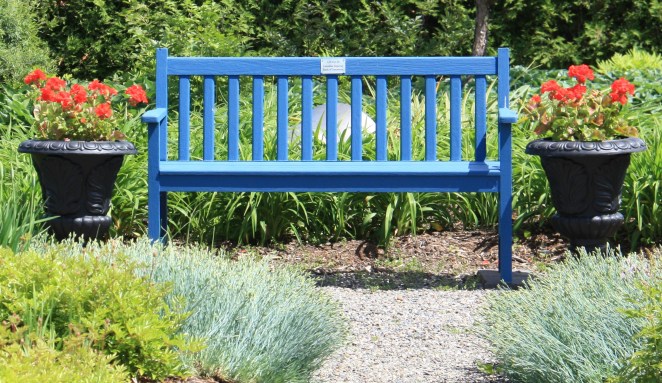
Creativity: Thursday Thoughts

IMG_0070.JPG

Creativity:
Thursday Thoughts
Kingsbrae 15.1

15 June 2017

The KIRA experience has been very kind to me. It has enabled me to spend time writing and thinking without the necessity of worrying about the daily rituals and necessities of everyday life. In addition, the daily conversations with the other artists in residence have kept my mind focused on the process of creation and this has allowed me to study how I am creating. As many on this blog have noticed, I have been very productive during this residency, and there are several reasons for it. I would like to share some thoughts and ideas with you.

Journal: On 2 March 2017, I received an e-mail telling me that I had been accepted for the arts residency at Kingsbrae. As most of you know, I keep a journal and write in it every day. On 3 March 2017, I started my Kingsbrae poetry sequence. I began by reading the entirety of the Kingsbrae web page and then watched the Kingsbrae Garden videos online. Then I began jotting down in my journal poems and snippets of poems, creative thoughts, metaphors, images,  and ideas. By the time I came to Kingsbrae, I had 90 proto-poems in place. Since they were taken from photos and videos, and were not written in situ, I saw them as prototypes, rather than as the real thing.

The Journal as Poetic Quarry: I look on the journal as a poetic quarry. It contains many stones, some tiny, some larger, some useless, and some very precious indeed. One part of my poetic journey here at Kingsbrae is to go back over these stones, turn them over one by one, discarding the dross, and concentrating on the precious material that has lain there waiting to be re-discovered. Now that I am on site, it is easier to distinguish between those essential words, the ones that really count, and the lesser words, the ones that can be dismissed. This sifting process needs time and thought, and that is exactly what the residency has given me. Writing tip: keep a journal. Mark in red those passages that contain seeds of poetry, images, metaphors, rhythms etc. Return to them when you have the time to do so. Time and space are essential: a time in which to work and a space in which to work. Without these two things , we are lost as writers. ‘I don’t have time,’ you think. Ask yourself: ‘what is more important than a little time each day, spent on yourself and your writing?’ As writers, we MUST indulge ourselves with those two little gifts, time and space. An hour a day is more than enough: find that hour, use it. Ten to fifteen minutes a day is enough to keep us ticking over: if we can’t find that ten minute space, then we are unfortunate indeed.

The Revision Process: As I develop as a writer (and believe me, I am still developing), I realize that the ability to recognize good writing is one of the most important skills that we possess. Re-reading is one thing. Distinguishing the great (oh yes, there are great thoughts and metaphors in those journals), from the good, from the average, from the futile and meaningless is a key skill. All of us have wasted precious time on an idea that just didn’t work. We have worried at it like a dog at an old bone, drooling, gnawing away, growling at ourselves and the bone, getting no nourishment. Leave those ‘dead’ ideas, those ‘dead’ metaphors. Move on to the good ones asap. Our writing time is precious: don’t waste it. Learn to recognize the good and workable from the lesser writings that waste our time.

The Creative Process: “What is this life if, full of care, / we have no time to stand and stare?” This is the first line of one of W. H. Davies’s poems. The Kingsbrae Residency has given me time to stand and stare. It has also given me time to sit and stare. Emptying myself of the daily drudge, I have been able to allow light and inspiration to enter my mind and fill me with creativity. I have discovered that there are ways to do this: meditation, an open mind, an emptiness within that slowly fills, and, above all, carpe diem, the ability to recognize that moment and seize it and exploit it. None of the above is unique to me. If we are at all creative, we are all faced with a simple choice: to develop our creativity or to let it wither. Most of us are too ‘busy’, in the worst sense of the word, to allow ourselves the time we need to create. This is a process we must reverse. We must return to self time, thinking time, emptiness time, metaphoric creative time.

The Value of Art: The modern corporate businessman’s mind is of the type that knows the price of everything and the value of nothing. As a result, we have the tendency, as artists, to fall into the ‘price’ mold rather than the ‘value’ mold. If we do not stop and think, if we do not find the time to create, if we do not search for the absolute values that are represented by our art and our creativity, then we count the pennies, add up the costs, and look at the price. Nobody said art was facile. Nobody said that creating the time and space in which we could create would be easy. This residency has convinced me of one thing: that without that time and space, we are nothing but drones, workers, lifeless puppets, going through the motions as other people pull the strings, lacking the spiritual wherewithal … We must stand up for creativity, for being different, for doing things differently, for being ourselves. We must stop being digitalized consumers and become, or continue to be, active, thinking creators. The world needs creativity and art. It needs people who stop and think. It needs people who think differently. It needs artists and creators. It needs us. What we do as artists and creators is precious and valuable. Never doubt it. Never forget it.
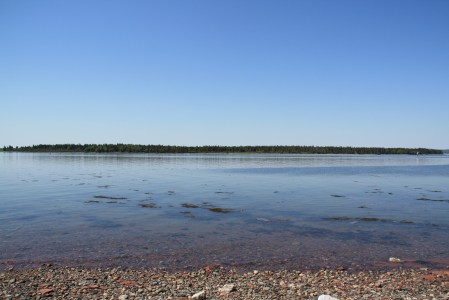
 

Wordless Wednesday

IMG_0007.JPG

Kingsbrae 14.2
14 June 2017

Wordless Wednesday

All sound has run dry in my
song-sparrow throat.
Words and music no longer flow.
They need eaux de vie,
the waters of life.

Water from a bucket, perhaps,
though I cannot stoop to fill,
nor carry it, without spilling.

A hosepipe, then, though I need
to bend to make the connections
and turn the tap on, and alas,
I am too old and stiff to bend.

Rain, perhaps, though today
it must fall from a cloudless sky.
Who could pray for rain on a day
like today, with sun warming earth
and flowers and my old bones
basking, wordless in the warmth.

I long for the word drought to end.
Silent I shall sit and wait for the word
-well to fill itself with those spiritual
waters flowering and flowing deep within.


Carlos Carty

IMG_0134 (2)


Journal: Carlos Carty addressed the group of resident artists tonight. Carlos is from Lima, Peru, but he has lived for the past few years in Brazil. He told us how, at the age of 15, he had discovered music while still in school. It was, he said, love at first sight. However, musical instruments were expensive and not easy to obtain, so he learned to play rhythms and music on throwaway things, empty boxes, plastic and glass bottles, material that could be re-cycled. He was self-taught and has had few lessons. However, his explorations have led him to the Pan Flute, the Andean flute, the Chinese (or sideways) flute, and to many of the myriad flute-like instruments that are played in the Andes in general and in Peru in particular.

Carlos is interested in all types of music and would love to be a full-time musician, dedicated exclusively to his music. However, he has a family to look after and music alone will not keep food on the table. This was a problem shared by all the artists in residence. He then told us of some of his difficulties. He also told of his preference for his own people’s traditional music. This music existed before the Incan Empire and long before the arrival of the Spanish conquistadores who laid his land and his people to waste. Part of Carlos’s musical experiments have centered on restoring a melodic happiness to a Peruvian traditional music that is, by nature, sad. Add to this his ability to create music from all types of recyclable material, and you will see Carlos as an innovator. His own compositions demonstrate this innovative spirit and he happily blends any and all types of music to the traditional music as he searches for new ways in which to express himself, his moods, and his emotions.

With regards to KIRA and the Kingsbrae experience, Carlos stated that six months ago, while thinking about his application to KIRA, he realized how important it was to write down his ideas and focus on the elements that made him the musician that he is. From these cogitations arose his ideas on the eclectic nature of music and the necessity to recycle not just music, but the means by which music is made. Music, for Carlos, comes as an imitation of nature. It is the sound of water, of rocks knocking against each other. It is the sound of the wind through grass and reeds, the beating of wood on stone. He also spoke of the various waves of immigrants who came into Peru. The African slaves, in their moments of leisure, expressed themselves in sound, sounds made from the very materials with which they were laboring. This too became a part of Peruvian music.

One of the reasons why Carlos loves the flute is that it is one of the world’s most ancient instruments coming after the percussion of wood on rock and taut animal skin or shells. Flutes go back many thousands of years, to ancient Greece, among other places, and they are the world’s original instruments and bind all cultures together via the international language of music.

Many questions followed Carlos’s presentation. Most of them centered on a clarification of one thing or another. However, thanks to Anne Wright, a very productive theme was introduced: the relationship between North American aboriginal music (especially the first nations peoples of Canada) and the traditional music of other aboriginal American people. This theme merged into the question of identity, loss of identity, and the attempt to recover that lost identity, especially in the current age when so many differences are so easily erased. Language, culture, identity, music … they are all tied closely together. Carlos is an excellent ambassador and has the personality to explore and develop such links as these. Perhaps there will be further room to develop these contacts at a later date.


Scent and Touch

img0137_1

Kingsbrae 9.4
9 June 2017

Scent and Touch

A feather upon the cheek,
this fern frond held
fragile, hesitant
between fine fingers.

Touch and smell:
two senses engaged.
A paint brush sounds,
brush-brushing lightly
the expectant skin.

Faint the taste tested
suggestive
on tongue tip.
No sight, just insight.

I have a sense of senses lacking.
My words reach out like fingers,
but they can neither retain
nor explain the meaning of it all.

Comment: “Built in cooperation with the Canadian National Institute for the Blind, the Scents and Sensitivity Garden is dedicated to the memory of St. Andrews’ resident Albert McQuoid. The garden features raised beds that allow handicapped, sight impaired, and wheelchair bound visitors the opportunity to enjoy the feel, and scent, of the plants and flowers right within arms’ reach.”

Poetic Process: Thursday Thoughts

img_0186


Kingsbrae 8.3
8 June 2017

Poetic Process: Thursday Thoughts

The end result of the poetic process, however we define it, is the poem. Whether the poem be good, indifferent or bad, depends on a set of critical value judgments of which the poet may or may not be aware at the time of writing. The end product must be allowed to look after itself. But what about the process?

The question is simple, but the answer is more difficult, because the actual nature of the process will vary with each one of us. If the end point is the poem, how do we write the poem, what is its starting point? Is it when we sit down to write? Is it when the pen nib (yes, I still write the old-fashioned way) makes contact with the paper? Is there a pre-writing starting point and if so, where does that begin? Is it in the poet’s head, or the poet’s eyes? Does it reside in touch or scent? Good questions: no answers other than the failsafe … it depends.

One thing that has emerged from this KIRA retreat is that above all we need time to be artists. Art and poetry take time, and artists, whatever their medium, need time to think, time to practice, time to splash paint on canvas, time to sit down and put their head in their hands and meditate … “What is this life,” writes W. H. Davies, the great Welsh poet, “if full of care, we have no time to stand and stare.”

Elise Muller came up with an interesting exercise for developing self-expression. “Write down a question with your dominant hand,” she said. “Then answer it by writing with your less dominant hand.” I tried this. “What do you mean by writing process?” my right hand asked. My right hand held the pen about half an inch from the page and made me stop … and think. I thought about the critical analyses, usually ultra-academic,  that I had written and read over the years. Then I started to organize them into do’s and don’ts. The thoughts of certain serious writers sprang to mind … then I switched my pen to my left hand.

Uncontrolled, uncontrollable thoughts came tumbling out and spilled off the end of the pen on to the empty page that rapidly filled with visual and verbal images: evening falls and the stars grow into flowers in the darkness … three deer enter an empty field and dance on the dandelions … the sky fills with snowflakes that erase, one by one, all the objects in the yard … the tide flows back in and the bay recovers its memories of silver fish beneath the waves … the half -empty / half-full glass becomes meaningless: its essence is to filter the sunshine and to sparkle with light … clouds gather into small, wooly herds and the wind chases them across the sky …

To be filled with poetry and creativity we must first be emptied of the cares of the world. Then, when our heads are empty and free there is space for them to fill with the most beautiful images and ideas. This creative process needs time. Time to download and forget our worries. “Time to stand beneath the boughs and stare as long as sheep and cows” (W. H. Davies again). Time to be ourselves. Time tobe. Time to become one with nature.

To gain this state of freedom, we need to be free of financial cares and woes. We need to escape from domestic duties. We need to be alone (when we need to be alone) and among friends of a like mind (when we need company). “The time to see when woods we pass, where squirrels hide their nuts in grass” (W. H. Davies, yet again). So, in the poetic process, we need that freedom to create, to cut the ties that bind so tightly, to walk and watch and stop and stare. When that old, tired head is empty, the poetry will flow back in. And it will be a poetry not of grinding ideas but of dancing metaphors and sparkling words. “A dull life this, if full of care, we have no time to stand and stare.”

KIRA has gifted me with this time, this quality time. Clare and the WYPOD and my Fictional Friends and the Thursday Grunts and my fellow New Brunswick writers have encouraged me to take advantage of it. The process is in process. Some of the results are already being seen on these pages.

My thanks to all those who made this adventure possible. I would also like to thank all those who now facilitate this process every day.


Words

IMG_0167.JPG


Kingsbrae 8, 2
8 June 2017

Words

Here, on the seashore,
the whisper of waves,
splashed with a flash of sun,
wind fingering the hair,
the light a delight,
and wordless this world
though its beauty be
configured in words.

The scything of the sea,
the land seized in snippets,
grey stones, red rocks,
gelatinous mudflats
blue on white striations.

Seagull wings
snipping celestial ribbons,
salt caked keen on lips,
sea weed scents sensed
yet never seen.

Captivated we stand here,
unattached our single wings,
save to this singular beauty:
peregrine the falcon soul,
so solitary as it soars.

Comment: So many of these new poems are just that, “new” and “raw”. Words, for example, is just a couple of hours old. That is the gift of time that I have been given. The writing process is so rapid that there is little time to digest the last thought and image sequence, before the next comes tumbling along. I guess it’s just a question of rolling merrily along and we’ll see later what we still think is fit for survival. The selecting of these poems will be an interesting task … and who will select the selectors …

Encaustic


Anne Mist

Mist Lifting Over The Bay
Anne Wright

Kingsbrae 4.3
4 June 2017

Encaustic
Anne Wright

Anne Wright led the first after supper discussion for KIRA June 2017. She talked about her voyage of discovery into the world of art and explained how she envisioned herself as an abstract expressionist who attempted to place mood, emotion, and feeling into her art work. She showed us examples of her latest works, greeting cards with a combination of pressed flowers and  artwork. She also presented three ‘works in progress’ from her encaustic collection. These have a wonderful tactile quality and seeing them and then touching them gave two very different impressions of her art.

Anne also talked about art as a communion with the unconscious. This may be understood as that which is not yet known or revealed, but is waiting to be given expression.  Art and poetry are the language of the soul, and so can capture something instinctively, before it gains open expression. Words and the meaning into which they distill often come much later and that, according to Anne, is the process of crystallizing the narrative of our lives. Sometimes, as artists, we enter art in order to probe more deeply into ourselves and to discover that which is within us. Anne then led our group into a deeper discussion of this residency and what each one of us, starting with herself, wished to achieve while at Kingsbrae.

Carlos intervened at this point and suggested that we should distinguish between ‘process’ and ‘result’.  With our nightly conversations we are working on the process of how we act and think as artists. Our creativity is in a process of change and this residency gives us time to think and re-think ourselves and thus to concentrate on the how and why we create. In addition, we have time in the individual creative periods to experiment with our creative process. The ‘results’ may be seen as a short term product, i.e. what we produce today, this week, this month, or as a long-term process, i.e. how we grow and develop in a future of which we may not not yet be aware.

Elise responded to this with the story of how she had pushed herself in her sculpting and had, as a result, accidentally broken her own stonework. This was the result of trying to carve a thin, delicate figure from stone. Her effort to create movement in static stonework led to a further discussion into how we attempt to place movement into two dimensional paint. This in turn led to a discussion of classical art with its formality and its entry points versus a more modern art that has no entry point and less formal construction. This responds in part to the twin aspects of reproducing the visual, external world versus creating a new, internal world that represents the inner workings of the artist’s and, by extension, the viewer’s, mind. In this way, what the viewer / reader / listener sees / reads / hears is as important (almost!) as what the creative artist creates.

Ruby spoke of her own art as a narrative line that led into a painting and told, through her painting, a story of her subjects. She spoke of her adventures on the quay where she had spoken with various people and asked permission to photograph and paint them. The contrasts between our different views on our distinct creative methods and how we create / imitate / reproduce / react with our various versions of the world were most interesting. This is an aspect of our residency that will grow and strengthen. It will play a large part in what we are now calling, thanks to Carlos’s intervention, the ‘artistic process’. Needless to say, we are all growing and developing and our creative worlds are growing with us.

Apologia

IMG_0447


Kingsbrae 5.2
5 June 2017

Apologia

Late last night, I opened Alistair Macleod’s book The Lost Salt Taste of Blood and I re-read the first story. I was soon dabbing my eyes with a tissue and blowing my nose.

This morning, I want to destroy everything I have written. I know I don’t possess the verbal and emotional genius of the great writers and I sense that I cannot write like them. Graduate school taught me to be passive, not active, and to write impersonally, choking every emotion when I write. Academia also taught me how to kiss and how to run away with my thirty silver pence. “Never challenge the status quo,” my professors told me. “Learn the rules and disobey them at your peril.”

But here, in this private space where I create and re-create, there are no rules. The enemy is not clear any more and the fight is not one of black against white. It is rather a choice between diminishing shades of grey, and all cats are grey in the gathering dark that storms against my closing mind. Should I destroy all my writing? I wouldn’t be the first to do so; nor would I be the last. And I won’t be the first or the last to destroy myself either. Intellectual, academic, and creative suicide: as total as the suicide of the flesh.

I carry on my back the names of those who have gone on before me as if they were a pile of heavy stones packed into a rucksack that I carry up a steep hill, day after day, only to find myself, next morning, starting at the bottom once again. But this is not the point: the point is that if I cannot write like the great writers, how can I write?

I think of Mikhail Bakhtin and his cronotopos, man’s dialog with his time and his place. I have no roots, no memories, and that is where my stories must start: in the loss of self, the loss of place, the loss of everything. I was uprooted at an early age, soon lost my foundations, and only survival mattered.

I look at the first page of one of my manuscripts. My writing manifesto is clear before me: “And this is how I remember my childhood,” I read. “Flashes of fragmented memory frozen like those black and white publicity photos I saw as a child in the local cinema. If I hold the scene long enough in my mind, it flourishes and the figures speak and come back to life.”

I am aware of the words of T. S. Eliot that “every attempt / is a wholly new start, and a different kind of failure / because one has only learnt to get the better of words / for the thing one no longer has to say, or the way in which / one is no longer disposed to say it” (East Coker).

Are these stories an exercise in creativity or are they a remembrance of things past? How accurate is memory? Do we recall things just as they happened? Or do we weave new fancies? In other words, are my inner photographs real photographs or have they already been tinted and tainted by the heavy hand of creativity and falseness?

The truth is that I can no longer tell fact from fiction. Perhaps it was all a dream, a nightmare, rather, something that I just imagined. And perhaps every word of it is true.

I no longer know.

Yellow Bird

IMG_0176

Kingsbrae 5.1.1
5 June 2017

Yellow Bird

Broken-winged, a bird I found,
panicking upon the ground.

I stooped to lift it from the land:
it nestled in my open hand.

A matchstick splint with cotton tied,
a canary cage to rest inside.

With healing done, an open door:
my yellow bird will fly no more.

I take a pencil, draw a tree,
my bird begins to sing for me.

I erase the cage bars, one by one,
paint a lion’s mane of sun.

Now yellow bird sits in his tree,
and sings all day, to inspire me.

Comment: I split the original post into two segments. The first, 5.1.1 is the poem Yellow Bird and the voice recording. The second, numbered Kingsbrae 4.3 Encaustic, contains the summary of the first evening’s artistic discussion.

Metaphor: Wednesday Workshop

img_0177

Metaphor
Wednesday Workshop
26 October 2016
Revised
31 May 2017

Metaphors: What are they? I must be honest: I don’t really know. I don’t understand them. I never have. I probably never will. This morning, I determined to find out what a metaphor really is. So I Googled metaphor and came up with the following definitions.

  1. A metaphor is “a figure of speech in which a term or phrase is applied to something to which it is not literally applicable in order to suggest a resemblance.”
    Well, that is pretty clear, isn’t it?
  2. A metaphor is “something used, or regarded as being used, to represent something else; emblem; symbol.”
    No doubts there.
  3. “Metaphor is a figure of speech which makes an implicit, implied or hidden comparison between two things that are unrelated but share some common characteristics. In other words, a resemblance of two contradictory or different objects is made based on a single or some common characteristics.”
    I know exactly what they mean. Or do I?
  4. “In simple English, when you portray a person, place, thing, or an action as being something else, even though it is not actually that “something else,” you are speaking metaphorically.”
    No misunderstanding here.
  5. “A metaphor is a figure of speech that refers, for rhetorical effect, to one thing by mentioning another thing. It may provide clarity or identify hidden similarities between two ideas. Where a simile compares two items, a metaphor directly equates them, and does not use “like” or “as” as does a simile.”
    Slightly clearer, but not as clear as daylight.

I turn to my blog in search of metaphors that I have created in my poetry and read that “The egg of my skull / shows hairline cracks: / tiny beaks pecking / fine-tuned sparks of song”. “This piece,” Tanya Cliff writes, “offers a unique and beautiful perspective on the theme (of birds).” I think I can do without the dull, dry definitions set out in the definitions above and understand metaphor as “a unique and beautiful perspective”. This functions for me. Thank you, Tanya.

Two more sequences, this time from October Angel: (1) she gathers her evening gown / and walks among ruined flowers (Meg Sorick’s choice) and (2) a snapdragon opens / the frosted forge of its mouth / and sprinkles the sky / with ice-hard shards of fire (Tanya Cliff’s choice). I can understand the first in terms of “a unique and beautiful perspective” since the picture of the October Angel is clear in my mind. In addition, evening / evening gown / ruined flowers are particularly evocative. The second sequence is much stronger as anyone who has seen the snapdragon flowers braving the ice and frost will testify.

After thinking about these three examples, I think I can now understand metaphor a little bit better. I would now define a metaphor as “a brief verbal sequence that creates a new reality that offers a unique and sometimes beautiful perspective on something that we have long known and accepted but now, thanks to the writer / poet, see in a different light.”

This personal definition allows us to distinguish more easily between dead metaphors and clichés like dead as a door nail or avoid it like the plague while allowing us to enjoy the permutations that spring from the innovation of the true metaphoric sequence. The metaphoric sequence also allows us to distinguish between a two word metaphor and a series of metaphors that are thematically linked.

From my own poetry, ruined flowers would be an example of the first while the longer sequence a snapdragon opens / the frosted forge of its mouth / and sprinkles the sky / with ice-hard shards of fire would be an example of the second. Iterative thematic imagery, a form of sequenced metaphor chains, then links the whole work, be it poem or longer piece, within an associative semantic field of parallel meanings. This also illustrates the idea of differentiating between the inorganic and organic conceit, where the inorganic conceit is the example of a single, independent instance while the organic conceit is woven into the fabric of the oeuvre.

In the WFNB Workshop on Metaphor, held in Saint John on Saturday, 27 May, 2017, we had a two hour, in-depth discussion on this topic. We began the workshop with a meet and greet and ice-breaker. Then we offered a pictorial definition of a metaphor. We generated a series of dead metaphors, to be avoided like the plague, except where we use them to define a character, or make fun of them, or use them in a new fresh light that resurrects them and brings them back to life. This was a great deal of fun. We then indulged in a series of creative writing exercises that focused on the creation of new metaphors. We finished the workshop with a “song of craze” in praise of the joys of metaphors. What a day!

The structure of the workshop was very simple. We had 120 minute (two hours) and broke them into 3 sessions of 20 minutes, a 5 minute break, 2 sessions of 20 minutes, and  a grand finale composed of 3 sessions at 5 minutes each. The twenty minute sessions broke down into 5 minutes writing, 7 minutes small group discussion (4 participants per group), and 8 minutes full room participation. The five minutes writing centered on each person writing to a topic. Each member of the group then shared what they had written with the other group members. This helped develop individual voices (the theme of the conference) and showed how each individual approached a single topic in a multitude of different ways. A representative piece from each group was then chosen and the writer read the creation to those gathered in the full room participation.

As a result, everybody was actively engaged in the thinking, writing, creating, reading, and critiquing process. A considerable number of what I call “writing starts” were made. Hopefully participants will continue to develop these writing starts and develop something from them, long term.