Empty Nest

IMG_1258 (2)

Empty Nest

The wind at the window
scratches tiny notes.
I can no longer hear the tune
nor read the words.

Who walks beside me
as I pace my lonely path,
abandoned in this empty house.

My self-portrait
stares back at me:
a splintered selfie,
framed in a sliver
of silvery glass.

Above me,
a monkey moon,
that itinerant tinker,
walks a fractured way
over broken glass.

The knapsack on his back
is cobbled together
from cobwebs and clumsy
veils of drifting clouds.

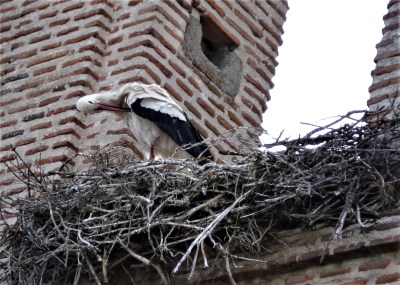
Comment: Another Golden Oldie from that same throw-away manuscript that I discovered a couple of days ago. I wrote this one the year after my mother’s death. My father was in hospital and I had flown back to Wales to visit him. When I was not with him, I wandered alone in a large house, empty of people, but filled with memories. The whole experience was rather surreal, just like the imagery I conjured up to describe it. Early spring, but a cold one. After hospital visiting hours, I wandered an untidy house and an unkempt garden. My mother had departed. My father was on the way out. I was alone with a life-time of memories. “No hay pájaros en los nidos de antaño” wrote Cervantes in the Quixote. “There are no birds in last year’s nests.” With no brothers, no sisters, no close family, and no friends left in Wales, I found that out the hard way. Those days of wandering, ‘upstairs, downstairs, in my lady’s chamber,’ taught me that most difficult of lessons in the hardest of ways.

IMG_0456 (2)

Bleeding Heart

IMG_1338 (2)

Bleeding Heart

White moths
wing their snowstorm,
pale stars through the night.

A candle flickers in the darkness.
Hands reach out to grasp me.
A feathered shadow flies
frail fingers across my face.

Butterflies
stutter their eye-lash kisses
against closed cheeks.

Awake,
I lie anchored by what pale visions
fluttering on the horizon?

Eye of the peacock,
can you touch what I see
when my eyelids close?

Black rock of the midnight sun,
blocking this day’s dark cave,
when will I be released
from my daily bondage?

Last night, the planet
quivered beneath my body
as I felt each footfall of a transient god
who mapped in runes
the ruins of my bleeding heart.


IMG_0811 (2)

Comment: Another Golden Oldie, also dug out from the rejection / dejection of striations. I tinkered with it this morning. Funny what a shift in structure and a twitching of the metaphors will do. New lamps for old: indeed, and why not? We are not just writers, we are re-writers and some thoughts can be reworked to rise again in the shadows of the adopted children that are our poems. This bleeding heart plant vanished a couple of years ago. We dug up the flowerbed, inserted a rockery, and watched and waited. After two years, the bleeding heart plant resurrected itself from within the stones. Survival, renewal, faith, hope: key words nowadays. Who locked that plant down? Who let it rise up again? When we have gone, how will our gardens get on without us? Very well, in all probability, but they may be more of a tangled garden than a cultivated one. And what’s wrong with a tangled garden? Why, nothing at all, my friends, absolutely nothing at all.

image5

With my angel

IMG_0258

… with my angel …

            … with my angel … face to face … the one I have carried within me since the day I was born … the black-one … winged like a crow … the one that hovers over me as I lie asleep … the one who wraps me in his feathered wings when I am alone and chilled by the world around me … the one who flaps with me on his back when I can walk no further … the one who creates the single set of footprints that plod their path through the badlands when I can walk no more …

img_0122

… ‘the truth’ my black angel says to me … I say ‘he’ but he is a powerful spirit, not sexed in anyway I know it … and yet I think of him as ‘he’ …awesome in the tiny reflection he sometimes allows me to glimpse of his power and glory … for, like Rilke, I could not bear meeting his whole angelic being face to face … as I cannot bear the sun, not by day, and not in eclipse … not even with smoked glass … when earthly values turn upside down and earth takes on a new reality … wild birds and bank swallows roosting at three in the afternoon … and that fierce heat draining from the summer sky … I remember it well … and the dog whimpering as a portion of the angel’s wing erased the sun until an umber midnight ruled … a simple phenomenon, the papers said … the moon coming between the earth and the sun …but magic … pure magic … to we who stood on the shore at Skinner’s Pond and sensed the majesty of the universe … more powerful than anything we could imagine … and the dog … taking no comfort from its human gods … whimpering at our feet …
… I saw a single feather floating down and knew my angel had placed himself between me and all that glory … to protect me … to save me from myself … and I saw that snowflake of an angel feather bleached from black to white by some small trick of the sunlight … and knowledge filled me … and for a moment I felt the glory … the magnificence … and there are no words for that slow filling up with want and desire as light filters from the sky and the body fills with darkness … and I was so afraid … afraid of myself … of where I had been … of where I was … of what I might return to … of my lost shadow … snipped from my heels …
… I don’t know how I heard my angel’s words … ‘the time of truth is upon you’ … ‘all you have ever been is behind you now’ … ‘naked you stand here on this shore … like the grains of sand on this beach … your days are numbered by the only one who counts’ … I heard the sound of roosting wings … but I heard and saw nothing more … I felt only midnight’s cold when the chill enters the body and the soul is sore afraid …
… ‘it is the law’ my angel said … I saw a second feather fall … ‘and the law says man must fail … his spirit must leave its mortal shell and fly back to the light’ … ‘blood will cease to flow … the heart will no longer beat … the spirit must accept and go’ … ‘do not assume… nobody knows what lies in wait’ … ‘blind acceptance … the only way … now …  in this twilight hour …  now when you are blind … only the blind shall receive the gift of sight’ … ‘all you have … your wife … your house … your car … your child … everything you think of as yours … I own … and on that day … I will claim it from you and take it for my own … now I can say no more’ …
… the sea-wind rose with a sigh and one by one night’s shadows fled … the moon’s brief circle sped from the sun … light returned, a drop at a time, sunshine flowing from a heavenly clepsydra filled with light …
… birds ceased to circle … a stray dog saw a sea-gull and chased it back to sea … and the sun … source of all goodness … was once again a golden coin floating in the sky …
… on my shoulder a feather perched … a whisper of warmth wrapped its protective cloak around my shoulders … for a moment, just a moment, I knew I was the apple of my angel’s eye … and I hoped and still hope that one day I might meet him again and understand …

Comment: An article on Marcus Aurelius in this morning’s paper made me think of this piece that I wrote, way back when, in the days when I was studying Francisco de Quevedo and the Neo-Stoic movement, courtesy of my good friend and colleague Henry Ettinghausen. “The day we were born we took our first steps on the road to death,” Quevedo wrote in one of his poems. With my angel is my own Neo-Neo-Stoic attempt to come face to face with that very personal reality, one which we all face, and to stare it down, eyeball to eyeball. Alas, in these troubled times, we must confront the knowledge that troubled times have been here before, that other generations have suffered them, and luckily, other generations have survived. We wouldn’t be here if they hadn’t. As another good friend, of mine Victor Hendricken, wrote on this blog just yesterday: “We continue to live on between inhale and exhale; we continue to live on between intake and exhaust, food and faeces. And in this time of self-isolation, we still abide by many of the same personal rules, including morning ablutions, setting and shutting off the alarm. Chin up, old boy. This too shall pass.” I found these words from Victor very comforting. With friendship, solid advice, and the ability to learn from those who have gone before us how to confront difficult times, this too shall pass.

Daffodils

IMG_0617

Daffodils

My daffodil day-dreams carry me back to Wales, that Land of Song where every valley conducts choirs of daffodils and their pale, brass voices are raised in an annual springtime hymn of hope. Beneath the trees, in Bishopston Valley, between Pyle Corner and Pwll Ddu, sheltered bluebells tinkle sweet tunes, lilies-of-the-valley bloom, and primroses raise their faces to the sky while hearkening to those springtime airs that sound where’er you walk. In Blackweir Gardens, the Feeder Brook flows into the castle moat and the castle’s central keep stands on the mound the Normans dug when they converted into a motte and bailey the old Roman camp that was built on an earthworks constructed by the Silures long before that countenance divine shone forth upon these clouded hills and long before the Roman came to Rye or out to Severn strode. Generation after generation, all those who witnessed the birth of these flowers and strove to be the first to hear the cuckoo’s call, come alive again in this floral tribute. Oh, Land of Song: the bluebells may have gone, the larks may sing no more, cuckoo and cowslip may have fled the valleys, but all is not lost, not while the daffodils still toss their heads in sprightly dance and spring breaks out its freckled sunshine.

Comment: Win some, lose some. Survival is all. At the same time as I mourn everything  that is lost, I also celebrate all that survive. The grosbeaks have left us, moving further north as the weather warms. They have left more room for cardinals and hummingbirds have moved in to replace them, as have turkey vultures. Turkey Vultures, Zopilote, The Trickster, in Oaxaca, the bird that flew high up into heaven, stole the fire of the gods, and brought it back on his wings, now flies over the St. John River Valley, having moved up here with the warmer air from the south.

“The olde order changeth lest one good custom should corrupt the world” … indeed it does. And we must mourn and celebrate the olde order while preparing for, and celebrating, the arrival of the new. For the world has changed and is changing as I sit here and type these words and it will have twitched and changed again by the time you read them. Who knows exactly what is coming? How do we prepare for the unknown? How do we open our arms and embrace an uncertain future? Good questions all. I cannot answer them for anyone but myself, but I must ask them. Many of them were discussed today by Suzanne Moore in an article entitled: The way we once lived is now redundant. We must reinvent ourselves. Read it and start thinking about how we can be strong, daring, caring, and best prepare ourselves, not for our own extinction, but for our own reinvention.


Why?

IMG_0446

Why?

“Where are you going?” I ask again. “To see a man about a dog,” my father replies.  “Why?” I ask. “Hair of the dog,” his voice ghosts through the rapidly closing crack as the front door shuts behind him. “Why?” I cry out.

I recall the mud nest jammed tight against our garage roof. Tiny yellow beaks flap ceaselessly open. Parent birds sit on a vantage point of electric cable, their beaks moving in silent encouragement. A sudden rush, a clamour of wing and claw, a small body thudding down a ladder of air to crash beak first on the concrete.

“Why?” I ask.

The age-old answer comes back to me. “Wye is a river. It flows through Ross-on-Wye and marks the boundary between England and Wales.” The swallows perch on the rafters watching their fledgling as it struggles on the floor, the weakening wing flaps, the last slow kicks of the twitching legs.

“Why?” I ask.”

Y is a crooked letter invented by the Green Man of Wye,” my grandfather says.

“Why?” I repeat. “I want to know why.” Silence hangs a question mark over the unsatisfied spaces of my questing mind.

Comment: A golden oldie. We would all like to know why. But there are no answers. Just riddles cast, like two trunk-less legs of stone, on the sands of time. Nothing beside remains. Yet still we ask the age old question? Why? And still we get the age old answer from the ageing masters who rule our childhood lives and teach us everything they know: “Because.”

Butterflies


IMG_1053 (2)

Butterflies

“Poetry gives permanence to the temporal forms of the self.”
Miguel de Unamuno.

… butterflies … temporal forms … fluttering …
existing for one sweet day … they perch … spread
their wings … fan us with their beauty … flourish …
catch our attention … then caught by a gust
tear their wings on a thorn … and perish … blink
your eye and they are gone … yet reborn … they
cluster and gather in dusty ditches …
congregate on bees’ balm … smother Black-Eyed
Susan and Cape Daisy … shimmer in shade …
butterflies by day … fireflies by night …
terrestrial stars floating in their forest
firmament … dark tamarack … black oak … bird’s
eye maple … silver birch … impermanence
surrounds us … dances beneath stars … sings with
robins … echoes the owl’s haunting cry …
eternity held briefly in our hands …
then escaping like water or sand … black
words on white paper capturing nothing …
… my dialog … my time … my place … butterflies …

Comment: This is another golden oldie that gains in meaning day by day as the lock down continues. Miguel de Unamuno (1864-1936) was a respected academic, philosopher novelist, essay writer, story-teller and powerful poet. He is probably most famous internationally for the philosophy he espoused in The Tragic Sense of Life. Other works of his include Our Lord Don Quixote and Niebla / Mist. The photo shows one of the butterflies that adorn the garden by my kitchen window each summer.

Earth Bounty

IMG_1238 (2)

Earth Bounty
by
Victor Hendricken

 The paradox of life: in order to survive, we must consume; by consuming, we create waste; however, we do not see our waste as detritus, but as the product of living. 

Deep beneath earth’s surface, a miner drills a one and one-quarter inch hole eight to twelve feet deep into a rock face that is roughly twelve feet square. The miner repeats his task until the rock face resembles a block of Swiss cheese. Each hole is stuffed with explosive material. Then a blasting cap shaped like a metal matchhead, containing a fuse and trailing a wire pair sheathed in plastic, is gingerly inserted into each hole, buried up to twelve inches inside the explosive.

The miner and his partner (miners always work in pairs) connect the wires from each cap to a common grounded wire. The pair retreats to a safe area stringing out the grounded wire behind them, where they meet up with other pairs of miners waiting for permission from the mine captain to connect the trailing wires to an electrical junction box wired directly to a throw switch on surface. When all miners are assembled, they travel by hoist to daylight, where they hang their personal identification tags on the appropriate tag board confirming they are no longer in the deeps. The board is rechecked and the captain sirens a series of warning alarms and when certain that everyone is safe on surface closes the switch initiating the blast.  All drilled faces explode as one.

The miners hang their work clothes to dry, shower and change into street clothes. Some head home to family; some go to the bunkhouse kitchen; some seek out the comfort of a pub and the company of their workmates. No one is allowed to go underground again until the air is purged of dust and noxious gasses.

A miner drilling into rock containing copper in sulphide, oxide or elemental form is not thinking about copper pots for cooking, or copper wire for electrifying his house, or copper tubing to carry water from well to sink. He is fully engrossed in the task at hand: break the rock into manageable sized pieces and transport it from the deeps to the surface.  He is acutely aware of his dependence on number of feet advanced in the drift today, in the volume of ore bearing rock extracted from the stope.  He gives no thought to the growing piles of waste rock strewn about the nearby surface.

Out on the greenish grey ocean the fisher sets his traps. The location of each cage is identified by a floating coloured buoy.  The day is long and the sea rough.  In nearby locations, trawler lines and weighted nets are released to scavenge the ocean at various depths herding schools of many fish species to a common fate.  Some nets scrape the ocean floor to capture creatures succored there. Occasionally, fishers are forced to overnight on the ocean surface as their prey migrates below to nibble at the bait within the traps, to gather in large schools before the nets.

As each trap is hauled up, emptied and rebaited, the fisher is not thinking about lobster rolls. As he hauls in the bulging net and empties it into the ship’s hold, he is not thinking about blackened cod or fish cakes, sole adamantine or tender filet with baked potatoes and butter.  He is focused on hauling the catch from the deep ocean and filling the ship’s hold; delivering the dead and dying sea animals to the fish plant for processing into human and other food.  He does not count the discarded carcases of species that contaminate his daily catch.

The logger fells another tree, trims the branches and saws the tree into cordwood lengths. He inhales deeply while admiring his day’s work.  Chainsaw in hand, he does not think about houses or furniture.  He does not measure in board feet, nor does he envision dimensional lumber as he hews, stacks and hauls.  He focuses on cords piled, loads counted. Trees are objects to devour, not treasures to be taken.  He does not notice the acres of clear-cut whose topsoil will soon become prey to buffeting winds and torrential rain.

At the end of the day, perhaps on the empty street or in the local pub, the miner’s thoughts may wander to home, to sitting at his wooden table inside his wooden house, to eating a banquet of sautéed fish knowing only the supermarket as the meal’s origin.  At the end of the day, the fisher may walk the dark street from dock to home, peer down an alley dimly lit by doorways leading to cavernous public drinking places. He may wonder at the hidden resources protected by the alley, exposed by the alley. He will not wonder about the light’s source, the tungsten filament in the lamp, or the clinking glasses as he enters the pub.  At the end of the day, the logger will lay down his saw, turn in his axe, enter the pub from the street and take a seat near the alley door. He does not question the source of the fisherman’s platter he is served, nor does he think about the metal in the barroom tables and chairs, nor what goes into making a beer glass.  He marvels at the burnished wooden bar rail, harbours a fleeting image of his chainsaw.

When the three, the miner, the fisher and the logger, by happenstance meet, they do not tell secrets of their trade.  They speak instead of trivia and sports, avoid politics and talk of home. The angry metal teeth on the logger’s saw, the sharply honed edge of his axe, the height and girth of trees felled are no more in mind than the metal and wooden boat into which the fisher loads his catch, than the living, mineralized stope from which the miner draws his bonus.  Each protects his space as surely as a mother holds her child from nosy passers’ by.

Stories of mining pass only between miners; stories of fishing remain solely with fishers; stories of lumbering are wedged into spaces between lumberjacks.  No word is spoken of farmers plowing fields and harvesting crops.

And while we blithely drive our vehicles of iron, steel, copper and zinc, barbecue pink salmon and grey mackerel, slather slabs of butter on thick slices of homemade wheat bread, dance on decks of wood and nails and screws, the miner puts on his slickers and dons his hardhat and lamp; the fisher steps into his waterproof garb and rubber boots; and the logger twice ties his cork boots, sharpens his saw, and shoulders his axe.  The farmer quietly steps into his worn overalls, mounts his high-powered four-wheeled tractor and attacks worn out fields with plow and harrow.

Comment: This morning’s piece by my friend Victor. I publish it here with great pleasure. Victor has a sharp mind and an elegant pen. Hopefully, he will continue writing for me and, always with his permission, I will continue to publish his oeuvre.

Learning Disabled Learning Troubled

alebrije2

Learning Disabled Learning Troubled
by
Victor Hendricken
 

Like separate lives, they flow through our weekly meets.

The many speakers, special to their cause,

Marking trails with wise words and images

That surely we can follow through dense forest,

Where new growth, vibrant, verdant,

Fertilized by wisdoms, fed by lore,

Shines and sparkles to ever light our way.

They tell us who they are,

And hint at what we may become.

Guided by their telling,

Senses stir, touched by feelings

Long lost or never known

And yet we ask for more.

No stopping here, no rest from task.

Reflection does make wealth of all the learning,

So the last day is the first,

While still we reach, unending in our thirst.


Expectations of discovery:

Telling stories in old age,

Hoping to discover who we are,

Or who we might have been

Had we not been ourselves as we are now.

More than mental beings, physical too.

Bodies wracked by desire, not for human flesh,

But something sinister, demanding, unclean almost,

Liquid in form or hazy blue and drifting,

Wild in its ability to bring ecstacy

To crazed senses and convulsed parts.

We talk, confused by dialect

Long lost or perhaps newly made

That speaks of different times,

When different rivers ran and winds were not so cold.

And yet we tremble to recapture words

That tell our passing and the greatness that we might have been

But for our special needs.


Readers we are not, but thinkers and doers,

Now there shines a bright star.

But wild it is, yet tamed with nectar of the gods

In white coats with sealed bottles at their will,

And small round pebbles of human kindness to dispense.

Lethargic no; sleepless yes!

And still our thirst, never satisfied,

Coyly beckons to the spring.

Until at last, letters dancing

Like eggs, scrambled, with dots of pepper laced.

We close our eyes and listen

And hear the world conform, at last.

Though weary, we who hear so well,

Cannot raise the glass, or read the words

So simply carved upon our epitaph of stone.


Many have come calling,

None remained, none returned.

Yet through it all one stayed;

A beacon, to light the way through confusion,

Bringing us home through the darkness

Of our ignorance and of our bliss,

Where vision, too often blurred by regularity,

Sees not the forms that cast the shadows,

Nor the minds that hold the forms.

For we too are human, with needs,

Unique, special, and starving to be met.


How can we say without saying,

Do without doing?

What magic cleverly spins its charm

To turn the chore from task to deep desire,

So that, without seeming to accede,

Demands are met, and institutions no longer risk.

Answers are oft found in their own questions.

But questions must be disassembled,

Stripped, laid bare to each their naked parts;

Abundant clues that lead to hidden corridors of knowing

Reveal, upon examination, answers that flow

From the tips of fingers to places inside,

Where decisions are dreamed and voiced.

There, nestled in the gut, close by the heart,

Feelings are born, expressions lived.


Look to the question,

And, in the very asking find the answer.

Who educates?  Evaluates?  Decides?

Is it how well I did, or how good I am?

Did I get to play a part and why not?

Choosing is as real on the inside, as it is on the out.

Comment: I am posting some poems and texts by friends. This poem is the first on the list, written by my good friend Victor Hendricken. Congratulations, Victor: You’re #1 on the hit parade!

Life is a Dream

cropped-img_0279-1.jpg

Life is a Dream

This life is nothing but a dream.
I cannot see the far side of the stream.

Life is a frenzy, a fiction, a story,
sometimes a romance filled with glory,
often a nightmare, bloody and gory.

We seek for answers, no confusion,
but all of our life is an  illusion.

We are but shadows in Plato’s Cave:
reality is what we crave,
but all we get is an early grave.

I’m not the first person who has said it,
but I’d love to take full credit.

Comment:  So many things here. My photo of Jan Hull’s carving that adorns my web page. It is carved in stone, Old Welsh red sandstone, unlike these ephemeral words. Thank you Jan. It links to Segismundo’s soliloquy from Calderón de la Barca’s La Vida es Sueño. I have adapted that piece to the current pandemic because Spain has instructed its people to wash their hands in time with this soliloquy.

¿Qué es la vida? Un frenesí.
¿Qué es la vida? Una ilusión,
una sombra, una ficción,
y el mayor bien es pequeño,
porque toda la vida es un sueño,
y los sueños, sueños son.

What is life? A frenzy.
What is life? An illusion,
a shadow, a fiction,
and the greatest good is small,
because life is a dream,
and dreams are nothing
but dreams, after all.


Fragile

PEI + bockle 2008 059

Fragile

Snow flakes fall fragile
strength in numbers
not in each morsel
falling rom grey skies

a word to the wise
there is no health
nor strength nor wealth
each one of us fragile

one puff of wind
a sudden gust
and we are gone
turned into dust
when that voice calls
go we must

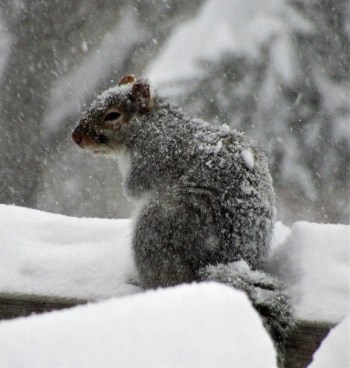
Comment: I sat here looking out of the window. I didn’t mean to write a sonnet, especially such an unstructured one. Then, poetry, like life, sometimes just happens. A sudden gust and the sky filled with snowflakes. Light and airy, winter fairies floating across the lawn, not settling, scurrying on. I blinked, looked again: the wind had dropped and they had gone. Now they’re back, wind-blown, and in a flurry. Just passing through. How many in a minute, in an hour, in a day? Anonymous, no name, the numbers game: some days that’s all we can play.