Faces

IMG_0258.JPG

Faces
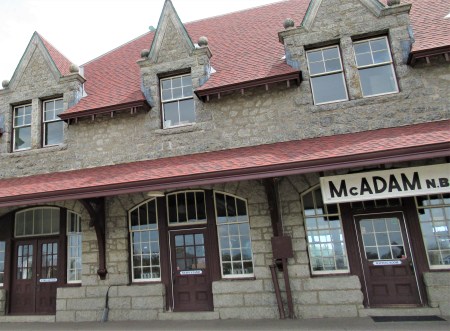
McAdam Railway Station #10

“White at windows
when trains pass through
in June on their way
to summer and sand.

Wind-tousled, tanned
at summer’s end
returning home to
Boston and Montreal.

I remember them
waving their hands,
flickering white hankies
as they went by.

This station is a ghost train
that travels through time
instead of space. Stand
still as silent stone. Wait.

Look: there’s someone,
waving at us now
from that window
on the second floor.”


IMG_0782 (2).JPG


Defenestration


IMG_0781 (2).JPG

Defenestration
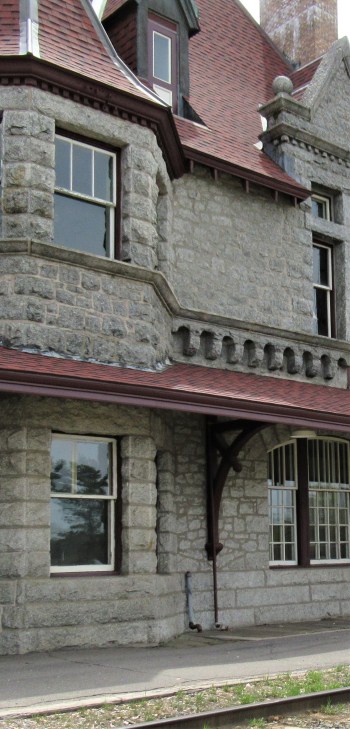
McAdam Railway Station 4

“When I first walked
by that tiny window,
right up there,
on the third floor,
I wanted to go up to it,
to stand there, to look out.

There was a young girl,
went up there one morning,
opened the window,
and threw herself out.

She must have been desperate.
Rejected by her lover,
who knows what state she was in.”

Defenestration?
It’s a funny word,
I had to look it up.

It’s from the Latin:
de means out from,
fenestra is the window,
fenêtre in French.

“She just opened the window
and threw herself out.”

Comment:  Geoff, in his role as tour guide, took Clare up to the third floor, showed her this window, and told her the story of the young girl who had jumped out, killing herself in the process. Clare said she was fascinated by the story and felt an urgent desire to stand there, and look out of the window. I am so glad she didn’t feel the need to throw herself out. Oral tradition: I love the way stories are passed from mouth to mouth, changing slightly all the while. Why did the young woman kill herself? Was she pregnant? We can only speculate and I guess we’ll never know for certain.

A Three Year Old Girl

img_0181

A Three-Year Old Girl
McAdam Railway Station #3

“I often see her, walking around,
standing in a doorway,
looking into a room.

She’s very curious
but never says a word.
Doesn’t ask questions.

She’s not scary at all,
like some of the others.

There are rooms here
where people won’t go
if they’re alone.

But they mean no harm,
these broken ghosts.

They’re lost, nowhere
else to go, I guess.
Just missed the last train”

Comment: Another story from Elsie, who says she often sees this young child in one room or another. The station is indeed filled with many memories and you can feel warm and cold presences throughout the building. Some rooms are filled with foreboding, while others are warm and comforting. Many old buildings have these qualities as do the old iron age walled camps scattered around the south of England. Maiden Castle and Badbury Rings spring to mind, as do Westbury White Horse, Corfe Castle and parts of Brownsea Island in Poole Harbour. Do I believe in ghosts? I echo the words of my mentor and fellow-countryman, Dylan Thomas: “I’d be a fool if I didn’t.”

In the Cave

9_Bisonte_Magdaleniense_polícromo.jpg

In the Cave
(514-520 BC)

one goes on a journey
knows where one’s been

reality returning
one tells what one’s seen

shadows dancing
on night’s silver screen

verbal sketches
from where one’s been

speaking other languages
heard not seen

the more one speaks
the more others think
‘dream’

a dream for those
who’ve never been
where one’s been


Russian Roulette

IMG_0724 (2).JPG

Russian Roulette
(1789 & 1937 & 2019) 

trickster mind
bred in heaven’s
half-acre
gateway to counterpane
sleep-full forgetfulness

yesterday’s
visual banquet
bluebell primrose
clover and cowslip
gone all gone

cuckoo survives
emerges every hour
calls from cuckoo clock
skylarks lie buried
within vinyl grooves
no more to rise

lions tigers panthers
elephants rhinoceros
slipping off the ark
sliding into oblivion

soul’s dark night
empty the house
spun Noah’s wheel
no more bets
the stakes are set

space-ship earth
humanity’s house-boat
spins onward into what

wheel of fortune
onward she goes
where she’ll stop
nobody knows

Comment 1:
I am intrigued by the ideas in this poem. Sitting in the eye surgeon’s waiting room this morning, I watched a video on vanishing wild life. The result: I added some images to this poem and elaborated it a little bit more. There may be some twists to the cork-screw, some more spins of the gun’s roulette wheel. I am not sure that I am finished with this one yet.

Russian Roulette 2
(1789 & 1937 & 2019)

yesterday’s
visual banquet
bluebell primrose
clover and cowslip
gone all gone

cuckoo survives
emerges every hour
calls from cuckoo clock
skylarks lie buried
within vinyl grooves
no more to rise
unless the magician
waves his wand

who loads the gun
points the pistol
pulls the trigger
fires at lions tigers
elephants leopards
pushing them off the ark
sliding them into oblivion

soul’s dark night
land’s desolation
all covered by rising seas
Noah spins his steering wheel
les jeux sont faits
rien ne va plus

space-ship earth
humanity’s house-boat
spins onward into what
a roulette wheel of fortune
onward she goes
where she’ll stop
nobody knows

Comment 2:
Told you I hadn’t finished with it. Here’s the next version. Great to live in a bilingual province. What a pity that so many people do not speak both official languages. If you have read this far, let me know which version you prefer. I am going for the one below, the latest edition.

Rushing Roulette
(1789 & 1936-39 & 2019)

yesterday’s
visual banquet
bluebell primrose
clover and cowslip
gone all gone

cuckoo survives
emerges every hour
calls from cuckoo clock
skylarks lie buried
within vinyl grooves
no more to rise
unless the magician
waves his wand

who loads the gun
points the pistol
pulls the trigger
fires at lions tigers
elephants leopards
pushing them off the ark
sliding them into oblivion

soul’s dark night
land’s desolation
all covered by rising seas
Noah spins his wheel
steering space-ship earth
humanity’s house-boat
onward into who knows what
a roulette wheel of fortune
onward she goes
where she’ll stop
nobody knows

messieurs et mesdames
les jeux sont faits

rien ne va plus

.
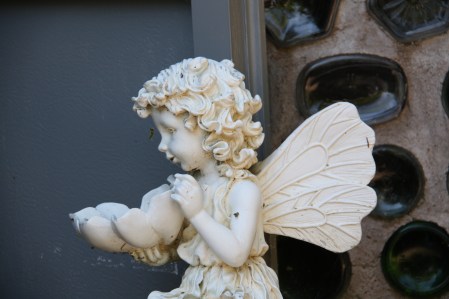
 

Chronos


IMG_0687 (2)

Chronos
(700 BC & 1933 AD)

tub-thumped these clouds
grey-framed skylights
gathering sky

corralled on coral
this ship’s figure-head
mouth open to speak
a foghorn
her bare breasted
Scylla & Charybdis
lighthouse lights

goat-legged beach-comber
wandering a lug-worm beach
avoid those places
where the sea-weed

water the father
earth the mother
false union
engendering an egg
waves breaking
their broken marriage

cyclical the sickle
ticking rocks to sand
time personified

Zeitgeist

IMG_0638.JPG


Zeitgeist

Zeitgeist is a concept from 18th- to 19th-century German philosophy, translated as “spirit of the age” or “spirit of the times”. It refers to an invisible agent or force dominating the characteristics of a given epoch.
Wikipedia 

Those who cannot learn from history are doomed to repeat it.

“Plus ça change, plus c’est la même chose.”

Poems for troubled times.

My current poems are deliberately cryptic. Each one is a mind game I am playing with you. I do not underestimate you. I have placed clues throughout each poem and if you follow the clues you will arrive at many of the poem’s hidden meanings. Some poems are more difficult than others, their meaning more recondite. Others seem very straightforward, yet still contain secrets.

This style of poetry has a long history going back to Anglo-Saxon riddles and way beyond, back into the mists of time. Luis de Góngora (1561-1627) and Francisco de Quevedo (1580-1645) specialized in similar forms of recondite poetry, often based on metaphor and the juego alusivo-elusivo, the game of alluding to something while eluding the act of saying what it is. Jorge Guillén (1893-1984) and Federico García Lorca (1898-1936) also played this game, as did Octavio Paz (1914-1998) and many of the surrealist writers. In the works of all of these poets, the clues may rest in the poem or they may be found in a generic knowledge of the mythology of the poem’s exterior world.

Our world finds itself in an incredible mess right now. Somehow, we have to sort it out. We must pick our ways through the difficulties of these troubled times, as you must pick your way through the intricacies of these poems. Many of you will give up. Some of you, the chosen few, will make your way to the heart of each poem. Remember that images and metaphors tie past, present, and future together. Each word, each image offers a picture that reflects some of the shared realities with which we live.

Remember, as I said above: “those who cannot learn from history are doomed to repeat it” (George Santayana). Otherwise expressed, in the words of T. S. Eliot: “Time present and time past / are both perhaps present in time future / and time future contained in time past” (Burnt Norton). The seeming anachronisms in my recent poems suggest that perhaps all time is ever-present and always one.

Stones (3 May 1808)

IMG_0664 (2).JPG

Stones
(3 May 1808 AD)

stones once thrown
can never be brought back
nor words once spoken
nor the bullet
once released
from musket or gun

here lies who knows who
face down in the dust
shirt soaked in blood
body pierced with lead

nor water time nor love
can ever flow back
beneath that bridge

some kneel some pray
some raise their eyes
to uncaring skies
every one of them dies
shooters
those waiting to be shot

even the soldiers
reloading their guns
never understand
how time’s tide runs
ebbs and then flows
until everyone goes

this you
lying face down
on cobble stones
well know


Comment: 

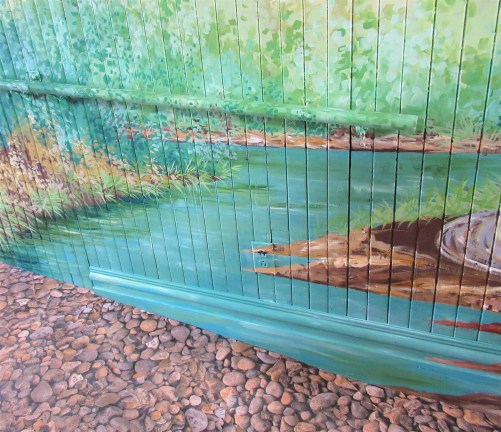
The poem is drawn in part from the Goya painting of the shootings, El tres de mayo de 1808. The painting above is a close-up of Geoff Slater’s latest mural, still in progress, at Macadam Railway Station in New Brunswick. “If only the stones could speak, what stories they would tell.” This re-post was inspired by a visit to Seasons of the Witch on  Mr. Cake’s Cake or Death site with its images of Goya’s Black Paintings. So, we have a continuing Goya mini-Fest, May the Second and May the third.

Tongue-Tied


IMG_0679 (2).JPG

Tongue-Tied
(2 May 1808 AD)

bottle tops unscrewed
tighter than the tightest
oyster refusing to open
pointed knife and scissors

plastic this many layered
onion-skin’s pliant defiance
waging its guerrilla war
against arthritic fingers

words tongue-twisted
damning dark mouths
white picket fences
midnight the faces
lightning the teeth

felonious figures
grimy with grimaces
Mother Hubbard’s
cupboard empty hearts

robin redbreasts
battering heads wings legs
against stony cobbles
if only stones could speak
what stories they would tell
this city this sunny square
anywhere

img_0668-2.jpg

Comment:

El dos de mayo, 1808, marks the start of the Spanish War of Independence. The people of Madrid rose up against Napoleon’s Mamelukes and Goya painted that encounter in his Dos de Mayo. On the third of May, 1808, Goya also bore witness to the shootings when Napoleon’s troops took hostages and shot them. Two great and wonderful paintings which we can celebrate today and tomorrow. Also well worth a visit, today and tomorrow, is Mr. Cake’s Cake or Death site with his blog on Seasons of Witches and his introduction to Goya’s Black Paintings. Another site that merits serious attention is Geoff Slater’s art site.

Dustbin Alley

20180823_152000-1_resized.jpg

Dustbin Alley
(1789 AD)

all the dustbins
dancing down the street
trying to achieve
a spring time copulation
to create more dustbins

you can’t have a revolution
without dustbins
dustbin … dustbins … dirty
dusty dustbins

a sadistic way to look at
basket-bins full of sawdust
heading between potholes
wind-blown bins
a right St. Vitus’s Dance

him sitting next to me
knitting a new red cap
to place upon
the old dictionary
me standing
on Gibraltar’s Rock so fair
this square in Paris
Place de la Bastille
where tumbrils rattle
over cobbles

Old Moll in a Moll’s Cap
toothless fairy
at a Goblin Party
afraid of mushrooms
scared of toadstools
[sick]

20180823_152016_HDR-1_resized - Copy.jpg