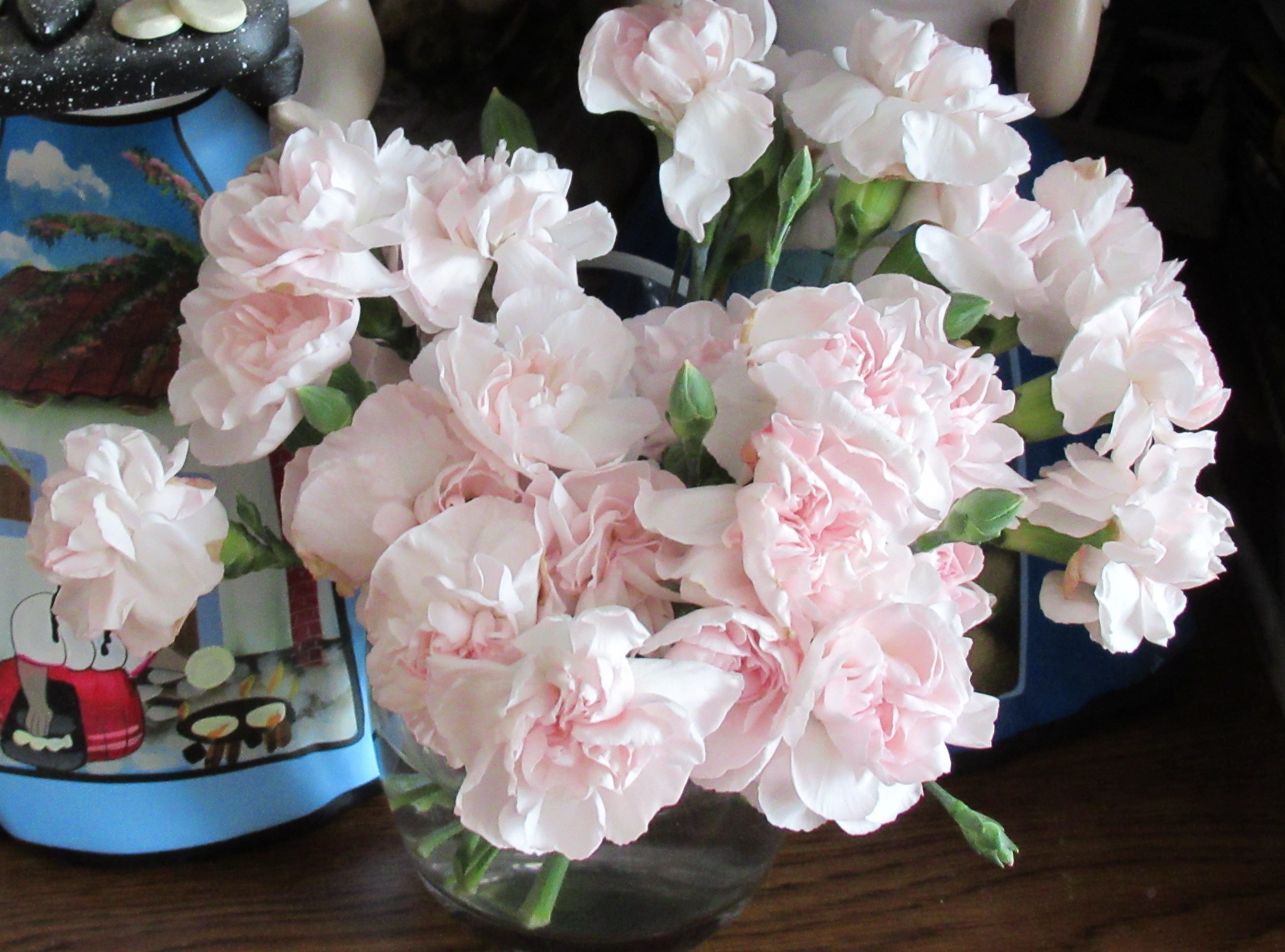
Clepsydra 31 & 32

31

… I become more aware
     of the world
          outside my mother’s womb

I listen to the house’s heartbeat
     the occasional creak
          intruding rarely
               the house inhaling
                    exhaling

 I pay attention
     to my own bodily sounds
          my heart rate slowing
               increasing

now I can hear
     the faint tick-tock
          of a distant clock

a sunray illuminates
     a dust mote
          that dances before my eyes

light without sound
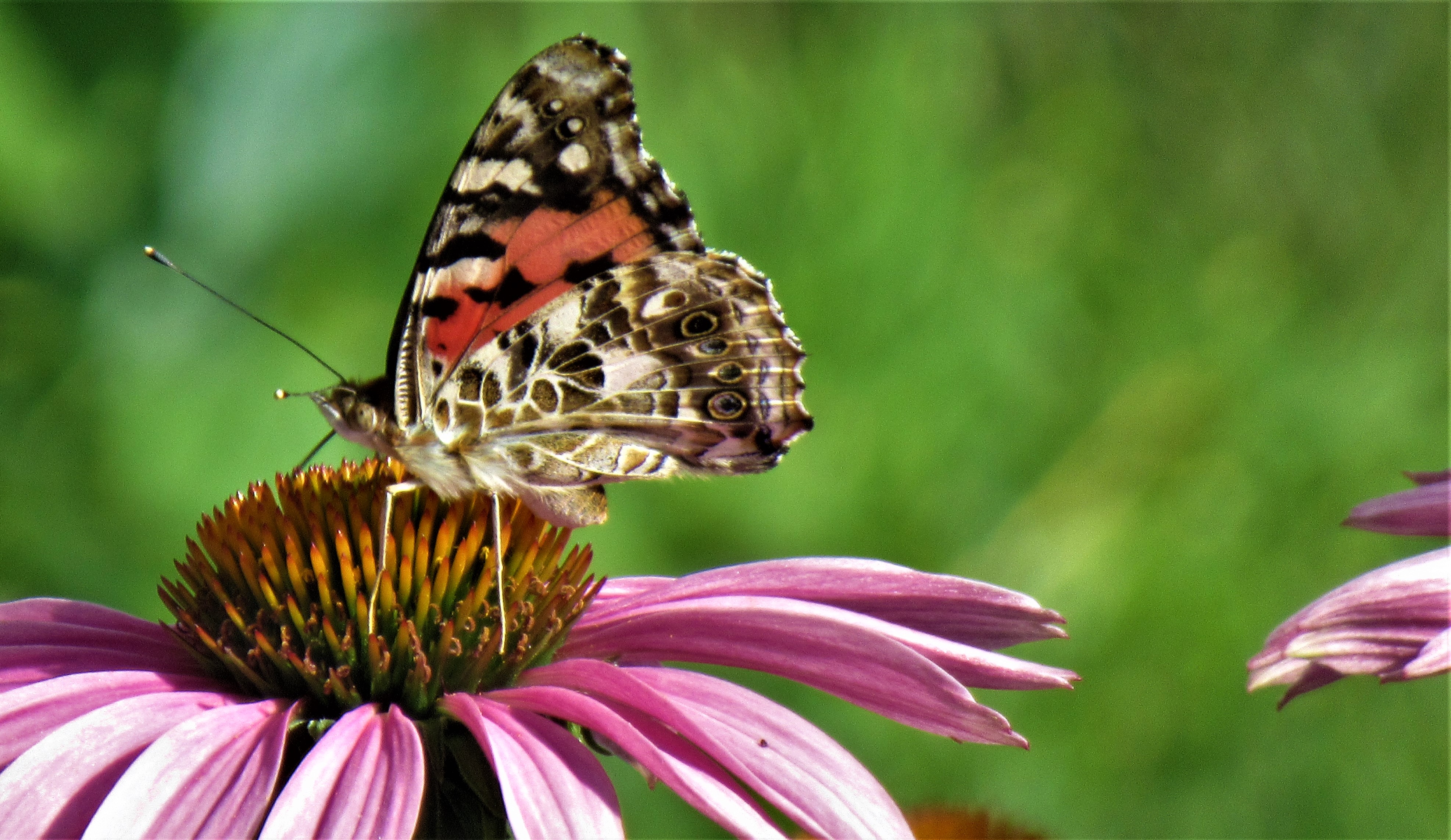
     silent butterfly wings
          seeking celestial light …

32

… did I write
          these words for me
               or did I write them
                    for someone else

does it matter
     when the only thing that counts
          is the beauty released,
               when the butterfly breaks free
                    and takes flight …

Commentary:

“The only thing that counts is the beauty released when the butterfly takes flight.” Sounds beautiful, doesn’t it? Just like the old poetic adage “beauty is truth and truth beauty.” But is it true? There are some very ugly truths and it is very hard to beautify them, even though we do our best to do so. I have always hated simplicities like “lipstick on a pig” or “silk purse out of sow’s ear”. And then there’s ‘a rose by any other name would smell as sweet.’ Probably true. Yet an ugly truth is still an ugly truth however much the spin doctors try to spin it.

And for whom does a poet (he in this case, the poet being me) write his poetry? Did I write those words for me, or for someone else? Good question. I certainly wrote them in the hopes that someone, somewhere, perhaps you, whoever you are, might read them. But I don’t know you, can’t know you, how could I know you? But if I don’t know you, how could I write for you? Did Cervantes write the Quixote for himself, or for his readers? And who were his readers, did he know them? He certainly didn’t know me, because he passed away on April 23, 1616, same date as William Shakespeare and the Inca Garcilasso de la Vega. The same date, you notice, but not the same day! Puzzle that one out, if you will. Meanwhile, he died 328 years, give or take a month or two, before I was born, so I don’t think he had me in mind as he penned his words, much as I didn’t have you (specifically) in mind, as I penned mine.

Carpe diem – seize the day. Don’t wase it on such idle philosophical speculations. Speculation / peculation – go buy yourself a lottery ticket – you may even win the jackpot. Of course, if you wish, you can be like me. I never buy lottery tickets and that would put money in my pocket every week (think of it as winnings!) except I never take it out. And remember – “Keep your water weak and your cider strong, keep your hands in your pockets and you won’t go wrong.”

Clepsydra 30

30

… but before all that
     did I emerge slowly
          from the grain
               of a granite heart
                    as a sculpture
                         emerges from stone

I broke out of a silent world
     left the flesh-and-blood house
          where my mother lodged me
               abandoned that amniotic silence
                    broken only
                         by my mother’s heartbeat

my own heart
     responded to that rhythm
          until I materialized
               and slipped into
                    this waiting world

only to be held at the hips
     trapped
          a climber in a cave
               half out
                    yet not able to break
                         completely free

and me
     visited all my life
          by the nightmare
               of that pincer grip
                    until the doctor
                         forceps in hand
                              pincered me
                                   and drew me forth
white meat
     from a reluctant lobster’s claw
          silent
               dangling upside down
                    a special lobster
                         blue at the bottom
                              red at the top
                                   breathless
                                        motionless

until that first slap
     broke the silence
          and wailing
                I came into
                     that waiting world …

Commentary:

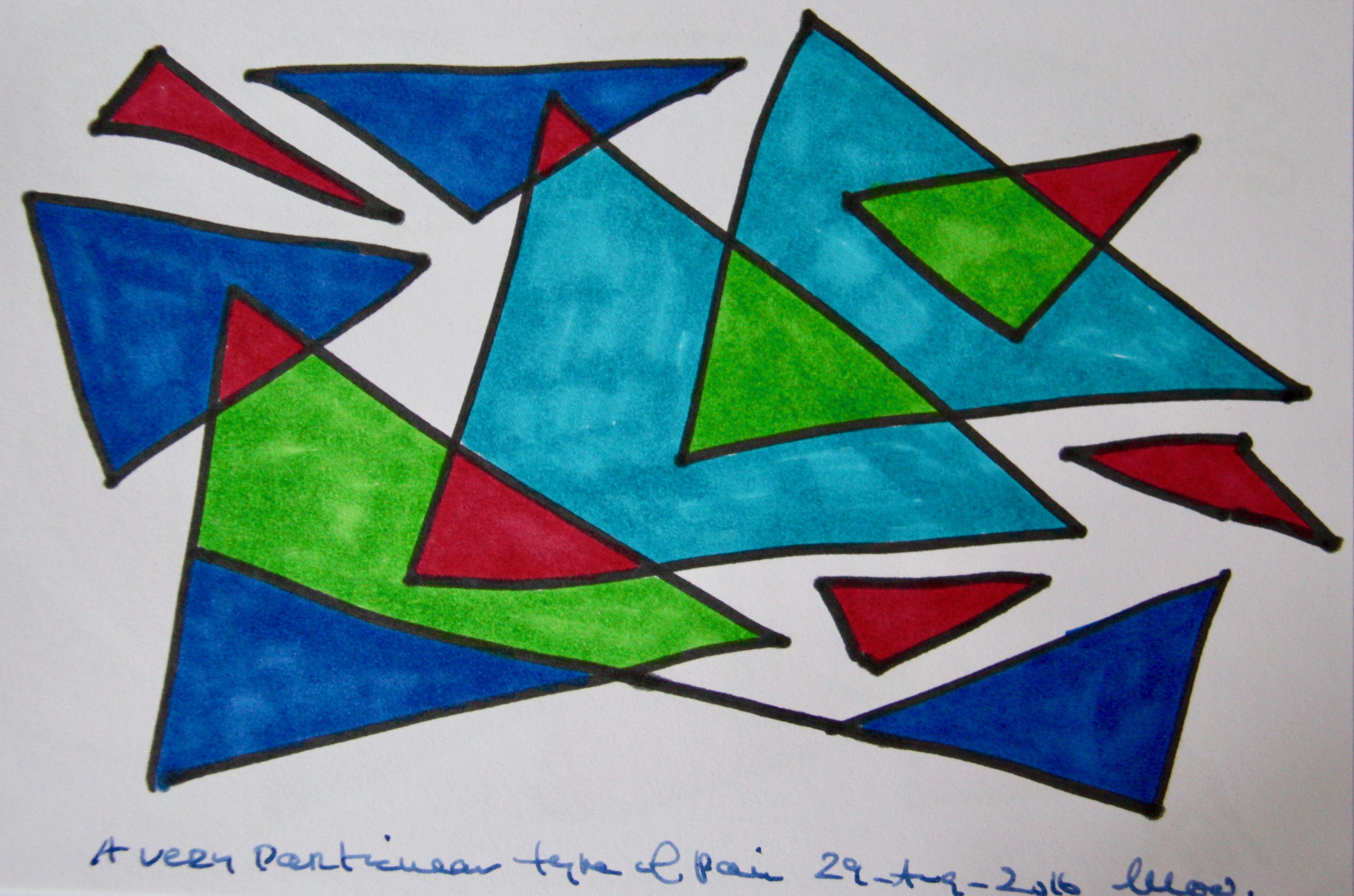
Nice painting, Moo. I like that. Its original title is Walking on Air, and I guess that’s what it might have felt like, dangling up side down, held by my feet, trying to walk on my hands, and look at all those suggestive colours. Colors / colours – English or Canadian? Does it matter? Red is still red and a rose by any other name would smell as sweet.

“Vanity of vanities, all is vanity.” Ecclesiastes, if I am not mistaken. “Great knowledge brings great grief; for in much wisdom is much grief, and he who increases knowledge increases sorrow.” So, we live and we learn, but what do we learn? Only the wisdom of all the wise people who walked this way before us. “In my beginning is my end …” – T. S. Eliot – “and in my end is my beginning.” In blood we begin our days, and in blood will we end them, just as the day begins with the spilling of the sun’s blood and ends in an evening of glory. Except when it’s cloudy, and then, of course, we have to guess what’s happening.

Guess-work – we guess how it began and we guess how it will end. And there’s the Clepsydra for you – drop after drop of water and people gathering knowledge, only to know how little they know, for, as Erich von Richthofen said, in the Medieval Course at the University of Toronto, a long time ago, in the 60’sixties of the last century which was also in the last millennium – “The more I know, the more I realize how much I don’t know.”

Blue and Green

“Blue and green
should not be seen
without a color
in between,”
thus spoke my mother.

What did she know
of the Peace Park grass
sweeping spring-clean
to head pond waters?

Didn’t she sense the frail
brown fringe of rock
scarfing between green
grass and head pond blue
or the white caps lacing
cow parsley on the stones?

I know she knew nothing
of yellow and red leaves,
brown spotted like an old
man’s hands, freckling waters,
fretting at the fragility
of nature’s delicate balance.

The Origin of the World

IMG_0265

The Origin of the World
Gustave Courbet:
L’Origine du monde

The origin of the world and where I came from,
her deep, moist cave that cast me from dark to light.
She loved me, she said, depriving me of her warmth,
leaving me to go back to her lover, loving him more.

Was it guilt that drove her to drinking whisky?
A forty-ouncer a day at the end, sometimes more.
She would wake in the night, wander the house,
banging against chairs, tables, walls, and doors.

She ran up bills in local shops, and the keepers
would dun me for the money she owed. She also
borrowed cash and some days her fingers were bare.
She left pawn shop IOUs on the table and I drove

 into town to redeem her rings. Once, in a drunken
frenzy, she cursed her only child. A mother’s curse is a
terrible thing. A living albatross, it claws lungs and heart.
Its weight drove me to the bottle. I too sought oblivion.

Reborn each day, mornings cast me back from dark to light.
Joy came when blackness descended, the albatross flew,
amniotic waters rocked me in warmth and comfort,
and my body’s boat floated once again on an endless sea.

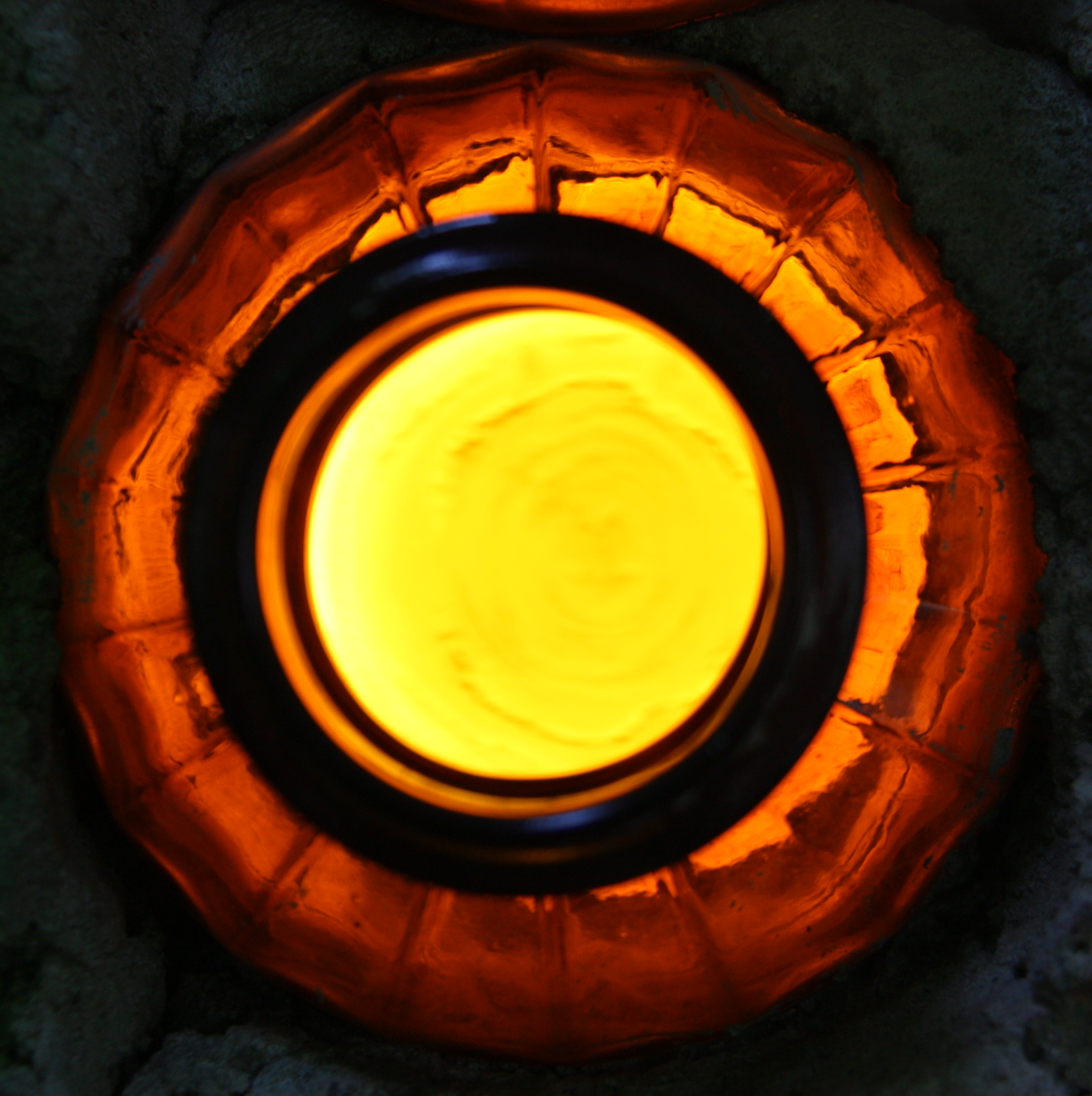
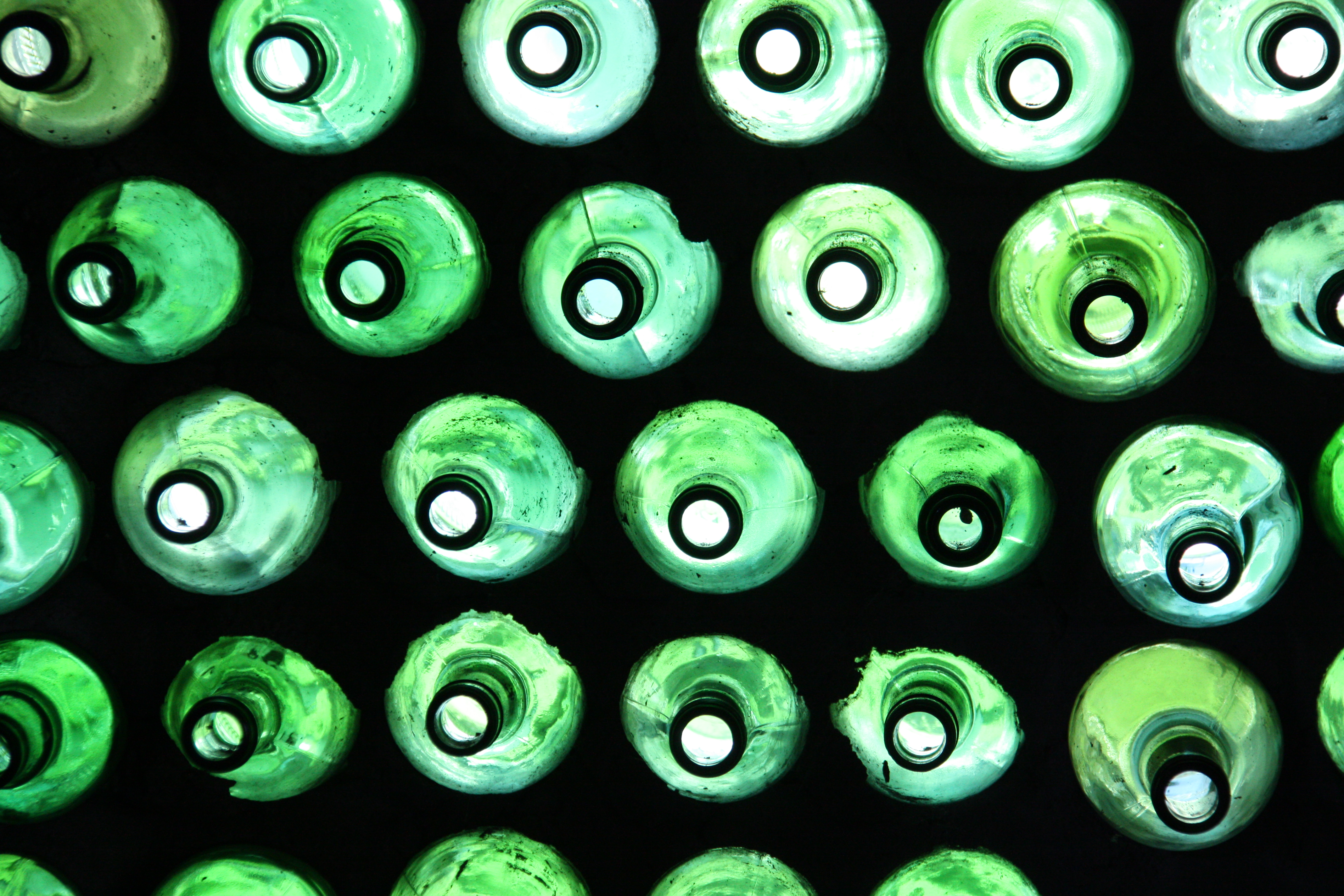
Comment: The photos show light shining through bottles in The Bottle House on Prince Edward Island. There is something very special about sunlight shining through stained and colored glass. Color distorts, speckles hands and face with a pointillistic magic, and the circular framework becomes a sun in its own right. As for Courbet’s painting, it still has the power to shock the viewer as it sets the eternal conundrum of the power relationship between the viewer (male) and the viewed (female). And remember: El ojo que ves no es ojo porque lo ves, es ojo porque te ve  / the eye you see is not an eye because you see it, it is an eye because it sees you, as Antonio Machado tells us. As for the poem, it stands or falls on its own, as does the painting. Visual shock or verbal shock: take your pick, but I hope you do not walk away unmoved.

IMG_0251


CV-19 Week 3 Day 1

IMG_1058 (2)

CV-19 Week 3 Day 1

So, yes, I am starting the third week of my self-imposed isolation. I am also in the first week of an imposed provincial State of Emergency. What I was doing willingly before, self-isolation, has now become law, self-isolation by edict.

It seems a minor change, but it isn’t. Whereas before I was happy not to go out, now the very prohibition makes me want to go out. Yes: I now want to be out there, wandering the now-empty streets, shopping in the now-closed stores, and visiting the newly locked and barred bars and restaurants.

This situation reminds me of the word-games we used to play as children in which you were given a word which you mustn’t use and then you discovered that you really, really wanted to use it, simply because you had been told not to. One such banned word, in my childhood, was bloody. All the grown-ups used it, but it was forbidden to the little children. Bloody hell, we thought. Or bloody nice weather, we said to friends of our own age. Then, if our parents caught us using the forbidden word, out came the carbolic soap and it was mouth wash time again. Yuck: I have never forgotten the taste and smell of that carbolic soap.

We devised schemes for getting round the prohibition. I guess children of all ages devise schemes for breaking down prohibitions. That’s why so many soldiers in WWI used to ‘break out of barracks’ as they resisted the imposition of nightly curfews with their locks and keys. “Oh we’re breaking out of barracks,” they would sing, “as we have done before.” Then came the other verses. “Take his name and take his number.” “Up before the CO.” “Forty days in prison.” Back to bread and water, as we have done before.”

So, when my mother took us to the butcher’s shop one day, we were all primed. “Look at all that bloody meat” we cried out , shrieking with laughter and rolling all over the saw-dusted floor. My mother was furious, but we were spared her wrath as the butcher, and his other customers, found it so amusing.

But CV-19 (Corona Virus \ Covidis 19) is not so funny and the punishments are much more drastic than a simple carbolic soap mouth wash session. That said, the itch to break the prohibition is so much stronger now that the law is provincially enforced and not self-imposed. That said, these are rules well worth following. Nobody wants to catch this and, much more important, nobody wants to be responsible for passing it on to somebody else, especially if that somebody else is in the target range for a serious, perhaps fatal, bout with the virus.

Funny old world, eh? And some funny old people living in it.

Hair of the Dog

IMG_0040 (3)

Hair of the Dog

I awoke to the dog’s tongue licking my hand. When I moved, he jumped off the bed, ran to the door, turned and barked. The hall clock chimed six times, early for me to get up, but I did because I needed a pee. The dog followed me into the bathroom, whimpering. Street noises seemed louder than usual. The dog started barking again and a voice called out from the hall below.
“Anyone home?”
The dog clattered down the stairs woofing wildly. Still in my pajamas, I looked over the balustrade to see the milkman standing below.
“Hello,” he said. “The door was open and I just dropped in to see if everything was all right. Where’s your mother?”
“In bed, asleep,” I dug with my index finger at the sleepy crackling gathered in the corner of my eye.
“Not if I know her,” the milkman said. “She’s run off again and taken a bottle with her. You’d better get dressed.”
I scowled at the milkman, went back upstairs, and looked in my mother’s bedroom. Her red flannel nightie lay in a heap on the floor by the unmade bed, with its rumpled sheets and pillows all higgledy-piggledy. The bed felt cold beneath my fingertips and the clothes she had worn the day before had gone.
“I’ll get dressed,” I shouted. “I’ll just be a moment.”
“Sure,” the reply floated up the staircase.
“You’re right,” I said to the milkman as I met him at the bottom of the stairs. “She’s gone.” The first rays of sunshine touched the stained-glass windows above the door, and fragmented colors danced with dust motes, turning the milkman’s white uniform into a harlequin suit of lights.
“Not the first time she’s gone AWOL,” the milkman winked at me.  “She’s got quite the reputation round here. You’d better go out and find her. I bet she’s in the park with the others. That’s where she goes when the mood takes her. I see her sometimes when I’m in the milk float. I’d take the dog, if I were you. He’ll find her. He usually does.”
The dog whimpered as we got to the end of the drive. I checked my watch: 6:30 AM. The early sun slowly sliced through the morning’s damp creating rainbows in the mist. I shivered.  The milkman waggled his fingers in a silent good-bye and his electric milk float hummed then lurched out into the street with a clinking of bottles.

I stood at the roundabout at the corner and didn’t know which way to go.
“Find mum,” I said and patted the dog’s head. He wagged his tail, put his nose down, turned right, and set off down the main road towards the city center.
Shadows danced on the lower ironwork of the locked park gates. A child’s swing creaked gently in the breeze. The dog sniffed at the gates, lifted his leg on them, gave them a generous squirt, then put down his nose and tugged at the leash.
I followed the dog as he went past the gates and pulled me towards a hole in the hedge, just large enough to squeeze through. The dog whined with excitement and pawed at the gap. I followed pushing aside the bushes.
The dog whined again and tugged me towards a sort of mound that lay on the nearest park bench. Newspapers offered scant warmth to the body that they covered. A hand hung down and the dog licked it frantically. I touched that hand and the dog’s lick joined us in an unholy matrimony. Beside the sleeping figure on the bench, an inch or two of what appeared to be whisky huddled at the bottom of a forty-ounce bottle. Other empty bottles lay on the wet grass, like spent cartridges, some of them pointing at the woman’s head.
Shuffling feet had worn down the grass where the woman lay. I saw traces of blood on bandages and empty syringes. Some needles had been wiped on the pair of torn pink panties that peeped out of the grass.
The dog continued licking at the woman’s hand then stopped, pointed his nose at the sky and let out a single, piercing howl.
I shook my mother’s shoulder.
“Mum, Mum,” I called, but she didn’t move. She was locked in a land where I dared not follow her. I took out my cell phone and called the police.

They arrived with a park attendant who opened the gates and let their car in. They took one look at my mum and called for an ambulance. When it got there, the ambulance men examined my mum, said she was alive, put her on a stretcher, and carried her to the ambulance. I told them I wanted to accompany my mum to the hospital.
“Not with that dog, you don’t,” the driver replied. He got in, started the engine, turned on the siren, and pulled away.

I took the dog home, called for a taxi, and it took me to the hospital. When I got to the room in which they had caged her, she was unconscious. She never woke up.
I buried what was left of my mum ten days later, after the autopsy.


By Any Other Name

IMG_0296

By Any Other Name
hortus conclusus
(1430-1432 AD)

don’t let them know
your origins your secrets
hide who and what you are
unholy ghosts will prowl
wild dogs will howl

sister-spouse
a garden enclosed
walled behind whose house
anonymous flowers
roses in abundance
set amongst thorns

sealed-up this fountain now
its well run dry
dead leaves in the bowl
shrunken petals
echoes of children’s voices
their faces hidden
among last year’s leaves

IMG_0617.JPG

Trains

img_0359

Trains

     You took me on holiday to the continent. Railway trains to Austria, Germany, and Switzerland. You loved those trains. I hated them. We stopped in the dark at unknown stations. I’m thirsty, you said. Get me some tea. I left the train, climbed down to the platform, went to the restaurant. I had a fistful of money, but didn’t know what it was worth. Tea? I begged the man behind the bar. My mother wants tea. They all shook their heads and offered me beer. My turn to say no. Coffee?  A pause. Uh-uh. They offered me orange juice, lemon juice, wine, and I finally water. A whistle shrilled. It’s the train, they said waving their hands in the direction of the door. I let them choose the money they wanted.  And something to eat. They gave me a sandwich, a slice of cheese in a baguette, then seized some more coins. The engine hooted, a lonely owl, calling for its lost chick.  I ran out of the restaurant, on to the platform. Carriages moved past, slow at first, gathering speed. The last passengers climbing aboard, the doors closing. I ran. The guard, at the end of the train, blew his whistle, waved a green flag, held the last door open, until I caught up. He helped me onto the train, gifting me with a storm of words in a language I could not understand. The doors between the wagons remained locked. My compartment lay to the front of the train. I couldn’t remember the number of my carriage or my seat. Wagons-Lits? I shook my head. Première classe? I shrugged. Touristique? I nodded. The guard grimaced, led me down the train, unlocked doors in the sleepers, led me on and on, until we arrived at my compartment. Restrained by another guard, you yelled and shed tears as you tried to pull the emergency cord that would stop the train. Ah, there you are. What the hell do you think you’re doing? I was worried sick. You slapped me. Now I stand on a different kind of platform, watching another train pull away. I stand here, abandoned, and watch you slide slowly into an unreachable distance.

Poinsettia

img0137_1


Poinsettia

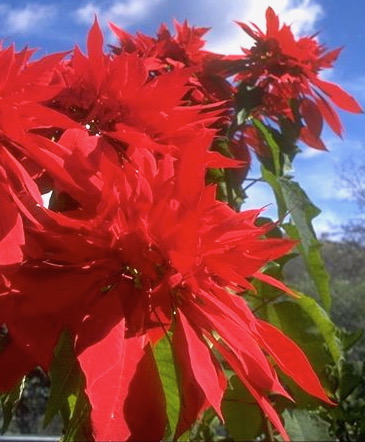
     You can sense it, you can feel it, the alert spirit that guards this room. Walk in there at your peril. No, don’t. Just stand at the door and observe the poinsettia. You bought her a real one, a year ago, but she forgot to water it and when you visited, leaves and flowers, had crisped and dried, withered and perished. You even found cigarette butts stubbed into the pot’s powdery earth. You bought her another one, this time an ever-lasting, artificial flower, scarlet blossoms of silk with yellow-dotted plastic beads. Today a feather-duster breeze cleanses and enriches the leaves, replenishing their faded splendor. Motes rise, their dancing angels of dust hovering, suspended in a sunbeam that picks out their supple luxury. Their fiery tongues cry out to you from their green plastic pot in this empty room. The plant throbs with a startling vibrancy in this early morning light that enlivens piano keys, table top, and the polished, wooden chair arms you cleaned yesterday.  The poinsettias seem to wring butterfly hands as they gently flap in the breeze from the open window where thin lace curtains twitch, shaping the sunlight into light and shade. Her ash tray sits by the radiogram and awaits her return. That last cigarette, lipstick staining the filter, stubbed out and cold, waits for a companion. Later today, you will go to the hospital and visit her. You do not want to enter this room for its guardian spirit demands solitude and silence. You do not wish to create a disturbance, yet something moves you, and you walk over to her flower. A film of grey cigarette dust rises once more from the silk poinsettia, disintegrates, and dances before you. You bend your head to the silken surface and feel dry leaves brush their butterfly kiss across your cheek as you breathe in the ashen smell of stale tobacco.

Butterfly


img_0160

Butterfly 

     Un-mown the front garden, the grass long. Like hay, no flowers in the borders, how could there be when nobody can bend down to plant them? They want me to mow the lawn, but I can’t. I call a man who has an industrial mower, a hay-maker, and he comes and does the job, front and back, within half an hour. Even with a scythe, it would have taken me a couple of days.

The magnolia tree leans low across the red-brick wall that separates the house from the street. White butterflies, its petals, blown on the wind, and its perfume regaling our noses of the waft of the wind. We leave the ground floor windows open during the daylight hours so we can take in the thick, rich, delicate scent.

     Pale and delicate, a cabbage white butterfly floats into our yard from the road. The roses are not yet in bloom, more thorn than rose. A sudden gust blows the butterfly across the garden and it shreds its snow-white wing upon a thorn: sudden shriek of white against wall and grass.

     Looking back, remembering  how I cast her ashes over the sea, thoughts pound in my head like waves on that Gower beach. Each word is a grinding of small pebbles. Mother, you are a swift river of blood contained within my skin and bones.