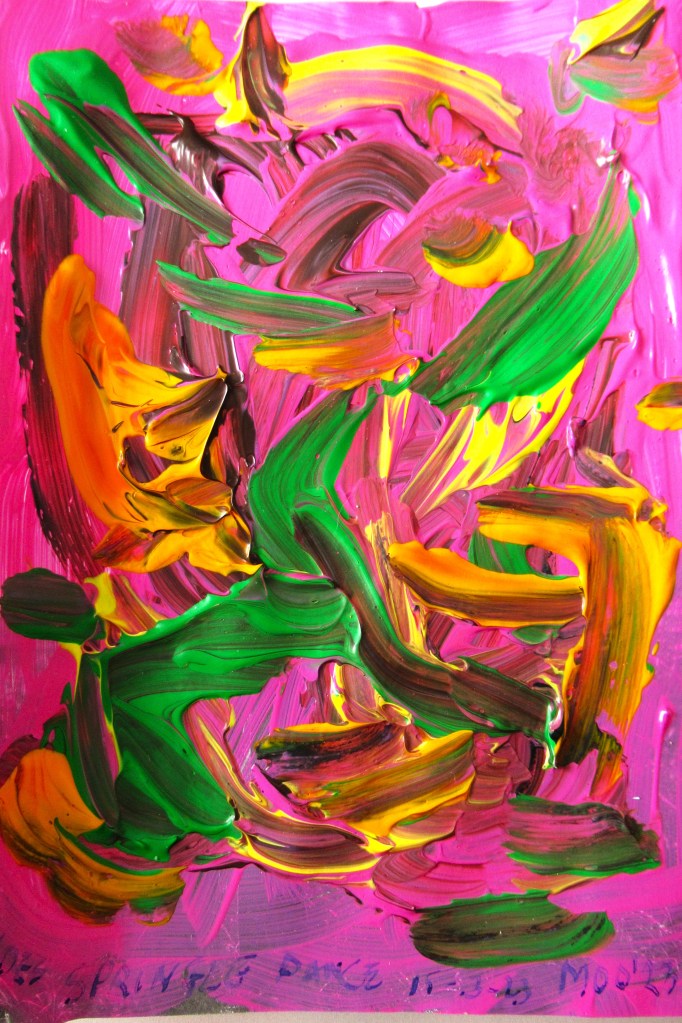
Window Pain

Window Pain

I live in a world beyond the material world.
At night, I swim, a silver fish, among the stars.
Constellations net me in their glistening hair.

By day I wander along a piano’s keys.
I replay life’s golden dreams again and again,
its quartets, concertos, and its symphonies.

A harmonious blacksmith, I no longer know
who, or what, I am. I only know I exist right here,
at my desk, looking out through my window,

a window in my mind, that serves as a mirror,
reflecting all I was, and am, and ever will be.
Sometimes, the sun shines. Often the rain

falls cold against that window pane, and I press
my nose against cold glass, and feel again the pain.

Lac Megantic – 10 years on

Lac Megantic
ten years on

Fire on the water, the waves ablaze,
and the sound, a monster, indestructible,
a dragon descending, breathing fire,
so swift, so powerful, come sudden
from nowhere, yet another disaster,
one of the many that torment us
now and then with its ravage and roar.

It refused to move on until sated – but
who could satisfy the monster’s hunger,
destroy its will, defeat its power?
Not us with our pitiful sacrifices,
homes, friends, family, devoured.

In spite of our efforts to rebuild,
nothing can ever be the same.
Ten years later, memories, grief,
and our tears are all that remain.
Yes, it has left, but what can we do
to stop it, if, and when, it comes again?


Comment: I wrote this poem on July 6, 2023, while listening to the CBC radio commentary on the tenth anniversary of the Lac Megantic disaster. A terrible event, it still haunts so many people, and yes, the fears, tears, grief, and memories linger on. How could they not?

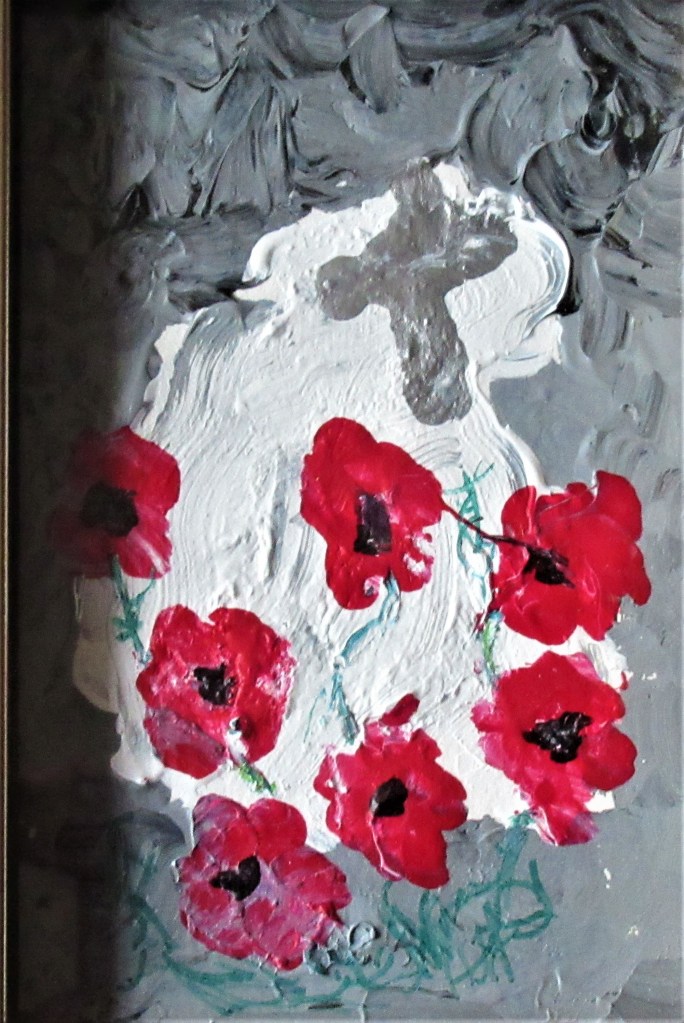
PaintingPoppies – by Clare Moore.

A World of Silence

A World of Silence

My dreams are black-and-white movies,
no voices, with the cinema pianist tapping
silent notes on the hammer dulcimer.

Shadowy images, cast by a candle, flicker
along the walls, and I am back in school,
walking, half-asleep to midnight mass.

I stumble forward, from that distant past
towards a series of unknown futures
none of which may ever come to pass.

In the Big Top of my head, the gymnasts
hold hands and in silence float their clouds
above the heads of the wondering crowds.

To fall or not to fall, to fall to rise no more.
Soundless sighs erupt from silent, open
mouths as the tight-rope walker sets out.

The umbrella in his hand is a Roman candle
that throws shadows on the circus sand
as clowns with bulbous noses cavort below.

The ring-master flexes an inaudible whip.
The carnival ponies trot up and down.
The motor-bike rider accelerates. In the hush
the bike ascends the Wall of Death and falls,
diving down, down, down, into silence.

“All words come out of silence. The language of poetry rises from, and returns to, silence.” John O’Donohue, Anam Cara, p. 110.

Poems for the End of Time

Poems for the End of Time

Here it is, and it is up and waiting for you! I already have my first copy. More on the way. The same artist who did the cover for People of the Mist did this one as well. He’s such a nice person – doesn’t charge me a penny.

Introduction

         Poems for the End of Time is composed of two linked collections, Meditations on Messiaen and Lamentations for Holy Week. They both have separate introductions in the body of the text.

         My graduate work at the University of Toronto (MA, 1967, and PhD, 1975) included studies on Golden Age / Early Modern Spanish Poetry (16th -17th Centuries). It enabled me to read and enjoy both the Renaissance and the Baroque poetry of Spain. My own interests lay within nature poetry, as expressed by the Spanish Mystics (St. John of the Cross and St. Teresa of Avila), the Neo-Platonic Poets (in particular, Fray Luis de León), and the Metaphysical poets (Luis de Góngora and Francisco de Quevedo). Echoes of their writings and thoughts are frequent within these two poetic sequences.

         I will write further on both sequences later in the book. Briefly, both sets of poems were written while listening to the music of Olivier Messiaen. Three of his compositions, Quatuor pour la fin du temps / Quartet for the End of Time, Éclairs sur l’au-delà / Lightning over the Beyond, and Petites esquisses d’oiseaux / Little Sketches of Birds, influenced me enormously. I listened to them every day while I was writing and revising these poems.

         These poems are not for the simple-minded. They form a contrasting tapestry of point and counter-point, filled with allusions, word-plays, internal rhymes, repetitions, and alliterations. They have a music all of their own.

Do not expect simplistic escapism. If you are serious in your efforts to read, listen to the magic of Messiaen as you turn the pages, much as I did while I was writing.

Redemption

I had no paper with me in the car
so I wrote this poem on a bottle redemption slip.

Redemption

Redemption:
that’s what I seek
and some days it seeks me.
A double need this need to redeem
and be redeemed. A double need too
this god I need, the god who needs me.

Lonely he will be without me,
and I without him.
Knock and the door will open.
Seek and ye shall find.

I look and, yes, he’s there,
him within me and me within him.

This redemption slip is all I need:
empty bottles on the one hand,
my empty heart on the other,
both now redeemed.

All of this while I sit in the car
outside a fast-food chain
wondering if a bullet will come,
to break the car’s window pane,
or someone brutal who will rejoice
in his heaven-sent task of delivering
my personal order of take-out pain.

People of the Mist

People of the Mist

Cover Painting

Pale Face by Moo

Back Cover Synopsis

            What if you walked into a church in a foreign country and came face-to-face your dead father? In People of the Mist, Nemo, orphaned as a baby after the suicide of his unmarried mother, seems called to visit Oaxaca, Mexico, the city of the returning dead. Upon arrival, he visits the town’s main cathedral only to encounter his adoptive father, a man he had buried years earlier. Confused by what he thinks is a realistic vision, he seeks the help of a local witch doctor to explain his mirage. The shaman seems to hold the answer and presents him with a broken medallion. He challenges Nemo to find the other half, promising the quest and discovery will reveal the real purpose of the young man being called to Oaxaca.

Brief Biography

Roger Moore, is an award-winning teacher, researcher, poet, and short-story writer. His accolades include being a CBC short story finalist, as well as winning multiple awards from the WFNB. Born in Swansea, Wales, he now lives in Island View, NB, Canada. Between 1995 and 2001, he taught multiple classes in Oaxaca, Mexico, where he first encountered the Mixtec codices.

Click here to view on Amazon

The Return

The Return

“You’ve been here before,” my Welsh grandmother
told me when she first held me. At least that’s what
they tell me she said. She married into a Catholic family,
but she never converted, refused to give up her own religion.

As a result, they didn’t respect her and never gave her
the treatment she deserved. I would love to ask her:
“Gran, if I was here before, where was I until I came back?”
Maybe she would know. The others wouldn’t dare ask
the question, let alone answer it. The facts of life were
forbidden things, surrounded by a silence of myth
or else spoken gently, in secret whisperings, with nothing
ever revealed to the young and curious.

Once again I have returned here and can honestly say
“yes, I’ve been here before.” This room seemed strange
the first time I visited, and yet it soon became my home from home.
As soon as I open the door, I embrace the familiar.
This room knows me, as I know it.
I walk to the writing desk, look out of the window,
and everything is at it was the last time I was here.
The sea below me sparkles as it always did.
The tower still stands at the end of the island,
and I know full well that, tomorrow morning,
dawn will flood the room with light.

Each day I am here, I will be blessed with a no sé qué
of mystic mystery that will overflow, fill the well
of my inner creativity, and allow me to fulfill
my destiny and praise those things that enlighten
the world and help to fill it with energy and verbal light.

Click here to listen to Roger’s reading.

Black Paintings

Black Paintings
pinturas negras
Goya

Wrapped in his blanket of silence, the painter paints.
He pays no attention to the shrieks, screams, prayers,
curses, doesn’t even hear them. He sees their staring eyes
as the bull’s eyes at which anonymous soldiers, heads down,
backs to his easel, fire. He sees their mouths as black holes,
slashed across their faces. He sees the priest with his rosary,
but never hears the rattle of the beads or the firing squad’s guns
going off, filling the canvas with smoke, the square with blood.

Back home, in the Quinta del Sordo, his deaf man’s house,
he sits at the supper table, dwarfed by his painting of Saturn,
devouring one of his children. Beside him, old women,
hags themselves, suck soup silently from wooden spoons,
or fly soundless, black bats in the starless sky,
 on the back of goats or on their witches’ brooms.

The great, open wounds of his paintings speak to us
of his hushed suffering, of the calamitous world that spawned
such violence, plague, famine, and fear. Plundering armies,
guerrilla warfare in back street and alley, torture, pillage,
rape, and suffering, pits filled with the dead and dying,
famine walking the streets, and all of it inaudible,
the nightmares of a little child, seen, but never heard.
His paintings speak to us, and they allow us to reconstruct
in our imagination, the many things that the painter, deaf,
but never dumb, could never hear, yet reproduced
using his paintbrush and his taciturn palette as a tongue.

Click here for Roger’s reading.

“It is said that deafness is worse than blindness because you are isolated in an inner world of terrible silence.” John O’Donohue, Anam Cara, p. 71.

Movement

Movement

Not just the ups and downs, but the small things,
moving, that catch your eye – that butterfly
on the bees’ balm, wings folding, unfolding –
that deer at the wood’s edge, invisible when still,
then suddenly surging into empty space, tail raised,
up and away – that crow, blending into tree black,
then one quick flap, and launched into clear air –
that falcon, perched on the pole, frozen at first,
then taking a step forward, wings folded, dropping,
like a stone then a fast strike on an unsuspecting
robin – silence , pierced by the robin’s shrill shriek,
then silence and peace returned after violence.

Slow movement – the autumn leaves turning color,
a day at a time, almost invisible the change, until one day,
an autumn leaf becomes a whole forest, blushing into
its autumn finery – even slower, the fall’s stealthy approach,
and then, one day, the blue skies turn grey, rain falls,
the wind rises up, and the leaves go tumbling, here, there,
playing strip-jack-naked with limbs and branches.

Looking at my inner world, I feel, but do not see,
winter drawing near – its frosty footprints grip my bones,
snow and frost lie white upon my head, blood flows
thin and slow, seeps life and warmth away, day by day,
inexorable, yes, but also invisible, their still, small steps.

Click here for Roger’s reading.