Poem from the Cree

IMG_1056 (2)


Poem from the Cree

The Cree have retreated from the streets.
Their violinist has taken time out, leaving
his last notes dancing from a street lamp.
Only the Fire-Brave remains, inhaling thick
black oily smoke. He juggles twin balls of fire.

Bones gather together to gather dry dust. Hollow
metal buffalo: a cold wind blew and plucked out
his heart. Five climate controlled pedestrian
walkways cross the prairie, linking building
to building. A glass wheat field shimmers
and tinkles to the rhythm of air conditioning.

The black cow, cast iron hide set free from rust,
ruminates behind its plate glass window.
The night wind whisks white buffalo bones
pale across the sky. Oskana ka asasteki.

With these words, I will leave you, suddenly,
abruptly. A light going out. Now I am here.
Oskana ka asasteki. And now I too am gone.

PEI + bockle 2008 059

Continue reading

Self-Publishing

img_0196


Self-Publishing

Why do we write?

Before we talk about publishing, in any form, we must pose the question: why do we write? As a former academic, my writing was intimately tied to academia. At first, I wrote to pass my exams; then I wrote to pass my courses by handing in essays and potential papers; then, when I was a full-time academic, I wrote for the “publish or perish” world of academia, churning out articles (90) and reviews (70) on topics that were tied to my research projects. My writing, in other words, had a purpose and a direction. I knew why I was writing and I was conscious of the areas and places in which my publications would be acceptable and accepted.

At the same time as I wrote for the academic world, I indulged in creative writing. I have always written poetry. I have always been aware of my vocation as a poet. However, I was also aware that it was very difficult to earn a living as a poet. We’ll talk more about that later. The academy, research, and teaching gave me enough free time to indulge my dream of being a creative writer. It also permitted me to put food on the table and to keep my family warm and comfortable during our cold, Canadian winters.

So, the first question you must ask yourself is: why am I writing? What do I hope to achieve as a writer? Who do I want to read my works? Why do I want to be published? How do I want to be published? Your answer to these questions, and others like them, will determine your relationship to the publishing process.

Traditional Publishing

It isn’t easy to become published in the traditional fashion. In the first place, there are fewer major presses out there, and those that do exist are very large and powerful indeed. They want only the very best work. Not only that, they want the best work that will make them the most money. Good writing isn’t always guaranteed to sell well and thus to make the most money, remember that. In the second place, there are some excellent smaller presses, but they tend to be niche presses tied to a specialized corner of the market. Academia is a niche market. My own area of academia, Spanish Seventeenth Century Literature, is a very small niche market indeed. In order to get published in the traditional manner, a great deal of research into the niche area and the presses that publish therein is needed.

Most major presses will not look at up and coming writers unless they are represented by an agent. Few agents will take on an up and coming writer. This is a chicken and egg conundrum: how do we get the experience to be represented when we need the representation to help get the experience? All writers must solve this problem in their own fashion. There is no easy answer. Novels that have the potential to be turned into films: these will attract an agent and a big press, because that’s where the money is. How many of us are capable of writing them? Short story collections used to be a reasonably safe bet, but it appears that fewer presses and literary magazines are publishing them. Poetry generates little or no money, hence it also belongs to a highly specialized niche market with very small circulation figures. Once these realities are understood, then we can consider the alternatives.

Self-Publishing

 Self-publishing is no longer associated with the so-called Vanity Press, a term used to denigrate it. Not so long ago writers who paid for their writing to be published were considered by many to be ‘poor’ writers, ‘vanity’ writers. This is no longer true and The Writers’ Union of Canada (TWUC) now accepts self-published works as genuine works of literary merit, always provided that they are well-written. The advent of the computer revolution made all forms of writing, printing, and publishing so much easier. The ensuing advances in desk-top publishing allowed anyone to be a published writer and a writer’s life was suddenly that much simpler.

I published two poetry books with traditional presses in 1978 (Last Year in Paradise) and 1986 (Broken Ghosts). In 1990, following the death of my parents, I felt a deep desire to write and to be published once more. I had poems published in small literary reviews and magazines and I had a track record of wins and honorable mentions in writing competitions, but nobody wanted to publish another book of my poetry. I papered my walls with rejections … and I got nowhere. Therefore, in 1990, I started to self-publish.

My first six books were simple: I typed out the poems, ordered them the way I wanted, and took them to the local print shop where, for a small sum of money, the books were printed and saddle-stitched. This was a cheap means of production, so cheap, that I didn’t need to sell the copies so I just gave them away to my friends. Between 1990 and 1996 I published six of these little paperback chapbooks: Idlewood, In the Art Gallery, Daffodils, Secret Gardens, Iberian Interludes, and On Being Welsh. The runs were small, ranging between 100 and 200 copies, and very cheap per copy, often less than a toonie / twony (two dollar coins, after ‘loonies’ one dollar pieces with a loon on the coin).

All the initial work for these books was done by me: writing, selection, typing, and editing. The printers did the rest: copying and binding. In the case of these first self-published books, the covers contained typed titles and the author’s name and nothing more. In 2000, I was very fortunate. I met a genuine editor who agreed to work with me to publish my poetry via a small university print-shop. I wrote the poems and typed the text. My editor, a wonderful lady, then edited the text and prepared it for printing. My beloved (aka my wife) designed the covers for these books. Between 2000 and 2012 we (self-) published six of them: Sun and Moon, Though Lovers Be Lost, Fundy Lines, At the Edge of Obsidian, Obsidian 22, and Monkey Temple. These were genuine paperback books, with an ISBN. They were all limited editions and again I gave them away to my friends.

2008 saw Nashwaak Editions, the book division of the Nashwaak Review, publish Land of Rocks and Saints, a book of poetry that I wrote while in Avila (Spain). Again I funded this printing myself and again I gave it away to my friends and colleagues. I was devastated on several occasions to find signed copies of these books in second hand bookstores, that which I had given away for free had been sold for money. The receivers of free gifts had gained more cash than the books’ writer.

I continued writing and now had several manuscripts that I thought well worth publishing. Armed with a genuine list of publications and prizes and with excellent letters of recommendation from established writers, I again tried the traditional approach. Alas, I got the traditional results. Two small trade presses who agreed to publish my work both went out of business before they could do so. Agents, if they bothered to reply (and most of them didn’t), turned me down. I got to final judging with a famous niche press, but their marketing department said the book wouldn’t sell and they refused to market it … I didn’t know where to turn.

I had for some time been getting e-mails from houses that, for a large sum of money, would publish my new works for me. However, I was by now retired, and didn’t have those ‘large sums of money’. Publishing costs varied from $1500 US to $3500 US to £3000 (sterling). Well, I wasn’t that desperate, especially when I was suddenly subjected to regular e-mails, constant phone calls, and targeted advertising. I got tired of sales reps ringing me up and asking “are you read to go to press now?” There had to be easier and cheaper ways to get published.

2016 saw a major change in my self-publishing. A new friend, now a very close friend, suggested I try CreateSpace on Amazon. He came over one afternoon to give me a demonstration and we had a manuscript up and running that same day. It cost me nothing. I still haven’t sold a copy of that particular book. But it is up and available on Amazon. I buy copies at a relatively cheap rate and, you guessed it, I still give them to my friends. I now have nine titles on Amazon, two new titles* and seven rewrites and expansions. These include Monkey Temple, Bistro*, Though Lovers Be Lost, Sun and Moon, Obsidian’s Edge, Empress of Ireland, All About Angels, Iberian Interludes, and Avila* (my first book of poetry in Spanish).

Marketing is still a problem partly because I just don’t have (nor do I want to have) what it takes to be a salesman. I still give copies of my books to my friends. I guess I’ll never make any money worth speaking about from my creative writing. But that has never worried me: I have never written for money, only for love. I write because I love writing. I publish so I can give copies of my books to those friends who ask for them. I am a poet, whether I want to be or not. I am also condemned to my fate: I am an academic, a writer of poetry and books, and a book self-publisher. I guess I’ll never be a businessman.

Is it all worth the effort? Yes, I think it is. Can (other) people make money from self-publishing? Yes, they can, especially if they are willing to advertise, market, and sell their books at every opportunity. This is something that I just cannot bring myself to do although I know several writers who have been very successful with this aspect of the trade.

Quality Control

Are self-published books capable of being genuine works of art? Indeed they can. Bistro, although being self-published, has just been confirmed as one of three finalists in the New Brunswick Book of the Year Competition (2016-2017). Several of the stories in Bistro were either published separately in literary magazines or were part of larger manuscripts that received recognition in one way or another for the quality of their writing. Parts of several of my other books on Amazon have been published or awarded prizes or honorable mentions in competitions and this gives my creative work a track record of respectability.

I am an academic, trained to assess written work and to maintain quality control on my own written work as well as that of other people. Not everyone is born to be an editor, let alone a self-editor. How do we get to the level of self-editing necessary to be confident in our own quality control? Enter your work in competitions. Submit your work to literary magazines. Take writing workshops online and in person. Consult with other writers and join a good writing group or form one yourself. Be careful of submitting your work to the opinions of your best friends and your family: they will only tell you how good you are. Remember that your granny may be your favorite person, but she is not necessarily your best critic. Seek always the objectivity that allows you to stand back and criticize your own writing from a distance. Seek the opinions of others who are objective and will do the same.

Summary

  1. Think about why you are writing and what you want to achieve with your writing.
  2. Consider the different ways in which you can publish or self-publish and decide which is better for you.
  3. Research your market / niche market as carefully as you can and target the area in which you wish to work.
  4. Writing is a long-term commitment: you must make that commitment and stick with it.
  5. Remember that there is no substitute for high quality writing.
  6. Remember the words of Dewi Sant, St. David, the Patron Saint of Wales: “Keep the faith.”
  7. Don’t give up. Keep moving forward. If you stop writing, you will never achieve your goals or finish that book.

Writing: Task or Multi-Task?

IMG_0262

Writing: Task or Multi-Task?

“To task or multi-task? That is the question.”

In the lonely world of creative writing, be it in poetry or in prose, is it better to continue with one text until the task of writing it is thoroughly finished? Or should we flit from text to text, developing several at once and thus multi-tasking in the best sense of the word? This is a key question in the revision process and relates directly to the concepts of write, re-write, revision, revisionism, and the creative process, all of which have been mentioned both in this blog and in the comments to this blog. However, there is no single answer to this seemingly either / or question as many factors must be considered.

  1. Deadlines:

Anyone who has worked with strict deadlines knows that they matter more than anything else. “I want this work on my desk by 4:00 pm today,” says the manager rubbing the magic bottle in which the genie is kept. “Yes, ma’am,” says the genie bowing before vanishing back into his bottle. Only one thing matters, the task in hand, and there can be no multi-tasking.

  1. Novellas and Novels:

With longer texts, while there might be room for manoeuver, provided no deadline is in sight, it is better by far to focus on the task in hand — the extended narrative — and to dedicate all tasking and multi-tasking to that prime task. The majority of writers who have written on the art of writing, including Stephen King, Graham Green, and E. M. Forster, emphasize the necessity of sticking at it, maintaining focus, and getting on with the task. Graham Green’s recommended approach is to write four to five pages a day, re-reading them and revising them the next day, before writing another four pages. That way the events, the action, the characters, are kept well in mind. In addition, Joan Clark and Norman Levine, in their workshops, advise writers to get to know their characters intimately, to think about them, and to write and rewrite until they come living from the page. Anyone who has taken a longish break and then returned to the writing of a novel knows just how difficult it is to get back into the mind of those characters. With an extended narrative, a dialog abandoned is a dialog lost. And one must learn to listen to one’s characters and to never forget what they have said, mustn’t one?

  1. Poems, Prose Poems, and Flash Fiction:

This is where multi-tasking can truly take place. The brevity of these pieces, and I classify epic and extended poetry with narrative rather than with poetry, allows the writer time to pick the pieces up and put them down again, to play around, to abandon the text and to return to it later. Being shorter pieces by definition, one can re-read them with ease, correct them at leisure, and research around them with impunity. In an extended narrative, or when writing to a deadline, focus is necessary. With shorter pieces, easily recalled, procrastination is a pleasure, not a crime. With poetry, focus is sharper but for shorter periods.

  1. From Poem to Poetry Book:

As the poems accumulate and the writing, or rather the putting together, of the collection becomes more important, so the need to concentrate and single-task, rather than to procrastinate and multi-task becomes paramount.

These are my initial thoughts on Task or Multi-Task. What happens when we apply them in real life to real questions?

  1. On Revision (Chuck):

Will this exercise (revision of older texts) provide you more gratification than starting new ones that may or may not be so important to you?

The question of revision is key. While I would like to avoid revisionism (Al: There is value in showing poetry as a snapshot in time (if only to avoid endless revisionism), the question of how to revise a text is of maximum importance. The text to be revised may be old or it may be recent, but the act of revision — how and why and what to revise — is one that must concern us as writers if we are to eschew automatic writing in a search for le mot et la phrase justes. If I can learn from the revision of older texts what I need to look for in order to revise newer texts, then my search for a way in which to recognize and achieve better form of writing can be justified, for the techniques discovered can surely be applied to future texts as well as to past ones.

  1. The young Roger who was once you is no more (Kevin):

This is a beautiful thought: thank you, Kevin. Much of that earlier writing must stand as it is (and was) as a monument to what and who I was back then. However, some thoughts and phrasings may well be weak and need revision. The recognition of weakness and the realization of how to strengthen and how to renew is surely a part of our ongoing growing writing process. That is what I would argue, anyway. I would argue further that revision is NOT multi-tasking, but is single-tasking in the sense that I, as reviser, am teaching myself how to revise: an ongoing process in the act of creativity.

  1. Conclusion:

In my current situation, I have five creative works (Echoes …, Waiting, Bistro, Stars … , People … ) lying fallow and waiting for their final touches. As I look back on what I have previously written and how I have written it, I am, in my opinion, multi-tasking. That is to say, I am working with many texts rather than concentrating on a single text. However, at the same time, I am working hard on a single task: that of teaching myself, once again, how to revise and how to rewrite. Hopefully I will put a little, objective distance between my current self and my recent texts. Then, when I return to them, I will be able to take them, one at a time, and revise them properly. That is my hope and my intention.

To task or to multi-task … writing or re-writing … each has its place in the creative process. To conclude: I thank all of you who contributed to this conversation (mentioned or not!), and I wish you joy in your (re-)creativity.

Comment: These questions are as relevant to my writing now as they were when I first posted them several years ago. The text names change, but the multi-tasking continues. There are about five manuscripts / typescripts on my desk right now, each one clamoring for attention. In a couple of cases, there are deadlines that I must meet. In others, overnight thought means an early morning return with new ideas. Most important of all, is to write, and to continue writing. And yes: unless there is an imminent deadline, I multi-task!

Why I Write


Time-Spirits

Why I Write

In the online creative writing course that I took last year, we were invited to read two articles on why I write, one written by George Orwell and the other by Joan Didion.  Both articles set me thinking: why do I write? My response to these articles, borrowed from my course notes and suitably doctored for my blog, follows.

George Orwell … where do I begin?

Homage to Catalonia is, in my opinion, one of the great personal memoirs written about the Spanish Civil War. Orwell fought on the side of the Republic, the legally-elected government, but fell foul of the Russian-backed Communists as they tried to unify the left under a banner of total Communism. The other side in the Spanish Civil War was, of course, the solidified right of the Spanish Falange and the Fascist Party. Orwell was targeted by the Communists and, wounded at the front, escaped across the French border with falsified papers. As he himself says in Why I Write, the political realization of the nature of totalitarianism led him to his stance as a writer. Animal Farm borrowed heavily from his Spanish experience, as did 1984.

Orwell sets out four reasons for writing. (1) Sheer egoism; (2) aesthetic enthusiasm; (3) historical impulse; and (4) political purpose. I personally identify most strongly with #2. Above all, in my case, I write my poetry in praise of nature and in sorrow for how I see us failing the natural world around us. However, I must admit that I also write out of sheer egoism (#1) and yes, I enjoy thumbing my nose at all those who have in one way or another slighted me and upon whom I want literary revenge, even if it be posthumous. Several of my older friends also write this way, though many of the younger ones seem to be more interested in writing for money than in art for art’s sake. I guess retirement and a small but relatively reliable pension added to the gradual onset of a blighting old age make me realize that there is not much time left in which to amass a fortune. This in turn also makes my professed credo of art for art and not for money more acceptable.

Having come to the conclusion that I never have, and never will, make any money through my writing, although publish or perish has walked side by side with me throughout my academic career, I now embrace the fact that I do not write for money. In fact, I usually give my independently published books away to my friends. Nor do I want the sort of fame that causes the paparazzi, with their microphones and videos, and camerasto flock to my doorstep, like starving sparrows or winter’s chickadees, in search of the breadcrumbs that fail to sufficiently nourish. To be appreciated, in my own small corner, like a well-loved local cheese or a craft beer, welcomed on a warm summer night for its fragrance and body … that is enough for me, although I must admit, that for one of my metaphors or images to be sniffed at, as if it were a glass of rare liqueur or a suitably aged port or a welcome Castillo de Monserans, also has its attractions.

This doesn’t mean that I am satisfied with who I am and how I write … I am not. I hope I never will be. I do want to be the very best that I can be. That’s why I keep writing and why I keep taking courses and workshops on writing. It’s also why I read and re-read, and why I keep reaching out to you and my other friends, and why I am so over-joyed when you, in your turn, reach out to me with the occasional word of praise for one of my stories or one of my poems.

However, warm as is the friendship of the beginning, failed and faltering writers’ support groups to which I belong,  most, if not all, writing is done in isolation: me and my memories, me and my invention, me and my keyboard, me and my blank page, me and my pen, me and a-penny-for-my thoughts as I refill that pen with Royal Blue ink in the hopes that something regal will actually fall from the nib and grace one of my pages, even though I am really wondering yet again whether, like the budding author in Camus’s La Peste,  I should start that first paragraph all over, yet again, just once more.

Alas, me and the cat and the keyboard do not share a healthy working relationship, especially when she walks across the keys, sticks her kitty-littered rear end in my face, scratches her itchy chin against the computer’s sharp edge, and purrs wildly for kibble while adding oft-repeated letters and deleting so many of the wonderful words that I have so carefully accumulated. Last month, incidentally, she also unfriended a dozen of my Facebook friends. Unfortunately, I do not know which ones and none of them have got back to me. Oh dear.

One of the students in my current course asked me when I started to write. The answer is that I do not know. I have always written. I guess I have written from a deep inner urge to understand myself and the world in which I live. Going to a series of boarding schools was also a key part in the relationship between me and my writing. I was six or seven when I first went to boarding school and every Sunday I was plonked down on a wooden bench and ordered to write a Sunday letter home to my parents. Oh the wails and the take-me-aways that issued from my pen only to be deleted by the school censors. As a result, from early on, I shaped letters for the censoring audience. I also wrote other letters and they became a part of my writing style and my need for self-expression.

Mikhail Bakhtin, in his theory of Chronotopos, speaks of ‘man’s dialog with his time and place’ and that is exactly what I do. I hold a dialog with the things happening around me in the particular place I find myself.  Why do I write? To better understand my time, my place, and my own interactions with the world around me. Writing then is a means to an end and that end, for me, is self-understanding, self-betterment, and the better understanding of the world in which we all live.

IMG_0402 (1)

Codification

IMG_0068 (2)

Codification

For me, it is vital to see how others read and interpret my work … what comes across, what doesn’t, how things are understood and read, sometimes in the same way, sometimes in different ways. It is always easy to pick out some favorite phrases. However, deciphering, interpreting, and then reacting to, a poem’s inner code, is a very different matter.

I love the cut and thrust of dialog … I was at our Tuesday night writing group meeting last night from 7-9:30 pm and we had a great time, back and forth across the table pecking, like wild birds perched on a literary feeder, at each others’ texts. My own texts are thickly layered and highly codified and I have become very interested in the theory of literary codification.

My own ideas are a development of those of Northrop Frye as he expressed them in The Great Code. When we lose our common code, to what extent do we need to explain a private one? This is of great import to Frye’s studies on William Blake, perhaps (in spite of his seeming simplicity in certain poems) one of the most difficult of English poets.

Perhaps the answer lies in Karl Jung’s theories on the racial subconscious: that we all share deep, (human) racial symbols that transcend words and often appear as symbols and images. If this is true, then we communicate, at a non-speech level, through metaphor and symbol, and that is more powerful and outreaching than linear language, however well and clearly codified it may be.

This emphasis on symbol, image, and metaphor leads us, of course, into surrealism, free writing, concrete poetry, sound poetry, and all those efforts to abandon the linear and reach into the subconscious roots of ‘that which binds us together as human beings’ … in my humanistic theories, to find the links that behind is more productive than the reinforce the fears and misbeliefs that separate. Alas, not everyone thinks that way in the literary world, and private codes can easily be used as wedges to force people apart.

We need codes, preferably codes that we can share. The question is, how explicit would we be, as writers, in explaining those codes? How closely should we imitate the writing codes of other people?

The eternal mystery of Aladdin’s Lamp: “New codes for old.” And don’t forget the magic words “Open Sesame.”

Ah, the joys of codification.

Commentary
This is a golden oldie, a repeat of an earlier post.  I am creating furiously at present and cannot always spend the time to create for the blog. Hence the repetitions and the golden oldies. Codification is something that has interested me for some time: the Biblical Code, The Western Tradition, Courtly Love, the Icy Fires of Petrarchism, Romanticism,  Impressionism, Expressionsim, Surrealism, Existentialism, Modernism, Post-Modernism … the -isms, once started, are apparently endless. All of these -isms spiral round the ideas of verbal codes. In codification, I would like to start a discussion on what these codes are, how they affect us, what do they mean, especially when they can be so totally personal. By all means, join the discussion: what do you mean by codes? How do you use them? How do you interpret the codes of other people? By all means post here, but better by far, rech out and discuss these things with your friends and your writing or art groups.

Aliens

IMG_1663 (2).JPG

Aliens

“I’ve got photos,” I said.

“Fake,” they replied.
“Doctored in photo shop.”

“I’ve got witnesses.”

“Bribed,
and equally deluded.”

“I’ve got letters.”
‘Forged,
handwriting and words.”

“Look,” I pointed.
“They’re out there now.
Looking at you through the window,
dancing, changing color, waving.”

“I can’t see them,” one said.
The others all shook their heads.

And now, they’re going to take me away.
There’s nothing left to say.


A Gift

IMG_1652 (2).JPG

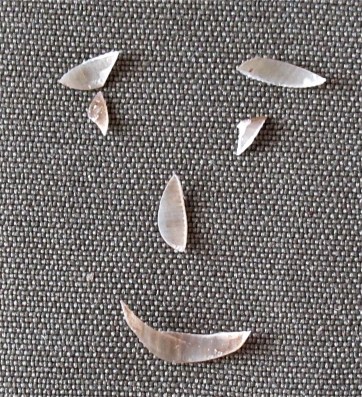
A birthday gift, hand made, by my five year old grand-daughter, in case I go gaga and forget who I am. I have no intention of doing so deliberately … but at my age … who knows? It can happen so quickly and so easily.

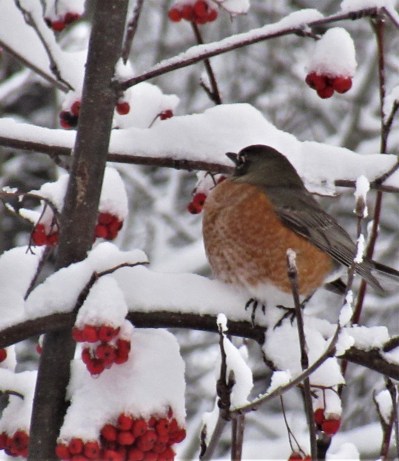
Robin Red Nest

That little red nest,
my heart,
hearth and home
to a galaxy of winged gods
who nest there,
year after year,
migratory spirits
blessing me with
hope renewed
in their spring nest’s
tangle of feather and twig.

Old now,
you thump to different rhythms
and schisms sprung from my body

Age winds you up like a watch spring
stretching my lifeline egg-shell thin.

When the wind of change
blows me away,
what will replace you
and your offer of sanctuary
to those you daily nourish?

So sad I will be
to abandon you,
your visions unfulfilled
as winter winds unravel you,
twig by twig,
until nothing remains
but the bare
white-boned cradle
in which I carried you,

so lovingly.

Sheep

IMG_1295 (2).JPG


Sheep

I wear the hide of the sheep
they slaughtered for me
twenty-three years ago
in Oaxaca, Mexico.

Like a sheep led to slaughter
I wait in the waiting room
along with other willing victims.
Heads down, silent, we clutch
open magazines, but do not
lift our heads or make eye contact.

In World War One, French troops
bleated like sheep as they marched
in tight columns towards Verdun.

They were disciplined and decimated,
one in ten shot for cowardice.
Is it cowardly to sit here, shivering,
glum faced, as we await
bad news and an uncertain fate?

I hate this uncertainty,
this inability to know what
is happening to my body.

Knowledge I can face, but
not doubt’s shadow dancing
like a will-o’-the wisp, and
leading who knows where,
keeping me awake as it did,
last night, stoking my fears
into this red-hot furnace
filled with burning coals
of fierce, fired-up doubt.

True bravery is to know fear,
to face it, and to face it down,
and to laugh in its face even
though your heart is breaking
and your gut tells you to run,
now, before it’s too late.


Words Overheard

IMG_0198

Words Overheard while Waiting

“Just one of those things,” an old woman whispers,
“my husband gone and me alone with all the grand
kids.” “Was it four years ago?” her friend says.

I remember his name, but I forget his face.”
“I’ll cope somehow, and the fourteen-year old,
with her belly 
starting to swell.” Silence wraps
a warning scarf around their flapping mouths.

Lives and worlds end and begin. Back turned
to their words, I listen to them talk. They chatter
about friends, family, acquaintances, giving
intimate details of childlessness from cancers
and sudden sicknesses, all laid out before me,
willy-nilly, to root and grow in my listening mind.

Never will I put a face to the girls with breast cancer,
the overweight women with diabetes, the old men
with their heart attacks, strokes, and damaged brains.

Fine dust dances in a sun ray.  Floating motes,
my lost loves, buried before their proper time.