Poinsettia

img0137_1


Poinsettia

     You can sense it, you can feel it, the alert spirit that guards this room. Walk in there at your peril. No, don’t. Just stand at the door and observe the poinsettia. You bought her a real one, a year ago, but she forgot to water it and when you visited, leaves and flowers, had crisped and dried, withered and perished. You even found cigarette butts stubbed into the pot’s powdery earth. You bought her another one, this time an ever-lasting, artificial flower, scarlet blossoms of silk with yellow-dotted plastic beads. Today a feather-duster breeze cleanses and enriches the leaves, replenishing their faded splendor. Motes rise, their dancing angels of dust hovering, suspended in a sunbeam that picks out their supple luxury. Their fiery tongues cry out to you from their green plastic pot in this empty room. The plant throbs with a startling vibrancy in this early morning light that enlivens piano keys, table top, and the polished, wooden chair arms you cleaned yesterday.  The poinsettias seem to wring butterfly hands as they gently flap in the breeze from the open window where thin lace curtains twitch, shaping the sunlight into light and shade. Her ash tray sits by the radiogram and awaits her return. That last cigarette, lipstick staining the filter, stubbed out and cold, waits for a companion. Later today, you will go to the hospital and visit her. You do not want to enter this room for its guardian spirit demands solitude and silence. You do not wish to create a disturbance, yet something moves you, and you walk over to her flower. A film of grey cigarette dust rises once more from the silk poinsettia, disintegrates, and dances before you. You bend your head to the silken surface and feel dry leaves brush their butterfly kiss across your cheek as you breathe in the ashen smell of stale tobacco.

Swansea Bay

IMG_0055


 Swansea Bay

            My childhood in Swansea: a mixture of seaside and sand. Walking over the bridge at the Slip to reach the dunes at high tide, the fish nets at low tide, the dog ever before me, running fancy-free, chasing yellow-beaked gulls that swoop low, mewl, and lead him on and on, past bundles of bathers’ clothes in summer, and the dog lifting his hind leg, visiting each pile, marking them, one by one, a squirt at a time, and us denying we know the dog, not ours, we say, then beg for the empty pop bottles, taking them back to the vendors, pocketing the cash back on the bottles until we have enough for an ice-cream, a grown-up wafer, not a childish cornet, or a go on the swing boats, and the dog comes with us, gets sea-sick, air-sick, hangs his head over the wooden sides drooling thick saliva as we wait for the bump and grind of the wooden bar that will slow us down in spite of us pulling on the ropes, harder and harder, until we swing higher and higher into the heavens, and the sands dwindle into nothing, and the dog throws up, and the man who handles the swing boats calls us bad names, as we run away, across the sands, ‘I’ll tell your dad,’ he shouts after us, but he never does, and the dog wanders loose across the sands to drink salt water and throw up again, and yes, I remember the starfish, their golden triangles winking wet in the sunlight as they hang from their netted firmaments, and we walk out along the concrete sewer pipes that pour the town’s waste, the town, and not the city, never for me a city, and how could it be a city when so many uncles and aunts lived on Town Hill and my father worked in Town Hall, and Swansea Town were the Swans, and they played soccer on the Vetch Field, the old hanging ground for the town jail, never the city jail, and the Mumbles Railway ran its electric trams out from Swansea Docks to the quarries by the Mumbles Pier, and we took that train, sat on the top deck, The Slip, Singleton Park, Blackpill, the Mayals, West Cross, Oystermouth, where last year, after a hundred years of absence, wild oysters finally returned, the pollution from Copperopolis, the largest copper mining and smelting town in the world, finally drained from Swansea Bay and the waters now clean enough to keep those oysters alive in their cultured oysters beds at Oystermouth, on Swansea Sands, below Oystermouth Castle with its ruined walls where we went once, but I remember nothing about it, nor Swansea Castle, in the old town centre by Castle Street, its ruined walls banned with their Keep Out signs and Danger, but the warnings themselves enough to invite us in, except we knew we’d be beaten if anything happened and we were caught and everyone knew everyone in Swansea Town then,  and somebody would surely bear the tale to our parents or grandparents,  but that’s enough of that, and its’ out of the tram and across the wooden planks of the Mumbles Pier, out to the end where the old men throw their lines into the sea and sit and wait and hope, pulling on cigarettes, Players Nay Cut for preference, as they watch swirling waters, taking sips, like old men everywhere, from secret bottles in brown paper bags that cause them to wipe their lips with the back of theirs hands and cough with pleasure, waiting for God knows what to come along and tickle the end of their line, and out there, at the end of the world, the lifeboat house with its slipway and the lifeboat, launched only in the roughest weather when the tall ships founder or the small boats are blown away, out into the sea, that twinkles now with its wrinkled old man’s face as it moves back and forth beneath wind and sun, and everyone is smiling in the summer warmth, though it’s cold where the wind blows off the sea, and it’s into the corners away from the wind, or into the pavilion where the arcade games wait for our money, and it’s ‘please, please, one more go’, as the small metal arms armed with their claws, clutch at toys and dolls, and furry animals, and the fighter planes come swooping down in their practice arcs and yes, I am a gunner again, fighting my Battle of Britain in a spinning turret with a mobile gun-sight, and time and my money run out and it’s ‘ please, please, one more go’, and my head is spinning, as the turret is spinning, and the world is spinning on its axis as memory’s spider spins its web of illusion, delusion, and time rolls backward on the station clock, as the tram rolls up and we track our tired way back home, past Oystermouth, West Cross, Blackpill with its little Roman Bridge, Singleton Park, the Recreation Ground, St. Helen’s, to the Slip, where we boarded in he first place, and home we go via the fish-and-chip shop in the road at the bottom of our street, and all adventures end as we open the front door, calling out ‘we’re home’, and the smell of warm salt and vinegar soaks through the newspaper binding the delicacies we have brought to placate the gods who wait in silence for our return.

Family Album

IMG_0061

Family Album

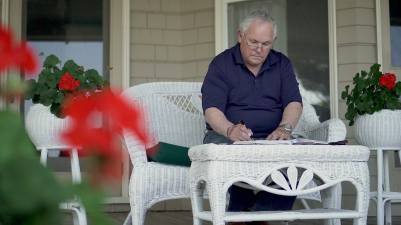
I recall him early in the day, carving his field into brown-tipped waves, with his two sheep dogs  running loose beside the enormous cart-horses that give him the horse-power, huge, born to labor and the plough, as they create their own steam in the morning mist, so cool, but stay clear of their hooves, huge hooves, iron shod hooves, hooves that will break a leg or stove in the dog’s ribs as if he were a rowing boat crushed against an Atlantic rock in the fast ebb-tide of the local bay, and watch out for them in the stable where they lean together, side by side,  like the oxen twins, Bright and Lion, out at King’s Landing, and like the oxen they munch their hay and stomp their feet and blow hot air out through their nostrils, almost in unison, their sweet-smelling breath sugaring the air, and the bright hay surrounding them, prickly and tickly, and leaving its speckled rash on arms and legs and necks …  and I thresh in dream-memories, flailing from harvesting remembered brightness beneath a star-filled sky, gathering memories, ordering them into vital bundles, and every package a re-creation of everything that I was, and am, and ever will be, and those who come after will find less of myself, yet more, much more, than this empty snowball of flesh, which sits here at the table, pen in hand, scribbling the words that begin and end it all, the tell-tale words that blindly bind and knot the ties that tie me in place, forever, between these lines, between these covers, and I jot down supplements that will supply fresh blood to the memories of my rapidly fading life … how long will I hold on to them, those memories, those moments of glory, those seconds that turn into minutes, then hours, and  the hours stringing themselves together to form days and weeks  as memories gnaw away the years, as a mouse gnaws away at a cheese, with jagged teeth until all that is left are sad photos of unnamed, unremembered people floating in the family photograph album like the one that my grandfather once gathered, and glancing from page to page I know no one even if the name is written there, his wonderful copperplate standing out beneath the photograph, ‘my sister Betty, aged two’, ‘my cousin David, aged ten months’, ‘my grandmother’s father’s sister’s cousin by marriage’, and there she is, this anonymous being, riding in the sidecar of a motorbike, and the photo all speckled and brown, like a hen’s egg, waiting in its egg-cup for the silver spoon that will bring it magically to life, a real life, not the false life of a forged memory that floods through my mind, so young, they are, so small, so pretty, all of them, so dashing, so handsome, even in their old-fashioned clothes, and now they are here, their spirits trapped in this photograph, floating ghosts in the half-life of a sepia snap, and will this be the afterlife for all of us, these snaps, taken in an instant, and then lasting, at first for hours, and then, forgotten and laid aside, then surfacing in another country, held by another hand and viewed by foreign eyes that do not know and will never understand … how can they ever understand?

Copperopolis

IMG_0192.JPG

Copperopolis

Mountains and craters on the moon look like this:
scarred, barren landscape, scabs of a dead industrial
revolution that created the largest copper smelting
plant in the world. Labourers strove for a living,
but met early with death. Rows of tiny, brick hutches
where families crowd, breeding like rabbits. Back
yards with greenhouses, cracked flagstones, allotments
where life-saving vegetables grow, and a chicken-coop
for the occasional egg worshipped after childbirth.
I remember it well. The garden walls adorned with
broken glass, set in concrete, so nobody could take
food from the garden, or steal the precious hens.
Washday on Monday, when furnace dust had settled
after the day of rest. Clothes hung out on Tuesday,
stained with the industrial waste that clogged bays,
fields, and farms. Summer and Fall, my father walked
shoeless to school, worked hard to buy himself winter
shoes. He sanctified footwear for the rest of his life.
He studied hungry, slept famished, and awoke to hunger
and cold. Born into poverty, we were rich in love.
My father broke out, scaled those walls, got odd jobs,
went to night school, educated himself, became someone.
He wanted the world for me. But my hands were too small
to grasp the enormity of what he had achieved and who he was.
He aimed for the stars, failed, but scraped his wings on the moon.
I cut my teeth on broken bottles and never wanted to leave.

Ice

IMG_0061.JPG


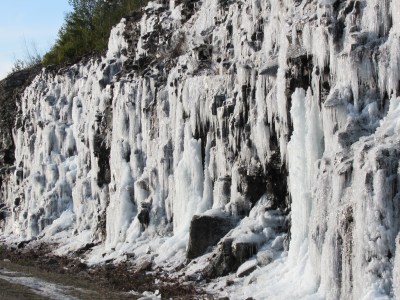
Ice, so many meanings: sliding on ice, as cold as ice, icing the puck, walking on thin ice, skating on thin ice, ice-blue eyes, an icy stare … ice is also nice, as in icing on the cake, ice lollipops, ice in the drinks, holding it on ice …

IMG_0057.JPG

Stalagmites and stalactites, like ants in the pants, the -mites go up and the -tites come down. Ice giants, ice demons,  silent ice, groaning ice, ice floes, the river iced up, the head pond so many different shades of grey and blue and white, fading in places into black, and these look like black-and-white photos, but they aren’t, there’s always a tinge of color, even when you least expect it.

IMG_0053.JPG

Silent ice, singing ice, groaning ice, and the steady drip-drip of melting ice and what a show, sunshine stealthy on ic, stepping across it on tip-toe, and the ice as radiant as a stained glass window … and oh, there was so much more I wrote and still want to write. Too late now. It was incredible! I added a third photo to my original post early this morning, and, when I updated the post, the whole blog post was deleted and I uploaded a blank page. How tragic. Never mind: the ice will have to speak for itself in its own silence, in its own creaking and groaning, in its spectacular ice palace of glimmer and glow.


IMG_0062.JPG


Xmas Birthdays

IMG_0013

Xmas Birthdays

They come in all shapes and sizes. The ones closest to Christmas, are they the best? Good question. Are the later ones any better? Who knows? In my case, January born, all I remember are the broken promises.

“I’m not buying you a Christmas present this year. I’m saving up to buy you something special for your birthday. What do you say to that?”

“Thank you, Auntie Gladys. You are so kind. I’ll look forward to my birthday.”

I next meet Auntie Gladys two weeks after my birthday. “Oh,” she says. “Was that your birthday just went by? I forgot all about it. Sorry.”

That’s just one example, but I remember many broken promises. I had to be older, sadder, and very much wiser before I realized that perhaps my Auntie Gladys didn’t have enough money to buy me one present, let alone two.

Then there was my mother’s mother’s birthday. It took place on December 23rd every year. During November, my mother never mentioned it. At the beginning of December, silence reigned. When my father’s office parties for Christmas drew closer, around the 15th or 16th of December, my mother’s mother’s birthday grew in stature and importance.

“Where’s your father?”

“I don’t know.”

“It’s late. He should be home. Did he tell you what he’d be doing tonight?”

“No.”

9 pm, 10 pm, 11 pm … then a key in the lock, I’d run to the door and heave at it with enthusiasm, and my father, pushing against a door I was now pulling open, would fall face first onto the mat, writhing and giggling.

Two or three nights like this and, on the evening of the 22nd or the morning of the 23rd, my mother would announce to me in a loud voice and in my father’s absence: “It’s my mother’s birthday. Pack your bag. We’re going to see her.”

“Aren’t you going to wait for dad?”

“No.”

“Aren’t we going to tell him where we’re going?”

“No.”

She’d call a taxi that would drive us to the train station or the bus station. She’d buy us tickets to her mother’s hometown, 40 miles down the road, and off we’d go.

I was often too tired to note the anxious tones of my grandparents’ questions. The mumbled conversations behind my back. The little errands that I was asked to run while the ‘grown-us’ discussed the nature of the current situational crisis.

“What do you want for Christmas?” my mother’s family would ask.

“I want my dad,” I’d reply.

Then, On Christmas Eve, still fatherless, but full of hope and the promises of presents and joy, I would go to bed and fall asleep, too tired to wait up and spy on dear old Santa.

Next morning, my father, hung over, rather smelly having slept in his shirt, unshaven, and looking sleepily sheepish, would appear and offer me whatever special gift he had been looking for during the past three days.

“Just for you,” my father would say, handing me his wrist watch (one year) or his fountain pen (another). “I went up to the North Pole specially to get it,” his smile lit up the room.

“Liar,” my mother would say and her family would roll their own sheep eyes and look at the ceiling or at their shoes.

“Well, maybe not the North Pole,” my father, now a little moth or butterfly, would wriggle on the pin my mother was sticking into him. “I went to London, actually.”

“Liar, liar.”

“But it was the office club’s official party trip. We saved a shilling a week to hire a coach and drive up to London to see Swansea playing Tottenham Hotspur.”

“Liar, liar, liar.”

“Well,” my mother’s father would mediate, “Swansea were playing Tottenham yesterday.”

“Told you so,” said my dad.

It was Christmas. Mistletoe would appear, kisses would be exchanged, peace would be bought, my watch wouldn’t work, and next time my father saw me he was wearing a brand new wrist watch that actually went tick-tock.

23 December … it’s my mother’s mother’s birthday again. I welcome the day with open arms, yet I always fear what might happen, and I always wait for the worst to come when the first of those Christmas birthday ghosts arrives to sit on the end of my bed and taunt me as I lie there, eyes wide open, haunted, sleepless remembering …


Twits, Tweets, and Twitter

img_0281


Twits, Tweets, and Twitter
aka
Bits and Bytes

After a very cold and snowy December, with low temperatures, way below average and dropping at times to -24C, with snow on the ground almost all month, and all this in the fall, aka autumn, since winter didn’t officially begin until 6 pm yesterday, December 21, it was a real shock and surprise to listen to the rain fall and high winds batter the windows all night as the overnight temperature rose to +14C and we received 40 mms of rain. As a result, we awoke to warnings of flash floods from melting snow and an influx of rain as winter has begun with a more of a whimper and a watery splash rather than with a flash freeze and a bang as your bottom hits the ice. I wonder what the deer think as they paddle through the puddles on their way to and fro from the water-logged feeders. I know what I’m thinking: ‘thank heavens we don’t have to shovel it’, but it will be a totally different story when it all freezes over, the road are like bottles, and we descend the hill in first gear with an ever-present fear of a much too welcoming ditch.

I have just read an interesting article on how, accustomed as we are to Twits and Tweets, many of us are no longer capable of unravelling a long interesting sentence that rambles on and on and refuses to make an immediate Twitter Point, usually underlined by the use of CAPITAL letters for KEY WORDS and all of this for a sound byte audience that is becoming less and less literate as social media proliferates and news is telescoped into tiny jam jars of meaning that are spread around with an illiterate spoon and many exclamation marks. There: you have just read a 96 word sentence. I wonder how you did with it? Did you persevere? Did you give up half way through?

In my former life, when I encouraged young people to read Miguel de Cervantes’s Don Quixote from cover to cover (and they did), I was surprised to discover the difficulties they had with his long sentences, some so long that they continued for a whole paragraph or a full page. I was also surprised to discover that many Spanish speaking people are now incapable of reading Don Quixote in the original Spanish as it is too complicated for them and too difficult in meaning and structure. I have cartoon versions of Cervantes’s master-piece, but have always found them to be simplistic and undignified. I have read the original, in Spanish, twenty-seven times, usually in the Martin de Riquer edition, and have never found the language to be a problem. Indeed, it is refreshing to enter the labyrinth of a long sentence and to struggle for a little while with the exact meaning of a complicated structure that offers so many multiple readings that no single meaning can easily be extricated, if at all, and so the mind wanders on and on in the Cervantine maze spun by a spider-web pen and a brilliant mind, now no longer accessible to the multitudes: a paradise now closed to so many, a garden open to a only a select few / Paraíso cerrado para muchos, jardines abiertos para pocos.

The spirit of Cervantes, the creator, appeared to me last night in a dream. ‘Rogelio,’ the master said. ‘Spare me and spare my creation.’ ‘Don Miguel,’ I mumbled sleepily, ‘here sit beside me on my bed. Welcome to my humble home.’ ‘I am not don Miguel,’ Cervantes replied. ‘I never was a don and I never will be one. I am humble Miguel, writer, poet, and son of a vagabond surgeon who, like father, like son, often entered the debtor’s prison’. ‘That same debtor’s prison where the history of your hero was engendered,’ I replied. ‘So they say, but I am not here for that. I have come for you to save me.’ ‘How, my Lord, how can I save you?’ ‘Rogelio, I am not a Lord, but a rumor has reached me in my after-life, that they have modernized my knight, given him a car, not a horse, set the Civil Guard against him, ridiculed him with condoms that he blows up like balloons, sent him to Salamanca, and Galicia, where he never went, continued his adventures, reborn, in a foreign language that I loathed …’ ‘That is bad, my Lord, I mean don Miguel, I mean Miguel …’ ‘Worse is to come.’ ‘Worse? How can it get worse?’ ‘Indeed, it arrived at my ears, you might say a little bird told me, that they are releasing my book in a series of 240 word tweets on a thing called Twitter that speaks like a Jesuit with false flickering words.’ ‘But you were brought up by the Jesuits …’ ‘That’s how I know of what I speak. This cannot be, the history of my knight reduced to episodes of 240 words, the whole 124 chapters, 1000 pus pages of finely scrawled ink, reduced to tweets on twitter by some poor twit … you must stop this nonsense. I and my knight depend upon you.’ ‘How can I stop it, don Miguel?’ ‘Charge the windmills of Twitter. Attack the falsehoods of Tweets. Stand up for the long, soulful sentence that will withstand the winds of time …’ ‘As your book has withstood, until now, the literary storm that is about to engulf it in an Alfred Hitchcock swarm of wild birds that is poised to twitter and tweet you to your doom?’

The ghost of Miguel de Cervantes vanished with a howl, only to be replaced by that of Pierre Menard, Borgian author of the renewed Quixotic page. ‘To tweet,” the ghost whispered in a thin, shrill voice, ‘or not to tweet, that is the question, and therein lies the Cervantine rub.’

Umbrella

IMG_0144

When it rains, everyone needs an umbrella.

IMG_0170


Umbrella

Black clouds overhead,
yet I walk dry
beneath a black umbrella.

Pitter-patter of falling rain:
my ears strain to catch
a nearby robin’s song.

I have mislaid his voice
and can no longer
translate his liquid trills

nor transform them
into a sunlight that will glisten
through dripping leaves.

Frogs in the summer pond
explode light bulbs in my brain.

A rainbow glistens in the pools
beneath my feet.

I want to see my garden reborn,
with words and my world renewed.

I thirst once more for life’s
sweet, fresh water.

Here below is the voice recording of my poem Umbrella.

Death’s Angel

039

Death’s Angel, also known as the Angel of Death, or the Black Angel, is probably the most important figure that we will meet, face to face, here, in the evening of our lives. He appeared at my bedside the other night, and spoke to me. Bright moon. The Angel stood there, haloed, blazing in a spotlight of glory.

“Everything you have, I own,” he announced, taking my hand. “Your house, your wife, your children, your cat, your dog, your car, your books, your flowers, your garden, they are all mine. And one day I will return and take you  from them.”

Cold, the moonlight. Frigid, that waking from my dreams. My hand burned with his fire, yet I shivered.

“When will you call for me?” I asked?

“Soon,” he said. “Very soon. And remember: it will always be much sooner than you think.”

“What can I do?”

“Nothing. I will lend you all these things that you think you own, for a  little while longer, but you must never forget that I am lending them to you. You do not possess them. They are only borrowed.”

“And then?”

“And then they will be mine As you will be mine.”

“There must be something I can do to …”

“There is always something. Embrace me now. Hold me. Breathe in my breath. Know me for who and what I am.”

I did as he asked and his warmth filled me. I looked into his eyes and no longer knew fear.

“There is no past,” he said. “No future. All that you own is this precious moment, the magic of the now, this breath you inhale, this air you release. That is what you own. Understand that, and let everything else go. Live in the moment, for the joy of the day. Seize each second, as you live it. Enjoy it, for that alone is yours. Knowledge, foreknowledge, and understanding: these are my greatest gift to you.”

Then, for a moment, I knew and  came to terms with the gifts he gave me.

“Sleep now,” he said. “But remember, I will be back.”

I fell asleep and dreamed of the man who met Death in Cairo. Death looked surprised to see him. “What are you doing here?” he asked. Fear filled the man. He ran, packed his bags, left Cairo with its vision of Death, and traveled as swiftly as he could to Baghdad. where he met again there with Death, who welcomed him.

“Why were you so surprised to see me in Cairo?” the man asked.

“Because we had a meeting here in Baghdad, tonight,” Death replied. “And I didn’t know if you’d show up.”

When I awoke, a joyous sun illuminated the world. What I had heard and seen rang out with splendor of church bells calling across green fields and leafy woods on a summer morning. I also knew that what the Angel told me, was not for me alone. It was for everyone I knew. A message, not of sorrow, but of joy, not of despair, but of hope.

This wine I sip, this bread I break, this ray of sunshine, this raindrop glistening, that nervous deer peering shyly from the woods, that chickadee feeding, those crows that bring the world back to life with their daily chorus, each is instant of life held, for the briefest of moments, and then released.

My greatest joy, gained from reading Don Miguel Ruiz, The Four Agreements,  is to pass his wisdom on to you who read my words, for this message will change your life, as Don Miguel Ruiz’s message has changed mine.

Carpe diem: seize the moment. Deus est in nobis: it is the world soul alive and living within us, unique to each of us. While it is with us, our joy will live forever, and, even though we perish, that joy once shared will never die.

img_0122


Cricket

IMG_0236


Cricket

            Street cricket. Played on ancient, cracked tarmac. The wicket: three sticks whitewashed on to the high stone wall of the cul-de-sac where my grandmother lived. It backed onto the wall that cut us off from the railway yards that led into High Street Station. That wall was the boundary, as were the neighbor’s front yards. Six and out if you hooked the cricket ball and hit it behind the wicket and over the railway wall. And you had to retrieve that ball. Lost ball stopped play and play stopped until you went across the bombed buildings at square leg, for a right-handed batsman, climbed the railway wall at its lowest spot, looked down at the rail yards forty feet below, and shouted until someone emerged from a workman’s hut to find the ball and threw it back.

            No worker … no ball … no game. Then you had to run out of your street, down the main road, up the hill for two streets, beg permission at the locked railyard iron gates: “Please, mister, can I get my ball?” Then run all the way back to where the waiting cricketers hung over your own street wall, by those bombed buildings, shouting and cheering. Search for the ball among shiny rails, shunting rails, rusty rails, dandelions, thistles, and nettles. Avoid the occasional shunting engine, with the driver leaning out of the cab and screaming warnings as the steam hisses out from the engine, brakes squeal, and wheels slowly clack on crossing tracks. Find the ball. Try unsuccessfully to throw it back over the wall. Try again. No good. Wall too high. Carry ball back to iron gates. Thank gateman politely so you can come back next time. Return ball to game. Game continues, rain or shine. Unless it’s real rain. The pissing down type. If so, run for nearest house and shelter by fire in kitchen.

            Other rules. Six and out over the railway wall. Two runs and fetch the ball yourself if you hit it into the bomb buildings at square leg, next to that railway wall. No fielders there. Too many loose bricks and too much scattered debris. Fragile walls still wobble or crumble warning you of cellars that might open up. Low walls that might collapse. You score four and out if you hit the ball into neighbor’s front yard. Some neighbors are nice and don’t mind. But watch out for the old witch whose fenced off garden is guarded by a gate.  If you hit her window, even with a tennis ball, she’ll be out quick as a flash, and steal your ball or stick a knitting needle in it, old spoil-sport. Otherwise, it’s single batsmen. You run your runs and walk back from singles. One hand one bounce, and tip and run once you’ve scored twenty. Much more difficult to stay in and everyone gets a chance to bat. One hand off the wall if you don’t clear it for a six and out. Dog stops play if your fox terrier gets the ball and runs around in circles, chasing its tail, with the ball getting soggy in his mouth. Damned dog. Damn difficult to catch. Lost ball stops match if dog runs back into the house and gives the ball you stole in secret back to your gran who was saving it for tennis.

            Cricket, in those days, was civilization. It had survived the bombing raids that missed the railway yards and bombed the bomb buildings. It had survived the machine-gun fire from the fighter-bombers that had strafed the street leaving bullet-holes, still unrepaired, in walls and shattering now-mended windows. It gave us a sense of rule and law, for the rules were strict and nobody broke them and stealing runs, touch and go, in tip and run was a skill and never a crime.

            Cricket: a small, bright window on the back-street where I lived, a window filled with happiness and light, even when it’s over the wall and six and out, or the dog runs away with the tennis ball, or the ball vanishes down a mysterious rabbit-hole in the bomb buildings and slides down to someone’s ruined cellar.

            Game’s over. The real Test Match is on, England versus Australia, though we live in Wales. The one primitive, tiny black-and-white tv screen in the street lights up with flickering figures and we sit around on the floor watching real men playing the real game on a sunny field in another world, the world, the world of black and white that many of us, us backstreet children from a ruined neighborhood, will never be allowed to know or see.