What makes a good neighbor?

Daily writing prompt
What makes a good neighbor?

What makes a good neighbor?

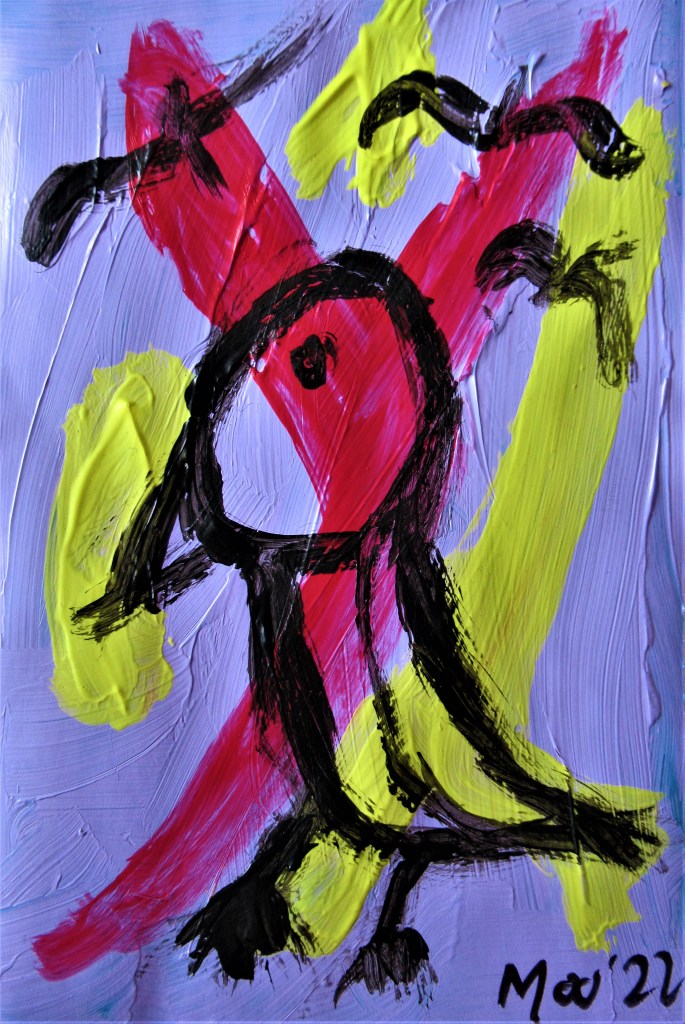
I am not sure what makes a good neighbor, but I am learning what makes a bad one. This cheeky little fellow has taken a liking to my garage. When he finds the garage doors closed, he gnaws and nibbles at the outside woodwork and tries to chew his way in. Not a nice neighbor.

Earlier this summer, I had problems with my windshield wiper liquid. The right side squirted well, and cleaned the passenger side nicely. The left side slowed down to a dribble, and then stopped. The rear window wiper, on the other hand worked well. No problems at all. One day, both the windshield wipers stopped squirting. Press the button – no liquid at all. I checked the reservoir – half full – and topped it up. Then I tried a pin in the tiny nozzles beneath the windshield. Sometimes they clog up with dust and block the flow. Nothing.

I decided to take my problem to a professional. He raised the hood, looked inside, took one sniff and said “Mice. I can smell the piss.” He told me to leave the car with him, at his garage, and that he’d call me later. He called and drove to the house to pick me up. On the way, I asked him “Well?” “Wait and see,” he told me. “You won’t believe this.”

When we got to his garage he showed me the evidence – a huge red squirrel nest, complete with a winter supply of food, nestled beneath the hood of my car, between the hood lining and the actual engine. The squirrel had chewed his way through the plastic tubing that linked the washer fluid to the wipers. He was shaking with laughter. I was devastated. Cost to me to repair my naughty neighbor’s activities? Well, I won’t tell you – because I don’t want to shock you – but it was quite a bit of money, not enough to be covered by my insurance.

When I got back home, the naughty neighbor was sitting on the roof rafters, inside the garage, chittering at me, chattering away, and scolding me. “I’ll get you, you little varmint,” I said. But he only chattered more loudly. I saw him coming in early one morning and he fled into the woodpile along the wall. “I’ll get you,” I said, beating at the spots behind the logs where I could hear him.

I went online and sought some solutions. One suggestion was to use cinnamon. So, I dug out a packet of cinnamon powder, spread it on the garage floor, across the doorway, and waited. Within minutes, a chattering began in the trees, outside the garage. An angry, nervous chittering and chattering. Then the garden went silent.

I keep renewing the cinnamon. The garage smells lovely. I haven’t seen or heard a squirrel for days. Has this actually worked, I wonder? Watch this page if you want to know the answer to that question.
What was the hardest personal goal you’ve set for yourself?

Daily writing prompt
What was the hardest personal goal you’ve set for yourself?

What was the hardest personal goal you’ve set for yourself?

Oscar Wilde once wrote – “Be yourself. Everyone else is taken.” The Ancient Greeks had a similar phrase – “Know thyself.” Well, to know myself, and then to be myself, are two of the hardest personal goals I have ever undertaken.

Why? Because I was educated in a system that wanted young people, boys and girls, to look alike, and think alike, and dress alike. That’s why school uniforms were designed. That’s why we marched into chapel at the same time every day, and sang the same hymns every day, and said the same prayers every day. Rote learning was a key element in this. I remember, age four, chorusing my two times table: “1 x 2 is 2. 2 x 2 is 4. 3 x 2 is 6. 4 x 2 is 8.” Very little room for thinking. Nobody would ever answer the question “Why is 2 x 2 4?” “What makes this so important?” “Why do we have to learn it?” The stock answer: “Little boys should be seen and not heard.” Or “Shut up and just do it.” Or “Why can’t you be like other children?”

This type of early school life, with anyone who stepped out of line, getting punished, often physically, was not conducive to lateral thinking or freedom of thought. Anyone who moved aside from the prescribed patterns was moved back into them, very quickly. The WWII convoy theory – the class moves at the speed of the slowest ship. No stragglers permitted. This later morphed into the slogan “No child left behind.”

But they were. And they were left outside, looking in. And if they didn’t buckle down, they suffered the shame of expulsion from the herd or the flock or the convoy. And once expelled, and branded as stupid or a trouble-maker, it was very difficult to get back in.

At what stage did I become myself? I am not really sure. First there was the phase of knowing I didn’t belong. Then there was the phase of realizing that my mind didn’t react like the minds of other people. Why not? Well, for one reason, on IQ tests, even the simple ones, I often saw multiple answers. But there was only ever one correct answer. Say what the Inquisitor wanted to hear and it was “Good dog, have a biscuit”. Give an answer other than the one he (or she) was looking for, and it was “Bad dog.” Then your nose was rubbed in the dirt.

Here’s a simple example from this year’s Farmer’s Almanac. Which is the odd one out? Tennis, pickle ball, badminton, squash… ” Oh dear, I think there were five, but I have forgotten the fifth. The correct answer – pickle ball, – it’s the only one played with a paddle not a racquet. GOOD DOG. How about badminton – it’s the only one played with a shuttlecock. BAD DOG. Or squash – its the only one played without a net between the players. BAD DOG. The Farmer’s Almanac was fun, but being judged sub-standard at age 11, and again at age 15, for coming up with creative, and perfectly logical alternative answers, was not much fun.

So – the most difficult personal goals – 1. to know yourself. 2. to grow into yourself. 3. to appreciate the wonderful, unique nature of who and what you truly are. 4. to then rejoice in the creativity of your own individuality.

What’s something you would attempt if you were guaranteed not to fail.

Daily writing prompt
What’s something you would attempt if you were guaranteed not to fail.

What’s something you would attempt if you were guaranteed not to fail.

Well, I remember when Arthur Lydiard was coaching Peter Snell, this was back in the early sixties. He ‘allegedly’ said – and I write from a decaying memory – that anyone could be trained to run a mile in under four minutes, using his methods. Next day, it is rumored that a fifty year old man, overweight, smoking a cigar, turned up at training and asked Lydiard to fulfill his promise.

Well, maybe it was Percy Cerruti training Herb Elliott. Same time frame. Different memories. Great coaches and great athletes. So here am I, at eighty (well, nearly), and I have always wanted to run a mile in under four minutes. My fastest time was 4:07 – downhill, with a following wind, during the Bristol University Rag Run (1966 – Bristol – Stamford Bridge – Hastings – Bristol). So, I am guaranteed not to fail, eh? I also hope you will guarantee that I do not fall, eh? And can I use both my canes, or only one, eh?

Okay, so this is how we’ll do it. You load me on the back of a flat bed truck. It has one of those walkways on it, with handrails on both sides, like they use in the rehabilitation centers. I won’t need my canes then. The truck drives a measured mile, in 3 minutes and 59 seconds exactly, and I “run aka speed walk aka speed lurch” all the way, hanging on to the handrails, thus covering a measured mile, in under four minutes, and achieving a life-time goal, attempting which I am guaranteed not to fail.

What was that line from Man of La Mancha aka DQ (and I don’t mean Dairy Queen) – “to dream the impossible dream.” And now, tired from my exertions, I will take a brief siesta and see if, in my impossible dreams, I can bring that time down a little bit lower. New world record, anyone?

What aspects of your cultural heritage are you most proud of or interested in?

Daily writing prompt
What aspects of your cultural heritage are you most proud of or interested in?

What aspects of your cultural heritage are you most proud of or interested in?

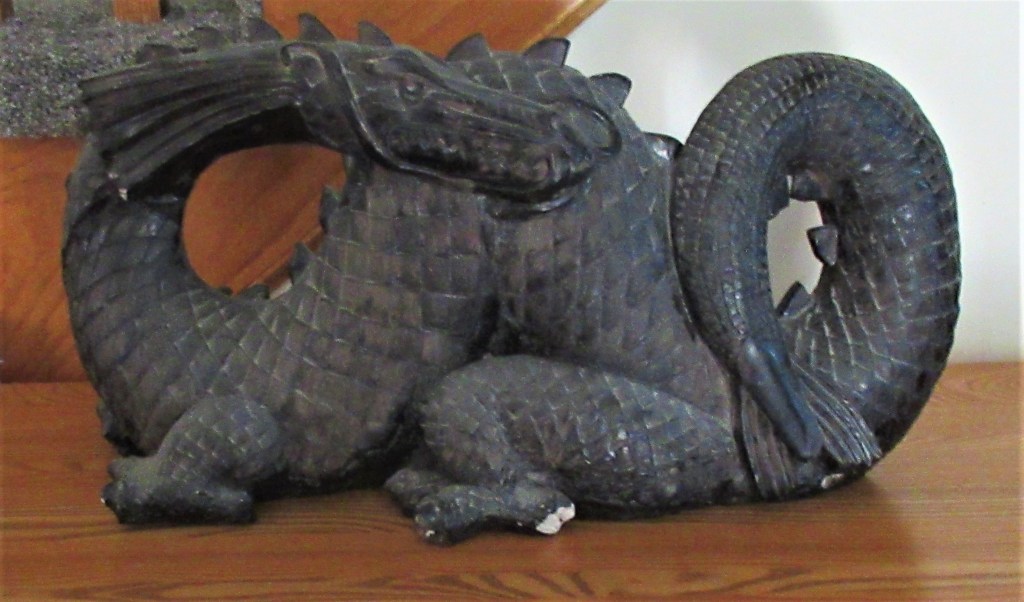
This dragon is not a dragon, well, it’s not a Welsh Dragon anyway. So, let us change the question – What aspects of your cultural heritage are you least proud of? Now that changes the perspective totally. I guess that I am least proud of the fact that, although born in Wales, I was never allowed to speak Welsh as a child. I speak with an English accent because I was sent to school in England so I wouldn’t even speak English like a person born in Wales. I am not proud of that aspect of my cultural heritage.

But I am proud of one little thing that stems from that Welsh cultural heritage – learning how to speak Welsh in my old age. It’s not easy to do that, here in Canada, but the internet carries many blessings, one of which is the learning of ‘foreign’ languages. Strange that Welsh should be considered a foreign language for somebody born in Wales. Something else not to be proud of, I suppose. Here’s my story.

Here I sit, an old man now, in front of my computer, learning at last my mother tongue, Welsh. I have discovered the beauty of simple words, not so much their meaning as their sound, the way they flow, the poetry of remembered rhythms: Cwmrhydyceirw, the Valley of the Leaping Stag, though legend has it that ceirw was really cwrw, and cwrw is beer, and its real name was the Valley of the Brown Stream Frothing like Beer.

Words have their own music, even if you cannot pronounce them properly: Mae hi’n bwrw glaw nawr yn Abertawe / it’s raining now in Swansea. Mae’r tywydd yn waeth heddiw / the weather’s worse today. Bydd hi’n dwym ddydd Llun / it will be warm on Monday. Place names also have their own magic: Llantrisant, Llandaff, Dinas Powis, Gelligaer, Abertawe, Cas Newydd, Pen-y-bont … Meaning changes when you switch from one language to another:  gwyraig ty / a housewife, gwr ty / a househusband, a concept of equality that has ruled Welsh lives since long before Julius Caesar invaded Albion, coming from Gaul with his legions in 55 BC.

The photographer asks me to smile. He wants me to say ‘cheese’ so I say it in French [fromage], then Spanish [queso], then Italian [formaggio]. “No, no, no,” he shakes his head. “I want to catch the real you. Try again.” So I say it in Welsh [caws]. He checks the memory card in his camera and looks puzzled.

“Your facial expression changes each time you speak a different language,” he tells me. “Please, won’t you just say ‘cheese’ in English? I want the real you.”

French, Spanish, Italian, then Welsh: all different and he wants the real me. Each language carves a new a map into my face.  Am I a clown, then, a comedian, a chameleon to wear so many masks and to slip so easily from one to another? And who am I, this stranded immigrant, marooned on a foreign shore that has finally become my home? Who or what is the real me?

“Cheese!” I say in desperation. “Got it,” he grins. “At last, I have captured the real you.”

What’s your #1 priority tomorrow?

Daily writing prompt
What’s your #1 priority tomorrow?

What’s your #1 priority tomorrow?

I have a couple of priorities, of course. I am not sure which is #1. Maybe I’ll ask the readers to tell me which one my top priority should be.

I guess my first priority is to wake up. That is very important at my age. A couple of my friends went to bed and never woke up. So, I guess an important priority, perhaps #1, is to actually wake up.

Having woken up, my next priority is to roll over, sit up, pull back the blankets, and actually attempt to get out of bed. This isn’t always easy. My back sometimes stiffens up overnight. Or else my hips don’t want to function. Then there’s the gammy knee I hurt playing rugby all those years ago. Then there’s the quality of the light – do I need a light on? If I do, I must reach for it without cramping up. Early morning cramp is not a good thing and really complicates the next step.

If I am in the high bed, then lowering legs, touching the floor with toes, and using arms to push up the rest of the way is relatively easy. But if I am in the low bed, I must turn sideways towards my bad knee, place my feet at an angle, and do a one handed pushup in order to find the right balance to get to my feet. That means watching out for slippery carpets. I do not want to fall. Sometimes I call on the aid of my faithful teddy bear and, by half throttling him, I manage to get that extra leverage.

Oh dear, I forgot another priority – condition of ageing bladder. All of the above activities are dependent upon the state of the union. If that is a problem, then I must call for assistance – and I hate doing that.

Next priority – the trip to the bathroom. I wish I hadn’t said ‘trip’, because sometimes I do. The effects of that can be a sudden grasp at something solid, a stubbed toe, a twisted something or other, or, worst of all, another fall. We certainly don’t want that to happen, especially if we are suffering from what Max Boyce [remember him?] once called ‘twisted legs and tails’.

Other priorities follow when we have reached the bathroom. I won’t go into those. Nor will I mention the perils of the return journey, the difficulties of getting dressed, the embarrassment when I fail with the patented sock-pull machine and have to wiggle my socks off, one by one, and then put them on again.

So, here I am, fully dressed, standing at the top of the stairs… one hand on the hand-rail, one hand on my trusty walking-stick, and down I go, hopefully one step at a time.

So: What’s my #1 priority tomorrow? You tell me. Which would you choose? And before you answer, just remember Dylan Thomas’s words ‘for whether we last the night or no, is surely only touch and go’. Touch and go, tip and run – I remember them well. And luckily I remember waking up this morning. I would hate to face the alternative – not waking up.

How often do you walk or run?

Daily writing prompt
How often do you walk or run?

How often do you walk or run?

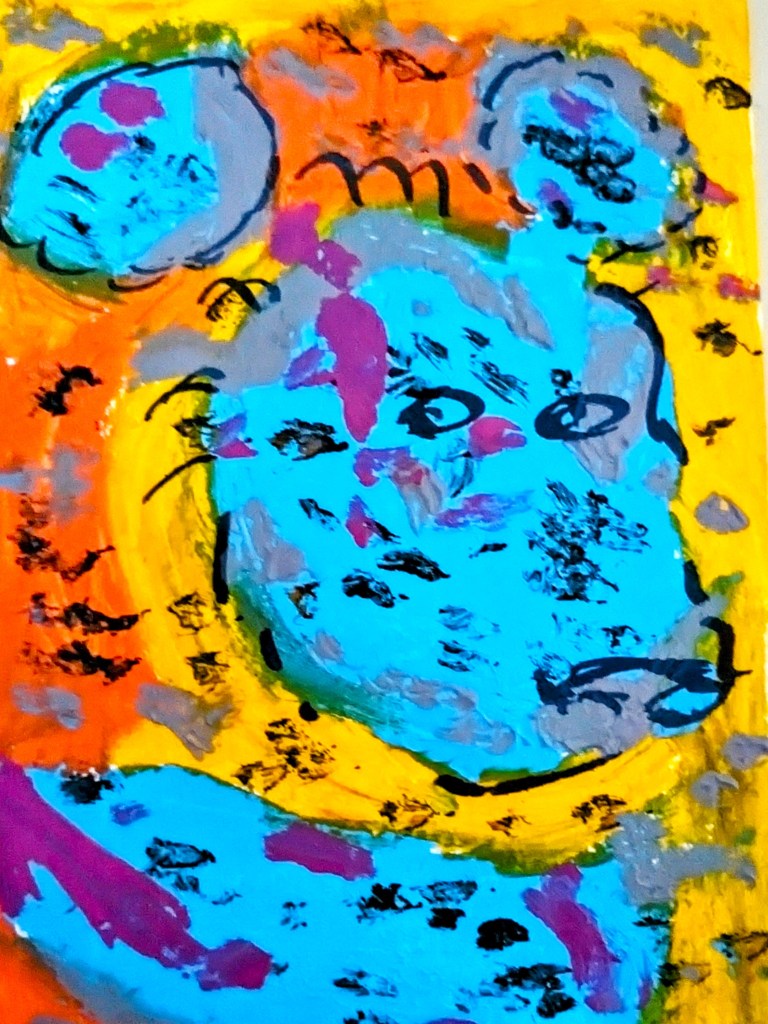
The painting above tells the whole story (thank you, Moo). On the left, the deer head (or is it a sheep’s head? Moo didn’t tell me) represents my hip and knee joints. On the right, the wolf’s head (or is it a bear’s head, look at those teeth) represents the osteo-arthritis that is sinking its own teeth into me and removing much of my movement. So, how often do I walk or run?

Walking, every day. I use two sticks in the outside world, or one stick and the furniture at home. The sticks are fun. I use them like chop-sticks to pick up fallen objects. And I have discovered that if I drop one of the sticks, I can stand on its rubber tip and raise the handle enough either to grasp it, or to secure it with the other stick. Wow!

Some days it is a positive circus act. Yesterday, the very thoughtful grocery store had placed the 1% milk on the top shelf, where I couldn’t reach it. I held on to my trusty shopping cart with one hand, reversed my stick and, with the handle, pulled a carton of milk to the edge of the shelf. I let go of the cart, flicked the stick, and sent the milk carton tumbling into my other hand. It took some concentration and I was surprised by the applause that came from several watchers, none of whom offered to help me. I do the same with out of reach beer cans, too. Bags of sugar on the lower shelf are much more difficult. my chopsticks aren’t designed to pick up a 3lb bulky bag of sugar.

As for running, well, my nose runs, my eyes water and run, my tummy rumbles and runs, and I move at a slowly increasing four-legged plod to the bath room, hoping against hope to get there in time. I usually do. My premonitions have become very accurate over the last few months. However, do nose, eyes, and tummy runs count? If not, well then, running rarely happens nowadays.

With the walking, though, in spite of everything, I aim for 2000 steps a day. I usually make it to 3,000, especially when I go shopping, and occasionally make it to 4,000. And that, ladies and gentlemen, is the best I can do.

What’s your all-time favorite album?

Daily writing prompt
What’s your all-time favorite album?

What’s your all-time favorite album?

My stamp album, of course. I am old enough to remember the joy of receiving letters from friends and pen-pals in far-away places with strange sounding names and oh, the joy of those colored squares of paper stuck in the top, right hand corner of the envelopes.

Then there were stamp dates, and stamp parties, where we gathered and swapped stamps, each trying to improve his or her collection. Not that I remember many young ladies saving stamps in those days, it seemed to be a boys only sport, like Conkers. I guess that was because those games were all dependent on one-up-man-ship. And yes, we have boycotts (some of them even open the batting for England), but I have never heard of girlcotts or one-up-woman-ship. I guess there are flaws in the language, all languages. Ceilings as well, probably – the height of linguistic folly.

Then there were stamp competitions when we could take our collections, more or less specialist, and show them off to our friends, admirers, and bitter rivals, hoping to gain fame and fortune. I for one never did. But I learned so much about the world, the rapidly changing world, as maps changed, borders changed, kings and queens changed, countries changed their names, divided their borders and morphed into something else.

Don’t forget those FDCs – First Day Covers – with their postal histories, not to mention the little booklets with the tear-out pages telling us all about Peter Rabbit, Flopsy Bunny, Mrs. Tiggy Winkle. and a dozen other tales. And then there were the special stamps – the penny blacks with their multiple Maltese Crosses, the Queen Victoria 9d green (mint), the Sea Horses, the French Painting Series, the Spanish Civil War stamps, issued on, and by, both sides of the conflict, and you mustn’t forget my own face as it appears on a Mexican do-it-yourself stamp, photo taken in Oaxaca, and the stamp sent back to Fredericton, NB, Canada, just for the fun of it.

My own stamp collection now sits in a cupboard, all covered in dust. I guess it is worthless. Nobody sends or receives letters anymore. Nobody collects stamps. Used stamps are now so much rarer. And those pristine new issues, so bright and cheerful, have never felt the lick of a lover’s tongue. And those envelopes have never borne the imprint of our secret messages – SWALK – PHTR – ICWTSY – and so many other little joys of a life that is long past, but never forgotten.

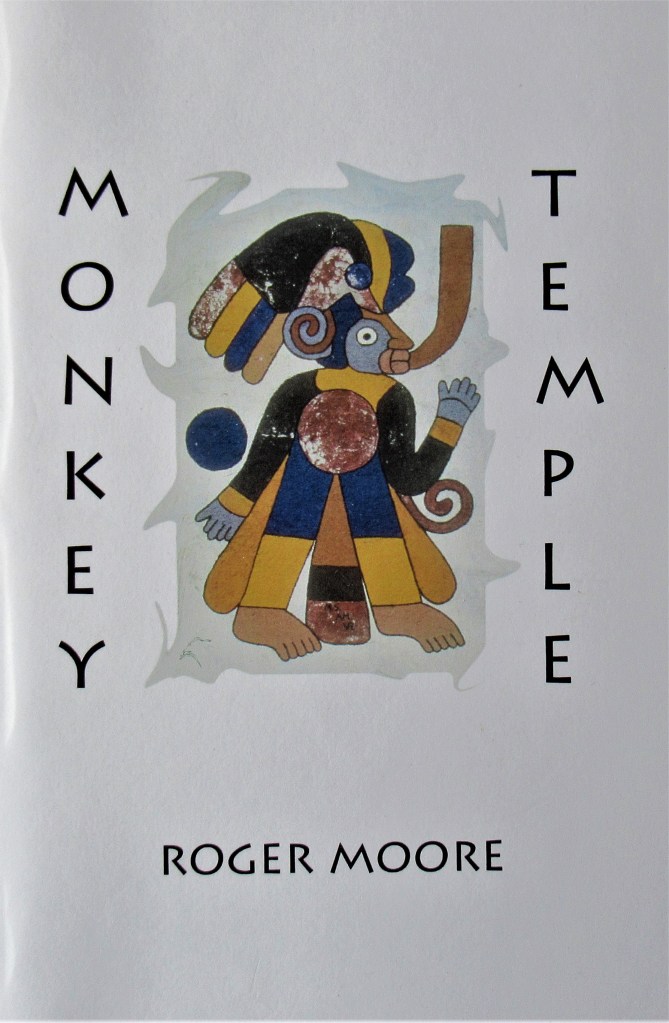
Monkey’s Clockwork Universe

Monkey’s Clockwork Universe

Some days, monkey winds himself up
like a clockwork mouse.
Other days he rolls over and over
with a key in his back like a clockwork cat.

Monkey is growing old and forgetful.
He forgets where he has hidden the key,
pats his pockets, and slows right down
before he eventually finds it
and winds himself up again.

One day, monkey leaves the key
between his shoulder blades
in the middle of his back.

All day long, the temple monkeys
play with the key, turning it round and round,
and winding monkey’s clockwork,
tighter and tighter, until suddenly
the mainspring breaks

and monkey slumps at the table
no energy, no strength,
no stars, no planets, no moon at night,
the sun broken fatally down,
the clockwork of his universe sapped,
and snapped.

Comment: a big thank you to all who have reminded that yes, I did write this book, and yes, it is one of my favorites. Oh those naughty little monkeys. For those of you who have read the book or heard me reading poems from Monkey Temple, all is well in Monkey Land and the King of Harlem, with a wooden spoon, still gouges out the crocodile’s eyeballs and beats the monkeys on their backsides, with a wooden spoon. I thank my old friend, Federico Garcia Lorca, for that wonderful vision from his own book, Poet in New York.

Do you see yourself as a leader?

Daily writing prompt
Do you see yourself as a leader?

Do you see yourself as a leader?

First, I want a definition of leadership. Here’s one – Leadership is the ability of an individual to influence and guide followers or members of an organization, society, or team. Leadership often is an attribute tied to a person’s title, seniority or ranking in a hierarchy.

Let us begin with the last sentence. Leadership often is an attribute tied to a person’s title, seniority or ranking in a hierarchy. I am without a title, I have no seniority and, furthermore, I do not belong in any hierarchy. So, having nothing onto which to hitch my leadership, I am clearly not a leader. In addition, I can say, in all honesty, that I have no followers. Where on earth would they follow me? I have no wish to go anywhere, let alone to lead other people into the wilderness that so often surrounds us.

So, what am I, if I am not a leader under that definition. Am I a follower? I doubt it. I cannot remember following anyone in thought, word, or deed. A maverick, then? Possibly. All in all, I have always felt that, rather than ‘belonging’, I was outside the hierarchical cultures in which I found myself and was merely an outsider, looking in through the window and watching and observing others as they boldly led, or meekly followed.

So being neither a leader nor a follower, what might I be? Well, I am a creative person. I see the world in a very different light. I also encourage others to see things differently and to present different points of view while embracing their own authenticity. I see myself as an innovator. I see myself as a problem solver. But my solutions have all too often come up against the red taped inhibitions that bind those hierarchical cultures into their unbending, iron strangleholds that limit or deny fresh visions of truth and beauty.

I always remember a story my grandfather told me about one of his experiences during WWI. “See that pile of sand over there?” “Yes, Sarge.” “Well, move it over here.” “Yes, Sarge.” “Right. Well done. Now move it back again.” “Yes, Sarge.”

Ah yes, leadership. And in those days to disobey a direct order was to volunteer yourself for ‘forty days in prison’ or ‘back to bread and water’ or, even worse, to qualify you for a blindfold and a firing squad.

Why do you blog?

Daily writing prompt
Why do you blog?

Why do you blog?

I blog to make the world a brighter, healthier, happier place. I also blog to keep my readers aware of the existence of poetry, beauty, truth, love, and creativity. If I didn’t blog, those readers might never see the painting that I have attached above, painted by my friend Moo, of course – wrth gwrs. In fact, if I didn’t blog, you might never know that Moo is my friend, as is Sparkle. And if I didn’t blog you would never read the interview I had with Sparkle.

Who are you?
I am Sparkle.

What are you?
I am a fairy.

What???
I am a fairy. More important, I am your house fairy.

What on earth is a house fairy?
Well, when your granddaughter built a little fairy house and placed it where I could find it, and when I saw it and entered it, at her invitation, I became your house fairy.

Why did you choose that particular house?
Because it was built by a kind, loving young lady who didn’t want you to be alone. She built the house and outside the door she wrote Welcome Fairies. So I knew I’d be welcome. More important, perhaps, she built another fairy house in her own home and my friend Crystal lives there. Crystal told me there was a fairy home vacant, and she also told me where to find it. And she said that her human had told her that you might need a fairy friend to keep you company and stop you from being lonely. So, here I am.

I didn’t know that fairies could talk to humans.
They can’t, normally. But you are not a normal human being.

What do you mean by that?
You are a poet and a dreamer. Both poets and dreamers already have one foot in fairy land. Sometimes we call it la-la-land. It is a very special place and the people who can go into it are, in many ways, almost fairies. These are the ones we can talk to.

How do you know I am part-fairy?
Because I can see your wings.

But I don’t have any wings, not that I can see.
Quite. “Ah would some power the giftie gie us to see ourselves as the fairies see us.” That poem was written by a friend of mine, a long time ago. He was a poet and I could talk to him too. When the time comes for poets and dreamers to cross the rainbow bridge, their wings become visible and their spirits can fly again. That’s when they are able to return to fairy land.
Socrates was another friend of mine. He too was a poet and a dreamer. He dreamed that humans originally had one wing in the middle of their backs. When they found their soul-mates, they could join together and then, with two joined wings, they could fly to the heights of the spirit world.

Socrates? What did he know? He thought the world was flat.
He didn’t know everything, of course. But he was right about some people having a single wing and needing a partner to fly. You are very special – you have found one of those. Socrates just didn’t know that other people could have two wings, although they couldn’t be seen here, on earth, in this dream world where they dreamed they were wingless people.

So, am I dreaming that I am a wingless person?
Of course you are. But you will wake up to the truth one day. My task here, as your house fairy, in this house built for me by that cute young lady, is to help you realize your dreams. I will help you release the poet within and I will help you to reach out and make the world a brighter, kinder, more loving space, for other people who lack what you have – the power to dream and to create.

Oh dear. This is a little bit too much for me, Sparkle. I’ll have to sit down and think about it. It’s too much to take in all at once.
I know. But I have been chosen and I have been given the power to choose you. I have done so and I am here. And remember – I will never leave you nor forsake you.

Thank you so much, Sparkle. And thank Crystal and that little girl for me.
I will. Now I must go. It’s September and I have some fall sparkling to do. But don’t worry – I am here. I’ll be back. We’ll talk again.