Poems for the End of Time

Poems for the End of Time

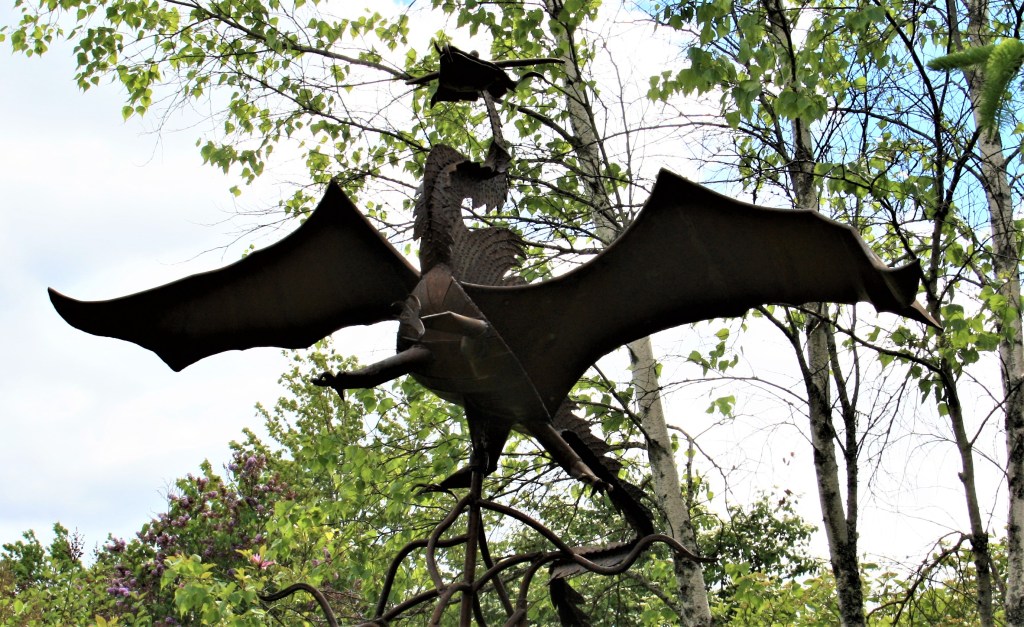
Here it is, and it is up and waiting for you! I already have my first copy. More on the way. The same artist who did the cover for People of the Mist did this one as well. He’s such a nice person – doesn’t charge me a penny.

Introduction

         Poems for the End of Time is composed of two linked collections, Meditations on Messiaen and Lamentations for Holy Week. They both have separate introductions in the body of the text.

         My graduate work at the University of Toronto (MA, 1967, and PhD, 1975) included studies on Golden Age / Early Modern Spanish Poetry (16th -17th Centuries). It enabled me to read and enjoy both the Renaissance and the Baroque poetry of Spain. My own interests lay within nature poetry, as expressed by the Spanish Mystics (St. John of the Cross and St. Teresa of Avila), the Neo-Platonic Poets (in particular, Fray Luis de León), and the Metaphysical poets (Luis de Góngora and Francisco de Quevedo). Echoes of their writings and thoughts are frequent within these two poetic sequences.

         I will write further on both sequences later in the book. Briefly, both sets of poems were written while listening to the music of Olivier Messiaen. Three of his compositions, Quatuor pour la fin du temps / Quartet for the End of Time, Éclairs sur l’au-delà / Lightning over the Beyond, and Petites esquisses d’oiseaux / Little Sketches of Birds, influenced me enormously. I listened to them every day while I was writing and revising these poems.

         These poems are not for the simple-minded. They form a contrasting tapestry of point and counter-point, filled with allusions, word-plays, internal rhymes, repetitions, and alliterations. They have a music all of their own.

Do not expect simplistic escapism. If you are serious in your efforts to read, listen to the magic of Messiaen as you turn the pages, much as I did while I was writing.


People of the Mist

People of the Mist

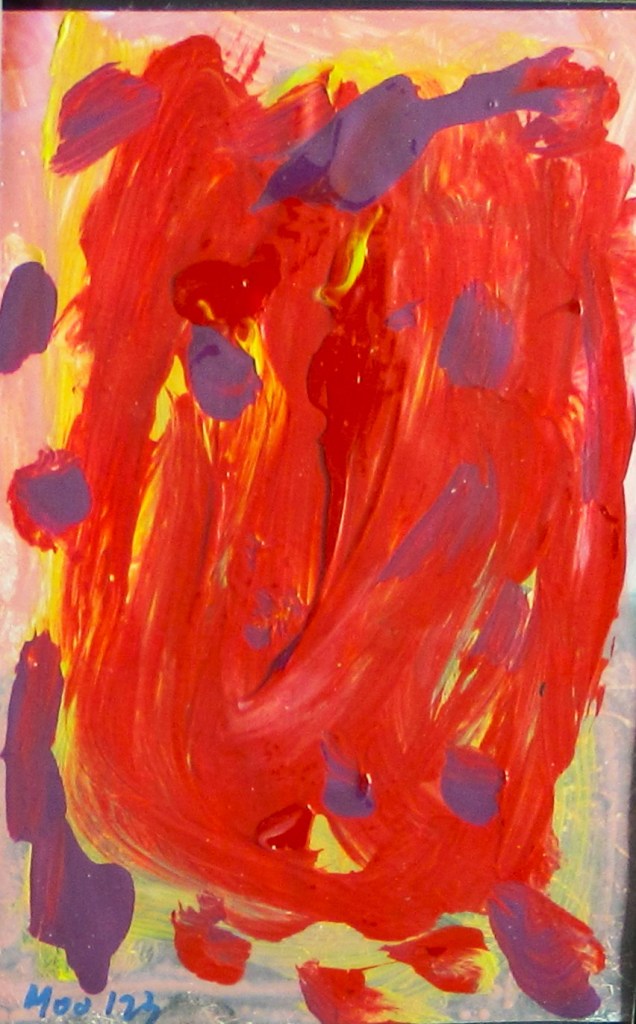
Cover Painting

Pale Face by Moo

Back Cover Synopsis

            What if you walked into a church in a foreign country and came face-to-face your dead father? In People of the Mist, Nemo, orphaned as a baby after the suicide of his unmarried mother, seems called to visit Oaxaca, Mexico, the city of the returning dead. Upon arrival, he visits the town’s main cathedral only to encounter his adoptive father, a man he had buried years earlier. Confused by what he thinks is a realistic vision, he seeks the help of a local witch doctor to explain his mirage. The shaman seems to hold the answer and presents him with a broken medallion. He challenges Nemo to find the other half, promising the quest and discovery will reveal the real purpose of the young man being called to Oaxaca.

Brief Biography

Roger Moore, is an award-winning teacher, researcher, poet, and short-story writer. His accolades include being a CBC short story finalist, as well as winning multiple awards from the WFNB. Born in Swansea, Wales, he now lives in Island View, NB, Canada. Between 1995 and 2001, he taught multiple classes in Oaxaca, Mexico, where he first encountered the Mixtec codices.

Click here to view on Amazon

World Within

World Within
Anam Cara, p. 15

I have rediscovered a world within me,
a secret world where I walked as a child,
a world that nobody else has ever seen.

When I was young, that world absorbed me.
In it, I went round and round on roundabouts,
and travelled high and low on swings and
swing boats, with their rough ropes.

Alas, as always, there were rainy days.
Then the sun would wear his hat but I knew
he would come out later and join my play.

Sometimes, in the summer, thunderstorms
would roll around and rattle our corrugated roof.
Dai Jones’ cows would rush through the field,
seeking shelter from the wind and rain.

In those days, every cloud had a silver lining.
I weathered tough times, waiting patiently
for the sun to return and light up the world.

One day, I don’t remember when, someone,
I don’t know who, slammed the door and shut
me out from that world. I spent my whole life
searching for it. At last, I have found it again.

Click here for Roger’s reading.

Sound of Silence

Sound of Silence
Cara Anam, p. xv

Where do the deer go
when they leave their tracks
behind them and pass out of our sight?

We lose them when, like school children,
they scale the snow bank,
stop at the roadside, and look left,
right, and left again, then walk sedately,
one by one, across the road, and blend
into the dark woods opposite our house.

Too many friends have walked a similar way,
crossed the great divide, and lost themselves
in the unknown that lies there, out of sight.

All too soon, we will be faced by that same
decision, whether or not to cross.
Our paths already tell us where we’ll go,
but the hands of our body clocks don’t yet
point to how, or when.

Click here to listen to Roger’s reading.

Heart and Hearth

Heart and Hearth

I remember the old coal fires in Swansea.
My grandmother’s house in the Hafod,
with a hearth separate from the kitchen.
The hearth held a huge cast iron fire-place
where cookpots and kettles hung
 or nestled into smouldering coals.

My grandfather’s house in Brynmill,
had a magic fireplace. Banked in before bed,
it gave warmth and light all through the night.
Warmth, comfort, the family gathered,
the wisdom of the old shared with the young,
traditional tales and songs passed down.

Everybody was welcome and each one
had a special spot reserved around the fire.

Comment:

I have been revising this poem, shortening it, and changing it very gently. Funny how the old days come back and dance before us, like the flames dance on the coals, as the old ghosts walk now upon the logs.

Click here for Roger’s reading.

Questions

Questions
Four Elements, p. 137

After my mother died,
I lit a candle in every church,
a real bees’ wax candle,
not those tiny electric lights
that glow for a little while,
when you insert money
in the insatiable slot.

Like the minuterie
on each landing of a Parisian
staircase, it gives enough light for
a quick prayer, or a very short
moment or two of silence.

Where does the light go
when the electricity switches off?
Where does the flame go
when the candle is snuffed?
Where did my mother go
when her light went out?

One day, but not too soon, I hope,
I will have to follow her and find
the answers to all of my questions.

Click here for Roger’s reading.

Hearth and Soul

Hearth and Soul

The kitchen – hearth and soul of the house. Here we gather, sit around the table and talk our hearts out. But here, in Island View, we have a kitchen, a gathering, but no hearth, and hence no real heart around which the household revolves.

In spite of that, old habits die hard. I remember the old coal fires in Swansea. My grandmother’s house in the Hafod, with a kitchen in a separate room from the stove, with a huge cast iron fire-place where cookpots and kettles could be hung or nestled into the coals. My grandfather’s house in Brynmill, where kitchen and hearth were separated, but the fire-place still held its magic. Banked in at night, those fires gave warmth and light ar hyd a nos and then they we resurrected the next morning.

We have a woodstove here in Island View, but we rarely light it as the fine particles make breathing difficult after a while. We keep it for emergencies. This winter we lit it when the temperatures dropped to -40C, with the wind chill factor, and heat pump and electric furnace needed assistance.

Warmth, comfort, the family gathered, the wisdom of the old folks shared with the young, and the passing on of traditional melodies. All the old memories and thoughts, the wishes and desires, the hiraeth too, handed down, from old to young. Everybody was welcome and everyone had his or her special place.

Such memories tug at the heart strings – hearth strings. Anyone who shares them with me will know what I mean.

Swansea

Swansea

To be Welsh in Swansea is to know each stop on the Mumbles Railway: the Slip, Singleton, Blackpill, the Mayals, West Cross, Oystermouth, the Mumbles Pier. It’s to remember that the single lines turn double by Green’s ice-cream stall, down by the Recreation Ground, where the trams fall silent, like dinosaurs, and wait, without grunting, for one to pass the other. It’s to read the family names on the War Memorial on the Prom. It’s to visit Frank Brangwyn in the Patti Pavilion and the Brangwyn Hall. It’s to talk to the old men playing bowls in Victoria Park. It’s to know that starfish stretch like a mysterious constellation, at low tide, when the fishnets  glow with gold and silver, and the banana boats bob in the bay, waiting to enter harbour, and the young boys dive from the concrete pipes without worrying about pollution.  But when the tide turns, the Mumbles Railway has been sold to a Texan, the brown and yellow busses no longer run to Pyle Corner, Bishopston, Pennard, Rhossili, sweet names of sand and tide, where my father’s ghost still fishes for salmon bass, casting its lines at the waves as they walk wet footprints up the beach to break down the sand-castle walls I built to last forever at Brandy Cove and by the Slip on Swansea sands.

Click here to listen to Roger’s reading on Anchor.

On Being Welsh – Dydd Dewi Sant

On Being Welsh – Dydd Dewi Sant

On being Welsh
in a land ruled by the English

 I am the all-seeing eyes at the tip of Worm’s Head.
I am the teeth of the rocks at Rhossili.

I am the blackness in Pwll Ddu pool
when the sea-swells suck the stranger
in and out, sanding his bones.

Song pulled taut from a dark Welsh lung,
I am the memories of Silure and beast
mingled in a Gower Cave.

Tamer of aurox, hunter of deer, caretaker of coracle,
fisher of salmon on the Abertawe tide,
I am the weaver of rhinoceros wool.

I am the minority, persecuted for my faith,
for my language, for my sex,
for the coal-dark of my thoughts.

I am the bard whose harp, strung like a bow,
will sing your death with music of arrows
from the wet Welsh woods.

I am the barb that sticks in your throat
from the dark worded ambush of my song.

On Being Welsh – short stories – Amazon and Cyberwit

On Being Welsh – poems included in my selected poems (1979-2009)

Cherry always listened to my readings

Click here to here Roger’s reading on Anchor
– On Being Welsh