Rage, Rage 59

Rage, Rage
59

You cannot hide
when the black angel comes
and knocks on your door.

“Wait a minute,” you say,
“While I change my clothes
and comb my hair.”

But he is there before you,
in the clothes closet,
pulling your arm.
You move to the bathroom
to brush your teeth.

Now,” says the angel.

Your eyes mist over.
You know you are there,
but you can no longer see
your reflection in the mirror.

Comment:

The last poem in the series and Rage, Rage against the dying of the light is over and done. Many of you will recognize the title from Dylan Thomas’s poem Do not go gentle into that dark night. I guess the theme itself has become part of the Welsh culture. And now we have exported it to New Brunswick, Canada, and perhaps beyond.

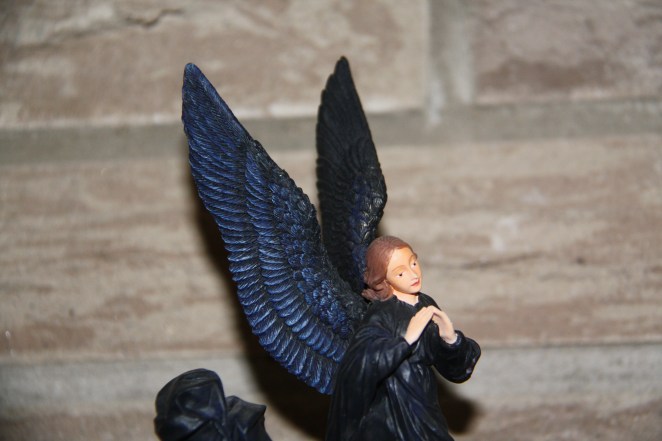
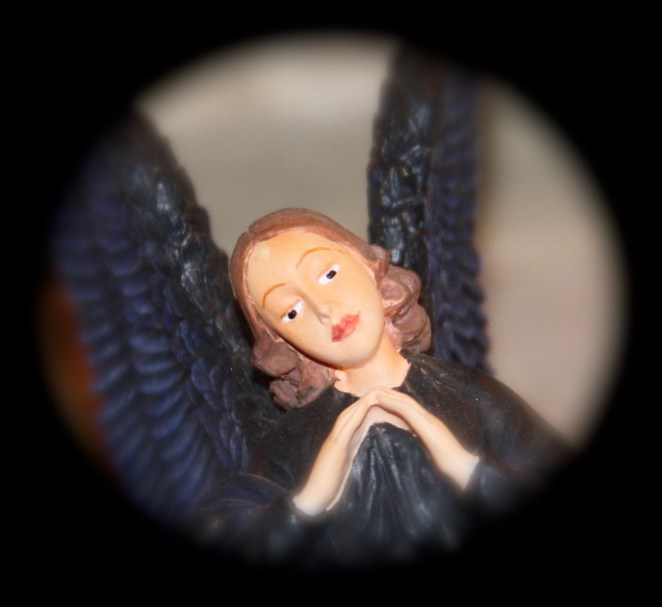
I bought The Black Angel, pictured above, in Avila, Spain. It is a plaster cast of one of the Angels in Roger Van der Leyden’s paintings, if I remember correctly. Here is the angel’s face in close up.

She or he brings a promise of rest and peace, a freedom from earthbound woes and sorrows. She stands on the shelf above the fireplace insert in our sitting room and brings blessings to the house. I look at her every time I light the fire. And she smiles down and blesses me. I think of her as a lady, but her peace and beauty outweigh any formal signs of sex.

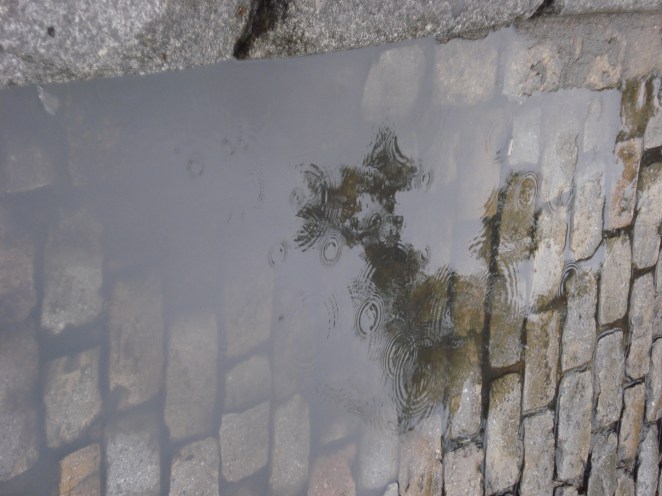
As for that reflection in the mirror, well, I don’t have one of me. But her is a photo to reflect upon:

Raining in Avila and puddles in the street. Now you see me, now you don’t. But I am there, holding the camera, and looking down at the water where —- rain has stopped play. The bails have been removed. Old Father Time has gone back to the Pavilion at Lord’s, and the cricket game is over for the day.

Rage, Rage 55

Rage, Rage
55

I walk on thin ice
at the frayed edge
of my life.

I search for the key
that will re-wind me,
but I fail to find it.

Who will winch up
the pendulums on
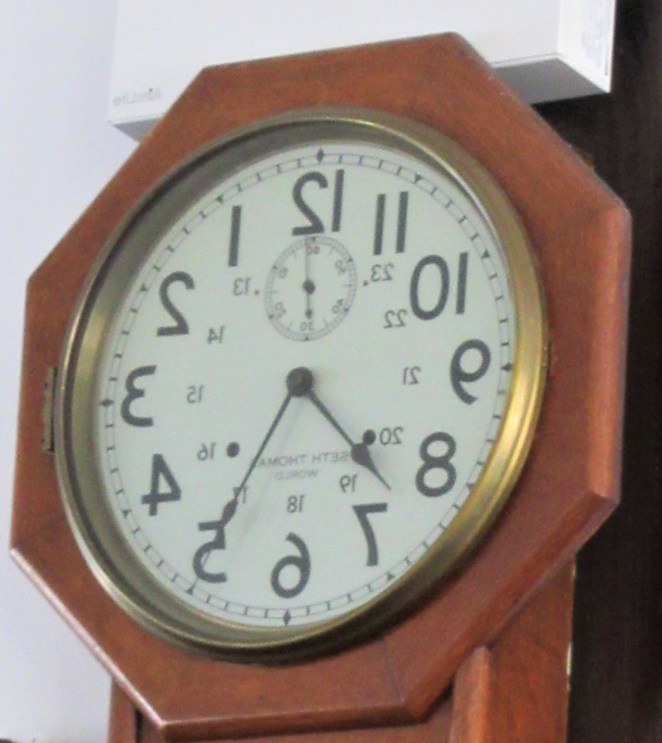
my grandfather clock,
resetting it
in spring and fall?

Who will watch
time’s sharp black arrows
as they point the path
of moon change
and the fleeting hours?

Each hour wounds,
or so they say.
Who will tend me
when that last one kills?

Comment:

Omnia vulnerant, ultima necat. / Each one wounds, the last one kills. That’s how the Romans thought about the collection of hours that make up a day. An interesting way of putting it. In lapidarian fashion. Four words that are worth a whole book of philosophical thought.

What is this thing called time? Good question, and one which is being asked more and more. Clearly time does not flow evenly within the human mind, though it is remarkably regular on the clocks we have invented to mark time for us. And remember, there are many types of time – seasonal time – spring time, summer time, autumn time, winter time. Strange that autumn – or fall as I have now learned to call it – is the only one that doesn’t have the word time attached to it.

And what about time changes – spring forward, fall back – when we change our clocks in order to make the most of daylight hours. A tedious process for many of us. I see some provinces are rejecting those changes and sticking to the same time, all the year round, from season to season. Personally, I would prefer life without those time changes, as would many of my friends.

Celestial time also known as sidereal time – the time as showed by the planets as they seem to march around the earth in the terra-centric universe. Rephrased, the positions of the planets as the earth turns slowly round the sun in the helio-centric universe.

Then there is the personal time of individual experience. An hour watching football or rugby on the tv set passes much more quickly than an hour passed in the doctor’s waiting room or the dentist’s chair. Of course, an hour watching a five day cricket test can also be a slow process, unless England are playing Australia in the Ashes. As one friend of mine commented, a long time ago, “I thought those English cricketers were unfit. But I’ve never seen anyone go out to bat and come back to the pavilion so quickly. They must be super-fit.” Alas, their cricketing problem, as usual, was centered on the three cants – can’t bowl, can’t bat, can’t catch.

En fuga irrevocable huye la hora.
La que el mejor cálculo cuenta
en lectura y lección nos mejora.

Irrevocable is the hour’s flight.
The one that counts the most
in learning or reading improves us.

Francisco de Quevedo
(1580-1645)

And remember – the hours fly by and your time is limited – spend it wisely and enjoy each and every day to the full limits of your abilities.

Rage, Rage 49 & 50

Rage, Rage
49

Waiting in the doctor’s office,
I hear two old women
gossiping about friends
and family, the intimate
details all laid out
to fester in my fertile mind.

Never will I be able
to put faces to those girls
with breast cancer,
to the women
weighed down
with diabetes,
to the old men
with their strokes
and heart attacks.

50

“Just one of those things,”
one of them whispers,
“my husband gone
leaving me alone
with the grandkids.”

“Is it four years? Or five?
I remember his name,
but I forget his face.”

“And our fourteen-year-old,
her belly already swelling …”

“You’ll cope somehow …”

Silence wraps its scarf
around their flapping mouths.
I think of all my own lost loves,
buried before their proper time.

Lives and worlds end …
new ones begin.

Comments:

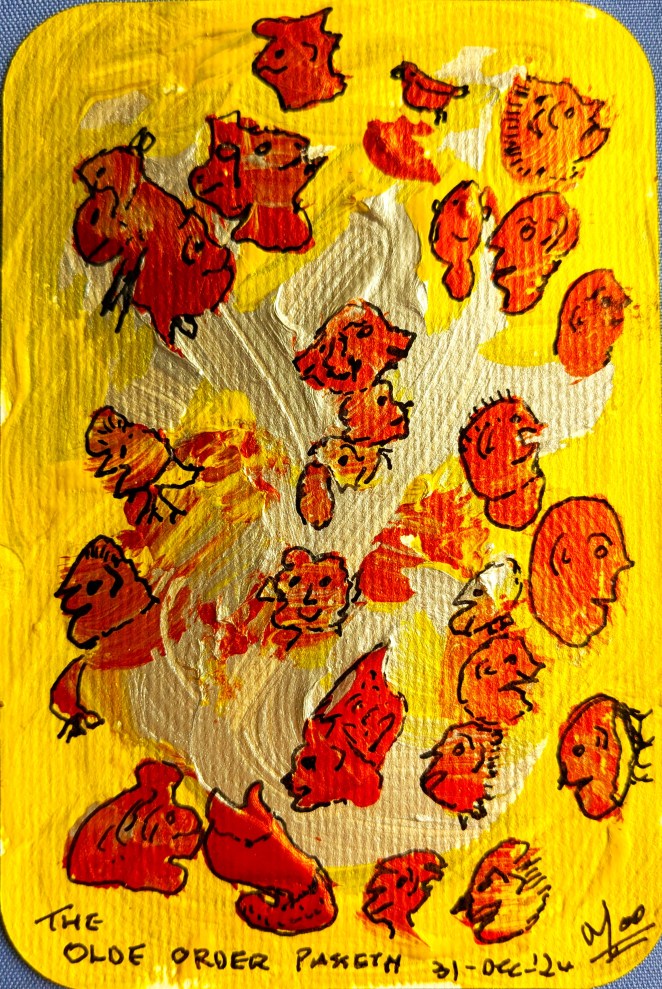
Lives and worlds end … new ones begin. How true it is. The olde order changeth lest one good custom should corrupt the world. Tennyson, I believe, from Idylls of the King. King Arthur and his knights of the round table. Each of them rode into that dark night, some quickly, some more slowly, but all were lost, as so many things are lost.

That was also the heading of the departures section of my old school magazine. At the end of the year, pupils left the school, many graduating, never to return, and the old order did indeed change. The fourth formers moved up to the fifth, the fifth to Transitus, then to the sixth, and finally, the scholarship students arrived in Ichabod. Ichabod, Ichabod, the glory that used to be. I look at old school photos and I wonder what became of so many of my childhood friends. The website for my old school also contains an obituary section. I consult it, every so often, to see who else has passed on. Fewer names than I would expect. Not everybody keeps in touch. I am in contact with few old boys from school, but nobody from my undergraduate university. Ships passing in the night, all of us. Our conversations lost in the mists of time.

The old order changes and the language changes with it too. When I was visiting Spain regularly, my first stop, every year, would be the local barber’s shop. I just sat there and listened while I waited to get my haircut, Spanish style. I listened for the new buzz words, the names that now floated around, the latest jokes, the ideas that were currently in fashion. Change is everywhere.

Covid changed the Spanish language, gave it a whole new set of terms that I do not recognize. The same thing happens with English, French, any language. French is not the same in Moncton, New Brunswick, as it is in Shediac. And the Acadian Peninsula is slightly different. As is the language of Grand Falls, and that of Little Falls, aka Edmundston, the capital of the Republic of Madawaska. The language also changes close to the border of Quebec where Joual can be heard. Same thing along the St. Lawrence river and out from Matane to Mont Albert and beyond. Small changes, sea changes, enormous varieties of change.

I often wonder what is happening in Wales both to Welsh itself and to the English language as it is spoken there. English in Swansea / Abertawe was never the English of Llanelli, nor was it the English of the Rhondda Valleys. How could it be? And Cardiff / Caer Dydd was always different. As was Newport / Cas Newydd. I haven’t been back there since 1988. 38 years of change – friends gone, family gone, nobody left. I couldn’t bear to stay in a hotel in a town where once I lived in my family’s homes.

How does one end a rant like this? In silence, of course. For silence wraps its silken around flapping mouths. I think of all my own lost friends and loves, buried so long ago, many before their proper time.
Rage, Rage 48


Rage, Rage
48

I carry memories
and scars like a snail
wears its shell
and I leave behind me
a slither of silver words.

I’m a broken gramophone,
needle stuck in a groove
repeating the same verses
again and again.
This repetition
drives me insane.

My thoughts just drift.
My body is a ship
in the doldrums,
no wind to fill its sails.

I pick up my paint brush
and paint myself –
lonely and blue
as idle as a long-lost lamb,
alone with nothing to do.

Comment:

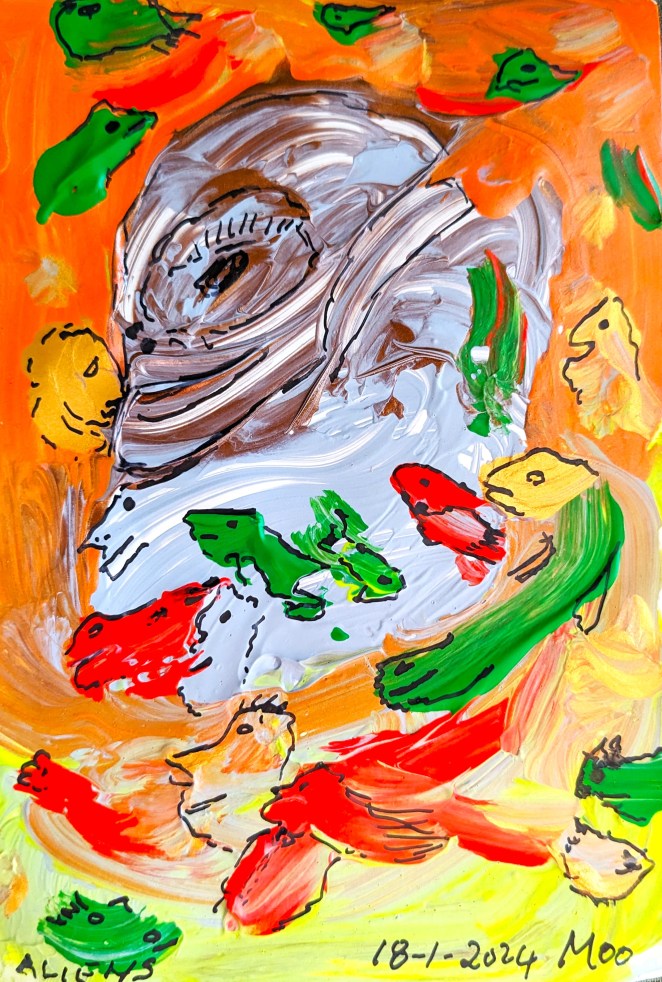
The alienation of an alien nation – and I wonder if they really are here, those aliens. So many strange happenings in my life. The silver slither of words drags me through so many lost moments in time. Fray Luis de León, I spoke to him last night, asked me the question – “Es más que un breve punto / este bajo y torpe suelo comparado / con aquel gran transunto / do vive mejorado / todo lo que es, lo que será, lo que ha pasado?”

It’s a lovely verse in Spanish, but not so easy to translate into English. Let’s try – first, word for word – “Is it more than a small dot this low and stupid soil compared with that great sky world where now lives improved all that is, all that will be, and all that has happened?”

A comment on the translation – first, the length of the sentence and the way in which it is complicated by inversions and ideas expressed in words which have little direct translation. Then there is the expression – 1. a small dot – un breve punto – a short moment in time. 2. low and stupid soil – este bajo y torpe suelo – clumsy earth below. That clarifies, a little the meaning. 3. that great sky world – aquel gran transunto – that great sky above. 4. where – do [short for donde – to keep the syllable count] – where – 5. lives improved – vive mejorado – lives a better life.

Here goes: “Is this clumsy earth below more than a short moment in time compared with that great sky above where now lives a better life all that is, all that will be, and all that has happened?” Not great, but we can live with it.

As Miguel de Cervantes said “To read in translation is to look at the reverse side of a tapestry.” So, to imagine the real side of the tapestry we need to count our syllables – they don’t match. We need to measure the length of our lines. They don’t match. We need to sharpen our metaphors and images – they don’t really match. And, last but not least, we have to imagine the Platonic, Terra-Centric universe in which the sun moves around the earth and the earth is the centre of all life.

I should add the cultural association of words. In every language, each word has an “associative field of cultural meanings”. Those “associative fields” differ from language to language. So, even getting the verbal meaning correct means that you do not necessarily get the cultural associations right. In fact, it’s almost impossible to do so. It’s a fascinating world and one which I have explored in various academic articles.

I would like to take cultural meanings a step further. In Don Quixote, II, 11 – I quote from J. M. Cohen’s Penguin translation of 1950 (rpt 1961) – Don Quixote says to Sancho ” … if I remember rightly, you said that she [Dulcinea] had eyes like pearls, and eyes like pearls suit a sea-bream better than a lady” (p. 533). I will leave aside, for now, Sancho’s comic mixing of the Petrarchan metaphors and concentrate on the single word sea-bream. To compare someone’s eyes to those of a sea-bream is comical in English. However, the word has several associative fields in Spanish which are worthy of deeper study. Secondary meanings of a sea-bream – besugo – include 1. a mild insult, as in no seas besugo / don’t be a fool / an idiot / stupid. 2. Diálogo de besugos – two people talking and neither one listening to the other. 3. Ojos de besugo – a blank or dazed expression. Quite simply, the translation besugo > sea-bream functions at the literal level, but by no means at the cultural level of the associative fields.

Alas, some days I’m a broken gramophone, needle stuck in a groove, repeating the same things again and again. Maybe one day I will get them right. And maybe I won’t. Better minds than mine have struggled with translating Spanish (poetry) into English (poetry), and most have failed. Many, dismally. We won’t mention names. Sometimes the best translations are not translations at all, but poems that recreate the original in the target language. I am quite happy with my translation of the meaning of Fray Luis de León’s poem – but how sad would be any attempt to transfer the verse form from Spanish to English? Five lines of seven and eleven syllables each – wow! Go for it. But remember – fools rush in where angels fear to tread.

Never mind. Maybe tonight I’ll have another little chat with Fray Luis de León and Miguel de Cervantes, Quevedo too, if I am lucky. Maybe their English will be good enough to give me a few hints. I’ll let you know later if any one of them does come to visit.

Rage, Rage 46 & 47

Rage, Rage
46

I fall into
the easy sleep of age,
pencil in hand,
notebook on knee.

Shadows grow longer
as my life grows shorter,
day by day.

Now it is so easy
to stumble and fall,
each slip a steep slope
down which I slide.

So difficult now
to regain my feet.

I must crawl to where
I can haul myself
first to my knees
and then stubbornly
upward until I can stand.

47

Now-a-nights
I fall easily into dreams
that all too often
turn into nightmares
that rise up from my past
to trouble my sleep.

I struggle and scream
and pinch myself awake,
only to find my cheeks
wet with tears and my mind
all shook up by the return
of childhood fears.

Freud and Jung pull the strings
of those mental puppets
that dance in my head.
Some nights I am afraid
of falling asleep,
for fear that I may never
get up from my bed.

Comments:

Coming to the end of Rage, Rage. When it is finished, that will also be the end of the trilogy – Clepsydra [Chronotopos I], Carved in Stone [Chronotopos II], and Rage, Rage [Chronotopos III]. I have written a fourth volume in the sequence – No Dominion [Chronotopos IV], but this is very personal and I will probably only share it with family members and the closest of friends. However, do not despair – I have an alternate fourth volume, but that is still being written. It us under wraps, and may well replace No Dominion. We shall see.

As for Freud and Jung, they certainly do pull the strings of those mental puppets that dance in my head. Moo says that there should be no strings attached. He has therefore drawn all those strange puppet like figures, a but like an Aunt Sally, really, but has left out the strings and the man / men / woman / women / people pulling them. An Aunt Sally or a lovely bunch of coconuts? Time well tell, if you ask it nicely.

Maybe one of my teddies will tell. They all romp around the room with me at night and I am sure they suspect much of what goes on in my dreams. Here they are – a selection of friendly teddy bears. Be very careful, though, they can be very grumpy, especially if you wake them up suddenly. They don’t like things that go BUMP in the night.

Monet at Giverny

Monet at Giverny

1

his lily pond
a mirror shattering
shards of clouds
flames beneath the lilies
fractured fish

2
the executioner stripes evening
a cross the sacrificed horizon
in blood we were born
in earth will we rest
our flesh turned to bread
empurpled this imperial wine
streaming with day’s death
these troubled waters

3
green footprints the lily pads
a halo
this drowned man’s beard
liquescent
like the gods
he dreamed
he walked dry over water
flowering goldfish
this thin line of cloud

4
maples flash ruby thoughts
ripples flowing outwards
as heavy as a stone at Stonehenge
this altar tumbling downwards
through a liquid sky

5
wisteria and his curly blue locks
Narcissus clad in an abyss of lilies
imperial his reflection and perilous
slowly he slides to sleep
merging into his imaged dream
a vaulted cathedral
his earthbound ribs
the blood space immaculate

6
night and day and sun and clouds
leapfrogging over water
something survives
sepia tints
dreaming on and on
exotic this sudden movement
Carassius auratus flowering

7
Clos Normand and the Grande Allée
closed to him now
folded his flowers
their petals tight at his nightfall
dark their colours
mourning for his mornings of light
fled far from him now

8
can we soften this sunstroke of brightness
le roi soleil threatening to blind us?
rey de oros
the sun glow braiding itself
an aureate palette
a susurration of leaves

9
the lady of the lake
holding out her hand
handing him an apple
l’offrande du coeur
a scarlet heart of flame
monochromatic this island
brown earth in a crimson lake
the world reborn in tulips

10
especially
when the dying sun
molten fire spreading
a limpid light
sky brimming over into pond
trapped in low clouds
a slash of colour here
and there a tree
a fountain of gold
the sun an apple
blushing
on a setting branch

11
silver-white the money plant
moonlight between fine-tuned fingers
its rattle of seeds
blunt the moon’s bite
raked from water
gaunt its gesture
matched ripples
face to face
with the moon

12
upside down these clouds
bright in their winter boats
the night wind blows
clean dry bones
across the sky

13
fish aloft like birds
skimming wet sunshine
spring’s first swallow
rising from the depths
to snatch a golden note
quivering in the air

14
thunder raises dark ripples
lightning a forked tongue
insinuated into paradise
an apple tossed away
caution thrown over the shoulder
as sharp as salt

15
winds of change
that first bite
too bitter to remember

16
timeless this tide
this ebb and flow
oh great pond-serpent
biting your own tail
forever

Comment:

A real Golden Oldie and going back a long way. I just re-discovered it. Funny how these things become lost and abandoned. Then they resurface. This is from Though Lovers Be Lost, available online should you wish to continue with its poetry!

Click on the link below to purchase the book

Though Lovers Be Lost
Print Edition

Rage, Rage 43

Rage, Rage
43

The truth,
unwelcome as it is,
is that the day I was born
I took my first steps
on the path to death,
my own death.

Death –
an inescapable law
that tells me that
body and spirit
will be forced apart.

My flesh will wither
and perish,
and the person
that the world and I
know as me
will no longer be able
to hold together.

Commentary:

“The day I was born I took my first steps on the path to death.” An echo of a line from Francisco de Quevedo, of course.

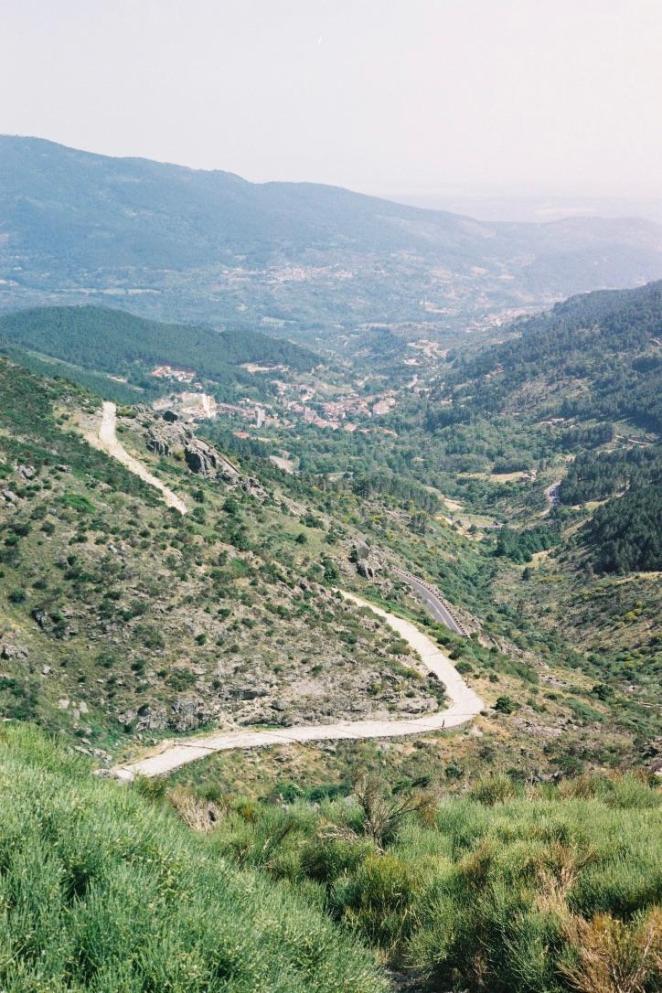
And the photo above? It is the old Roman road that ascends the Puerto del Pico in the Province of Avila. Hard to believe it was laid down nearly 2,000 years ago and still carries the transhumance cattle and sheep from the valleys in winter to the hills in summer. It is also a part of the Camino de la Plata, the silver road that brought precious metals from Spanish America to Madrid after the discovery and conquest of the Incan Empire.

The treasures of the Empire – what joy. Yet what weight around the neck of the Spanish nation. Wealth so abundant, spending so rife, money-lenders always lending, filling in the gaps between the arrival of the treasure convoys from the Colonies. And yet that borrowing became a millstone around the borrowers’ necks. So much money borrowed that there came a moment when each convoy only served to pay off the loan debt of the last set of borrowings.

The cattle and sheep struggle to climb to those heights. Yet it is not difficult to imagine how much easier it was to walk downhill, beside the creaking wagons that held the gold and silver to pay off the monarch’s debts, en route to the king and his court.

Think also of the squeals of anguish heard when the treasure fleet did not arrive. Captured by the English pirates, or hurricane battered and lost in the Caribbean or closer to home. This meant even more borrowing on the back of earlier borrowing and always the cost of living and the lending rates rising higher and higher.

Rage, Rage 41 & 42

Rage, Rage
41

Mortal,
this open wound
clinging, crablike,
to my sleeve.

A sudden surge,
this burgeoning urge
to end it all and sever
life’s thread.

How many times
must I jump,
eyes closed, through
hospital hoops?

Blood thinners,
my veins so
delicately untied,
my life blood
leaking meekly out,
dribbling from
my fingertips,
drip by feeble
drip.

42

Nothing left now
but this pain in my heart.

It makes me think
about growing old,
that unstoppable process
of the body’s slow,
inevitable breakdown
from everything
to nothing.

I should go to the doctor,
but what can she,
will she do?
She can’t stop the hands
on my body-clock
and lop ten, fifteen,
or twenty years
away from my life.

Nor can her pills,
lotions, potions
gift me in the same way
as the long-sought
Fountain of Youth.

Comment:

I should go to the doctor, but what can she, will she do? She can’t stop the hands on my body-clock and lop ten, fifteen, or twenty years away from my life. Nor can her pills, lotions, potions gift me in the same way as the long-sought, never discovered, Fountain of Youth.

Ah yes, my dear old body clock. Clocks went back last Sunday. My body clock still hasn’t quite caught up with the tick-tock clock with its Westminster Chimes and Nursery Rhymes. I have talked to quite a few people recently who have said the same thing. And it isn’t just the ageing and the aged – even young people, just out of their teens, feel the effects of the seasonal time change.

Apparently, the Insurance Companies notice a larger number of fender-benders, and worse, during the first few days after Old Father Time springs forward or leaps back. So why do we change the clocks and why does my body clock not immediately match the tick-tock clock? Good questions.

Maybe Salvador Dalí got it right. Time is Surreal. It is a clock folding itself over a tree branch or sliding over a waterfall, bent in two, with all its numbers abut to fly off. Moo says that his friend, Salvador Dalí, is jealous of Moo’s lovely painting, shown above. Moo says Dalí said he’d wished he’d painted it. I think that Moo, like all painters, has a little je ne sais pas quoi of the word magician about him. His words are as warped as his art. Who could even envy somebody who painted a clock like that.

I suspect Moo would not be able to ace his cognitive test if he actually drew something like that in answer to the prompt – “draw what time it is”. In fact, last time Moo was asked to do just that, this is what he drew – 10:42 AM. I don’t know about you, but I think Moo is a little bit strange. That doesn’t stp me liking him and using his paintings though.

Rage, Rage 38

Rage, Rage
38

Now, my heart is once more
a time-bomb ticking
beneath her fingers.

I dream of walking tall,
with her by my side,
in the youthful paradise
of a distant,
long-promised land.

My tom-tom heart,
softening clay,
putty beneath her fingers,
thumps out a hoodoo
voodoo beat on its drum.

Victor Sylvester,
and his orchestra,
Sundays on BBC radio,
announces his signature rhythm –
slow, slow, quick, quick, slow
my mind waltzes to the music
plucked from my heart strings.

Wild winds blow in from the shore
buffeting my heart, breaking it apart.
Blown open, in spite of my dreams,
my secret is not a secret anymore.

Comment:

Absent without leave, I have chased the dreams of rugby and cricket and abandoned my poetry until another today. And here I am, a week after St. David’s Day, still dreaming, still raging, still recalling so many things.

Wild winds blow in from the shore buffeting my heart, breaking it apart. You can see, in the photo above, the wind tugging at the waves. A lurid sky fills with heavy clouds and oncoming rain. My heart is out there somewhere, wave-washed, blown open by the simple beauty of wind and sea.

How many now recall Victor Sylvester on BBC Radio on a Sunday afternoon? Or the Billy Cotton Band Show? That was our Sunday afternoon entertainment long before we had TV. You can’t imagine it, can you? A world without TV. So many things fade away from far too many people.

Who now will talk of my Voce and my Larwood, long ago? How many saw Hammond at his best, with his imperial cover drive? Ken Jones? Cliff Jones? JJ and JPR? Lloyd and Bleddyn? Old visions, buffet my heart, breaking it apart. Frank Worrall in Swansea at St. Helen’s. Everton De Courcy Weekes at Bristol, in the County Ground. I have the photos. I have the memories. And I have a broken heart when I remember things, some personal, some not, that so few people do.