International Book Day

23 April 1616 > 23 April 2021
International Book Day.

Today we celebrate the anniversary of the deaths of three great writers: el Inca Garcilasso de la Vega (Comentarios Reales, Peru), William Shakespeare (poetry and plays, England), and Miguel de Cervantes (Don Quixote and so much more, Spain).

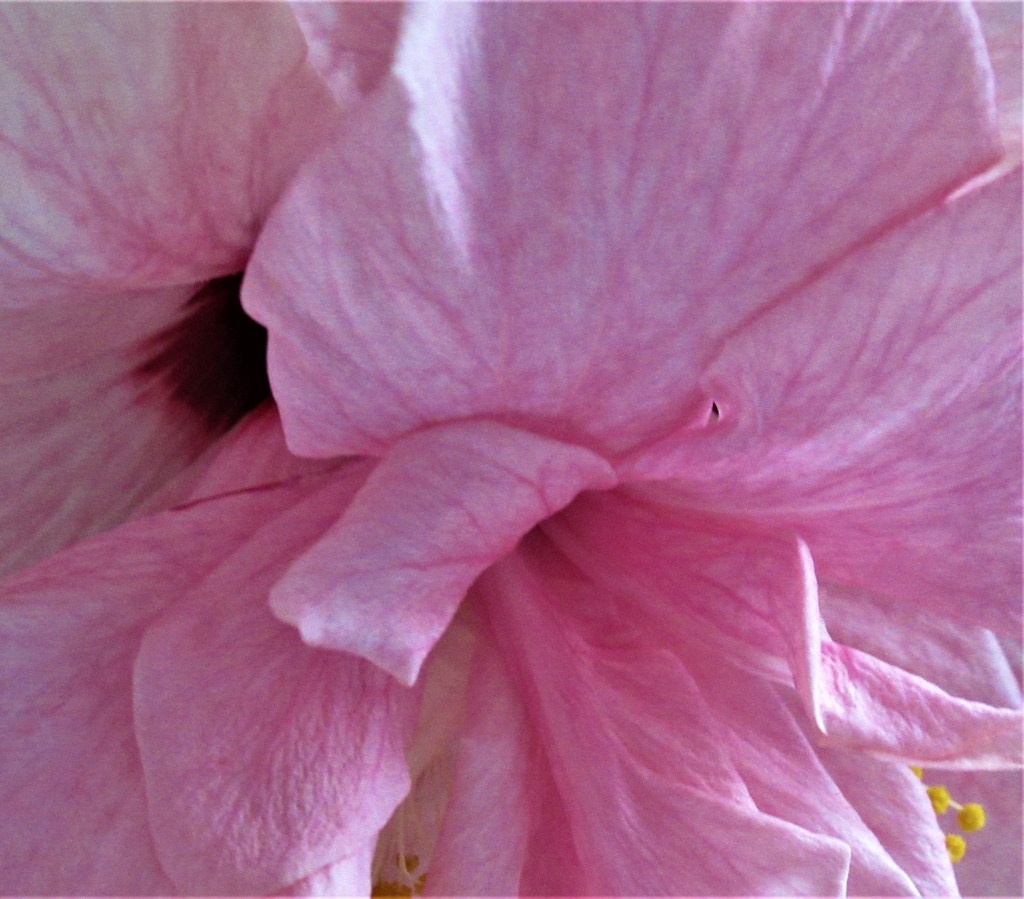
Our hibiscus decided to issue its first official blossom of the year, just to help us all celebrate this day.

Potholes and Portholes

Spotify:
Remember to scroll down to the appropriate audio episode.

Potholes and Portholes

My poems are drawn from my life,
not from the lives of others.

I live my words,
drawing them wriggling
through the holes
punched by others in my flesh.

Pot-holes,
portals to the underworld,
so many cars
slithering in spring’s freshet
melt of tarmac and metal flesh.

Portholes:
so many ships,
leaving port,
sailing away
into unknown seas
well beyond my ken.

Trucks

Spotify:
Remember to scroll down to the appropriate audio episode.

Trucks

Flocks of colored passerines flying up
and down cracked tarmac roads, this way and that.
Spring songs fill the highway’s grey-black throat
with noise and color. Songs? Coarse the engine
growl, the grinding gears, the rattle and roar
of ten-wheeler trucks, dust and stones pinging
off the windshields and hoods of passing cars.

Noisy, smelly, dusty, yet welcome spring
visitors, predicting new building sites,
foretelling fresh human nests, promising
an end to winter’s frost, snow and ice, with
the assurance of warmer weather to come,
days longer, nights shorter, holidays at hand,
and a finish to the pothole season.

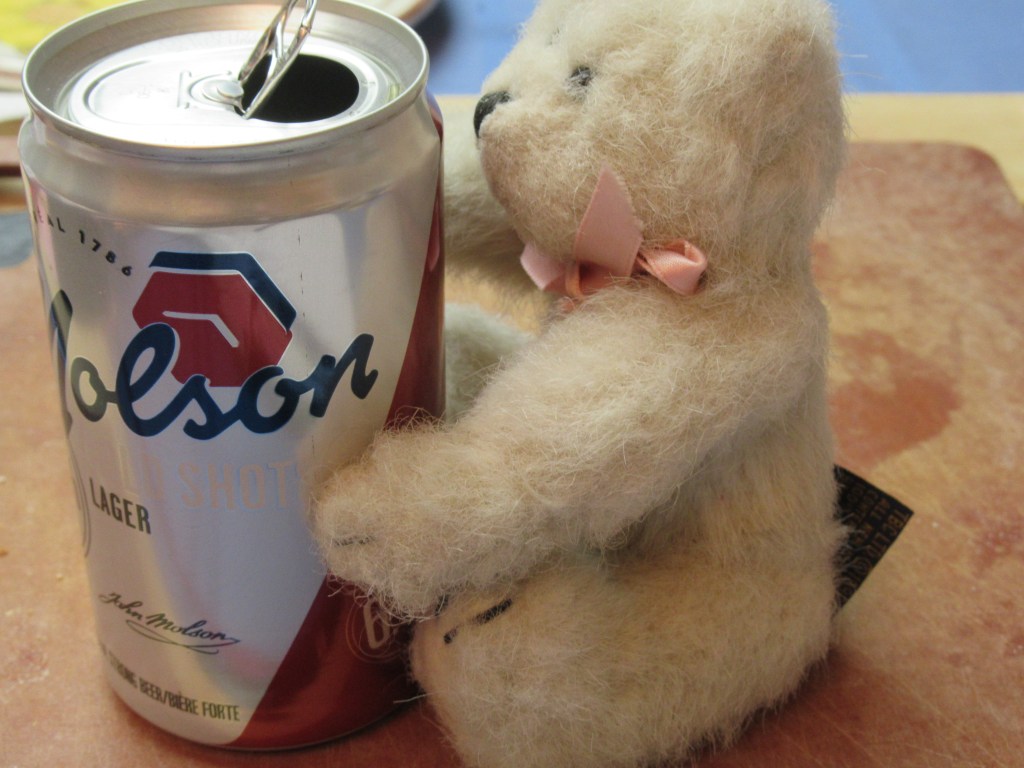
Basil Bear Packs

Basil Bear Packs

            “You promised.”

            “I know I did.”

            “Then take me with you. I’m only small. I’ll fit in a pocket.”

            “All right: go and pack.”

            “What shall I pack?”

            “Don’t ask me. I don’t know. I’ve never travelled with a teddy bear before.”

            The conference is a strange one. There are no women present and only one person of color. Nobody speaks to him. When he reads, I am the only one to hear his paper. It’s actually quite good.

            I move from that session to the next one. The man sitting beside me opens his briefcase and tells me to look inside. I do. He has two pistols in there.

“Are you packing?” he asks me.

     “No,” I reply. “But I packed to come here. So did my guardian.”

“Guardian?” the man raises his eyebrows. “That’s cool: a body guard, eh? You need to pack round here. But a body guard is great. Where are you going tonight?”

I tell him.

“That’s a dangerous area of town. You’d both better be packing if you go down there.”

“Thanks for the advice,” I nod to him. “Are you going to the reception?”

“Yup,” he smiles. “I’ll see you there. And don’t forget to pack.”

“Well, Basil,” I see when I get back to the hotel room. “It looks like you’ll be going out with me tonight.”

“That’s great,” little Basil gives me a big teddy bear smile.

When I get to the reception, my friend from earlier is there. He nods at me and smiles at the bulge on the left side of my jacket.

“Good to see you’re packing. Can I have a look?”

“Sure,” I say and open my coat. Basil sits up, opens his eyes, and gives him a little wave. The man’s mouth falls open. He stares at me, wild-eyed.

“Ain’t nobody gonna tackle a mad man who’s carrying a teddy bear,” I say. “Now that’s really packing.”

He walks to the bar, orders a double-double and swallows it, Ker-Splosh.

“That’s telling him,” says Basil, snuggling back down in the warm beneath my armpit. “Hi-ho, Silver: let’s go out and get those gangsters.”

Comment: For Tiffany who understands the important things on the brighter side of life.

Spring

Spotify:
Remember to scroll down to the appropriate audio episode.

Spring

Slow going
this snow going,
but at least
it isn’t snowing.

Snow forecast
on the weather show,
but we all know
it cannot last,
now the equinox
is past.

With a roll of drums
Easter comes,
but friends and family
stay away.

So all alone
and safe at home
we’ll spend
our Easter day.

Everybody understands
how often we must
wash our hands.

Don’t go unmasked,
even when asked,
and all our friends
must safely stay
at least six feet away.

Comment: I just received this poem as a memory on Facebook. Interesting. I remember writing it, online, a year ago today, and what a fun time I had. Here’s the link to the video. I loved being involved in the creative experience. It was my first poetry video. I do hope you like it.

Golden Angel


Spotify:
Remember to scroll down to the appropriate audio episode.

Golden Angel

He stands beneath guardian trees,
his saffron garments glossed with gold.

Hands cupped, body bent,
he softly swells as he dips
beneath sun and rain.

He speaks to me:
wild prophet from an ancestral book
that I believed in when I was a child,
but no longer read or understand.

I try to interpret the aroma of his lips,
his slow, small growth of gesture.

His winged words are traps
tripping my tongue, clipping my wings,
preventing me from flight.

Shape-shifter, she changes before my eyes
and takes on her earthly disguise.

This image has an empty alt attribute; its file name is img_0258.jpg

Sun and Moon

Sun and Moon
Poems from Oaxaca, Mexico

is available at the following link:
Click here to purchase Sun and Moon

Introduction to Sun and Moon

Oaxaca

A city of legends where the dead walk among the living and the stones beneath your feet come alive and talk to you. A city where the animals have voices and the songs of tree and leaf can be clearly heard. A city of hallucinations and spirits, of mystery and myths, a city, young in itself, built on land so old that memories clutch at you with treacherous fingers and lay siege to your heart claiming you for their own. This is the land of Sun and Moon. Come, enter its world. Join me there, if you dare.

Meeting my father in the main square

I saw my father yesterday evening, in Oaxaca. I walked through the zócalo, opened the main cathedral doors and walked in. The doors closed behind me. I looked towards the main altar and there my father stood, motionless. The evening light shone through the engraved glass panels and illuminated him as if he were some long passed saint come back to visit me. We stared at each other, but I couldn’t open my mouth to speak. The hairs on my neck stood on end and my hands shook. When I forced my mouth open, words stuck in my throat. He wore his best grey suit over a light blue shirt and a dark blue, hand woven tie: the outfit in which I had buried him.
            Three old women, dressed in black, broke the spell. One stood in front of me and wouldn’t let me approach my father. She held a large bag of knitting in her hands and the wool spilled everywhere as she pushed me away. The second threatened me with a pair of scissors that she held in her left hand and thrust towards my face. The third smacked a tailor’s measuring rod against my father’s head.  He nodded, smiled sadly, and they all turned their backs on me and hurried away out of the cathedral and into the square.
            Just for a moment, I stood there in silence. Then I pulled the doors open and ran in pursuit of my father. The setting sun filled the square with shadows that whispered and moved this way and that, as if a whole village had come down from the hills to walk beneath the trees and dance in the rays of the dying sun. I stood on the cathedral steps and called out my father’s name, but I could see no sign of him among the cut and thrust of the shadowy crowd.
            I ran out into that crowd and pushed at insubstantial people who stood firm one moment and then melted away the next like clouds or thick mist. I came to a side street and saw real people, flesh and blood beings, a group of villagers gathered behind their band. I stopped and as I did the village elder put a live match to the taper of the rocket that he clutched between his thumb and forefinger. The taper caught on fire and the rocket soared upwards with a searing whoosh. The village band marched forward and started to play a traditional dance as the rocket clawed its way into the sky to explode with a loud knock on the door of the gods.
            Tired of grasping at shadows and afraid of this living phalanx of men that marched towards me I went back to the cathedral and knelt at the altar of La Virgen de la Soledad, the patron saint of Oaxaca. Real wax candles stood before her altar, not tiny electric lights, and I inserted five pesos in the slot, took a taper, and lit a fresh candle from an ageing one that had started to sputter. I knelt and, for the first time in years, I prayed. I prayed for the soul I had saved from extinction by lighting my candle from another’s flame. I prayed for my father and my mother and, above all, I prayed for myself.
            On the way home to my second-floor apartment where I live alone, I bought two litres of mescal, one to send me to sleep, and the other so I would survive the next morning.


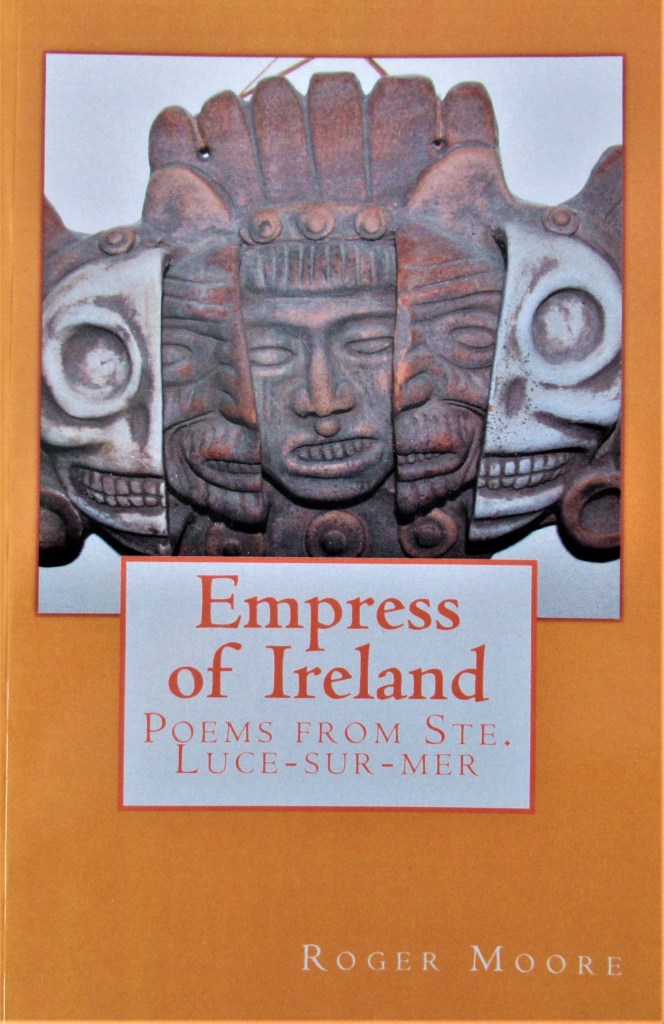
Empress of Ireland

Empress of Ireland
Poems from Ste. Luce-sur-mer

is available at the following link:
Click here to purchase Empress of Ireland

The Empress of Ireland

The poems which have come together to form the Empress of Ireland were begun in Ste. Luce-sur-mer, Quebec, in May 2002. It was off-shore from Ste. Luce, in the early hours of the morning of the 29th of May, 1914, that the Empress of Ireland collided, in dense fog, with a converted Norwegian collier whose bows had been strengthened for ice-breaking. There were approximately 15 minutes between the moment of impact (1:55 am) and the moment the Empress caught fire and sank (2:10 am). Although the disaster has received little international attention, more passengers perished in this accident (840) then in the loss of the Titanic (832) or the sinking of the Lusitania (791).

Introduction to the Empress of Ireland

Click on the link below to read an early post with a new sound recording of
A Survivor lights a candle
https://rogermoorepoet.com/2020/11/23/a-survivor-lights-a-candle/

I first heard voices in the cries of the sea birds on the beach at Ste. Luce-sur-mer.

Borne on the wind, over the sigh of the waves, they seemed high-pitched, like the voices of children, or of men and women in distress. These were lost voices, the cries of people alone and frightened by the dark. I heard them calling to me.

That night, there were knocks at my cabin door and finger nails scratched at my window. Tiny sounds, almost beyond the range of human hearing: the snuffling of puppies when they turn over in their sleep and tug at each other, whimpering in their dreams.

“Who’s there?”

I started from my sleep. But there was only the wind and the waves as the tide’s footsteps climbed a moonbeam path to ascend the beach. When I walked on  the sand next day, at low tide, there was a whispering behind my back. Little voices crying to be set free.

“Who’s there?”

A lone gull flew past my head and battered itself against the wind’s cage with outraged sturdy wings.  That night, the mist descended. The church stepped in and out of its darkness and shadows gathered, persistent, at my door.

I walked out into the night and saw a lone heron surrounded by gulls. It was as if an adult, clamoured at by children, was standing guard over the beach. Then I saw the shadows of little people searching for their parents, the shapes of mothers and fathers looking for their off-spring, lost among the grains of sand.

Beyond them, on the headland, the church stood tall above the shadows. I saw grandmothers and grandfathers, their lips moving in supplication, kneeling before the granite cross which stands above the sea. As I approached, they turned to me, opened their mouths, mouthed silent words, then disappeared.  When I went back to bed, faces and voices visited me in my dreams. When I got up next morning, they came to me in the speech of birds hidden in the foliage, in the words dropped by the osprey’s wing, in the click of the crab’s claw as he dug himself deeper into the sand.

“Release us”

“Speak for us!”

“Set us free!”

The words of the M Press of Ire are not my words. They could never be my words. Foundered words, they are, rescued from the beach, and dragged from the high tide mark with its sea weed, carapace, charred wood, old rusted iron, and bright bones of long dead animals polished by the relentless action of wind, sea and sand.

On Being Welsh

On Being Welsh
in a land ruled by the English

On Being Welsh
in a land ruled by the English

is available at the following links:

https://www.amazon.ca/dp/9388319842

https://www.amazon.com/dp/9388319842

A shortened version of this manuscript was awarded first place in the David Adams Richards Awards for a prose manuscript by the Writers’ Federation of New Brunswick, 2020.

Individual stories have been published in Anti-Lang (M. T. Head), West Coast Short Story Slam (Teeth), and on commuterlit.com (Remembrance Day).

Individual stories have won awards as follows: Butterflies (Honorable Mention, Atlantic Short Story Competition, Writers’ Federation of Nova Scotia), Auntie Gladys (Finalist, Wordfeast NB, Postcard Stories), Message in a Bottle (Honorable Mention, WFNB Creative Non-Fiction), The Key (Finalist, CBC Short Story Competition), Letting Go (First Place, WFNB Douglas Kyle Memorial, short story).

I would like to thank Lucinda Flemer, Primum Mobile, the first mover, who brought together the KIRA artists and turned them into a creative community. These artists include Geoff Slater and Chuck Bowie, both of whom have influenced the writings in this book. A special thank you must go to Ginger Marcinkowski, my Beta reader, who really deserves an Alpha Grade for all her help and understanding.

I would also like to thank Dr. Karunesh Kumar Agarwal (Managing Editor) Cyberwit.net for his editing skills and his invitation to participate in this poetry series.

Donna Morrissey, award winning Canadian author and judge of the 2020 D. A. Richards Award, wrote the following about my winning submission.

Judge’s Judgement: “This writer’s prose is eloquent, lyrical and beautiful. His stories are disturbing and memorable. It is an evocative journey through the deeply seeing eyes of an old man, and back through his tormented and deeply felt self as a beaten boy. There were times I held my breath against his suffering, and times I applauded his courage to keep on living. At all times I was held by the strength of such writing as would allow me those sparse and limited visuals to the bruising of the flesh whilst leading me directly into the tendered heart. Congratulations.” 

The Story: Set in Tara Manor, a boutique hotel in St. Andrews, New Brunswick, the narrator searches for a story he can write. He rejects the stories and myths of other people and indigenous races, only to discover that he must be the subject of his own tale. It is a story of childhood abuse, first at the hands of his own family and then in Catholic and Protestant boarding schools in Wales where he was sent at the early age of six. It tells of a growing self-distancing from the world, including self-harm and attempted suicide, and then of self-discovery, understanding, and self-forgiveness, far from his Welsh homeland, in the Maritime beauty of Atlantic Canada.

Editor’s Comment: No doubt, here in these poems we are impressed by the ease and strength of the rhythm. Several of these poems show the passionate flight of profound imagination. The poems have poignant force of true feeling. All poems are irresistibly powerful.

Author’s Comment: Poems or stories? Both really, for On Being Welsh is composed of poetry written, not in verse, but in prose. Prose poems then, or poems in prose. How could I write anything but poetry when I come from the same town in Wales as Dylan Thomas and Vernon Watkins. I too was born with music in my heart and poetry on my lips.

On Being Welsh

On Being Welsh in a land ruled by the English

This is now published and in my hands. I do not yet have full details on links and where and how to purchase, but I will put them up as soon as I have them. Meanwhile, I am grateful to my cover artist, who always does such a great job, and to my editor, Dr. Karunesh Kumar Agarwal (Managing Editor) Cyberwit.net. What a pleasure it has been to work with him. The cover picture, incidentally, is An Only Son.

I am now working on my next book, Stars at Elbow and Foot. I am sure many will recognize the title as coming from a line of a man born in the same town in Wales as I was: Dylan Thomas. The island in the picture is the only Island visible in Island View, incidentally. Alas, I do not have a picture of my cat, though I may put one on my next cover.

Ah yes, time to celebrate. I guess we’ll open a barrel of wine tonight. Hopefully we won’t finish it one sitting. I’d be lying if we did. This incidentally is the bodega where I got baptized. If you haven’t got baptized in a Spanish bodega, you haven’t lived. I’ll tell you about it sometime. How I miss that verdejo! Unfortunately, the verdejo didn’t miss me, and that’s how I got baptized. ‘Ya te hemos bautizado!’ “Que sea yo, y no el vino.” And if you understand that, you speak pretty good Spanish or Spanish pretty good … and you probably have an evil mind, just like mine.

Here I am, on the sea-shore, selling C-shells and thinking about my evil mind. But remember, my evil mind is mine, and it’s a one-of-a-kind. You go and find your own. And watch out for those Saint John C-gulls.

Go on, buy one and read it.
I dare you.