Hide and Seek

Hide and Seek

Pictures and memories play hide and seek.
They hunt the slipper that hides in the words
that slither and slide across my page.

They long to emerge, fully formed, and to step,
without effort, into your mind. They want
to linger there, to baffle, taunt, and haunt you.

Digging through the verbiage, a thought,
a metaphor, a grouping of words will join and
rejoin. This is the grit that the oyster slowly shapes
into the pearl of great price that glows so bright.

Consider the opal. Plain at first sight, yet changing
color, shimmering in sunlight, a chameleon
adapting to mood and shadow, its moon dance
hovering, a butterfly over burgeoning blossoms.

Who could ever forget, once seen, star light
illuminating the bay, the moon gilding the sea,
those summer nights, our secret love flowering.

The veiled will unveil itself and tease its way,
its path over the sparkling waters of the bay.
Knock and it will open. Seek and you will find.

Comment: I had a specific, named place in mind when I first wrote this poem. Then I realized that my secret place was not necessarily the remembered place of other people who had undergone similar experiences. So, I removed the specific and made it generic.

I know you have been there, to your own special place. A warm summer night. Star light over a bay. Or maybe it was an estuary, or perhaps a river bank? The moon appearing, lighting up the waters. Walking, perhaps, hand in hand. Or sitting, as I remember it so well, in a late-night café, watching the night lights on the fishing boats, as the moon spread its golden carpet over the bay.

What do you enjoy most about writing?

Daily writing prompt
What do you enjoy most about writing?

What do you enjoy most about writing?

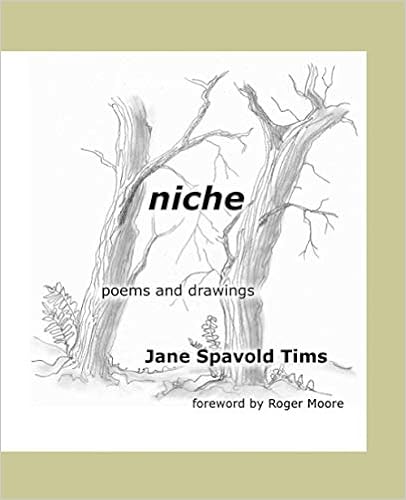
I love it when a special friend reads one of my books and then takes it to the place where it was composed, and sends me a wonderful photograph of the book cover and the exact spot, at Hopewell Cape, where the cover was drawn. Wow! That is so special. Thank you, Sara, my friend and accomplice, for making even more art out of art and involving nature in the process.

Other friends have done similar things. Here is a collection of my books on the sea shore at Holt’s Point. And yes, Fundy Lines is in there as well. Can you spot it? Another very good friend, Geoff, contributed this very meaningful photo. So much of my life, there, upon the sea shore, waiting for the tide to come in.

This book, and its cover, are also very special indeed. And here’s why.

Still Life with Hollyhock
Geoff Slater

How do you frame this beaver pond,
those paths, those woods? How do you
know what to leave, what to choose?
Where does light begin and darkness end?

Up and down: two dimensions. Easy.
But where does depth come from?
Or the tactility, the energy, water’s
flow, that rush of breathless movement
that transcends the painting’s stillness?

So many questions, so few answers.
The hollyhock that blooms in my kitchen
is not a real hollyhock. Intertextuality,
visible and verbal: this is a poem about
a painting of a digital photograph of a
hollyhock, a genuine flower that once
upon a time flourished in my garden.

A still life, naturaleza muerta in Spanish,
a nature morte in French, a dead nature,
then, portrayed in paint and hung alive,
on display, in this coffin’s wooden frame.

So, what do I enjoy most about writing? Everything – for whenever creative people create they draw in others into a web of intertextuality that spins its way from mind to mind and, especially in Canada, links shore to shore to shore.

Janus

Janus

I walked backwards into my childhood
a step at a time. I failed to find it
where I thought I had left it.

I opened cupboards, doors, drawers,
searched beneath beds, went outside,
rummaged through garden and garage,
and found absolutely nothing at all.

 My past was as dry as a squeezed orange
when the juice has gone and long days
left on the window ledge has dried it up.

I looked in the mirror, and the man
I saw was not the boy I had seen
the day before. How could he be?

Janus, two-faced, looks forwards and back.
I will no longer seek the self that was

I shall accept the self that is, the one that grew
outwards and upwards from the one
that was before. Acceptance. I can do no more.

Crossing the Bridge

Crossing the Bridge

When I got to there, I couldn’t cross it.
I sat in the coffee shop, over-looking
the River Severn and ordered a cup
of cafeteria tea. Time limped slowly by
and I let my untasted tea grow cold.

What was there for me on the other side?
Empty stood the house where I was born.
Sold, the bungalow, built by my father
and his father, the summer home I loved
so much. Lost the kitchens I remembered
so well, kitchens in which I had come of age.

I tried to picture the ghosts of Christmases
past walking the logs that flamed in the fire.
Ghosts? They inhabit my mind, share my life,
dwell in my days, dream with me most nights
when a golden moon sails past my window,
and silver stars fill my dreams with light.

Skype or Zoom

Skype or Zoom

I sit and watch the grandfather clock,
listening to every tick and tock.

So slow, the sullen pendulum swings
as time limps by on leaden wings.

When they arrive, the house will fill
with youthful joy and much goodwill.

Age will flee for a week or two,
then we’ll be alone, just me and you.

Watching the telly, watching the clock,
counting each tick and every tock.

We will be lonely, left here alone,
waiting for them to telephone.

The very best thing to lighten the gloom
is to see them again on Skype and Zoom.

What brings you peace?

Daily writing prompt
What brings you peace?

Septets for the End of Time

I

Crystal Liturgy

Here, in the abyss,
where song-birds pluck their notes
and send them, feather-light,
floating through the air,
here, you’ll find no vale of tears,
no fears of shadow-hawks,
for all blackness is abandoned
in the interests of sunlight and song.

Here, the crystal liturgy surges,
upwards from the rejoicing heart,
ever upwards, into the realms of light,
where color and sound alike
brim over with the joy that, yes,
brings release to head and heart.

Here, seven-stringed rainbows reign,
the everlasting harp is tuned and plucked,
and an eternity of music cements
the foundations of earth and sky.

Here, the master musician conducts
his celestial choir, their voices rising,
higher and higher, until they reach
the highest sphere, and song and voice
inspire, then expire, passing from our eyes
and ears into unbounded realms of light.

Here, the seven trumpets will sound
their furious dance, a dance that will announce
the end of this singer, the end of his song,
but never the end of song itself.

What is the most important thing to carry with you all the time?

Daily writing prompt
What is the most important thing to carry with you all the time?

What is the most important thing to carry with you all the time?

Things I carry with me

            That old black cast-iron stove, wood-fired, that baked the best ever breads and cakes and warmed the bungalow on cold, summer mornings. The Welsh dresser with its age-blackened rails that displayed the plates, and cups, and saucers. The old tin cans that ferried the water from the one tap located at the end of the field. Full and wholesome, its weight still weighs me down as I carry it in my dreams. The Elsan toilet from the shed by the hedge and the shovels that appeared, every so often, as if by magic, as my uncle braved the evening shadows to dig a hole on the opposite side of the field, as far from the bungalow as possible.

            The outhouse at the end of the garden. The steps down to the coal cellar where they went when the sirens sounded, to sleep in the make-shift air raid shelter, along with the rats and mice that scurried from the candles. The corrugated iron work shop in the garden where my uncle built his model ships, the Half-Penny Galleon and the Nonesuch. The broken razor blades I used to carve my own planes from Keil Kraft Kits, Hurricanes and Spitfires, an SE5, and once, a Bristol Bulldog. Twisted and warped, they winged their ways into nobody’s skies, though once we built a paper kite that flew far away in a powerful wind and got tangled in a tree. The greenhouse from which I stole countless tomatoes, red and green. Kilvey Hill towering above the window ledge where the little ones sat when there were more guests than chairs in the kitchen. The old bombed buildings across the street. The bullet holes in the front of the house where the Messerschmidt strafed us.

            The old men spitting up coal dust from shrivelled lungs. The widows who took in lodgers and overnight travelers. The BRS lorries, parked overnight, that littered the street. The steep climb upwards into those lorries. The burrowing under dirty tarpaulins to explore the heavy loads, and many other things. The untouchable, forbidden drawer where the rent money waited for the rent collector’s visit. The old lady, five houses down who, when the shops were shut, sold warm Dandelion & Burdock and Orange pop for an extra penny a bottle.  The vicious, snub-faced Pekinese that yapped fierce defiance from the fortress of her lap. The unemployed soccer referee who on Saturdays walked five miles to the match and five miles back just to save the bus fare, his only financial reward. My father’s shadowy childhood. His first pair of shoes, bought at five years old, so he wouldn’t go barefoot to school. 

            Wet cement moulded onto the garden wall, then filled with empty bottles to be smashed when the cement set solid. The coal shed where the coal man delivered the coal: cobbledy-cobbledy, down the hole. The outside toilet with its nails and squares torn from yesterday’s newspaper. The lamp-lighter who lit the lamps every evening as the sun went down. The arrival of electricity. The old blackout curtains that shut in the light and shut out the night. The hand rolled fabric sausage that lay on the floor by the door and kept the heat of the coal fire in the kitchen. The kitchen itself with its great wooden chair drawn up by the fire. That chair: the only material possession I still have from that distant past.

Qué será

Qué será

Peace in the Peace Park,
here on the headland,
where cool grass slopes
down to the water’s edge.

Geese have nested close by
and gifted us with goslings.
Golden balls of fluff, they walk
on the land right now,
but soon will take to the water.

A thin, yellow line, they will
paddle behind their parents,
webbed feet invisible
beneath the water’s flow.

And I, in the metal coffin
of my over-heated car,
sit and watch them, envying
their freedom of movement,
waiting for whatever will come.

My beloved draws near.
I sense as much as see her,
as I covet her strong steps,
the ageless sway of her body.

Alas, I am growing old,
and not with any grace,
but fighting it all the way,
and qué será, será
is all that I can say.

Rebirth

Rebirth

“El mundo nace
cuando dos se besan.”
Octavio Paz

A new world is born
when two people kiss.
The hummingbird sips
at the hollyhock’s lips.
Bee enters the blossom
and, sated, comes out.
A butterfly perches,
flutters its wings.
The sun enters a cloud:
radiance is born.
Silver linings
morph to gold.
The sun’s needle stitches
the world together.
Oh to be a part of Eden,
Paradise born anew,
in the moment when
lip meets lip and the tongue
is a twister, touching down.
Two hearts a-whirl,
their world aflame.
Their world reshaped,
new shapes now born.
Wild flowers swaying
in an age-old dance.
Life’s journey renewed,
not always by chance.

What traditions have you not kept that your parents had?

Daily writing prompt
What traditions have you not kept that your parents had?

What traditions have you not kept that your parents had?

What traditions have you not kept that your parents had?

To the best of my knowledge, my parents only had three traditions. I have not kept any of them.

Tradition 1: They took two weeks holiday every year in August. Both were hard-working, and that holiday was always a precious break from work. Being employed in academia and a life-long inhabitant of the Ivory Tower, I have not had holidays forced upon me by a 9 to 5 work schedule. Research and creativity do not function according to a 9 to 5 clock. I realize how fortunate I am, and I give thanks every day for my intellectual and creative freedom.

Tradition 2: They fought like cats and dogs at every opportunity. It was so bad that, at one stage, in my innocence, I thought that cats were females and that dogs were males, and that was why they opened instant hostilities whenever they saw each other. Luckily, I have no siblings to challenge this view of events, and my parents are long gone, so they won’t be worried either.

Tradition 3: My maternal grandmother’s birthday was just before Christmas. On her birthday, every year when I was a child, my mother would come home early from work, but my father wouldn’t. He often didn’t come home at all. Office parties. My mother would hang around the house for a while, consoling herself. Then she would get angry, tell me to pack a bag, pack one herself, and call a taxi. This would take us to the railway station or the bus station, and off we would go to grandma’s house to celebrate her birthday. My father, looking sheepish and hang-dog, would arrive late Christmas Eve, or early Christmas morning. On Boxing Day, the gloves came off, and they were at it again. That’s why it’s called Boxing Day. Well, that’s what I thought anyway.

So there you have it. Three traditions that my parents had and that I have never kept.