Apologia

IMG_0447


Kingsbrae 5.2
5 June 2017

Apologia

Late last night, I opened Alistair Macleod’s book The Lost Salt Taste of Blood and I re-read the first story. I was soon dabbing my eyes with a tissue and blowing my nose.

This morning, I want to destroy everything I have written. I know I don’t possess the verbal and emotional genius of the great writers and I sense that I cannot write like them. Graduate school taught me to be passive, not active, and to write impersonally, choking every emotion when I write. Academia also taught me how to kiss and how to run away with my thirty silver pence. “Never challenge the status quo,” my professors told me. “Learn the rules and disobey them at your peril.”

But here, in this private space where I create and re-create, there are no rules. The enemy is not clear any more and the fight is not one of black against white. It is rather a choice between diminishing shades of grey, and all cats are grey in the gathering dark that storms against my closing mind. Should I destroy all my writing? I wouldn’t be the first to do so; nor would I be the last. And I won’t be the first or the last to destroy myself either. Intellectual, academic, and creative suicide: as total as the suicide of the flesh.

I carry on my back the names of those who have gone on before me as if they were a pile of heavy stones packed into a rucksack that I carry up a steep hill, day after day, only to find myself, next morning, starting at the bottom once again. But this is not the point: the point is that if I cannot write like the great writers, how can I write?

I think of Mikhail Bakhtin and his cronotopos, man’s dialog with his time and his place. I have no roots, no memories, and that is where my stories must start: in the loss of self, the loss of place, the loss of everything. I was uprooted at an early age, soon lost my foundations, and only survival mattered.

I look at the first page of one of my manuscripts. My writing manifesto is clear before me: “And this is how I remember my childhood,” I read. “Flashes of fragmented memory frozen like those black and white publicity photos I saw as a child in the local cinema. If I hold the scene long enough in my mind, it flourishes and the figures speak and come back to life.”

I am aware of the words of T. S. Eliot that “every attempt / is a wholly new start, and a different kind of failure / because one has only learnt to get the better of words / for the thing one no longer has to say, or the way in which / one is no longer disposed to say it” (East Coker).

Are these stories an exercise in creativity or are they a remembrance of things past? How accurate is memory? Do we recall things just as they happened? Or do we weave new fancies? In other words, are my inner photographs real photographs or have they already been tinted and tainted by the heavy hand of creativity and falseness?

The truth is that I can no longer tell fact from fiction. Perhaps it was all a dream, a nightmare, rather, something that I just imagined. And perhaps every word of it is true.

I no longer know.

Purple FF

img_0199

Purple

I close my eyes and return to Paris, Easter holidays, 1961. Algérie-française, Algérie-algérienne, the car horns tweet in the street as we drive the boulevards of a city divided. This is all new to me, a seventeen year old student in Paris to learn about French culture. My friends in the car have heard the tooting before and join in the fun.  Algérie-française the driver toots.

Turning a corner, flattened and blackened, still flaming against a fire-burned tree, the metal skeleton of a Deux Chevaux, a ‘tin of sardines’, bears witness to the car bomb that has laid its occupants low.

* * *

Hitching the highway, from Paris to Chartres, thumb stuck out to catch the wind, a purple Citroen stopped and offered me a lift. I trusted the car: a Citroen, like Simonet’s famous detective Maigret used to drive.

When the car stopped and the door opened, I got in and saw that the driver wore black leather gloves. His hand movements on the steering wheel were stiff and clumsy and he made exaggerated gestures when he changed gear.

“No hands,” he explained. “Lost them in Algeria. Listen: I used to be the driver for a top General. I drove him out of an ambush once. I lost my hands later, when the car exploded, caught in a crossfire. They teach you things in the Army. I can still drive.”

He accelerated and threw the car at four times the speed limit through the S bend that snaked through a small group of houses. I bounced from side to side, held back by no seat belt.

“You see,” he said. “They train you to do this before they let you drive. Ambush. The sniper at the corner. The Molotov Cocktail. You must always be prepared.”

I closed my eyes and returned to Paris.

Collateral damage: the young girl with her photo in the Figaro next day, scarred for life; her mother, legs blown off, lying in the gutter in a pool of purple blood.

Maman, maman,” the young girl cried. But her mother was never going to reply.

The Pom-pom-pompiers arrived in their fire trucks, sirens screaming. The ambulances screeched to a halt. The young girl cried. The mother bled out her life-blood in silence. Her blood turned purple and black as it flowed through the gutter.

Parisians emerged from dark doorways and stood there, bearing silent witness. Evening draped itself over the Paris skyline. The sky darkened and became one with the purple of the car bomb’s angry flame. Purple bruises marked my arm where I had gripped myself with my own fingers. An indigo angel squatted above the faubourg street, with shadowed wings, brooding.

* * *

I opened my eyes.

We left the village in our wake, travelling five times faster than the speed limit.

“They trained me for this,” the driver said. “I am prepared for anything.”

He stopped the car by the cathedral in Chartres. I thanked him and got out. He offered me his hand and I shook it. Inside the glove, the hand was hard and metallic. Alcohol sweated out through the purple veins that stained his nose and flowed in abundance over his sun-tanned face.

Teddy Bear Tales TBT 1


Empress 048

Oppressive-Possessives
TBT1

 Teddy Bear Tales 1

 “Possessives are oppressive,” my Teddy Bear whispers in my ear. “I’m not your Teddy and you’re neither my owner nor my master. The world exists without you possessing it. It will continue without you. And yes, I hear you, especially when you talk in your sleep. ‘My wife,’ you mutter, ‘my daughter, my flowers, my garden, my lawn, my birds, my bees, my deer, my house, my grounds, my groundhog, my car, my TV, my team, my Teddy.’ Well, permit me to share a secret with you. None of them are yours. You may think you own them, but you don’t.”

My God …” I sat up in bed and held my Teddy Bear at arm’s length, staring into his button eyes.

“There you go again,” Teddy stared right back at me. “Whatever are you thinking? Those two little words, yours and mine, are a threat to the universe.”

My Favorite Book

img_0196

My Favorite Book

Last night, my writing group threw the table open for discussion on ‘my favorite book’. I listened as each member of the group came up with a title or two and then chose a book that was ‘the favorite’. When my turn came, I was last, they all turned to me, but I remained silent for a long time and then: “I can’t do it,” I said. “I bet it’s got windmills in,” one person remarked, thinking of my propensity of frequently quoting Cervantes’s Don Quixote as a model when literary discussions arise. Indeed, Don Quixote might be my favorite book, but is it?

Let us begin with the concept of book. Is a book something contained between two covers or could it be a series of books? For example, does one choose between The Chronicles of Narnia or must one select The Lion, The Witch, and the Wardrobe over The Silver Chair? Is one free to choose The Lord of the Rings, or must one prefer The Two Towers, say, to The Return of the King? By extension, where exactly does The Hobbit stand, as a book, in book form, in relationship to the later and longer series? Or The Silmarion? Again, can we roll them all together, a series of books under the cover of one book, a favorite book?

The idea of favorite author versus favorite book then surfaced and we discussed Georgette Heyer, John LeCarré, equally loved and loathed, Jane Austen, the Bronte’s, J. K. Rowling, and William Shakespeare. The mention of Shakespeare led us into plays as reading material and plays as performance, and performance as on stage or on film. One of our members loved Shakespeare on film and TV, but didn’t like reading Shakespeare, because it was ‘difficult to read and needed the interpretation of the actor for the meaning to come across’. This same person did not like LeCarré’s books, but was very appreciative of his work on film. Where does George Smiley begin and Alec Guinness end, one asks? How can we separate the character from the actor? Applied to James Bond, who is James Bond? Is he Sean Connery (totally unique and my personal favorite), Roger Moore (better for me in the role of Simon Templar, The Saint), or one of the later and newer actors who have taken over the role? By extension, should James Bond be played by a black actor (why ever not I ask?), and could (oh horror of horrors!), a female actor take over that role (I’d love to see it … “I’m Bond. Jane Bond!”)?

This led us into the art of the narrative and the relationship between book as narrative and film as narrative. Clearly they are two different forms of media, but how do they influence each other? The book obviously comes first. We can talk of the seventeenth century novel, but it is difficult to talk of the seventeenth century film. So, the linear narrative of the book comes first and then that book is turned into a film. However, a film contains its own narratives structures and these include multiple points of view, split screens, flashbacks and time distortions, and a multiplicity of other devices among which the actual scenic impact is of the utmost importance. For most of us, the nineteenth century novel (no radio and no television for entertainment in those days) is long drawn out and very slow moving. We miss the instantaneous impact of screen and TV with the breaks for advertisements and the time to recharge our coffee cups and snacks. This leads us to our own attention spells as readers and our own demands for the instant gratification of a thrill a minute. “Hook them on page one and addict them by page three,” one person commented to many nods from around the table.

But the mention of Don Quixote also takes us into other areas. In this age of bi- and multi-lingualism, do we prefer to read our books in one language rather than in an another? Don Quixote in Spanish or French or English? And which translation? There are some twenty translations of Don Quixote into English. Is one preferable to another? Which is more accurate in the terms of a translation? Which reads more easily in terms of a re-creation in artistic form of the original? Should we prefer an English-English translation to an American-English translation? And where oh where is the Australian, Indian, Pakistani, South African, Canadian, Irish, or Welsh translator who will justify that famous text in his own country’s rendition of what used to be called the King or the Queen’s English?

Don Quixote, according to the great Spanish literary critics, is a book for the three ages of life. Readers should read it when they are young, when they are middle aged, and when they are approaching old age. Why? Because one’s reading and understanding of the book changes as one grows older. If this is true, then can we not expect to have books that we preferred at an earlier age in life, The House at Pooh Corner, for example, or The Wind in the Willows? And what about our early teens (adolescence), our early twenties (university years)? The idea of our being able to choose a ‘favorite book’ becomes less and less clear as we open up our minds to the broader horizon of tastes that change as we age and mature.

You will have noted that, with the exception of Shakespeare, we concentrated on the twin ideas of fiction and narrative, be it in word or on the screen. What about poetry? Five major critics met at the Modern Language Association of America’s meeting held one year in the University of Toronto and held a panel discussion in which they discussed why and how they had been attracted to the foreign language that they had studied. In four of the five cases, it was the poetry of the language, not the theatre or the narrative, that had pulled them in. Last night, we did not discuss poetry.

When we bring poetry to the table, we open a different discussion. We rarely read and appreciate ‘books of poetry’. With a few notable exceptions, it is individual poems and poets that attract our attention, rather than entire books or collections. And what is it about poetry that attracts us? Surely, it is the power, not of situation nor of action, but of language. It is the sheer power of language and the thrill of words that draws us to poetry. Perhaps that is why, in an age of impatience, we have less time for immersion in the magic spell of words and their undercurrents of subtle meanings. As a friend of mine said to me, the day before yesterday, “I started your poetry book, Obisdian’s Edge, but it was too deep for me, too difficult. I gave up on it. I needed something simpler to read.”

Comment: This article should be read in association with an earlier piece in this blog (15 July 2016) on My Top Ten Books.

Writing Groups: Thursday Thoughts


img_0186

Writing Groups
Thursday Thoughts
11 May 2017

We write in solitude.

We cannot group-write with a second person suggesting the second word and a third person, the third word. This leads only to the Third Word War or the Third Word Whore, as some would express it.

To write is to be alone. It is to sit alone before a blank page and watch it slowly fill with the black ants that we form into thoughts. With pen or pencil we trace the Morse Code SOS of our Mayday signals. We gather them into groups, press them between cardboard covers, and we send them out to sea in little bottles. Then we sit back and wait, hoping to contact intelligent and compatible life that will approve our efforts and perhaps offer to publish our writing.

We must not confuse the act of writing with the act of sharing.

In many cases, to share is to seek approval. But this is not always true. We sometimes share in the hopes that a listener will suggest improvements to our writing. I think of this as ‘sharing from weakness’. We are unsure of our sharing self and we seek confirmation and reinforcement. We also seek the reassurance that the second person or the third actually has a better vision than the writer and can improve that writer’s offering. How confident are we in our own writing when we constantly look for approval?

Sometimes, our sharing is in an act of defiance. We organize our black ant army. We form it into battalions. We launch them at the enemy and “Take that you bastards,!” we think as we read out our thoughts. Occasionally, our sharing is an act of self-praise. We know it’s good and we want others to realize just how good this piece is and how good we are. Auto-homenaje (Spanish): an act done in praise of oneself.

The act of sharing can be private and confidential. This is when we gather with a group of friends to share our thoughts and creations. This is most useful, in my opinion, at the beginning of a writer’s career. Writers have to become independent. They have to learn to shake off the shackles of doubts, second and third opinions, and the rewriting that comes from the mind of an outside reader. Writers have to learn to stand alone and to write alone. This is where the public reading comes in.

To read in public, as in an open reading given before an audience of unknown faces, is a different proposition. We are relatively confident when we share with our friends. We are not so confident when we read in public. We must be confident in ourselves and our words if we are to stand before strangers and expose ourselves, our strengths and our weaknesses, to those who may not love us and some who may actually hate us, looking for any defect, any chink in our written armor.

Beyond writing, yet enclosed within it, is the writer’s desire to be recognized and published. If we are writers, we want our works to be known and read. We want to be published. Even when we know we are not ready to be published or worthy to be seen in print, we like to imagine ourselves preparing that great tome or slender volume of verses that one day will project us into the realms of glory when it finally sees the light of day.

Yet we cannot publish alone. Or can we? Desk-top publishing on our own computer is easy to do. Format the work, print it out, take it to the photocopy machine, copy it multiple times, staple the resulting pages together and we have … a book. But are we satisfied with those morsels of paper that we hand out to our friends? Some people are, many are not.

Let us look at an alternate route: we hand the book over to a press that edits the writing, does all the copying work for us, chooses a cover, binds the book, gives us twenty free copies, and hands us an enormous bill … some are happy with that; again, others are not.

Let us examine another route: we find an online company that will do all (or most) of that for free. All we have to do is market our work … again, some are happy with that; others are not.

Mal de todos, consuelo de tontos. This is a delightful Spanish phrase. It means that when everyone is travelling in the same ship of sorrows, only fools are consoled by the fact that we all share the same fate. Perhaps that’s why writers gather together in groups and perch, like autumn swallows preparing to migrate, on chairs in a drawing room at somebody’s house or gather together in a disreputable, but cheap, coffee house to read, discuss, share, and endlessly talk about the works that never get published.

“You just got rejected? What a pity. I just did too. Let’s compare rejection letters. Paper your walls with them, my friend.”

The carrot that we all seek is the pot of gold at the rainbow’s end that contains the winning lottery ticket: a letter from a publisher offering to publish the book we have written. An Old Welsh Recipe for rabbit pie begins with these wise words: “First catch your rabbit.” The same wisdom must be applied to writers: “First, write your book.”

When the book is written, to the satisfaction of the writer, then, only then, let the networking begin. Then we can reach out to the community. Then we can read in public. Then we can seek out that elusive publisher and follow our own thirty-nine steps to success.

Bu, in the meantime, remember, never forget, we write in solitude.

Nobody’s Child

IMG_0466.jpg


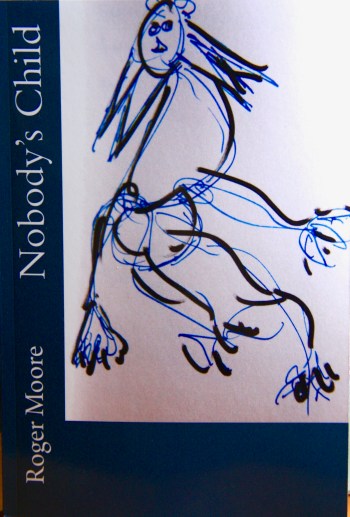
I ordered Nobody’s Child on Monday and it arrived on Thursday, two days after A Cancer Chronicle. Two books, two days apart. Wow. Nobody’s Child is a collection of short stories and Flash Fiction that deals with some difficult topics. A couple of the shorter pieces have appeared on these pages and will be familiar to the followers of this blog. Most of the material is new, some of it, very recent. Some of the stories have been published, others have received awards and honorable mentions. A shortened version of the collection, under the same title, was given an Honorable Mention in the David Adams Richards Fiction Prize of the Writers’ Federation of New Brunswick in 2016.

Let the fiction begin: “… so this is earth day and we light candles in our house and turn off the telly and the computers and sit there reading and writing, watching each other through the flicker of the candle flames, and listening to the sounds of the house, such subtle sounds, the creak of the siding, the click of a door, a blind moving in the room overhead, the tick of the grandfather clock in the hall … and the smoke rises from the candles and makes dark patterns in the stillness of the air … and yet, through the blackness, the bleakness of the candle smoke, a hand reaches out and holds me by the nape of the neck, and thrusts me back into a past which once again has come back to haunt me …”

Nobody’s Child    is available on Amazon.

Moonshine: FFF


fundy-05-mistwolfepipers-081

Moonshine
Flash Fiction Friday
Friday, 5 May 2017

Here, on the wharf, in Santander, I stand in the shadow cast by the Customs House and gaze at the moon path sketched out over the water. “Over the mountain, over the sea, that’s where my heart is longing to be.” I taste the bitter salt of homelessness and know that I will never belong in this world and that I will never find a place to call my own. Back home, I have a black and white television and a black and white dog. Here I have nothing. Back home, when I am home, I am a latch key kid. My parents leave for work at seven in the morning and my mother gets home about five every night. Those ten hours on my own are mine to do what I like with: but I must account for them. “What did you do today, dear?” And everything I say I do is checked. Did I make the beds? Did I do the laundry? Did I finish the ironing? Did I wash and dry the breakfast dishes? Did I clean the house from top to bottom?

Sometimes I strip and stand in front of the mirror in their bedroom and look at my naked body. It’s not much to look at. Once I stood there with the carving knife in my hand and deliberately cut myself across the ribs, just to feel the pain and watch the blood flow down. Other days I play cards against myself. That way one part of me always wins, but then the self I play against is always doomed to lose. Sometimes I wage battles with toy soldiers, moving them up and down across the carpet in front of the fire. Occasionally, I throw a soldier in the fire, just to watch him perish.

Sometimes I just sit on the back of the settee and press my forehead against the cool window. The rain is cold and cools the window pane. I know the sky is crying and sometimes I think I know why. I’ll go back to my boarding school soon. There, we are taught to be isolated and to live in isolation. The bullies will come and they will bully me. I have not grown much over the holidays and I know they will be even bigger, and even stronger, and even faster. I don’t want to go home. I don’t want to go back to that school. I don’t want to be bullied and abused. The masters cane me and the older boys beat me and the bullies force me to do things, unspeakable things, things that I don’t want to do. I have tried to run away but someone always brings me back and then they beat me for running away. “Don’t be a coward,” they say, “take it like a man.” And I do.

I look across the water. How beautiful is the Bay of Santander beneath the moon. I look up at the hills, at Peña Cabarga, at the hills from whence cometh my salvation. My grandfather walks towards me over the waves. He helps me choose stones and pebbles, helps me to fill my pockets with them. He takes me by the hand and gives me courage. He and I walk down the slip way, hand in hand, and then we walk out across the moon path and into the sea.

Picaresque Novels

img_0177


The Picaresque Novel
Wednesday Workshop
3 May 2017

The Picaresque Novel

             Think of a pendulum: at one end of the swing, we have the pastoral novel and the novel of chivalry. The knights errant meet shepherds and shepherdesses on their travels, and all are cultured and can read and write. The main characters, heroes and heroines, if you wish, express high ideals and maintain a cultured standard of thought and living. The knights, in particular, follow the path of chivalry and defend the poor and maidens in distress. The ladies, especially the shepherdesses, are all ‘as pure as driven snow’ and they go to their graves, in the immortal words of Miguel de Cervantes, ‘as virgin as the mothers who bore them’.

            At the other end of the pendulum swing and positioned there partly in contrast to the ‘perfect society’ of knights, shepherds, and shepherdesses, we find the picaresque novel. Most pícaros are men, though female pícaras do exist (la pícara Justina, for example), and the pícaro is an anti-hero. He writes in the first person singular and tells the story of his survival in the lower ranks of a corrupt and impoverished society.

            Wikipedia phrases it this way: “The picaresque novel (Spanish “picaresca,” from “pícaro,” for “rogue” or “rascal”) is a genre of prose fiction that depicts the adventures of a roguish hero or heroine of low social class who lives by his or her wits in a corrupt society. Picaresque novels typically adopt a realistic style, with elements of comedy and satire. This style of novel originated in 16th-century Spain and flourished throughout Europe in the 17th and 18th centuries. It continues to influence modern literature.”

            Lazarillo de Tormes, considered by many to be the first picaresque novel, was written in Spain and three editions appeared in 1554. Lazarillo is given by his mother to a blind man who agrees to look after the young boy in return for the boy’s services as a guide. Even today, a person who guides a blind man is still called a lazarillo in some places. The book describes the life of Lazarillo as he moves from master to master until he eventually establishes himself ‘at the peak of all happiness and the height of his career’ as the local town-crier, married to a cast-off woman with whom the celibate village priest has created three children.

             Lazarillo de Tormes, a book that never uses the term pícaro, establishes the basic rules for the genre. (1) It is an autobiography, or pseudo-autobiography, of the main character. (2) That character leads a peripatetic life, wandering from master to master, usually at the bottom end of society, but sometimes working in the kitchen or lower service of the great. (3) The picaresque novel also contains elements of humor and satire and in some cases, Guzmán de Alfarache, for example, has a moralizing purpose that is used to justify the immorality of the book.

            The church did not receive the picaresque novel well, especially when the satire and humor were aimed at the church. In the Lazarillo, for example, Lazarillo works for a seller of Papal Bulls who sets up an elaborate and deceitful charade in order to increase his sales. This charade involves a friend who poses as a doubter, is then cursed and goes into a fit, but recovers almost immediately with the blessing of the Papal Bull. Lazarillo de Tormes was censored by the Inquisition and appeared in an even shorter version that was called El Lazarillo Castigado, Lazarillo Punished, with all unwholesome references to the church removed.

            Perhaps the most famous picaresque novel, after Lazarillo, was El Buscón / The Swindler. It was written by Francisco de Quevedo in 1601 and circulated in manuscript form until it was published, illegally I should add, in 1627. The novel was so scandalous that it was denounced to the Inquisition and Quevedo often denied writing it. His intricate and heavily conceited style is inimitable, however, and the book contains several references to his own life. It is difficult imagining any other person as author.

            Wikipedia translates pícaro as ‘rogue’ or ‘rascal’ and this illustrates the pleasant and humorous scallywag style that the character often has. However, the darker, more murderous side of the pícaro emerges more clearly when ‘swindler’ (Penguin Translation) or a stronger term is used. In this fashion, the pícaro (rascal or rogue) can be associated with Tom Jones or Oliver Twist, while his darker, more reprehensible side may be associated with by Bill Sykes or Fagin himself.

            More important, perhaps, is the long life that the picaresque has had in Western Literature as the traveler, the journeyer, the observer, the young man who is ‘down and out’,  works his way across the land, surviving, adventuring and commentating.

CROCODILE TEARS: FFF

img_0184

Crocodile Tears
Flash Fiction Friday
28 April 2017

The crocodile lives in the wind-up gramophone. The gramophone lives in the top room of the house. The boy winds up the gramophone with a long brass handle, round and round, till the spring is tight. A tight spring frightens the crocodile and he sits quietly in his cage. But as the record goes round and the spring loosens up, the crocodile roars and demands to be freed. He’s the Jack that wants to jump out of the box. His long-term dream is to eat up  the witch who looks out of the window and watches the boy as he plays in the yard.

Last week the boy decided to dig. He picked up a spade and dug a deep hole that went all the way down to his cousin in Australia. The little dog laughed and joined in the fun, scraping with his front paws and throwing earth out between his back legs like happy dogs do. The witch in the window cackled with laughter and the rooks in the rookery rose up in a cloud and cawed in reply. Only the boy is able to see the witch and he only sees her when she sits in the window. But he knows she wanders through the house, and the air goes cold when she enters and exits the rooms, especially when she brushes past the boy and sweeps his skin with her long, black gown.

When the boy got tired of digging, he drove the spade into the ground and left it standing by the hole. When his father came home it was well after dark. He didn’t see the hole but he saw the spade. So he didn’t fall in to the shaft of the coal-mine that went down to Australia. No free trip to the Antipodes for that lucky dad. He beat the boy for that, for digging that hole. Then he beat him again for lying: the hole didn’t go to Australia. Australia was too far away and the angle was wrong. The boy laughed when he saw that his dad didn’t know where Australia was.

“Ha-ha,” he laughed. And his dad beat him again, this time for laughing.

Sometimes at night the boy can hear rats running through his bedroom walls. They scuttle and scuffle as they hunt through the guttering. The crocodile growls from time to time in that upstairs room. The witch cackles with laughter. The boy puts his head under the blankets and cries himself to sleep. Sometimes he wishes the crocodile would come and eat up his dad. But he loves his dad like the dog loves his dad even though his dad beats both the boy and the dog. Sudden beatings, they are,  that arrive without warning: hail and thunder from a sunny summer sky.

“Well, you’re not laughing now,” his father announces. “A beating a day keeps disobedience away.  There will be no disobedience in this house.” When the father beats the boy, the dog cowers beneath a chair. The boy hears the crocodile growl and smiles through the tears as he wipes salt water from his eyes.

“Are you laughing at me? I’ll make you laugh on the other side of your face,” the father taunts the son and beats him again.

The crocodile growls. The old witch cackles. The rooks in the rookery rise up in the air and the father’s hair stands up on end like it does when lightning lights up the sky, and thunder rolls its drums, and the sky’s wheels rattle like an old warrior’s chariot whose wheels have not been greased. The veins stand out in his father’s cheeks as the old man raises his hand to the boy.

The old man tells the same old jokes again and again. The boy must always remember to laugh at them as if he had never heard them before. If he doesn’t laugh, his father gets angry. Some of the jokes are good, and the boy likes the one about the Catholic who goes into the bar in Belfast and asks the barkeep if they serve Protestants. Or  is it the one in which the Protestants go into the bar and ask the barkeep it they serve Catholics … anyway … whatever … one night, the boy dreams and it happens like this. The crocodile escapes from the gramophone. The witch hands the boy a leash and a collar and between them they restrain the crocodile.

“Walkies?” says the boy.

The crocodile nods his head and crocodile and boy walk down the street to the Kiddy’s Soda Fountain on the corner.  When the boy walks in with the crocodile, the waitress raises her eyebrows and opens her mouth.

“Do you serve grown ups in here?” the little boy asks her.

“Of course we do,” says the waitress.

“Good. I’ll have a glass of Dandelion & Burdock for myself and a grown-up for the crocodile. Please.”

The witch says grace, the boy sips his Dandelion & Burdock, and they all shed crocodile tears as the boy’s pet crocodile chomps on the fast disappearing  body of the boy’s dad.

Scarecrow

IMG_0085

Scarecrow

Flash Fiction
Friday, 21 April 2017

            Sometimes at night I hear nocturnal animals walking across the lawn outside my bedroom window. Intruders in the garden, they rattle the feeders, walk dark through the woods, and sometimes howl at the coyote moon. My heart pumps sudden blood, rapid, through my veins and toes and fingers twitch as I toss around, restless, in my bed.

            Below me, in the hall, the grandfather clock ticks the night away. I stitch myself up in my dreams, count the black sheep in the family, and iron old ghosts upon the ironing board until they are as flat as the white shirts we wore in boarding school on Sundays.

            If I close my eyes, they rise up before me, those Sunday shirts, flapping their arms, and mouthing their apologies for the sorry life they made me lead. No, I didn’t need to spend those days praying on my knees before the stations of the cross. Nor did I need to ask forgiveness for all the transgressions pulled from me, like teeth, in the weekly confessional.

            Marooned in a catholic cul-de-sac, I went around and around in rigid circles like an academic puppet trapped in the squared circle of an endless syllogism. Who locked me into this labyrinth of shifting rooms where sticky cobwebs bind windows, doors, and lips? Why does the razor blade whisper a love song to the scars crisscrossing my treacherous wrist? Who sealed my lips and swore me to secrecy?  And why?

            A tramp with a three-legged dog, I sleep beneath a pier at midnight and watch the waves rolling up the summer beach to catch me out. Sometimes I steal a deckchair, place it at the edge of the sea and bid the tide to cease its climb. The moon winks a knowing eye and the waves continue to rise. Toes and ankles grow wet with wonderment and I shiver at the thought of that rising tide that will sweep me away to what unknown end?

            Last night I wrapped myself in a coward’s coat of many-colored dreams. My senses deceived me and I fell asleep in a sticky web spider-spun by that self-same moon that hid among the clouds and showed her face from time to time. My fragile fingers failed to unravel all those knots and lashings and I was a child again walking the balance beam that led from doubt to knowledge.

            A thin line divides the shark from the whale and who knows what swims beneath the keel when the night is dark and the coracle slides sightless across the sea? I gathered the loose ends of my life, wove them into a subtle thread, and made myself a life-line that would bind my bones and lash my soul to my body’s fragile craft.

            What could I possibly have dreamed as I paraded the promenade a stone’s throw from the barracuda? I crossed my fingers and the beggar at the gate rolled up his sleeves and bore witness to my penitential wounds.

            “How many times,” he asked, “can you pay those thirty silver pence? Don’t they lie heavy on your eyes and heavier on your heart?”

            “Indeed they do,” I answered. “Yet the debt must be paid, but I don’t know how, and where, and when, and to whom?”

            Carnivorous was the carnival he promised and he turned my small world upside down. With coals for eyes and a carrot nose, a scarecrow descended and devoured my town in a clash of flashing teeth. Beneath the waves, the conga stamped its sudden feet of flame. A sea parrot scraped its red and yellow beak against a rainbow of crusty, feathered rage. I awoke to the dog’s sudden tongue in my mouth: an invasion of salt, saliva, and wet, crumbling biscuit.

            That night I opened a bottle of Scotch and drained it dry. I took no prisoners. Around me, the dead and dying licked their wounds as they sank lifeless to the bottom of the glass.

            “Hickory-dickory-dock,” said the mouse as he ran up the grand-father clock. But that particular clock stopped long ago, at midnight, when the Queen of Hearts tied a dead rat to the pendulum, the house slipped sideways, and my heart was filled with woe.

            This morning, fresh snow. The garden basks white beneath pale sunshine. The back porch bears no footprints. The raccoon has abandoned me and chipmunk and squirrel have turned their backs. Today, the scarecrow will scare those nightmare crows away and not a memory will survive to haunt my waking dreams.