Spotify Remember to scroll down to the correct audio episode.
Chaos Theory
Chaos theory: it states that we don’t know what we’re doing and it wouldn’t really matter anyway, even if we did, because life lacks meaning, chance rules, and Lady Luck with her lusty locks attached to her forehead and she, all bald and hairless from behind, must be caught as she arrives, because later is much too late, and when past, she’s gone for good and our good luck’s gone with her, and we’re left for ever, sitting there, head in hands, bemoaning all that milk spilled before we ever had a chance to actually taste it.
Click on the link below to peruse my books for sale.
Spotify Remember to scroll down to correct audio episode.
False Spring
Winter whiteness slowing now, and the tide that full bore crashed white waves against our house receding to garden’s foot where warm roots wait their waking.
But winter still stalks the land and April brings snow, more snow, as if there will never be an end to these waves of whiteness, thinner, trimmer, true, but unwelcome as spring days grow longer and sunrise beckons ever more early with Crow and Blue Jay breaking the morning’s peace into raucous pieces as they bounce from branch to branch …
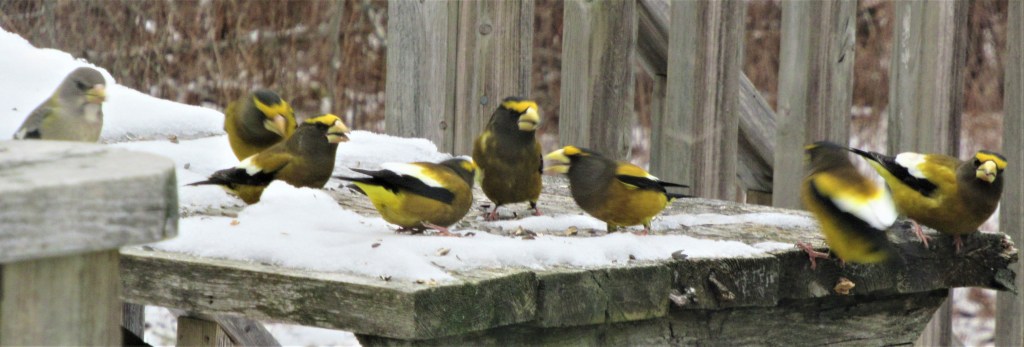
.. and brown the earth, and barren, and bare, the robins finding no food and flying on, while the passerines just call and pass us by, finches at the feeder, purple and gold, yet singing no songs, and the robins, hop-along casualties of this long-delayed spring that promises, to come but never arrives …
Click on the link below to peruse my books for sale.
Comment: Not so bad this year, the weather, but it’s been a funny winter, most strange, and totally discomforting, what with the pandemic, the lockdowns, the relief of going back to yellow, fresh lockdowns, and so many things happening everywhere while we were trapped inside where nothing was happening, save in the various forms of virtual reality that replaced quotidian reality with a mixture of faux, fake, and false, all wrapped up in a brown-paper bag of honey-sweet smiles and scowls, raised voices, and bottled anguish.
Spotify Scroll down to hear appropriate audio episode.
Not on My Watch!
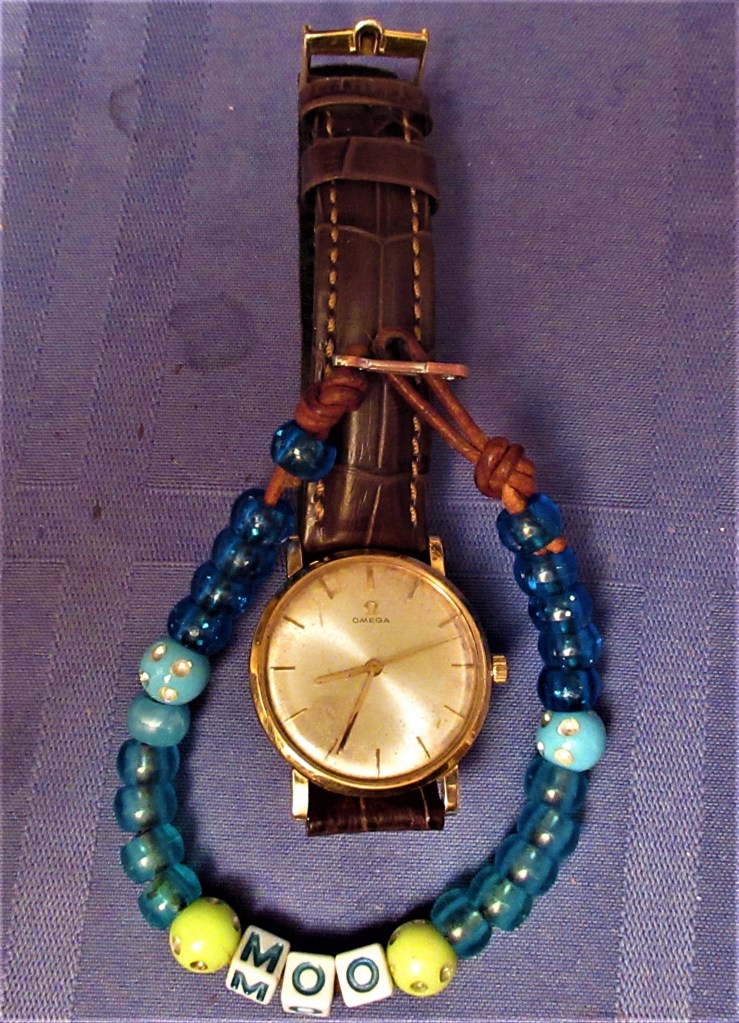
The black-and-white cat sits in the window and watches the ginger cat that lounges on the porch and watches the five deer that stand in the woods at the garden’s foot and watch the neighbor’s little dog that watches the raccoon that disdainfully removes the garbage can lid and fishes out the food, scattering paper and wrappers and cans as four crows sit in the tree and watch the wind as it whistles the papers round and round in a windmill that wraps itself round the feet of another neighbor who is watching the raccoon with open-eyes as a seagull flies above him and bombs him from above, damn seagulls, and the bird poop falls right on my neighbor’s watch face and he cries out “Oh no, not on my watch!”
Click on the link below to peruse my books for sale.
Comment: The photo shows the Omega watch that my father gave me for my 21st birthday. I am wearing it now, together with the bracelet that my four year old granddaughter, his great-grand-daughter, gave me for my birthday two years ago. Four generations in one photograph. Unbelievable.
Spotify Remember to scroll down to correct audio episode.
GBH on the TCH
She climbs up from the river where she’s been drinking. She ripples tawny, red, and orange across the TCH.
As quick as a fox, they say: black socks, brush winter-thick held high and proud, as quick as a shadow melting into dark woods on the highway’s far side.
Her cub follows close behind, but he’s not quite as quick. A passing car tries to swerve only to grind him into the gravel.
Sudden, that fox-stink, still clinging to my nostrils like a slow-motion death, dreamed at night, frame by bitter frame, until a life-time of silence seals the lips of parted lovers.
Click on the link below to peruse my books for sale.
I opened the car door and he ran across the parking lot and jumped into the back seat.
“Where have you been?” I asked. He thumped his great tail, sniffed, and licked my hand.
As we drove home, he thrust his head between the seats and placed his paw upon my shoulder. Then he licked my ear and the side of my face.
I pulled into the garage and let him out of the car. He raced to the end of the drive, surveyed the neighborhood, and drilled an invisible pee into the snow.
I whistled, and he ran back to the door, whimpering and scratching, impatient. I held the door open and he bounded in. “You’re back home now,” I told him.
He ran to the cat’s bowl and lapped some water, scoffed her kibble, and lay down in his usual place. At night, he lies beside me in bed, a fluffy spoon carved into my body’s curve.
In the morning, he walks through the kitchen and doesn’t make a sound. The cat senses he’s there and bristles and hisses at rainbow motes dancing in the sun.
He’s sitting beside me now, head on my knee, as I type these words, one-handed, because I’m scratching him in his favorite spot just behind his ear.
We are all so lonely, locked in our cardboard castles, no view beyond the battlements, save for the wild lands, the forest, from which the enemy might come.
Wild beasts, we cage ourselves in our isolation and bang our heads on the bars we built to protect us.
Sometimes, at night, we ascend to the topmost turret to observe the stars that dance above us, tracing our lives in their errant ways.
And is this freedom, this night sky, with its wayward planets, trapped in their overnight dance and weaving our futures, for ever and ever, amen?
Your flightless fancies flit through a darkness of despair, as awkward as auks, as clumsy as penguins stranded in zoo cages far from their native seas, as meaningless as the dodos, as dead as the ashes lying cold beneath the crematorium’s fire.
A sudden bucket clatters down the well, but it draws no water. Winter ice will not melt. Desert sands may burn boat and feet but they will not warm your glacial heart. The manner of your second coming brings forth no nourishment.
A spider web on the wall grows into a mirror. Face to face, present and past become ambulant tenses that foretell no conditional. No future beckons, let alone a future perfect. A dislocation of infinitives stretches into the infinity of an invisible futurity of never-joining railway lines.
Spotify: Remember to scroll down to the appropriate audio episode.
Driving at Night
Once upon a time, my hair was brown and curly, but now it’s straight and as white as this drifting snow clogging the windshield.
I smooth down my hair with my fingers: swollen knuckles, crooked joints. I burn with feverish thoughts yet cold blood shivers through my arteries.
Headlights blind me in my good eye. The other one’s useless when I drive at night. It’s a long time since I last saw, let alone touched, my toes. Putting on my socks or tying my shoelace is a morning no-no.
Short of breath, of agility, with no ability to climb up stairs: I stop to catch my breath, pause, and shudder with despair.
What happened to my youth? Where did my childhood go?