Fake News!

Fake News!

A long time ago, wrapped in the stifling chrysalis of academia, a friend of mine tried to flutter her wings by making a joke at a very serious conference. She was delivering a paper on one of my favorite Spanish poets, in which she examined the sundry variants of a sonnet that the poet first wrote in 1603, then re-wrote in 1613, revised again in 1627-28, and revised a couple more times before its final revision in 1643, about two years before his death (1645).

At the end of her paper, she was caught off-balance when faced by an apparently serious question from the audience “Did the poet make any more revisions after 1645?” In an effort at humor, she replied, “Well, actually, no. But when they were carrying his body to the church for the funeral, he popped his head out of the coffin and proclaimed in a loud voice ‘Hell, no, I won’t go. I haven’t finished revising the poem yet.’”

This off-hand academic pseudo-joke was greeted with a babble of excited voices and an elderly fellow scholar clapped his hands, exclaimed “Wonderful!” and, in the ensuing silence, asked her what documentary evidence she had for this astonishing revelation, hitherto unknown to the academic world. If she was off-balance before, she was clearly reeling at this stage: a punch-drunk amateur academic swaying before the hypnotic fists of Dr. Muhamad Ali. She smiled sweetly, said she would produce the proper evidence at the appropriate time, and left the podium.

Later, sharing drinky-poos with the some fellow scholars, I listened to her as she made excuses for her strange sense of humor and I smiled as she explained the situation to them. They were not amused. “You, madam, are an acknowledged expert in your field,” one of them told her. “Your fellow academics trust you and believe you when you make such statements. You must be very careful about what you say.”

Fake news, indeed!

Now I must make an apology on my own behalf. Alas, if you read one of the blog items I posted recently, you might be puzzled by the Gazunda tree. I am forced to admit there is no such thing, to the best of my knowledge, as a Gazunda tree, not in the main square in Oaxaca, nor anywhere else in the world. Of course, when it rains people have been known to go under certain trees to use them as an umbrella and thus to take shelter from the rain, but this is the full extent of the origin of the name: the tourist or the golfer or the walker or whatever goes under (say it fast — Gazunda) the tree when it rains. There is nothing more to the Gazunda tree than that little joke.

And this brings us to a really serious series of questions: how do we know things are true? How do we establish the truth of a statement? Why do we believe some people and not others, some facts and not others? How do we choose between a series of alternate truths all of them presented as factual realities when, in actual fact, not all of them are true? This leads us on to the basic foundations on which our knowledge is built: how do we distinguish between scientifically established facts, and hearsay, and gossip if we are ignorant of basic scientific knowledge and principles?

To this we must add the triple increases that threaten us. These are (1) the increase in the availability of real scientific knowledge that bombards us every day with fresh facts and new information; (2) the increase in sources of information and the easy access to those sources; (3) the fact that many of these sources, far too many in my opinion, present us with a fictional or heavily biased version of a pseudo- or alternate truth. And yes, in light of telling the truth, the whole truth, and nothing but the truth, we are indeed entitled to question the existence and indeed the very meaning of these words: truth and alternate truths.

Such questioning is present in the writings of some of the early-modern philosophers. This is exemplified in the following passage that comes, I think, from René Descartes:

“There is no earth, no heaven, no extended body, no magnitude, no place and that nonetheless I perceive these things and they seem good to me. And this is the most harrowing possibility of all, that our world is commanded by a deity who deceives humanity and we cannot avoid being misled for there may be systematic deception and then all is lost. And even the most reliable information is dubious, for we may be faced with an evil genius who is deceiving us and then there can be no reassurance in the foundations of our knowledge.”

“There can be no reassurance in the foundations of our knowledge.” These are chilling words and present us with the unfortunate fact that unless we ourselves, each one of us, to the best of our abilities search out the absolute truth about all we hear, say, and do, we are indeed lost and we must wander in the dark with no light to guide us. ‘A sad life this, when beneath the axe, we have no time to check our facts.’ 

Name the most expensive personal item you’ve ever purchased (not your home or car).

Daily writing prompt
Name the most expensive personal item you’ve ever purchased (not your home or car).

Name the most expensive personal item you’ve ever purchased (not your home or car).

I began by checking the meaning of item and found the following – an individual article or unit, especially one that is part of a list, collection, or set. Then I started to think about the meaning of meaning. Is an education an item? Is it an individual unit? Can it be considered part of a list, collection, or set? Let’s put it this way – I started school when I was four years old. I continued until I was 18. Along the way I collected many items of knowledge and many certificates to prove it. Then I went to Paris for a year to perfect my French – now that was an expensive adventure, I can assure you of that. Next came Santander, Spain, for a whole summer, to do for my Spanish what Paris had done for my French. I guess I didn’t really pay for these items, as my parents did, though I helped a little, with odd jobs here and there.

These adventures were followed by 3 years of undergraduate studies. They were covered in part by my local government authority, for which I am eternally grateful, also by my parents, and then I too assisted, again with odd jobs and summer work. Next came graduate school, at the University of Toronto. This was financed by my earnings as a Teaching Assistant and then a Teaching Fellow. My beloved and I got married in Canada, and she found work and also assisted with graduate school and the general cost of living. Assisted? She carried me along when the work load grew too heavy.

Then there was a Canada Council Doctoral Fellowship that helped finance two more years of study in Santander, Spain, where I completed manuscript research at the Biblioteca Menendez y Pelayo. This was followed by my first job, as a lecturer, at the University of New Brunswick, Canada. I taught full-time while completing my doctorate, but my education did not stop there.

I pursued coaching certificates with the National Coaching Certification Program of Canada and soon related coaching methods to in-class teaching methods. This revolutionized my teaching. As did a Certificate in Multi-Media Studies (at UNB), followed by courses in Digital Film and Video. Then came a Teaching Certificate from IATHE – the Institute for the Advancement of Teaching in Higher Education (based in Ottawa, but no longer extant). My Certification process was topped off by a Certificate in Creative Writing from Humber College, Toronto.

All of these degrees and certificates cost money. All contributed to the list of items that go together to form my education. But a personal education, in the meaning I give to the word, goes way beyond an accumulation of certificates. It is a life -long process of growth, personal development, and understanding, of reaching out to other human beings and helping them to create their own lives and their own paths to life-long learning.

Has this been expensive? You bet it has. But its worth is priceless compared to remaining static and enmired in a past knowledge that never develops and never grows, as sometimes – I might even write ‘often’ – happens when learning stops with the acquisition of the Ph.D.

When asked what I teach, my reply is always the same – “People, real, live people.” And that is something that I continue to do whenever and wherever I can. “To know the cost of everything and the value of nothing” – I scarcely remember – nor do I care to know – what cost I paid for each step along a road along which I am still travelling. But I do know and totally appreciate the value of the continuing education that I working so hard to buy.

What was your favorite subject in school?

Daily writing prompt
What was your favorite subject in school?

What was your favorite subject in school?

I never had one. I hated every school I attended with a passion. I hardly passed an examination during my school days and I remember, in Mathematics, dropping from Level I, to Level II, to Level III. I failed the first exam in Level III and earned this comment on my school report “Now I know why he descended to Level III.” I still have those school reports, incidentally, complete with the signatures of the Masters of my – limited, very limited – universe. How I appreciated Pink Floyd’s The Wall, when I first heard it. “We don’t need no education, we don’t need no thought control, no dark sarcasm in the classroom, hey, teacher, leave those kids alone. You’re just another brick in the wall.” And yes, I built walls around me, many of them. But I survived.

Another comment from that report: “He has read widely and indiscriminately – I do hope it has done him some good.” That reading included the complete works of Jean-Paul Sartre and Albert Camus, lots of Andre Gide, the theatre of Jean Anouilh – some of which I saw live in Paris -, an immersion in the Existentialist philosophical movement, the complete plays of Corneille, Moliere, Racine, Beaumarchais, a variety of French Poets, including Apollinaire and Jacques Prevert, a selection of Spanish poets, novelists, and playwrights, and a series of modern-(ish) British poets, including John Manley Hopkins, Wilfred Owen, Dylan Thomas, Vernon Watkins, and ‘indiscriminate others’! I wrote a great deal of poetry at that time, some of it in imitation of Francois Villon and Gilbert Chesterton (of whom I read many works as well).

Alas, my enthusiasm was not appreciated, especially as I scorned many of the texts that I was forced to read for my examinations. I should add I also scorned the limited, authoritarian interpretations of them that were forced upon us. The slavish imitation of ‘teacher’s remarks’ gained an A+. Any attempt to think outside the authoritarian boxes built oh so carefully for us, earned an F-.

But, if I had to choose one subject, it would be Myself. Protecting that self, developing that sense of self, growing into myself, understanding myself, and finally, having left those schools, those ideas, and that country far, far behind me, becoming the self that I am – and have always wanted to be. “What do you want to be when you grow up?” “I just want to be me.” And I am, thank heavens. And it’s a good job too, for, as Oscar Wilde once said “Everyone else is taken.”

What are you most proud of in your life?

Daily writing prompt
What are you most proud of in your life?

What are you most proud of in your life?

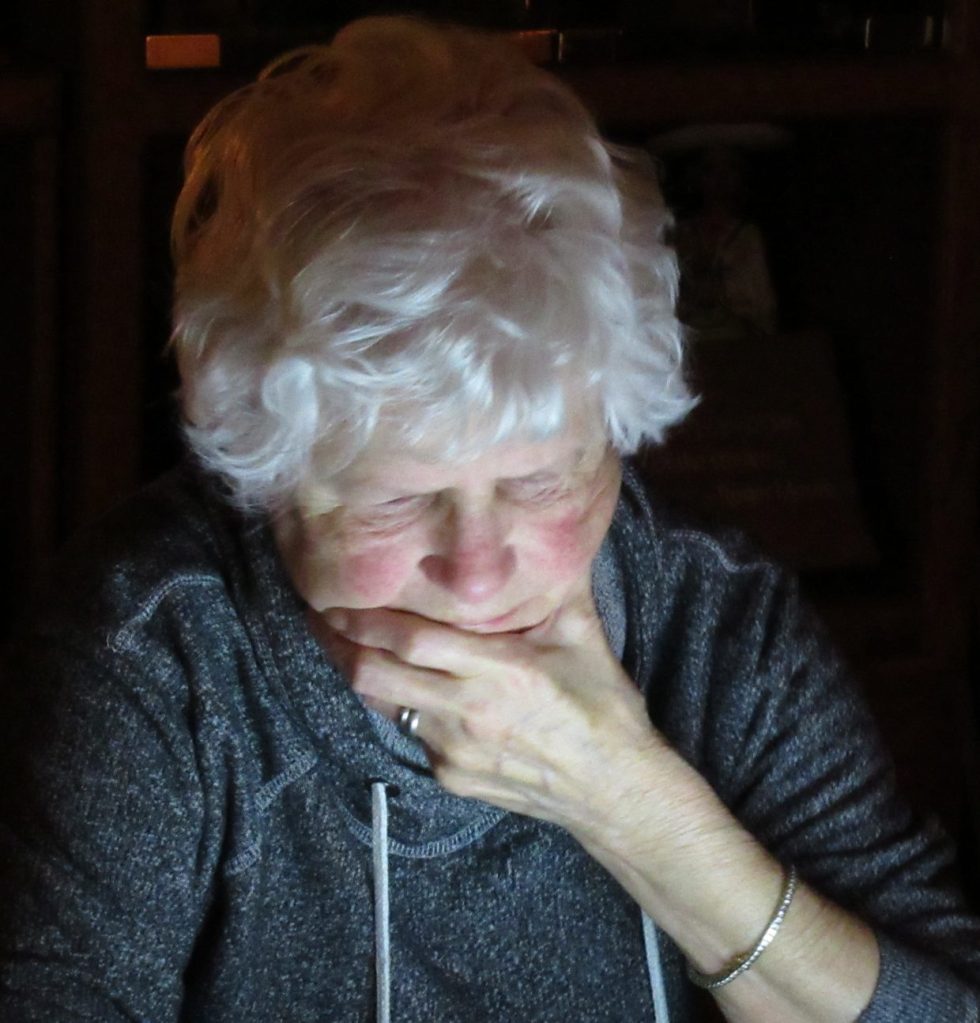
The young lady in the photograph above. We met, at a boarding school dance, in England, when we were both seventeen years old. We have been together ever since. Why am I so proud of her? Let me count the ways.

When she discovered my love of Spain and the Spanish language, she took time out from her own career in order to learn Spanish. When I asked her why she was learning the language, she replied ‘because if I am going to be with you, I want to share your life, and that means loving the things you love.’ We became engaged in Santander, Spain, on her 21st birthday. Then, the following year, when I received an offer to study and teach at the University of Toronto, she promised me that if I called her, she would come out and join me.

I called her as a Thanksgiving Gift from my Canadian family. She packed up her clothes and her career, bought a wedding dress, and travelled to Toronto that December. We got married on Christmas Eve. We had very little money. We didn’t have a wedding photographer. Nor did we have a honeymoon. I guess we never needed one. We had just enough money put by to last us until the end of January. So, First week of the New Year, she set out in search of a job. A qualified Diagnostic Radiographer, she was hired by the Doctor’s Hospital in Toronto, and she financed my graduate studies for the next three years.

Our next adventure was a Canada Council (as it was back then) Doctoral Fellowship that took us back to Spain where I completed the research for my thesis at the local library, with its trove of manuscript documents. We returned to Canada after two years, and took up residence in Fredericton, New Brunswick, where we still live. Her adventurous life led her to a certificate in accountancy, taken via a correspondence course. Then, she presented me with our daughter. We bought an American Cocker Spaniel and she started showing and grooming dogs, becoming Show Secretary of the Fredericton Kennel Club. She trained and groomed two Canadian Champions, an ASCOB (Willy) and a Parti-color (Smudge).

Our daughter decided she wanted to be a gymnast. Parents were requested to ‘get involved’ with the local club and my beloved became a gymnastics judge. She rose in the gym circles and became first provincial judging chairperson and then a nationally qualified judge, officiating at the National Gymnastics Championships and also at the Jeux du Canada Games.

She travelled with me to Oaxaca, Mexico, and fell in love with the Pre-Colombian Mexican Codices that we found there in abundance. She studied them carefully and then taught me all about them. I, in my turn, introduced them to my own students. When I took my first Multi-Media Courses at the University of New Brunswick, she followed them with me. The result was two-fold – our first web page which she built with with HTML, no templates in those early days, followed by our online Quevedo Bibliography. This, about ten years later, morphed into the online searchable data base that she built with the assistance of the technicians at the Digital Library in Harriet Irving Library.

Now, we are growing old together – such sweet sorrow. this Christmas we will celebrate 57 years of marriage. And yes, my beloved is still my most valuable Christmas present – and the person of whom I am most proud. I remember the old Worthington beer advertisement. “Behind every good man, there’s a good woman.” The cartoon shows a lady carrying a bottle of Worthington.

My beloved has stood behind me all my life. She has carried for me, not a bottle of Worthington, but the burden of assisting, helping, encouraging, supporting, carrying the load when it became too heavy for me. She has been a silent partner in so many ways, but one without whom I would be nothing.

If you had a million dollars to give away, who would you give it to?

Daily writing prompt
If you had a million dollars to give away, who would you give it to?

If you had a million dollars to give away, who would you give it to?

The key word here is “who”. Who suggests an individual – children (just choose one and make the rest jealous), grandchildren (copy the above), a friend (wow, that would make the family happy). So, let us choose another set of words – If you had a million dollars to give awaywhat would you do with it? Now that’s a better question.

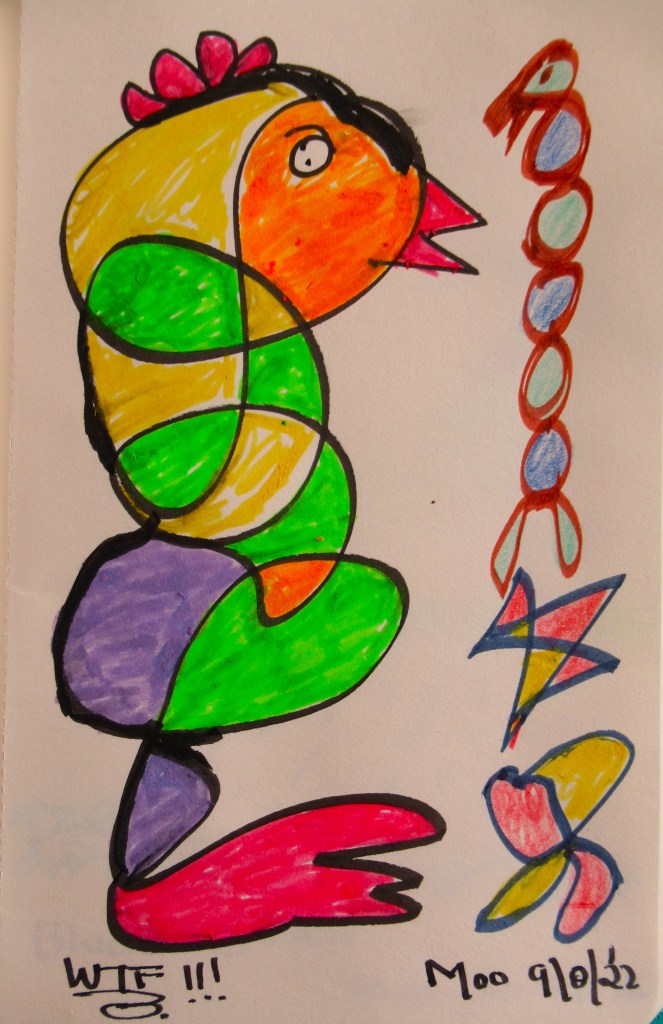
Look at the painting above. Bas Bleu was the name given to French women intellectuals who often wore dark blue stockings to show their difference. But check out Moo’s bas bleu – she has blue stockings, but not shoes. No shoes is a sign of poverty (or extreme holiness). I’ll go for the former. I would give that bas bleu and all her colleagues and lookalikes a chance at some security and a more secure intellectual future.

How? I would set up a needs-based scholarship fund for female students with special needs – indigenous women from the first nations, single mothers who need help, support, and encouragement, older women returning to the university, some of them with little or no financial support. This, I believe, is one of the most important things we need to do to improve our university system. A million dollars at invested at 5% would return $50,000 a year. That would provide five scholarships at $10,000 for five financially deserving women.

Can it be done? Of course it can. I know. I have already set the wheels in motion for such a fund to be established when my beloved and I have had our last twitch and fallen off the perch. Alas, the sum invested is a lot less than $1,000,000. I wish I had more to give. But every good thought counts and every dollar, to a person in need, is a step along the way.

What TV shows did you watch as a kid?

Daily writing prompt
What TV shows did you watch as a kid?

What TV shows did you watch as a kid?

Well, first of all I want to define the age group that outlines the meaning of ‘kid’. Here’s one definition: What age range is a kid? Children (1 year through 12 years) Adolescents (13 years through 17 years. They may also be referred to as teenagers depending on the context.) If we start with the 1-12 year old age group, then I can safely say I had no favorite TV shows as a kid, quite simply because during those years, we didn’t have a TV. Ipso facto, not having a TV, I couldn’t watch one.

That said, our first family TV was bought by my maternal grandfather in June, 1953. It was very small, black and white, very grainy, and was the only one on the street where he lived. I remember all of us crowing into the sacred room where the TV stood and watching the Coronation of Queen Elizabeth II. I was 9 years old at the time. I don’t remember much about the Coronation, but it was my first TV show.

Early TV. In the beginning, there were black and white sets. The BBC had only one channel. It came on from 12 noon until 1:30 or 2:00 pm, then shut off until 5:00 pm when it opened for evening programming until 9:30 pm or 10. I was safely tucked into my bed by then. And since I visited my grandparents at odd times, I rarely saw any TV shows. I do remember Sooty, a hand puppet, hitting Harry Corbett, the puppet-master, with a hammer (!), and I have vague visions of Muffin the Mule, a string puppet, dancing on a piano.

By the age of nine, I had been removed from my first boarding school and was attending my second. There were no television sets in boarding schools in those days. So, guess what? There were no favorite programs. In the holidays, with both parents working, to make enough money to send me to boarding school, as they so frequently told me, I often spent time with aunts and uncles (no TV) or with my paternal grandmother (no TV). The bungalow was our favorite summer residence, and that didn’t even have running water or electricity, let alone a TV set. It had one radio, an item of religious importance, that ran off a battery, and was for the sole use of my uncle. It sat on a high shelf and was untouchable. One bungalow in the bungalow field actually had a telephone, and that was only used for emergencies.

So, in the age group I am writing about, age 1-12, I rarely, if ever, saw a TV set and I certainly had no favorite programs. Radio programs, yes. But that is a different story, one that tells of a single radio in the dormitory, to the sound of which, eight or ten or twelve boys, in rows of beds, fell asleep to the sound of music. It also tells of prowling masters who would enter the dorms and switch the radios off. I will not go into the horrors of boarding school life during those formative years. I have done that elsewhere. But the shows that I remember were all true life horror shows where real flesh and blood, in the 6-12 age group, suffered appallingly, at the hands of older boys and brutal masters. But those shows, and I remember them well, were never seen on TV and were denied vehemently by the perpetrators, boys who had been bullied in their turn, and masters who claimed they were only doing their duty and making men of us. Men, indeed, and an adulthood that I, among many others, never wanted to enter.

Modern Society

Daily writing prompt
What would you change about modern society?

What would you change about modern society?

Good question – what indeed? First, define society. It’s not as if a single society dominated the world. Do we then distinguish between the world, this geoidal planet on which we live, and the multiple societies that inhabit this world? If we do, then what right do you, or I, or any other individual have to change any or all of the world’s cultures and societies? And how do we change them?

Many ways have been tried in the past, very few successfully. The Spanish Inquisition burned many books and censored others. Other book burnings and spurnings have taken place, and in some places, they are still happening. But are they effective in the long term? Good question. Short term, maybe. Long term, I am not so sure.

Do we limit education, and by extension, knowledge, to a few , limited people, who believe what we believe, and do what we want them to do? That has been tried as well. Short-term successes, but long term disasters. As well as depriving people of education and books, we can also enslave them. This is still happening in many places.

So, another definition: what do we mean by change? Change for the better? Change for the worse? Change for change’s sake? Change for the betterment of our own selves and the devil take the hindmost? And what do we mean by modern? So many questions – so few answers.

Albert Camus once wrote that he was ‘optimiste, quant au monde, pessimiste quant a l’homme‘ – an optimist where the world is concerned, a pessimist where humankind is concerned. Personally, I am not sure that this particular thought stands up any longer. Is it still possible to be optimistic about a planet that we are capable of blowing to smithereens, a planet, moreover, that is currently suffering from wind and rain, fire and flood, famine and war, pandemic and a pollution like none we have ever seen before?

How can I change the world? I am just a single human being. Well, I am a married one, actually. But I only have one vote. I rather fear that single vote (votes don’t marry and produce offspring) will have little effect on my ability to make any change at all to modern society.

Pass the soap and a towel, please, as a certain person said a long time ago. I want to cleanse my hands and purge my soul. I am too old a dog to try and learn new tricks.

Broken Laws and Broken Rules

Broken Laws and Broken Rules

Rugby Football is a wonderful game. It has laws, not rules, and yes, like almost every rugby player I have known, I have broken the laws, and got away with it. How? Stepping off-side, handling the ball in the ruck (old laws), blocking and obstructing ‘accidentally on purpose’. I asked one of my instructors on a national coaching coach whether we should be coaching school age players to play outside the laws. His reply was most instructive. “The laws – there’s what the law book says, what the referee is calling on the day, and what you can get away with. You get away with what you can.” He was a national level coach – so much for the laws of rugby.

There is a difference between the rule of law, specific laws, and rules. Life in various boarding schools, twelve years, from age six to eighteen, taught me that rules were made to be broken. No talking after lights out. Whisper away – just don’t let yourself be heard by the prefects or monitors listening outside the dormitory door. No hands in trouser pockets. So – stick them in your coat pockets. No smoking – well I didn’t smoke, never have. But I know many who did but very few who got caught. No talking in prep – so I taught myself and a couple of friends basic sign language – the alphabet mainly. You may not place butter on your bread – so put the butter on the bread and turn it upside down when you eat. And no, that wasn’t me. No reading in the dormitory after lights out – so, go to the toilet, with a book in your pajamas and sit there and read Lady Chatterley’s Lover for as long as you want. You may only wear ties of a quiet color. So, wear a V-neck sweater and make sure the nude lady on your quietly colored tie cannot be seen by the masters. It is forbidden to enter a public house. So, sit outside in the garden. It is forbidden to drink beer. So, order some cider – it was the West Country, after all. And remember that rules, especially school rules, are often asinine, ie -stupid, like an ass – and made to be broken.

“The law is an ass is a derisive expression said when the the rigid application of the letter of the law is seen to be contrary to common sense.” Well, that is quite explicit, as is this – “This proverbial expression is of English origin and the ass being referred to here is the English colloquial name for a donkey, not the American ‘ass’, which we will leave behind us at this point. Donkeys have a somewhat unjustified reputation for obstinance and stupidity that has given us the adjective ‘asinine’. It is the stupidly rigid application of the law that this phrase calls into question.” Both quotes come from the following site – and I am indebted to the writers thereof – https://www.phrases.org.uk/meanings/the-law-is-an-ass.html

It is well worthwhile to remember, not just the law, but the spirit of the law. I can honestly say that I have never broken a law or a rule in such a way as to cause someone else to get hurt, physically or emotionally. Play up, play up, and play life’s game – ludum ludite – I have always done so – and always have I stayed within the spirit of rule or law.

A Very Spanish Omelet

A Very Spanish Omelet

Spanish Omelets – I learned how to cook them in Santander, Spain, when I was attending summer school at the Universidad Internacional Menéndez y Pelayo. No – I didn’t learn at the university. My landlady taught me. She always left me an egg and a potato for supper. The first night she showed me how to cook a tortilla española. She showed me how easy it was – and from then on, she left the ingredients out for me and allowed me to cook the nightly omelet for myself.

Ingredients: splash of olive oil, pinch of salt, 1 potato (peeled, diced, or sliced), 1 egg.

Preparation: heat frying pan, put in the olive oil, let it warm, add the diced potato, add pinch of salt (to taste), fry until golden brown (or to taste) stirring all the while. Beat egg in a bowl. Add beaten egg to fried potatoes to make omelet. Turn omelet over in pan to cook both sides.

Seems simple, eh? But not so fast. Olive oil: I prefer Spanish olive oil, of a good quality. Other national olive oils will serve just as well, but they will change the taste of your omelet. Pinch of salt: now that’s easy. Or is it? I prefer pure sea salt. However, check the chemicals listed on the side of your salt box. Some add iodine, others sugar. No two salts are the same. Your omelet will change taste with the salt you choose. Gets complex, doesn’t it? Nothing complex about a potato, is there? But kind of potato will you use? The Universidad de la Papa in Peru lists approximately 80 different kinds of potato. Each kind will change the taste, and the texture of your omelet. Dicing or slicing? The cut of the potato will also change the taste of the omelet. When we took omelets to the beach in Spain, we always knew who had made the omelet according to the way in which the potato was sliced. Thin slices or squarish chunks? Regular cut or cut in irregular fashion? Sliced then chopped smaller? And as to the potato prior to frying, par-boiled or uncooked? Both ways lend a different texture to your omelet. De gustibus non est disputandum – there is no arguing about taste. There is nothing as simple as an egg – really? White shell or brown? Pale yolk or dark? Free range or battery hen? Fresh or, well, just hw fresh are some fresh eggs – “Eggs from Australia, fresh as the morning” -? Guess what – you omelet will change in taste, texture, and color according to the type of eggs that you use and the chicken that laid them. I wrote Add beaten egg to fried potatoes to make omelet – very true. But the good cooks that I copy actually add the hot fried potatoes (with as little oil on them as possible) to the whipped egg, and allow them to settle and gel together before returning the mixture to the pan. Not so simple then, this omelet cooking. Experiment. Try different methods and different blends of the four basic ingredients. When you find the blend you like best, stick to it.

Cebollista o anti-cebollista – the annual tortilla cooking competition in Galicia permits only four ingredients, as listed above, in their omelet entries. They do not permit the use of onions / cebollas. If you do wish to add an onion to the potato mix as it fries, you may most certainly do so. But the same cautions apply to onions as to potatoes. Be aware of what you are using and how you are using it. And whether you choose to use onions, or not, remember you have chosen a side in an ongoing war – cebollistas contra anticebollistas! Most people are one side or the other, rarely both.

Other things often appear in Spanish Omelets, sometimes under one name, sometimes under another. Next time, if any interest is shown in these recipes of mine, I will elaborate more on The Very Spanish Omelet.

Be Yourself

Be Yourself

“Be yourself. Everyone else is taken.” Oscar Wilde.

One of my favourite authors. A creator of bons mots and a specialist in renewing the meaning of meaning within words. And yes, within the witticism is a pearl of great price. We must indeed be ourselves. But who are we? That is the question. And how do we find ourselves, or know when we are lost, or know when we are found? Alas, all of us must seek those answers for themselves. No one size fits all.

Re-reading Robert Bly’s The Sibling Society, I am struck by his description of a lost generation that looks sideways for knowledge and ignores the long-held traditions of those earlier generations who brought us here and led us to where we are now. Lost people living in a lost world of instantaneous, shallow distractions. Deflect, distract, don’t think, gaze in awe and wonder, and let the show go on.

The Romans, towards the end of their Empire, had words for it too – bread, wine, and circus. Wrap yourself in an invisible cloak of instant pleasures, think no negative thoughts, do nothing, indulge, enjoy, envy, and climb that ladder as fast as you can. Onwards and upwards into the clouds of unknowing and uncaring.

Up there the Wizard of Oz performs his magic, his illusions, his trickery. Only believe and thou shalt see – whatever it is that the Magician wishes to show you. Don’t think. Don’t doubt. Be like someone famous. Copy them. Imitate them. Smoke like them. Drink like them. Be like them. Try to be them. There are some wonderful role models out there. Only believe ….

And forget about the Fall of the Roman Empire, forget about Oscar Wilde, forget about Robert Bly, forget about me. Above all forget these words – “Be yourself. Everybody else is taken.”

Forget them – or carve them into your heart and follow the Delphic Oracle and “Know thyself” or Shakespeare “To thine own self be true”. And remember – you can always make each day a good one. It’s up to you.