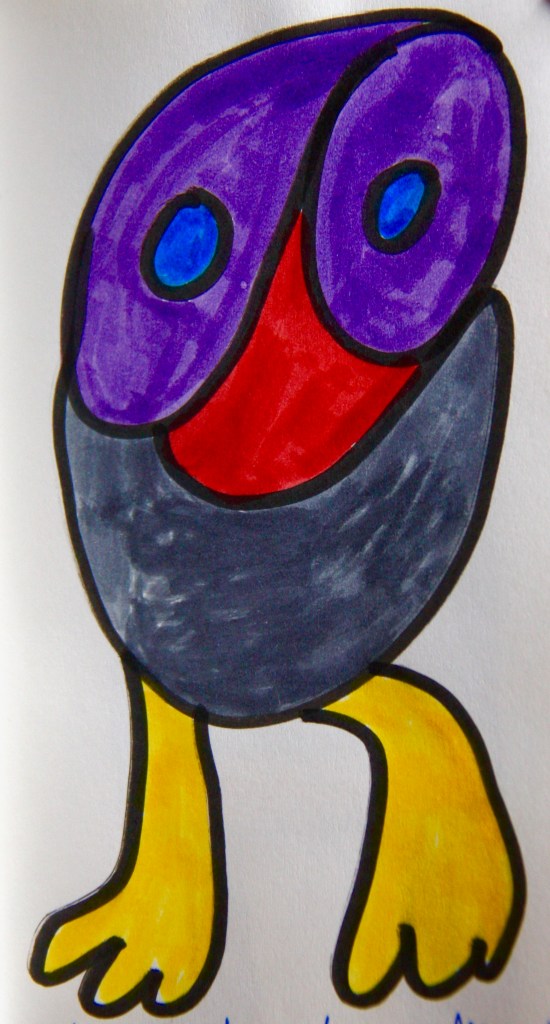
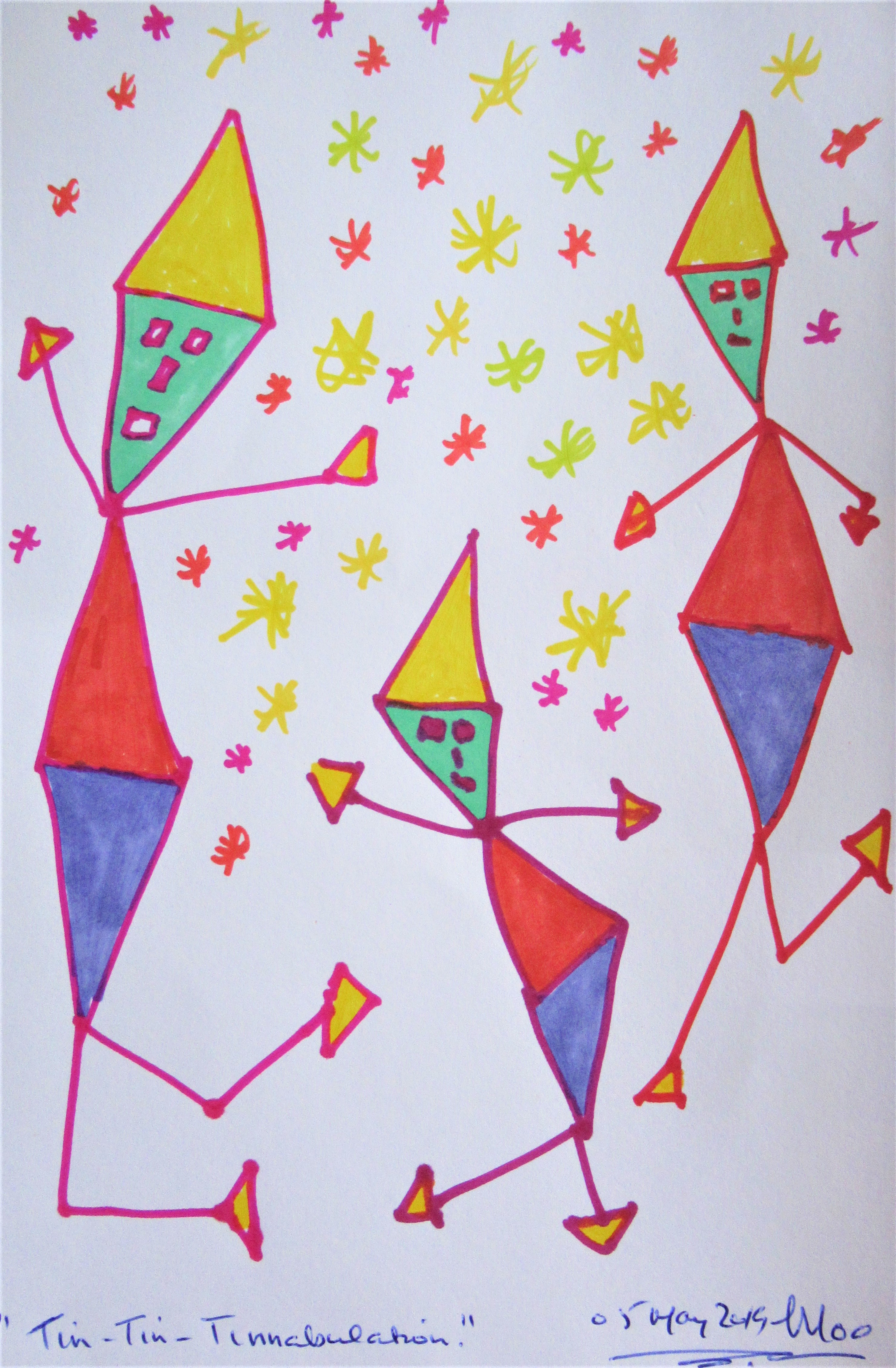
Kite

Kite Flying

So light, the kite,
a butterfly in flight.

Breeze battered,
sky-blue shattered.

Children stare
seeing the wing-shape
fluttering there
rising on flimsy air.

Diving, dipping,
nylon cord slipping,
finger-flesh ripping.

Here come others,
children and mothers.

Butterflies, bright,
ready for flight,
fighting wind-might:
a child’s delight.

I didn’t have photos of a kite.
I offer some humming birds instead.
Listen closely:
you can hear them hum.

Hot Water Duck

Canada Geese at Mactaquac

Hot Water Duck

The worst punishment of all was to be sent to bed early.  You climbed upstairs by candlelight, if you were lucky, or groped your way upwards in the dark, if you had been really bad. You entered the cold, dark, damp of the bedroom and punishment was not to have supper, and not to have a warm hot water bottle or a warm baked brick to keep you warm in bed. I loved that hot brick, baked in the oven or by the fireside, then wrapped up in a towel. Bricks and bottles: they banished damp from the bed and kept you warm for a while, or burned if the wrapping fell off. The hot water bottles: they were made of tin not rubber, and once, I remember a cast iron duck, that my grandmother baked in the oven, then wrapped in swaddling clothes, like a little baby. But if the grown-ups said you had been naughty, or nasty, or cheeky, or just plain wicked, then you were given nothing to keep you warm, and you lay in bed and shivered until you cried yourself to sleep.

Canada Geese and Fall Foliage at Mactaquac

Dream

Fall Foliage

Dream

I dreamed last night
that angels lofted me
skywards and wrapped me
in cotton-wool clouds.

The nearest rainbow
was a helter-skelter
that returned me to earth
where I landed in
a pot of golden sunlight.

Red and yellow
were
my hands and face.
I stood rooted like
an autumn tree covered
in fall foliage with
no trace of winter’s woe.

“May this moment last
forever,” I murmured,
as the rainbow sparkled
and I rejoiced in
my many-colored coat.

Comment: I have noticed on several occasions that when I am reading a text, I change the wording on the page to a new wording that seems more in keeping with the rhythm of the moment. I see that I have done this here, more by accident than by plan. I have noticed this too when listening to Dylan Thomas’s recordings of his own verse. Each reading then becomes a new variant on the poem. In this case, I rather prefer the second variation, but I am not sure that I approve of the first one, nor nor do I approve of leaving words out. Naughty! I am afraid that I still haven’t developed the skill of reciting instead of reading my poems. I guess it will happen soon enough. In the meantime, I’ll just have to put up with these little flaws.

Dream … A poetry reading from One Small Corner
Fall Foliage in Island View

Royal Doulton

Trying not to …

Royal Doulton
            Some nights I woke up during the night, needing to pee. At night, I slept with my gran. I never liked using the Royal Doulton chamber pot that squatted coldly beneath her huge brass bed, especially if she was in the room. We had no indoor plumbing, nor running water. Apart from the rainwater the only tap was at the far end of the field, a long way away. Rainwater, caught in a bound, wooden barrel, was the only water we didn’t need to fetch.
            The cows that wandered through our yard at night really frightened me. We would meet them in the lane some times, a noisy, dusty, flowing, multi-colored tide that flooded the pathway and forced us walkers into the next field, if there was a gate close by, or to climb high into the hedge, if there wasn’t a gate. One cow, with a crooked horn, had gored our neighbor’s dog. She had also broken a young girl’s leg. Vicious when, isolated from the herd, she often meandered around on her own.
            At night, when I wanted to pee, I walked outside, to the outhouse. I would grope my way out of the bedroom and slide back the bolts on the door. Then I would half-open that door and peep out, listening carefully for any sound of the cows tearing out the grass with their teeth. I would sniff the night air, and if I caught the sweet breath of a cow in the vicinity, I would pee through the narrow crack of the open door and swear in the morning, when someone found the little puddle, that it wasn’t me, that it must have been one of the cows.
            One quiet night, I walked bravely out into the dark and stepped right into a fresh, warm cow pat. It sifted upward between my toes and rose to assault my nose. After I had gone pee, I wiped my foot again and again in the long grass beside the outhouse, then placed it beneath the water-spout from the rain barrel, trying to flush it clean before I crept back into bed.
            That was the night I left the back door open. Next morning, Nana woke us all up with a series of long, loud screams. The black and white cow had wandered through the open door and ended up in the kitchen where my grandmother had come face to face with it in the early morning light.
            I still have dreams, nightmares, really, of a herd of cows invading my bedroom, breaking down the doors, climbing in through the windows, and me all alone, trapped in my bed, shivering ferociously, squeezing myself, trying desperately not to go pee.

Ffynon Wen

McAdam Railway Station drawn by Geoff Slater

Ffynon Wen

Stuffy, you said. I can’t breathe. Early morning mist scratched pale finger nails down your bedroom window. Grey foggy faces glanced in, grimaced and scowled. Damp and slippery, the window frame, when I opened the sash. What time is it?  Before I could answer, you demanded more milk for your tea. I left you there, in bed, went downstairs to the kitchen and brought back milk. Then you wanted more sugar. Shut the window, you said. It’s cold. I’m shivering.
Puppet on a string, I raised my cord-bound feet and danced at your command. Then I went downstairs, fetched more sugar, came back, and left the morning paper on your bed. On the front page, a picture of the last passenger engine, green and rusty, from the GWR (Great Western Railway). It used to carry passengers from Swansea to Cardiff to Paddington in London. Now it pulls a line of filthy coal trucks. Covered in dirt, rain, steam and dust, I couldn’t make out the name or the number.
Passengers on trains speeding to different destinations, we never had time, time for talking, time for understanding, time to think, time to be heard. Laden with baggage, our minds followed different tracks. Platform lights blazed in the night, a Van Gogh blaze of starry fires. We flashed past towns, stations where we’d never stop. Windows glowed in deserted waiting rooms, shattering the darkness, their full moons reflected in the double glass of a locked carriage door.
We rattled over cross-tracks, never knowing why, yet I have never forgotten the rhythm of the wheels, slowing, accelerating, running at full speed, the telephone wires looping, cattle in fields grazing peacefully, wondering why …
We rarely talk. I guess we have little to say. We leave big questions to float in the wind. We don’t tell our nightmares, our stories or our dreams. Trivia is too trivial. Serious issues cut too deep, unspoken, unanswered to this day. We bury our noses in the daily paper. We gloss our lives away. We flash past so many signals with their pointed mechanical signs.
When your train finally stopped, I disposed of your body in Thornhill Crematorium, opposite the Ffynnon Wen, the White Well Restaurant and Bar where we celebrated our last supper together.

Comment: An old story, resurfacing from the Archives in which I found my old, dusty Cambrian Chronicles. It’s also a story I have reworked many times, as poem, flash fiction, philosophical statement, personal memoir … I guess such moments, such memories, are very hard to come to terms with. They lie just out of sight and gnaw at us at night, surfacing when least expected and packing a powerful punch of helpless hopelessness. And no, there is nothing we can do about such things except stare blank-faced into our moon-faced morning coffee and blink back the tears we were unable to shed at the time.

I guess, deep down, it’s all about grieving and how we grieve. In some cultures, it is all about manhood and stiff, upper lip. In others, it is letting the tears flow and the emotions run riot. It differs with each and all of us for we and our circumstances are all unique. I look at the current state of the world and I keep thinking that, no, it’s not a case of one size fits all. Not everybody is the same, and each one of is special, and needs something special, especially in these difficult times. Keep safe, keep well, and do not provide, if you can avoid doing so, any reason for your loved ones to mourn for you.

Brân

IMG_1063 (2)

Brân

Golden in the starlight, moon carved mountains and valleys, taut the skin, treacherous to the touch.  Heavy he is, glowing. He and his children. We carry them to the dark beneath the trees. Locate the secret, sacred place. Dig deep, bury him with the hoard.
We all know the place. Have measured it with footsteps. None will reveal it. Not under torture. Rather our lives than darkness eternal.
My mother limps beside me. Back-bent and broken. A crone in the moonlight. She’s been here before. Much too often. That’s how she bore me. Caught by the heathen. Captured and taken and twenty times taken.
Me, the blond son. Son of sea-raiders. Not black like my brothers. But never forsaken.
Head of the household, her man rejected her. Called for the Druids with mistletoe and magic, herbs and fragrance, scourging their medicine.
She would not drink them. Said she would keep me. Her biggest baby. Blond. To take vengeance.
Behind us, the villa in flames, there in the distance. Smoke rises heavenwards. Blots out the stars. “We should have fought,” my brothers say. “You would be dead,” my mother replies.
Brân, the white crow. King Arthur revenant. I fly the land, my brothers behind me. Black-haired, black-feathered. Strong as the crow flies. We travel at night. Fast now and furious.
My long bow penetrates. Shatters oak shields. Kills at a distance. None can withstand it. Daylight finds us grouped in the forest. Close to the place where the dragon lies buried. Close to my mother, the place where she sleeps.
Oh yes, they hunt us. But they don’t dare find us. Swift is their fate if they come close. Frightened they are, feared by the finding, wordless and dumb at the swift ending.

Comment: It’s an ill-wind, they say, blows nobody any good. So, ipso facto, some good must come from even the worst of things. Maybe, like Charles Dickens, I should write: ‘These were the worst of times, these were the best of times.’ The worst, because we have been under lock down, first voluntary, then involuntary, and now voluntary again, for 83 days. The worst, because we know that many people are dying and that many, many more are suffering. The worst, because we see some people, who think they are above the law, flouting the law and getting away with it while putting other innocent people at risk. The best, because we have seen extraordinary sacrifices made by the humblest people, many of whom, shop clerks, garbage collectors, street cleaners, bus drivers, taxi drivers, nurses, care-workers, house cleaners, were seen, if they were seen at all, as cheap labor to be exploited. However, thanks to CV, we now see them for what they are: the keys to making our lives and our economies function. The best, because where precautions have been taken the death toll has dropped and so have the infections. The best, because once again, we are free to move around so much more. However, many of us, after so long, no longer want to.

For me, safely distanced among the trees in my ivory tower, these have also been the best of times. I have made many new friends online. I have restructured the ordering of my acquaintances. I have gone into my computer files and found things that I cannot even remember having written. One such is Brân, the white crow, who is said to be King Arthur, still alive, and flying everywhere, ready to protect his from the evils that beset them. I do not know when I wrote this piece. Nor do I remember where the ideas came from. In what secret fold of the mind were they born? I do not know. But I do know that I have seventeen manuscripts, many of them rediscovered during this Dickensian ‘best of times / worst of times’, and all of them awaiting publication. This one is from a 67 page manuscript called A Cambrian Chronicle. 67 pages … and I don’t remember writing any of them.

Mist at Jarea

fundy-05-mistwolfepipers-081

Mist at Jarea

Moving in with the tide,
drawing gauze curtains
over the islands,
climbing, so silent,
pebbles and rocks
to arrive at our windows
and block out the sun.

The mist’s grey face
presses against the panes.
Long lost friends,
come back to haunt us,
loom out of our past.

They bear memories
born beyond the mist,
living now in, and for, this mist.

They come stalking us and tap
with long, cold wisps of fingers
at locked windows and doors,
bolted so they can’t get in.


Bath Time

62074164_10157302392400522_2936552509885382656_n

Bath Time

              My grandfather took a bath once a year, On New Year’s Eve, so he could be ready, so he said, washed and clean, for the New Year. His bath day / birthday was a family event. If we wanted a bath, well the bath water didn’t stay hot for long in the bath-tub at the top of the house, under the rafters, so an old tin bath was dragged into the kitchen and a black, iron kettle was placed on the hob, and water was boiled. One by one, we were immersed, and scrubbed, to emerge pink and glossy. All this happened in the kitchen in front of the fireplace, where we sat up wrapped in bath-robes and blankets, drinking hot cocoa so we wouldn’t catch cold. But my grandfather took his bath at the top of the house, under the rafters, in the old chipped enamel tub with its lion-claw feet, water-stained sides, and its old brass taps. He walked up there fully clothed, walked into the bathroom, and shut the door behind him, drawing the bolt with a finality that shut us all out. He sang the great choruses from Aida, and Nabucco, and we imagined him, wallowing there, in the warm water, with all his clothes on, for it was hard to imagine my grandfather naked. Then, half an hour later, he would emerge, looking just like he did when he walked into the bathroom. We never heard the water running, nor did we hear it draining away. All we heard was the The Hebrew Slaves’ Chorus and my grandfather swinging his Blacksmith’s hammer as he battered at the New Year’s Anvil.

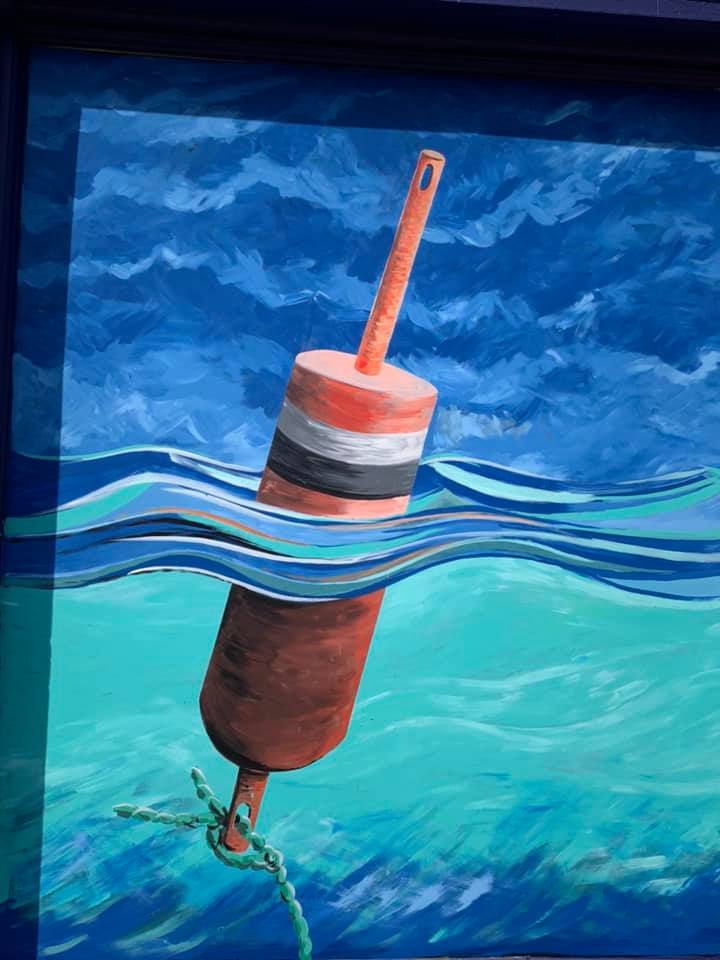
Comment: I didn’t have a photo of an old bath tub in my collection, so the lead picture is one of Geoff Slater’s murals: a buoy (pronounced ‘boy’ in Wales), taking a bath in the sea.  Let me know if you like these Welsh childhood memories, and I will keep adding to them. They are certainly fun to write and I find incredible the many ways in which memories surge as I am learning to speak Welsh. Each new chapter in my journey seems to start a new wave of thought.

Lamplighter

Avila 2008 207

Gas Lamps

When I was very young, a long time ago, in Swansea, many of our streets still had gas lamps.  The lamp-lighter would appear in winter around three or three-thirty to light those lamps. I remember him walking up the street with his long pole over his shoulder, moving from lamp to lamp. We had one outside our front door. He would turn on the gas, then light the lamp from the lighted wick at the end of his pole.  Sometimes he carried a ladder with him. Then, every so often, when the lamp needed tending, he would climb the ladder and adjust the wick. These gas lights were not very bright but they stood out like light houses between stretches of darkness and we would walk from pool to glowing pool, as if they were stepping stones leading us up the hill to home. We all knew the lamplighter and he would often wave to us as we sat in the front room window to watch him walk by. We rarely saw him in the mornings when he came back to turn off the lamps. We were all tucked safely into our beds. I remember that I wanted to be lamplighter. Later I realized that there are many ways to light a lamp and spread brightness through the world. When I grew up, I became teacher, a coach, a faculty adviser, a mentor, a creator, and those roles allowed me to establish myself as a lighter of a very different set of lamps.


Limbo Dancing

IMG_0724 (2)

Limbo Dancing

Yesterday I went limbo dancing
in the bedroom mirror.
Lower and lower I danced
until I fell into the mirror
and became my reflection.

Rough were the waters.
I know how to swim, but
I thought I would drown,
except the light was too shallow
and my feet touched bottom
when I let down my wheels.

I swam on and in
looking for a deserted island
on which to build
my idle, sandcastle dreams.

Two people said they saw
my reflection swimming,
a goldfish in a silver space.

They said I stared back at them
with circles of longing
ringing my eyes, but I laughed
when they said they had seen me,
for when I looked in the mirror
that reflected the mirror,
I saw myself limbo dancing,
stranded between
heaven and hell
in a dance hall called Virus
where I drank Corona.

Whose eyes watch me now
as my video goes viral
and I twist and I dance
in a fantasy land
filled with sweet nothings.