Sign Language

Sign Language

A skater leaving marks on fresh ice
or a stone cast into a pond,
with multiple meanings, multiple ripples
moving slowly outwards,
to end up where?

Who knows? Not me.
I only know that the thrown stone,
like the spoken word,
can never be recalled.

Each word a stone,
and each stone leaving its mark
on many people of many cultures
and multiple languages,
though English is the language
in which I now write.

Frost and snow here this morning.
Not much, just a dusting.
I look out of the window
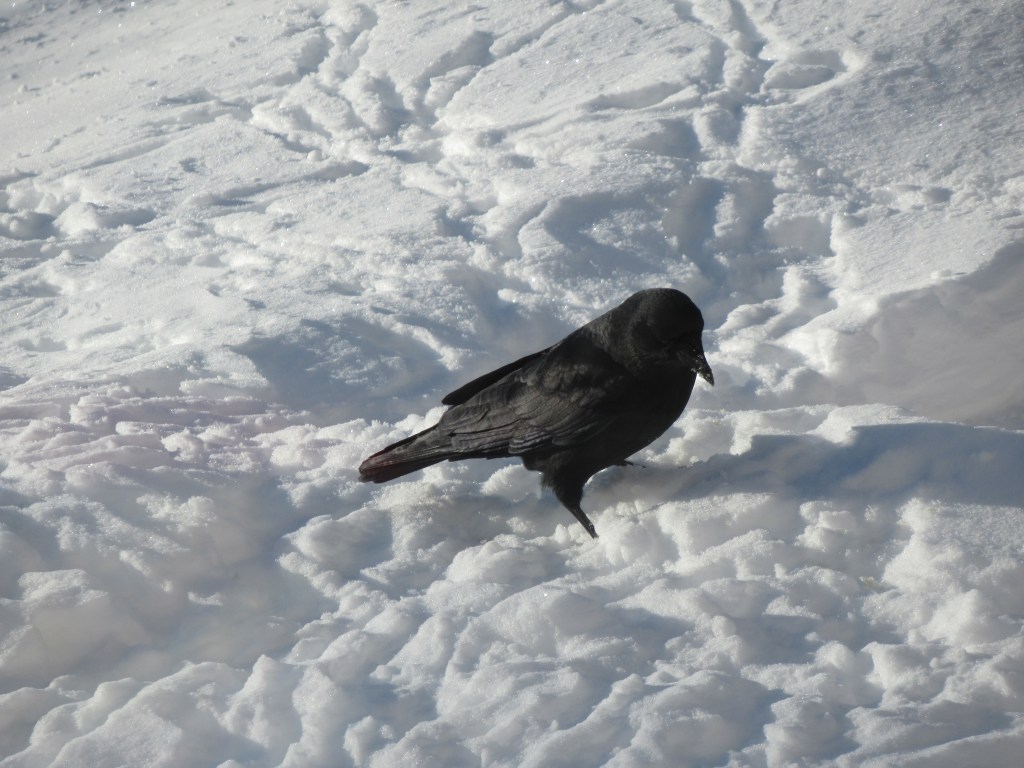
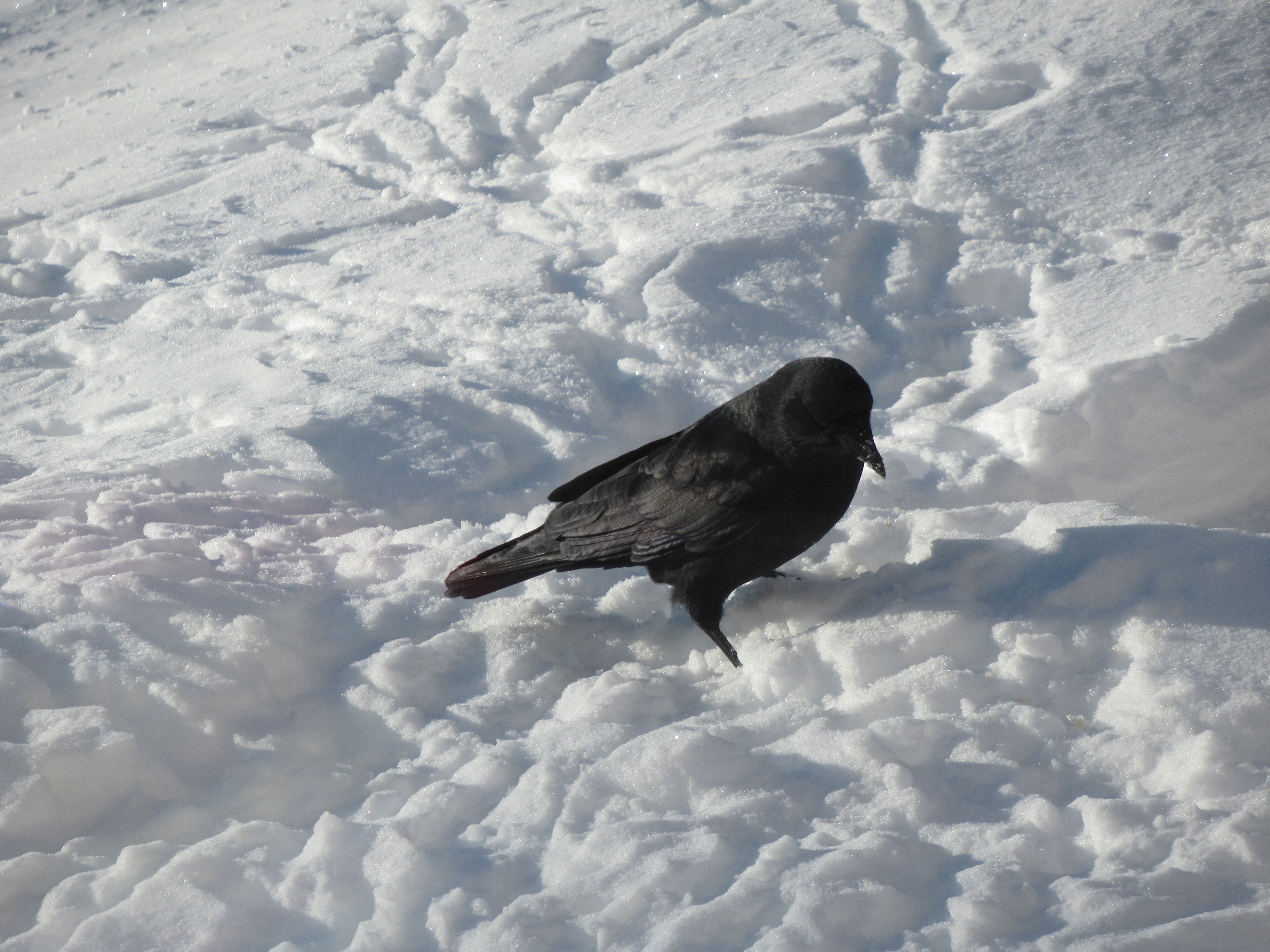
at the crows’ claw prints
on my yard’s white surface.

My eyes draw silence
out of the white space
with its runic language
written by the crows.

The meaning of meaning –
tell me, if you can,
what do they say?
What do they mean?
What do they want from me?

Commentary:

Intertextuality – this poem came directly from this morning’s commentary, with some minor alterations. The commentary itself, emerged from Carved in Stone, 35. Three separate steps in the great chain of intertextuality, where text speaks to text and the crows cock their heads, turn them to one side, listen, and write their answers in the snow.

Sometimes words just flow. Sometimes, I force them to flow. However, I have learned over the years that the secret is to relax and to allow the words to come to you of their own free will. Sometimes they whisper, occasionally they shout. But if you are willing to listen, you will hear them everywhere. And they have so much to say, if you will only learn to listen carefully and try to understand their language.

Carved in Stone 35

Carved in Stone

35

My eyes draw sound
out of the white space
of silence.

Silent the pen,
gliding smooth,
over unlined paper,
a skater leaving marks
on fresh ice.

Each mark is a signifier,
or a series of signifiers
constituting a signified,
a message engraved
in the reader’s mind.

Commentary:

Each mark is a signifier, part of a series of signifiers constituting a signified, a message written on paper, then engraved in the reader’s mind. But, of course, the message has to be read, and the reader has to be diligent enough to burrow into the meaning of the message. And what is the meaning of meaning? Ah, we have been down that rabbit hole before and Alice has been through the looking glass, and we have seen ourselves in our daily mirrors, slowly fading as the years go by.

A skater leaving marks on fresh ice or a stone cast into a pond, with multiple meanings, multiple ripples moving slowly outwards, to end up where? Who knows? Not me. I only know that the thrown stone, like the spoken word, can never be recalled. And there’s a 2,000 year history behind those words. Each word a stone, and each stone leaving its mark on many people of many cultures and multiple languages, though English is the language in which I now write.

Frost and snow here this morning. Not much, just a dusting. I looked out of the window at the crows’ prints on the white surface of the garden. My eyes drew silence out of the white space with its runic language written by the crows.

The meaning of meaning – tell me, if you can, what did they say? What did they want from me? What did they mean?

Clepsydra 22

22

… winds kiss words from lips
      sand creaks
           squeaks underfoot
                    creeps between dry toes

the sand cleanses
     purges
          brings closure
               each magnificent moment
                    lighting a candle

is this beach an altar
     under the rocks’
         shadow church
              it doesn’t matter

mindfulness
     holding each memory
          each piece of colored glass

wave after wave
     climbing ashore
          washing footprints
               memories away
                    closing
                         door after door …

Commentary:

“Wave after wave climbing ashore, washing footprints, memories away, closing door after door.” Everything turns out in black-and-white – here a crow, there a seagull. What does each say to each, when they meet upon the beach? Silence and stillness. No sound of wind or wave, no sign of the tide rising or falling, and what do the birds say to each other, when they meet like this? Two solitudes, mine and thine, and somehow the silence must be broken, or in our separate solitudes we will remain. What if I open my solitude and show it to you? Will you then open yours and spread it willingly before me? Or will you turn away, crow spurning seagull and there’s no going back.

And did my feet, in ancient time, walk upon the beach in Santander? Did they wander over the cliffs at Cabo Mayor? What did I say to the sands in Swansea Bay when, sitting on the steps by the railway station, I dusted the sand from between my toes, placed socks upon my feet, and did up my sandals? Private places, private memories, private conversations live on in the privacy of my head.

A dozen heads, all crowded onto the computer screen, zoomed in so they can be together for an hour or two, repeating their memories to each other – how much did they really share? How much can we know, your life of mine, my life of yours? At what point do those twin railway lines meet at the edge of time? Or are they doomed to a parallel universe where mind and mind, rail and rail, neither meet nor understand? Tell me, if you can, what the crow thought of the gull when they met, that morning on the sand.

Aubade

Spotify:
Remember to scroll down to the appropriate audio episode.

Aubade

Driving in winter, early one morning,
from Island View
to the Georges Dumont Hospital in Moncton
for Cancer tests

1

The crows in the garden complain of the cold,
cawing from their look-out points
with short, sharp calls.

A life of ease they seem to live,
but when the mercury descends and water freezes
icy blinds inside our window panes and snow-
squalls bluster in from north and west,
who knows what’s best for those poor birds
aloft in their crow’s nest spars,
sailing snow’s seas,
steadfast in their skippering of wind-bent trees?

This Arctic cold is such
that neither man nor beast can love it much,
crouched close to whatever warmth there is,
shivering in the wind’s cold touch.

 2

 Yesterday, a dozen crows pecked at salt grains
scattered over this road.

A black-clad chorus, they rejoiced
when sunshine drew the white-tailed deer,
from winter depths of banked up snow.

Not long ago she was alive.
Now she lies stiff and broken.

Soon she’ll be picked up by workmen,
tossed into the back of their truck,
dumped, and forgotten.

What magic spell invokes what beginnings?
To what end do we prolong our days?
What myth, this fairy-tale I call my life?
Stars drift hidden through the sunny sky.

3

Driving home from the hospital,
bullied by fierce winds
on a snow-packed road,
I dream as I drive.

I envision a past
that never was, a future
that may never be.

As I hibernate in that past,
last summer’s flowers
flourish in my mind.

The car skids into a snow bank
and my world shakes in shock.

A thirty wheeler rumbles by:
there are so many ways to die.

Crow’s Feet

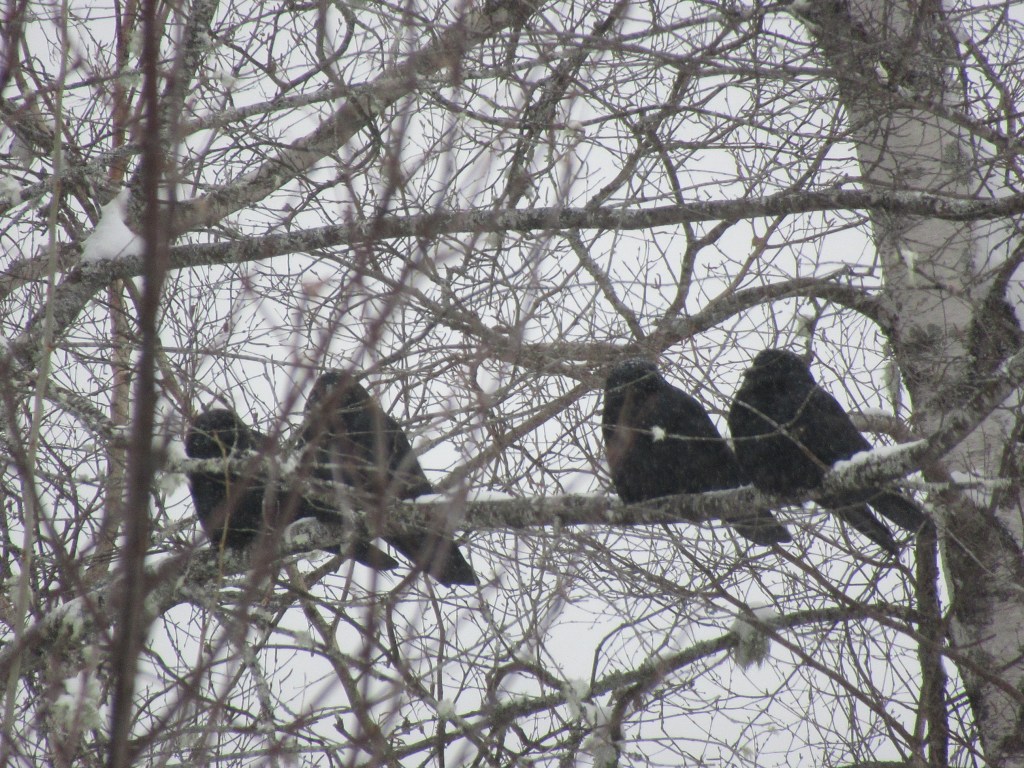
A crow, but not a beach. You’ll have to click on the link at the bottom of the page for the real beach photos.

Crow’s Feet

a convict’s arrows
marking the eye’s corner
and the beach at low tide
with its crackle of wings
as sea-birds fly
their defensive patterns
feathered sails
on a canvas wind

how many crabs
made in the image
of their carapaced god
hide in the sand
half-buried waiting
for the tide to turn
and water to return
and give them refuge

abandoned shells
postage stamps
glued in the top right-hand corner
of a picture post card beach

who can decipher
the sea’s hand writing
this mess of letters
stitched by sandpipers
who thread the beach’s eye
inscribing dark secrets
with the sewing machine
needles of their beaks

pregnant this noon tide silence
this absence of waves
where the quahaug lies buried
secured by a belly button
a lifeline to air and light
surrounded by crow’s feet
tugging at the beach’s dry skin

sand beneath my feet
sand between my toes
dry sand sandpapering

Comment:
And here’s the link to the beach photos.

https://moore.lib.unb.ca/poet/Crows_Feet.html

Thin Ice

Thin ice, light snow, and the crows’ feet of age marking the earth face with graven beauty, scars like those made by time’s tick-tock arrows.

Thin Ice
Vulnerant omnia, ultima necat

I walk on thin ice
at the frayed edge
of my life.

I search for the key
that will rewind me,
but I fail to find it.

Who will winch up
the pendulums on
my grandfather clock,
resetting it
in spring and fall?

Who will watch
time’s sharp black arrows
as they point the path
of moon change
and the fleeting hours?

Each hour wounds me.
Who will tend me
when that last one kills?

Birch

Birch

A birch tree lies on my power lines,
and I am powerless.

No phone, no radio, no tv,
and all because of a snow-laden tree.
Why did this happen to me?

“It’s a day, man, a day.
It’s nothing but a day.”

“Imagine,” says my wife,
“being without power all your life.”

I clench my fist and pump the air.
Nobody sees me. There’s no one to care.

A ghost’s voice echoes in my head:
“Stop moaning, bro, at least you ain’t dead.”

Sun, wind, melting snow.
The lame tree rising, slow.

At last the wires are free.
Power is back again.
I breathe more easily.

October

October

… and the wind a presence, sudden,
rustling dusty reeds and leaves,
the pond no longer a mirror,
its troubled surface twinkling,
sparking fall sunshine,
fragmenting it into shiny patches.

It’s warm in the car, windows raised
and the fall heat trapped in glass.
Outside, walkers walk hooded now,
gloved, heads battened down
beneath woollen thatches.

A wet dog emerges from the pond,
shakes its rainbow spray
soon to be a tinkle of trembling sparks
when the mercury sinks
and cold weather closes the pond
to all but skaters. Then fall frost will turn
noses blue and winter will start to bite.

Brân

IMG_1063 (2)

Brân

Golden in the starlight, moon carved mountains and valleys, taut the skin, treacherous to the touch.  Heavy he is, glowing. He and his children. We carry them to the dark beneath the trees. Locate the secret, sacred place. Dig deep, bury him with the hoard.
We all know the place. Have measured it with footsteps. None will reveal it. Not under torture. Rather our lives than darkness eternal.
My mother limps beside me. Back-bent and broken. A crone in the moonlight. She’s been here before. Much too often. That’s how she bore me. Caught by the heathen. Captured and taken and twenty times taken.
Me, the blond son. Son of sea-raiders. Not black like my brothers. But never forsaken.
Head of the household, her man rejected her. Called for the Druids with mistletoe and magic, herbs and fragrance, scourging their medicine.
She would not drink them. Said she would keep me. Her biggest baby. Blond. To take vengeance.
Behind us, the villa in flames, there in the distance. Smoke rises heavenwards. Blots out the stars. “We should have fought,” my brothers say. “You would be dead,” my mother replies.
Brân, the white crow. King Arthur revenant. I fly the land, my brothers behind me. Black-haired, black-feathered. Strong as the crow flies. We travel at night. Fast now and furious.
My long bow penetrates. Shatters oak shields. Kills at a distance. None can withstand it. Daylight finds us grouped in the forest. Close to the place where the dragon lies buried. Close to my mother, the place where she sleeps.
Oh yes, they hunt us. But they don’t dare find us. Swift is their fate if they come close. Frightened they are, feared by the finding, wordless and dumb at the swift ending.

Comment: It’s an ill-wind, they say, blows nobody any good. So, ipso facto, some good must come from even the worst of things. Maybe, like Charles Dickens, I should write: ‘These were the worst of times, these were the best of times.’ The worst, because we have been under lock down, first voluntary, then involuntary, and now voluntary again, for 83 days. The worst, because we know that many people are dying and that many, many more are suffering. The worst, because we see some people, who think they are above the law, flouting the law and getting away with it while putting other innocent people at risk. The best, because we have seen extraordinary sacrifices made by the humblest people, many of whom, shop clerks, garbage collectors, street cleaners, bus drivers, taxi drivers, nurses, care-workers, house cleaners, were seen, if they were seen at all, as cheap labor to be exploited. However, thanks to CV, we now see them for what they are: the keys to making our lives and our economies function. The best, because where precautions have been taken the death toll has dropped and so have the infections. The best, because once again, we are free to move around so much more. However, many of us, after so long, no longer want to.

For me, safely distanced among the trees in my ivory tower, these have also been the best of times. I have made many new friends online. I have restructured the ordering of my acquaintances. I have gone into my computer files and found things that I cannot even remember having written. One such is Brân, the white crow, who is said to be King Arthur, still alive, and flying everywhere, ready to protect his from the evils that beset them. I do not know when I wrote this piece. Nor do I remember where the ideas came from. In what secret fold of the mind were they born? I do not know. But I do know that I have seventeen manuscripts, many of them rediscovered during this Dickensian ‘best of times / worst of times’, and all of them awaiting publication. This one is from a 67 page manuscript called A Cambrian Chronicle. 67 pages … and I don’t remember writing any of them.
Black Angel

img_0178

Black Angel

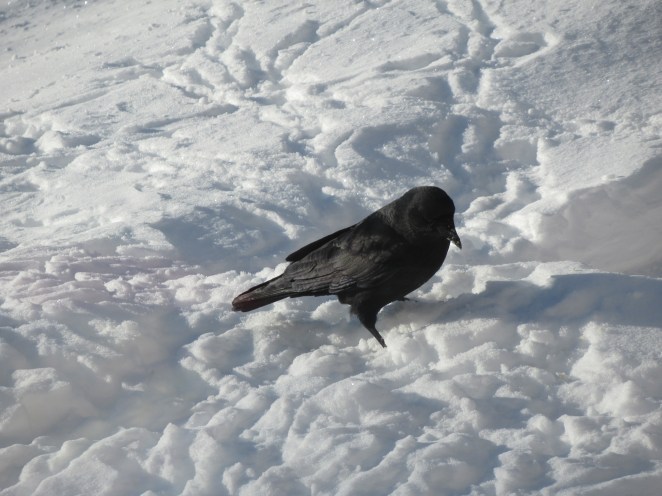
You cannot hide
when the black angel arrives
to knock on your door.

“Wait a minute!” you say,
“While I change my clothes
and comb my hair.”

But he is there before you,
in the clothes closet,
pulling your arm.

You move to the bathroom
to brush your teeth.

“Now!” says the angel.
Your eyes mist over.

You may know you are there,
but you can no longer see
your reflection in the mirror.

IMG_0003

Comment: Another Golden Oldie from the same dusty manuscript (as if e-files could get dusty), but a little bit more sinister, this one. As long as you can see your reflection and as long as your shadow is still clipped to your heels when the sun shines, you are probably all right. A friend of mine had a nasty turn the other night. He woke up with cramp at 3 in the morning, got out of bed to stretch, blacked out while he was stretching, and came round on the bedroom floor an hour later. It took him 10 minutes to roll over, perform a push up, get onto his knees, crawl to the chair, and pull himself upright. He climbed back into bed and forgot all about it until it was time for him to get up the next morning. Then he lay there worrying until the forces of nature forced him to his feet. Now he says he’s fine … he might be. I checked his shadow and it’s still there and when I talked with him on Messenger, he’d managed to shave.