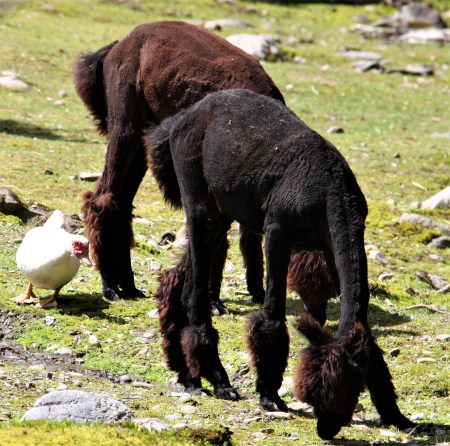
Sheep
Wales is whales to my daughter
who has only been there once on holiday,
very young, to see her grandparents,
a grim old man and a wrinkled woman
who wrapped her in a red shawl
and squeezed her and hugged her
till she cried herself to sleep
lunging for lack of space and air,
suffocating in a straitjacket
of warm Welsh wool so tightly bound.
So how do I explain the sheep?
They are everywhere, I say.
On lawns, in gardens. I once knew
a man, a friend of my father’s,
whose every prize tulip was devoured
by a sheep, one single sheep
who sneaked into the garden
on market day when they left the gate ajar.
Sheep are everywhere, I say, everywhere.
I remember riding on a passenger train
and seeing sheep leering like tourists
peering from dark coal wagons travelling
God knows where and bleating
fiercely as we passed them by.
In Wales, I say, sheep are magic.
When you travel to Paddington
on the train, just before you leave Wales
at Severn Tunnel Junction,
you must lean from the carriage window
and loudly call “Good morning, Mister Sheep!”
and if the one you greet looks up,
why, provided you’re good and quiet
for the rest of the journey,
your mum and dad will buy you
something nice in London.
My daughter shows disbelief. And “Look
at that poster there:” I say, “a hillside
of white on green, and every sheep
as still as a stone,
and each white stone a roche moutonnée.”
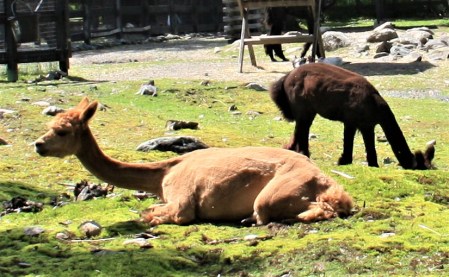
Commentary: I couldn’t find a Welsh sheep in my photo collection, so I used this photo of Pre-Columbian Incan sheep substitutes instead. Llamas is probably a Freudian slip or a typo for lambs. See: there’s reason for everything and a link between all things, even llamas, vicuñas, and alpacas, like this pair from Kingsbrae Garden Barber Shop Shorn Quartet. The other two from the Barber Shop Alpaca Quartet are around somewhere. I’ll go and look. Ah yes, here they are. Listen carefully, and you may hear them sing.






 rogermoorepoet