Octo-+Plus

Octo+Plus

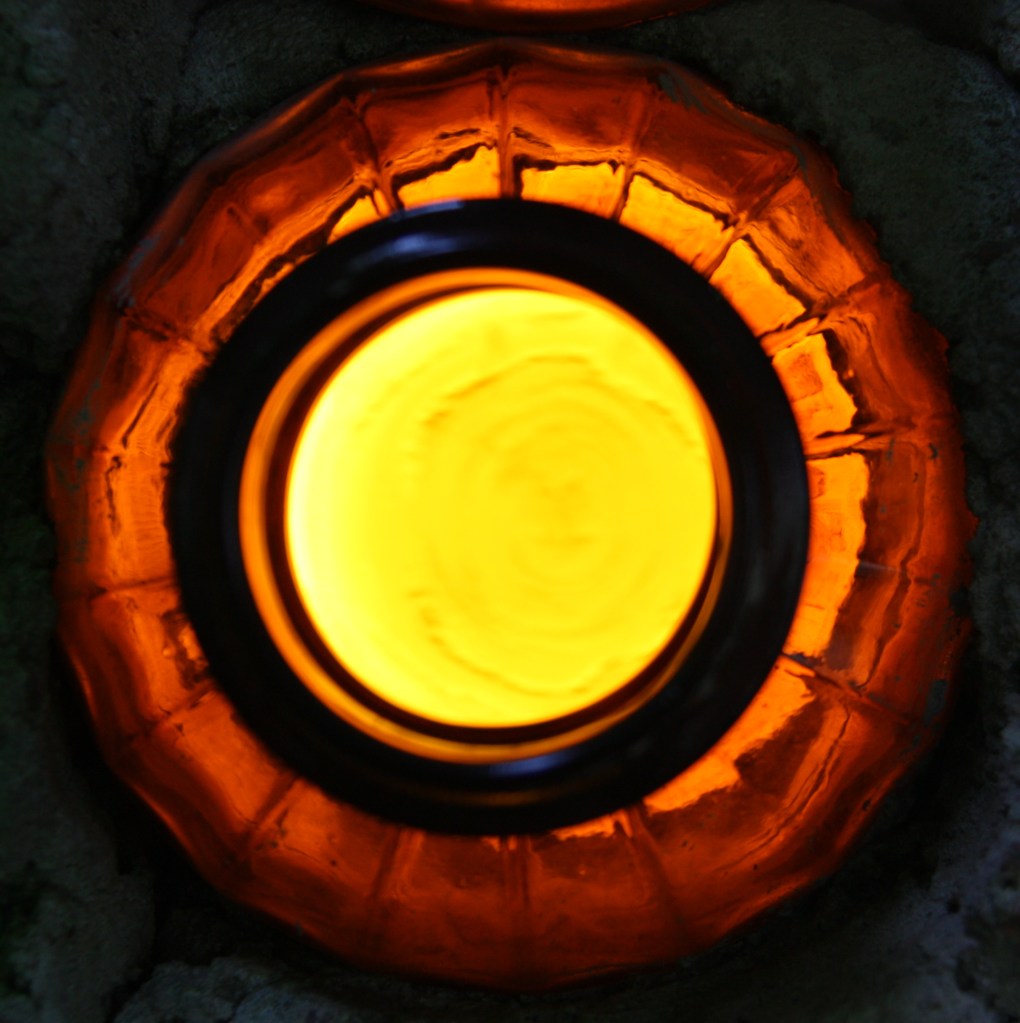
The Octo-Plus has eaten up all my words and the stream has run dry. When the words don’t flow, I let the paint flow instead. Sometimes it works and sometimes it doesn’t. That might actually be a self-portrait, lurking in the bottom left corner of the painting’s glass. Ah, the ghost, not in the machine, but in the painting. It’s a hard life, being a writer when the words dry up.

I remember the old school’s terms of abuse “Oh, dry up!” Well, 70 years later, I have done just that. Mind you, it’s only for a day or two, and look, miracle of miracles, I am writing again. Leave the keyboard, take up your pen. The words are flowing and you’re writing again.

Twist & Bust

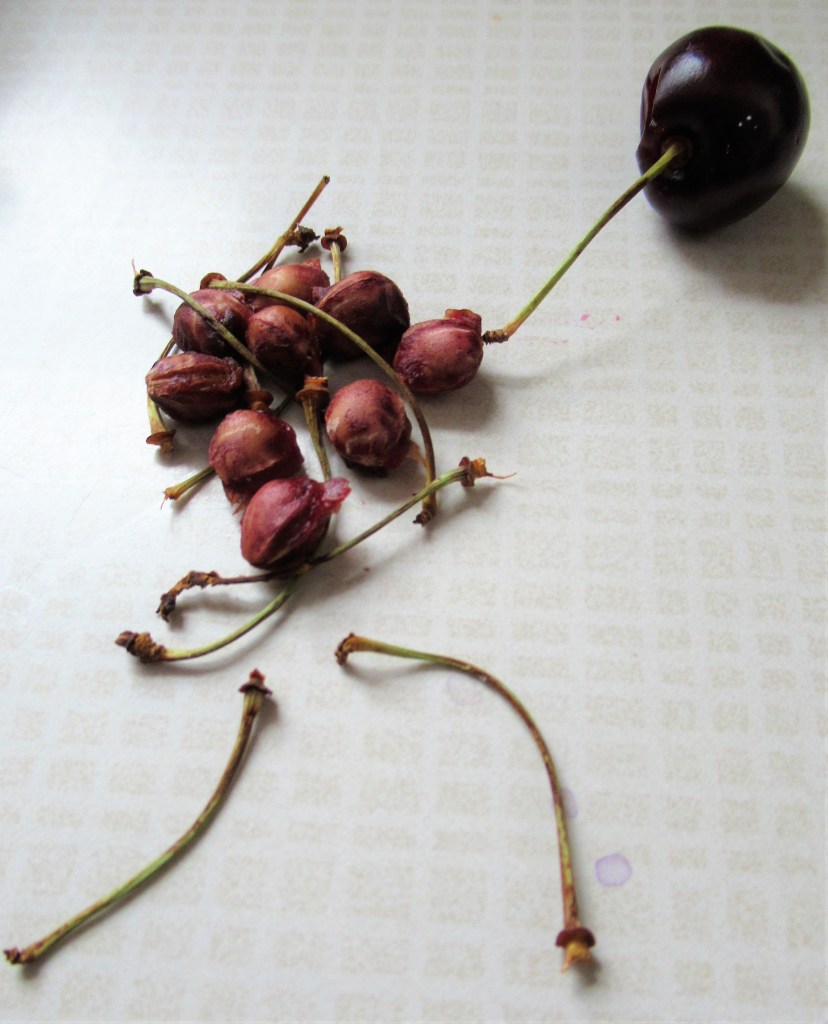
Lady Cherry Stones with balloon!

Meditations on Messiaen
Why do the people?

6

Twist and Bust

 Vingt-et-un, twist and bust, always hoping,
seldom winning, holding out one’s hand
for hand-outs, for special treatment, for some
thing that raises us above the everyday nothingness.

Twist, yes. Let’s twist again, like we did back when.
But this isn’t Oliver Twist: “Please sir, may I
have some more?” though everyone is heading
for the poor house and the beadles are gathering
by Bedlam’s door with their handcarts and dogs
and the full enforcement of a blue-serge law
made to twist and torment, though I have never
understood the law, especially when it is left
in the hands of lawyers, for “the law, dear sir, is an ass”,
a striped ass at that, black and white like a zebra,
though grey and costly in the areas that matter most.

And what is there to do but rant away
about the injustice of it all, the size of the pay-checks
and now you must check-out the food banks,
 the soup kitchens, the meals on wheels, the charitable
eating and boarding houses, because there’s no more roof
over the head and the house is sold and the incomes
are split and the children are more-or-less cared for,
though rather less than more, and the dog is turfed from
his dog house and the pussy cat booted from her feathered bed.

Click on the link below for Roger’s reading.

Twist & Bust

Mystery and Magic

Mystery and Magic Rule

            “Sólo el misterio nos hace vivir, sólo el misterio / Only the mystery keeps us alive, only the mystery.”(Federico García Lorca, 1898-1936). The poet and the artist both create metaphors, mysteries, magic. The search for meaning, the attempt to unravel the Gordian knot that surrounds the inner core of mystery is what keeps us, as viewers, viewing, and us, as readers, reading. Sometimes, as in a mystery novel, the ending is closed. The mystery that has spurred us on is revealed and the novel ends. Sometimes, as in many of the poems and stories in my books, the ending is open. The mystery continues and we never leave the land of wonderment that we first entered when we opened the book. There is no closure. Words and memories, metaphors and images, lines and rhythms, remain trapped in our mind with the brightness of butterflies that flutter before our eyes and flitter away before they can be caught. Beauty is in the eye of the beholder. And in poetry, each beholder becomes a new creator, a new artist creating a private, imagined world.

A private, imagined world: reading The Hobbit or The Lord of the Rings is one thing. The characters came alive and I recreated them in my own mind. I remember the first cartoon rendition of The Lord of the Rings. The characters were no longer mine. I did not respond to them. I left the film early and went off to the closest bar. To drown my sorrows and forget. Same thing with Harry Potter. My own inner visions were not the external visions created for me by Hollywood or whoever. In fact, after seeing one film, I gave up on the whole series. Not my inner creations, not my heroes, not my people.

This might be a generational problem. I grew up in the age of radio, no TV, not until I was 9 years old. I remember listening to the Wind in the Willows on BBC Radio. Voice echoed in my head and each character, each episode was recreated in my own mind. I read my first copy, carefully preserved since childhood, the other night, and Ratty, Moley, and Badger were just as I first remembered and recreated them. The same with The Chronicles of Narnia, read, before they were seen.

Perhaps someone else’s visuals destroy the magic and the mystery we have created. Perhaps there is a huge difference between reading first and seeing first, or seeing first and then reading the novel. I once used A Room with a View as a textbook in a reading and writing class. Many participants had enormous problems with the written version. In fact, they did not understand the written version until after they had seen the Merchant Ivory film. “Oh woe is me: shame and scandal in the family”. But whose shame? Whose scandal? The world is changing ever more rapidly. There seem to be few absolute rights and wrongs. So many things seem to be relative. Mystery and Magic: are these the things that keep us alive?

Poetry or Prose?

Poetry or Prose?
Wednesday Workshop
22 September 2021
Patos de setiembre.

When I write, I do not distinguish between poetry or prose. More often than not I think in terms of the rhythm and musicality of the words I am using, if the words sound right, when read out loud, they probably are. Here is a prose poem, Cage of Flame. It is written in prose, but it’s meaning is dependent on imagery, metaphors, associative fields, and musicality. Read it as you would any piece of prose, in sentences, following the guidance of the grammar. Read it two or three times quietly to yourself then, when you have grasped the poem’s rhythms, try reading it out loud. If you want to know how I would read this poem, check my recorded readings on my blog, Spotify or SoundCloud.

Cage of Flame

Now you are a river flowing silver beneath the moon. High tide in the salt marsh: your body fills with shadow and light. I dip my hands in dappled water. Twin gulls, they float down stream, then perch on an ice-floe of half-remembered dreams. Eagle with a broken wing, why am I trapped in this cage of flame? When I turn my feathers to the sun, my back is striped with the black and white of a convict’s bars. Awake, I lie anchored by what pale visions fluttering on the horizon? White moths wing their snow storm through the night. A feathered shadow ghosts fingers towards my face. Butterflies stutter against a shuttered window. A candle flickers in the darkness and maps in runes the ruins of my heart. Eye of the peacock, can you touch what I see when my eyelids close for the night? Last night, the black rock of the midnight sun rolled up the sky. The planet quivered beneath my body as I felt each footfall of a transient god.

Clearly the above is prose because it has no line breaks. But what happens when we break that prose into shorter lines and turn it into a poem?

Cage of Flame

Now you are a river flowing
silver beneath the moon.
High tide in the salt marsh:
your body fills with shadow and light.
I dip my hands in dappled water.

Eagle with a broken wing,
why am I trapped in this cage of flame?
When I turn my feathers to the sun,
my back is striped with the black
and white of a convict’s bars.

Awake,
I lie anchored by what pale visions
fluttering on the horizon?
White moths wing their snow
storm through the night.
A feathered shadow ghosts
fingers towards my face.
Butterflies stutter against
a shuttered window.
A candle flickers in the darkness
and maps in runes the ruins of my heart.

Eye of the peacock,
can you touch what I see
when my eyelids close for the night?
The black rock of the midnight sun
rolled up the sky.

Last night, the planet quivered
beneath my body and I felt
each footfall of a transient god.

            It seems to be the same text, but is it? And what happens if we change those line breaks? It will change the external structure of prose > to poem > to new poem, but it will not alter the internal structures that survive all format changes. Does the rhythm stay the same in both cases? It certainly does when I read it, but how about you? Poetry or prose? And what’s the difference anyway if the words roll off your tongue and metaphors, mystery, and magic rule?

Comment:
Clearly poetry and prose are not interchangeable, for they both fulfill different functions. The classical difference is often said to lie between history, what actually happened, and poetry, the formal arrangements of words in song. This seemingly simple definition becomes blurred, of course, when history, written in prose, is confused with epic, the retelling of history in poetic form. Prose fiction is a much later development and it is Miguel de Cervantes who gives us, in Don Quixote, his own Renaissance solution: “La épica también puede escribire en prosa” / the epic can also be written in prose. The mingling of poetry and prose underlines the use of rhetorical tropes in writing. Later, Baudelaire will offer us us his Petits poèmes en prose thus gifting the world with prose poems. Much of what I write is prose poetry or poetry in prose. Rhythm, metaphor, allusions, alliteration, similes, intertextuality all combine to decorate my writing. And yes, I am very clear about what I am trying to do.

Clockwork Universe

Meditations on Messiaen
Revelations

2

Clockwork Universe

A golden globe of sunlight, this orange,
moving in time with the shadows in the skies
that time has ticked to captivate the stars.

Its auburn skin burgeons, polished shiny
by the low fall sun penetrating the window,
desiring to slice this tree-fruit into segments.

A Prelapsarian orange, it glows with the glory
of its unblemished birth in that distant garden
where everything was perfect, before the Fall.

Apples and oranges, chalk and cheese.
Clichés ring out but oranges and lemons sing
the bells of St. Clements as children dance.

Heads bowed they pass beneath archways
of linked hands, imaginary scaffolds bringing
candles and choppers to chop off their heads.

So much more certain, a clockwork orange,
wound up and ready to serve as an alarm clock
that awakes us to the realities of unsustainability.

Or are we all just marginal oranges, placed here
to be devoured, when needed, or thrown away
when our time has run out and our glow is gone?

Circular perfection, balanced now in my hand.
When my nail pierces the peel it releases a perfect
storm of essence of orange, assaulting the senses,
droplets, scent on nostrils, tangy taste on tongue.

Click on the link below for Roger’s reading.

Clockwork Universe

Brother Donkey

Meditations on Messiaen
Revelations

1

Brother Donkey

A statue of St. Francis stands in the corner
of the roof garden. He holds out his hands
for Plaster of Paris birds to settle upon them.

St. Francis wears a brown, sack-cloth cassock
bound at the waist by a knotted, white cord.
Living birds would come to him, if he called,
but he is silent. He knows the birds by their names,
not the Latin or Spanish names, nor their names
in Mixtec or Nahuatl. He knows their true names,
their own ineffable names that grace each of them
and brightens their songs of colored glory.

Brother Sun, by day, and Sister Moon, by night,
bless him with their soft-feathered gifts of light.
Alas, he is bound to this earth by Brother Donkey,
the flesh and blood body he once wore and now
wears in effigy. Of the earth, earthy, his thoughts
are bent on beating this sackcloth body down
and raising his mind in birdsong that will reach up,
higher and higher until it achieves his Kingdom Come.

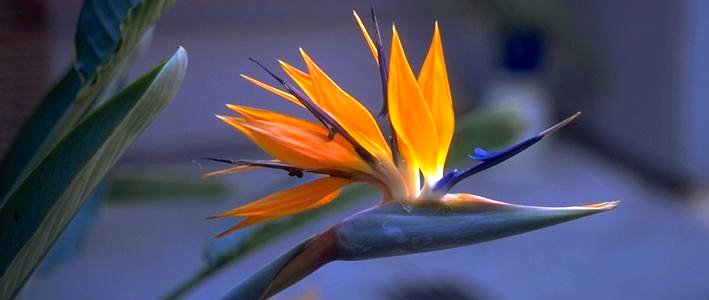
In front of him, the Bird of Paradise offers him
that which he most desires, a return to earth
in avian form, winged like a miniature angel
armed with a golden harp and an aura of song.

Click on the link below for Roger’s reading.

Brother Donkey

Transitions

Meditations on Messiaen
Quartet for the End of Time

4

Transitions

Modes of limited transitions,
moods of time tapped in time
to time’s rhythmic piano.

Scales fall from the listener’s eyes.
A transitory awakening,
this glimpse of the composer’s vision,
each note a new version
extracted from abstracts
perceived in color,
each note a hue, and chords
a rainbow spectrum of light
glimpsed darkly through
a raindrop’s lens.

Birdsong and sunshine.
Notes perched
on the matinal branch,
each in tune with the other,
at times discordant,
yet the morning chorus
diluting the day
with the liquidity
of light and sound.

Click on the link below for Roger’s reading.

Transitions

The Art of Narrative

The Art of Narrative

            Art has almost always told a story, even though, as in the case of the Cave Paintings in Altamira, Puente Viesgo, Lascaux, and elsewhere, we may not know exactly what that story is. On the other hand, many of the great paintings of the Spanish Golden Age (1525-1680) have a hidden narrative that we can often work out. Take, for example, Vulcan’s Forge (1630), painted by Diego Velázquez after his first trip to Italy (1629). On the surface, this is a painting of a typical Spanish Forge of the seventeenth century. Ordinary workmen labour away at their daily tasks, but, and there is always a but, the figure on the left is adorned with a god-like halo. Why? Because he is the bearer of a message. Vulcan’s wife, Venus, has been having an affair with Mars, the god of war. Vulcan has forged a net of fine, golden chains and placed it over the bed where they will loiter. Now, Mars and Venus are trapped in that net, caught in the act, so to speak. No wonder the mouths of Vulcan’s helpers are open in wonderment.

Bisonte Parado: Cenicero de Altamira.

            Before the arrival of photography, painting was the only way to record the world, to make a picture of what was happening, to tell a story in paint. That is why a picture is worth a thousand words. I have retold the narrative of the painting of Vulcan’s Forge in 128 words. There is, of course, a great deal more to tell about his and other paintings and how they represent the artist’s narrative reality. The advent of photography changed the artist’s vision of the world. As photography developed and became quicker, faster, and offered what some might consider to be a more accurate version of reality, so artists rethought their role. Was it to capture, in paint, the world as they saw it, with a single visual entry point, and a constant perspective? Or was it to catch the way light fell upon objects (Monet), or to offer multiple entry points (Braque), or to paint the turmoil of the inner mind (Picasso, Miró, Pollock)? Artists could do such things. Until recently, with the advent of the computer, it was much more difficult for the camera to do so. The camera recorded, but artists created and re-created their own narratives of the world around and inside them. Now we can enter photoshop and the equivalent and play around with out own photos of reality, distorting them and twisting them as we please.

Verbal to Visual to Verbal

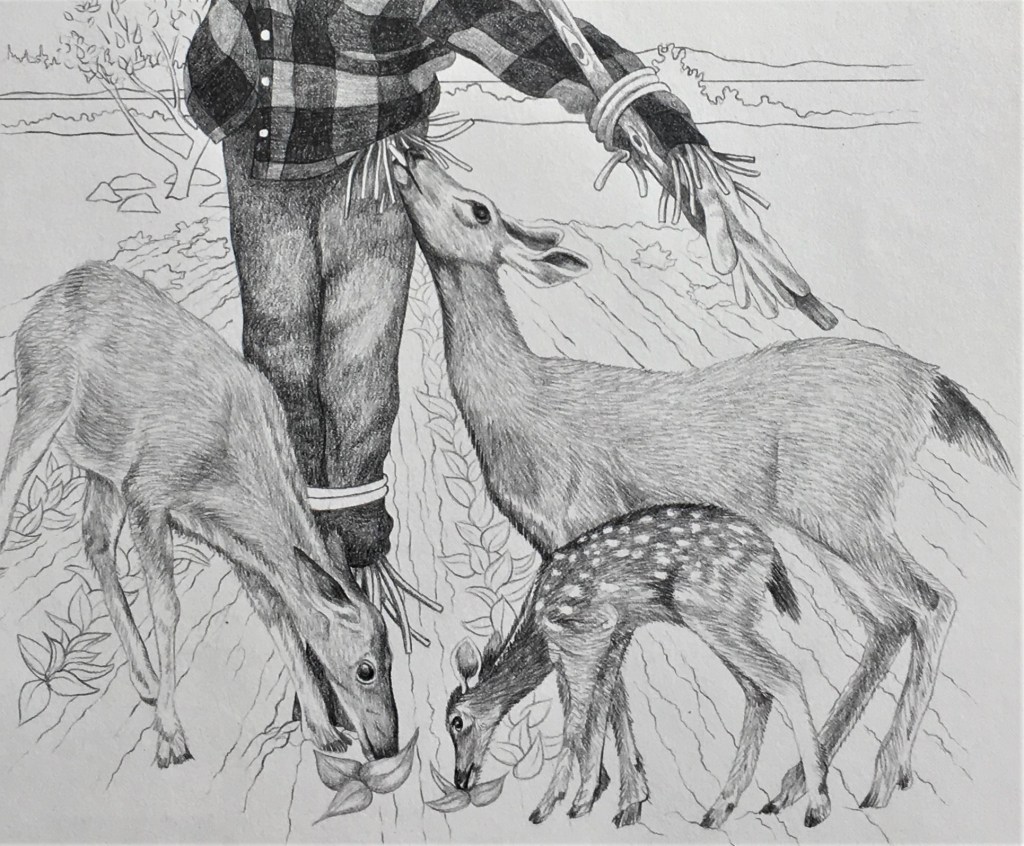
            Which came first, the chicken or the egg, the verbal or the visual? Or was there a sort of spontaneous combustion? In the case of Scarecrow, the artistic collaboration between myself, the author, and Geoff Slater, the artist, the words came first: “In the beginning was the word.” He heard me reading my story, started to sketch the characters, and within six months we had produced an illustrated book.

Wonderful drawings. Thank you, Geoff.

Words and narrative first, then an artist’s rendition of key moments in the narrative. However, in the case of Twelve Days of Cat, our second artistic collaboration, Geoff sent me 12 drawings of a cat and I looked at them and worked out a narrative that would join them together in a symbiotic relationship. Scarecrow is an illustrated narrative in prose. Twelve Days of Cat is a narrative in poetry based on what was once an independent series of charcoal sketches. Who cares which came first, verbal of visual, when the results are so pleasing to ear and eye.

Bird’s Nest

Jackson Pollock it ain’t. But just look at those fledgling storks launching themselves into the air. And yes, those are their nests!

Spotify
Scroll down to appropriate episode.

Bird’s Nest
Jackson Pollock No5 (1948)

This bird’s nest starts with a startling tweet
that wins a trilled, thrilled response. A flutter
of heart-string wings, creator, viewer, join

with the creation. Thin threads of life mix
and match their tangled weave, existential
tapestry, fathered in a feathered nest.

World without end, this labyrinth without
an entry point, without a beginning,
with a spaghetti-thread middle that meets

not in a breath-catch of the mind, but in
a brush-flick of coloured rain, a cycle
recycled of circled paint, circular

in its circumnavigation, its square
eight by four-foot globe of a new world whirled
in stringy whorls, reinvented beauty

drawn haphazardly from the bicycle
tour de force of this artist’s inner mind.

Comment: This is a tongue-twister of a poem, much as Jackson Pollock’s painting is a twisted vision twisting the viewer’s eye. And, no, it is not easy to read. Nor is the painting easy to view. Click here for a link > Jackson Pollock < to the painting. Click here for a link to Alejandro Botelho’s reading of < My Grandfather >. Note that Alejandro’s reading of My Grandfather begins at 17.58. And note too that the other poets are also well worth listening to. Once again, thank you for this, Alejandro: your work is very much appreciated.

Crocodile Tears

Crocodile Tears

The crocodile lives in the wind-up gramophone. The gramophone lives in the top room of the house. The boy winds up the gramophone with a long brass handle, round and round, till the spring is tight. A tight spring frightens the crocodile and he sits quietly in his cage. But as the record goes round and the spring loosens up, the crocodile roars and demands to be freed. He’s the Jack that wants to jump out of the box. His long-term dream is to eat up the witch who looks out of the window and watches the boy as he plays in the yard.
            Last week the boy decided to dig. He picked up a spade and dug a deep hole that went all the way down to his cousin in Australia. The little dog laughed and joined in the fun, scraping with his front paws and throwing earth out between his back legs like happy dogs do. The witch in the window cackled with laughter and the rooks in the rookery rose up in a cloud and cawed in reply. Only the boy is able to see the witch and he only sees her when she sits in the window. But he knows she wanders through the house, and the air goes cold when she enters and exits the rooms, especially when she brushes past the boy and sweeps his skin with her long, black gown.
            When the boy got tired of digging, he drove the spade into the ground and left it standing by the hole. When his father came home it was well after dark. He didn’t see the hole but he saw the spade. So he didn’t fall in to the shaft of the coal-mine that went down to Australia. No free trip to the Antipodes for that unlucky dad. He beat the boy for that, for digging that hole. Then he beat him again for lying because the hole didn’t go to Australia. Australia was too far away and the angle was wrong. The boy laughed when he saw that his dad didn’t know where Australia was.
            “Ha-ha,” he laughed. And his dad beat him again, this time for laughing.
            Sometimes at night the boy can hear rats running through his bedroom walls. They scuttle and scuffle as they hunt through the guttering. The crocodile growls from time to time in that upstairs room. The witch cackles with laughter. The boy puts his head under the blankets and cries himself to sleep. Sometimes he wishes the crocodile would come and eat up his dad. But he loves his dad like the dog loves his dad even though his dad beats both the boy and the dog. Sudden beatings, they are, that arrive without warning: hail and thunder from a sunny summer sky.
            “Well, you’re not laughing now,” his father announces as he beats him one more time. “A beating a day keeps disobedience away. There will be no disobedience in this house.” When the father beats the boy, the dog cowers beneath a chair. The boy hears the crocodile growl and smiles through the tears as he wipes salt water from his eyes.
            “Are you laughing at me? I’ll make you laugh on the other side of your face,” the father taunts the son and beats him again.
            The crocodile growls. The old witch cackles. The rooks in the rookery rise up in the air and the father’s hair stands up on end like it does when lightning lights up the sky, and thunder rolls its drums, and the sky’s wheels rattle like an old warrior’s chariot whose wheels have not been greased. The veins stand out in his father’s cheeks as the old man once more raises his hand to the boy.
            The old man tells the same old jokes again and again. The boy must always remember to laugh at them as if he had never heard them before. If he doesn’t laugh, his father gets angry. Some of the jokes are good, and the boy likes the one about the Catholic with the pet crocodile who goes into a bar in Belfast and asks the barkeep if they serve Protestants. ‘Of course we do,’ says the barkeep. ‘Good,’ says the man. ‘I’ll have a pint of bitter for myself and a Protestant for the crocodile.’  Or is it the one in which the Protestant goes into the bar and ask the barkeep if they serve Catholics … anyway … whatever … one night, the boy dreams and it happens like this. The crocodile escapes from the gramophone. The witch hands the boy a leash and a collar and between them they restrain the crocodile.
            “Walkies?” says the boy.
            The crocodile nods his head and crocodile and boy walk down the street to the Kiddy’s Soda Fountain on the corner. When the boy walks in with the crocodile, the waitress raises her eyebrows and opens her mouth.
            “Do you serve grown ups in here?” the little boy asks her.
            “Of course we do,” says the waitress.
            “Good. I’ll have a glass of Dandelion & Burdock for myself and a grown-up for the crocodile. Please.”
            The witch says grace, the boy sips his Dandelion & Burdock, and they all shed crocodile tears as the boy’s pet crocodile chomps on the fast-disappearing body of the boy’s dad.
            Next morning, the boy wakes up. The witch and the crocodile are sitting on his bed.
            “I had a funny dream last night,” says the boy.
            The witch cackles. The crocodile burps, then sheds crocodile tears. The boy starts to laugh. He laughs until he cries and then the witch sheds crocodile tears too.