Empress of Ireland

Empress of Ireland
Poems from Ste. Luce-sur-mer

is available at the following link:
Click here to purchase Empress of Ireland

The Empress of Ireland

The poems which have come together to form the Empress of Ireland were begun in Ste. Luce-sur-mer, Quebec, in May 2002. It was off-shore from Ste. Luce, in the early hours of the morning of the 29th of May, 1914, that the Empress of Ireland collided, in dense fog, with a converted Norwegian collier whose bows had been strengthened for ice-breaking. There were approximately 15 minutes between the moment of impact (1:55 am) and the moment the Empress caught fire and sank (2:10 am). Although the disaster has received little international attention, more passengers perished in this accident (840) then in the loss of the Titanic (832) or the sinking of the Lusitania (791).

Introduction to the Empress of Ireland

Click on the link below to read an early post with a new sound recording of
A Survivor lights a candle
https://rogermoorepoet.com/2020/11/23/a-survivor-lights-a-candle/

I first heard voices in the cries of the sea birds on the beach at Ste. Luce-sur-mer.

Borne on the wind, over the sigh of the waves, they seemed high-pitched, like the voices of children, or of men and women in distress. These were lost voices, the cries of people alone and frightened by the dark. I heard them calling to me.

That night, there were knocks at my cabin door and finger nails scratched at my window. Tiny sounds, almost beyond the range of human hearing: the snuffling of puppies when they turn over in their sleep and tug at each other, whimpering in their dreams.

“Who’s there?”

I started from my sleep. But there was only the wind and the waves as the tide’s footsteps climbed a moonbeam path to ascend the beach. When I walked on  the sand next day, at low tide, there was a whispering behind my back. Little voices crying to be set free.

“Who’s there?”

A lone gull flew past my head and battered itself against the wind’s cage with outraged sturdy wings.  That night, the mist descended. The church stepped in and out of its darkness and shadows gathered, persistent, at my door.

I walked out into the night and saw a lone heron surrounded by gulls. It was as if an adult, clamoured at by children, was standing guard over the beach. Then I saw the shadows of little people searching for their parents, the shapes of mothers and fathers looking for their off-spring, lost among the grains of sand.

Beyond them, on the headland, the church stood tall above the shadows. I saw grandmothers and grandfathers, their lips moving in supplication, kneeling before the granite cross which stands above the sea. As I approached, they turned to me, opened their mouths, mouthed silent words, then disappeared.  When I went back to bed, faces and voices visited me in my dreams. When I got up next morning, they came to me in the speech of birds hidden in the foliage, in the words dropped by the osprey’s wing, in the click of the crab’s claw as he dug himself deeper into the sand.

“Release us”

“Speak for us!”

“Set us free!”

The words of the M Press of Ire are not my words. They could never be my words. Foundered words, they are, rescued from the beach, and dragged from the high tide mark with its sea weed, carapace, charred wood, old rusted iron, and bright bones of long dead animals polished by the relentless action of wind, sea and sand.

One Small Corner

One Small Corner
A Kingsbrae Chronicle

is available at the following link:
Click here to purchase One Small Corner

Introduction to One Small Corner

I think of my creative writing in terms of visual, verbal photos. I create snapshots in words and these snapshots come from everywhere that I have been. For me, they are precious moments caught and frozen forever in the camera of the poet’s eye. Visual and verbal, they illustrate the life I have lived and the things I have seen. These are the phenomena on which my artistic life is founded.

I am not a philosopher by any means, but I have over time developed an artistic philosophy. It started a long time ago at Wycliffe College with my A level studies of French existentialism and continued later in the Graduate School at the University of Toronto, where I studied the origins of existentialism as they are expounded in phenomenology. Both these movements have influenced my life and my writing. Bakhtin’s chronotopos: “Man’s dialog with his time and place” has also been a great influence on my creative thinking. My art is indeed my dialog with my time, my place, and the people who inhabit them.

One Small Corner is the record of my stay at the KIRA Residence in St. Andrews-by-the-sea, New Brunswick, Canada. I was selected to be the only poet in the first cohort of Resident Artists and during the month of June, 2017, I was able to work full-time on this collection.

On Being Welsh

On Being Welsh
in a land ruled by the English

On Being Welsh
in a land ruled by the English

is available at the following links:

https://www.amazon.ca/dp/9388319842

https://www.amazon.com/dp/9388319842

A shortened version of this manuscript was awarded first place in the David Adams Richards Awards for a prose manuscript by the Writers’ Federation of New Brunswick, 2020.

Individual stories have been published in Anti-Lang (M. T. Head), West Coast Short Story Slam (Teeth), and on commuterlit.com (Remembrance Day).

Individual stories have won awards as follows: Butterflies (Honorable Mention, Atlantic Short Story Competition, Writers’ Federation of Nova Scotia), Auntie Gladys (Finalist, Wordfeast NB, Postcard Stories), Message in a Bottle (Honorable Mention, WFNB Creative Non-Fiction), The Key (Finalist, CBC Short Story Competition), Letting Go (First Place, WFNB Douglas Kyle Memorial, short story).

I would like to thank Lucinda Flemer, Primum Mobile, the first mover, who brought together the KIRA artists and turned them into a creative community. These artists include Geoff Slater and Chuck Bowie, both of whom have influenced the writings in this book. A special thank you must go to Ginger Marcinkowski, my Beta reader, who really deserves an Alpha Grade for all her help and understanding.

I would also like to thank Dr. Karunesh Kumar Agarwal (Managing Editor) Cyberwit.net for his editing skills and his invitation to participate in this poetry series.

Donna Morrissey, award winning Canadian author and judge of the 2020 D. A. Richards Award, wrote the following about my winning submission.

Judge’s Judgement: “This writer’s prose is eloquent, lyrical and beautiful. His stories are disturbing and memorable. It is an evocative journey through the deeply seeing eyes of an old man, and back through his tormented and deeply felt self as a beaten boy. There were times I held my breath against his suffering, and times I applauded his courage to keep on living. At all times I was held by the strength of such writing as would allow me those sparse and limited visuals to the bruising of the flesh whilst leading me directly into the tendered heart. Congratulations.” 

The Story: Set in Tara Manor, a boutique hotel in St. Andrews, New Brunswick, the narrator searches for a story he can write. He rejects the stories and myths of other people and indigenous races, only to discover that he must be the subject of his own tale. It is a story of childhood abuse, first at the hands of his own family and then in Catholic and Protestant boarding schools in Wales where he was sent at the early age of six. It tells of a growing self-distancing from the world, including self-harm and attempted suicide, and then of self-discovery, understanding, and self-forgiveness, far from his Welsh homeland, in the Maritime beauty of Atlantic Canada.

Editor’s Comment: No doubt, here in these poems we are impressed by the ease and strength of the rhythm. Several of these poems show the passionate flight of profound imagination. The poems have poignant force of true feeling. All poems are irresistibly powerful.

Author’s Comment: Poems or stories? Both really, for On Being Welsh is composed of poetry written, not in verse, but in prose. Prose poems then, or poems in prose. How could I write anything but poetry when I come from the same town in Wales as Dylan Thomas and Vernon Watkins. I too was born with music in my heart and poetry on my lips.

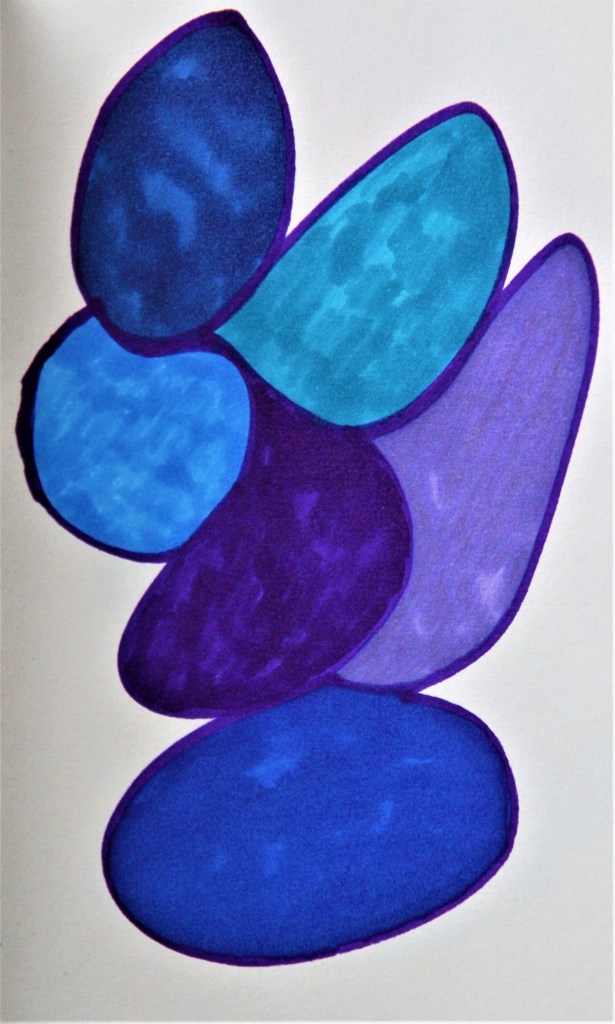
Blue, blue day

Blue Blue Day

Blue, blue day

“My grandfather told me there’d be times like these” and he was right. I wonder about his blue days, down there in the trenches, on the Somme, and on other fronts. He survived. He was a survivor. Sometimes that’s the only thing to be. So how do we survive? How do we ignore the snipers, the whizz-bangs, the star shells, the other things that go bump in the night?

There is no single answer. One of my best friends goes into hospital tomorrow, 6:00 am, buccal cancer. An operation. All may be well afterwards. I certainly hope so. I will be here for him, as my grandfather was there for me, as I have been there for others, as others have been there for me. I will not mention names. A blue, blue day indeed. But what shade of blue? If all goes well, the celestial blue of joy and hope, the blue of Mary’s robe when she crushes the serpent beneath her foot, the joy of the blue sky after the storm.

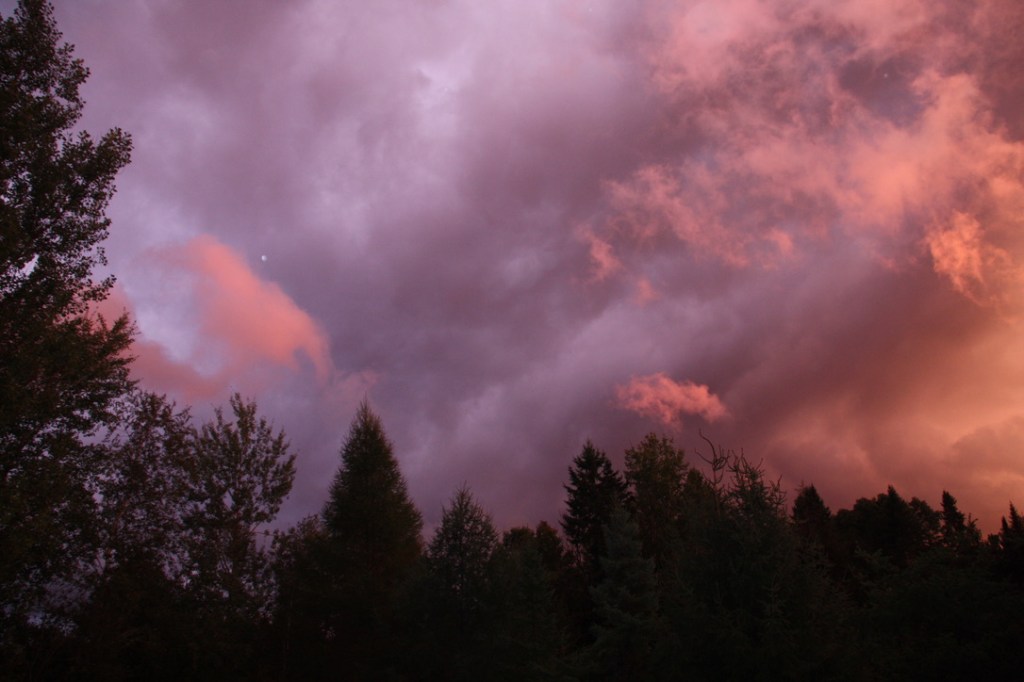
Not, we hope, the dark blue, almost purple, of the gathering storm, the blue of thunder clouds turning almost into black, the midnight blue of the last chance saloon with its overtones of tragedy and disaster. “I never felt more like singing the blues”… indeed I didn’t. But what shade of blue? And for me, it is always the blue of clearing skies, the blue of Mary’s robe, the blue of hope.

“And still I live in hopes to see, Swansea Town once more,” thus sang my father’s father during WWI. He was gassed, he was wounded, he was decorated, he was mentioned in dispatches, so many things happened to him. But he survived the snipers, Big Bertha, the star shells, the whizz-bangs, and he saw his beloved “Swansea Town once more.” As I hope I will, but my dream of a return to the blues of Swansea Bay may be fulfilled in a very different fashion.

Alas, my beloved Swansea Town is now a city. “And so I live in hopes to see, Swansea City once more.” It doesn’t sound the same, does it? It doesn’t have the same carry, the same rhythm, the same resonance. And what about Town Hill? Has it now been renamed City Hill? I am sure Town Hall, the old Brangwyn Hall where my father used to work, is now City Hall, which my father never entered. Enough, no more for “you can never walk in the same river twice” (Heraclitus).

Niche

Jane gave me the honor of writing the foreword to her book and I did so with great pleasure.

Jane Tims: Niche. KDP.
Book Review

Niche, the fourth poetry book published by Jane Tims, is a neat configuration of six segments that elaborate and illustrate the poet’s original definition of the multiple meanings of her title word niche. It is very difficult to separate the author from the act of narration as her keenly observed and skillfully executed drawings, together with their verbal representation on the page, are so autobiographical and so much an extension of her artistic and professional abilities that the objective separation of writer and text is scarcely possible. It is hard to forget that Jane Tims was, and to a great extent, still is, a highly competent professional botanist. The harnessing of the professional botanist, with her unique drawing skills and scientific knowledge, to the poet and auto-biographer is a key factor in the reading and interpretation of this text in which acute observation blends with an intimate knowledge of the observed botanical world, both flora and fauna, and this allows the poet, in her role of poetic narrator and lyrical voice, to weave a network of poems that are, at one and the same time, objective and intensely subjective.

The author emphasizes this when she writes in the Preface that “In biological terms, the niche is the quality of a space occupied by a living thing, the sum total of physical, nutritional, biological, psychological and emotional needs gathered together in one place.” She also reminds us that in human terms “niche can be a metaphor for home, community or personal space” and it is within these metaphoric spaces that the poetry text is elaborated. The text becomes a linked mixture of visual drawings, iterative thematic imagery and associative fields, all centred on the multiple meanings of niche. These terms are both biological and human in nature and the poet’s named world meets at this juncture between the human and the natural.

The section occupying space (1-19) bears the subtitle satisfying need and begins with a setting out of what this means in the following 12 poems and 4 accompanying drawings. The poem ‘apples in the snow’ with its companion drawing stands out for me. The section strategy, subtitled solidifying position (21-43) outlines in poetic terms, how plants, animals, and humans ensure their own survival. The section praying for rain, subtitled, avoiding danger and discomfort (45-68), offers views on discomforts and dangers. It also opens the discussion—relocate or stay where we are? The section mapping the labyrinth or places I have occupied (69-83), which contains the wonderful sentence “When I get lost on the road ahead, I look to the road behind me,” throws open the multiple meanings of home. The section new ways for water, subtitled coping with change (85-98), offers a double landscape, first, external, the things seen, touched, examined, remembered and described, and then the internal landscape that reflects upon them and is reflected in them. Finally, forgetting to move, with its subtitle getting comfortable (99-111), presents an autobiography that links observer (the twin personage of author and narrator) to observed (nature, both flora and fauna, and the added element of autobiography and self) via the symbiotic relationship of botanist to botany.

Two moments stand out for me. (1) Sadness is in seeking the space that is never found. (2) Loneliness is in trying to return to a space once occupied but no longer available. The whole concept of the Welsh word hiraeth is summed up in these two lines. Carpe diem, Jane Tims’ poetry indeed seizes the day and, with its minute, intense observation, it preserves so many precious moments. It also pays attention to that which has been lost, those moments that are irretrievable. They will vary for each reader, but hopefully, like me, you will take great pleasure in discovering them for yourself.

Comment: Brian Henry of Quick Brown Fox picked up this review and published it on QBF. Thank you, Brian and thank you Jane, you both do me great honor. Here’s the link: Niche on QBF 14 March 2021

Gaza Street

This is the original version. It is much better than the revision that I posted earlier. Sometimes, when we revise, we lose the freedom of thought and association that comes with the early version. Message: keep your variations and keep an open mind. Over-elaboration is the poet’s worst enemy.

Wingless in Gaza Street

amputees deprived of flight
they flutter grounded in the gutter

galley slaves chained to broken oars
they ply blunt stumps relentlessly

shorn of strength and beauty
their once glorious shuttles weave dark circles

my mouth is a full moon open in a round pink circle
bone and its marrow settle in subtle ice

futile fragility of the demented heart pumping
its frequency of fragmented messages

frail beauty torn from its element of air
this brightness of moths drowning in inky depths

the seven o’clock news brought to you
from an otherwise deserted street.

Clematis

Not clematis, but bruised clematis clouds.
I’ll keep looking.
Maybe I’ll find the real things.

The clematis unfolds bruised purple on the porch. Beneath the black and white hammers of ivory keys, old wounds crack open. A flight of feathered notes: this dead heart sacrificed on the lawn. I wash fresh stains from my fingers with the garden hose while the evening stretches out a shadow hand to squeeze my heart like an orange in its skin. Somewhere, the white throat sparrow trills its guillotine of vertical notes. I flap my hands in the air and they float like butterflies, amputated in sunlight’s net. The light fails fast. I hold up shorn stumps of flowers for the night wind to heal and a chickadee chants an afterlife built of spring branches.
Pressed between the pages of my dream: a lingering scent; the death of last year’s delphiniums; the tall tree toppled in the yard; a crab apple flower; a shard of grass as brittle as a bitter tongue at winter’s end. I know for sure that a dog fox hunts for my heart. Vicious as a vixen, the fox digs deep at midnight, unearthing the dried peas I shifted from bowl to bowl to measure time as I lay in bed. I sense a whimper at the window, the scratch of a paw. I watch a dead leaf settle down in a broken corner and it fills me with sudden silence.
Midnight stretches out a long, thin hand and clasps dream-treasures in its tight-clenched fist. The lone dove of my heart flaps in its trap of barren bone and my world is as small as a pea in a shrunken pod. Or is it a dried and blackened walnut in its wrinkled shell of overheating air? Sunset, last night, was a star-shell failing to fire. Swallows flew their evensong higher and higher, striving for that one last breath lapped from the dying lisp of day. Its last blush rode red on the clouds for no more than a second’s lustrous afterglow.
I lower the delphiniums, body after body, into their shallow graves. Night’s shadows weave illusions from earth’s old bones and rock becomes putty, malleable in the moonlight. Midnight readjusts her nocturnal robes and pulls bright stars from a top hat of darkness. Winged insects with human faces appear with the planets and clutter the owl’s path. Night swallows the swallows and creates more stars. The thin moon hones its cutting edge into an ice-cold blade.

Now that’s a clematis bruise!

Water Falls

DSC01067.JPG

 Water Falls

    What is it about running water
that it explodes like long, blonde
hair over moss and rock
frothing with sunlight the diamond
sparkle, the freckling sound,
light flickering downwards,
fine threads of angel hair
tumbling from above, falling,

DSC01073.JPG
white, over earth’s rocky shoulders,
pillowed across soft green quilts

DSC01045.JPG
poured down from heaven’s skies
watering the earth’s dark throat,

DSC01058.JPG
sinking through the soil
emerging in rivulets and brooks
until all waters are one
and the rains join hands
to splash, rejoicing,

DSC01055.JPG
dryads and naiads bathing
together in deep, cool pools,
nymphs reborn, acrobats over rocks
as water falls to seek the sea.

Dark is her shop

Dark is her Shop

IMG0014_1.jpg

I buy two liters of white mescal, cheap and rough,
without the second brewing: fire water, not smooth.
Two liters: she sells them in an old Coke bottle
she’ll seal with cellophane, and a rubber band.
Six worms I buy. Bedraggled fighters dragging
smoky trails as they plummet through a yellow sea.

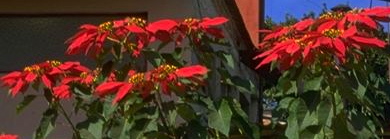
In the shop next door I buy poinsettias.
When I get home, I put them in a vase
and watch them, red-eyed, watching me.
Bloodstains scratching a white-washed wall.

IMG0034_1.jpg

Misshapen gems in a ceramic prison, their beauty
breaks me down: a fragmented world, decimated
words, metaphors born from worms and mescal.

The eyes I see are not eyes because I see them:
they are eyes because … twin brown ovals …
they watch me as they float in a liquid mirror
within the upraised glass held by my hand.

Outside, beyond the balcony,
sun -blood melts like sealing wax.
The bougainvillea strains sharp stains
through a lonesome slice of sunlight
giving birth to flamboyán and tulipán.

My lemon tree leans over to listen.
Glistening pearls of dew embellish
its morning throat. Christmas decorations
these postage-stamp minstrels, thronging
each branch, filling me with song.

18 June 2002 butterflies in ditch 014.jpg

Butterflies, winged flakes of archaic paint,
flutter from temple walls leaving them barren.
Church towers, strong when terra firma shakes,
quiver insubstantial. Mescal melts the morning,
a miracle, this quiver of shimmering air.

Teddies or Cats?

IMG_0015.JPG

Five reasons why a Teddy Bear is much better for you than a Kitty Cat.
I know, I know: cat lovers will go wild. They think cats are such lovely cuddly things. And they believe strongly that nobody can resist a warm, loving, darling, purring bundle of fur. Well, I can resist cats. And I can give you five good, sound, solid, 25 carat reasons why Teddy Bears beat Kitty Cats any day of the week.

One
Teddy Bears do not need to be fed on a regular basis. In fact, one piece of kibble will last a Teddy Bear for a very, very long time. And you can’t say the same for your cat. So less expense, no need to feed, don’t have to put that fresh water down every day, no constant fawning attention when hungry or just plain greedy, don’t have to worry about treading on the cat’s tail … In fact, a Teddy Bear wins out every time.

Two
“Don’t mention cleaning out the kitty litter.  Promise?”
“I promise. I won’t mention it.”
“Word of honor?”
“Word of honor. Fresh Walnut and all that.”
“You just mentioned it.”
“Mentioned what?”
“The kitty litter.”
“I didn’t.”
“You did: you said ‘Fresh walnut.’”
“So?”
“So that’s what keeps the kitty litter from smelling.”
“Does it smell much?”
“Quite a bit. I hate cleaning it out.”
“Why?”
“It’s so smelly, filthy, grainy, lumpy, stinking …”
“So, why do you do it, then? What you need is a nice, clean, environmentally friendly Teddy Bear. There’s no cleaning up after a Teddy Bear. Who’s ever heard of Teddy Bear Litter?”
“You said you wouldn’t mention it.”
“Mention what?”
“Kitty litter.”
“I didn’t, you did.”

Three
Teddy Bears don’t have off-spring. You don’t need to neuter them, and they don’t need taking to the vet. Nor did they sit and wait in family groups for their photos to be taken. What we have below is a fake photo placed there by the unscrupulous enemy for their own pro-cat propaganda purposes.

Empress 048.jpg

Four
Teddy Bears are very obedient. If you tell a Teddy Bear to “sit” or to “stay”. He does so. Immediately. And he stays where you put him. There’s no clash of wills and egos, no conflict at all. Teddy Bears are easily trained and very obedient. Also, they don’t want to go out in the garden and wander beneath the bushes to shriek and whine when the moon is full. Now, if you have cats and you want them to sit and stay still, you must give them something to watch or to play with. Chipmunks and garden birds aren’t cheap, you know, and they are less trainable than cats. How long do you think it takes to train a chipmunk to just sit there quietly to entertain your cat? Especially when it’s being hissed at and the cat is bouncing the window with anguish? Also, Teddy Bears don’t climb on furniture, nor do they break ornaments, nor sink their claws into your hair as you pass beneath them, nor do they drop on you, unexpectedly, from great heights.

Five
Five and finally, when there’s a moth, a fly, or a mosquito on the ceiling at night, you can’t train your kitty cat to fly into the air and snatch it off the ceiling. But as for Teddy: grab him by one leg, preferably the back one; give him his commands “Ready, Teddy, Go!” and hurl him skywards. With a little practice, he’ll nail that nocturnal buzzing monster every time.

No: all things considered — and I promise I won’t mention, you know what, that little box the cat sits in — there’s nothing better than a Teddy Bear. Wise, silent, friendly, cuddly, obedient, friendly (did I say that?), needs no training, always there when needed, waits patiently for you when you’re away, never stalks off with tail in air, never gets out and hides in the garden where you can’t find him, adorable, cuddly (did I say that already?) … Give me a Teddy Bear anytime.

Click this link for original post and more photos:
https://rogermoorepoet.com/2016/05/01/teddy-bears-and-kitty-cats/.