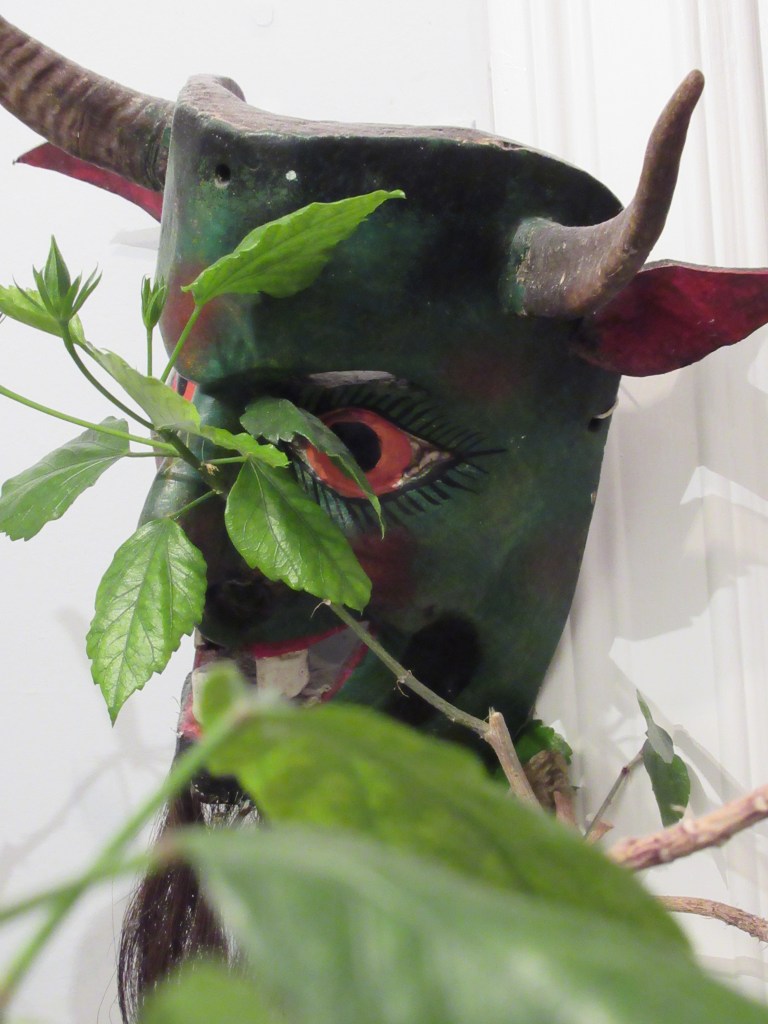
Do you play in your daily life? What does ‘playtime say to you?

Daily writing prompt
Do you play in your daily life? What says “playtime” to you?

Do you play in your daily life? What does ‘playtime say to you?

Poesía de juego y poesía que expresa la autenticidad del ser / poetry as play and poetry that expresses the authenticity of being. For me, poetry is play. However, it is far more than just ‘play‘ – because it is a play that expresses the authenticity of my being.

I write in my journal on a daily basis. As I write, I sometimes spot little gems, thoughts or word clusters that can be turned into poems. For me, playtime is when I start to elaborate the words (signifiers) and turn them into thoughts (signified). The meaning may be the message, but the words that carry the message are the building bricks of the poetry of play which sometimes, with a happy Midas touch, turns into the poetry of gold that expresses the authenticity of who and what I am.

But play is also what I do when I paint. And sometimes I sit beside my mirror image friend, Moo, and paint with him. While Moo is great with colours, he is sometimes at a loss for words. Then I help him by playing with words, shuffling them around, until he finds the title that he wishes for his poems. Sometimes I consult, on Moo’s behalf, with other friends, and they are the ones who join in the game, and settle the dispute by agreeing upon the name that Moo will finally choose for his painting.

But, speaking of painting, there is no play better than the game of making meaning out of color [does it really matter how you spell it? ] and shape while taking a line for a walk and turning it into something playful yet meaningful. Mix and match, and stitch and patch, and then add the lines and title that ease the metamorphosis of color into shape and meaning.

There are other games I play to help fill in the daily gaps that have entered my post-retirement life. Online games of patience, crosswords, chess games with their intricate patterns of red and white or light and dark. Then their [now it does matter how you spell there!!!] are mining games when I dig deep into other people’s poetry and search among the gems of Octavio Paz, Antonio Machado, Dylan Thomas, John O’Donohue, Milton Acorn, Valverde, Quevedo, St. Teresa of Avila, Gongora, Sor Juana, Cervantes, or many other friends, their voices now silences, with whom I speak with my eyes, in order to find something that inspires me to play yet another game – hunt the symbol.

Re-reading Rudyard Kipling is a game too. “Do you like Kipling?” “No, I never Kipple.”And in books like Kim, the great game of life goes on and on, and Kipling’s signifiers (words) turn into a signified (meaning) that is warped by my creative mind and changed into my ideas of a new game in which hunt the symbol turns into the game of Brillig where the slithey troves of new words, fresh words, are reborn into my game-world and emerge from their game-whirled into my own word-play conversation with my own thyme and plaice [or should that be time and place?] And long may Moo and I play that game!

Memory

Spotify:
Remember to scroll down to the appropriate audio episode.

Memory

Marigolds, Oaxacan flowers
grown to guide the dead,
leave so many memories at my door.

Milk bottles placed on the concrete step:
every morning, sparrows peck holes
in the silver tops to drink the cream.

Memory:
its once open door
now slowly closes.

Keys no longer turn in the lock.
Sleep gathers in forgotten rooms,
falling like dust on silken flowers.

Shadows double themselves in the mirror:
recycled shades carve the shower’s glass.

Wary of shade and flame I bathe beneath
a dust-laden beam of sunlight.

Motes in my mind:
flesh and blood chessmen
playing their game
on checkered boards of day and night.

Queen’s Gambit

I always hated Queen Pawn openings 1. P-Q-4 – P-Q4. 2. P-QB4… the poisoned pawn.

Queen’s Gambit
the poisoned pawn

Openings are so important.
They should be magnets
drawing you in,
but sometimes they’re whirl-pools
dragging you down.

You try to hold your breath,
but you must breathe and let go,
you must go with the flow and sink
to whatever awaits you in the deep.

Down there, it’s a different world.
Light breaks its alternate shadow,
and you are the light in the darkness,
down there, where no sun shines.

You are the glow-worm,
glowing where no stars glow.
You are the line, the sinker, the hook,
the bait, the temptation that encourages
your opponents to sacrifice their own peace,
 to join you, to swim, or to drown.

Comment: To take or not to take, that is the question. It’s a long time since I read Hamlet or played competitive chess. I have forgotten many of the ins and the outs, the traps and the snares, the devils that hide in the details of ‘yes’ or ‘no’. Sometimes we must just take a chance and play by the seat of our pants. Sometimes we must try to recall all the nuances and shades of meaning. And we all know how one step leads to another and how a misstep leads to one disaster after another. Not to win or lose, but to play up, play up, and play the game. Says who? I don’t find those words in my favorite chess book: Chess for Money and Chess for Blood. The poisoned pawn, indeed: and a throw of the dice never eliminates chance / un coup de dès n’abolira jamais le hasard. Go on, take the pawn, throw the dice, I dare you.

Keeping Score


IMG_1337 (2)

Keeping Score

(‘… we blossom and flourish
like leaves on a tree
and wither and perish …’)

In the beginning was the number,
and that number was one:
number one.

Place it on the chessboard,
square A1,
bottom left corner,
black.

Next door,
on square B1,
white,
place number 2.
Next door,
C1,
place number 4.

The D1 square
claims number 8.
The players are abandoned
to their fate.
16 perch
on square E1.

32
land next door,
what fun,
and crowd into
square F1.

Square G1
sees 64
and H1
numbers
128,
each number a person,
forsaken of late,
and left to perish
in a perilous state.

Black on the left,
white on the right,
the numbers will soon rise
out of sight.

That’s just the start,
the first rank done.
Now we can really
have some fun.
A bean counter’s work
is never done.

H2 = 2-5-6.
Now we’re really
in a fix.

G2 = 5-1-2.
Whatever are we
going to do.

F2 = 1-0-2-4.
Now we’re rattling
up the score.

E2 = 2-0-4-8:
why did we procrastinate,
enjoying ourselves,
rich, young and wealthy,
thinking everyone
hale and healthy,
encouraging them
to drink and party.

D2 = 4-0-9-6.
‘What’s this?’
They cried.
‘It’s just the dead ones,’
we replied.
“Surely there can’t be
many more?”
We said we really
couldn’t be too sure,
though we all wished
it was somewhat fewer.

Body bags are not too pleasant,
laid out in rows,
or curved in a crescent.

“C2?”
We were asked
by a man in a surgical mask.
“8-1-9-2,”
came the reply,
“and there’s lots more
yet to die.”

“B2?”
“I’ll have to tell you later,
when I’ve checked
my calculator.”

We punch the numbers,
one by one.
Keeping score is so much fun.
“8192
multiplied by 2
gives us
1-6-3-8-4.”
“My God,” he said.
“How many more?”

A2
multiplies by two
the numbers laid out
on B2.
“We’re sorry,” we said,
“the news ain’t great:
now we’ve climbed to
32 thousand,
seven hundred
and sixty-eight.”

Don’t bother to give us any thanks.
We’ve got to calculate six more ranks.

Maybe when we get to square H8,
the dying will decelerate.
Then maybe we can celebrate.

Until then we’ll just keep score
and hope there aren’t too many more.

Self-Isolation Day 18

IMG_1773 (2).JPG

Self-Isolation Day 18

So we are in the eighteenth day of our Self-Isolation. Yesterday I added a fifth book to my group around the table: The Art of the Middle Game by Paul Keres and Alexander Kotov, translated by Harry Golombek. I have had this book since 1964 when it was first published in Penguin Books. Once upon a time, I played serious chess, was president of a chess club, and read widely about the game. But I have not played any serious, face to face chess since I came to Canada and the last games I played were in 1994, when I visited the Dominican Republic, although I did pay a couple of games in Oaxaca on my first visits there.

I dipped in and out of this book yesterday, playing sample games here and there. It was a joy to rediscover the movement of the pieces and to see how great minds viewed the chess board. Sharpe’s Riflemen are wonderful to watch on YouTube, but they cannot rival the two sixteen piece armies that wage battle on the sixty-four squares of the chess-board!

The Art of the Middle Game uses descriptional notation. This means that when the King Pawn takes two steps forwards, it moves from King two to King four. In descriptional notation, this becomes P-K4. If it is the first move of the game, by white, then it becomes 1. P-K4. If the opposition follows suit, then his move is also transcribed as P-K4. This gives us 1. P-K4   P-K4. And this is where the confusion arises: each side has a K-4, and a Q-4 and every other square is doubled up as well in a mirror image of army facing army. After such a long time away from the game, I found my concentration wavering in places and thus I had pieces on the wrong squares and had to start all over again. Very frustrating.

When I played chess in Spain, also back in the sixties, I was faced with algebraic notation, long in use on the continent of Europe. The eight ranks are lettered a-h, from left to right, and the eight files are numbered 1-8 from bottom to top, with ‘white on the right’ i.e. h-1 always white. This means that each square has a single, plotted designation and it is much easier to follow the game as there is no mirror imaging. In this fashion, 1. P-K4 would become e2 – e4 followed by e7 – e5. None of this changes the nature of the game, but it does change the speed and ease with which it is transcribed and followed.

I remember buying my first pocket chess set, in Boots the Chemist (!) when I was 9 or 10 years old. It is an old cardboard set with red and white squares and pieces. I still have it and I am using it now. The scrawl that I call my handwriting is still unmistakable, after all these years. That same day I bought Harry Golombek’s The Game of Chess, and I taught myself how to play, based on that book. I remember looking at the descriptional notation and not understanding how the system worked, even after days of memorization. Then, one morning, as Dylan Thomas, another Swansea Boy once wrote, ‘light broke where no light shone’ and as all the squares fell miraculously into place, the system of descriptional notation suddenly made sense to me. “Threshold knowledge is a term in the study of higher education used to describe core concepts — or threshold concepts — which, once understood, transform perception of a given subject, phenomenon, or experience” (Wikipedia). The discovery of the key to descriptional notation was indeed a threshold experience, as was the transition to algebraic notation. What a wonderful world we live in.