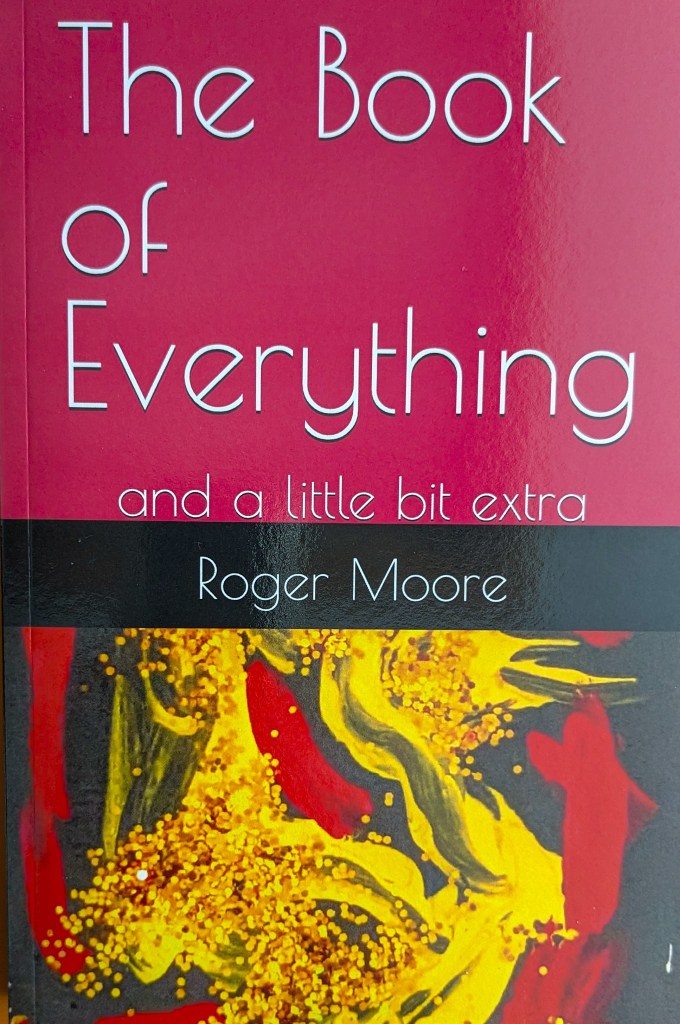
The Book of Everything

Discourse Analysis
and
The Meaning of Meaning

Words have dictionary definitions that allow us to agree on what they mean. In this fashion, when I say ‘my grandmother’, you automatically know that I am referring either to the mother of my mother (maternal grandmother) or the mother of my father (paternal grandmother). This is the dictionary meaning of the word ‘grandmother’.

But words have lives of their own, and their meaning changes when used by individuals. You, the reader, never knew my grandmothers. You never will. They both passed away a long time ago. I loved them both, but for very different reasons, and to me they were as different as different can be.

This means that when you, the reader of these words, reach the word ‘grandmother’, the faces you see, the emotions you feel, the memories conjured up by that word are totally different from mine. Same word, same dictionary definition, different personal memories, experiences, relationships. In addition, the role that our grandmother(s) played in our lives will be very different too. That role may vary from culture to culture, from language to language, and from the social structure of the changing society in which we live.

For example, when I first went to Santander, Spain, I visited a family who lived in a large, detached house that contained three generations of the family – grandmother and siblings, father and mother, grandchildren, and an assortment of aunts and uncles. No need for babysitters in that household. Everybody had a vested interest in the development of the young ones and the older ones received tender, loving care, twenty-four hours a day, every day of the week.

I lived from time to time in the same town as my own grandparents. I saw them regularly, but rarely on a daily basis. When my parents sent me to my first boarding school, age six (if I remember correctly), I lost contact with my family. My paternal grandfather died when I was away at school. My maternal grandmother died while I was away at school. My paternal grandmother died when I was living in Spain. My maternal grandfather died when I was living in Canada. Alas, after those early years, I scarcely knew them. My experience, then, was so different from that of other people.

When I moved to Canada, the Atlantic Ocean separated me from my parents. My daughter, born in Canada, grew up with no close knowledge of her grandparents. The word ‘grandmother’ did not mean the same to her as it did to the grandchildren in Santander, or to me. How could it? All those miles between the families, and visits limited to a couple of weeks every other year at best. Although the dictionary meaning is always the same, what a difference in the emotional meanings for each person using that word.

Discourse Analysis, the way I use it, builds not on the dictionary meanings of words, but on their emotional and personal resonance. I take the standard, dictionary meaning of words, twist it, look for meanings at different levels, and then build an alternative narrative on that changed meaning. I have great fun doing so.

Part of that verbal fun comes from my childhood. I listened to Radio Shows like The Goon Show and Beyond Our Ken. Giles’ Cartoons gave my names like Chalky White, the skeletal school teacher, or Mr. Dimwitty, a rather dense teacher in another school. These shows also twisted the meaning of words and drew their humor from such multiple meanings. The Goon Show – “Min, did you put the cat out?” “No, Henry, was it on fire?” Or on an escaped convict – “He fell into a wheelbarrow of cement and showed every sign of becoming a hardened criminal.” Or from Beyond Our Ken – “My ear was ringing. I picked it up and answered it. ‘Ken here, who am I speaking to?’ ‘Larry Choo.’ ‘Ah, Choo.’ ‘Bless you, Ken.’ Verbal scenes like these – it’s hard to get visual pictures from listening to the radio – remain engraved in my memory banks. More than engrained, they become part of the verbal system from within which I write.

This system includes Direct Discourse, Indirect Discourse, and the Twisted Discourse of an Inventive Mind that still wishes to create. It also comes from Francico de Quevedo’s Conceptismo, from Ramón del Valle-Inclán’s esperpento, and from certain aspects of Albert Camus’s Theory of the Absurd, all blended with the poetry of Jacques Prévert and the songs of Georges Brassens. This from the latter – “Tout le monde viendra me voir pendu, sauf les aveugles, bien entendu.” Everyone will come to see me hanged, except the blind of course.

This is not always easy humor, nor is it a comfortable way to see the world. But it is a traditional one with a long literary history. The title of my book goes back to Francisco de Quevedo, of course, who, in 1631, in Madrid, published El libro de todas las cosas y otras muchas más / The book of everything and a lot more things as well. Don Roger turns to his good friend Don Francisco whenever he needs a helping hand.

The pieces themselves were first published on my blog rogermoorepoet.com. They have been revised, and I have added some more pieces in a similar vein. Tolle, lege – Take and read.  Above all, enjoy this world of mine, with its subtle and not so subtle humor, its sly digs at many of our follies, and its many forms of creativity.

The Book of Everything
and
a little bit extra

Click on the title to purchase this book.
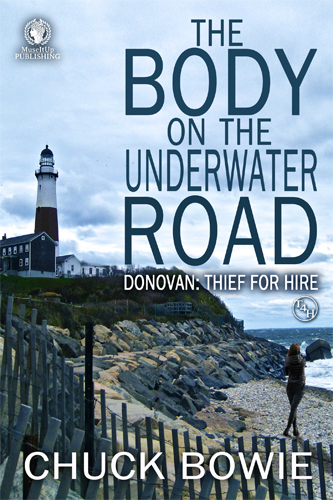
Chuck Bowie

Chuck Bowie
(June, 2019)

We met at St. Andrews, at low tide, on
the underwater road. In secret we
shared the closed, coded envelopes of thought,
running fresh ideas through open minds.

Our words, brief vapor trails, gathered for
a moment over Passamaquoddy,
before drifting silently away. Canvas sails
flapped white seagulls across the bay.

All seven seas rose before our eyes, brought
in on a breeze’s wing. The flow of cold
waters over warm sand cocooned us
in a cloak-and-dagger mystery of mist.

We spun our spider-web dreams word by word,
decking them out with the silver dew drops
proximity brings. Characters’ voices,
unattached to real people, floated by.

Verbal ghosts, shape-shifting, emerging from
shadows, revealed new attitudes and twists,
spoke briefly, filled us with visions of book-
lives, unforgettable, but doomed, swift to fail.

Soft waves ascended rock, sand, mud, to wash
away footprints, clues, all the sandcastle
dreams we had constructed that afternoon,
though a few still survive upon the printed page.

Comment:
This is a ‘get well soon’ post for my friend, Chuck Bowie. Let us hope it gives him that little boost all artists need, when they feel a little bit down. An excellent writer, I am pleased to support his work and bring it to the attention of the readers of this blog. The poem, incidentally, is taken from my own book, The Nature of Art and the Art of Nature.

Chuck and I met at St. Andrews, on the beach, and spent a pleasant hour or two discussing both art in general and the structure and characters of this book in particular.

Was that really in June, 2019, more than five years ago, when he was resident artist at KIRA? So many tides have risen and fallen since then. So much water has gathered and flowed. Vis brevis, ars longa – life is short, but our art outlives us – long may both authors and their art survive and flourish!

Coming Soon ….

Coming soon ….. to a Rollator near you.

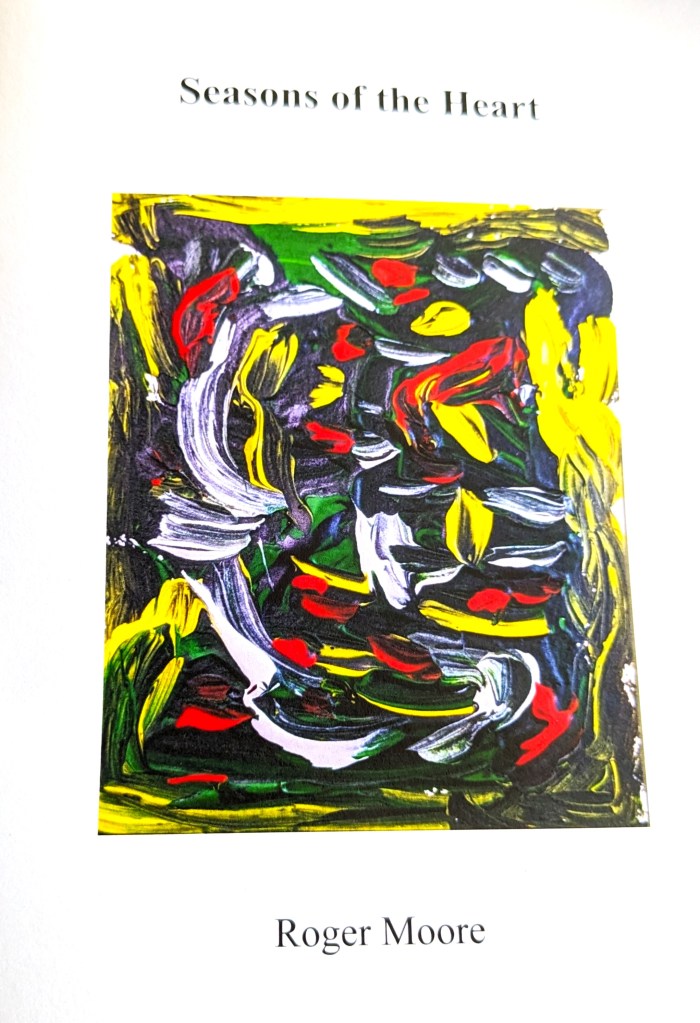
Yesterday I checked the galley proof and all seems well. The distortion on the photo above is all mine (!) and the original cover is much clearer, better, straighter, and brighter.

I have not posted for two weeks, and yet some of my faithful followers have still clicked on this site to see how I am doing. Thank you so much.

Several things happened last month. (a) I started a stretching and exercise program. (b) I upped my walking to 4000 steps a day. (c) I used a combination of Rollator [Nexus 3] and shopping cart to build up, slowly, to an hour a day of aerobic exercise.

That’s all good news for the physical body and the mental state, but not such good news for the creative cycle. Blog postings have suffered and my online social presence has been greatly reduced. On the good side, I have been out and about, around the garden and around the block, and have re-established contact with neighbors, friends, and the local canine newbies and golden oldies.

I also managed to edit and correct and revise Seasons of the Heart and this chapbook of poems, based on my meditations on Anam Cara (by John O’Donohue) will soon be available to gift to my closest friends.

As you probably know by know, I do not sell what I call my “Covey Collection” of self-published chapbooks and books. If you wish to support my efforts as an artist, you can do so by clicking on this link and seeing if there is anything that fancies your tickle, sorry, I mean tickles your fancy.

B & W

“Slim words couched
in the empty whiteness
of the page.”
John O’Donohue,
Anam Cara

black words
          white page
thoughts
          floating in space

airs and graces
          whirlwind words
blowing through
          freshening
cleansing

cotton clouds
          silky sky
that one word
          waiting
to be spoken

that one thought
          soon to be word-borne
out from the dark

a new existence
          to brighten us
blind us with light

What sacrifices have you made in life?

Daily writing prompt
What sacrifices have you made in life?

What sacrifices have you made in life?

Oh dear, so many, many sacrifices. Here, let me count the ways. This morning, for breakfast I sacrificed a banana, followed by an orange. Last night, for supper, I sacrificed a lobster – and it was lovely. I thanked its spirit for allowing me to nourish myself upon it. Then, for lunch, I sacrificed three eggs and cooked them in an omelet. You know what they say “You can’t make an omelet without breaking eggs”. Nor can you be a robber baron without breaking legs. Sorry. Wrong post. That belongs under “Have you ever broken any bones?” To which my answer is – “Only those of other people.” Maybe I’ll write that one later. But for now, two poems for your entertainment!

Squeezed Orange

Clock greets the hours
with hammer blows,
on a quivering anvil.

Rooster crows
his thick, rich cocoa rico:
morning provides
smells of roasting beans.

Squeezed orange –
glass fills with a golden liquid,
as fierce and sweet
as sunshine on a branch.

A wasted globe,
this orange bath robe,
spent and exhausted,
soon to be transubstantiated.

Breakfast

Yesterday,
I sacrificed a chicken.

Unborn,
it lay within
it’s calcium cocoon,
dormant,
a volcano sleeping
beneath thick snow.

Tap, tap, tap,
the silver spoon
bounced off
the hairless skull:
a sudden crack,
a spurt of orange blood.

Note: This poem is taken from my poetry collection Obsidian’s Edge – From Morning to Night: A Day in Oaxaca

Prompts and Impromptus

Prompts and Impromptus

The creative process is different for each one of us. I think of three different creative modes.

The Quarry and Treasure Trove – I write in my journal every day. I have done so for nearly forty years. For me, it is a treasure trove of creativity and I can return to it anytime I want to to revive old memories and to research old moods. I think of it as a quarry that contains valuable images and metaphors that can be used in different ways to create and recreate. I also find that, as I journal, I distinguish between that which is mere dust and ashes and can be abandoned, and that which is a genuine gemstone that can be polished and published. Writing regularly helps me to distinguish between the commonplace and that one piece of gold that emerges.

Impromptus – Some people, like the cat above, wait patiently for inspiration to come. Sometimes it does, sometimes it doesn’t. When it doesn’t, they blame Writer’s Block or something similar. While you can sit and wait for inspiration, using the methods outlined in The Quarry and Treasure Trove you can ‘go out and make things happen’. Seek and you will find. Knock and it will open. Now that’s inspiration for you!

Prompts – The creative writer can also use prompts. I have used those that appear in Word Press, but only in sporadic fashion. I do not use them everyday. In fact, I have been a bit down and otherwise engaged recently, and my visits to social media have been very limited. I apologize to my friends – we few, we happy few, we band of siblings.

One of my best friends has been helping me through this rough patch. She has been putting together a book of creative prompts. She converted that into a webpage called  judyandco.com and I highly recommend her work to anyone who, like me, gives up the ghost for a little while, and then wishes to regain the creative spirit. As she wrote to me only this morning – “there’s a bunch of free stuff on there” -.

So, for those who need a kick start for their creativity, try clicking on  judyandco.com – I am sure you will find inspiration there.

What relationships have a positive impact on you?

Daily writing prompt
What relationships have a positive impact on you?

What relationships have a positive impact on you?
I think one of my poems answers this question best. I write “one of my poems” but it is really my ‘free’ translation of one of Francisco de Quevedo’s sonnets – Retirado en la paz de estos desiertos. I have changed the poem slightly, but I am sure Don Francisco (1580-1645) will excuse Don Roger’s impoverished effort (2023).

On Loneliness
29 December 2023

Resting in the peace of these small rooms,
with few, but welcome books together,
I live in conversation with my friends,
and listen with my eyes to loving words.

Not always understood, but always there,
they influence and question my affairs,
and with contrasting points of view,
they wake me up, and make me more aware.

The wisdom of these absent friends,
some distant from me just because they’re dead,
lives on and on, thanks to the printed word.

Life flits away, the past can’t be retained.
each hour, once past, is lost and gone,
but with such friends, I’m never left alone.

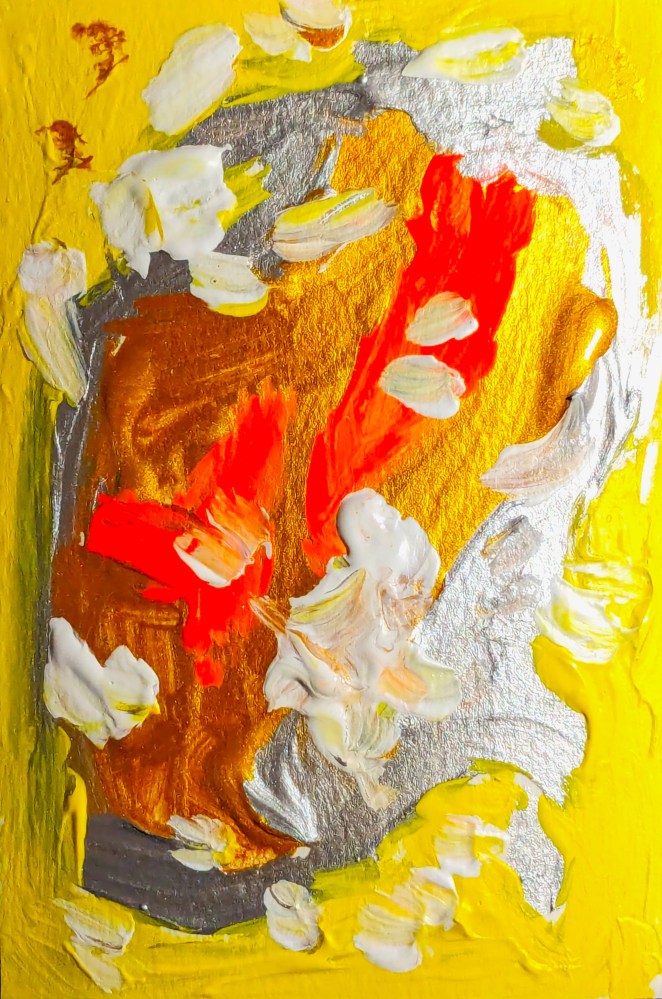
The painting, by my friend Moo, is called Fiat Lux – Let There Be Light. It is reminiscent of Dylan Thomas’s poem, Light breaks where no light shines. Intertextuality – Quevedo drew inspiration from the Stoics. I drew inspiration from Quevedo. Moo drew inspiration from Dylan Thomas. The nature of creativity and its continuing links throughout the ages shines clearly through these wonderful associations.

Do you have a favorite place you have visited? Where is it?

Daily writing prompt
Do you have a favorite place you have visited? Where is it?

Do you have a favorite place you have visited? Where is it?

Just one place? So difficult to choose. I have been very lucky in my travels. I haven’t gone far, but I have tried to go deep, returning to the same places again and again. One place I often visited was St. Luce-sur-Mer in Quebec. It is a wonderful little town on the banks of the St. Lawrence River. The sunsets are sheer marvels and the views of the Northern Lights across the bay are just outstanding. Site of the wreck of the Empress of Ireland, it is filled with mystery and memories, as is the nearby Rimouski. Ste. Luce sur Mer would be my third choice.

Oaxaca, Mexico, would be my second choice. The city itself, capital of the state, is packed with history. I taught there for a couple of weeks (maximum six) every year from 1995-2001 and every time I returned I found something different and more mysterious. The dancing and music in the capital, the cascades of fireworks flowing down the facade of a church, the Christmas Cribs that grew day by day as people added to them, the incredible food, and above all the people – dancing in the Zocalo on Sundays to the music of the State Orchestra, crowding the markets with color, and the markets themselves, the scents of peppers, coffee, chocolate – to visit Oaxaca, in those days, was to visit the heart of Mexico. Imagine sitting beneath the tree that Hernan Cortes had sat beneath when he visited Oaxaca just after the Conquest of Mexico City – Tenochtitlan – and talked to the Mixtecs and Zapotecs of the Oaxaca Valley. And the codices – wonderful – I cannot say enough in praise of Oaxaca.

My number one choice: Avila. The lead photo shows the Toros de Guisando. Pre-dating Christianity, these four stone bulls – verracos – were often used as boundary markers by the Vettones who lived there before the Romans. One of these four bulls bears, carved into its side, the marks of one of the Roman Legions that passed this way. The countryside around Avila has to be seen to be believed. The walled city itself is a wonderland – three kilometres of walls, 9 gateways, a Cathedral that shows an enterprising mixture of styles, museums, libraries, squares, and a welcoming people who make you one of the family. I visited here for four summers, 2005-2008, staying for between 6 and 8 weeks on each visit, and always residing in the same place, El Rincon, close by the Mercado Chico.

The Banks of the Seine

Banks of the Seine

Gnawing at the carcass of an old song,
my mind, a mindless dog, chasing its tail,
turning in circles, snapping at the fragment
of its own flesh, flag-flourished before it,
tournons, tournons, tournons toujours,
as Apollinaire phrased it, on a day
when I went dogless, walking on a mind-leash
before the Parisian bouquinistes who sold,
along the banks of the Seine, such tempting
merchandise, and me, hands in pockets,
penniless, tempted beyond measure,
by words, set out on pages, wondrous,
pages that, hands free, I turned, and turned,
plucking words, here and there, like a sparrow,
or a pigeon, picks at the crumbs thrown away
by pitying tramps, kings, fallen from chariots,
as Eluard wrote, and me, a pauper among riches,
an Oliver Twist, rising from my trance, hands out,
pleading, “Please, sir, can I have some more?”

Comment:
This is a fusion / confusion, if you like, of The Kingston Trio’s song – The Seine – with a quote each from Guillaume Apollinaire – Alcools – and Paul Eluard – Il ne m’est Paris que d’Elsa, and Francisco de Quevedo’s – El Buscon – and a tip of the old chapeau nouveau to R. S. Thomas and Charles Dickens. Fools rush in, I am afraid, where angels fear to tread. Go on. Rush right in. Sort it all out. I double-dog dare you – and thank you for that one, Jude.

Dark

Dark

The lights went out suddenly,
leaving me in the dark.
A cloudy night, not a spark
of starlight to light my way.

My search for candles was slow.
I found them, struck matches,
and sat at the table watching
light catch and flames glow.

A war baby – bombs, blackout
curtains, diminished light, all
are present in my DNA, and yet,
I fear the dark above all.

Like a moth, or a high plane
caught in a searchlight,
I struggle to escape from twin
siren calls: fire and light.

I sat and waited for power
to return. An hour, two hours,
three, four. Then I couldn’t wait
any more. I climbed the steep,
wood hill that led to bed.

At the top of the stairs
a plea for light filled my head
and a plea for the return
of light formed the focus
for long-forgotten prayers.

Comment:
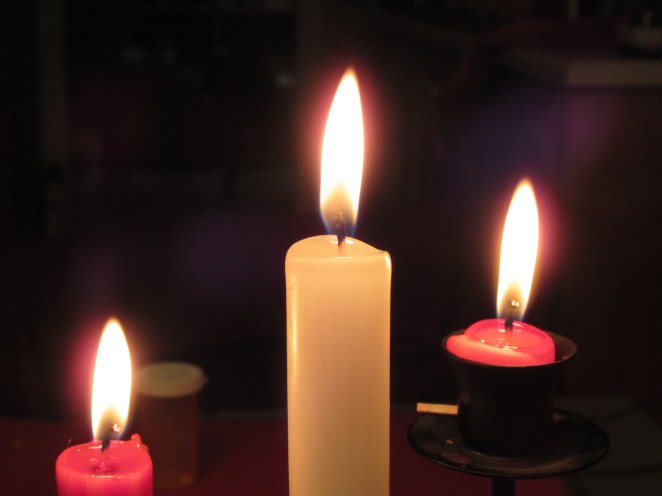
We lost power for 15 hours a couple of weeks ago. One moment we were sitting there, after supper, ruminating quietly, with the lights on. The next, we were sitting in the dark. We found a flashlight – light but no warmth. Then moved on to candles. Candles need matches. When the ingredients were ready, we struck the matches to light the candles. These were the first three we lit.

We are so lucky. Sure, it was an awkward night. But it was only fifteen hours. We talked about the homeless, their poverty, often in the middle of such wealth, the poor who have homes, but who cannot afford to light them or heat them, the innocent victims in war zones, powerless in every sense of the word, deprived of light, heat, water, plumbing, sanitation. Our prayers that night included them as well – all of them.