Joy of Words

Joy of Words

If the words won’t come, don’t worry.
Sooner or later, they will arrive, driving
down in flurries. Think wind-driven leaves
or the soft white whisper of snaking snow.

There is a moment when all sounds cease
and you can be at one with your inner self,
there, where summer sunshine twinkles
and soft rains bring forth clarity and joy.

What are words anyway, but soap bubbles
emerging from an iron ring to rise in
child-hood’s skies, soaring, dying, around
the cloudy thrones of sun-kissed clouds.

We, their so-called creators, are left below,
building cotton-wool castles spun from air.

Comment:

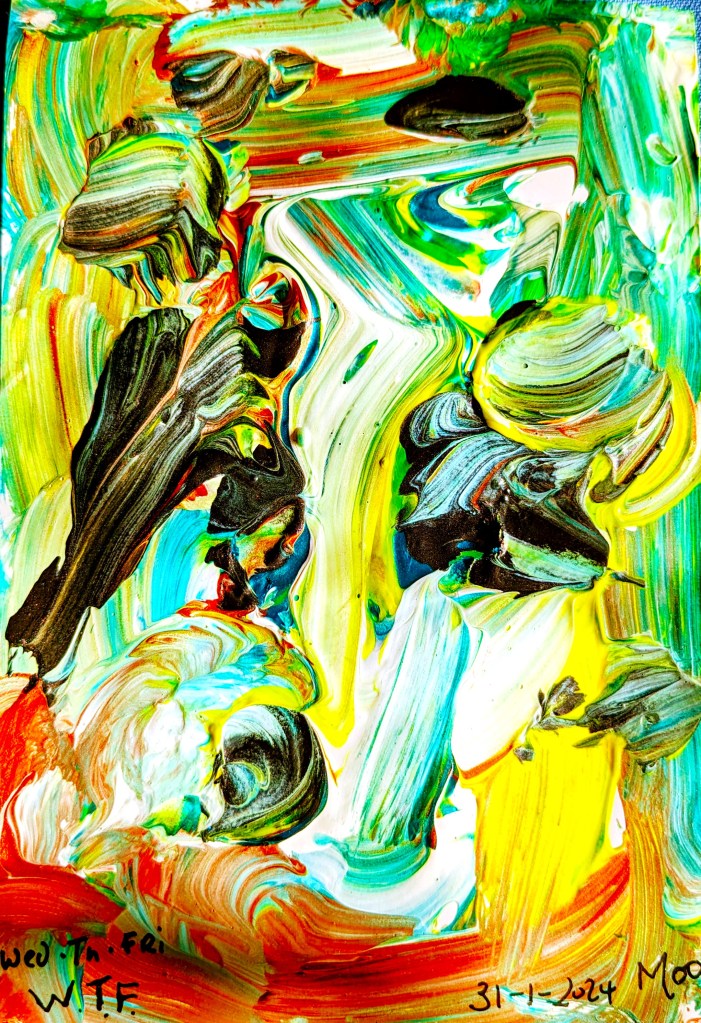
The painting, animales de fondo, comes from a book by Juan Ramon Jimenez in which he describes human beings as ‘animals living at the bottom of an ocean of air’. I have tried to capture the concept both verbally and visually.

What is good about having a pet?

Daily writing prompt
What is good about having a pet?

What is good about having a pet?

Good heavens – what a strange question. Here in New Brunswick – Nouveau Brunswick, Canada’s only bilingual province, I guess it depends on whether you are Anglophone or Francophone. Nothing like a nice, healthy ‘pet’, if you are a Francophone, though you have to be wary, very wary, of them at my advancing age. And nothing like some ‘pets de ma soeur‘ for breakfast, with a nice cafe au lait, unless you would rather ‘un bon bin de beans‘.

On the other hand, if you are Anglophone, then the term takes on a different series of meanings, doesn’t it, my pet, I ask my wife. Happily, she neither woofs, nor woofs her cookies in reply. And if this is all double-Dutch to you, don’t worry. It’s all tied up with discourse analysis and the meaning of meaning. Don’t be so mean! What do you mean by that?

I suppose we are all talking about cats and dogs, and budgerigars – not budgie smugglers – and other two and four-legged friends, along with sliding ones, like baby boa-constrictors, that can – like pythons in Florida, grow to an enormous size. Such an enormous size, in fact, that you end up being the pet when the monster rules, and your flush your once-a-baby, now a problem, alligator down the New York toilet to grow even bigger and become a danger to the men and women who patrol the subterranean sewage systems.

And don’t forget Julius Caesar, the pet parrot who told the burglar, in an Irish accent, that “Jaysuss” was watching him” as the burglar tried to burgle the house. Alas, Julius Caesar failed to warn the house-breaker that Jaysuss was in fact a huge, pet Rottweiler that was standing – we stand on guard for thee – right behind the unfortunate man. Who needs a burglar alarm and an AI system, when you have two or three pet, and not petits, Rotties patrolling the house 24/7? Mind you, I wouldn’t call them pets, those Rotten Rotties, though they may cause them in certain people, and very generous ones at that.

What makes a good neighbor?

Daily writing prompt
What makes a good neighbor?

What makes a good neighbor?

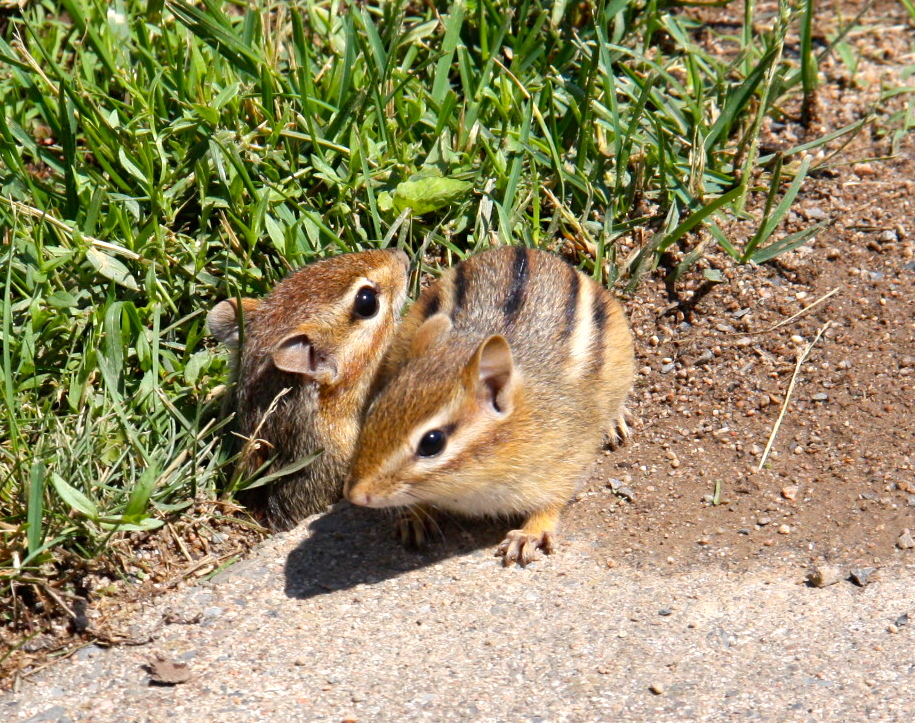
I am not sure what makes a good neighbor, but I am learning what makes a bad one. This cheeky little fellow has taken a liking to my garage. When he finds the garage doors closed, he gnaws and nibbles at the outside woodwork and tries to chew his way in. Not a nice neighbor.

Earlier this summer, I had problems with my windshield wiper liquid. The right side squirted well, and cleaned the passenger side nicely. The left side slowed down to a dribble, and then stopped. The rear window wiper, on the other hand worked well. No problems at all. One day, both the windshield wipers stopped squirting. Press the button – no liquid at all. I checked the reservoir – half full – and topped it up. Then I tried a pin in the tiny nozzles beneath the windshield. Sometimes they clog up with dust and block the flow. Nothing.

I decided to take my problem to a professional. He raised the hood, looked inside, took one sniff and said “Mice. I can smell the piss.” He told me to leave the car with him, at his garage, and that he’d call me later. He called and drove to the house to pick me up. On the way, I asked him “Well?” “Wait and see,” he told me. “You won’t believe this.”

When we got to his garage he showed me the evidence – a huge red squirrel nest, complete with a winter supply of food, nestled beneath the hood of my car, between the hood lining and the actual engine. The squirrel had chewed his way through the plastic tubing that linked the washer fluid to the wipers. He was shaking with laughter. I was devastated. Cost to me to repair my naughty neighbor’s activities? Well, I won’t tell you – because I don’t want to shock you – but it was quite a bit of money, not enough to be covered by my insurance.

When I got back home, the naughty neighbor was sitting on the roof rafters, inside the garage, chittering at me, chattering away, and scolding me. “I’ll get you, you little varmint,” I said. But he only chattered more loudly. I saw him coming in early one morning and he fled into the woodpile along the wall. “I’ll get you,” I said, beating at the spots behind the logs where I could hear him.

I went online and sought some solutions. One suggestion was to use cinnamon. So, I dug out a packet of cinnamon powder, spread it on the garage floor, across the doorway, and waited. Within minutes, a chattering began in the trees, outside the garage. An angry, nervous chittering and chattering. Then the garden went silent.

I keep renewing the cinnamon. The garage smells lovely. I haven’t seen or heard a squirrel for days. Has this actually worked, I wonder? Watch this page if you want to know the answer to that question.

Monkey’s Clockwork Universe

Monkey’s Clockwork Universe

Some days, monkey winds himself up
like a clockwork mouse.
Other days he rolls over and over
with a key in his back like a clockwork cat.

Monkey is growing old and forgetful.
He forgets where he has hidden the key,
pats his pockets, and slows right down
before he eventually finds it
and winds himself up again.

One day, monkey leaves the key
between his shoulder blades
in the middle of his back.

All day long, the temple monkeys
play with the key, turning it round and round,
and winding monkey’s clockwork,
tighter and tighter, until suddenly
the mainspring breaks

and monkey slumps at the table
no energy, no strength,
no stars, no planets, no moon at night,
the sun broken fatally down,
the clockwork of his universe sapped,
and snapped.

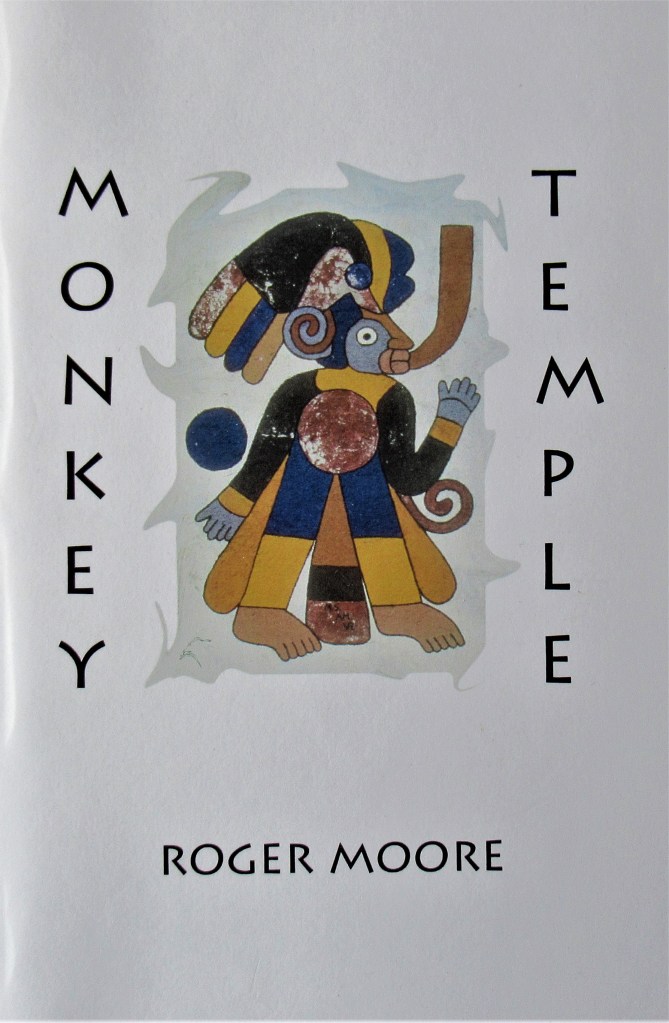
Comment: a big thank you to all who have reminded that yes, I did write this book, and yes, it is one of my favorites. Oh those naughty little monkeys. For those of you who have read the book or heard me reading poems from Monkey Temple, all is well in Monkey Land and the King of Harlem, with a wooden spoon, still gouges out the crocodile’s eyeballs and beats the monkeys on their backsides, with a wooden spoon. I thank my old friend, Federico Garcia Lorca, for that wonderful vision from his own book, Poet in New York.

Dissolution

Dissolution

When I am no more myself,
will I know what I have become?
What last breath in the mirror
will reflect my passing from this self
to the next, if there be another one?
Does it matter? No, to most of us,
yes, to the lusting soul that seeks,
but what does it seek, I ask myself?

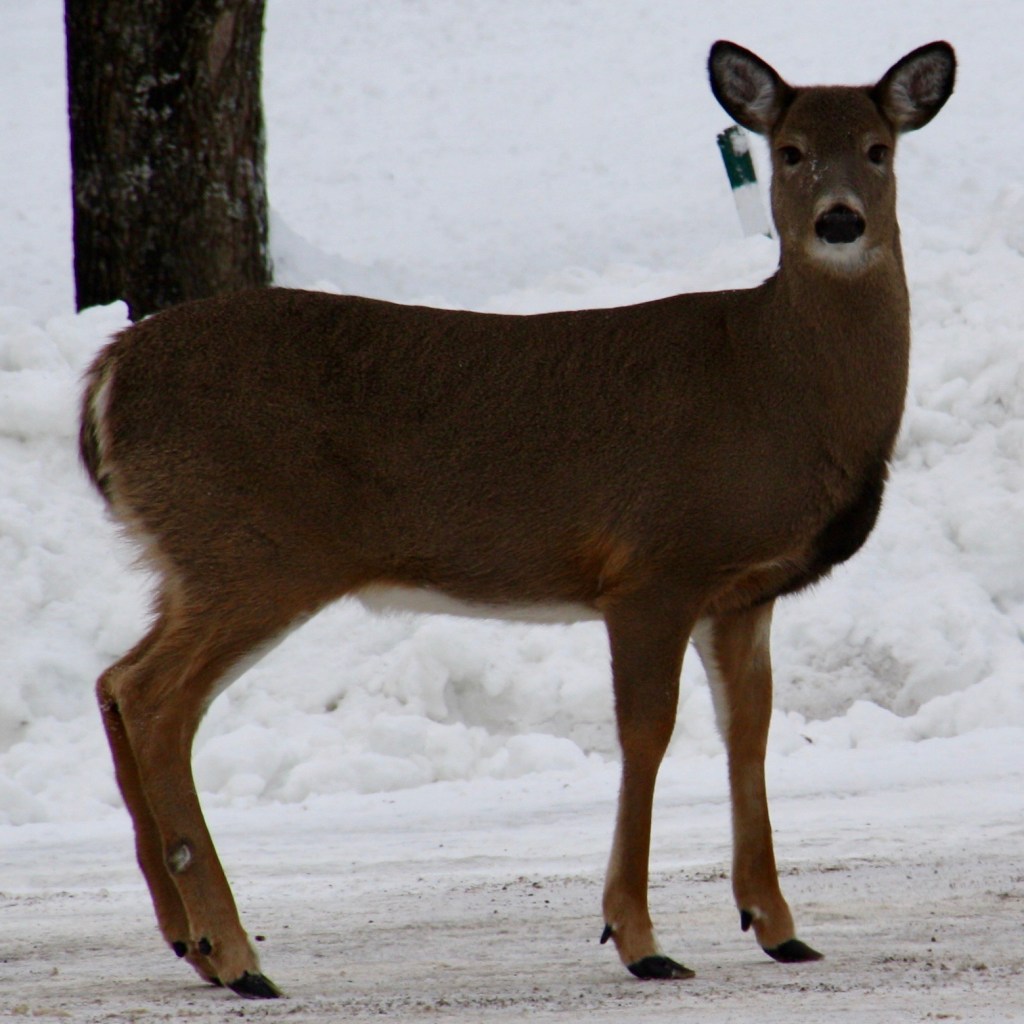
I watch the deer crossing the yard.
Muted, dark against winter trees,
I can scarcely make them out,
let alone understand their wanderings.
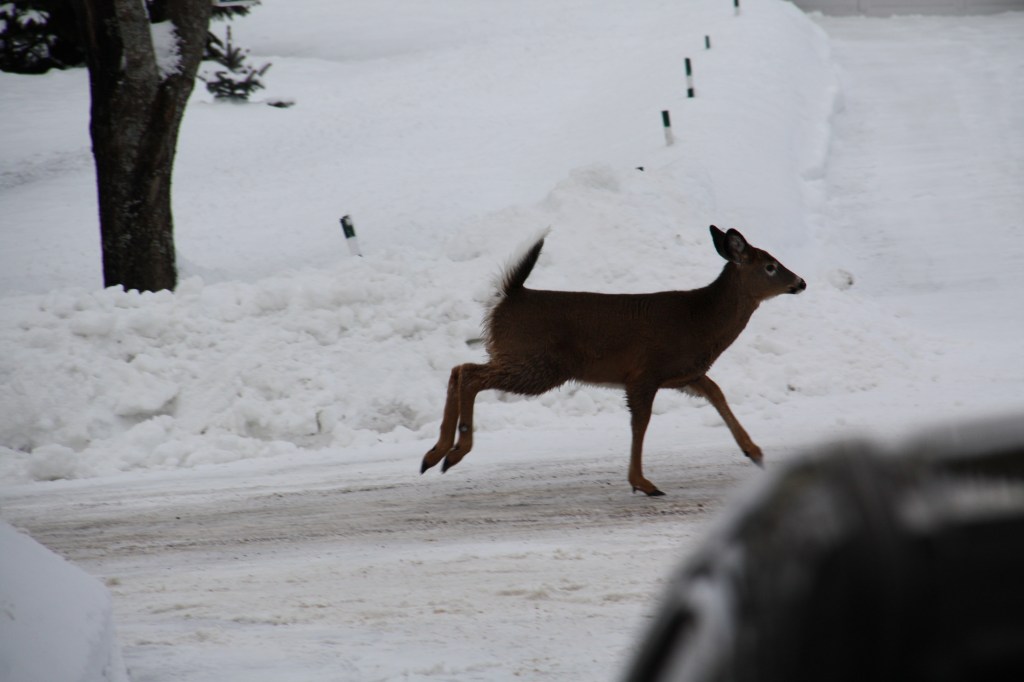
If they scare, they raise white flags of tails,
then run, dancing down their tracks,
as light as thistle-down, though the snow
be deep beyond their walk-ways.

I want to see them as they really are,
the original inhabitants of this land that
a scrap of paper, drawn up by a lawyer,
says I own. Nobody owns this land.
It was here before me and will be here
long after me and mine are gone.

Only the deer truly belong, passing
through, each generation similar
to the one before, knowing no lawyers,
holding no legal papers, but aware
instinctively that we are the intruders,
that the forest is their heart and home,
and that they are sole owners of this land.

Click here for Roger’s reading.

Comment: from a poem by Guillaume Apollinaire: “I am no more myself. I have become the fifth of the twelfth.” I bought a book of his poetry (Livre de Poche) from les bouquinistes in September, 1962, when I started the school year in Paris. I picked it up last night, and started reading it again. The result – this little poem and a host of memories that came flooding back as the deer walked through the garden and all was right with the world.

Spider Web

Spider Web

for
Ginger and Michael Marcinkowski

I do love long and complicated sentences,
stuffed with clauses and dependent clauses,
 and all strung together like a spider’s web,
an enormous web with silvery threads that glisten
 with dew drops in the early morning sun that
blanches them, turning them white, and look,
there’s a little fly caught in this one, trapped
by his own struggles, and struggling even more
as the spider emerges, advances towards his prey,
soon to be his breakfast, or lunch, if he lets his victim
stew in the poisons soon to be injected, and look,
dew drops are falling as web shakes, and threads
tremble, and the dark and seamier side of life
emerges with its stark, black lines, from beneath
the advertising mask of glorious beauty that distorts
reality, as the spider turns into an assassin and the fly
into his victim, and yes, each of us must choose whether
to be an assassin or a victim, meurtrier ou victime,
as Camus phrases it in one of his books, L’Étranger,
though I read it so long ago, when I was a teenager,
studying French in school, and that was one of the books
I chose to read, but I was never labelled, meurtrier or
victime, just trouble-maker, first class, because I didn’t,
wouldn’t, couldn’t tow the official line and kow-tow
to a rigid authority, that walked set lines, like this spider,
the meurtrier, who turned that fly into his victime, and I,
I who could so easily become either, became neither,
but merely the observer, who stands on the outside,
looking in, and watching as the show goes on and on,
year after year, seculae seculorum, world without end,
and yes, the English Master told me never to mix
metaphors, nor to add foreign languages to my poems,
but what if they are not foreign to me, but a part of my being,
as part of the spider’s being is to be a meurtrier, and as for
that fly, well, he is the victime, in whichever language you use,
and yes, this poem is only one sentence, and I love it, amen.

Click here for Roger’s reading.

Sound of Silence

Sound of Silence
Cara Anam, p. xv

Where do the deer go
when they leave their tracks
behind them and pass out of our sight?

We lose them when, like school children,
they scale the snow bank,
stop at the roadside, and look left,
right, and left again, then walk sedately,
one by one, across the road, and blend
into the dark woods opposite our house.

Too many friends have walked a similar way,
crossed the great divide, and lost themselves
in the unknown that lies there, out of sight.

All too soon, we will be faced by that same
decision, whether or not to cross.
Our paths already tell us where we’ll go,
but the hands of our body clocks don’t yet
point to how, or when.

Click here to listen to Roger’s reading.

White Wolf

White Wolf

The white wolf of winter
exits her den-warmth and
shakes snow from her coat. Flakes
fly, whitening the world.

She points her nose skywards,
clears her throat, howls until
cold winds blow their chorus
of crystals, crunchy crisp.

We cower behind wooden walls,
peer out through frosted glass.
The white wolf draws near and she huffs
and she puffs until door frames rattle.

The snow drifts climb higher,
blotting out the light. Night
falls, an all-embracing
Arctic night of endless
snow snakes slithering on
ice-bound, frost-glass highways,
side roads and city streets.

Outside, in the street lights’
flicker, snow flies gather.
Thicker than summer moths,
they drop to the ground, form
ever-deepening drifts.

Our dreams become nightmares:
endless, sleepless nights, filled
with the white wolf’s winter
call for snow and even more snow.

Click here to hear Roger’s reading.

True Names

True Names
Iron John, p. 236

No one will know our true names
until after we have left this place.

Like that elusive moon in tonight’s sky,
our paths will be visible, seen, but not heard.

Orion herds the stars, steering them westwards,
away from the sunrise, to moon’s golden circlet.

So much has been lost, so many of us have gone,
leaving us to mourn unspoken thoughts, silent words.

In spring, sometimes, we can hear voices whispering
to us among burgeoning blossoms and leaves.

Who will bear witness to lovers’ wishes and desires
when the great separation springs upon them?

Who will sing songs, give speech to the little children
taken before their time and lost in the silent night?

Click here for Roger’s reading.

Light Breaks

Bandits

Two shadows,
at three in the morning,
their faces masked,
shifty in the moonlight,
slip soundless over snow,
as they move towards
the bird feeders.

They huddle together,
forming a darker patch.
I watch the feeders move,
but cannot see the seed
nor hear it as it falls.

The feeders empty,
they move again
towards the back porch,
climb the steps,
and settle once more.

I know that by morning,
all traces of seed will be gone,
devoured by Dyson and Hoover,
scavengers and professional
seed removers.

Comment: Light Breaks

“Light breaks where no sun shines…” but sometimes it takes a long time to happen. The name of my blog is rogermoorepoet and it’s main function is to showcase my poetry, above all, to my friends and followers. In my efforts to publish in print form, I have neglected to pay attention to the main function of this blog – poetry. Why? Because when I submit poems I always find the phrase – ‘must be unpublished – including on social media’! So I stopped publishing poetry on my poetry blog and on other social media. Okay, okay. I know. I am an idiot. BUT – light has now broken where no sun shone – Dylan Thomas, of course, another Swansea Boy, and as of today poetry is back. A big thank you to any and all who have been waiting for its return. Give me some encouragement – let me know if you like what I am doing – paintings and poetry!

Click here for Roger’s reading.