Yours are the hands that raise me up, that rescue me from dark depression, that haul me from life’s whirlpool, that clench around the jaws that bite, that save me from the claws that snatch.
Yours are the hands that move the pieces on the chess board of my days and nights, that break my breakfast eggs and bread, that bake my birthday cake and count the candles that you place and light.
You are the icing on that cake, and yours is the beauty that strips the scales from my eyes, then blinds me with light.
I did the memory test today. It’s hard to believe that tomorrow I may not know where I am nor what is the day. Others have passed this way, none to my knowledge in my family. Sorrow gnaws the red bone of my heart. The lady at the doctor’s counter says she is seventy. Her bed-ridden mother, for whom she seeks medicinal solace is ninety-eight. Her mind, she says, is as sharp as a needle or a knife, or a blade of grass. What dreams, I wonder, flit through her head at night? Does she recall her child hood with its pigtails, the first young man she kissed, church on Sundays, the genders carefully segregated, driving there in the family horse and cart? Thunder rolls and shakes my world’s foundations; a storm watch, followed by storm warnings, walks across my tv screen. Lightning flashes. Aurora Borealis daubs the night sky north of Island View with its paint-box palette of light. Memories, according to the song, are they made of this. But what is this? Is it these shape-shifting, heart-stopping curtains of shimmering grace? Or is it those darker shadows cast by firelight on the smoky walls of a pre-historic Gower cave where my ancestors gnawed the half-cooked bones of the aurox and never ever dreamed of Jung’s racial memories as they communicate information from the unconscious to the conscious mind.
Some people leave indelible impressions memorable moments impressed on memory’s eye or clasped closely to the butterfly heart caged in its chest wings wildly beating as it strives for flight
some people cast shadows on snow leave footprints light as flakes as they walk across our waking dreams or call on us in those midnight hours when their image sears the drowsing mind
Some people set a fire in our hearts allow us to see things out of sight to write what we never thought to write to reach out to the unreachable to teach what we thought was unteachable
Stars in night’s silence they point the way lead us on paths we never thought to tread present us with a thread to lead us through life’s labyrinths and out from the darkness into bright light
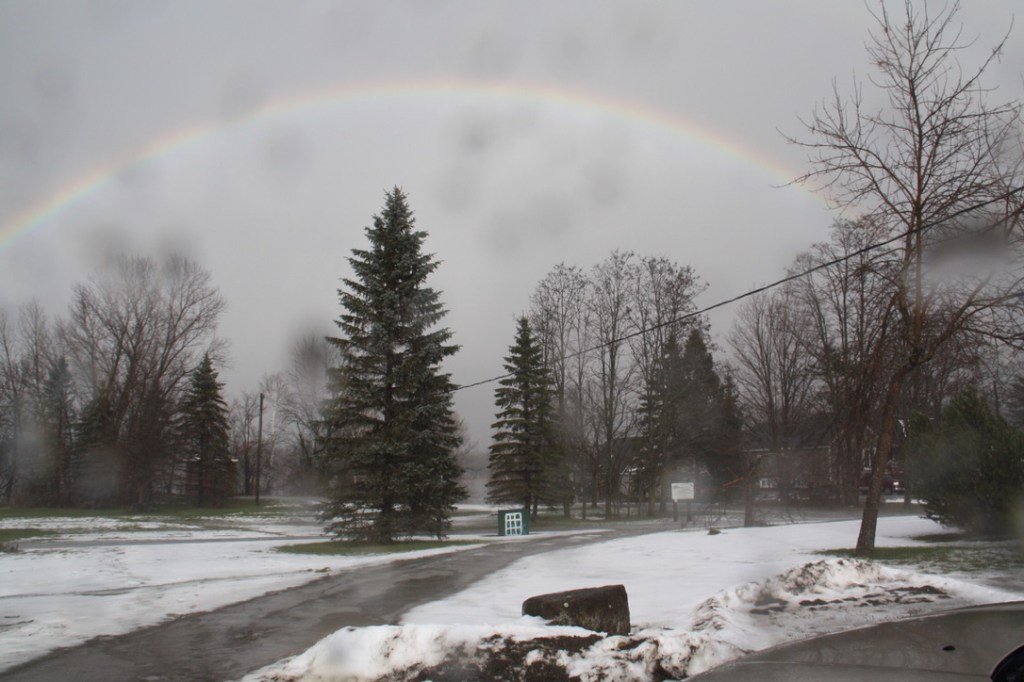
Sometimes they cross the rainbow bridge before we do and when they go we know deep down in our hearts that they are there just out of sight waiting for us ready to welcome us when it’s our time to go
I have been a member of the Writers’ Foundation of New Brunswick for a long, long time. I am not a ‘founding member’, but I think I have been a member since around 1985, and I am sure I was a member in 1986, when Goose Lane Editions, Fredericton, published my second poetry collection, Broken Ghosts. I was most certainly a member in 1989 when my still-unpublished poetry manuscript Still Lives placed first in the Alfred G. Bailey poetry competition.
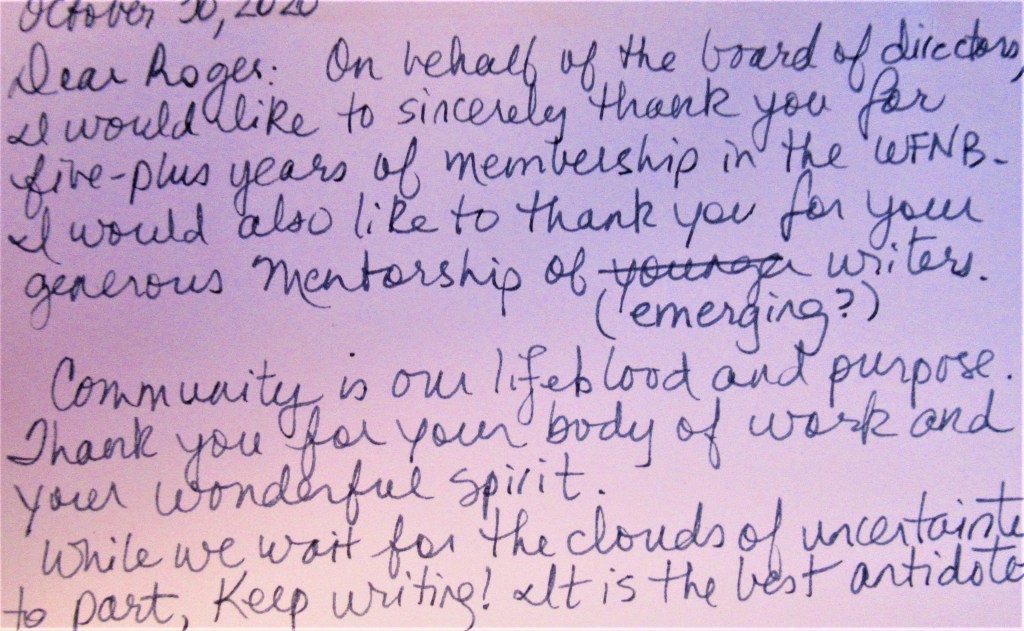
In the years between 1985-1986-1989 and 2020, I have never received a hand-written communication from any member of the WFNB Board, other than an official communication of one kind or another. Imagine, then, my surprise, when the above postcard, inserted in a hand-addressed envelope, arrived in my mail box yesterday. I was truly amazed and very grateful to the president who wrote these kind words to me. Amidst the panic and the pandemic, it is so nice to be remembered and in such a thoughtful way. Madam President: thank you so much for reaching out to me with this verbal gesture. And yes, you can count on my support for yourself and our Writers’ Federation, I hope for a long, long time to come.
I was in two minds whether to post this or not. However, I wish to emphasize several things: the importance of reaching out, the importance of continuing to believe in ourselves and our creative talents during these difficult times, the necessity of creating alternate communities and of supporting each other as much as possible, the need to avoid total isolation and to maintain human contact in different ways when the physical things — meeting, touching, holding, direct dialog — and the normal activities and relationships of healthy human beings are denied to us, and last, but by no means least, the need to encourage each other and to offer comfort and recognition whenever and wherever possible.
November on the Berryfield: duck weather, we call it, with the rain pouring down and the watchers standing on WWI duckboards, chilled their fingers, eyes blinking against the wind.
West Country clay turns rugby boots into leaden counterweights. Hands stuck in pockets, the railway carriage where we changed is a distant memory. The only reality, this wet clay holding us back.
Mouldy and muddy, our rugby jerseys are all the same and it’s hard to distinguish friend from foe.
Trench warfare, we think, as the two packs strain, a Roman tortoise, sixteen bodies, thirty-two legs, crabbing from side to side as they seek a perfection that will never be found on a day like today.
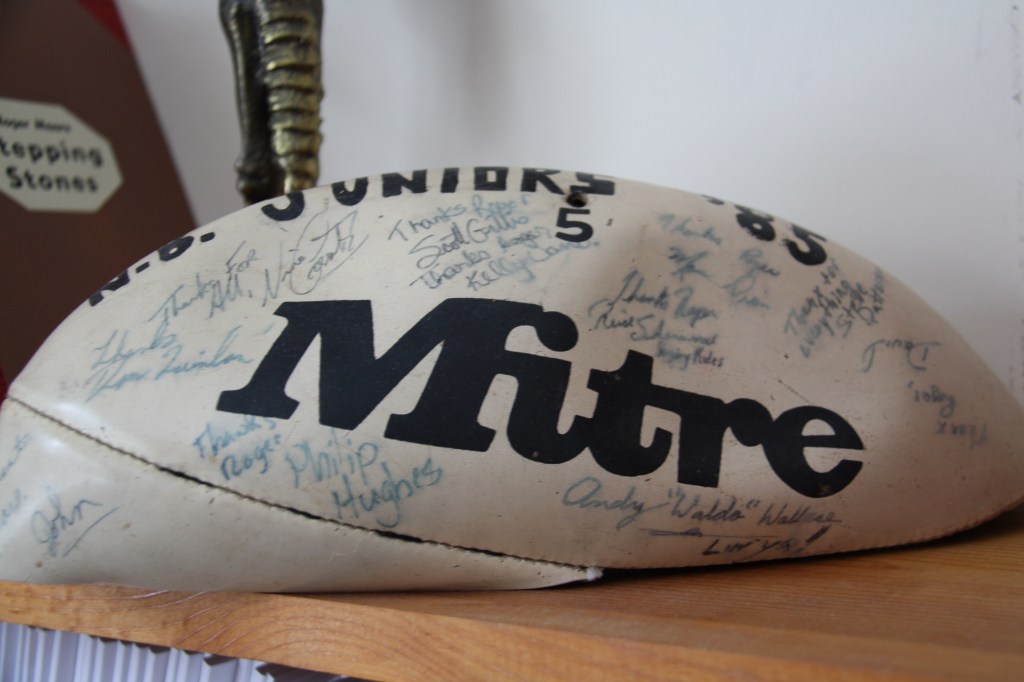
Rain shrouds the goalposts and the scrum half’s kick is a yard too far from clumsy, chilled fingers as they scrabble in vain at this soap-bubble nightmare we call a rugby ball. Worn-out legs churn through mud that clutches like an octopus at feet and ankles.
Running rhythms are lost. Wet clay fingers hold us back. Grey ghosts of ancient alumni raise up our hearts, help us to haul our opponents’ tired bodies down.
Comment: Just rediscovered this, revised it, and now I am posting it again. The Berryfield is where I played my school rugby. If anyone remembers the Berryfield, or actually played there, by all means drop me a line. That West Country clay mud was the devil. Heavy and clinging, it grew on your boots until they became as heavy as diver’s boots and gradually weighed you down. It was worse for the opposition than for us. We, at least, were accustomed to it. It was even worse for the cross-country runners and I have never forgotten those ploughed clay fields.
To be Welsh on Sunday (This prose poem should be read out loud, fast, and in a single breath!)
To be Welsh on Sunday in a dry area of Wales is to wish, for the only time in your life, that you were English and civilized, and that you had a car or a bike and could drive or pedal to your heart’s desire, the county next door, wet on Sundays, where the pubs never shut and the bar is a paradise of elbows in your ribs and the dark liquids flow, not warm, not cold, just right, and family and friends are there beside you shoulder to shoulder, with the old ones sitting indoors by the fire in winter or outdoors in summer, at a picnic table under the trees or beneath an umbrella that says Seven Up and Pepsi (though nobody drinks them) and the umbrella is a sunshade on an evening like this when the sun is still high and the children tumble on the grass playing soccer and cricket and it’s “Watch your beer, Da!” as the gymnasts vault over the family dog till it hides beneath the table and snores and twitches until “Time, Gentlemen, please!” and the nightmare is upon us as the old school bell, ship’s bell, rings out its brass warning and people leave the Travellers’ Rest, the Ffynnon Wen, The Ty Coch, The Antelope, The Butcher’s, The Deri, The White Rose, The Con Club, the Plough and Harrow, The Flora, The Woodville, The Pant Mawr, The Cow and Snuffers — God bless them all, I knew them in my prime.
Comment: I wonder how many other ‘serious drinkers’ or ‘amateurs’ remember these pubs and clubs. And, oh yes, there were so many more. The Mexico Fountain, The Tennis Court, The Old Market Tavern, The New Market Tavern, The Load of Hay, all those many colored dragons: green, black, blue … the Three Lamps, the Cricketers, the Villiers Arms, the Birchgrove Arms, the Rose and Shamrock, several Red Dragons, the Church, the Black Swan, I can’t remember how many different Georges, and Kings’ Heads, the Vine Tree, the Sun, the Oak tree, the Penguin, the Naval Volunteer, the Quadrant, the Coronation Tap, the Mauretania, The White Horse, the Black Horse, the Old Grey Mare … so many memories, and all deniable, and I’ll never forget the Wheelbarrow Race (ask me about it), nor Pickety Witch, one of those pubs at which I never stopped!
I chose each book, held it in my hands for one last time, then placed it peacefully in its new resting place. Old friends, they were … I broke that friendship and set my friends free to fulfill their promised afterlife on another reader’s shelves.
Mind to mind, though they had lived five hundred years ago, I strove to engage them in lively conversation, Bakhtinian dialogs within our time and space, and that space my basement library.
I loved to hear their lilting speech, to listen to their wisdom with open eyes and mind. I answered them with words I quickly pencilled on each page.
One day, a man arrived from the university. He carried them away in a delivery truck and they were borne to a wider world.
If you see on, bless it, read it, cherish it. Blind now my eyes that devoured their words. Deaf now my ears that heard the dead, for I can listen no more.
Note:“Escucho con mis ojos a los Muertos / I listen with my eyes to the words of the dead.” Francisco de Quevedo (1580-1645)
With thanks to Nicholas Wermuth, who was kind enough to comment and help me revise and restructure this poem.
Every day, now he’s learning to speak Welsh, he finds out something new about his childhood. It’s not the need to talk so much as the necessity of diving into himself and mining his memories.
Brynhyfryd / Mount Pleasant. Pen-y-Bont / the End of the Bridge. Ty Coch / the Red House.
This latter the house in which he was born, way out of town, by Fairwood Common, away from the strafing and bombing. The war generation of his family all born in the same in-the-country Gower bed. No room in war-time hospitals not even for the birth of war babies.
Three of his brothers did not survive those rough, household births. He still bears the forceps’ scars from the moment the doctor plucked him out, head first, and hung him up by the heels, shaking him, bringing him back to life.
He bears other scars as well from the survivor’s burden of carrying three dead brothers for seventy long years, alive and kicking in the womb-warm crevices of his still beating heart.






 rogermoorepoet