Heart and Hearth

Heart and Hearth

I remember the old coal fires in Swansea.
My grandmother’s house in the Hafod,
with a hearth separate from the kitchen.
The hearth held a huge cast iron fire-place
where cookpots and kettles hung
 or nestled into smouldering coals.

My grandfather’s house in Brynmill,
had a magic fireplace. Banked in before bed,
it gave warmth and light all through the night.
Warmth, comfort, the family gathered,
the wisdom of the old shared with the young,
traditional tales and songs passed down.

Everybody was welcome and each one
had a special spot reserved around the fire.

Comment:

I have been revising this poem, shortening it, and changing it very gently. Funny how the old days come back and dance before us, like the flames dance on the coals, as the old ghosts walk now upon the logs.

Click here for Roger’s reading.

Questions

Questions
Four Elements, p. 137

After my mother died,
I lit a candle in every church,
a real bees’ wax candle,
not those tiny electric lights
that glow for a little while,
when you insert money
in the insatiable slot.

Like the minuterie
on each landing of a Parisian
staircase, it gives enough light for
a quick prayer, or a very short
moment or two of silence.

Where does the light go
when the electricity switches off?
Where does the flame go
when the candle is snuffed?
Where did my mother go
when her light went out?

One day, but not too soon, I hope,
I will have to follow her and find
the answers to all of my questions.

Click here for Roger’s reading.

Time and Tide

Time and Tide

Sitting, waiting patiently for
whatever may come along,
that is all I have left,
save for impatience, anger,
and frustration.

These canes that help me walk
will sometimes slide on the ice,
or catch in a crack and tumble me
forwards, into a stumble or fall.

I can only sit for so long
before a screen or an empty page.
Anguish gets the better of me
and I rise to my feet and lumber
round the house, avoiding
the loose ends of carpets
and the skittering cat.

A dropped plate that I can’t pick up,
the table shaken so that liquids spill,
such events are more frequent now.

I sometimes think I am sitting,
enthroned on time’s sea-side sand,
trying to hold back the rising tide,
that cares not, nor listens, nor obeys.

Hearth and Soul

Hearth and Soul

The kitchen – hearth and soul of the house. Here we gather, sit around the table and talk our hearts out. But here, in Island View, we have a kitchen, a gathering, but no hearth, and hence no real heart around which the household revolves.

In spite of that, old habits die hard. I remember the old coal fires in Swansea. My grandmother’s house in the Hafod, with a kitchen in a separate room from the stove, with a huge cast iron fire-place where cookpots and kettles could be hung or nestled into the coals. My grandfather’s house in Brynmill, where kitchen and hearth were separated, but the fire-place still held its magic. Banked in at night, those fires gave warmth and light ar hyd a nos and then they we resurrected the next morning.

We have a woodstove here in Island View, but we rarely light it as the fine particles make breathing difficult after a while. We keep it for emergencies. This winter we lit it when the temperatures dropped to -40C, with the wind chill factor, and heat pump and electric furnace needed assistance.

Warmth, comfort, the family gathered, the wisdom of the old folks shared with the young, and the passing on of traditional melodies. All the old memories and thoughts, the wishes and desires, the hiraeth too, handed down, from old to young. Everybody was welcome and everyone had his or her special place.

Such memories tug at the heart strings – hearth strings. Anyone who shares them with me will know what I mean.

Swansea

Swansea

To be Welsh in Swansea is to know each stop on the Mumbles Railway: the Slip, Singleton, Blackpill, the Mayals, West Cross, Oystermouth, the Mumbles Pier. It’s to remember that the single lines turn double by Green’s ice-cream stall, down by the Recreation Ground, where the trams fall silent, like dinosaurs, and wait, without grunting, for one to pass the other. It’s to read the family names on the War Memorial on the Prom. It’s to visit Frank Brangwyn in the Patti Pavilion and the Brangwyn Hall. It’s to talk to the old men playing bowls in Victoria Park. It’s to know that starfish stretch like a mysterious constellation, at low tide, when the fishnets  glow with gold and silver, and the banana boats bob in the bay, waiting to enter harbour, and the young boys dive from the concrete pipes without worrying about pollution.  But when the tide turns, the Mumbles Railway has been sold to a Texan, the brown and yellow busses no longer run to Pyle Corner, Bishopston, Pennard, Rhossili, sweet names of sand and tide, where my father’s ghost still fishes for salmon bass, casting its lines at the waves as they walk wet footprints up the beach to break down the sand-castle walls I built to last forever at Brandy Cove and by the Slip on Swansea sands.

Click here to listen to Roger’s reading on Anchor.

Challenge

Challenge

What is the biggest challenge you will face in the next six months?

The months change but the challenge never does. How does one stay alive? How does one survive? How does one pass the time from one minute to the next, one hour to the next, one day to the next, one week to the the next, and one month to the next?

I faced a challenge this morning. I got to the shop and could not climb over the piled up ice to reach the slippery step that led to the salted sidewalk that led to the shop’s entrance. Fortunately a kind young man took my arm, and helped me upwards, onto the sidewalk. He waited while I shopped and brought me back down to the car, arm in arm, and carrying my shopping. I gave him a poetry book, Septets for the End of Time, as a reward.

What will be the next big challenge? I honestly don’t know. Starting the snow blower at -20C, perhaps? Blowing the snow and avoiding a slip, a fall, a sit down on a snow bank from which I cannot get up? Who knows? I don’t. I need more medicine – will my biggest challenge be finding that the pharmacy has again run low on my medication and I have to wait for my renewals? I have just had a blood test – three months late – and I don’t know what the results will be? Will that be my biggest challenge – coming face to face with a negative result that demands more action? I just don’t know. Driving out the other day, I met a speeding car on my side of the road, in my lane, coming straight towards me. The driver was staring at his cell phone, one hand on the wheel, eyes down, concentrating on something that certainly wasn’t the road. I swerved aside, towards the snow bank, honked the horn, and he looked up, eyes wide with shock, and swerved away. Brown trouser time, I guess, for that unfortunate individual.

It would be so nice to have a smart answer. My biggest challenge will be to find a solution to the chess problem that has puzzled me for years – how to defend Queen side openings when Black. My biggest challenge will be to draw the cards for a perfect hand of cribbage. My biggest challenge will be to pay the grocery bills as the prices rise. My biggest challenge will be to pay the dentist’s bills when I have no dental coverage and the savings dwindle every month. My biggest challenge will be how to avoid the pain in my teeth now that I can no longer afford the dentist. My biggest challenge will be to crawl to the telephone and get help if I manage to fall in the kitchen and cannot get up.

So, what is my greatest challenge over the next six months? Living from day to day, without falling downstairs and killing myself – how about that for an answer?

My Teenage Self

My Teenage Self

What advice would you give to your teenage self? In one word – grow up. Useless advice really, because it happens, whether we want it to or not. That said, I have lost so many young rugby players that I coached or played with, to driving accidents and other misfortunes, sometimes self-inflicted via alcohol or drugs, that to say grow up – please! – is so important.

Each morning I read the obituaries in the local newspaper. Afterwards, I look back over the path I have journeyed. If I had perished at the age of the current ‘missing person’ – say, 45 – 50 – 55 – 60 – I think of all that I would have missed in those intervening years. Then I grieve for all that they will have missed in the life that should have lain ahead of them.

“Don’t cry over spilt milk” – Old Welsh Proverb. And no, we mustn’t cry over what is lost. We must celebrate what has been achieved, Dylan Thomas (1914-1953), one of Wales’s greatest Anglo-Welsh poets, dead at 39 – what other glory may have lain ahead of him? Garcilaso de la Vega (1501-1536), one of Spain’s purest and most innovative poets, dead at 35. What more might he have written in an extended lifetime? Federico Garcia Lorca (1898-1936), executed, many say tortured and murdered, at the age of 38. Think of the theatre, the poetry, the Gypsy Ballads, the songs of a dark love – what more did he have, hidden inside him, that was never allowed to spread its wings and fly out into the light of day?

So, I would give to my teenage self, the same advice that I would give to any teenager – grow up – please, grow up, don’t go too soon, – and please grow into that unique and wonderful being that you have the potential to be.

Digging the Snow

Digging the Snow

I have had a snow blower for some time now. It means that I don’t have to dig the snow. I just get the machine to blow it. But what if the blower doesn’t work?

This winter the local radio station has been filled with stories about snow blowers breaking down, snow blowers catching on fire, snow blowers not starting, snow blowers breaking their shearing pins. All of this has been caused by the weight of the snow, its depth, the compilation of snow on snow, ice pellets on snow, icy rain on snow.

The other day, I went out to blow the snow. It was so heavy that I likened it to wet quick sands on the beach. I could hardly get the blower out of the garage. When I did, I couldn’t move it, forwards or backwards, without enormous effort. I sat on the back of my car and cried. Here is the related post https://rogermoorepoet.com/2023/01/18/luminescence/

For many people of my age, and younger, this is heart attack time. Blowing snow, digging snow, clearing snow, shoveling snow. I know the song – “let it snow, let it snow, let it snow.” But who clears it? Who digs it? Do you dig that snow? Hey, man, dig that snow. Cool, eh? Chill, man, chill.

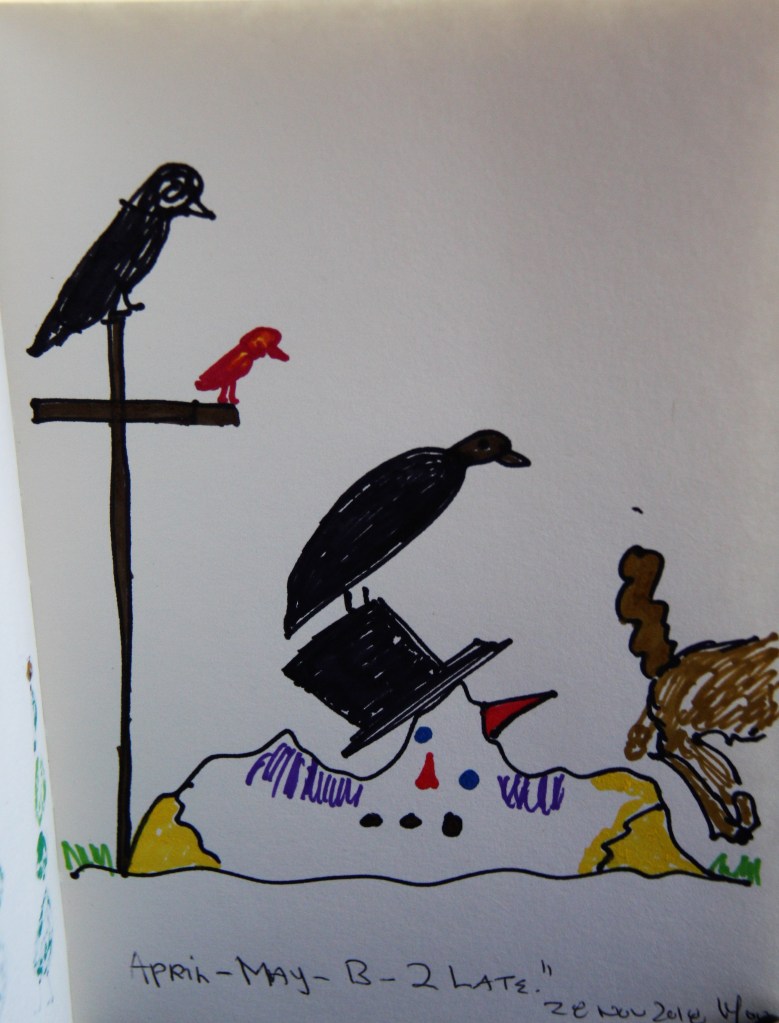
So where did the snowman go? To the hospital with a heart attack? Who knows? But one thing I do know: digging snow has become one of the things that I fear. And why shouldn’t I? I am at that age when things happen. And here’s what I mean – https://rogermoorepoet.com/2023/02/10/and-if-we-fall/

No. I don’t want to become a fatality on the statistics page. I don’t want to ‘fall to rise no more, as many others have done before’ – a tribute to Over the hills and far away, that one. So, let it snow, yes. But not too much and let us avoid that bleak mid-winter when ‘snow had fallen, snow on snow, snow on snow on snow’. Christmas Card whiteness I can take – but not the chest wracking heave of heavy snow, weighing my shovel down, puling me down, burying me.

Snow falls – what if we fall…

Snow falls – what if we fall…

There I was – with my trusty snow-blower blowing the snow – and I shifted gear to go backwards – and my glove caught – and the snow-blower kept on coming – straight at me – and there wasn’t room to manoeuvre -manoeuver – maneuver – aka I couldn’t get out of the way – and the snow bank behind me caught me just at the back of the knees – and I sat down in the snow – oh dear – luckily I let go of the gear lever and the throttle lever – but the machine was almost on top of me – and I couldn’t get up – so I called for help – but no help came – and I tried to pull on the machine with one hand – and I put the other on an ice patch in the snow and that hand went through – so I am sitting there – can’t stop laughing – and then my beloved appears – and she brings me my walking stick – and she moves the snow blower forward – and then she gives me the stick – in my left hand – lifts me and pushes – while I lift with the left and pull with the right – and I have pulled a cork from a champagne bottle more easily than I pulled myself out of that snow – but together we did it – and oh was I wet – I had to finish the blowing – go inside – and change my jeans – and I am still laughing at the thought of myself – sitting there in that snow – and I needed to pee so badly – as the cold and damp crept in and – what if there had been nobody there to help – or what if it had been windy and my cries had not been heard – and what if we fall – as so many others have done before – fall to rise no more – and what if – “if – if – if – if – onions climbed a cliff – potatoes would rise – with watery eyes – if it wasn’t for if -” and that’s what my grandfather always sang to me when I asked him “what if…?” – so- what if … but don’t answer – because we’ll never know –

Parents

Parents

Today’s prompt – what were my parents doing at my age? Well, actually, they were both dead. We aren’t meant to mention death anymore, so let me say ‘they had passed’. Loads of cliches of course – pushing up the daisies – moved into higher society – or lower but I hope not – deceased – demised – expired (like my driver’s license) – extinct (like the Dodo) – passed on – recycled – enough – no more – it’s not as sweet now as it was before – nor do I like any potential answer when I look in the mirror and wonder – who am I? – What am I? Where am I going? Am I next?

My father being an excellent rugby player – on the wing – in the old days – I can imagine him running, and kicking and chasing – but I can’t imagine him passing. Or setting up a maul or a ruck. Dear Lord – times have changed – and the laws of rugby have changed – and the rules of etiquette have changed – and political correctness has put dark hands upon our throats and choked us -let us not contemplate the myth of freedom of speech – but consider the endless stupidity of senseless questions that changeth not and abide with all of us, on radio and tv and in the newspapers – all day and everyday.

Here’s anther prompt – Where have all the young men gone? Depends on which song you listen to – emigrated – gone down the mines – gone west – gone AWOL – gone astray – gone to graveyards, everyone. But will we – or they – ever learn – blydi hel – a good Welsh expression – I doubt it.

So – I ask myself – what are my parents doing today? – and the answer is – I really do not know. I would like to think they are happy – happy in the knowledge that they did their best for me – happy to know that I am still here – ar gwaetha pawb a phopeth rh’y n’i yma o hyd – I hope I spelled that right – I have seen several versions – and yes – in spite of everything, I am still here – I am well – and I would like to tell them that I love them – and I would like to thank them for all they did right – and forgive them for anything they did wrong – and yes, I loved them so much – and still do – and I miss them – and blydi hel – now you’ve got me crying.