What makes a good neighbor?

Daily writing prompt
What makes a good neighbor?

What makes a good neighbor?

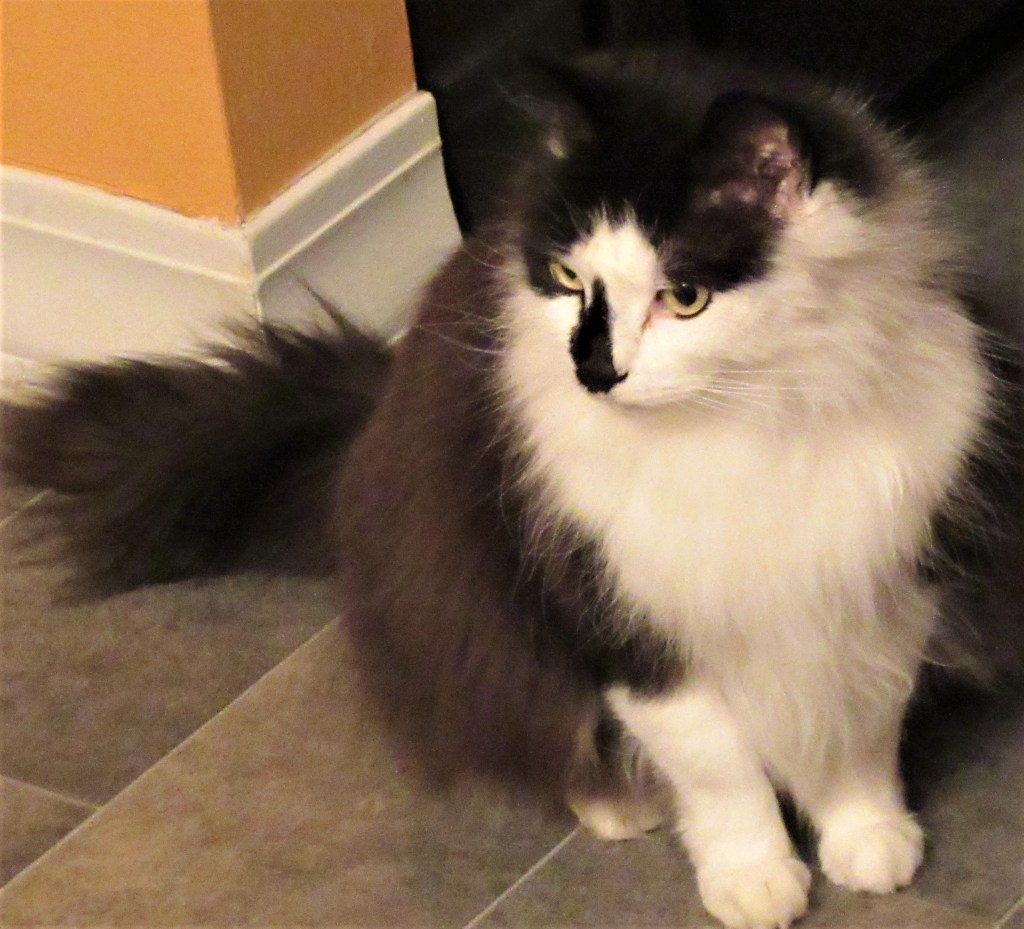
I am not sure what makes a good neighbor, but I am learning what makes a bad one. This cheeky little fellow has taken a liking to my garage. When he finds the garage doors closed, he gnaws and nibbles at the outside woodwork and tries to chew his way in. Not a nice neighbor.

Earlier this summer, I had problems with my windshield wiper liquid. The right side squirted well, and cleaned the passenger side nicely. The left side slowed down to a dribble, and then stopped. The rear window wiper, on the other hand worked well. No problems at all. One day, both the windshield wipers stopped squirting. Press the button – no liquid at all. I checked the reservoir – half full – and topped it up. Then I tried a pin in the tiny nozzles beneath the windshield. Sometimes they clog up with dust and block the flow. Nothing.

I decided to take my problem to a professional. He raised the hood, looked inside, took one sniff and said “Mice. I can smell the piss.” He told me to leave the car with him, at his garage, and that he’d call me later. He called and drove to the house to pick me up. On the way, I asked him “Well?” “Wait and see,” he told me. “You won’t believe this.”

When we got to his garage he showed me the evidence – a huge red squirrel nest, complete with a winter supply of food, nestled beneath the hood of my car, between the hood lining and the actual engine. The squirrel had chewed his way through the plastic tubing that linked the washer fluid to the wipers. He was shaking with laughter. I was devastated. Cost to me to repair my naughty neighbor’s activities? Well, I won’t tell you – because I don’t want to shock you – but it was quite a bit of money, not enough to be covered by my insurance.

When I got back home, the naughty neighbor was sitting on the roof rafters, inside the garage, chittering at me, chattering away, and scolding me. “I’ll get you, you little varmint,” I said. But he only chattered more loudly. I saw him coming in early one morning and he fled into the woodpile along the wall. “I’ll get you,” I said, beating at the spots behind the logs where I could hear him.

I went online and sought some solutions. One suggestion was to use cinnamon. So, I dug out a packet of cinnamon powder, spread it on the garage floor, across the doorway, and waited. Within minutes, a chattering began in the trees, outside the garage. An angry, nervous chittering and chattering. Then the garden went silent.

I keep renewing the cinnamon. The garage smells lovely. I haven’t seen or heard a squirrel for days. Has this actually worked, I wonder? Watch this page if you want to know the answer to that question.

What’s your #1 priority tomorrow?

Daily writing prompt
What’s your #1 priority tomorrow?

What’s your #1 priority tomorrow?

I have a couple of priorities, of course. I am not sure which is #1. Maybe I’ll ask the readers to tell me which one my top priority should be.

I guess my first priority is to wake up. That is very important at my age. A couple of my friends went to bed and never woke up. So, I guess an important priority, perhaps #1, is to actually wake up.

Having woken up, my next priority is to roll over, sit up, pull back the blankets, and actually attempt to get out of bed. This isn’t always easy. My back sometimes stiffens up overnight. Or else my hips don’t want to function. Then there’s the gammy knee I hurt playing rugby all those years ago. Then there’s the quality of the light – do I need a light on? If I do, I must reach for it without cramping up. Early morning cramp is not a good thing and really complicates the next step.

If I am in the high bed, then lowering legs, touching the floor with toes, and using arms to push up the rest of the way is relatively easy. But if I am in the low bed, I must turn sideways towards my bad knee, place my feet at an angle, and do a one handed pushup in order to find the right balance to get to my feet. That means watching out for slippery carpets. I do not want to fall. Sometimes I call on the aid of my faithful teddy bear and, by half throttling him, I manage to get that extra leverage.

Oh dear, I forgot another priority – condition of ageing bladder. All of the above activities are dependent upon the state of the union. If that is a problem, then I must call for assistance – and I hate doing that.

Next priority – the trip to the bathroom. I wish I hadn’t said ‘trip’, because sometimes I do. The effects of that can be a sudden grasp at something solid, a stubbed toe, a twisted something or other, or, worst of all, another fall. We certainly don’t want that to happen, especially if we are suffering from what Max Boyce [remember him?] once called ‘twisted legs and tails’.

Other priorities follow when we have reached the bathroom. I won’t go into those. Nor will I mention the perils of the return journey, the difficulties of getting dressed, the embarrassment when I fail with the patented sock-pull machine and have to wiggle my socks off, one by one, and then put them on again.

So, here I am, fully dressed, standing at the top of the stairs… one hand on the hand-rail, one hand on my trusty walking-stick, and down I go, hopefully one step at a time.

So: What’s my #1 priority tomorrow? You tell me. Which would you choose? And before you answer, just remember Dylan Thomas’s words ‘for whether we last the night or no, is surely only touch and go’. Touch and go, tip and run – I remember them well. And luckily I remember waking up this morning. I would hate to face the alternative – not waking up.

How often do you walk or run?

Daily writing prompt
How often do you walk or run?

How often do you walk or run?

The painting above tells the whole story (thank you, Moo). On the left, the deer head (or is it a sheep’s head? Moo didn’t tell me) represents my hip and knee joints. On the right, the wolf’s head (or is it a bear’s head, look at those teeth) represents the osteo-arthritis that is sinking its own teeth into me and removing much of my movement. So, how often do I walk or run?

Walking, every day. I use two sticks in the outside world, or one stick and the furniture at home. The sticks are fun. I use them like chop-sticks to pick up fallen objects. And I have discovered that if I drop one of the sticks, I can stand on its rubber tip and raise the handle enough either to grasp it, or to secure it with the other stick. Wow!

Some days it is a positive circus act. Yesterday, the very thoughtful grocery store had placed the 1% milk on the top shelf, where I couldn’t reach it. I held on to my trusty shopping cart with one hand, reversed my stick and, with the handle, pulled a carton of milk to the edge of the shelf. I let go of the cart, flicked the stick, and sent the milk carton tumbling into my other hand. It took some concentration and I was surprised by the applause that came from several watchers, none of whom offered to help me. I do the same with out of reach beer cans, too. Bags of sugar on the lower shelf are much more difficult. my chopsticks aren’t designed to pick up a 3lb bulky bag of sugar.

As for running, well, my nose runs, my eyes water and run, my tummy rumbles and runs, and I move at a slowly increasing four-legged plod to the bath room, hoping against hope to get there in time. I usually do. My premonitions have become very accurate over the last few months. However, do nose, eyes, and tummy runs count? If not, well then, running rarely happens nowadays.

With the walking, though, in spite of everything, I aim for 2000 steps a day. I usually make it to 3,000, especially when I go shopping, and occasionally make it to 4,000. And that, ladies and gentlemen, is the best I can do.

What was the last thing you searched for online? Why were you looking for it?

Daily writing prompt
What was the last thing you searched for online? Why were you looking for it?

What was the last thing you searched for online? Why were you looking for it?

The last thing that I searched for online was a prompt that I wished to be prompted by, but I promptly lost it before I could respond to it. Then I went looking, but still couldn’t find it, even though I searched everywhere I could think of.

I grow forgetful as I age, and now I can’t remember what the prompt asked for, and that’s a pity because I remember that I had a lovely answer. Now I can’t remember my answer either. So I am stuck in a sort of one-way street, going in the wrong direction, as I draw near to a roundabout that will lead me back the way I came.

I am afraid some Minotaur or other will seek me out, because I am lost in a labyrinth without the thread of Theseus to lead me out. And its no good searching online, because I no longer know what I am looking for. And that’s a bit like my life at the present time – a pointless search for meaning as I wander, amazed, through a baffling maze of days, seeking, I know not what, and never finding it. I don’t want to give up on it yet, because I know that the answer lies just around the corner, lurking like the last sardine in a sardine can, or the last piece of squid, cowering blackly in its own ink, in the tin, not wanting to be eaten.

Life leads me a merry dance, as king-like, a one-eyed man in the kingdom of the blind, I rule my world. For, en el reino de los ciegos, el tuerto es rey / in the kingdom of the blind, the one-eyed man is king. And no, I didn’t search for that online. It came to me in a sort of dream because, as Goya says, el sueño de la razón produce monstruos / when reason sleeps, monsters are born. And now I see them everywhere, those monsters, and I search online for solutions, but none appear. And so I continue on my merry-go-round way, leading my ragamuffins around those ragged rocks.

Coal Face

And Every Valley

And every valley shall be filled with coal.
And the miners will mine, growing old
before their time, with pneumoconiosis
a constant companion, and that dark spot
on the grey slide of the sidewalk a mining
souvenir coughed up from the depths
of lungs that so seldom saw the sun
and soaked themselves in the black dust
that cluttered, clogged, bent and twisted
those beautiful young bodies into ageing,
pipe-cleaner shapes, yellowed and inked
with nicotine and sorrows buried so deep,
a thousand, two thousand feet down,
and often so far out to sea that loved ones
knew their loved ones would never see
the white handkerchiefs waved, never
in surrender, but in a butterfly prayer,
an offering, and a blessing that their men
would survive the shift and come back
to the surface and live again amidst family
and friends, and always the fear, the pinched
-face, livid, living fear that such an ending
might never be the one on offer, but rather
the grimmer end of gas, or flame, or collapse,
with the pit wheels stopped, and the sirens
blaring, and the black crowds gathering, and
no canaries, no miners, singing in their cages.

Comment: A friend wrote to me about the closing of the pits in Nottinghamshire and how the mining communities had suffered, were still suffering, and might never recover. This poem is the first one in a sequence on the mine closures in South Wales and other mining communities. Poems For the End of Time – the book is available here.

Are you seeking security or adventure?

Daily writing prompt
Are you seeking security or adventure?

Are you seeking security or adventure?

Well, what a strange question. In the first place what on earth does ‘are you seeking’ mean and to what does it refer? Some examples of what it might refer to include – shopping, investments, playing sports, dining out, preparing your own food, going on holiday, choosing a pair of shoes, or a new shirt, driving to work in the morning, parking the car. In each case, your answer will change according to the exact thing you are doing and what you are seeking when you do it.

Security or adventure – does it have to be one or the other? Rock climbing or mountaineering can be an adventure. But if security measures are neglected, then the adventure exposes the foolhardiness of the neglecting of security measures. You could say the same thing about driving to work. In the race to achieve access to a decent parking spot, do you go for ‘adventure’, drive fast, take risks, weave your way through traffic, honk your horn, and drive other drivers, would be parkers in your spot, off the road? Or do you set out early, drive carefully, obey the traffic rules, and seek the security of the knowledge that, with an early departure, the parking spot you desire will be there, without the rush of the madcap adventure?

When you combine security with adventure, and there is no reason why you shouldn’t for they are both compatible, then you have the best of both worlds. You can be secure in your adventuring and adventurous in your security. Think ‘Titanic’ – and you will realize that recent events have shown that adventure without total security is not the sort of risk that any sane person, in their right mind, wants to run.

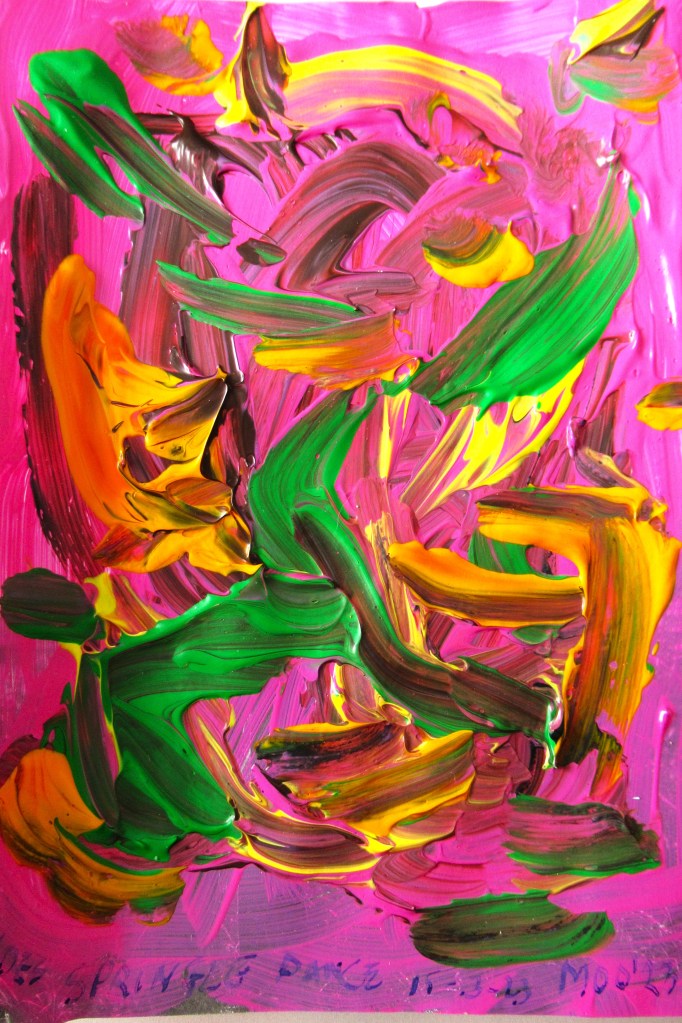
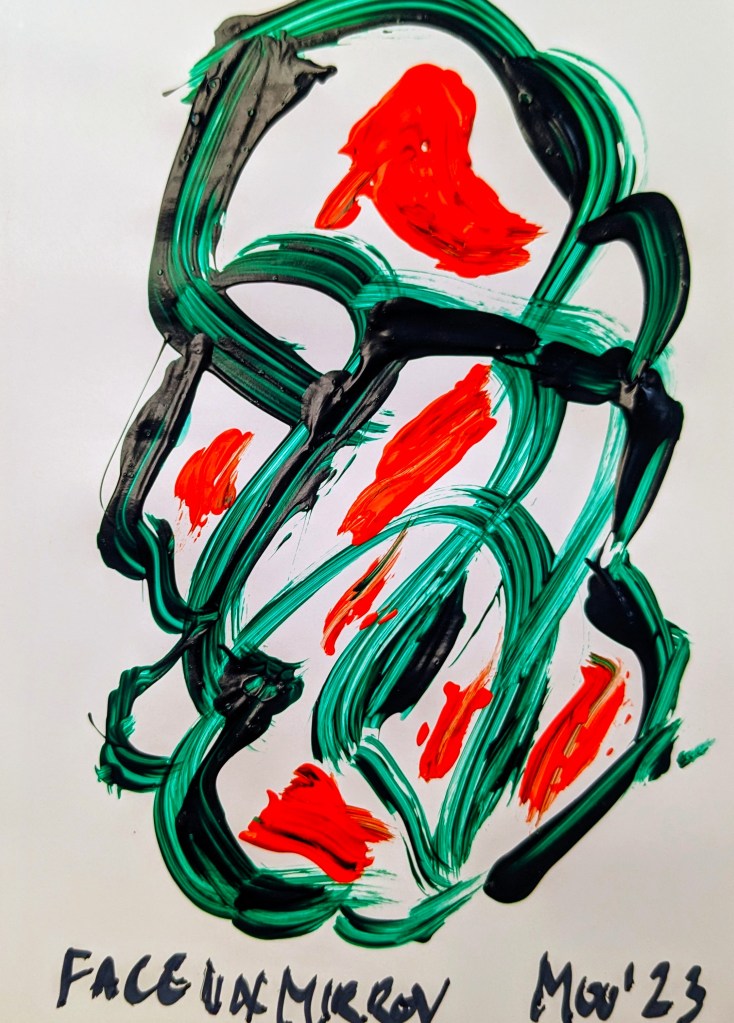
And look at that painting, the one above that leads the post, is it ‘secure art’ or ‘adventurous art’ or is it even art at all? Accept nothing at face value. Think carefully before you answer those questions too.

Situations

Situations

I am sitting at my desk, typing to you.
Many thoughts are running through my head.

I am checking the weather regularly –
high winds and rain are due soon.

Clare has just walked past the window.
She waved at me, but didn’t ask for any help.

The washing is almost dry and needs folding.
 We need to tie down the umbrella and porch chairs.

The cat has just walked across my keyboard.
I correct her footprints. They have typed false words.
 
Now she has discovered the dried blood on the floor.
It soaked into the boards when I cut my arm last night.

I meant to clean it up this morning, but I forgot.
I can hear her tongue rasping as she licks it up.  

Lac Megantic – 10 years on

Lac Megantic
ten years on

Fire on the water, the waves ablaze,
and the sound, a monster, indestructible,
a dragon descending, breathing fire,
so swift, so powerful, come sudden
from nowhere, yet another disaster,
one of the many that torment us
now and then with its ravage and roar.

It refused to move on until sated – but
who could satisfy the monster’s hunger,
destroy its will, defeat its power?
Not us with our pitiful sacrifices,
homes, friends, family, devoured.

In spite of our efforts to rebuild,
nothing can ever be the same.
Ten years later, memories, grief,
and our tears are all that remain.
Yes, it has left, but what can we do
to stop it, if, and when, it comes again?


Comment: I wrote this poem on July 6, 2023, while listening to the CBC radio commentary on the tenth anniversary of the Lac Megantic disaster. A terrible event, it still haunts so many people, and yes, the fears, tears, grief, and memories linger on. How could they not?

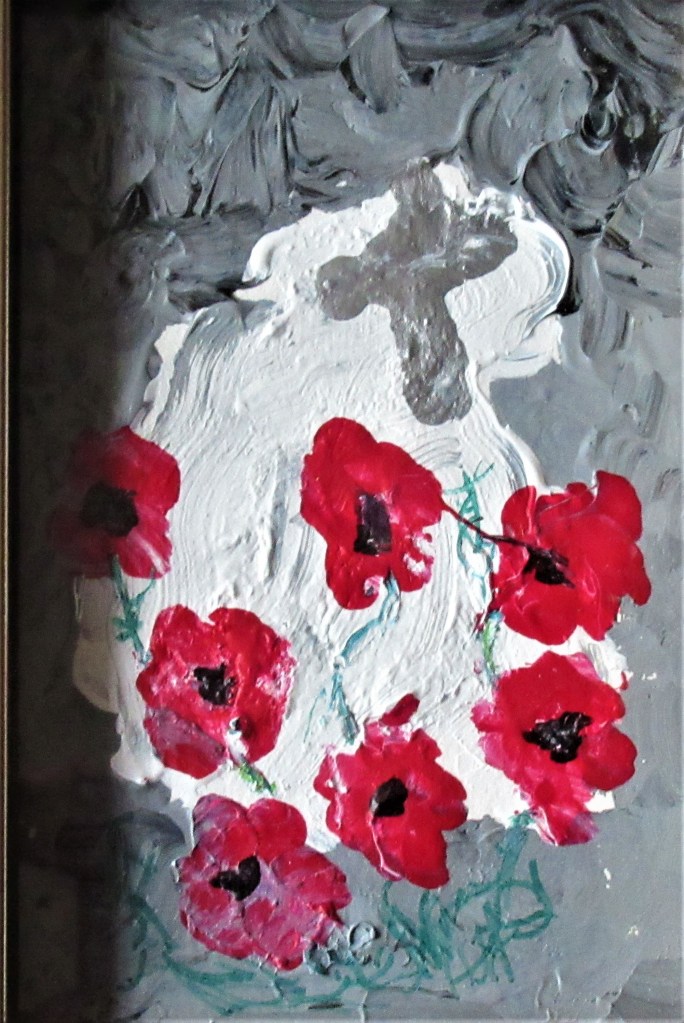
PaintingPoppies – by Clare Moore.

Magician

Magician

I stand on a tiny platform, high above
the upturned faces of the clamouring crowd.
Before me, the high-wire stretches across
the diameter of the circus tent.

Clad in the enormous shoes of a clumsy clown,
I grip the wire with the toes of one foot.
Now I must choose – umbrella or pole?

The spotlight outlines my face’s whiteness,
the bulbous nose, the fixed, painted smile.
My jaws clamp tight in concentration.

Clutching the brolly, a good old gamp, I walk
the thin wire plank of my current destiny.
One step, two steps, tickle you under the chin,
and I pretend to fall, grasp the wire, and raised
by the crowd’s gasp of despair, swing back up.

Then, a yard from the finish line, I swallow dive,
turn a somersault in the air, and land on my back
in the middle of the safety net as the crowd goes wild.

“The magician works on the threshold that runs between light and dark, visible and invisible.” John O’Donohue, Anam Cara, p. 145.

“The most difficult role in the play is that of the fool – for he who would play the fool must never be one.” Don Quixote.

Painting: Fire Sky by Moo.

A World of Silence

A World of Silence

My dreams are black-and-white movies,
no voices, with the cinema pianist tapping
silent notes on the hammer dulcimer.

Shadowy images, cast by a candle, flicker
along the walls, and I am back in school,
walking, half-asleep to midnight mass.

I stumble forward, from that distant past
towards a series of unknown futures
none of which may ever come to pass.

In the Big Top of my head, the gymnasts
hold hands and in silence float their clouds
above the heads of the wondering crowds.

To fall or not to fall, to fall to rise no more.
Soundless sighs erupt from silent, open
mouths as the tight-rope walker sets out.

The umbrella in his hand is a Roman candle
that throws shadows on the circus sand
as clowns with bulbous noses cavort below.

The ring-master flexes an inaudible whip.
The carnival ponies trot up and down.
The motor-bike rider accelerates. In the hush
the bike ascends the Wall of Death and falls,
diving down, down, down, into silence.

“All words come out of silence. The language of poetry rises from, and returns to, silence.” John O’Donohue, Anam Cara, p. 110.