“Only the mystery …

… keeps us alive …

… only the mystery.”

“Sólo el misterio nos hace vivir,
sólo el misterio.”
Federico García Lorca
“Only the mystery …
… keeps us alive …
… only the mystery.”
“Sólo el misterio nos hace vivir,
sólo el misterio.”
Federico García Lorca

Dreams
I once stole the nose from a sacred statue.
Today I watch it cross the square attached to a face.
Eight Deer walks past with a fanfare of conches:
you can tell him by his donut with its little tail.
A shadow moves as zopilote wings his way across the square.
I spoke with him once on a midnight bus.
He begged me to fold his wings and let him sleep forever.
A gringa called Nuttall sells tins of watery soap.
Her children fill my days with enchantment
as they blow bright bubbles through a magic ring.
Eight Deer, eight years old, sets out on his conquests.
Nine Wind births nine of his people from flakes of flint,
or was it from the magic tree in Apoala?
The voices in my head slip slowly into silence.
Sometimes I think they have no need of me,
these dreams that come at midnight,
and knock at my window.
Other times I know they cannot live without me.

Earth to Earthlings
“Get out and about,” she told me.
Take off your socks and shoes.
Walk barefoot on the earth and grass:
twin pleasures, you can choose.”
I took two canes, one in each hand,
and left the house to walk the land.
In the garden I took off my shoes
to walk barefoot on the lawn;
when grass sprang up between my toes
I was instantly reborn.
I stood in the shade of the crab apple tree
and let leaf and flower spill over me.
Sunlight took away my frown
and freckled a smile on my face.
I was blessed again with hope and light;
earth and grass filled me with grace
When white blossoms filtered down
they gifted me a flowery crown.
I stooped to reach my shoes
and carried them home in my hand,
maintaining as long as I could
my contact with this magic land.


Chance Encounter
(Overheard at the bar)
“Meeting her, unexpected,
with another man,
and me, with another woman,
all four of us looking
bemused by what the other
had chosen in each
other’s absence
— suspense and silence —
then the halted, faltering
politeness of a nod,
a handshake, ships
passing in the night,
signals no longer recognized.”
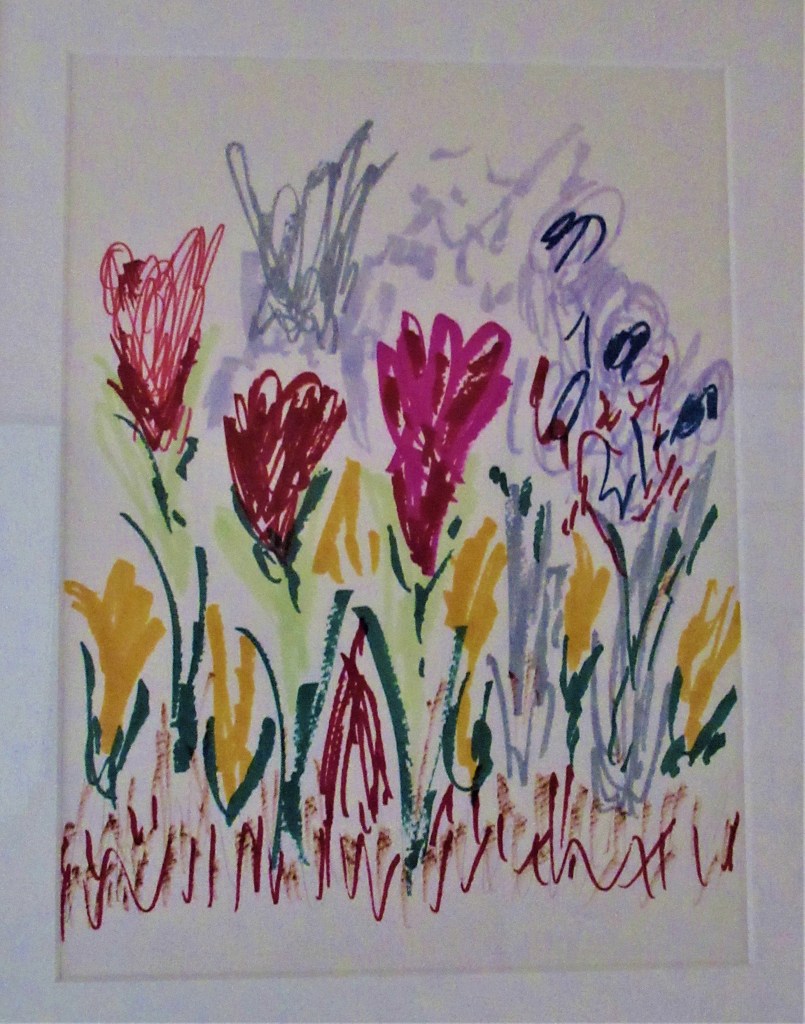
Daydreams
The alarm clock shuffles
its pack of sleeping hours:
a clicking of claws,
needles knitting outwards
towards dawn’s guillotine.
A knife edge
this keening wind
sharpening my bones
tingling fingers and toes.
Ageing eyes refurbished
in the morning’s sky fire.
Ravishing rainbows
dazzling the eyelash of day.
Old myths grow legs.
They wander away
to gather in quiet corners,
where the wind weaves
dry leaves into endless
figures of eight.
An old man now,
I dream of white rabbits,
running down tunnels,
escaping the hunter’s hands.
When my dreams break up,
they back into a cul-de-sac:
a wilderness of harsh black scars.
Scalpels, my finger nails, carving
red slashes on white-washed walls,
trenchant shadows, twisted dancers,
old warrior kings
bent into pipe wire shapes.
Pilgrims
On the cathedral steps,
a boy pierces his lips
with a cruel spine of cactus.
The witch doctor
catches the warm blood
in a shining bowl.
The boy’s sister
kneels before el brujo,
who blesses her
in an ancient ritual.
Walking the pilgrim road,
she will visit all twelve
central Oaxacan shrines.
On her head she will carry
this basket filled with flowers
and heavy stones.
El Brujo casts
copal on his fire.
Brother and sister
girl inhale the incense.
The witch doctor
marks their cheeks with blood.

San Pedro
Oaxaca
A single sunbeam descends.
Sharp blade of a heliocentric sword,
it shatters the chapel’s dark.
Fragmented light
stains me with glazed colors.
A pallid lily truncated
in the dawn’s pearly light,
Peter, the young widower,
kneels in prayer.
His head wears a halo.
His pilgrim palm
presses into the granite
forcing warming fingers
into a cradle of cold stone.
His flesh clings to
the statue’s marble hand.
A mingled maze:
marble and human veins.
Peter > petrus > piedra >
this church now a rock.
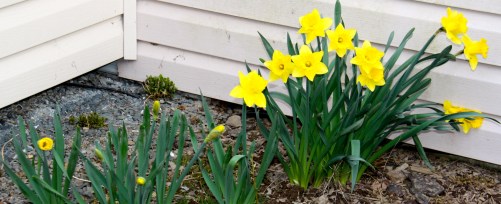
Daffodils
(for my mother)
Light in dark
bright yellow stridence
shrill golden dog’s bark
to warn off death’s wolves
that freeze her blood
she dreaded night’s unease
the devil’s wintry anti-spring
life’s darkest sparks
but loved the daffodils’
sunny March cadence
of brief piercing dance
Comment: A Golden Oldie. My mother loved daffodils and planted them all over the garden in Cardiff, Wales. They are the national flower of Wales and break into blossom just in time to welcome St. David on St. David’s Day, soon to be upon us, Dydd Dewi Sant.
Daffodils
A poem for the lady who brought some to us when Clare fell
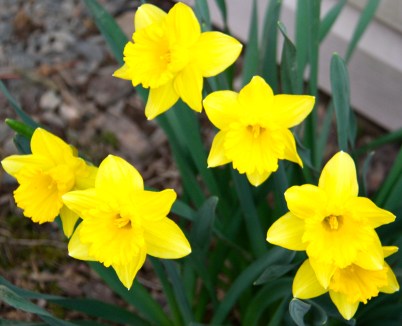
Daffodils
For ten long days the daffodils
endured, bringing to vase and breakfast-
table stored up sunshine and the silky
softness of their golden gift.
Their scent grew stronger as they
gathered strength from the sugar
we placed in their water, but now
they have withered and their day’s done.
Dry and shriveled they stand paper-
thin and brown, crisp to the touch.
They hang their heads:
oncoming death weighs them down.

Sunset at Ste. Luce. We wait for the choir to arrive. Take a deep breath: it will soon be here.Angel Choir
(on seeing the Northern Lights at Ste. Luce-sur-mer)
Sonnet
Listen to the choristers with their red and green voices.
Light’s counterpoint flowering across this unexpected son et lumière,
we tremble with the sky fire’s crackle and roar.
Once upon another time, twinned with our heavenly wings,
we surely flew to those great heights and hovered in wonderment.
Now, wingless, our earthbound feet are rooted to the concrete.
If only our hearts could sprout new wings and soar upwards together.
The moon’s phosphorescent wake swims shimmering before us.
The lighthouse’s finger tingles up and down our spines.
Our bodies flow fire and blood till we crave light, and yet more light.
We fall silent, overwhelmed by the celestial response.
When the lights go out, hearts and souls are left empty.
Leaving the divine presence is a gut-wrenching misery.
Abandoned, hurt and grieving, we are left in darkness.
Comment: The Spanish mystics, St. John of the Cross, and St. Teresa of Avila, wrote, in the sixteenth-century, about the ‘dark night of the soul’. That dark night also arrives when the communion with the spiritual finishes and the communicants are left alone, in their loneliness, abandoned to their earthly selves. To leave the divine presence is a heart-breaking, gut-wrenching misery. To turn from the marvels of nature can produce lesser, but still deeply moving feelings of grief and sadness. The secret is to preserve that joy and to carry it with us always, warm, in our hearts. Doing so makes the pain of separation much more bearable.
 rogermoorepoet