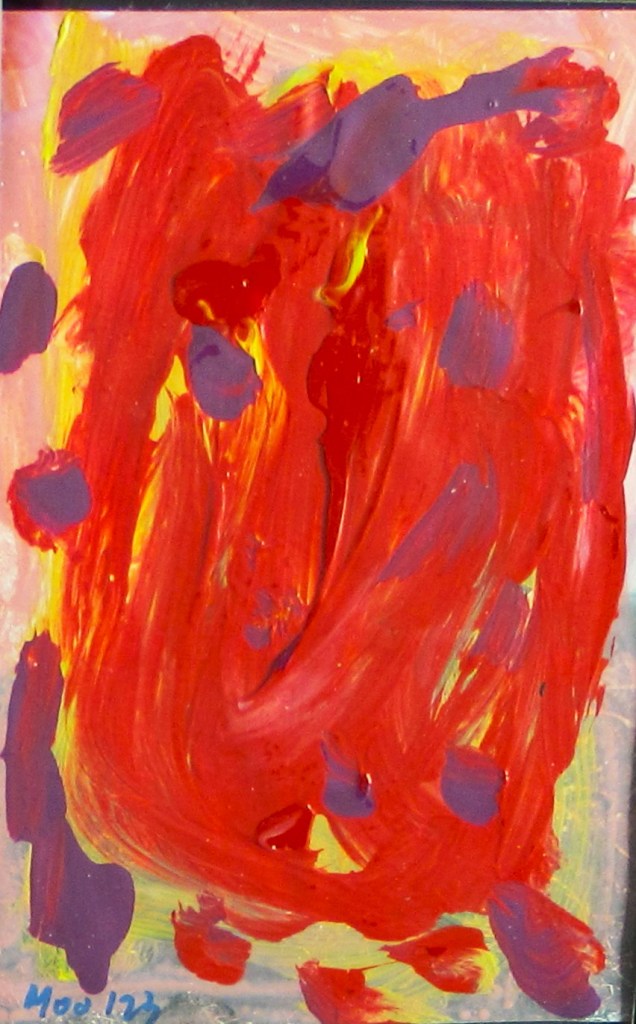
Anonymity

Anonymity

Multiple masks stripped away, old wall paper
shed in strips, layer by layer, until you reveal
the bedrock foundations of your delicate face.

Your visage dissolves before my eyes until you
become what you were when I first met you:
sweet, young, fresh, a delight to catch the eye.

As you still are, to these old, fragile eyes of mine,
cataracts removed and lenses still capable of
seeing you in your spring, although it is your winter.

The snowfall of your hair cannot deny the sparkle
in your eyes, the summer freckles that will soon return,
the sunlight and joy you bring when you enter the room.

Ageing, yes, but you are as young and as sweet
as you always were. How could you not be?
Anonymity peels itself away until no barriers exist

between what you are to me now, and what you were.
It is a lie, that only the young write poetry in praise
of their beloved’s eyebrow, her lips, her gaze.

For how many days have we stood together, as one,
breathing the same air, walking together, facing
the same difficulties, and overcoming them hand in hand?

Yes, we have both slowed down – the way of all flesh –
and we are no different. We wither and perish, but
we haven’t perished yet, although we are withering.

The magic of our love, our gifts, molded into our DNA,
will not perish with us, and never will, not while
our spirits live on and our love creates others in our shape.

Click here for Roger’s reading.

“In the human face, the anonymity of the universe becomes intimate.” John O’Donohue, Cara Anam, p. 37.
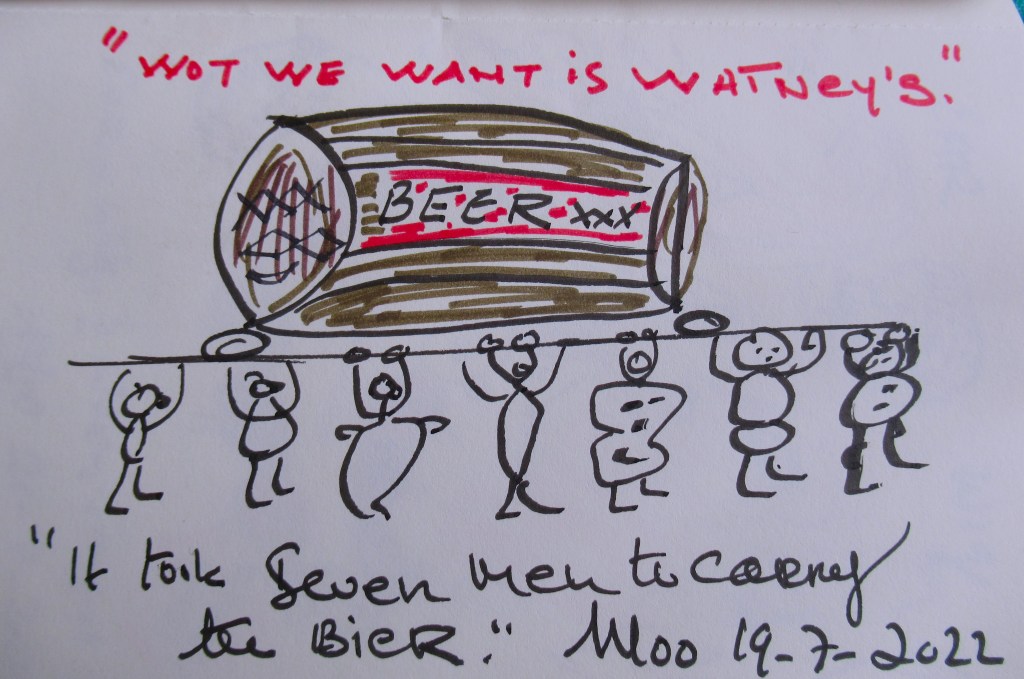
The Rover’s Return

The Rover’s Return

The eternal return to The Rover’s Return,
renovated, again and again, but filled
with the ghosts of Ena Sharples and others
who walked this cobbled street before,
and every episode more or less the same,
though décor, characters, accents change
and life becomes ever more complicated
from episode to episode, the street slang
changing slightly, and ageing characters
ageing more and more as time goes by,
and yet the trumpet’s martial sound,
the rhythms of the northern brass bands,
the first of those accents to break the plum
in the mouth snobbery of Oxford English
and the BBC’s domination of the language,
and ‘hey, Mr. Oxford Don, me no graduate,
me immigrate,’ echoing round the abandoned
buildings where the working class once worked,
and the elderly were cared for by their friends
and neighbors, not tossed into care homes,
and abandoned to their fate, as they have been
so often of late, and all things change, in time
with the clocks that tick-tock forward, their clock
work everlasting, and the pigeons still there,
and those crazy chimney pots, and that cat,
slithering down the roof, and the rovers still roving,
then returning, once again to the Rover’s Return.

Click here for Roger’s reading.

Comment: For more than sixty years I have listened to Coronation Street and some things have never changed, the trumpeter from the Brass Band, the rain on the cobbles, the memories and ghosts that linger among brickwork and paint. It takes me back to my childhood, when ITV was the upstart channel that dared to challenge the might of the mighty, one might almost say, the almighty BBC. And now, here in Island View, I turn away from the color and recall the old black and white sets, with their selection of two channels, one of them advert free, and their scheduled times of programs, not the TV blaring twenty four hours a day and two hundred channels available at the touch of a button.

It’s all one sentence, though I had to stop and take a couple of breaths while reading it. My good friend and fellow poet, Jane Tims, has called me ‘the master of the long sentence,” and I do love long sentences, especially when I am in rant mode, like now. But I am also very much aware of other friends that warn me that “your sentences are too long. They are too complicated. I don’t understand them. Write shorter sentences.” OMG, FFS. LMA* – 4 – UAW** – IMHO.

Translation of unusual terms: LMA* = Leave Me Alone. UAW** = You aRe Wrong.

Acknowledgements: My quote from the poem, inaccurate, and from memory, is from John Agard, whose poetry I love. I acknowledge now his poem and its influence upon me. I too am no Oxford don, and I too am an immigrant. His wonderful reading of the full poem can be found here. John Agard, Oxford Don.

Ides of March

Ides of March

Sometimes, as the sun goes down, the shadows close in.
You can sense real people, half-hidden in the mists
rising up from the ground. You shiver in their presence.

They fought a battle here, according to legend.
Legends never lie, though they hide away the facts,
as these mists hide those fallen warriors, brought
back to life, in the half-light, and thirsting for warm blood.

In the distance, blood flows staining the evening sky.
When the hairs on your neck rise up as wraiths, you take
to your heels and run to the place where you left your car.

Westbury White Horse, Badbury Rings, Maiden Castle –
such places are haunted with those whose spirits never left,
never moved on. They stayed here, defending the defenseless,
spirited warriors, never saying die, not even when dead.

Close by, at the hill’s foot, someone has built an altar
crowned by a small, carved cross. Who put those flowers on it?
Who came to bless the peace of those who dream and wait?

The Ides of March have come once more. Now they have gone.
Like all those other Ides before them, like all those years,
those seasons, those warriors. Come and gone. Or not gone,
as you stand there, sensing their spirits, living on and on.

Click here for Roger’s reading.

Comment: The Ides of March – March 15 this year, two days before St. Patrick’s Day. “The Ides of March are come.” “Ay, Caesar. Come but not gone.” William Shakespeare. Julius Caesar. The Ides always seem such a precious time. Sandwiched between St. David (Wales) on March 1 and St. Patrick (Ireland) on March 17, and all so close to the Equinox and the start of spring. It is snowing outside my window as I type. About four inches / ten centimeters down and more to come. But, with the lengthening of the daylight hours and the arrival of spring, we hope the snow won’t last too long.

Landscape

Landscape

Your face: a landscape
luminous in the darkness,
a mapa mundi in the light,
your heart spread out.

My eyes trace the contours,
follow the ups and downs
of your existence, track crows’
feet, crinkling by your eyes.

Time has carved, molded,
sculptured your features.
Wind, snow, wet weather,
sunlight, each has left its mark,
a wrinkle when you frown,
a dimple when you smile.

My eyes want to rest here
for a while, take in the tracks,
pause at the passes, climb hills,
descend into valleys and dales.

Such beauty spread before me.
Such a joy to contemplate
the way you are able to show
the paths I have walked of late.

Click here for Roger’s reading.

“It [landscape] is the most ancient presence in the world, though it needs a human presence to acknowledge it.” John O’Donohue, Anam Cara, p. 37.

Erratic

Erratic
Four Elements pp. 156-159

Plucked before my time
by some glacial hand,
that tore me from my land
and deposited me on
this foreign shore.

Long did I languish,
worn slowly down
by wind, rain, ice, snow.
Now I am carved anew
and learning to grow.

The old land rejected me,
wouldn’t let me back.
This land had no choice,
but I found I had lost all
notion of a distinctive voice.

Now I belong nowhere, a stranded
immigrant, I cannot return.
Neither can I call this place home,
and yet I have sent my roots
deep into its landscape.

I have grown into it,
become one with its seasons,
accepting its long hours
of silence, with white snow
falling upon darkening trees.

World Within

World Within
Anam Cara, p. 15

I have rediscovered a world within me,
a secret world where I walked as a child,
a world that nobody else has ever seen.

When I was young, that world absorbed me.
In it, I went round and round on roundabouts,
and travelled high and low on swings and
swing boats, with their rough ropes.

Alas, as always, there were rainy days.
Then the sun would wear his hat but I knew
he would come out later and join my play.

Sometimes, in the summer, thunderstorms
would roll around and rattle our corrugated roof.
Dai Jones’ cows would rush through the field,
seeking shelter from the wind and rain.

In those days, every cloud had a silver lining.
I weathered tough times, waiting patiently
for the sun to return and light up the world.

One day, I don’t remember when, someone,
I don’t know who, slammed the door and shut
me out from that world. I spent my whole life
searching for it. At last, I have found it again.

Click here for Roger’s reading.

White Wolf

White Wolf

The white wolf of winter
exits her den-warmth and
shakes snow from her coat. Flakes
fly, whitening the world.

She points her nose skywards,
clears her throat, howls until
cold winds blow their chorus
of crystals, crunchy crisp.

We cower behind wooden walls,
peer out through frosted glass.
The white wolf draws near and she huffs
and she puffs until door frames rattle.

The snow drifts climb higher,
blotting out the light. Night
falls, an all-embracing
Arctic night of endless
snow snakes slithering on
ice-bound, frost-glass highways,
side roads and city streets.

Outside, in the street lights’
flicker, snow flies gather.
Thicker than summer moths,
they drop to the ground, form
ever-deepening drifts.

Our dreams become nightmares:
endless, sleepless nights, filled
with the white wolf’s winter
call for snow and even more snow.

Click here to hear Roger’s reading.

Heart and Hearth

Heart and Hearth

I remember the old coal fires in Swansea.
My grandmother’s house in the Hafod,
with a hearth separate from the kitchen.
The hearth held a huge cast iron fire-place
where cookpots and kettles hung
 or nestled into smouldering coals.

My grandfather’s house in Brynmill,
had a magic fireplace. Banked in before bed,
it gave warmth and light all through the night.
Warmth, comfort, the family gathered,
the wisdom of the old shared with the young,
traditional tales and songs passed down.

Everybody was welcome and each one
had a special spot reserved around the fire.

Comment:

I have been revising this poem, shortening it, and changing it very gently. Funny how the old days come back and dance before us, like the flames dance on the coals, as the old ghosts walk now upon the logs.

Click here for Roger’s reading.

True Names

True Names
Iron John, p. 236

No one will know our true names
until after we have left this place.

Like that elusive moon in tonight’s sky,
our paths will be visible, seen, but not heard.

Orion herds the stars, steering them westwards,
away from the sunrise, to moon’s golden circlet.

So much has been lost, so many of us have gone,
leaving us to mourn unspoken thoughts, silent words.

In spring, sometimes, we can hear voices whispering
to us among burgeoning blossoms and leaves.

Who will bear witness to lovers’ wishes and desires
when the great separation springs upon them?

Who will sing songs, give speech to the little children
taken before their time and lost in the silent night?

Click here for Roger’s reading.

Questions

Questions
Four Elements, p. 137

After my mother died,
I lit a candle in every church,
a real bees’ wax candle,
not those tiny electric lights
that glow for a little while,
when you insert money
in the insatiable slot.

Like the minuterie
on each landing of a Parisian
staircase, it gives enough light for
a quick prayer, or a very short
moment or two of silence.

Where does the light go
when the electricity switches off?
Where does the flame go
when the candle is snuffed?
Where did my mother go
when her light went out?

One day, but not too soon, I hope,
I will have to follow her and find
the answers to all of my questions.

Click here for Roger’s reading.