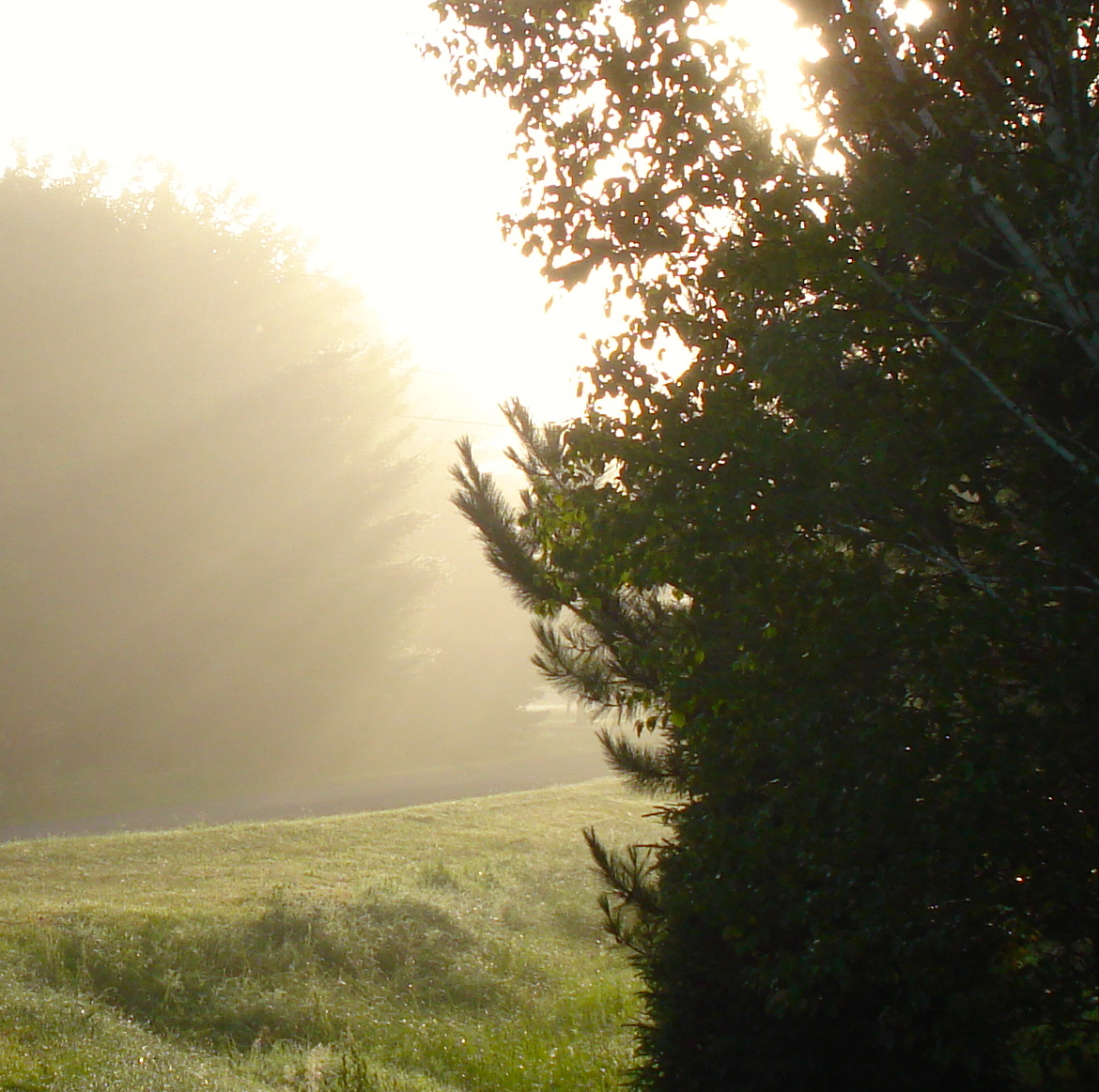
Clepsydra 25 & 26

25

… how will it all end
     does it not need closure
          something to bring
               the water-wheel full circle
                    a golden key to open
                         what

the museum’s door
     memory’s door
          the archives where
               so many memories lie
                    gathering dust

though some may tell the truth
     whatever that is

or does the story go on and on
     never pausing
          never ending
               wrinkle after wrinkle
                    threaded through time
                         after time
                              the candle
                                    burning

the clepsydra
     dripping all life away
          the pendulum
               swaying
                    back and forth …

26

… Westminster Chimes
     chiming the quarters
          church bells
               ringing out a warning

the hills alive
     alight
          with burning beacons

what new armadas
     sailing now off our coast
          what fireflies flicker
               their thunderous roar
                    frightening birds in trees
                         driving deer
                              into the woods

how many people
     cast forth like bread
          upon the waters
               to return ten-fold

hark to the bells
     ringing out again
          St. Clement’s
               St. Martin’s
                    the Old Bailey
hark to the children singing
     dancing in a circle
          never-ending
               until the music ends

and the last child
     is caught by
          the lowering arms
               trapped
                    a fish flapping
                         in the osprey’s grasp …

Commentary:

I wonder how many people still sing the children’s song about the bells of London? Images from it – intertextuality – occur throughout Clepsydra.

“Oranges and lemons,”
ring the bells of St. Clement’s.

“You owe me five farthings,”
say the bells of St. Martin’s.

“When will you pay me,”
ask the bells of Old Bailey.

“When I grow rich,”
sing the bells of Shoreditch.

“And when will that be,”
sing the silver bells of Battersea.

“I do not know,”
booms the great bell at Bow.

“Here comes a candle
to light you to bed.
And here comes a chopper
to chop off your head.”

The song appeared at children’s parties. Two of them joined hands, held their hands high, like London’s Tower Bridge, and the children, in a long chain passed beneath the ‘bridge’ as the song was sung. At the end, the children speeded up and they tried to avoid the last verse when the bridge’s arms descended and two children were caught. These then had to replace the original two gate-keepers and the game started again. At least, that was how I remember it being played.

It is worth remembering how violent in their imagery children’s songs can be. The games seem sweet, but they often have dark undertones, some going back to the Black Death – “Ring a ring a rosies, a pocket full of posies, atishoo, atishoo, we all fall down.” If you don’t know what that all signifies, go down the rabbit hole with Alice and the white rabbit and look it all up! And find out what a farthing is, and a penny farthing – go on – I double-dog dare you!

And remember – poetry carries its own meaning – or multiple meanings – and they are not always easy to find. Dig, my friends, dig. There’s gold in them there hills.

White Wolf

IMG_1843 (2)

White Wolf
Rhodri Mawr

Winter’s white wolf
shakes ice from her coat,
makes snowflakes fly,
blanches our world.

Nose pointed skywards,
she howls a North wind
straight down from the Pole
as we shiver indoors.

Snow gathers in the air,
thick as winged moths,
then drops to the ground,
plays dead in deep drifts.

Snow banks climb higher,
blotting out light.
Soon, Arctic cold will wrap us
in its endless night.

Avila 2008 381 (2).jpg

White Wolf  in Island View


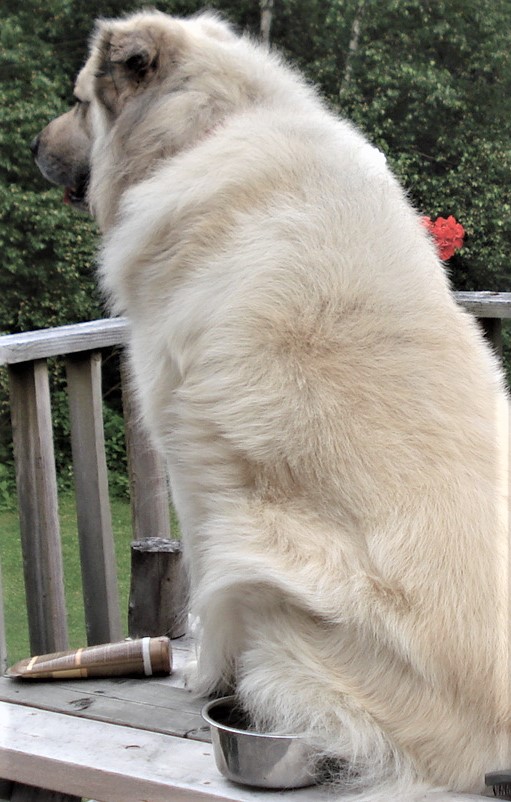
Comment: Y blaidd gwen yn y gaeaf / The white wolf in winter, translated from the original Welsh of an anonymous Gŵyr poet, circa 1613. Oh I do love messing about with images and words. I don’t have a photo of a white wolf, so instead I have posted a photo of my lapdog, Tigger, who weighs in at 115 lb. Tigger, of course / wrth gwrs, is a delicate champagne color rather than white. When he sheds hair in the summer known in the doggy trade as ‘blowing his coat’, it is like a snow storm coming off the back porch. The nesting birds and the chipmunks and squirrels can be seen carrying chunks of his fur back to their nests. They will keep wonderfully warm, wrapped in the raggle-taggle gypsies torn from coat. There are several jokes and pieces of misinformation or weird humor, woven into my poem. I wonder how many you can spot? Each of my poems is a puzzle, in one way or another, so have fun solving the riddles!

Self-Isolation Day 18

IMG_1773 (2).JPG

Self-Isolation Day 18

So we are in the eighteenth day of our Self-Isolation. Yesterday I added a fifth book to my group around the table: The Art of the Middle Game by Paul Keres and Alexander Kotov, translated by Harry Golombek. I have had this book since 1964 when it was first published in Penguin Books. Once upon a time, I played serious chess, was president of a chess club, and read widely about the game. But I have not played any serious, face to face chess since I came to Canada and the last games I played were in 1994, when I visited the Dominican Republic, although I did pay a couple of games in Oaxaca on my first visits there.

I dipped in and out of this book yesterday, playing sample games here and there. It was a joy to rediscover the movement of the pieces and to see how great minds viewed the chess board. Sharpe’s Riflemen are wonderful to watch on YouTube, but they cannot rival the two sixteen piece armies that wage battle on the sixty-four squares of the chess-board!

The Art of the Middle Game uses descriptional notation. This means that when the King Pawn takes two steps forwards, it moves from King two to King four. In descriptional notation, this becomes P-K4. If it is the first move of the game, by white, then it becomes 1. P-K4. If the opposition follows suit, then his move is also transcribed as P-K4. This gives us 1. P-K4   P-K4. And this is where the confusion arises: each side has a K-4, and a Q-4 and every other square is doubled up as well in a mirror image of army facing army. After such a long time away from the game, I found my concentration wavering in places and thus I had pieces on the wrong squares and had to start all over again. Very frustrating.

When I played chess in Spain, also back in the sixties, I was faced with algebraic notation, long in use on the continent of Europe. The eight ranks are lettered a-h, from left to right, and the eight files are numbered 1-8 from bottom to top, with ‘white on the right’ i.e. h-1 always white. This means that each square has a single, plotted designation and it is much easier to follow the game as there is no mirror imaging. In this fashion, 1. P-K4 would become e2 – e4 followed by e7 – e5. None of this changes the nature of the game, but it does change the speed and ease with which it is transcribed and followed.

I remember buying my first pocket chess set, in Boots the Chemist (!) when I was 9 or 10 years old. It is an old cardboard set with red and white squares and pieces. I still have it and I am using it now. The scrawl that I call my handwriting is still unmistakable, after all these years. That same day I bought Harry Golombek’s The Game of Chess, and I taught myself how to play, based on that book. I remember looking at the descriptional notation and not understanding how the system worked, even after days of memorization. Then, one morning, as Dylan Thomas, another Swansea Boy once wrote, ‘light broke where no light shone’ and as all the squares fell miraculously into place, the system of descriptional notation suddenly made sense to me. “Threshold knowledge is a term in the study of higher education used to describe core concepts — or threshold concepts — which, once understood, transform perception of a given subject, phenomenon, or experience” (Wikipedia). The discovery of the key to descriptional notation was indeed a threshold experience, as was the transition to algebraic notation. What a wonderful world we live in.

Eternity

IMG_0177.JPG

Eternity

Eternity: where can it be found? Not in these flowers that have already faded and gone. Where then? In mortal beings, condemned to dust? In wild words cast upon the wind? In friends and friendships, oh so perishable?

Oh where and oh where has my little dog gone?

Carved in Stone: that’s what people sometimes say … or it’s not carved in stone, as if words in stone lasted forever. They rarely do. Very little endures. Here today and gone tomorrow, or, like a stomach ache, gone with the wind.

Maybe the answer lies here, in this sequence I worked out a long time ago. Rock of Ages, cleft for me … oh where and oh where can we hide our mortality. Click on this link and you may have the answer. There again, you may not. Work it out for yourself: what are all  those anonymous marks, carved into stone and shadowed by a setting sun? If you know, please let me know. Quick now, before it’s too late, and we two too are gone.