Wednesday Workshop: The Poem Itself

Books

Wednesday Workshop
02 May 2018
The Poem Itself

One of the joys of downsizing one’s library is rediscovering old books, genuine treasures, that one wishes to read again. On my basement bookshelf I found an old copy of Stanley Burnshaw’s The Poem Itself (New York: Crowell, 1976). I thumbed quickly through it and found my old marginal notes on poems by Miguel de Unamuno and Antonio Machado. Reading the annotations to the poems I came across such literary and philosophical gems as these.

  • “Poetry gave (Unamuno) permanence to the temporary forms of the self” (p. 167).
  • “Unamuno’s God needs men to be sure of his own existence” (p. 171).
  • “The poetic element (for Machado) was not the word for its phonic value, nor color, nor line, nor a complex of sensations, but a deep palpitation of the spirit” (p. 172).
  • “In the life of every sensitive person there is much spiritual experience which cannot be given a name or a title” (p. 173).

These brief insights into the nature of poetry sent me back to the book’s first pages and I read with much joy and pleasure the opening essay entitled The Three Revolutions of Modern Poetry (pp. xvii-xliv).

The first revolution is that of Syntax (p. xxiii). Word order is changed substantially and words and thoughts are inverted. Sixteen lines of Mallarmé (p. xxiv) are composed of one sentence with five commas and a colon. There is no logical sequence of beginning, middle, and end as one thing runs into another and thoughts shape-shift and move. The structure becomes that of presences and dreams as Mallarmé writes to his new theory: “to paint, not the thing, but the emotion it produces” (p. xxv). Other analyses of syntactical distortion and fragmentation follow and Emily Dickinson’s Further in summer than the birds— leads into Cummings’ my father moved through dooms of love / through names of am through haves of give. When I link this most modern movement to Francisco de Quevedo’s ‘soy un fue, y un será, y un es cansado’ / I am a “was” and a “will be” and a  tired “is” … I realize yet again that all is not new in this modern world of ours. After all, Quevedo lived from 1580-1645, a modern poet indeed.

The second revolution is that of Prosody (p. xxvii). Rimbaud’s first poem in vers libre / free verse was written (probably in 1873) and published in 1886. Today, we are no longer shocked by the breaking down of the tyranny of verse. In fact, we are probably more shocked by people who use rhyming, metric poetry than by the many innovations in line length and word arrangement with which we are so steadily bombarded. That said, I still find some of Cumming’s innovations, Grasshopper / PPEGORHRASS for example (p.xxi) to be quite stunning and not always readily intelligible.

The third revolution is that of Referents, “the upheaval in poetic communication as a whole and specifically its referents” (p. xxxi). This is basically the writers of poetry turning to their private, interior worlds for inspiration. While poetry has always contained references to the self, modern poetry may be full of meaning for the writer, but that meaning doesn’t always extend to the reader. This is particularly true of automatic writing, surrealism, and the metaphoric poetry that floats, sometimes without factual substance, in the mind of reader and writer alike. Burnshaw isolates three moments in the development of this obscurity.

  • “a deliberate attempt to enrich the communicative content of language by expunging the unessential words” (p. xxxiii).
  • “to compress years of anguish, dreams, and projects into a sentence, a word” (p. xxxvii).
  • “the use of personal symbols and hence the creation of a private cosmology” (p. xxxviii).

These three elements contribute to the privacy and hermetic obscurity prevalent in certain poets. Le jeu ne vaut pas la chandelle / the game isn’t worth the candle … alas, while some difficult poems and poets are very worthwhile, some poetry is definitely not worth the valuable time wasted in trying to decipher it. That is my conclusion: nobody else’s.

This re-adventure back into modern poetry contributed to a delightful voyage through the verse of Baudelaire, Mallarmé, Nerval, Verlaine, Machado, and Unamuno (among others).  It is a voyage that I have started, but not yet finished. It is also a voyage that is generating new thoughts, fresh understanding, and a renewed desire to write. What more can a reader / writer desire than to be among friends, also sharing loneliness and despair and also held at bay by the living words of dead men, their voices and wisdom heard through ageing eyes that can still scan the printed page … vivo en conversación con los difuntos / y escucho con mis ojos a los Muertos // I live in conversation with the deceased / and listen with my eyes to the dead (in my friend Elias River’s translation) of Quevedo’s poem Retirado en la paz de estos desiertos.

Backstreets

IMG_0009

Backstreets

You go from the beaches turn away from the waters
and walk with your warder through this catholic prison,
through the streets of this city where innocents die
and the guilty confess to pitiless crimes
in hide-bound confessionals of dark white-washed churches
that strut in the streets and the heart-breaking alleys
with washing at windows and black widows waving
as you consciously wander through past sins and problems
forgetting remembering the squares with their fountains
with their saints and their statues in cold heartless marble,
with swords without edges and tongues sharp as grass
that cuts you with silence as it slips through your fingers
whilst bitter and bleeding you wander through labyrinths
of meaningless shortcuts leading to churches
and stationary statues that threaten with footsteps
until you come out at last to the light and the sea 

Commentary:
Another Golden Oldie, this time from my poetry book Broken Ghosts, published by Goose Lane (Fredericton, 1986). It dates from time spent in Spain (1969-1971) and recalls walking in tiny seaside towns along the north coast (Cantabria) without being specific to any single place, although Castro Urdiales, Comillas, Laredo, Santander, and Zarauz all conjure up similar visions and memories. A single sentence, the poem can be read in one breathless breath.


Monkey Teaches Sunday School


IMG_0040 (2)

Monkey Teaches Sunday School on Mondays
(With apologies to Pavlov and his dogs)

Younger monkeys e-mail elder monkey
and expect an answer within two minutes.
Elder monkey drools and writes right back.

He is turned on by the bells and
whistles of his computer.
“Woof! Woof!”
His handlers hand him a biscuit.

Elder monkey has grown to appreciate
tension and abuse:
the systematic beatings,
the shit and foul words hurled at his head.

The working conditions in his temple
kennel are overcrowded.
Elder monkey is overworked.

Yet he has managed to survive,
to stay alive and fight
what he once believed was the good fight.

Now he no longer knows:
nor does he drool anymore
when bells and whistles sound
and his handlers bait him with
an occasional, half-price biscuit.

Bear

IMG_5811_2

Bear

This carving’s tame.
Children may sit
safely on its back.
They may stroke
the mighty muscles.

Its jaws are wedged in a grin.
Its red tongue hangs still.
No saliva drops from its chin.
Marble glass eyes.

Woodworm, like moth,
have left holes in its back.
More: many a crack
ensures its tameness.

Its shoulders hunch.
Sixteen claws
probe the concrete
museum floor.

Its nearer ear
bears small chips like
my grandmother’s tea-set.

There’s lots of room
for slips between cups
and this bear’s lips.

I can sense
death’s closeness
when I smell its breath.
I feel it move
beneath my hand.

I know you’re in there,
Bear,
alive, alert, angry, hungry.

Cold sweat covers
my false, carved skin.


Brick

img_0185

Brick

Red brick the universe,
red brick crumbled
sparrow crumbs now.

Red brick,
not lily-white limestone,
nor chalk,
white cliffs,
will tumble,
tugged down
by fierce tides

Red brick
and rough:
sand-paper,
the builder’s hands,
life- lines fortified,
unfettered brick dust.

Red brick,
heart, liver, lungs:
red holes, not black,
where red roses
flourish.

Red brick,
shattered into red
dust and this sun
a dwarf brick
shrinking in its
innocence.

Red bricks:
their dust become
gas giants,
Saturn’s rings,
useless wooden wagons
drawn up
in second hand westerns.

The huff and the puff:
brick shit houses,
these red brick
universes, built to last
way beyond
those dreaming spires,
that failed, will fail,
and still fail to inspire.

“Here endeth
the second lesson:
Book of  Brick.”

Photos

Books

Photos

After eight years of retirement
I still have most of my books.
I keep them in the basement,
where no lights shine on the shelves.

Every day, when I come down to read,
I find more books than the day before.
I think they copulate in the dark.

At night, when I turn the lights off,
I can hear them all chattering,
and clattering away. At first, I thought
they were faking it, like human beings.

Now I am not so sure. What are they doing
as they lie there beneath their covers?

Books, a generic term:
I fear the dictionaries are worst,
lining things up in alphabetical order.
Then I wonder about the mysteries,
the philosophies, the religious tracts
that are hell-bent on controlling others,
but are notorious for not controlling themselves.

Whatever are they up to, I wonder,
as they rustle their pages and mutter
to each other on their shelves.

I have a collection of art books
with pictures of unclothed statues ,
not to mention real, naked people.
I am afraid to look at the photos.

Moon

IMG_0261 (2)

Moon

when the glue of the universe
sticks to your fingers
the turtle’s snap
is a red-tailed kite
sky blue across the marsh

where now the will o’ the wisp
that ragged wanderer
in his tinker’s coat
all hash-tags and patches

frost crisps the leaves
dry cactus in a tilted rain stick
they patter and fall
three deer watch from the ditch
twitching their ears

gibbous this rabbit moon
night hung from the sky
who will gnaw next at the rind
of its round yellow cheese

Heart

IMG_0040 (2)

Heart
(sonnet for Hanna and Cherry)

club-foot the pigeon feet
burned off by frost and lime
cracked this egg shell in its cup
the world’s heart overflowing

this silver spoon carved from milk
-tops pecked by morning birds
who placed it in my mouth

song of the blackbird
sung from the corrugated iron roof
where he whistles his virtuosity

playing cards placed face down
who holds the jolly joker
with his floppy cap and jingling bells
who holds the red ace key to my heart


Feathered Kangaroo

IMG_0125.JPG

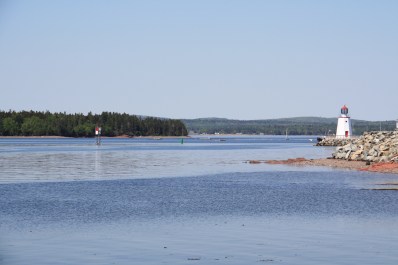
This is a photo of a Feathered Kangaroo
water hopping on PEI, Canada.

Feathered Kangaroo!

A long time ago, still wrapped in the stifling chrysalis of academia, a friend of mine tried to flutter her immanent butterfly wings by making a joke at a very serious conference. She was delivering a paper on one of my favorite Spanish poets, in which she examined the sundry variants of a sonnet that the poet first wrote in 1603, then re-wrote in 1613, revised again in 1627-28, and revised a couple more times before its final revision in 1643, about two years before his death (1645).

At the end of her paper, she was caught off-balance when faced by an apparently serious question from the audience “Did the poet make any more revisions after 1645?” In an effort at humor, she replied, “Well, actually, no. But when they were carrying his body to the church for the funeral, he popped his head out of the coffin and proclaimed in a loud voice ‘Hell, no, I won’t go. I haven’t finished revising the poem yet.’”

This off-hand academic pseudo-joke was greeted with a babble of excited voices and an elderly fellow scholar clapped his hands, exclaimed “Wonderful!” and, in the ensuing silence, asked her what documentary evidence she had for this astonishing revelation, hitherto unknown to the academic world. If she was off-balance before, she was clearly reeling at this stage: a punch-drunk amateur academic swaying before the hypnotic fists of Dr. Muhamad Ali. She smiled sweetly, said she would produce the proper evidence at the appropriate time, and left the podium.

Later, sharing drinky-poos with some fellow scholars, I listened to her as she made excuses for her strange sense of humor and I smiled as explained the situation to them. They were not amused. “You, madam, are an acknowledged expert in your field,” one of them told her. “Your fellow academics trust you and believe you when you make such statements. You must be very careful about what you say.”

Feahered Kangaroo, indeed, water-hopping on PEI!

Now I must make an apology on my own behalf. Alas, if you read the blog item I posted recently, you might be puzzled by the Gazunda tree. I am forced to admit there is no such thing, to the best of my knowledge, as a Gazunda tree, not in the main square in Oaxaca, nor anywhere else in the world. Of course, when it rains people have been known to go under certain trees to use them as an umbrella and thus to take shelter from the rain, but this is the full extent of the origin of the name: the tourist or the golfer or the walker or whatever goes under (say it fast — Gazunda) the tree when it rains. There is nothing more to the Gazunda tree than that little joke.

And this brings us to a really serious series of questions: how do we know things are true? How do we establish the truth of a statement? Why do we believe some people and not others, some facts and not others? How do we choose between a series of alternate truths all of them presented as factual realities when, in actual fact, not all of them are true? This leads us on to the basic foundations on which our knowledge is built: how do we distinguish between scientifically established facts, and hearsay, and gossip if we are ignorant of basic scientific knowledge and principles?

To this we must add the triple increases that threaten us. These are (1) the increase in the availability of real scientific knowledge that bombards us every day with fresh facts and new information; (2) the increase in sources of information and the easy access to those sources; (3) the fact that many of these sources, far too many in my opinion, present us with a fictional or heavily biased version of a pseudo- or alternate truth. And yes, in light of telling the truth, the whole truth, and nothing but the truth, we are indeed entitled to question the existence and indeed the very meaning of these words: alternate truths.

These considerations seem modern and up to date, but of course they are not. They can be found in Miguel de Cervantes’s novel, Don Quixote (Part One, 1605, and Part Two 1615). They are present throughout the meta-theater created by playwrights like Pedro Calderón de la Barca (1600-1681), who set similar dilemmas of truth and fiction in, for example, his play La Vida es Sueño (Life is a Dream) as well as in the twelve plays he wrote based on Cervantes’s masterpiece. They are also present in the writings of some of the philosophers of the day. This is exemplified in the following passage that comes, I think, from René Descartes:

“There is no earth, no heaven, no extended body, no magnitude, no place and that nonetheless I perceive these things and they seem good to me. And this is the most harrowing possibility of all, that our world is commanded by a deity who deceives humanity and we cannot avoid being misled for there may be systematic deception and then all is lost. And even the most reliable information is dubious, for we may be faced with an evil genius who is deceiving us and then there can be no reassurance in the foundations of our knowledge.”

“There can be no reassurance in the foundations of our knowledge.” These are chilling words and present us with the unfortunate fact that unless we ourselves, each one of us, to the best of our abilities search out the absolute truth about all we hear, say, and do, we are indeed lost and we must wander in the dark with no light to guide us. ‘A sad life this, when beneath the axe, we have no time to check our facts.’ So: hie thee to Wikipedia, or Google the infamous Feathered Kangaroo. Or you can take my photo and the words accompanying it for the truth, the whole truth, and nothing but the truth. The choice, my friends, is yours.